×

India🇮🇳 | citiesBengalurutech parks, craft breweries, leafy neighborhoods, street food | things to do and best time to go

Explore SrinagarExplore Chennai

Backpacking in Bengaluru
By Johan Kruseman 🇳🇱 | Updated September 4, 2026

Most travelers land in Bengaluru expecting a tech metropolis with little soul—just glass towers and traffic jams. That’s only half the story. Bengaluru sits high on the Deccan Plateau in southern India, and while it’s India’s IT capital, it’s also a city of leafy parks, crumbling colonial-era bungalows, and a nightlife scene that actually hums after dark (a rarity in much of India). Backpackers will find a city that’s easy to navigate, with cheap auto-rickshaws, a metro that actually works, and a surprising number of hostels where meeting fellow travelers is as easy as ordering a dosa. The city’s highlights—Cubbon Park’s morning joggers, the Indo-Islamic arches of Bangalore Palace, the old-school bustle of KR Market—are worth a day or two, but Bengaluru isn’t as instantly gripping as Mysore’s palaces or Hampi’s ruins. It’s safe, affordable, and cosmopolitan, but the real reward is the local energy: a blend of old and new, chai stalls and craft beer, all pulsing under a canopy of rain trees.

Discover everything you want to know in the 📖 India Travel Guide.


Get your India guide
162 ranked highlights, routes & tips, works offline (498 pages)
Loading the map 🌍
CLICK TO FILTER
cities
towns
villages
landmarks
national parks
hikes
beaches
attractions
festivals
regions
SHOW COUNTRY’S BESTSHOW ALL

✨ Why go?
Ranked #99 city in India
Why Bengaluru should be on your travel list

Bengaluru is a curious pivot point in any India backpacking route. It’s not about ticking off a long list of sights within the city itself—though there are highlights worth your time—but more about what the city offers as a strategic basecamp. The hostel scene here is robust, with options that balance comfort and budget, making it easy to recharge without breaking the bank. For those who value walkability, Bengaluru’s neighborhoods offer a mix of green spaces and bustling streets that invite exploration on foot, though traffic can test your patience. The food scene is a playground for anyone who loves South Indian flavors, with street stalls and cafes that deliver authentic meals at wallet-friendly prices. When the sun sets, the city’s nightlife kicks in with a variety of pubs and live music … read more 👉
Bengaluru is a curious pivot point in any India backpacking route. It’s not about ticking off a long list of sights within the city itself—though there are highlights worth your time—but more about what the city offers as a strategic basecamp. The hostel scene here is robust, with options that balance comfort and budget, making it easy to recharge without breaking the bank. For those who value walkability, Bengaluru’s neighborhoods offer a mix of green spaces and bustling streets that invite exploration on foot, though traffic can test your patience. The food scene is a playground for anyone who loves South Indian flavors, with street stalls and cafes that deliver authentic meals at wallet-friendly prices. When the sun sets, the city’s nightlife kicks in with a variety of pubs and live music venues, offering a chance to unwind or meet fellow travelers. Crucially, Bengaluru’s transport connections are a major draw—flights, trains, and buses link you efficiently to other parts of India, making onward travel straightforward. If your style is about mixing a bit of city life with smart logistics, Bengaluru is a practical choice. But if you’re chasing nonstop sightseeing or a compact, walkable old town vibe, it’s best treated as a well-placed stopover rather than a destination to linger.
Want to include Bengaluru in your India route?
Create a personalized India itinerary that includes Bengaluru and the places that fit your trip — based on your travel style, budget, and available time. Get your route in seconds.

Generate my trip

💡 HighlightsKey sights and experiences for travelers

Lalbagh Botanical Garden
Bengaluru’s lungs and its living museum of trees. Lalbagh is not just a park—it’s a 240-acre time capsule, planted by Hyder Ali and expanded by Tipu Sultan, with a glasshouse modeled after London’s Crystal Palace. You’ll find centuries-old silk cotton trees, a lake full of herons, and locals practicing yoga at sunrise. The annual flower shows are a riot of color and local pride. Early morning (6-8 am) is magic: cool, misty, and uncrowded. Entry is about ₹30 for adults. You’ll want at least 1-2 hours, but you could easily lose half a day if you let yourself wander.

Bangalore Palace
A real-deal palace, not a hotel or a government office. Built in the late 1800s, this Tudor-style mansion is all turrets, woodwork, and stained glass—a relic of the city’s royal past, still … read more 👉
Lalbagh Botanical Garden
Bengaluru’s lungs and its living museum of trees. Lalbagh is not just a park—it’s a 240-acre time capsule, planted by Hyder Ali and expanded by Tipu Sultan, with a glasshouse modeled after London’s Crystal Palace. You’ll find centuries-old silk cotton trees, a lake full of herons, and locals practicing yoga at sunrise. The annual flower shows are a riot of color and local pride. Early morning (6-8 am) is magic: cool, misty, and uncrowded. Entry is about ₹30 for adults. You’ll want at least 1-2 hours, but you could easily lose half a day if you let yourself wander.

Bangalore Palace
A real-deal palace, not a hotel or a government office. Built in the late 1800s, this Tudor-style mansion is all turrets, woodwork, and stained glass—a relic of the city’s royal past, still owned by the Wadiyars. The audio tour is surprisingly engaging, with stories of lavish parties and eccentric maharajas. Go mid-morning to dodge school groups. Entry is steep by local standards (₹240-₹480 for Indians, more for foreigners), but the interiors are worth it if you like history with a side of faded grandeur. Expect to spend 1-1.5 hours.

KR Market (Krishna Rajendra Market)
This is Bengaluru’s sensory overload in a nutshell. KR Market is a working wholesale bazaar, famous for its flower market—imagine mountains of marigolds and jasmine, all before breakfast. It’s chaotic, loud, and utterly photogenic. Go at dawn (5-7 am) for the full spectacle and to avoid the heat. Free to enter, but bring small change if you want to buy fruit or flowers. You’ll need 45-90 minutes, depending on your appetite for crowds.

Indian Music Experience Museum
A hands-on, interactive museum dedicated to Indian music—think of it as a science center for sound. You can play instruments, mix tracks, and trace the evolution from Carnatic ragas to Bollywood hits. It’s a rare spot where kids and adults are equally entertained. Best visited late morning or early afternoon when school groups thin out. Entry is ₹150-₹300. Give yourself 1-2 hours; music nerds will want more.

Cubbon Park
The city’s green heart, beloved by joggers, dog walkers, and anyone needing a break from traffic. Cubbon Park is less manicured than Lalbagh, but that’s its charm—giant rain trees, colonial-era statues, and impromptu cricket matches. Sunday mornings are car-free and full of families. Free entry, open dawn to dusk. You can stroll for 30 minutes or picnic for hours.

VV Puram Food Street
A pilgrimage site for street food lovers. VV Puram comes alive after dark, with dozens of stalls serving dosas, vadas, sweets, and the city’s famous “Chow Chow Bath.” It’s safe, lively, and a crash course in Bengaluru’s food obsessions. Go after 7 pm for the full effect. Most snacks are ₹30-₹100. You’ll want 1-2 hours, or until you can’t eat another bite.

National Gallery of Modern Art (NGMA)
A stately colonial mansion turned into a showcase for Indian art from the 18th century to today. The collection is strong on local legends and national icons, and the leafy grounds are a peaceful escape. Go on a weekday afternoon for quiet contemplation. Entry is ₹20-₹500. Art lovers can linger for 2 hours; casual visitors, 45 minutes.

For day trips, Bengaluru is the launchpad for Nandi Hills (sunrise views and cycling), Ramanagara (granite cliffs and silk history), and Bannerghatta National Park (wildlife and hiking). Nandi Hills is my personal favorite—catching the city wake up from above is worth the early alarm.
Spotted a mistake or missing something? Contact us.
🏘️ NeighborhoodsNeighborhood guide to Bengaluru

Bengaluru’s sprawl demands a strategic approach to where you land. Each neighborhood offers a distinct trade-off between convenience, cost, and character. Here’s the lowdown to help you pick your base like a pro.

MG Road / Brigade Road
This is the city’s commercial heart, buzzing with shops, bars, and restaurants. It’s walkable and well-connected by metro, making it a solid choice if you want nightlife and easy transport. Prices here lean higher, reflecting the central location. Great for short stays if you want to dive into the city’s pulse without long commutes.

Koramangala
A favorite among young locals and expats, Koramangala blends a lively café culture with startup energy. It’s more affordable than MG Road but still offers plenty of nightlife and eateries. The area is sprawling, … read more 👉
Bengaluru’s sprawl demands a strategic approach to where you land. Each neighborhood offers a distinct trade-off between convenience, cost, and character. Here’s the lowdown to help you pick your base like a pro.

MG Road / Brigade Road
This is the city’s commercial heart, buzzing with shops, bars, and restaurants. It’s walkable and well-connected by metro, making it a solid choice if you want nightlife and easy transport. Prices here lean higher, reflecting the central location. Great for short stays if you want to dive into the city’s pulse without long commutes.

Koramangala
A favorite among young locals and expats, Koramangala blends a lively café culture with startup energy. It’s more affordable than MG Road but still offers plenty of nightlife and eateries. The area is sprawling, so expect some walking or short rides. Ideal for longer stays if you want a neighborhood vibe with a social scene.

Indiranagar
Known for its nightlife and boutique shops, Indiranagar is a bit pricier but delivers comfort and style. It’s compact enough to explore on foot and has good bus and metro links. Perfect if you want to balance evening entertainment with daytime chill spots, though not the cheapest option.

Jayanagar
Quiet and residential, Jayanagar is a break from the city’s chaos. It’s affordable and walkable, with local markets and parks. Nightlife is minimal, so it suits travelers who prioritize comfort and calm over late nights. Best for longer stays where you want to recharge.

Majestic / City Railway Station
If you’re all about budget and transport, this area is your hub. It’s noisy and crowded but unbeatable for catching buses and trains across Karnataka and beyond. Accommodation is cheap, but comfort takes a backseat. Ideal for short stays or transit days when saving time and money is key.

⌛️ 1 dayHow to make the most of one day

Bengaluru is a city of contrasts—where sleek tech hubs rub shoulders with centuries-old temples, and leafy parks offer a quiet reprieve from the urban buzz. It’s not just India’s Silicon Valley; it’s a place where tradition and innovation collide in ways that surprise even seasoned travelers. If you have just one day here, the trick is to pick a slice of the city that reveals its character without turning your schedule into a frantic checklist.

Start your morning in the neighborhood of Basavanagudi. This area feels like stepping into a slower, more grounded Bengaluru. Visit the Bull Temple, a massive granite structure dedicated to Nandi, Shiva’s bull, and then wander through the nearby Dodda Ganapathi Temple. Both spots offer a glimpse into the city’s spiritual roots without the crowds that … read more 👉
Bengaluru is a city of contrasts—where sleek tech hubs rub shoulders with centuries-old temples, and leafy parks offer a quiet reprieve from the urban buzz. It’s not just India’s Silicon Valley; it’s a place where tradition and innovation collide in ways that surprise even seasoned travelers. If you have just one day here, the trick is to pick a slice of the city that reveals its character without turning your schedule into a frantic checklist.

Start your morning in the neighborhood of Basavanagudi. This area feels like stepping into a slower, more grounded Bengaluru. Visit the Bull Temple, a massive granite structure dedicated to Nandi, Shiva’s bull, and then wander through the nearby Dodda Ganapathi Temple. Both spots offer a glimpse into the city’s spiritual roots without the crowds that swarm more famous sites. After soaking in the calm, grab a filter coffee and a plate of idli from a local eatery—this is where you taste Bengaluru’s soul in a cup and a bite.

By afternoon, shift gears to the bustling heart of the city—MG Road and Brigade Road. These streets are a sensory overload in the best way: street vendors, chic boutiques, and cafes packed with young professionals. It’s a great place to people-watch and feel the city’s pulse. If you want a break from the commercial buzz, slip into Cubbon Park nearby. It’s a green lung in the concrete jungle, perfect for a short walk or just to sit and watch the world go by.

Evening calls for something off the beaten path. Head to the neighborhood of Jayanagar, often overlooked by tourists but beloved by locals. Here, you’ll find charming streets lined with small shops and eateries. Try dinner at a traditional South Indian restaurant—think dosa and sambar that hit the right balance of spice and comfort. The relaxed vibe here contrasts sharply with the city’s daytime hustle, giving you a fuller picture of Bengaluru’s layered personality.

In one day, you’ve moved from spiritual calm to urban energy and back to neighborhood warmth. It’s a trade-off: you won’t see every landmark, but you’ll experience the city’s rhythm in a way that sticks with you. That’s the real win.
Turn your Bengaluru visit into an India adventure
Build a complete India route with Bengaluru, hidden gems, must-see destinations, and realistic travel times included.

Generate my trip

🌤️ When to go?Best time to visit Bengaluru


  • Weather: Bengaluru enjoys a moderate climate year-round, but the best window is from October to February. During these months, expect dry conditions and pleasant temperatures, avoiding the heavy monsoon rains that hit from June through September.

  • Temperature: In the ideal months, daytime highs hover around 25-28°C (77-82°F), with cooler nights dropping to 15-18°C (59-64°F). This balance keeps you comfortable without the need for heavy gear or constant hydration stress.

  • Daylight Hours: Daylight remains fairly consistent, roughly 11 to 12 hours daily. This steady rhythm lets you plan hikes, city tours, or markets without racing the sunset or wasting daylight.

  • Crowds: Tourist numbers peak during the winter months, especially December and January, thanks to the agreeable weather and holiday
read more 👉

  • Weather: Bengaluru enjoys a moderate climate year-round, but the best window is from October to February. During these months, expect dry conditions and pleasant temperatures, avoiding the heavy monsoon rains that hit from June through September.

  • Temperature: In the ideal months, daytime highs hover around 25-28°C (77-82°F), with cooler nights dropping to 15-18°C (59-64°F). This balance keeps you comfortable without the need for heavy gear or constant hydration stress.

  • Daylight Hours: Daylight remains fairly consistent, roughly 11 to 12 hours daily. This steady rhythm lets you plan hikes, city tours, or markets without racing the sunset or wasting daylight.

  • Crowds: Tourist numbers peak during the winter months, especially December and January, thanks to the agreeable weather and holiday season. If you prefer fewer people, aim for October or February, when the city feels lively but not packed.

  • Seasonal Activities: Festivals like Diwali (October/November) and the Bengaluru International Film Festival (February) add cultural layers to your visit. Timing your trip around these events can enrich your experience but expect higher prices and busier venues.

  • Price Fluctuations: Accommodation and flights spike during the cooler months and festival periods. Booking early or targeting shoulder months like October or February can save you money without sacrificing comfort.


Pro-tip: Lock in your trip for late October or early February to dodge the monsoon mud, enjoy crisp air, and skip the peak crowd surge—maximizing value and comfort with minimal trade-offs.


source: climatestotravel.comJANJanuary: highly recommended for travelingFEBFebruary: excellent for travelingMARMarch: good for travelingAPRApril: fair for travelingMAYMay: fair for travelingJUNJune: below average for travelingJULJuly: below average for travelingAUGAugust: below average for travelingSEPSeptember: fair for travelingOCTOctober: excellent for travelingNOVNovember: highly recommended for travelingDECDecember: highly recommended for traveling
when-to-go

✈️ The backpacker research shortcutIndia Travel Guide

An offline-friendly backpacking guide with optimized travel routes, ranked highlights, transport advice, and the best areas to stay.
example page 0 from our offline Travel Guide for India
example page 1 from our offline Travel Guide for India
example page 2 from our offline Travel Guide for India
example page 3 from our offline Travel Guide for India
example page 4 from our offline Travel Guide for India
example page 5 from our offline Travel Guide for India
example page 6 from our offline Travel Guide for India
example page 7 from our offline Travel Guide for India
The digital guide (498 pages) contains:
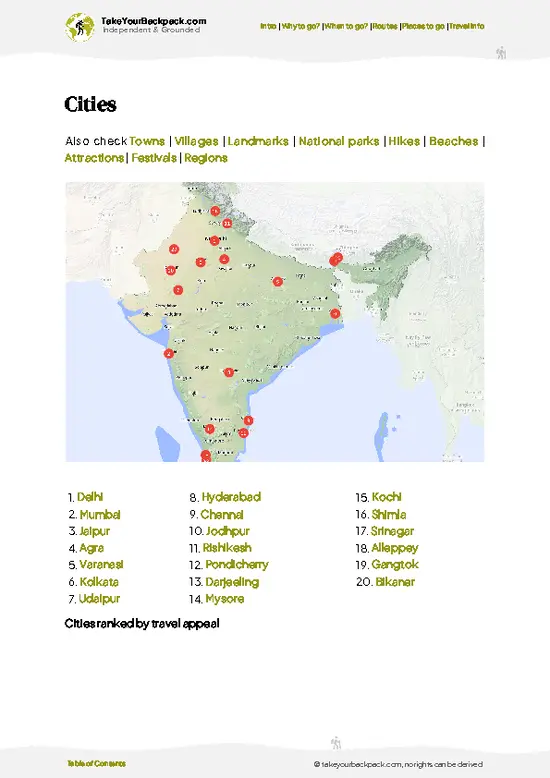
162 highlights, ranked by travel appeal
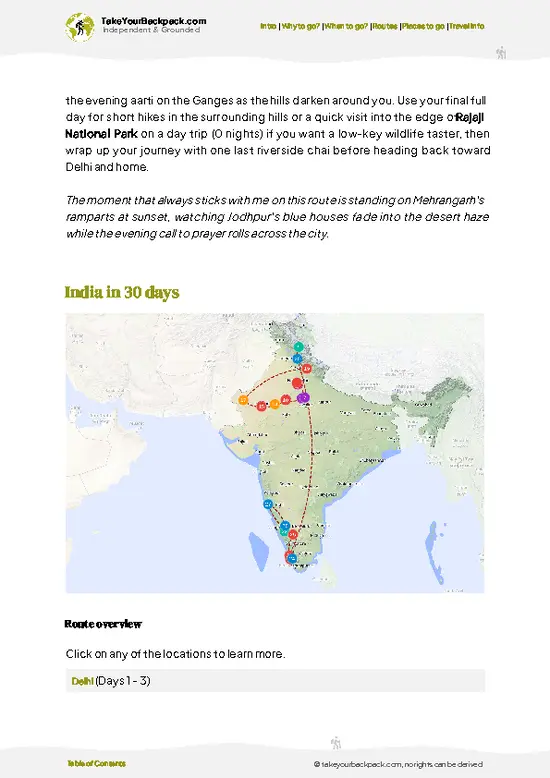
Optimized 14, 21 & 30-day travel routes
Cities, national parks, landmarks, beaches
How to get around
Offline-friendly for travel without Wi-Fi
👉 Click to see all 30+ guide features

📅 Plan smarter in minutes, not weeks
Month by month travel advice
Festivals & national holidays
Budget expectations

🗺️ Go to the right places, skip the overrated ones
Honest pros & cons of destinations
Top hikes, parks & viewpoints
Lesser-known places most travelers miss
Clear “worth it vs skip it” guidance

🛏️ Travel smoothly without rookie mistakes
Best areas to stay
Transport systems explained simply
Common scams & safety advice
SIM cards, money & practical tips

🌍 Understand the country, not just visit it
Culture & traditions
52 Essential phrases & customs
Festivals worth planning around
Traveler-friendly historical context
Insights that make places more meaningful

📱 Built for real travel conditions
Fully downloadable PDF
Works completely offline
Optimized for phone use
Useful in remote areas & buses
Everything in one place
Save weeks of stressful planning
Get instant access to your full guide. 30‑day money-back guarantee.
+ Add another guide for just US$7.80

By proceeding you agree to our terms.
Sent to your inbox immediately after payment • 100% Secure Checkout
Best Backpacking Travel Advisor 2025 tourism awardBest Backpacking
Travel Advisor
2025
What others say about Take Your Backpack Guides:
⭐⭐⭐⭐⭐
Fantastic, amazing amount of information!
⭐⭐⭐⭐⭐
My goodness this is amazing, it's what I've been looking for hats off too you!
⭐⭐⭐⭐⭐
I think this is absolutely BRILLIANT
⭐⭐⭐⭐
Very complete and informative. It's still missing places, but I gotta to commend you
⭐⭐⭐⭐⭐
This is truly amazing, thank you, can't wait to explore it with my kids!
⭐⭐⭐⭐⭐
Awesome resource, thank you!
⭐⭐⭐⭐⭐
This is amazing! Can't wait to explore the ones I haven't seen
⭐⭐⭐⭐
I love this! Well done, great idea.
⭐⭐⭐⭐⭐
Thanks for taking the time to make this gem!
⭐⭐⭐⭐⭐
This might be the best website I've ever seen.
⭐⭐⭐⭐⭐
Congratulations, and thank you so much for your work; it's incredibly valuable.
⭐⭐⭐⭐
In all seriousness I think you did a great job pointing out the important spots
⭐⭐⭐⭐⭐
10/10 very good
⭐⭐⭐⭐⭐
As someone who's only just starting to visit regularly this is awesome, thank you.
⭐⭐⭐⭐
Thank you very much! I'm going to visit my dad, it's going to be very useful!
⭐⭐⭐⭐⭐
This is really cool! We'll be travelling for the first time and this definitely come in handy.
⭐⭐⭐⭐⭐
You are now our minister of culture, congratulations 👨‍💼
⭐⭐⭐⭐⭐
Just wanted to tell you that this is a pearl! Going to follow your recommendations.
⭐⭐⭐⭐⭐
This is so cool. I'll definitely be using the resource for my travels soon.
⭐⭐⭐⭐⭐
This is very impressive! Good work.
⭐⭐⭐⭐⭐
This is an amazing and informative site. Very well done!

🛏️ Where to stay?How to pick the right area

Bengaluru’s backpacker scene orbits mainly around two neighborhoods: Koramangala and Indiranagar. Both offer a smart balance of safety, social buzz, and budget options, but they play different roles in your trip’s trade-off map.

Koramangala is the classic choice for solo travelers who want to plug into a lively, youthful atmosphere without breaking the bank. It’s a sprawling area packed with hostels, cafes, and co-working spaces, making it easy to meet fellow backpackers or digital nomads. The vibe here is energetic but not chaotic—think a steady hum of creativity and casual hangouts. You’ll … read more 👉
Bengaluru’s backpacker scene orbits mainly around two neighborhoods: Koramangala and Indiranagar. Both offer a smart balance of safety, social buzz, and budget options, but they play different roles in your trip’s trade-off map.

Koramangala is the classic choice for solo travelers who want to plug into a lively, youthful atmosphere without breaking the bank. It’s a sprawling area packed with hostels, cafes, and co-working spaces, making it easy to meet fellow backpackers or digital nomads. The vibe here is energetic but not chaotic—think a steady hum of creativity and casual hangouts. You’ll find affordable eats and plenty of nightlife, so your evenings can stretch without draining your wallet. The trade-off? It’s a bit farther from the city center’s tourist landmarks, so you’ll spend more time on transport if sightseeing is your priority.

Indiranagar, on the other hand, leans into comfort and style while still catering to budget travelers. It’s safer and cleaner, with a slightly more upscale feel. Hostels here tend to be newer and offer better amenities, which means you pay a bit more but gain in convenience and a polished social scene. It’s closer to central Bengaluru, so you save time on transit. The trade-off is a higher price tag and a vibe that’s less raw backpacker and more boutique traveler.

Other areas like MG Road or Brigade Road are tempting for their central location but skew toward tourists and business travelers, with fewer budget-friendly social spots. Plus, they can feel sterile after dark.

In Bengaluru, your choice boils down to what you value: Koramangala for raw social energy and budget freedom, or Indiranagar for a safer, more comfortable base that still keeps you connected. Both neighborhoods turn the city’s sprawling chaos into a manageable, rewarding game.

🚌 Getting aroundHow to get around Bengaluru

Bengaluru moves to a rhythm that’s part clockwork, part improvisation. It’s a city where the rush hour crush feels like a test of your patience and wits, yet there’s an underlying pulse of spontaneity that keeps you alert. The traffic jams don’t just slow you down—they force you to rethink your route, your timing, your expectations. Here, time is elastic; a 10-minute trip can stretch into an hour if you’re not strategic. Comfort is a luxury often sacrificed to save time or money, but the savvy traveler learns to read the city’s flow and pick their battles. This is a place where knowing when to walk, when to hop on a bus, or when to grab a shared auto-rickshaw can turn a logistical headache into a smooth, even enjoyable, part of your adventure.


  • Walking: The ultimate zero-cost option, perfect
read more 👉
Bengaluru moves to a rhythm that’s part clockwork, part improvisation. It’s a city where the rush hour crush feels like a test of your patience and wits, yet there’s an underlying pulse of spontaneity that keeps you alert. The traffic jams don’t just slow you down—they force you to rethink your route, your timing, your expectations. Here, time is elastic; a 10-minute trip can stretch into an hour if you’re not strategic. Comfort is a luxury often sacrificed to save time or money, but the savvy traveler learns to read the city’s flow and pick their battles. This is a place where knowing when to walk, when to hop on a bus, or when to grab a shared auto-rickshaw can turn a logistical headache into a smooth, even enjoyable, part of your adventure.


  • Walking: The ultimate zero-cost option, perfect for short distances in neighborhoods like Koramangala or Indiranagar. It’s slow but gives you a real feel for the city’s texture and street life. Avoid midday heat; mornings and evenings are best. No schedule, just your pace.


  • BMTC City Buses: The backbone of budget transit, these buses cover almost every corner of Bengaluru. Fares start as low as ₹10, making them unbeatable for cost-conscious travelers. They run roughly from 5:30 AM to 11 PM, but expect delays during peak hours. Comfort is minimal—think crowded, noisy, and sometimes hot—but they’re fast on dedicated bus lanes when traffic snarls elsewhere.


  • Metro (Namma Metro): A game-changer for beating traffic, the metro runs from about 5 AM to 11 PM with trains every 5-10 minutes during peak times. Tickets cost between ₹10 and ₹60 depending on distance. It’s clean, air-conditioned, and reliable, but the network is still expanding, so it won’t get you everywhere. Best for longer hops across the city’s main corridors.


  • Auto-Rickshaws (Shared and Private): The wild card of Bengaluru transit. Shared autos are cheap (₹10-₹20 for short trips) but unpredictable in timing and route. Private autos offer door-to-door convenience but can be pricier and require negotiation or app-based booking. They’re faster than buses in heavy traffic but less comfortable and sometimes a bit chaotic.


  • App-Based Ride Services (Ola, Uber): The comfort option for budget travelers willing to spend a bit more. Prices vary widely depending on demand and distance, but you get air-conditioned rides, fixed routes, and the convenience of cashless payment. Surge pricing can spike costs during rush hour, so timing your rides is key to balancing comfort and budget.

👛 Costs (as of 4 September 2026)Travel costs and budget guide for Bengaluru

Backpacking in Bengaluru offers a range of affordable options for independent travelers. Here's a breakdown of typical daily expenses:
  • Dorm accommodation: High season dorm beds typically cost between USD7 to 12 per night, while off-season prices can drop to USD5 to 8.
  • Meals: Street food and local eateries offer meals for around USD1.50 to 3, with occasional splurges at mid-range restaurants costing up to USD7.
  • Local transport: Auto-rickshaws and buses usually cost USD0.30 to 1 per trip, depending on distance.
  • City transport pass: A monthly metro or bus pass averages around USD10, but daily travelers might spend about USD1 to 2 on single rides.
  • Basic activities/entry fees: Entry to museums, parks, and cultural sites generally ranges from USD1 to 5.
  • Miscellaneous expenses: This includes bottled water,
read more 👉
Backpacking in Bengaluru offers a range of affordable options for independent travelers. Here's a breakdown of typical daily expenses:
  • Dorm accommodation: High season dorm beds typically cost between USD7 to 12 per night, while off-season prices can drop to USD5 to 8.
  • Meals: Street food and local eateries offer meals for around USD1.50 to 3, with occasional splurges at mid-range restaurants costing up to USD7.
  • Local transport: Auto-rickshaws and buses usually cost USD0.30 to 1 per trip, depending on distance.
  • City transport pass: A monthly metro or bus pass averages around USD10, but daily travelers might spend about USD1 to 2 on single rides.
  • Basic activities/entry fees: Entry to museums, parks, and cultural sites generally ranges from USD1 to 5.
  • Miscellaneous expenses: This includes bottled water, snacks, and small purchases, typically around USD1 to 3 daily.

Total daily budgets for backpackers in Bengaluru generally fall between USD15 and 35. This range covers comfortable dorm stays, local meals, transport, and some activities without stretching your wallet.


source: numbeo.com
⚠️ Prices can change and everyone travels differently, so take this as a rough guide. Hope it helps you plan your adventure!

🚌 Day tripsExploring the surroundings

Bengaluru’s sprawling urban pulse makes it a surprisingly strategic hub for day trips that balance adventure with ease. You’re not just stuck in traffic here; you’re positioned to tap into a variety of landscapes and experiences without the hassle of overnight planning.

Nandi Hills
Just a 1.5 to 2-hour drive from Bengaluru, Nandi Hills offers a refreshing escape into cooler air and rolling greenery. It’s a classic sunrise spot, but don’t show up too late—crowds and heat can kill the vibe. For under ₹500 total (including bus or shared taxi), you can hike or rent a bike to explore the hilltop fortress and ancient temples. The best time is winter or early spring when the mist clings to the valleys, making the views feel cinematic. First-timers often underestimate the steep climb, so pack water … read more 👉
Bengaluru’s sprawling urban pulse makes it a surprisingly strategic hub for day trips that balance adventure with ease. You’re not just stuck in traffic here; you’re positioned to tap into a variety of landscapes and experiences without the hassle of overnight planning.

Nandi Hills
Just a 1.5 to 2-hour drive from Bengaluru, Nandi Hills offers a refreshing escape into cooler air and rolling greenery. It’s a classic sunrise spot, but don’t show up too late—crowds and heat can kill the vibe. For under ₹500 total (including bus or shared taxi), you can hike or rent a bike to explore the hilltop fortress and ancient temples. The best time is winter or early spring when the mist clings to the valleys, making the views feel cinematic. First-timers often underestimate the steep climb, so pack water and wear sturdy shoes.


Lepakshi
About 3 hours away by bus, Lepakshi is a treasure trove of Vijayanagara architecture and frescoes that don’t get the tourist traffic they deserve. Entry is cheap, and local buses keep costs low, making it a budget-friendly cultural deep dive. The site’s intricate carvings and the giant hanging pillar are worth every minute of travel. Avoid the monsoon season; the roads can get dicey, and the open-air ruins lose their charm under heavy rain. This trip rewards patience and curiosity, perfect for those who want to see India’s history beyond the usual stops.


Mysuru
Clocking in at about 3 hours by train or bus, Mysuru is a polished contrast to Bengaluru’s tech hustle. The city’s palace, markets, and laid-back vibe offer a full day of exploration without rushing. Budget travelers can keep costs low by using public transport and eating at local eateries. The best window is October to February when the weather is pleasant and the palace lights up for evening shows. A common slip-up is trying to cram too much into one day; Mysuru deserves a slow pace to soak in its regal atmosphere.


Shivanasamudra Falls
Roughly 2.5 hours from Bengaluru, this spot is a natural spectacle where the Cauvery River splits into twin waterfalls. It’s less touristy than other falls in Karnataka, so you get a more authentic experience. Entry and transport combined can stay under ₹600 if you hitch a shared taxi or take a bus. The monsoon months (July to September) bring the falls to full roar, but the surrounding paths can be slippery—watch your step. This trip is a win for those who want nature’s power without a multi-day trek.


Each of these trips trades off some travel time for a rich payoff in culture, nature, or history. Bengaluru’s connectivity means you don’t have to sacrifice comfort or break the bank to get out and explore. You just need to pick your priority—whether it’s the thrill of a sunrise hike, a dive into heritage, or a splash in the wild—and plan accordingly.
Want to know what more India offers?
The India Travel Guide describes 162 highlights, from cities to national parks, from beaches to hikes

Get the Travel Guide -

🍲 FoodLocal Flavors for Backpackers

Bengaluru’s food scene is a playground for your taste buds, where dosa—a crisp, golden crepe made from fermented rice and lentils—rules the breakfast table. Don’t miss the idli and vada combo, soft and fluffy steamed cakes paired with crunchy fried lentil doughnuts, all dunked into spicy chutneys and tangy sambar. These dishes aren’t just meals; they’re a ritual, best enjoyed with your hands, scooping up bites with a practiced flick of the fingers.

For drinks, the city’s filter coffee is a must-try—thick, dark, and sweet, it’s the fuel that powers Bengaluru’s bustling mornings. Later, you’ll find backpackers gravitating toward lively street food markets and casual eateries where the air is thick with the scent of frying spices and fresh herbs. These spots are where locals gather, sharing … read more 👉
Bengaluru’s food scene is a playground for your taste buds, where dosa—a crisp, golden crepe made from fermented rice and lentils—rules the breakfast table. Don’t miss the idli and vada combo, soft and fluffy steamed cakes paired with crunchy fried lentil doughnuts, all dunked into spicy chutneys and tangy sambar. These dishes aren’t just meals; they’re a ritual, best enjoyed with your hands, scooping up bites with a practiced flick of the fingers.

For drinks, the city’s filter coffee is a must-try—thick, dark, and sweet, it’s the fuel that powers Bengaluru’s bustling mornings. Later, you’ll find backpackers gravitating toward lively street food markets and casual eateries where the air is thick with the scent of frying spices and fresh herbs. These spots are where locals gather, sharing plates of chaat—a medley of crunchy, tangy, and spicy snacks that explode with flavor.

Evenings often unfold in laid-back bars or cafés, where craft beers and inventive cocktails mix with the city’s youthful energy. Bengaluru’s drinking culture is relaxed but social; it’s common to toast with friends over a round of Kingfisher or a local brew, savoring the moment more than the buzz. Here, eating and drinking isn’t just about sustenance—it’s a way to plug into the city’s rhythm, a shared experience that’s as much about connection as it is about flavor.

🛡️ SafetySafety Tips and Common Scams in Bengaluru

Bengaluru is generally a safe city for backpackers, but like any bustling metropolis, it rewards a bit of street-smart awareness. Crowded markets and busy transit hubs are where you’ll want to keep your wits about you—pickpocketing isn’t rampant but can happen if you’re distracted. Solo travelers, especially at night, should stick to well-lit, populated areas; neighborhoods like Koramangala and Indiranagar are lively and safe after dark, but venturing into quieter, less familiar parts without a local guide isn’t worth the gamble.

Scams here tend to be low-key rather than aggressive. The classic “auto-rickshaw meter not working” trick is common—always insist on the meter or agree on a fare upfront. Vendors might overcharge tourists, so a confident, polite negotiation is your best defense. … read more 👉
Bengaluru is generally a safe city for backpackers, but like any bustling metropolis, it rewards a bit of street-smart awareness. Crowded markets and busy transit hubs are where you’ll want to keep your wits about you—pickpocketing isn’t rampant but can happen if you’re distracted. Solo travelers, especially at night, should stick to well-lit, populated areas; neighborhoods like Koramangala and Indiranagar are lively and safe after dark, but venturing into quieter, less familiar parts without a local guide isn’t worth the gamble.

Scams here tend to be low-key rather than aggressive. The classic “auto-rickshaw meter not working” trick is common—always insist on the meter or agree on a fare upfront. Vendors might overcharge tourists, so a confident, polite negotiation is your best defense. Annoyances like persistent touts near major attractions can be deflected with a firm “no, thank you.” Carry yourself with calm confidence, blend in by avoiding flashy displays, and you’ll navigate Bengaluru’s streets smoothly, turning potential hassles into minor blips rather than trip stoppers.

FAQFrequently asked questions about Bengaluru

3 to 4 days are sufficient to explore Bengaluru's main attractions including Lalbagh Botanical Garden, Bangalore Palace, and the vibrant MG Road area. This allows time to experience local cuisine and some tech hubs. Additional days can be added for day trips to nearby places like Nandi Hills.
Yes, Bengaluru is generally safe for solo backpackers, especially in well-populated and tourist-friendly areas. Standard precautions like avoiding isolated places at night and using registered taxis or ride-sharing apps are recommended. The city has a relatively low crime rate compared to other major Indian cities.
Bengaluru is known as the 'Silicon Valley of India' due to its role as the nation's leading IT hub. It is also famous for its pleasant climate, diverse food scene, and vibrant nightlife. The city hosts numerous tech parks and startups, making it a major center for technology and innovation.
⚠️ Things can change over time, so always validate details locally before you go.

Other Indian cities near Bengaluru

Explore more nearby:

  • Bangalore—Tech parks, craft breweries, tree-lined avenues| 2 km away
  • Mysore—Royal palace, sandalwood markets, yoga schools| 122 km away
  • Pondicherry—French quarter, seaside promenade, Tamil heritage| 268 km away

💡 Not sure where to go next?
Create a personalized itinerary for India including Bengaluru and the places that fit your trip.

Generate my itinerary

👉 Discover all cities

Or checkout all India has to offer (think cities, towns, villages, national parks, hikes, beaches, festivals)
Country photo of India

We 💚 feedbackFinal thoughts on visiting Bengaluru

Bengaluru’s charm lies in its unexpected blend of cutting-edge tech hubs and laid-back café culture—a city where you can dive into India’s startup pulse by day and unwind in leafy parks by night. But don’t kid yourself: traffic here is a beast that devours time and patience alike. If you’re not ready to play the waiting game, that daily grind can drain your energy faster than the city’s famous filter coffee can recharge it.

✈️ When did I visit India?
As part of my 1.5 year travel around the world trip, I visited India in December 2015.

✍️ Help improve this page!
The information on this page is based on my own backpacking experience in India, supplemented with up-to-date research and feedback from other travelers. Travel details can change, so if you notice anything outdated or incomplete, feel free to let me know.


🙋‍♂️ Give feedback

👋 Meet the founderWho’s Behind Take Your Backpack?

Johan, backpacker and founder of TakeYourBackpackHi, I’m Johan (Netherlands 🇳🇱), the creator of TakeYourBackpack. Over the past decade, I’ve backpacked through 80+ countries across six continents, gaining extensive experience with independent travel, long-term trips, and overland routes.

This site is built on a combination of firsthand travel experience and carefully curated insights from other backpackers. Many guides are based on places I’ve personally visited, while others bring together tips, observations, and practical advice shared by trusted travelers I’ve met along the way.

The goal is to provide realistic, experience-driven guidance — not generic itineraries — so you can explore destinations with better context, clearer expectations, and more confidence.

Get full India guide •
Instant download • 162 highlights • Full Offline guide