×

India🇮🇳 | regionsDzükou Valleyseasonal wildflowers, rolling grasslands, border ridges | things to do and best time to go

Explore ChoptaExplore Goa

Backpacking in Dzükou Valley
👌 Worth visitingregion ranked #11
By Johan Kruseman 🇳🇱 | Updated September 4, 2026

Your boots squelch in black mud, mist beads on your eyelashes, and the only sound is your breath and a distant cowbell drifting through the valley. Wildflowers brush your shins. The clouds keep trying to swallow the ridgeline and failing. That’s Dzükou Valley.

Dzükou sits on the border of Nagaland and Manipur in Northeast India, and it feels far from the rest of the country in every way. It’s cheap once you’re there, but getting in via Kohima or Viswema is slow, bumpy, and not exactly cushy. The payoff is a quiet, almost alpine bowl of hills and streams that still feels more like a local picnic spot than an “Insta spot,” especially compared with busier Northeast hubs like Shillong. You trade easy transport and nightlife for raw landscape, simple homestays, and that rare feeling that you arrived somewhere instead of consuming it.

Discover everything you want to know in the 📖 India Travel Guide.


Get your India guide
162 ranked highlights, routes & tips, works offline (498 pages)
Loading the map 🌍
CLICK TO FILTER
cities
towns
villages
landmarks
national parks
hikes
beaches
attractions
festivals
regions
SHOW COUNTRY’S BESTSHOW ALL

✨ Why go?
Ranked #11 region in India
Why visitors keep coming back

In the Dzükou Valley, backpackers find a sweet spot where nature and culture collide. The variety of landscapes is jaw-dropping—think lush meadows, rolling hills, and dramatic cliffs, all within a day’s trek. You can soak in the local culture without the hassle of constant relocation; it’s a perfect base for exploring nearby villages and their traditions.

Transport is a breeze, too. You can hop on a shared taxi or take a local bus, giving you the freedom to roam at your own pace. This flexibility allows for slow travel, letting you truly absorb the sights and sounds. It’s not just about the destination; it’s about the journey, and Dzükou Valley nails that balance.
Want to include Dzükou Valley in your India route?
Create a personalized India itinerary that includes Dzükou Valley and the places that fit your trip — based on your travel style, budget, and available time. Get your route in seconds.

Generate my trip

💡 HighlightsThe experiences that define the visit

  1. Dzüko Valley meadow (the broad valley floor) — That sweeping, grassy carpet is what people picture when they think of Dzüko: a high-altitude meadow rimmed by ridges, perfect for slow walks, picnics and watching clouds drift through. It’s the core landscape that makes this place feel like its own tiny world.
  2. Seasonal wildflower carpets — From monsoon into early autumn the valley explodes with blooms (lilies, primulas and a host of tiny endemic flowers). The colors and density of the blooms here — especially after a rainy night — are the reason photographers and botanists keep coming back. Peak months change with the monsoon, so timing matters.
  3. Dzukou ridge sunrise viewpoint — A short early-morning climb from the main meadow yields a classic moment: the ridge lights up, you get panoramic
read more 👉
  1. Dzüko Valley meadow (the broad valley floor) — That sweeping, grassy carpet is what people picture when they think of Dzüko: a high-altitude meadow rimmed by ridges, perfect for slow walks, picnics and watching clouds drift through. It’s the core landscape that makes this place feel like its own tiny world.
  2. Seasonal wildflower carpets — From monsoon into early autumn the valley explodes with blooms (lilies, primulas and a host of tiny endemic flowers). The colors and density of the blooms here — especially after a rainy night — are the reason photographers and botanists keep coming back. Peak months change with the monsoon, so timing matters.
  3. Dzukou ridge sunrise viewpoint — A short early-morning climb from the main meadow yields a classic moment: the ridge lights up, you get panoramic views over Nagaland and Manipur hills and, if you’re lucky, a sea-of-clouds effect. Best experienced with few other people around.
  4. Plateau campsite (the overnight meadow) — Camping out on the plateau is a very different experience than a day-trek: quiet nights, massive starfields and the valley’s sounds up close. Tents, a simple cooked meal and an early start for sunrise make it feel like you’ve claimed the place for a night.
  5. Ephemeral mirror-pools (hidden gem) — Scattered shallow pools that appear after rains, tucked away behind low hummocks. They make perfect mirror reflections of the sky and blooms, and most day-trippers miss them because they stick to the main trail. Great photo reward if you take a little detour.
  6. Rhododendron & bamboo side-glades (hidden gem) — A few quieter corridors off the main meadow are dense with bamboo and rhododendrons. They’re peaceful, smell amazing after rain and feel like a pocket of the valley that time forgot. Locals know the faint paths — follow one and you’ll likely have it to yourself.
  7. Granite outcrops & little summits — Scattered rocky bumps give you small scrambling opportunities and different vantage points over the valley floor. Hopping between these outcrops gives a real sense of the valley’s geology and offers varied angles for photos or a private picnic.
  8. Seasonal streams and spring-fed pockets (hidden gem) — Tiny clear streams thread the meadow and collect in shallow, drinkable spring pockets. They’re perfect for cooling your feet after a hike and are frequently overlooked because they’re small and easy to miss unless you slow down and look.
  9. Local-guided evenings and valley stories — Talking with local guides/porters around the campsite about the valley’s plants, weather quirks and folklore is an experience in itself. It’s not a monument you can point at; it’s an exchange that adds meaning to everything you see there.
  10. Quiet birding & butterfly pockets — The valley may be small, but its isolation and variety of microhabitats bring interesting hill birds and colorful butterflies. It’s a low-key hotspot for naturalists who sit quietly and scan the flowers and bushes.


Personal favorite: Seasonal wildflower carpets — nothing beats walking into a valley wall-to-wall with flowers after a night of rain; it’s the single most “Dzüko” experience in my book.
Spotted a mistake or missing something? Contact us.

Things to do near Dzükou Valley

Ratings based on Tripadvisor reviews. When you book through this link, you support our work at no extra cost to you.

⌛️ 5 days5-day itinerary for Dzükou Valley

Day 1: Kohima
Kohima is your gateway to Dzükou Valley. Arrive here early to soak in the local culture and history. The transport system is straightforward: buses and shared taxis connect you to the valley. Spend the day exploring the local markets and the Kohima War Cemetery. This sets the tone for your adventure, giving you a taste of Nagaland’s rich heritage.

Day 2: Dzükou Valley Base Camp
Start your trek to the Dzükou Valley Base Camp. The trail is well-marked but can be steep. This is where the magic begins. The lush landscapes and vibrant flora will make you forget the effort. The transport here is all about your legs; there are no shortcuts. Embrace the challenge; it’s part of the experience.

Day 3: Dzükou Valley Exploration
Spend the day exploring the valley. The early morning … read more 👉
Day 1: Kohima
Kohima is your gateway to Dzükou Valley. Arrive here early to soak in the local culture and history. The transport system is straightforward: buses and shared taxis connect you to the valley. Spend the day exploring the local markets and the Kohima War Cemetery. This sets the tone for your adventure, giving you a taste of Nagaland’s rich heritage.

Day 2: Dzükou Valley Base Camp
Start your trek to the Dzükou Valley Base Camp. The trail is well-marked but can be steep. This is where the magic begins. The lush landscapes and vibrant flora will make you forget the effort. The transport here is all about your legs; there are no shortcuts. Embrace the challenge; it’s part of the experience.

Day 3: Dzükou Valley Exploration
Spend the day exploring the valley. The early morning light casts a golden hue on the rolling hills. Take your time; this is where you’ll find the heart of Dzükou. The comfort of your base camp allows you to relax after a day of hiking.

Day 4: Off-Path Reward: Japfu Peak
Take a detour to Japfu Peak. It’s a bit of a trek, but the panoramic views are worth every step. This is a chance to see the valley from above, a perspective that adds depth to your journey.

Day 5: Return to Kohima
Head back to Kohima, reflecting on your adventure. The trek back is quicker, and you’ll feel accomplished. This journey is not just about the destination; it’s about the stories you collect along the way.

If you can only choose one day, make it Day 3 in the valley. The tranquility and beauty will etch themselves into your memory, justifying the entire trip.
Turn your Dzükou Valley visit into an India adventure
Build a complete India route with Dzükou Valley, hidden gems, must-see destinations, and realistic travel times included.

Generate my trip

🌤️ When to go?Seasonal considerations and timing


  • Weather: The sweet spot is October to December. Post-monsoon freshness means clear skies and lush greenery, perfect for trekking. Avoid the monsoon months (June to September) when trails turn into slippery mudslides.

  • Temperature: Daytime highs hover around 15-20°C (59-68°F), cool but not freezing. Nights can dip to 5°C (41°F), so pack layers. Spring (March-April) is warmer but less green.

  • Daylight Hours: Around 10-11 hours of daylight in peak season, giving you ample time to explore without rushing. Early starts beat the afternoon haze and crowds.

  • Crowds: Peak season draws weekend warriors and local tourists. Weekdays are your secret weapon for solitude and better photo ops.

  • Seasonal Activities: Post-monsoon is prime for wildflowers and birdwatching. Winter months offer crisp air
read more 👉

  • Weather: The sweet spot is October to December. Post-monsoon freshness means clear skies and lush greenery, perfect for trekking. Avoid the monsoon months (June to September) when trails turn into slippery mudslides.

  • Temperature: Daytime highs hover around 15-20°C (59-68°F), cool but not freezing. Nights can dip to 5°C (41°F), so pack layers. Spring (March-April) is warmer but less green.

  • Daylight Hours: Around 10-11 hours of daylight in peak season, giving you ample time to explore without rushing. Early starts beat the afternoon haze and crowds.

  • Crowds: Peak season draws weekend warriors and local tourists. Weekdays are your secret weapon for solitude and better photo ops.

  • Seasonal Activities: Post-monsoon is prime for wildflowers and birdwatching. Winter months offer crisp air and starry nights but fewer blooms.

  • Price Fluctuations: Accommodation and guides cost more during peak season. Off-season means bargains but brace for unpredictable weather.


Pro-tip: Arrive just after the monsoon clears—trails are fresh, crowds thin, and you’ll snag the best homestay rates before the holiday rush hits.


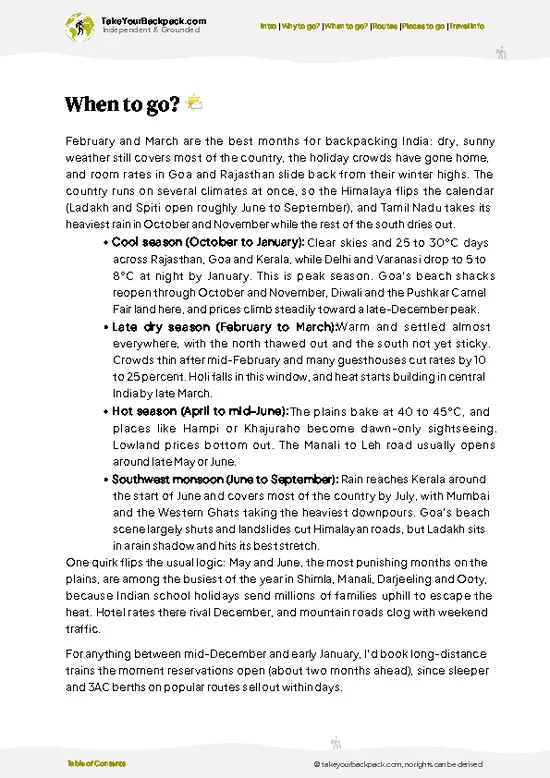
source: climatestotravel.comJANJanuary: highly recommended for travelingFEBFebruary: highly recommended for travelingMARMarch: good for travelingAPRApril: good for travelingMAYMay: fair for travelingJUNJune: below average for travelingJULJuly: below average for travelingAUGAugust: below average for travelingSEPSeptember: fair for travelingOCTOctober: excellent for travelingNOVNovember: excellent for travelingDECDecember: excellent for traveling
when-to-go

✈️ The backpacker research shortcutIndia Travel Guide

An offline-friendly backpacking guide with optimized travel routes, ranked highlights, transport advice, and the best areas to stay.
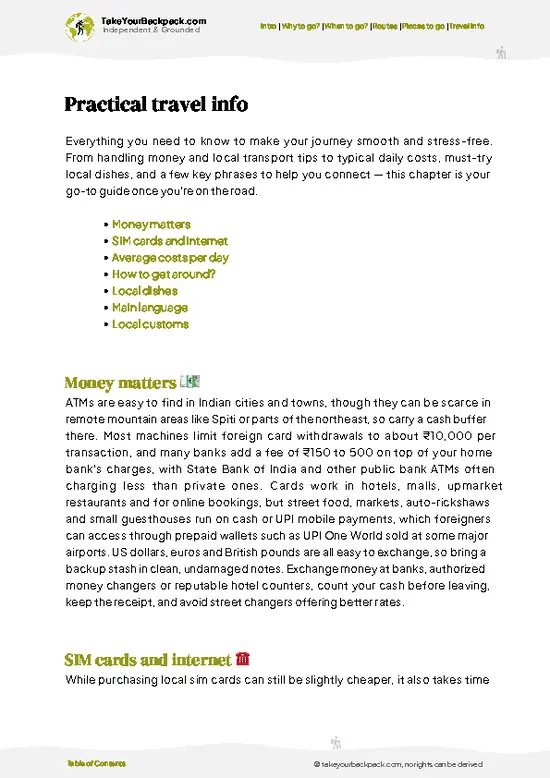
example page 0 from our offline Travel Guide for India
example page 1 from our offline Travel Guide for India
example page 2 from our offline Travel Guide for India
example page 3 from our offline Travel Guide for India
example page 4 from our offline Travel Guide for India
example page 5 from our offline Travel Guide for India
example page 6 from our offline Travel Guide for India
example page 7 from our offline Travel Guide for India
The digital guide (498 pages) contains:
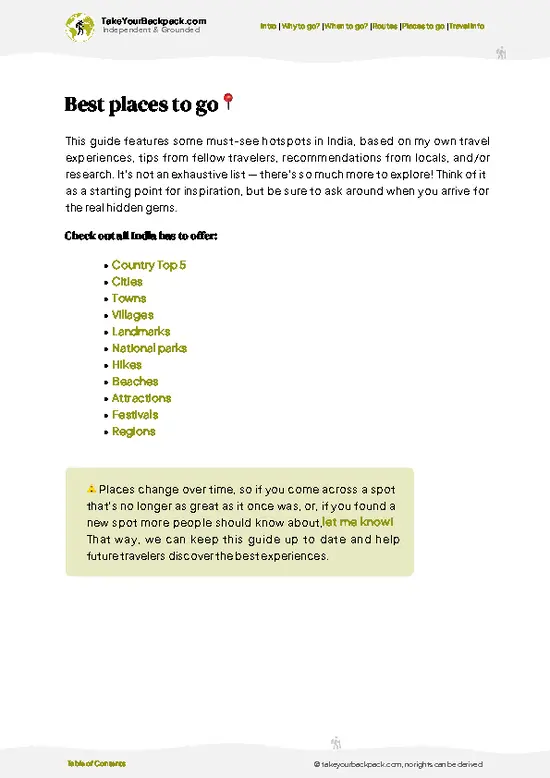
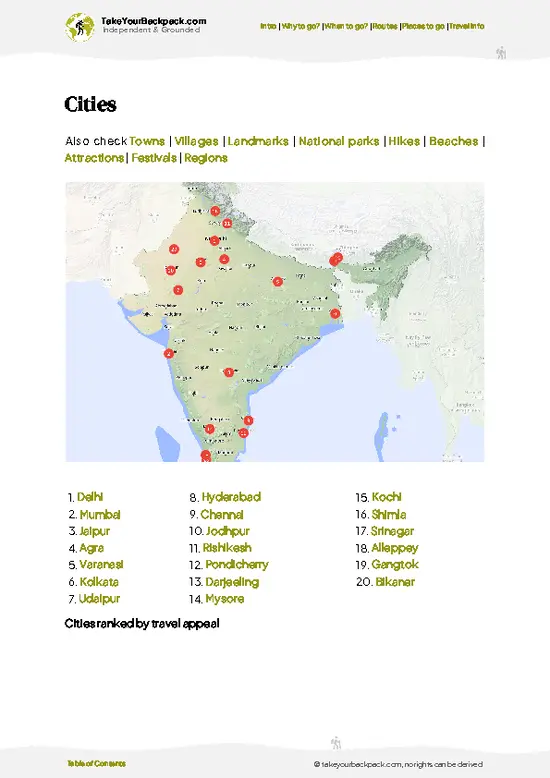
162 highlights, ranked by travel appeal
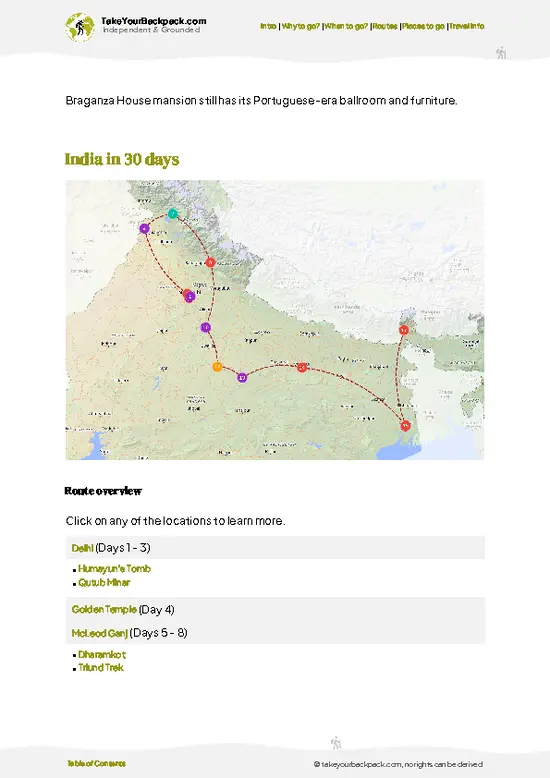
Optimized 14, 21 & 30-day travel routes
Cities, national parks, landmarks, beaches
How to get around
Offline-friendly for travel without Wi-Fi
👉 Click to see all 30+ guide features

📅 Plan smarter in minutes, not weeks
Month by month travel advice
Festivals & national holidays
Budget expectations

🗺️ Go to the right places, skip the overrated ones
Honest pros & cons of destinations
Top hikes, parks & viewpoints
Lesser-known places most travelers miss
Clear “worth it vs skip it” guidance

🛏️ Travel smoothly without rookie mistakes
Best areas to stay
Transport systems explained simply
Common scams & safety advice
SIM cards, money & practical tips

🌍 Understand the country, not just visit it
Culture & traditions
52 Essential phrases & customs
Festivals worth planning around
Traveler-friendly historical context
Insights that make places more meaningful

📱 Built for real travel conditions
Fully downloadable PDF
Works completely offline
Optimized for phone use
Useful in remote areas & buses
Everything in one place
Save weeks of stressful planning
Get instant access to your full guide. 30‑day money-back guarantee.
+ Add another guide for just US$7.80

By proceeding you agree to our terms.
Sent to your inbox immediately after payment • 100% Secure Checkout
Best Backpacking Travel Advisor 2025 tourism awardBest Backpacking
Travel Advisor
2025
What others say about Take Your Backpack Guides:
⭐⭐⭐⭐⭐
Fantastic, amazing amount of information!
⭐⭐⭐⭐⭐
My goodness this is amazing, it's what I've been looking for hats off too you!
⭐⭐⭐⭐⭐
I think this is absolutely BRILLIANT
⭐⭐⭐⭐
Very complete and informative. It's still missing places, but I gotta to commend you
⭐⭐⭐⭐⭐
This is truly amazing, thank you, can't wait to explore it with my kids!
⭐⭐⭐⭐⭐
Awesome resource, thank you!
⭐⭐⭐⭐⭐
This is amazing! Can't wait to explore the ones I haven't seen
⭐⭐⭐⭐
I love this! Well done, great idea.
⭐⭐⭐⭐⭐
Thanks for taking the time to make this gem!
⭐⭐⭐⭐⭐
This might be the best website I've ever seen.
⭐⭐⭐⭐⭐
Congratulations, and thank you so much for your work; it's incredibly valuable.
⭐⭐⭐⭐
In all seriousness I think you did a great job pointing out the important spots
⭐⭐⭐⭐⭐
10/10 very good
⭐⭐⭐⭐⭐
As someone who's only just starting to visit regularly this is awesome, thank you.
⭐⭐⭐⭐
Thank you very much! I'm going to visit my dad, it's going to be very useful!
⭐⭐⭐⭐⭐
This is really cool! We'll be travelling for the first time and this definitely come in handy.
⭐⭐⭐⭐⭐
You are now our minister of culture, congratulations 👨‍💼
⭐⭐⭐⭐⭐
Just wanted to tell you that this is a pearl! Going to follow your recommendations.
⭐⭐⭐⭐⭐
This is so cool. I'll definitely be using the resource for my travels soon.
⭐⭐⭐⭐⭐
This is very impressive! Good work.
⭐⭐⭐⭐⭐
This is an amazing and informative site. Very well done!

🛏️ Where to stay?Where staying makes the most sense

When you’re diving into the Dzükou Valley, consider staying in Kohima. This city is a vibrant hub for backpackers, offering a mix of local culture and social energy. You’ll find plenty of cafes where you can swap stories with fellow travelers.

Then there’s Jakhama, a quieter village that feels like a warm hug. It’s perfect for those seeking peace after a day of trekking. The locals are friendly, and you can often join in on community events.

Don’t overlook the small village of Viswema. It’s a gateway to stunning trails and has a cozy, welcoming vibe. You’ll feel like you’re part of the landscape, … read more 👉
When you’re diving into the Dzükou Valley, consider staying in Kohima. This city is a vibrant hub for backpackers, offering a mix of local culture and social energy. You’ll find plenty of cafes where you can swap stories with fellow travelers.

Then there’s Jakhama, a quieter village that feels like a warm hug. It’s perfect for those seeking peace after a day of trekking. The locals are friendly, and you can often join in on community events.

Don’t overlook the small village of Viswema. It’s a gateway to stunning trails and has a cozy, welcoming vibe. You’ll feel like you’re part of the landscape, not just passing through.

Each spot has its own charm, so choose based on whether you crave social buzz or serene solitude.

🚌 Getting aroundTransportation options and practical tips

In Dzükou Valley, the rhythm of travel dances between the structured and the spontaneous. Here, the air is thick with the scent of wildflowers, and the trails whisper stories of those who’ve wandered before. Schedules? They’re more like suggestions. You’ll find that the locals glide through their day with an easy grace, while you, the intrepid traveler, must embrace a bit of chaos. This isn’t a place for rigid itineraries; it’s about feeling the pulse of the valley and letting it guide you.


  • Shared Jeep: These are your lifeline to the valley. They run from Kohima to the base of Dzükou, typically starting around 6 AM and wrapping up by 4 PM. Expect to pay around ₹300-₹400. It’s a bumpy ride, but you’ll meet fellow adventurers along the way.


  • Local Bus: A budget-friendly option, buses leave
read more 👉
In Dzükou Valley, the rhythm of travel dances between the structured and the spontaneous. Here, the air is thick with the scent of wildflowers, and the trails whisper stories of those who’ve wandered before. Schedules? They’re more like suggestions. You’ll find that the locals glide through their day with an easy grace, while you, the intrepid traveler, must embrace a bit of chaos. This isn’t a place for rigid itineraries; it’s about feeling the pulse of the valley and letting it guide you.


  • Shared Jeep: These are your lifeline to the valley. They run from Kohima to the base of Dzükou, typically starting around 6 AM and wrapping up by 4 PM. Expect to pay around ₹300-₹400. It’s a bumpy ride, but you’ll meet fellow adventurers along the way.


  • Local Bus: A budget-friendly option, buses leave from Kohima and cost about ₹150. They’re less frequent, so catch one early—around 7 AM is your best bet. Comfort? Think basic, but you’ll save cash for that local meal later.


  • Trekking: If you’re feeling adventurous, hike from the base to Dzükou. It’s about a 3-4 hour trek, and while it’s free, you’ll need to pack snacks and water. The views are worth every step, and you’ll feel like you’ve earned your place in this stunning landscape.


  • Motorcycle Rental: For the free spirits, renting a bike can cost around ₹500 per day. It gives you the flexibility to explore at your own pace, but be ready for some rough patches on the road.


Master Tip: Always check with locals for the latest on transport schedules. They know the best times to travel and can help you avoid the crowds. Embrace the flow, and you’ll find your way through Dzükou like a local.

🍲 FoodLocal Cuisine & Drinks

In the Dzükou Valley, food is a celebration of local flavors. Dive into the Naga cuisine with dishes like smoked pork cooked with bamboo shoots, a smoky delight that dances on your palate. Don’t miss the king chili—it’s not just spicy; it’s a rite of passage.

For a true backpacker experience, hit up the local markets. The vibrant stalls overflow with fresh produce and homemade snacks. Grab a plate of pork with bamboo shoots from a street vendor, and wash it down with a cup of local rice beer—it’s a communal drink, perfect for sharing stories with fellow travelers.

Dining here is casual. Expect to eat with your hands; it’s not just acceptable, it’s encouraged. Embrace the shared meals and the laughter that fills the air. This isn’t just food; it’s a taste of the culture.

FAQTraveler FAQ

3 to 4 days are ideal to explore Dzükou Valley thoroughly. This allows time for trekking, camping, and enjoying the natural beauty without rushing. The trek from the base village to the valley is about 10 kilometers one way.
You get around Dzükou Valley primarily on foot, as there are no roads for vehicles inside the valley. Trekking is the only practical way to explore the area, with well-marked trails connecting key spots. Local guides can be hired for navigation and safety.
Dzükou Valley is known for its stunning natural beauty, rare flora including the Dzükou lily, and vibrant seasonal blooms. It is also famous for its cool climate and panoramic views, making it a popular trekking destination between Nagaland and Manipur.
⚠️ Things can change over time, so always validate details locally before you go.

Other Indian regions near Dzükou Valley

Explore more nearby:

  • Majuli—river island, satra monasteries, bamboo stilt houses| 166 km away
  • Meghalaya—living root bridges, limestone caves, monsoon forests| 237 km away
  • Chopta—alpine meadows, Himalayan views, temple routes| 1528 km away

💡 Not sure where to go next?
Create a personalized itinerary for India including Dzükou Valley and the places that fit your trip.

Generate my itinerary

👉 Discover all regions

Or checkout all India has to offer (think cities, towns, villages, national parks, hikes, beaches, festivals)
Country photo of India

We 💚 feedbackSumming up the experience

Dzükou Valley is a slice of paradise, with its rolling hills and vibrant flowers that feel like nature’s own art gallery. But here’s the catch: the trek to get there can be grueling, especially in the rain. Embrace the challenge, though; the payoff is a serene escape that feels like your own secret hideaway.

✈️ When did I visit India?
As part of my 1.5 year travel around the world trip, I visited India in December 2015.

✍️ Help improve this page!
The information on this page is based on my own backpacking experience in India, supplemented with up-to-date research and feedback from other travelers. Travel details can change, so if you notice anything outdated or incomplete, feel free to let me know.


🙋‍♂️ Give feedback

👋 Meet the founderWho’s Behind Take Your Backpack?

Johan, backpacker and founder of TakeYourBackpackHi, I’m Johan (Netherlands 🇳🇱), the creator of TakeYourBackpack. Over the past decade, I’ve backpacked through 80+ countries across six continents, gaining extensive experience with independent travel, long-term trips, and overland routes.

This site is built on a combination of firsthand travel experience and carefully curated insights from other backpackers. Many guides are based on places I’ve personally visited, while others bring together tips, observations, and practical advice shared by trusted travelers I’ve met along the way.

The goal is to provide realistic, experience-driven guidance — not generic itineraries — so you can explore destinations with better context, clearer expectations, and more confidence.

Get full India guide •
Instant download • 162 highlights • Full Offline guide