How Many Regions to Visit: Plan on
two or three regions per trip, and no more than four even on a long one. Overland journeys between regions take 10 to 24 hours, so each extra region costs one to two days of your holiday. Two regions in three weeks leave time to slow down, recover from the inevitable stomach upset and deal with delays. Anything beyond that tends to become a series of train platforms and hotel check-ins.
Choosing by Travel Style: First-timers should start with the
south or the west. Rail and bus services are easier to read, English is widely spoken, and hassle levels are lower than in the busiest northern cities. The north is the right choice if you want history and big monuments, but be prepared for crowds, touts and constant sales pressure. Skip it for your first week if …
read more 👉 How Many Regions to Visit: Plan on two or three regions per trip, and no more than four even on a long one. Overland journeys between regions take 10 to 24 hours, so each extra region costs one to two days of your holiday. Two regions in three weeks leave time to slow down, recover from the inevitable stomach upset and deal with delays. Anything beyond that tends to become a series of train platforms and hotel check-ins.
Choosing by Travel Style: First-timers should start with the south or the west. Rail and bus services are easier to read, English is widely spoken, and hassle levels are lower than in the busiest northern cities. The north is the right choice if you want history and big monuments, but be prepared for crowds, touts and constant sales pressure. Skip it for your first week if you are easily worn down.
Hikers and slow travelers should pick the Himalayan belt, where costs are low and days are quiet. The trade-off is access: roads close, landslides happen, and altitude sickness is a real risk above 3,000 meters. Build in rest days and climb slowly.
If you want fewer travelers and cultural depth, the east and northeast suit experienced travelers best. Transport is sparse, permits are required in some border areas (Inner Line Permits, usually arranged online or at the entry point for a small fee), and English is less common outside towns. Do not choose these regions if you have only ten days, because travel eats the schedule.
Beach-focused travelers should choose the west or southwest coast, but note that Goa in peak season is crowded and expensive, while the same coast in the monsoon is mostly shut.
What It Costs: Budget US$20 to 35 a day for hostels or simple guesthouses, local food and sleeper or second-class trains. A mid-range style with private rooms, air-conditioned trains and occasional taxis runs US$40 to 80 a day. Tourist circuits in Rajasthan, Goa and Kerala backwaters cost 20 to 40% more than rural areas.
Typical figures: dorm beds US$4 to 10, private rooms US$12 to 35, meals at local restaurants US$2 to 5, and long-distance trains from US$5 in sleeper class to US$40 or more in first class AC. Domestic flights run US$30 to 90 if booked ahead. Monument entry for foreigners is much higher than for locals, typically ₹600 to 1,100 (about US$7 to 13) at major sites such as the Taj Mahal, and smaller sites cost ₹40 to 600. Official guides cost ₹1,000 to 2,500 (US$12 to 30) per group, and a car with driver is roughly ₹3,000 to 4,500 (US$36 to 55) a day. Per region, expect to spend US$200 to 500 for a week depending on style.
Costs and Delays That Catch Travelers Out: Booking trains late is the first problem. Reserved berths on popular lines fill 60 to 120 days ahead, and last-minute options mean either expensive flights or a seat in an unreserved coach. Book early through IRCTC, or use the Tatkal quota (opens one day before departure) only as a fallback. Allow for delays of two to six hours, particularly in winter fog.
Taxi and rickshaw overcharging is another. Use prepaid taxi counters at stations and airports, or ride-hailing apps such as Ola and Uber where available, and agree on fares before you get in. Rickshaw drivers who offer free tours or say a site is closed are steering you to a commission shop. Ignore them and walk on.
Tours sold on the street are usually overpriced. Book through your accommodation or a licensed operator, and compare quotes. For monuments, buy tickets online where possible, since some sites offer a small discount and queues are shorter.
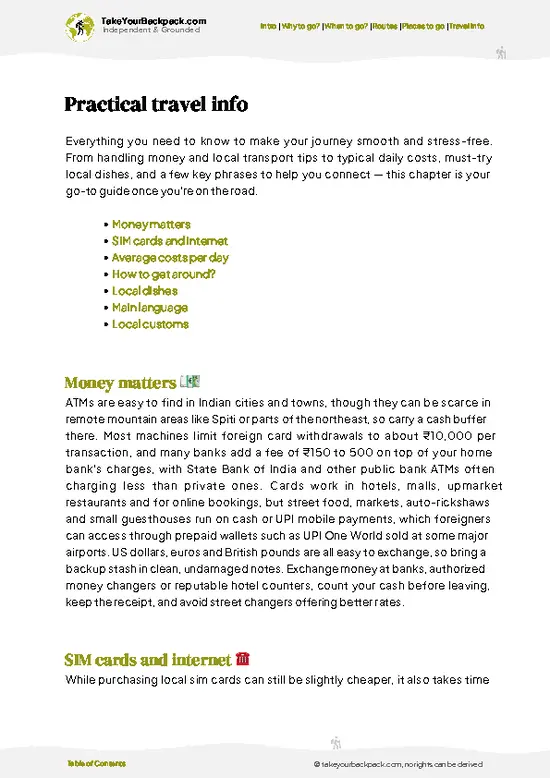
Do not change money on the street. Use ATMs in banks, expect a fee of ₹200 to 500 per withdrawal, and carry a card with no foreign transaction charges. Keep small notes for tipping and fares, because drivers often claim they have no change.
Safety and Cultural Considerations: India is manageable for independent travelers, but stomach trouble is the most likely problem. Drink bottled or filtered water, avoid ice in cheap places, and eat at busy stalls where food is cooked fresh. Bring oral rehydration salts.
Women travelers should expect staring and sometimes unwanted comments, especially in the north. Dress modestly with shoulders and knees covered, avoid walking alone late at night, and choose accommodation with good reviews from solo women. Use prepaid taxis after dark and share your location with someone.
Respect religious sites: remove shoes, cover your head where required, and ask before photographing people or rituals. Use your right hand for eating and passing money. Public displays of affection draw disapproval. In the mountains, check road and weather reports before leaving, because landslides and closures are routine from June to September, and avoid driving at night on hill roads.
Air quality in northern cities between October and January is often poor, with Delhi frequently at hazardous levels in November. If you have respiratory problems, plan that part of the trip for other months and carry an N95 mask. Finally, take out travel insurance that covers medical evacuation, especially for the mountains.

 Best Backpacking
 Hi, I’m Johan (Netherlands 🇳🇱), the creator of TakeYourBackpack. Over the past 3 decades, I’ve backpacked through 90+ countries across six continents, gaining extensive experience with independent travel, long-term trips, and overland routes.