×

India🇮🇳 | national parksJim Corbett National Parkriver valleys, Sal forest, wild elephants | things to do and best time to go

Explore Great Himalayan National Park Conservation AreaExplore Kanha National Park

Backpacking in Jim Corbett
🏆 Top picknational park ranked #1
By Johan Kruseman 🇳🇱 | Updated July 9, 2026

Most people arrive at Jim Corbett National Park expecting a tiger theme park with guaranteed sightings; it isn’t that, and treating it like one is the fastest way to be disappointed. Corbett sits in Uttarakhand, in the Himalayan foothills near Ramnagar, and it’s more about layered forest, river valleys, and the tension of maybe seeing big wildlife than constant action. For backpackers, the pros are real: dramatic sal forest and grasslands, elephants, rich birdlife, short walks around the buffer zones, decent road and rail access from Delhi, and still-manageable entrance and safari fees if you plan ahead and share jeeps. The cons: you can’t just wander off on long hikes inside the core zones, safaris are tightly regulated, popular gates get crowded in season, and the cheapest stays are in Ramnagar or basic forest rest houses that book out early. Compared with nearby Rajaji or even Dudhwa, Corbett feels more commercial but also more organized, with better odds of seeing marquee wildlife if you accept the rules and the structure.

Discover everything you want to know in the 📖 India Travel Guide.


Get your India guide
162 ranked highlights, routes & tips, works offline (498 pages)
Loading the map 🌍
CLICK TO FILTER
cities
towns
villages
landmarks
national parks
hikes
beaches
attractions
festivals
regions
SHOW COUNTRY’S BESTSHOW ALL

✨ Why go?
Ranked #1 national park in India
Reasons people choose to explore here

Backpackers flock to Jim Corbett National Park for its blend of independent exploration and budget-friendly options. The park offers a range of camping sites and hostels nearby, making it easy to keep costs down while still enjoying the wild. You can pitch a tent under the stars or find a cozy dorm to recharge after a day of adventure.

The trail variety is another draw. Whether you’re into jungle treks or river walks, there’s something for everyone. The well-marked paths allow for self-guided exploration, which is a huge plus for those who prefer to set their own pace. You can wander through the diverse landscapes, spotting wildlife without the constraints of a tour group.

However, be mindful of the entry fees and vehicle costs for safaris, which can add up quickly. If you’re on a tight … read more 👉
Backpackers flock to Jim Corbett National Park for its blend of independent exploration and budget-friendly options. The park offers a range of camping sites and hostels nearby, making it easy to keep costs down while still enjoying the wild. You can pitch a tent under the stars or find a cozy dorm to recharge after a day of adventure.

The trail variety is another draw. Whether you’re into jungle treks or river walks, there’s something for everyone. The well-marked paths allow for self-guided exploration, which is a huge plus for those who prefer to set their own pace. You can wander through the diverse landscapes, spotting wildlife without the constraints of a tour group.

However, be mindful of the entry fees and vehicle costs for safaris, which can add up quickly. If you’re on a tight budget, stick to the trails and enjoy the park’s natural beauty without the extra expenses. This way, you preserve your energy and funds for the moments that truly matter—like a close encounter with a majestic tiger or a quiet sunrise over the hills.
Want to include Jim Corbett National Park in your India route?
Create a personalized India itinerary that includes Jim Corbett National Park and the places that fit your trip — based on your travel style, budget, and available time. Get your route in seconds.

Generate my trip

💡 HighlightsDon't-miss highlights and experiences

  • Dhikala Zone — The classic Corbett experience: open grasslands rimmed by sal forest, the Ramganga meandering through, and an in-park forest lodge so you sleep inside tiger country. Highest chances of big-cat and herds sightings, plus easy daylight nature walks and unforgettable sunrise/sunset light for photos. (Personal favorite.)
  • Bijrani Range — Dense sal and mixed forest with fewer tourists than Dhikala but excellent tiger and herbivore activity. Jeep safaris here often deliver close encounters and dramatic forest scenes — great if you want wildlife without the crowd.
  • Sitanadi Reserve — A quieter buffer forest adjoining Corbett where walking trails are possible and birdlife is rich. It’s a top pick for people who want to stroll under canopy, spot smaller mammals, and listen to dawn chorus
read more 👉
  • Dhikala Zone — The classic Corbett experience: open grasslands rimmed by sal forest, the Ramganga meandering through, and an in-park forest lodge so you sleep inside tiger country. Highest chances of big-cat and herds sightings, plus easy daylight nature walks and unforgettable sunrise/sunset light for photos. (Personal favorite.)
  • Bijrani Range — Dense sal and mixed forest with fewer tourists than Dhikala but excellent tiger and herbivore activity. Jeep safaris here often deliver close encounters and dramatic forest scenes — great if you want wildlife without the crowd.
  • Sitanadi Reserve — A quieter buffer forest adjoining Corbett where walking trails are possible and birdlife is rich. It’s a top pick for people who want to stroll under canopy, spot smaller mammals, and listen to dawn chorus away from the jeep noise.
  • Sonanadi Range — Thick riverine forests around the Sonanadi River that attract tigers, elephants and lots of waterbirds. The river edges, oxbow lakes and shaded trails make it one of the more scenic, wildlife-dense corners of the park.
  • Ramganga River and Grasslands — The riverine habitat is wildlife-magnet territory: crocodiles, otters, waterbirds and animals coming to drink at dawn/dusk. The broad floodplain and tall grass create classic Corbett vistas and great photo opportunities.
  • Garjia Devi Temple & Kosi River — A striking rocky temple set in the Kosi River near the park’s edge; the rapids, pools and wooded banks make this a peaceful, photogenic stop that mixes local culture with scenery.
  • Jim Corbett Museum (Kaladhungi) — If you’re into history, this was Corbett’s home-turned-museum. It’s small but atmospheric: old photos, memorabilia and a sense of the man who helped put the place on the map — nice bookend to the wild side of the park.
Spotted a mistake or missing something? Contact us.

Things to do around Jim Corbett National Park

Ratings based on Tripadvisor reviews. When you book through this link, you support our work at no extra cost to you.

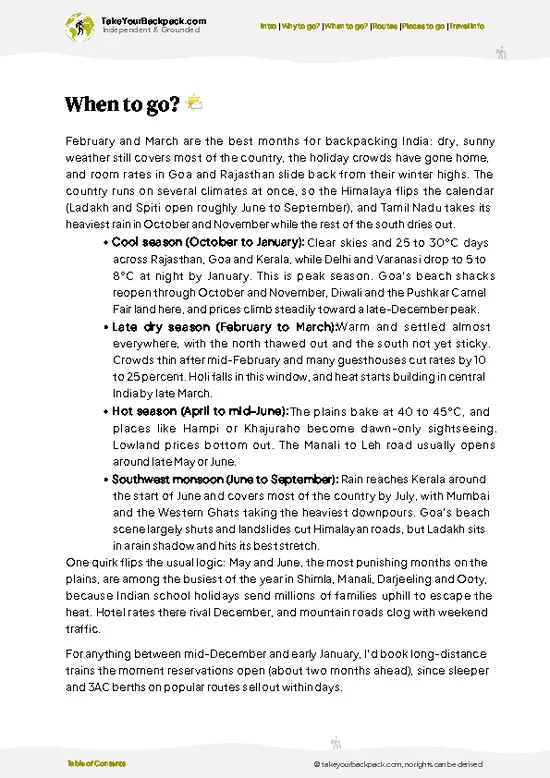
🌤️ When to go?Seasonal considerations and timing


  • Weather: The park is best visited between November and June. Monsoon season (July to September) brings heavy rains, making trails slippery and increasing the risk of leeches and flooding. Avoid this period unless you’re prepared for wet conditions and limited wildlife sightings.

  • Temperature: Winters (November to February) are cool, ranging from 5°C to 20°C (41°F to 68°F), perfect for comfortable trekking and spotting animals near waterholes. Summers (March to June) can get hot, hitting 35°C to 40°C (95°F to 104°F), which can drain your energy quickly during midday hikes.

  • Daylight Hours: Peak daylight lasts about 10-11 hours in winter and up to 13 hours in summer. Early morning and late afternoon safaris are best for wildlife activity and cooler temperatures, so plan your days accordingly.
read more 👉

  • Weather: The park is best visited between November and June. Monsoon season (July to September) brings heavy rains, making trails slippery and increasing the risk of leeches and flooding. Avoid this period unless you’re prepared for wet conditions and limited wildlife sightings.

  • Temperature: Winters (November to February) are cool, ranging from 5°C to 20°C (41°F to 68°F), perfect for comfortable trekking and spotting animals near waterholes. Summers (March to June) can get hot, hitting 35°C to 40°C (95°F to 104°F), which can drain your energy quickly during midday hikes.

  • Daylight Hours: Peak daylight lasts about 10-11 hours in winter and up to 13 hours in summer. Early morning and late afternoon safaris are best for wildlife activity and cooler temperatures, so plan your days accordingly.

  • Crowds: The park sees a surge in visitors during winter holidays and weekends, especially December and January. Booking safaris early is crucial to avoid disappointment and inflated prices.

  • Seasonal Activities: Winter months offer better chances to spot tigers and other wildlife as animals gather near water sources. Summer is good for birdwatching but expect fewer mammals out in the heat.

  • Price Fluctuations: Safari rates and accommodation prices peak in winter and drop significantly during the off-season (monsoon). Budget travelers can save by visiting in shoulder months like October or early March, balancing weather and cost.


Pro-tip: Aim for late November or early March to dodge crowds, enjoy mild weather, and get the best bang for your buck without sacrificing wildlife sightings.


source: climatestotravel.comJANJanuary: excellent for travelingFEBFebruary: excellent for travelingMARMarch: highly recommended for travelingAPRApril: highly recommended for travelingMAYMay: good for travelingJUNJune: good for travelingJULJuly: below average for travelingAUGAugust: below average for travelingSEPSeptember: fair for travelingOCTOctober: highly recommended for travelingNOVNovember: excellent for travelingDECDecember: excellent for traveling
when-to-go

✈️ The backpacker research shortcutIndia Travel Guide

An offline-friendly backpacking guide with optimized travel routes, ranked highlights, transport advice, and the best areas to stay.
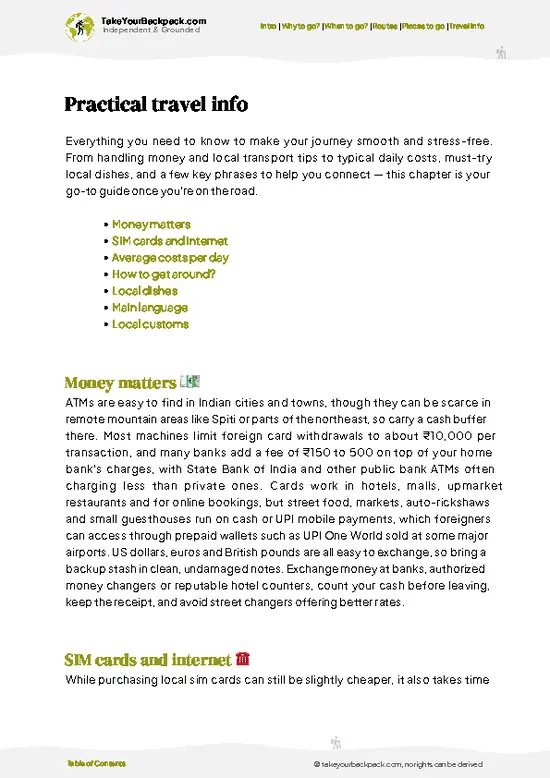
example page 0 from our offline Travel Guide for India
example page 1 from our offline Travel Guide for India
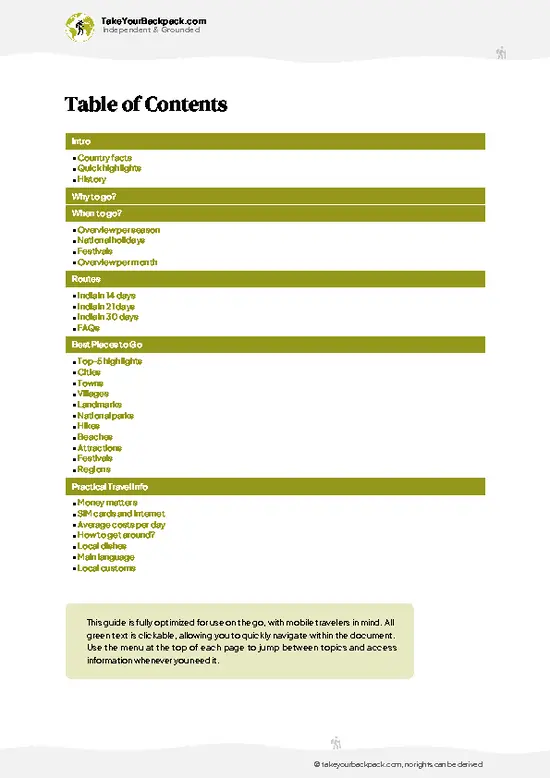
example page 2 from our offline Travel Guide for India
example page 3 from our offline Travel Guide for India
example page 4 from our offline Travel Guide for India
example page 5 from our offline Travel Guide for India
example page 6 from our offline Travel Guide for India
example page 7 from our offline Travel Guide for India
The digital guide (498 pages) contains:
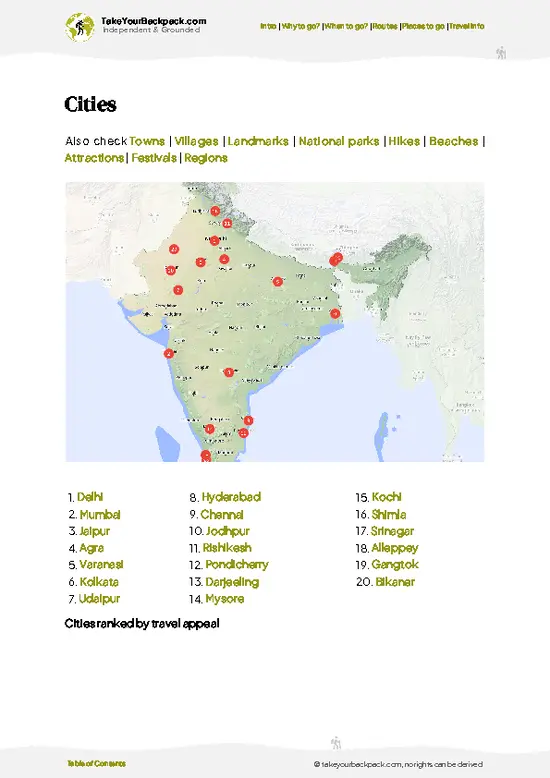
162 highlights, ranked by travel appeal
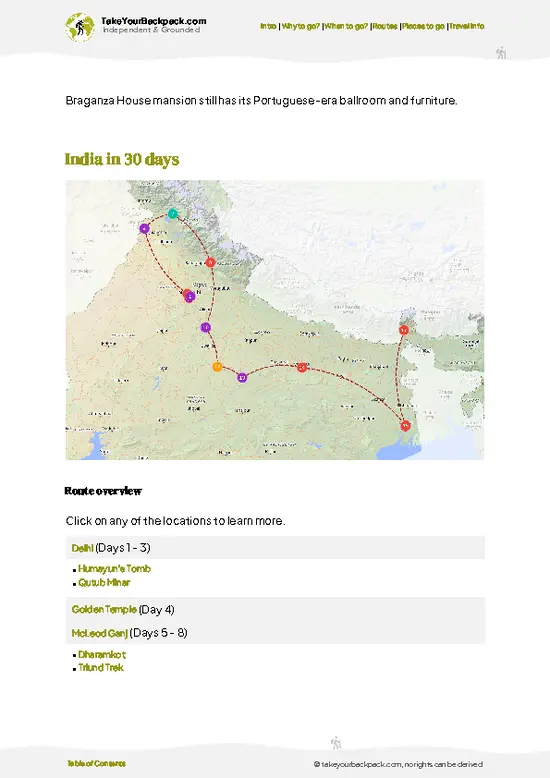
Optimized 14, 21 & 30-day travel routes
Cities, national parks, landmarks, beaches
How to get around
Offline-friendly for travel without Wi-Fi
👉 Click to see all 30+ guide features

📅 Plan smarter in minutes, not weeks
Month by month travel advice
Festivals & national holidays
Budget expectations

🗺️ Go to the right places, skip the overrated ones
Honest pros & cons of destinations
Top hikes, parks & viewpoints
Lesser-known places most travelers miss
Clear “worth it vs skip it” guidance

🛏️ Travel smoothly without rookie mistakes
Best areas to stay
Transport systems explained simply
Common scams & safety advice
SIM cards, money & practical tips

🌍 Understand the country, not just visit it
Culture & traditions
52 Essential phrases & customs
Festivals worth planning around
Traveler-friendly historical context
Insights that make places more meaningful

📱 Built for real travel conditions
Fully downloadable PDF
Works completely offline
Optimized for phone use
Useful in remote areas & buses
Everything in one place
Save weeks of stressful planning
Get instant access to your full guide. 30‑day money-back guarantee.


By proceeding you agree to our terms.
Sent to your inbox immediately after payment • 100% Secure Checkout
Best Backpacking Travel Advisor 2025 tourism awardBest Backpacking
Travel Advisor
2025
What others say about Take Your Backpack Guides:
⭐⭐⭐⭐⭐
Fantastic, amazing amount of information!
⭐⭐⭐⭐⭐
My goodness this is amazing, it's what I've been looking for hats off too you!
⭐⭐⭐⭐⭐
I think this is absolutely BRILLIANT
⭐⭐⭐⭐
Very complete and informative. It's still missing places, but I gotta to commend you
⭐⭐⭐⭐⭐
This is truly amazing, thank you, can't wait to explore it with my kids!
⭐⭐⭐⭐⭐
Awesome resource, thank you!
⭐⭐⭐⭐⭐
This is amazing! Can't wait to explore the ones I haven't seen
⭐⭐⭐⭐
I love this! Well done, great idea.
⭐⭐⭐⭐⭐
Thanks for taking the time to make this gem!
⭐⭐⭐⭐⭐
This might be the best website I've ever seen.
⭐⭐⭐⭐⭐
Congratulations, and thank you so much for your work; it's incredibly valuable.
⭐⭐⭐⭐
In all seriousness I think you did a great job pointing out the important spots
⭐⭐⭐⭐⭐
10/10 very good
⭐⭐⭐⭐⭐
As someone who's only just starting to visit regularly this is awesome, thank you.
⭐⭐⭐⭐
Thank you very much! I'm going to visit my dad, it's going to be very useful!
⭐⭐⭐⭐⭐
This is really cool! We'll be travelling for the first time and this definitely come in handy.
⭐⭐⭐⭐⭐
You are now our minister of culture, congratulations 👨‍💼
⭐⭐⭐⭐⭐
Just wanted to tell you that this is a pearl! Going to follow your recommendations.
⭐⭐⭐⭐⭐
This is so cool. I'll definitely be using the resource for my travels soon.
⭐⭐⭐⭐⭐
This is very impressive! Good work.
⭐⭐⭐⭐⭐
This is an amazing and informative site. Very well done!

🛏️ Where to stay?How to pick the right area

Jim Corbett National Park offers a range of accommodation options that cater to backpackers, but you need to navigate wisely to avoid pitfalls.

Inside the park, options are limited but worth considering. The Forest Rest Houses provide a rustic experience, allowing you to immerse yourself in nature. However, these can book up quickly, so plan ahead. The park also has a few eco-lodges that focus on sustainability, but they can be pricier than expected.

Just outside the park, the town of Ramnagar is your best bet. It’s a hub for backpackers, with budget guesthouses and hostels that won’t break … read more 👉
Jim Corbett National Park offers a range of accommodation options that cater to backpackers, but you need to navigate wisely to avoid pitfalls.

Inside the park, options are limited but worth considering. The Forest Rest Houses provide a rustic experience, allowing you to immerse yourself in nature. However, these can book up quickly, so plan ahead. The park also has a few eco-lodges that focus on sustainability, but they can be pricier than expected.

Just outside the park, the town of Ramnagar is your best bet. It’s a hub for backpackers, with budget guesthouses and hostels that won’t break the bank. Look for places like the Corbett Jungle Inn or the Riverside Resort, which offer decent amenities and easy access to the park entrance.

Be cautious of hidden costs. Many accommodations charge extra for meals or activities, so clarify what’s included before you commit. Also, consider transportation costs to and from the park; they can add up if you’re not careful.

By choosing wisely, you can preserve your energy and budget for the real adventure—exploring the wild beauty of Jim Corbett.

👛 Costs (as of 5 December 2024)What things cost and how to budget

Visiting Jim Corbett National Park requires some planning, especially when it comes to costs.

Entry fees vary depending on the zone you choose. For the most popular Dhikala zone, expect to pay around €25 to €30 (approximately $30 to $35) for Indian citizens. For foreign nationals, the fee can jump to about €50 to €60 (around $60 to $70).

If you want to go on a jeep safari, budget an additional €30 to €50 (about $35 to $60) per vehicle. This cost can be shared if you’re traveling with others. Booking in advance is essential, especially during peak seasons, as spots fill up quickly.

Accommodation options range widely. Basic lodges start at around €20 to €30 ($25 to $35) per night. Mid-range hotels can cost between €50 and €100 ($60 to $120), while luxury resorts can exceed €150 ($180) per … read more 👉
Visiting Jim Corbett National Park requires some planning, especially when it comes to costs.

Entry fees vary depending on the zone you choose. For the most popular Dhikala zone, expect to pay around €25 to €30 (approximately $30 to $35) for Indian citizens. For foreign nationals, the fee can jump to about €50 to €60 (around $60 to $70).

If you want to go on a jeep safari, budget an additional €30 to €50 (about $35 to $60) per vehicle. This cost can be shared if you’re traveling with others. Booking in advance is essential, especially during peak seasons, as spots fill up quickly.

Accommodation options range widely. Basic lodges start at around €20 to €30 ($25 to $35) per night. Mid-range hotels can cost between €50 and €100 ($60 to $120), while luxury resorts can exceed €150 ($180) per night.

Food is generally affordable. Expect to spend about €5 to €10 ($6 to $12) per meal at local eateries. However, dining at upscale resorts will cost significantly more.

Keep in mind that additional costs can arise from park regulations, such as mandatory guides for certain zones. This can add another €10 to €20 ($12 to $25) to your budget.

Plan for these expenses to avoid surprises. Being aware of the costs will help you focus on enjoying the park’s wildlife and natural beauty without financial stress.


source: corbettnationalpark.in
⚠️ Prices can change and everyone travels differently, so take this as a rough guide. Hope it helps you plan your adventure!

🥾 TrailsBest hikes in Jim Corbett national park

Jim Corbett National Park is a gem for those who crave the thrill of nature. The park offers a mix of lush forests, rolling hills, and riverine belts, making it a feast for the eyes. You might catch a glimpse of the majestic Bengal tiger or spot some playful elephants in their natural habitat. The terrain is diverse, ranging from gentle slopes to more rugged areas, so there’s something for everyone.

While there aren’t extensive marked hiking trails like you might find in some other parks, you can explore designated zones that allow for guided treks. One of the popular routes is Dhikala Zone, … read more 👉
Jim Corbett National Park is a gem for those who crave the thrill of nature. The park offers a mix of lush forests, rolling hills, and riverine belts, making it a feast for the eyes. You might catch a glimpse of the majestic Bengal tiger or spot some playful elephants in their natural habitat. The terrain is diverse, ranging from gentle slopes to more rugged areas, so there’s something for everyone.

While there aren’t extensive marked hiking trails like you might find in some other parks, you can explore designated zones that allow for guided treks. One of the popular routes is Dhikala Zone, which gives you a real taste of the wilderness.
  • Length: 20 km
  • Estimated Duration: 6-7 hours
  • Difficulty Level: Moderate
  • Key Features: Scenic views of the Ramganga River, diverse flora and fauna, and potential wildlife sightings.
  • Terrain: Mix of flat and hilly areas, with some rocky patches.

Getting to Jim Corbett is pretty straightforward. You can hop on a bus or train from major cities like Delhi or Nainital, and then take a local taxi to the park entrance. Just keep in mind that it can get crowded, especially during weekends and holidays, so try to plan your visit during the week if you want a more tranquil experience. The entrance fee is reasonable, but it varies depending on the season, so check ahead. Just remember to bring your camera—this place is Instagram gold!
⚠️ Hiking info can sometimes be outdated or inaccurate. Before you hit the trail, check the latest conditions with locals. If you do spot anything that's off, I'd love to hear from you, so I can update it for fellow travelers.

🛡️ SafetyStaying Safe: What Travelers Should Know

Jim Corbett National Park is generally a well-managed destination for backpackers, but there are a few realities to keep in mind. The weather can shift unexpectedly, especially during monsoon season. Be prepared for sudden rain; a waterproof jacket is essential.

The terrain varies, with some trails being steep and rocky. Good footwear is crucial for maintaining grip and stability. Navigation can be straightforward, but always carry a map or download offline maps to avoid getting turned around.

Wildlife encounters are a highlight, but respect is key. If you spot a tiger or elephant, maintain a safe distance and stay calm. Don’t approach or provoke animals; your safety and theirs depend on it.

First-timers often underestimate the importance of hydration and snacks. Carry enough water and … read more 👉
Jim Corbett National Park is generally a well-managed destination for backpackers, but there are a few realities to keep in mind. The weather can shift unexpectedly, especially during monsoon season. Be prepared for sudden rain; a waterproof jacket is essential.

The terrain varies, with some trails being steep and rocky. Good footwear is crucial for maintaining grip and stability. Navigation can be straightforward, but always carry a map or download offline maps to avoid getting turned around.

Wildlife encounters are a highlight, but respect is key. If you spot a tiger or elephant, maintain a safe distance and stay calm. Don’t approach or provoke animals; your safety and theirs depend on it.

First-timers often underestimate the importance of hydration and snacks. Carry enough water and energy bars to keep your energy up. Lastly, be mindful of your pace; take breaks to enjoy the surroundings and avoid exhaustion. This way, you’ll preserve your energy for the moments that truly matter.

Other Indian national parks near Jim Corbett

Explore more nearby:


💡 Not sure where to go next?
Create a personalized itinerary for India including Jim Corbett and the places that fit your trip.

Generate my itinerary

👉 Discover all national parks

Or checkout all India has to offer (think cities, towns, villages, national parks, hikes, beaches, festivals)
Country photo of India

We 💚 feedbackParting advice and final tips

Jim Corbett National Park is a wildlife lover’s dream. The thrill of spotting a tiger in its natural habitat is unmatched. But be prepared: the park can get crowded, especially during peak season. This can dilute the experience, making it feel more like a safari than a true wilderness adventure. Plan your visit wisely, and you’ll preserve your energy and budget for those heart-pounding moments that make it all worthwhile.

✈️ When did I visit India?
As part of my 1.5 year travel around the world trip, I visited India in December 2015.

✍️ Help improve this page!
The information on this page is based on my own backpacking experience in India, supplemented with up-to-date research and feedback from other travelers. Travel details can change, so if you notice anything outdated or incomplete, feel free to let me know.


🙋‍♂️ Give feedback

👋 Meet the founderWho’s Behind Take Your Backpack?

Johan, backpacker and founder of TakeYourBackpackHi, I’m Johan (Netherlands 🇳🇱), the creator of TakeYourBackpack. Over the past decade, I’ve backpacked through 80+ countries across six continents, gaining extensive experience with independent travel, long-term trips, and overland routes.

This site is built on a combination of firsthand travel experience and carefully curated insights from other backpackers. Many guides are based on places I’ve personally visited, while others bring together tips, observations, and practical advice shared by trusted travelers I’ve met along the way.

The goal is to provide realistic, experience-driven guidance — not generic itineraries — so you can explore destinations with better context, clearer expectations, and more confidence.

Get full India guide •
Instant download • 162 highlights • Full Offline guide