×

India🇮🇳 | festivalsKumbh MelaMass pilgrimage, river confluence, sadhus | things to do and best time to go

Explore HoliExplore Navratri

Backpacking in Kumbh Mela
🏆 Top pickfestival ranked #3
By Johan Kruseman 🇳🇱 | Updated September 4, 2026

Most people realize too late that Kumbh Mela is basically a one-stop crash course in India: language, food, faith, chaos management, all compressed into a few sleepless days. It runs in rotation between four cities in northern and central India—Prayagraj (Allahabad), Haridwar, Nashik, and Ujjain—along the Ganges and its sister rivers. As a backpacker destination, it’s not a “festival” in the EDM sense; it’s a colossal Hindu pilgrimage where the soundtrack is temple bells, devotional chants, loudspeakers blaring bhajans, and the constant shuffle of millions of feet on dust and sand. The crowd skews Indian families, sadhus, and rural pilgrims, with a thin sprinkling of wide-eyed foreigners. The vibe is intense, raw, and humbling rather than chill. It runs for weeks, with peak “bathing days” feeling like a moving city. Worth it if you crave immersion and don’t mind discomfort; skip it if you need personal space to stay sane.

Discover everything you want to know in the 📖 India Travel Guide.


Get your India guide
162 ranked highlights, routes & tips, works offline (498 pages)
Loading the map 🌍
CLICK TO FILTER
cities
towns
villages
landmarks
national parks
hikes
beaches
attractions
festivals
regions
SHOW COUNTRY’S BESTSHOW ALL

✨ Why go?
Ranked #3 festival in India
What sets this place apart

Backpackers flock to Kumbh Mela for a reason: it’s a whirlwind of social energy and temporary community that’s hard to replicate. This festival isn’t just an event; it’s a cultural immersion that pulls you into the heart of India’s spiritual tapestry. Picture this: millions of pilgrims, sadhus, and curious travelers converging at the banks of sacred rivers, all sharing stories, laughter, and a sense of purpose.

Planning your route around Kumbh Mela means you’re not just hitting a destination; you’re diving into a living experience. The festival’s affordability compared to other global events makes it a smart choice for budget-conscious adventurers. You’ll find that the cost of food, lodging, and transportation is often lower than expected, allowing you to stretch your budget further for … read more 👉
Backpackers flock to Kumbh Mela for a reason: it’s a whirlwind of social energy and temporary community that’s hard to replicate. This festival isn’t just an event; it’s a cultural immersion that pulls you into the heart of India’s spiritual tapestry. Picture this: millions of pilgrims, sadhus, and curious travelers converging at the banks of sacred rivers, all sharing stories, laughter, and a sense of purpose.

Planning your route around Kumbh Mela means you’re not just hitting a destination; you’re diving into a living experience. The festival’s affordability compared to other global events makes it a smart choice for budget-conscious adventurers. You’ll find that the cost of food, lodging, and transportation is often lower than expected, allowing you to stretch your budget further for those memorable moments.

Incorporating Kumbh Mela into your travel plans adds a layer of excitement and authenticity. It’s a chance to witness rituals that have been performed for centuries while connecting with fellow travelers and locals alike. This festival is not just a stop; it’s a pivotal chapter in your journey, fueling your spirit for the adventures that lie ahead.
Want to include Kumbh Mela in your India route?
Create a personalized India itinerary that includes Kumbh Mela and the places that fit your trip — based on your travel style, budget, and available time. Get your route in seconds.

Generate my trip

💡 HighlightsMust-see experiences and standout moments

  • Shahi Snan — The Mass Holy Bath: The defining spectacle — thousands (often millions) of people timing their plunge into the river together on auspicious days. It’s less about performance and more about raw collective faith and scale: riverbanks packed, chants rising, water full of people — a sight you won’t forget.
  • Sadhus, Akharas and Their Processions: Renunciates in ash and saffron, wandering camps (akharas) and the dramatic processions — including the naked (Naga) sadhus — make Kumbh instantly recognizable. They bring centuries-old traditions, charismatic personalities and intense ritual energy; this is my personal favorite because their presence gives the whole event its spine (watch and photograph respectfully).
  • Spiritual Discourses, Aartis and Chanting: Daily pravachans (talks),
read more 👉
  • Shahi Snan — The Mass Holy Bath: The defining spectacle — thousands (often millions) of people timing their plunge into the river together on auspicious days. It’s less about performance and more about raw collective faith and scale: riverbanks packed, chants rising, water full of people — a sight you won’t forget.
  • Sadhus, Akharas and Their Processions: Renunciates in ash and saffron, wandering camps (akharas) and the dramatic processions — including the naked (Naga) sadhus — make Kumbh instantly recognizable. They bring centuries-old traditions, charismatic personalities and intense ritual energy; this is my personal favorite because their presence gives the whole event its spine (watch and photograph respectfully).
  • Spiritual Discourses, Aartis and Chanting: Daily pravachans (talks), communal bhajans and riverside aartis turn the banks into an ongoing spiritual festival of sound. The mixture of loud, intimate and meditative moments — pilgrims listening to gurus, groups chanting, boats lit for aarti — creates a powerful atmosphere you can feel physically.
  • The Temporary City: Camps, Bazaars and Food Stalls: Kumbh grows a whole city of tents, temporary streets and markets out of nothing — budget guesthouses, community kitchens (langars), and endless stalls selling local food and religious trinkets. For a budget traveler it’s great: cheap eats, people-watching, and a real sense of improvisational urban life.
  • Cultural Mosaic and Folk Traditions: People come from across India, bringing regional costumes, folk music, village rituals and local cuisines, so the festival becomes a living map of India’s cultural variety. Between the pilgrim rituals, street theatre and impromptu performances you’ll see traditions you’d never encounter in one place otherwise.
Spotted a mistake or missing something? Contact us.

Things to do near Kumbh Mela

Ratings based on Tripadvisor reviews. When you book through this link, you support our work at no extra cost to you.

🌤️ When to go?When is the celebration of Kumbh Mela?


  • Topic: Weather and Temperature – Aim for January to March when northern India cools down to a manageable 10-25°C (50-77°F). Avoid the scorching summer months of April to June, where temperatures can soar above 40°C (104°F), turning your pilgrimage into a sweat-drenched slog.

  • Topic: Daylight Hours – The festival’s main bathing days align with full moons and specific astrological timings, mostly during daylight. January to March offers roughly 10-12 hours of daylight, enough to explore without rushing but not so long that fatigue sets in.

  • Topic: Crowds – Kumbh Mela is a magnet for millions, but the peak crowd crush happens on the most auspicious bathing days. Arrive early in the festival cycle to dodge the worst of the human tide and secure better accommodation and transport options.

  • Topic:
read more 👉

  • Topic: Weather and Temperature – Aim for January to March when northern India cools down to a manageable 10-25°C (50-77°F). Avoid the scorching summer months of April to June, where temperatures can soar above 40°C (104°F), turning your pilgrimage into a sweat-drenched slog.

  • Topic: Daylight Hours – The festival’s main bathing days align with full moons and specific astrological timings, mostly during daylight. January to March offers roughly 10-12 hours of daylight, enough to explore without rushing but not so long that fatigue sets in.

  • Topic: Crowds – Kumbh Mela is a magnet for millions, but the peak crowd crush happens on the most auspicious bathing days. Arrive early in the festival cycle to dodge the worst of the human tide and secure better accommodation and transport options.

  • Topic: Seasonal Activities – The cooler months bring vibrant spiritual gatherings, religious debates, and cultural performances. These enrich the experience beyond the ritual baths, making your visit more than just a dip in the river.

  • Topic: Price Fluctuations – Accommodation and transport prices spike during peak bathing days. Booking early or arriving before the festival’s crescendo can save you a significant chunk of your budget, preserving funds for local food and souvenirs.


Pro-tip: Time your visit to catch the festival’s opening days—cooler weather, manageable crowds, and lower prices combine to keep your energy high and your wallet intact for the real adventure.


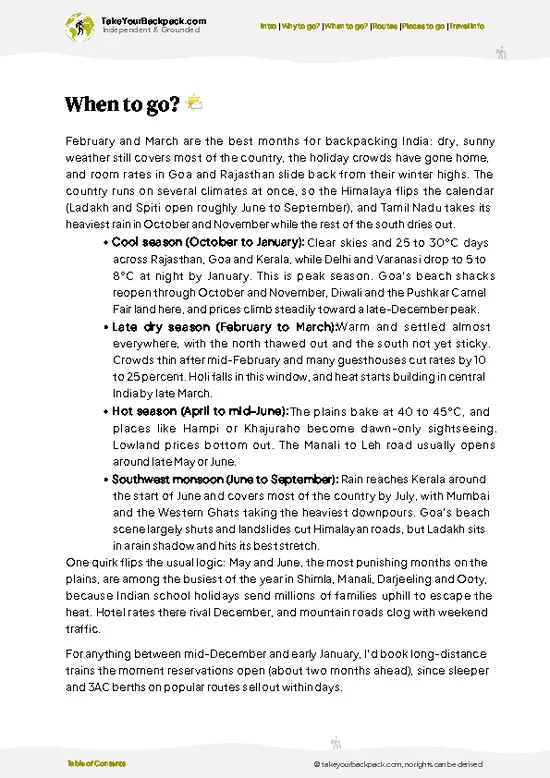
source: climatestotravel.comJANJanuary: highly recommended for travelingFEBFebruary: highly recommended for travelingMARMarch: highly recommended for travelingAPRApril: highly recommended for travelingMAYMay: not recommended for travelingJUNJune: not recommended for travelingJULJuly: not recommended for travelingAUGAugust: not recommended for travelingSEPSeptember: not recommended for travelingOCTOctober: highly recommended for travelingNOVNovember: highly recommended for travelingDECDecember: highly recommended for traveling

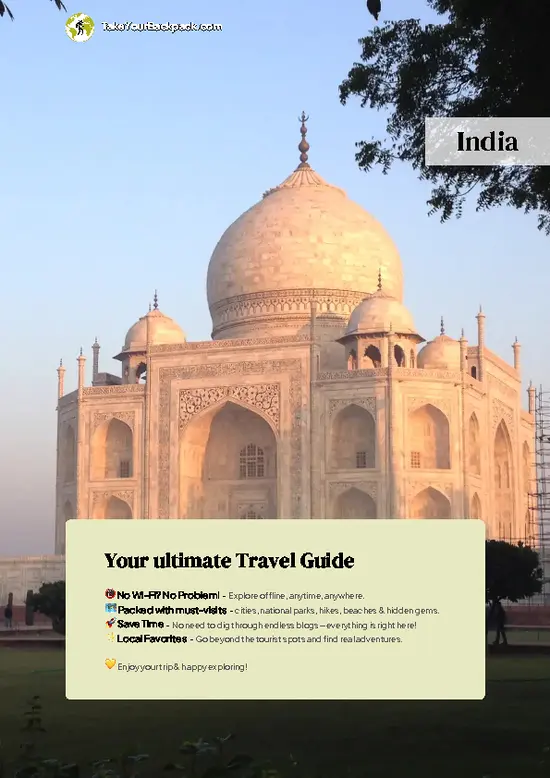
✈️ The backpacker research shortcutIndia Travel Guide

An offline-friendly backpacking guide with optimized travel routes, ranked highlights, transport advice, and the best areas to stay.
example page 0 from our offline Travel Guide for India
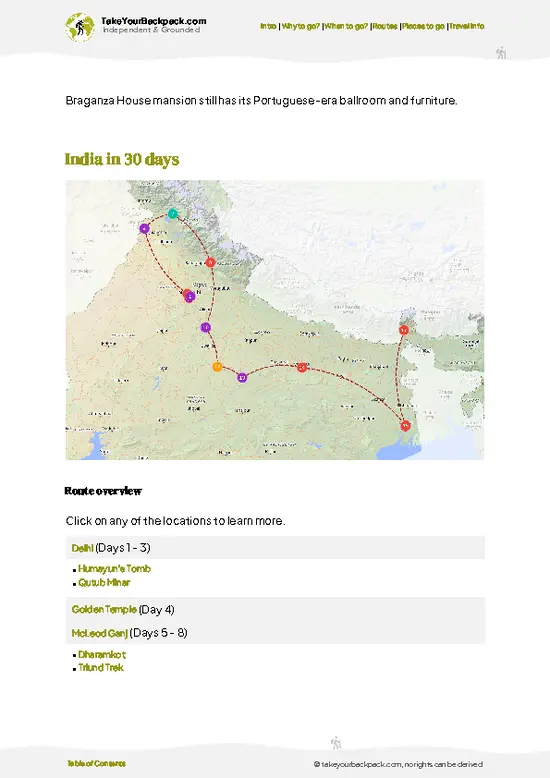
example page 1 from our offline Travel Guide for India
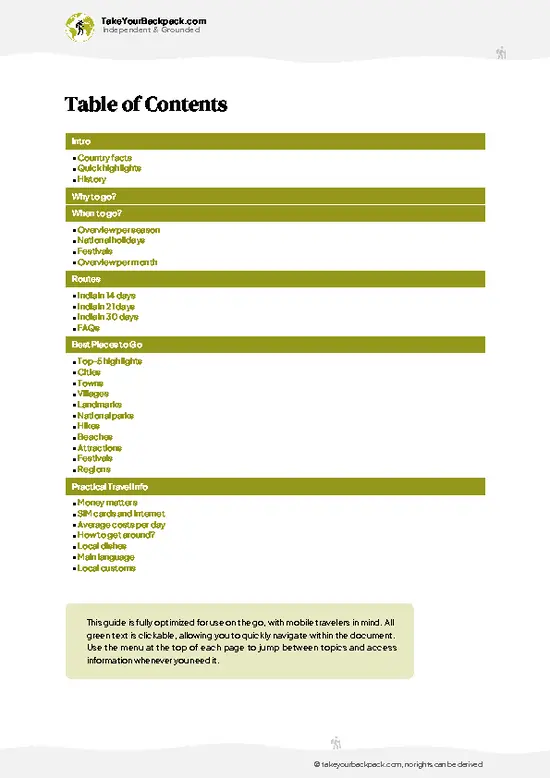
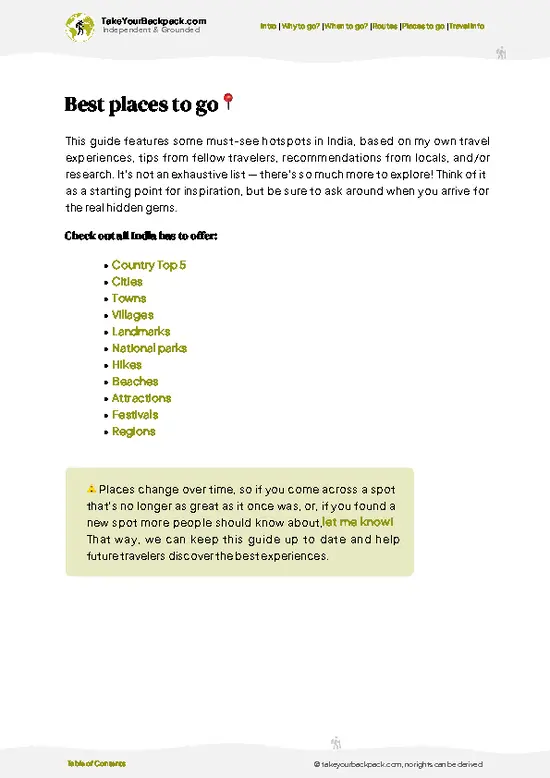
example page 2 from our offline Travel Guide for India
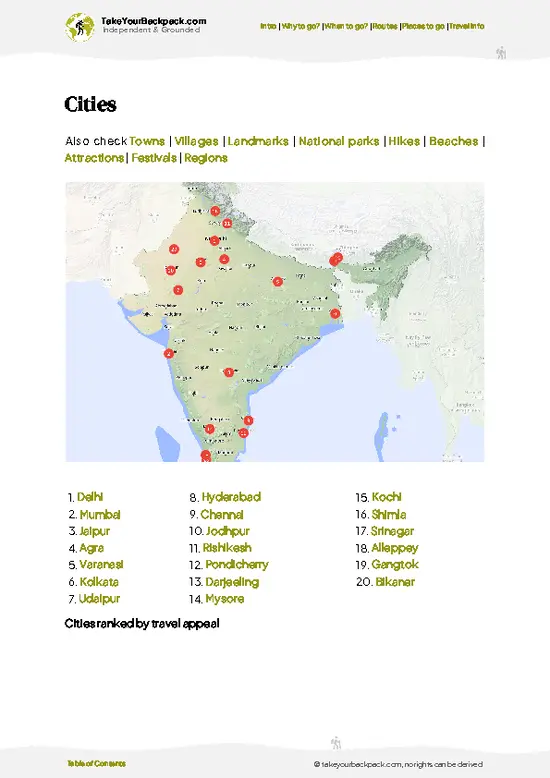
example page 3 from our offline Travel Guide for India
example page 4 from our offline Travel Guide for India
example page 5 from our offline Travel Guide for India
example page 6 from our offline Travel Guide for India
example page 7 from our offline Travel Guide for India
The digital guide (498 pages) contains:
162 highlights, ranked by travel appeal
Optimized 14, 21 & 30-day travel routes
Cities, national parks, landmarks, beaches
How to get around
Offline-friendly for travel without Wi-Fi
👉 Click to see all 30+ guide features

📅 Plan smarter in minutes, not weeks
Month by month travel advice
Festivals & national holidays
Budget expectations

🗺️ Go to the right places, skip the overrated ones
Honest pros & cons of destinations
Top hikes, parks & viewpoints
Lesser-known places most travelers miss
Clear “worth it vs skip it” guidance

🛏️ Travel smoothly without rookie mistakes
Best areas to stay
Transport systems explained simply
Common scams & safety advice
SIM cards, money & practical tips

🌍 Understand the country, not just visit it
Culture & traditions
52 Essential phrases & customs
Festivals worth planning around
Traveler-friendly historical context
Insights that make places more meaningful

📱 Built for real travel conditions
Fully downloadable PDF
Works completely offline
Optimized for phone use
Useful in remote areas & buses
Everything in one place
Save weeks of stressful planning
Get instant access to your full guide. 30‑day money-back guarantee.
+ Add another guide for just US$7.80

By proceeding you agree to our terms.
Sent to your inbox immediately after payment • 100% Secure Checkout
Best Backpacking Travel Advisor 2025 tourism awardBest Backpacking
Travel Advisor
2025
What others say about Take Your Backpack Guides:
⭐⭐⭐⭐⭐
Fantastic, amazing amount of information!
⭐⭐⭐⭐⭐
My goodness this is amazing, it's what I've been looking for hats off too you!
⭐⭐⭐⭐⭐
I think this is absolutely BRILLIANT
⭐⭐⭐⭐
Very complete and informative. It's still missing places, but I gotta to commend you
⭐⭐⭐⭐⭐
This is truly amazing, thank you, can't wait to explore it with my kids!
⭐⭐⭐⭐⭐
Awesome resource, thank you!
⭐⭐⭐⭐⭐
This is amazing! Can't wait to explore the ones I haven't seen
⭐⭐⭐⭐
I love this! Well done, great idea.
⭐⭐⭐⭐⭐
Thanks for taking the time to make this gem!
⭐⭐⭐⭐⭐
This might be the best website I've ever seen.
⭐⭐⭐⭐⭐
Congratulations, and thank you so much for your work; it's incredibly valuable.
⭐⭐⭐⭐
In all seriousness I think you did a great job pointing out the important spots
⭐⭐⭐⭐⭐
10/10 very good
⭐⭐⭐⭐⭐
As someone who's only just starting to visit regularly this is awesome, thank you.
⭐⭐⭐⭐
Thank you very much! I'm going to visit my dad, it's going to be very useful!
⭐⭐⭐⭐⭐
This is really cool! We'll be travelling for the first time and this definitely come in handy.
⭐⭐⭐⭐⭐
You are now our minister of culture, congratulations 👨‍💼
⭐⭐⭐⭐⭐
Just wanted to tell you that this is a pearl! Going to follow your recommendations.
⭐⭐⭐⭐⭐
This is so cool. I'll definitely be using the resource for my travels soon.
⭐⭐⭐⭐⭐
This is very impressive! Good work.
⭐⭐⭐⭐⭐
This is an amazing and informative site. Very well done!

🛏️ Where to stay?Best areas to stay in India

When the Kumbh Mela rolls around, the energy is electric, and you want to be right in the thick of it. The best areas to stay are those that pulse with life and camaraderie, perfect for budget travelers and solo adventurers.

Start in Haridwar, a hub for the festival. The ghats are alive with rituals, and you’ll find plenty of budget accommodations. The vibe here is welcoming, and you can easily connect with fellow backpackers. The streets are filled with food stalls, so you can fuel up without breaking the bank.

Next, consider Rishikesh, just a short ride away. While it’s known for yoga and … read more 👉
When the Kumbh Mela rolls around, the energy is electric, and you want to be right in the thick of it. The best areas to stay are those that pulse with life and camaraderie, perfect for budget travelers and solo adventurers.

Start in Haridwar, a hub for the festival. The ghats are alive with rituals, and you’ll find plenty of budget accommodations. The vibe here is welcoming, and you can easily connect with fellow backpackers. The streets are filled with food stalls, so you can fuel up without breaking the bank.

Next, consider Rishikesh, just a short ride away. While it’s known for yoga and tranquility, during Kumbh Mela, it transforms into a vibrant meeting point. You’ll find hostels and guesthouses that cater to backpackers, plus the chance to join group activities like river rafting or yoga sessions. The social scene is lively, and the views of the Ganges are a bonus.

Lastly, Allahabad (Prayagraj) is essential. The city is packed with temporary camps and budget lodgings during the festival. The atmosphere is a whirlwind of spirituality and celebration. Stay close to the Sangam, where the rivers meet, and immerse yourself in the rituals.

Avoid the tourist traps and focus on these areas. They’ll keep your energy high and your budget intact, allowing you to soak in every moment of this epic journey.

👛 Costs (as of 4 September 2026)Typical daily expenses

The Kumbh Mela is a massive spiritual gathering, and navigating its costs can feel like a challenge. Here’s how to break it down:
  • Festival Tickets: Entry to the Kumbh Mela is generally free, but some special events or ceremonies may charge a small fee. Expect to pay around €5-€10 ($5-$12) for premium experiences or guided tours that enhance your visit.
  • Accommodation: Options range widely. Budget travelers can find dormitory beds for about €5-€15 ($5-$18) per night. If you prefer a private room, expect to pay between €20-€50 ($22-$60) in nearby guesthouses. During peak times, prices can spike, so book early.
  • Local Transport: Getting around can be straightforward. Rickshaws and local buses are your best bets. Budget around €1-€3 ($1-$4) for short rides. If you’re traveling further, a taxi might
read more 👉
The Kumbh Mela is a massive spiritual gathering, and navigating its costs can feel like a challenge. Here’s how to break it down:
  • Festival Tickets: Entry to the Kumbh Mela is generally free, but some special events or ceremonies may charge a small fee. Expect to pay around €5-€10 ($5-$12) for premium experiences or guided tours that enhance your visit.
  • Accommodation: Options range widely. Budget travelers can find dormitory beds for about €5-€15 ($5-$18) per night. If you prefer a private room, expect to pay between €20-€50 ($22-$60) in nearby guesthouses. During peak times, prices can spike, so book early.
  • Local Transport: Getting around can be straightforward. Rickshaws and local buses are your best bets. Budget around €1-€3 ($1-$4) for short rides. If you’re traveling further, a taxi might cost you €10-€20 ($12-$24), depending on the distance.
  • Food & Drinks: Street food is a highlight. You can enjoy meals for as little as €1-€3 ($1-$4). If you opt for sit-down restaurants, expect to pay €5-€15 ($6-$18) per meal. Always keep an eye out for clean, busy spots to ensure quality.
  • Miscellaneous Expenses: This includes souvenirs, extra activities, or unexpected costs. Set aside around €10-€30 ($12-$36) for these. It’s wise to have a buffer for spontaneous experiences that might catch your eye.

Planning ahead can save you from surprises. Keep your budget flexible, and you’ll have the energy for the moments that truly matter.


source: incredibleindia.org
⚠️ Prices can change and everyone travels differently, so take this as a rough guide. Hope it helps you plan your adventure!

🍲 FoodLocal Cuisine & Drinks

At Kumbh Mela, food is as vibrant as the festival itself. You’ll find an array of local specialties that pulse with flavor. Dive into aloo parathas stuffed with spiced potatoes, or savor chole bhature, a hearty chickpea dish paired with fluffy bread. Street stalls are everywhere, serving up puri and halwa that are not just meals but experiences.

Don’t miss out on lassi, a creamy yogurt drink that cools you down amidst the chaos. Try the sweet lassi for a sugar rush or the salted version for a savory twist. Both are refreshing and a must-have in the heat of the festival.

A quirky aspect of Kumbh Mela is the sharing culture. It’s common to see people offering bites from their plates, creating a communal vibe. Be prepared for lines; patience is key. Serving sizes can be generous, so consider … read more 👉
At Kumbh Mela, food is as vibrant as the festival itself. You’ll find an array of local specialties that pulse with flavor. Dive into aloo parathas stuffed with spiced potatoes, or savor chole bhature, a hearty chickpea dish paired with fluffy bread. Street stalls are everywhere, serving up puri and halwa that are not just meals but experiences.

Don’t miss out on lassi, a creamy yogurt drink that cools you down amidst the chaos. Try the sweet lassi for a sugar rush or the salted version for a savory twist. Both are refreshing and a must-have in the heat of the festival.

A quirky aspect of Kumbh Mela is the sharing culture. It’s common to see people offering bites from their plates, creating a communal vibe. Be prepared for lines; patience is key. Serving sizes can be generous, so consider splitting dishes to sample more.

Cash is king here; many vendors don’t accept cards. Keep small bills handy to avoid fumbling in the crowd. Embrace the chaos, savor the flavors, and let the food fuel your exploration. Each bite is a step deeper into the heart of this incredible gathering.

FAQCommon questions from travelers

Kumbh Mela takes place every 12 years at each of the four locations (Prayagraj, Haridwar, Ujjain, Nashik), with the Maha Kumbh Mela occurring every 144 years. The festival typically lasts for about 48 days, with the main bathing days spread throughout this period.
Attending Kumbh Mela is generally free of charge. Costs mainly come from travel, accommodation, and food, which can vary widely depending on your choices, but budget travelers can manage with as little as $10-20 per day.
No, you do not need tickets in advance to attend Kumbh Mela. It is an open public event, and anyone can join at any time during the festival period.
⚠️ Things can change over time, so always validate details locally before you go.

Other Indian festivals near Kumbh Mela

Explore more nearby:

  • Holi—Colored powders, water splashing, street revelry| 115 km away
  • Ganga Dussehra—River rituals, holy dips, flower offerings| 247 km away
  • Durga Puja—Clay idols, pandal displays, Bengali cuisine| 736 km away

💡 Not sure where to go next?
Create a personalized itinerary for India including Kumbh Mela and the places that fit your trip.

Generate my itinerary

👉 Discover all festivals

Or checkout all India has to offer (think cities, towns, villages, national parks, hikes, beaches, festivals)
Country photo of India

We 💚 feedbackSumming up the experience

Kumbh Mela is a wild, electric experience that pulls you into a sea of humanity, spirituality, and vibrant rituals. You’ll feel the pulse of devotion in every chant and splash of the sacred river. But brace yourself: the crowds can be overwhelming, and accommodations often come with a hefty price tag if you’re not savvy. Stay flexible, embrace the chaos, and you’ll find moments that make the journey worth every ounce of effort.

✈️ When did I visit India?
As part of my 1.5 year travel around the world trip, I visited India in December 2015.

✍️ Help improve this page!
The information on this page is based on my own backpacking experience in India, supplemented with up-to-date research and feedback from other travelers. Travel details can change, so if you notice anything outdated or incomplete, feel free to let me know.


🙋‍♂️ Give feedback

👋 Meet the founderWho’s Behind Take Your Backpack?

Johan, backpacker and founder of TakeYourBackpackHi, I’m Johan (Netherlands 🇳🇱), the creator of TakeYourBackpack. Over the past decade, I’ve backpacked through 80+ countries across six continents, gaining extensive experience with independent travel, long-term trips, and overland routes.

This site is built on a combination of firsthand travel experience and carefully curated insights from other backpackers. Many guides are based on places I’ve personally visited, while others bring together tips, observations, and practical advice shared by trusted travelers I’ve met along the way.

The goal is to provide realistic, experience-driven guidance — not generic itineraries — so you can explore destinations with better context, clearer expectations, and more confidence.

Get full India guide •
Instant download • 162 highlights • Full Offline guide