

×

India🇮🇳 | citiesLucknowNawabi architecture, kebab alleys, Urdu culture | things to do and best time to go

Explore PatnaExplore Nashik

Backpacking in Lucknow
👌 Worth visitingcity ranked #28
By Johan Kruseman 🇳🇱 | Updated September 4, 2026

Lucknow is not for travelers who need beaches, bars on every corner, and a backpacker bubble. It rewards people who like slow-burn cities, food, and history puzzles. Sitting in north India between Delhi and Varanasi, it’s a calm, Urdu-poetry kind of capital with the Bara Imambara, Rumi Darwaza, and old bazaars as the main “wow” points rather than big-ticket monuments. It’s cheap, generally safe, light on nightlife, and far less chaotic than nearby Varanasi or Kanpur, but also quieter on the hostel-social scene, so you work a bit harder to meet people and get a lot more real-life India in return.

Discover everything you want to know in the 📖 India Travel Guide.


Get your India guide
162 ranked highlights, routes & tips, works offline (498 pages)
Loading the map 🌍
CLICK TO FILTER
cities
towns
villages
landmarks
national parks
hikes
beaches
attractions
festivals
regions
SHOW COUNTRY’S BESTSHOW ALL

✨ Why go?
Ranked #28 city in India
What makes it a must-see city

Lucknow is a strategic basecamp for backpackers, balancing affordability with rich cultural experiences. The hostels here are not just budget-friendly; they foster a vibrant community, perfect for meeting fellow travelers. The city’s walkability allows you to soak in the local atmosphere, while the food scene offers a delightful mix of street eats and cozy cafes. As for nightlife, it’s laid-back yet lively, ideal for unwinding after a day of exploration. Plus, Lucknow serves as a convenient launchpad for day trips, making it easy to dive deeper into the region without sacrificing comfort or time.
Want to include Lucknow in your India route?
Create a personalized India itinerary that includes Lucknow and the places that fit your trip — based on your travel style, budget, and available time. Get your route in seconds.

Generate my trip

💡 HighlightsPlaces and moments you shouldn't skip

  1. Bara Imambara — The massive 18th-century Asafi Imambara with its arched central hall (no beams), the famous Bhulbhulaiya labyrinth on the roof, the atmospheric Shahi Baoli stepwell and skyline views — it’s the single most evocative way to feel old Lucknow’s Nawabi scale and engineering trickery.
  2. Chota Imambara (Hussainabad Imambara) — Ornate interiors, glittering chandeliers and eerie calligraphy make this a devotional and visual treat; best visited late afternoon when the light and reflections bring the gilt and glass alive.
  3. Rumi Darwaza — The iconic, imposing gateway that’s become Lucknow’s symbol; it’s a photo-ready, Ottoman-inspired monument whose presence helps you understand how the city once announced itself to visitors.
  4. The British Residency (Residency Complex and Museum) — Ruined
read more 👉
  1. Bara Imambara — The massive 18th-century Asafi Imambara with its arched central hall (no beams), the famous Bhulbhulaiya labyrinth on the roof, the atmospheric Shahi Baoli stepwell and skyline views — it’s the single most evocative way to feel old Lucknow’s Nawabi scale and engineering trickery.
  2. Chota Imambara (Hussainabad Imambara) — Ornate interiors, glittering chandeliers and eerie calligraphy make this a devotional and visual treat; best visited late afternoon when the light and reflections bring the gilt and glass alive.
  3. Rumi Darwaza — The iconic, imposing gateway that’s become Lucknow’s symbol; it’s a photo-ready, Ottoman-inspired monument whose presence helps you understand how the city once announced itself to visitors.
  4. The British Residency (Residency Complex and Museum) — Ruined cantonment buildings, graves and a compact museum lay out the brutal story of the 1857 siege; walking the grounds gives real, physical context to that turning point in modern Indian history.
  5. Chowk Bazaar & Tunday Kababi — Narrow lanes lined with workshops selling chikankari, brassware and street food; the original Tunday (and several century-old kebab stalls) deliver the culinary history of Lucknow — eat while you wander the crafts stalls for the full experience.
  6. Hazratganj — Victorian arcades, old cinemas and colonial shopfronts mixed with modern cafés: this is the city’s living high street where you can sip chai, shop for local sweets, and watch Lucknow’s genteel urban pulse.
  7. La Martiniere (Constantia) — A spectacular colonial building with baroque façades, sculpted interiors and sprawling lawns (it’s an active school, but the architecture and grounds are worth seeing); it vividly shows Lucknow’s Anglo-European chapter.
  8. Lucknow State Museum — Small but rich: Awadhi paintings, archaeological finds, weaponry and folk objects that stitch together regional culture and history — a good stop if you want artifacts and context beyond the monuments.
  9. Chattar Manzil — The “umbrella palace” on the Gomti’s bank: graceful domes, a river-side setting and a sense of Indo-European palace style; quieter than the big imambaras and great for photography and a stroll by the water.
  10. Dilkusha Kothi — Romantic, partially ruined 19th-century mansion with visible scars from the 1857 conflict; less crowded and evocative in a different, less polished way than the formal monuments — good for curious walkers and photographers.
A few easy day trips from Lucknow include the Sufi shrine at Dewa Sharif (Barabanki), the small heritage village of Kakori with its own kebab history (personal favorite), and the pilgrimage city of Ayodhya, all of which are visitable within a few hours’ drive.
Spotted a mistake or missing something? Contact us.

Things to do in Lucknow

Ratings based on Tripadvisor reviews. When you book through this link, you support our work at no extra cost to you.

🏘️ NeighborhoodsNeighborhood guide to Lucknow

Lucknow offers a rich tapestry of culture and history, making it a fascinating city for backpackers. Here’s how the neighborhoods stack up:

Hazratganj: The heart of Lucknow, this area buzzes with cafes and shops. It’s walkable and perfect for short stays. Expect a mix of nightlife and quiet spots. Prices can be higher, but the vibe is worth it.

Old Lucknow: Dive into history here. Narrow lanes and traditional architecture create a unique atmosphere. It’s cheaper and great for longer stays. Walkability is decent, but be ready for some hustle. Nightlife is low-key, focusing more on local eateries.

Gomti Nagar: A modern contrast to the old city. This area is spacious and well-connected by transport. It’s quieter, ideal for longer stays, with a mix of shopping and dining options. Prices are … read more 👉
Lucknow offers a rich tapestry of culture and history, making it a fascinating city for backpackers. Here’s how the neighborhoods stack up:

Hazratganj: The heart of Lucknow, this area buzzes with cafes and shops. It’s walkable and perfect for short stays. Expect a mix of nightlife and quiet spots. Prices can be higher, but the vibe is worth it.

Old Lucknow: Dive into history here. Narrow lanes and traditional architecture create a unique atmosphere. It’s cheaper and great for longer stays. Walkability is decent, but be ready for some hustle. Nightlife is low-key, focusing more on local eateries.

Gomti Nagar: A modern contrast to the old city. This area is spacious and well-connected by transport. It’s quieter, ideal for longer stays, with a mix of shopping and dining options. Prices are moderate, making it a solid choice for comfort seekers.

⌛️ 1 dayWhat you can realistically do in a day

Lucknow, a city steeped in history and culture, offers a unique blend of Mughal architecture and vibrant street life. Start your morning at the iconic Bara Imambara, where the intricate design and the mystery of its central hall will captivate you. Don’t rush; take a moment to absorb the grandeur and the stories embedded in its walls.

As the sun climbs, wander through the bustling streets of Chowk. Here, you can savor a plate of piping hot kachoris from a local vendor. The flavors are a burst of Lucknow’s culinary heritage.

In the afternoon, head to the quieter area of Hazratganj. Stroll along its tree-lined boulevards, popping into charming shops. For a unique experience, visit the lesser-known Rumi Darwaza, a stunning gateway that often gets overshadowed by its more famous counterparts. … read more 👉
Lucknow, a city steeped in history and culture, offers a unique blend of Mughal architecture and vibrant street life. Start your morning at the iconic Bara Imambara, where the intricate design and the mystery of its central hall will captivate you. Don’t rush; take a moment to absorb the grandeur and the stories embedded in its walls.

As the sun climbs, wander through the bustling streets of Chowk. Here, you can savor a plate of piping hot kachoris from a local vendor. The flavors are a burst of Lucknow’s culinary heritage.

In the afternoon, head to the quieter area of Hazratganj. Stroll along its tree-lined boulevards, popping into charming shops. For a unique experience, visit the lesser-known Rumi Darwaza, a stunning gateway that often gets overshadowed by its more famous counterparts.

As evening falls, find a cozy spot at a rooftop café overlooking the city. Sip on chai while watching the sunset paint the sky. This blend of history, food, and local life makes your day in Lucknow truly rewarding.
Turn your Lucknow visit into an India adventure
Build a complete India route with Lucknow, hidden gems, must-see destinations, and realistic travel times included.

Generate my trip

🌤️ When to go?Best time to visit Lucknow


  • Weather: Lucknow’s best window is October to March when the climate cools down from scorching summer highs above 40°C (104°F) to a comfortable 15-25°C (59-77°F). Avoid April to June’s brutal heat and July to September’s monsoon deluge.

  • Temperature: Winters are mild, rarely dipping below 7°C (45°F), perfect for exploring without sweating buckets or freezing your toes off.

  • Daylight Hours: Expect roughly 10-11 hours of daylight during the cooler months, ample for sightseeing without rushing.

  • Crowds: Tourist numbers peak in winter, especially around December and January festivals, so plan accordingly if you prefer quieter streets.

  • Seasonal Activities: Winter hosts cultural festivals like Lucknow Mahotsav, offering rich local experiences that summer’s heat would kill.

  • Price Fluctuations:
read more 👉

  • Weather: Lucknow’s best window is October to March when the climate cools down from scorching summer highs above 40°C (104°F) to a comfortable 15-25°C (59-77°F). Avoid April to June’s brutal heat and July to September’s monsoon deluge.

  • Temperature: Winters are mild, rarely dipping below 7°C (45°F), perfect for exploring without sweating buckets or freezing your toes off.

  • Daylight Hours: Expect roughly 10-11 hours of daylight during the cooler months, ample for sightseeing without rushing.

  • Crowds: Tourist numbers peak in winter, especially around December and January festivals, so plan accordingly if you prefer quieter streets.

  • Seasonal Activities: Winter hosts cultural festivals like Lucknow Mahotsav, offering rich local experiences that summer’s heat would kill.

  • Price Fluctuations: Accommodation and flights spike in peak season; shoulder months like October and March offer better deals without sacrificing comfort.


Pro-tip: Aim for late October or early March to balance pleasant weather, manageable crowds, and wallet-friendly prices—this is when Lucknow feels like a well-kept secret you’re smart enough to uncover.


source: climatestotravel.comJANJanuary: highly recommended for travelingFEBFebruary: excellent for travelingMARMarch: highly recommended for travelingAPRApril: fair for travelingMAYMay: below average for travelingJUNJune: below average for travelingJULJuly: fair for travelingAUGAugust: fair for travelingSEPSeptember: fair for travelingOCTOctober: highly recommended for travelingNOVNovember: excellent for travelingDECDecember: highly recommended for traveling
when-to-go

✈️ The backpacker research shortcutIndia Travel Guide

An offline-friendly backpacking guide with optimized travel routes, ranked highlights, transport advice, and the best areas to stay.
example page 0 from our offline Travel Guide for India
example page 1 from our offline Travel Guide for India
example page 2 from our offline Travel Guide for India
example page 3 from our offline Travel Guide for India
example page 4 from our offline Travel Guide for India
example page 5 from our offline Travel Guide for India
example page 6 from our offline Travel Guide for India
example page 7 from our offline Travel Guide for India
The digital guide (498 pages) contains:
162 highlights, ranked by travel appeal
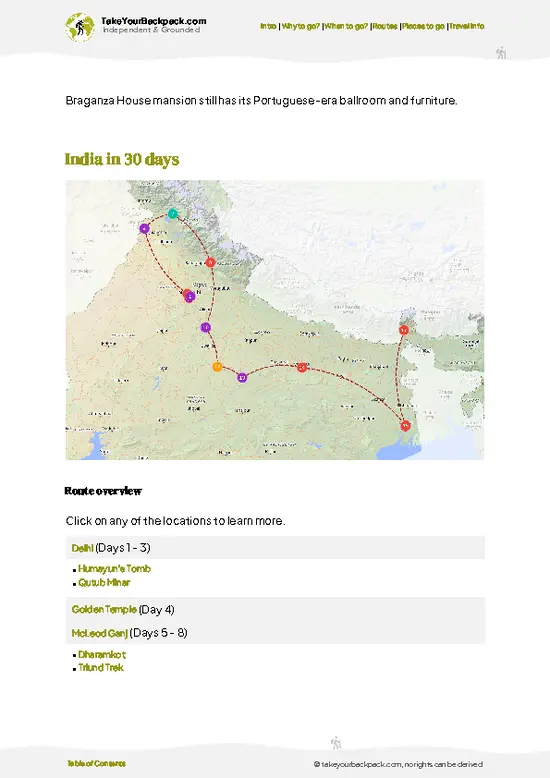
Optimized 14, 21 & 30-day travel routes
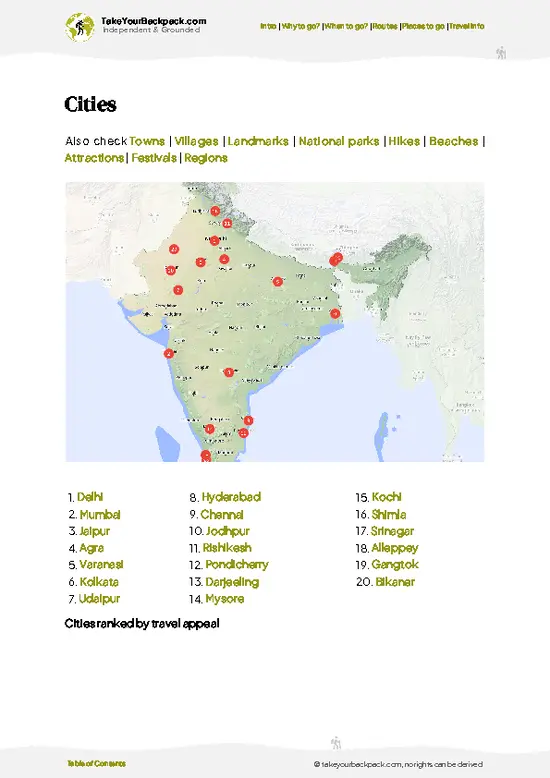
Cities, national parks, landmarks, beaches
How to get around
Offline-friendly for travel without Wi-Fi
👉 Click to see all 30+ guide features

📅 Plan smarter in minutes, not weeks
Month by month travel advice
Festivals & national holidays
Budget expectations

🗺️ Go to the right places, skip the overrated ones
Honest pros & cons of destinations
Top hikes, parks & viewpoints
Lesser-known places most travelers miss
Clear “worth it vs skip it” guidance

🛏️ Travel smoothly without rookie mistakes
Best areas to stay
Transport systems explained simply
Common scams & safety advice
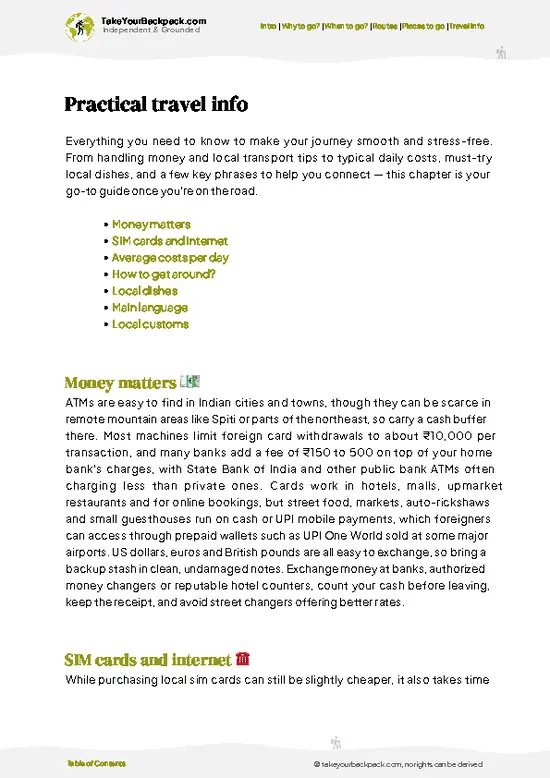
SIM cards, money & practical tips

🌍 Understand the country, not just visit it
Culture & traditions
52 Essential phrases & customs
Festivals worth planning around
Traveler-friendly historical context
Insights that make places more meaningful

📱 Built for real travel conditions
Fully downloadable PDF
Works completely offline
Optimized for phone use
Useful in remote areas & buses
Everything in one place
Save weeks of stressful planning
Get instant access to your full guide. 30‑day money-back guarantee.
+ Add another guide for just US$7.80

By proceeding you agree to our terms.
Sent to your inbox immediately after payment • 100% Secure Checkout
Best Backpacking Travel Advisor 2025 tourism awardBest Backpacking
Travel Advisor
2025
What others say about Take Your Backpack Guides:
⭐⭐⭐⭐⭐
Fantastic, amazing amount of information!
⭐⭐⭐⭐⭐
My goodness this is amazing, it's what I've been looking for hats off too you!
⭐⭐⭐⭐⭐
I think this is absolutely BRILLIANT
⭐⭐⭐⭐
Very complete and informative. It's still missing places, but I gotta to commend you
⭐⭐⭐⭐⭐
This is truly amazing, thank you, can't wait to explore it with my kids!
⭐⭐⭐⭐⭐
Awesome resource, thank you!
⭐⭐⭐⭐⭐
This is amazing! Can't wait to explore the ones I haven't seen
⭐⭐⭐⭐
I love this! Well done, great idea.
⭐⭐⭐⭐⭐
Thanks for taking the time to make this gem!
⭐⭐⭐⭐⭐
This might be the best website I've ever seen.
⭐⭐⭐⭐⭐
Congratulations, and thank you so much for your work; it's incredibly valuable.
⭐⭐⭐⭐
In all seriousness I think you did a great job pointing out the important spots
⭐⭐⭐⭐⭐
10/10 very good
⭐⭐⭐⭐⭐
As someone who's only just starting to visit regularly this is awesome, thank you.
⭐⭐⭐⭐
Thank you very much! I'm going to visit my dad, it's going to be very useful!
⭐⭐⭐⭐⭐
This is really cool! We'll be travelling for the first time and this definitely come in handy.
⭐⭐⭐⭐⭐
You are now our minister of culture, congratulations 👨‍💼
⭐⭐⭐⭐⭐
Just wanted to tell you that this is a pearl! Going to follow your recommendations.
⭐⭐⭐⭐⭐
This is so cool. I'll definitely be using the resource for my travels soon.
⭐⭐⭐⭐⭐
This is very impressive! Good work.
⭐⭐⭐⭐⭐
This is an amazing and informative site. Very well done!

🛏️ Where to stay?Best areas to stay in India

Lucknow’s Aminabad area is the go-to for backpackers who want to dive into the city’s pulse without breaking the bank. It’s a bustling, sensory-rich neighborhood where budget stays cluster around lively markets and street food stalls, making it easy to meet fellow travelers and locals alike. The vibe here is gritty but safe enough during the day, with a social atmosphere that’s hard to beat. For a quieter, more relaxed base, Hazratganj offers a cleaner, greener environment with cafes and parks, still affordable but leaning toward comfort. Both areas balance cost and experience better than the … read more 👉
Lucknow’s Aminabad area is the go-to for backpackers who want to dive into the city’s pulse without breaking the bank. It’s a bustling, sensory-rich neighborhood where budget stays cluster around lively markets and street food stalls, making it easy to meet fellow travelers and locals alike. The vibe here is gritty but safe enough during the day, with a social atmosphere that’s hard to beat. For a quieter, more relaxed base, Hazratganj offers a cleaner, greener environment with cafes and parks, still affordable but leaning toward comfort. Both areas balance cost and experience better than the sprawling, less accessible suburbs, which can drain your time and energy.

🚌 Getting aroundHow to get from A to B

Lucknow moves at its own rhythm—a blend of old-world charm and the pulse of a growing metropolis. It’s not a city where everything clicks like clockwork, but neither is it a free-for-all. Instead, it’s a dance between the predictable and the spontaneous. You’ll find moments where schedules matter, like catching a bus or train, but also plenty of room for improvisation, especially when hailing an auto-rickshaw or navigating narrow lanes on foot. Understanding this flow is your secret weapon: it lets you pick the right balance between saving time, spending money, and grabbing comfort.


  • Walking: The cheapest and often fastest way through Lucknow’s dense old city lanes. No schedule, zero cost, but expect heat and crowds—perfect if you want to soak in street life up close.

  • City Buses: Runs
read more 👉
Lucknow moves at its own rhythm—a blend of old-world charm and the pulse of a growing metropolis. It’s not a city where everything clicks like clockwork, but neither is it a free-for-all. Instead, it’s a dance between the predictable and the spontaneous. You’ll find moments where schedules matter, like catching a bus or train, but also plenty of room for improvisation, especially when hailing an auto-rickshaw or navigating narrow lanes on foot. Understanding this flow is your secret weapon: it lets you pick the right balance between saving time, spending money, and grabbing comfort.


  • Walking: The cheapest and often fastest way through Lucknow’s dense old city lanes. No schedule, zero cost, but expect heat and crowds—perfect if you want to soak in street life up close.

  • City Buses: Runs roughly from 6 AM to 10 PM, fares under ₹20. Slow and crowded during rush hours, but unbeatable for budget travel across longer distances.

  • Auto-Rickshaws: Available 24/7, fares vary but usually ₹30-100 depending on distance. Faster than buses, flexible routes, but negotiate fares upfront to avoid surprises.

  • Metro: Newer, cleaner, and faster for key corridors, operating 6 AM to 11 PM. Tickets start at ₹10. Comfort and speed come at a slightly higher price but save hours in traffic.

  • Cycle Rickshaws: Slow and charming, ideal for short trips in congested areas. Costs ₹20-50, no schedule, and a chance to experience the city’s pace at human speed.

👛 Costs (as of 4 September 2026)Money, prices, and spending tips

Backpacking in Lucknow offers a fascinating blend of affordability and cultural richness, but knowing the cost breakdown helps you play the budget game smartly.
  • Dorm Accommodation (High Season): Expect to pay around $6 to $10 per night. High season, usually cooler months, means a slight bump in prices due to demand, but still very wallet-friendly compared to bigger metros.
  • Dorm Accommodation (Off-Season): Prices drop to about $4 to $7. Off-season brings quieter streets and better bargaining power for longer stays.
  • Meals: Street food and local eateries will run you about $2 to $5 per meal. You can feast on kebabs, biryanis, and chaat without breaking the bank, especially if you avoid touristy spots.
  • Local Transport: Rickshaws and shared autos cost roughly $0.30 to $1 per short trip. It’s
read more 👉
Backpacking in Lucknow offers a fascinating blend of affordability and cultural richness, but knowing the cost breakdown helps you play the budget game smartly.
  • Dorm Accommodation (High Season): Expect to pay around $6 to $10 per night. High season, usually cooler months, means a slight bump in prices due to demand, but still very wallet-friendly compared to bigger metros.
  • Dorm Accommodation (Off-Season): Prices drop to about $4 to $7. Off-season brings quieter streets and better bargaining power for longer stays.
  • Meals: Street food and local eateries will run you about $2 to $5 per meal. You can feast on kebabs, biryanis, and chaat without breaking the bank, especially if you avoid touristy spots.
  • Local Transport: Rickshaws and shared autos cost roughly $0.30 to $1 per short trip. It’s cheap, but be ready to negotiate and hold on tight.
  • City Transport Pass: Lucknow’s public buses and metro rides can be covered with a daily pass around $1.50 to $2. This is a great way to move efficiently if you plan multiple trips in a day.
  • Basic Activities/Entry Fees: Historical sites like Bara Imambara or Rumi Darwaza charge entry fees in the $1 to $3 range. Guided tours or special exhibits might push this higher but still remain affordable.
  • Miscellaneous Expenses: Think snacks, bottled water, or a chai break—budget around $1 to $3 daily. These small costs add up but are part of the authentic experience.

All told, you’re looking at roughly $15 to $25 per day for a solid, no-frills backpacking experience in Lucknow. This range balances comfort and economy without sacrificing the chance to dive into the city’s unique vibe. Knowing where your money goes lets you decide when to splurge on a guided tour or save by hopping on a bus instead of a rickshaw.
⚠️ Prices can change and everyone travels differently, so take this as a rough guide. Hope it helps you plan your adventure!

🚌 Day tripsWhere to go beyond the main area

Lucknow serves as a fantastic launchpad for day trips that pack a punch without draining your wallet or time. Here are some standout options.

Ayodhya
Just a 2-3 hour bus ride from Lucknow, Ayodhya is steeped in history and spirituality. This ancient city is known for its temples and the serene banks of the Sarayu River. A visit here offers a glimpse into India’s rich cultural tapestry, especially if you explore the Ram Janmabhoomi complex. Budget around ₹200-300 for transport and a few hundred more for food. Best visited in winter when the weather is pleasant. First-timers often underestimate the time needed to soak in the atmosphere, so plan to spend a full day.


Nawabganj Bird Sanctuary
Only about an hour away, this sanctuary is a haven for birdwatchers and nature lovers. With over … read more 👉
Lucknow serves as a fantastic launchpad for day trips that pack a punch without draining your wallet or time. Here are some standout options.

Ayodhya
Just a 2-3 hour bus ride from Lucknow, Ayodhya is steeped in history and spirituality. This ancient city is known for its temples and the serene banks of the Sarayu River. A visit here offers a glimpse into India’s rich cultural tapestry, especially if you explore the Ram Janmabhoomi complex. Budget around ₹200-300 for transport and a few hundred more for food. Best visited in winter when the weather is pleasant. First-timers often underestimate the time needed to soak in the atmosphere, so plan to spend a full day.


Nawabganj Bird Sanctuary
Only about an hour away, this sanctuary is a haven for birdwatchers and nature lovers. With over 200 species of birds, it’s a peaceful escape from the city buzz. Entry is minimal, around ₹50, and you can easily spend a few hours wandering the trails. The best time to visit is during the winter months when migratory birds flock here. A common mistake is to rush through; take your time to enjoy the tranquility.


Sravasti
Roughly 5 hours from Lucknow, Sravasti is a significant Buddhist pilgrimage site. The ruins of ancient monasteries and stupas are captivating, and the quiet atmosphere allows for reflection. Expect to spend around ₹500 for transport and entry fees. The ideal time to visit is between October and March. Many first-timers miss out on the guided tours that enrich the experience, so consider joining one.


Rae Bareli
Just a 2-hour train ride away, Rae Bareli offers a mix of history and local culture. The main attraction is the historic Anand Bhawan, the ancestral home of the Nehru-Gandhi family. Entry is around ₹20, making it a budget-friendly option. Visit during the cooler months for the best experience. A common pitfall is not checking train schedules in advance, which can lead to delays.
Want to know what more India offers?
The India Travel Guide describes 162 highlights, from cities to national parks, from beaches to hikes

Get the Travel Guide -

🍲 FoodWhat to Eat & Drink

Lucknow is a culinary treasure waiting to be explored. Dive into kebabs—the city’s pride—where tender meat melts in your mouth, infused with spices that dance on your palate. Don’t miss biryani, a fragrant rice dish layered with marinated meat, each bite a celebration of flavor.

Street food stalls buzz with energy, offering chaat that’s a tangy explosion of tastes. Sip on lassi, a creamy yogurt drink that cools the spice.

Eating here is a communal affair; locals often share dishes, so don’t hesitate to join in. Embrace the chaos of markets, where the aroma of sizzling snacks fills the air, and every corner invites you to taste something new.

🛡️ SafetyTraveler Safety Guide

Lucknow is generally safe for backpackers, but a few areas require extra awareness, especially around crowded markets like Hazratganj. Solo travelers should stick to well-lit streets at night; it’s quieter than you might expect.

Common scams include overly friendly locals offering unsolicited help, often leading to inflated prices. Politely decline and keep your wits about you. Everyday annoyances like aggressive rickshaw drivers can be managed by agreeing on fares upfront. Carry yourself confidently, and you’ll navigate the city like a pro.

FAQCommon questions from travelers

2 to 3 days are sufficient to explore Lucknow's main attractions such as Bara Imambara, Chota Imambara, and the British Residency. This allows time to experience local cuisine and markets without rushing.
Yes, Lucknow is generally safe for solo backpackers, especially during the day and in well-populated areas. Standard precautions like avoiding isolated places at night and keeping valuables secure are advised.
Lucknow is known for its rich Nawabi heritage, exquisite Mughlai cuisine, and historical monuments like Bara Imambara. It is also famous for its traditional chikankari embroidery and vibrant cultural festivals.
⚠️ Things can change over time, so always validate details locally before you go.

Other Indian cities near Lucknow

Explore more nearby:

  • Varanasi—Ghats, cremation fires, winding alleys| 268 km away
  • Agra—Taj Mahal, Mughal tombs, river views| 296 km away
  • Jabalpur—Marble rocks, river gorges, colonial cantonment| 426 km away

💡 Not sure where to go next?
Create a personalized itinerary for India including Lucknow and the places that fit your trip.

Generate my itinerary

👉 Discover all cities

Or checkout all India has to offer (think cities, towns, villages, national parks, hikes, beaches, festivals)
Country photo of India

We 💚 feedbackParting advice and final tips

Lucknow’s culinary scene is a feast for the senses. The kebabs and biryanis are legendary, a true taste of history. But be prepared: the heat can be relentless. Hydration is key, and don’t underestimate the midday sun. Embrace the flavors, but pace yourself.

✈️ When did I visit India?
As part of my 1.5 year travel around the world trip, I visited India in December 2015.

✍️ Help improve this page!
The information on this page is based on my own backpacking experience in India, supplemented with up-to-date research and feedback from other travelers. Travel details can change, so if you notice anything outdated or incomplete, feel free to let me know.


🙋‍♂️ Give feedback

👋 Meet the founderWho’s Behind Take Your Backpack?

Johan, backpacker and founder of TakeYourBackpackHi, I’m Johan (Netherlands 🇳🇱), the creator of TakeYourBackpack. Over the past decade, I’ve backpacked through 80+ countries across six continents, gaining extensive experience with independent travel, long-term trips, and overland routes.

This site is built on a combination of firsthand travel experience and carefully curated insights from other backpackers. Many guides are based on places I’ve personally visited, while others bring together tips, observations, and practical advice shared by trusted travelers I’ve met along the way.

The goal is to provide realistic, experience-driven guidance — not generic itineraries — so you can explore destinations with better context, clearer expectations, and more confidence.

Get full India guide •
Instant download • 162 highlights • Full Offline guide