×

Indonesia🇮🇩 | festivalsBaliem Valley FestivalDani tribe, mock battles, pig feast, Wamena | things to do and best time to go

Explore Bali Arts FestivalExplore Jember Fashion Carnival

Backpacking in Baliem Valley
🏆 Top pickfestival ranked #3
By Johan Kruseman 🇳🇱 | Updated October 15, 2026

Book your Wamena flights and a bed months ahead, because the festival has no central ticket office and no big venue, and the early planners get the guides, the cheaper rooms and the best viewing spots. The Baliem Valley Festival fills a high highland basin around Wamena, in Papua Pegunungan province, Indonesian New Guinea, reachable only by air. Three days, usually in August, bring Dani, Lani and Yali clans together for mock tribal wars, pig feasts, spear throwing and music on pipes and drums. Expect photographers, anthropology buffs and adventurous backpackers, not party crowds. The vibe is raw and loud, with dust, mud and warriors in feathers and boar tusks. I stood at the edge of a field near Welesi at dawn, cold air in my teeth, as a war cry rolled across the grass and made my arms prickle. Go for the culture. Skip it if you want comfort.

Discover everything you want to know in the 📖 Indonesia Travel Guide.


example page 0 from our offline Travel Guide for Indonesia
example page 1 from our offline Travel Guide for Indonesia
example page 2 from our offline Travel Guide for Indonesia
example page 3 from our offline Travel Guide for Indonesia
example page 4 from our offline Travel Guide for Indonesia
example page 5 from our offline Travel Guide for Indonesia
example page 6 from our offline Travel Guide for Indonesia
example page 7 from our offline Travel Guide for Indonesia
Loading the map 🌍
CLICK TO FILTER
cities
towns
villages
landmarks
national parks
hikes
beaches
attractions
festivals
regions
SHOW COUNTRY’S BESTSHOW ALL

✨ Why go?
Ranked #3 festival in Indonesia
The unique appeal for travelers

Backpackers build routes around this event because it puts several highland tribes in one place on the same days, something you would otherwise spend weeks of hard trekking to approximate. The social energy comes from sharing a muddy field with a small crowd of travelers, guides and local families, so conversation starts easily and trekking partners are simple to find for the days after. The temporary community feels real: villagers cook, trade and perform for each other as much as for visitors. For cultural depth, few events in Southeast Asia let you watch ritual warfare displays, pig cooking in earth ovens and traditional dress up close. Costs are lower than comparable festivals in Asia or Africa because entry is cheap, though flights eat into the budget. It also fits longer plans: pair … read more 👉
Backpackers build routes around this event because it puts several highland tribes in one place on the same days, something you would otherwise spend weeks of hard trekking to approximate. The social energy comes from sharing a muddy field with a small crowd of travelers, guides and local families, so conversation starts easily and trekking partners are simple to find for the days after. The temporary community feels real: villagers cook, trade and perform for each other as much as for visitors. For cultural depth, few events in Southeast Asia let you watch ritual warfare displays, pig cooking in earth ovens and traditional dress up close. Costs are lower than comparable festivals in Asia or Africa because entry is cheap, though flights eat into the budget. It also fits longer plans: pair it with a multi-day trek to Dani villages, or add Raja Ampat or Bali before or after your trip.

💡 HighlightsThe experiences that define the visit

  1. Mock tribal warfare: Dani, Lani and Yali groups re-enact battles in the open field, with painted bodies, spears and bows, war cries and charging lines. It is the centerpiece and the reason most people come.
  2. Pig feast and earth oven cooking: Pigs are cooked with hot stones in a pit, layered with sweet potato and leaves. It is a traditional way of sealing peace and sharing wealth, and visitors can usually watch the whole process.
  3. Traditional dress and body decoration: Men wear koteka (penis gourds), feather headdresses and boar tusk ornaments, while women wear woven string skirts and carry net bags called noken. Details differ by clan, so there is plenty to compare.
  4. Music and dance: Groups perform with pikon (a bamboo mouth harp), drums and chanting, and dance in rhythmic lines. It is less polished
… read more 👉
  1. Mock tribal warfare: Dani, Lani and Yali groups re-enact battles in the open field, with painted bodies, spears and bows, war cries and charging lines. It is the centerpiece and the reason most people come.
  2. Pig feast and earth oven cooking: Pigs are cooked with hot stones in a pit, layered with sweet potato and leaves. It is a traditional way of sealing peace and sharing wealth, and visitors can usually watch the whole process.
  3. Traditional dress and body decoration: Men wear koteka (penis gourds), feather headdresses and boar tusk ornaments, while women wear woven string skirts and carry net bags called noken. Details differ by clan, so there is plenty to compare.
  4. Music and dance: Groups perform with pikon (a bamboo mouth harp), drums and chanting, and dance in rhythmic lines. It is less polished than a stage show and all the better for it.
  5. Village visits around the valley: Many travelers extend the trip with short treks to Dani villages, where you can see honai round huts and meet families. A local guide makes this easier and respectful.
I would pick the mock warfare first. Seeing hundreds of people move across the field at once explains the valley’s history faster than any museum, and the early morning light is spectacular for it.
Spotted a mistake or missing something? Contact us.

🌤️ When to go?When is the celebration of Baliem Valley Festival?

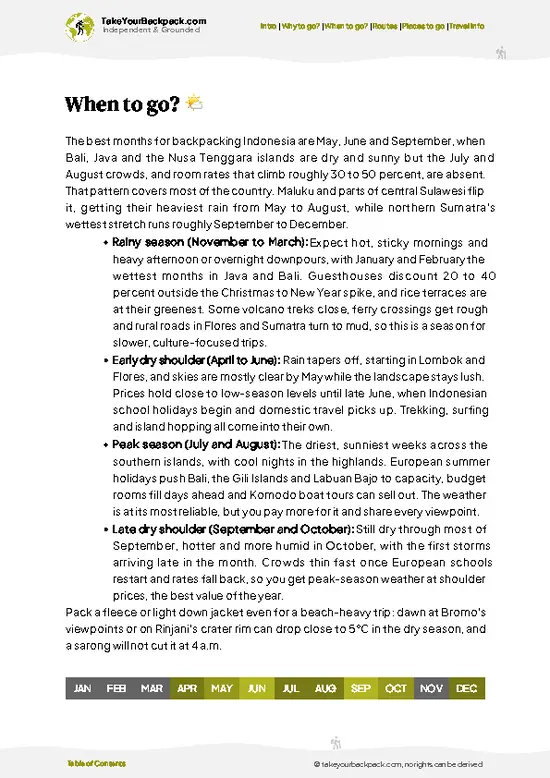
  • Festival window (usually August): Dry season brings days around 20 to 24°C (68 to 75°F) and chilly nights near 8 to 12°C (46 to 54°F) at about 1,600 meters. Daylight runs roughly 6am to 6pm all year near the equator. Crowds peak, and flights and rooms in Wamena cost the most.
  • Shoulder months (June, July, September): Mostly dry, with fewer visitors and lower prices. Trekking conditions are good, but you miss the gathering.
  • Wetter months (November to March): Afternoon rain is frequent, trails turn to mud and flights can be delayed by cloud. Prices drop, yet trekking is harder.
Confirm the exact dates with the local tourism office before booking, since they are announced each year.

source: climatestotravel.comJANJanuary: not recommended for travelingFEBFebruary: not recommended for travelingMARMarch: not recommended for travelingAPRApril: not recommended for travelingMAYMay: not recommended for travelingJUNJune: not recommended for travelingJULJuly: not recommended for travelingAUGAugust: excellent for travelingSEPSeptember: not recommended for travelingOCTOctober: not recommended for travelingNOVNovember: not recommended for travelingDECDecember: not recommended for traveling

✈️ The backpacker research shortcutIndonesia Travel Guide

An offline-friendly backpacking guide with optimized travel routes, ranked highlights, transport advice, and the best areas to stay.
example page 0 from our offline Travel Guide for Indonesia
example page 1 from our offline Travel Guide for Indonesia
example page 2 from our offline Travel Guide for Indonesia
example page 3 from our offline Travel Guide for Indonesia
example page 4 from our offline Travel Guide for Indonesia
example page 5 from our offline Travel Guide for Indonesia
example page 6 from our offline Travel Guide for Indonesia
example page 7 from our offline Travel Guide for Indonesia
The digital guide (460 pages) contains:
✅ 153 highlights, ranked by travel appeal
✅ Optimized 14, 21 & 30-day travel routes
✅ Cities, national parks, landmarks, beaches
✅ How to get around
✅ Offline-friendly for travel without Wi-Fi
👉 Click to see all 30+ guide features

📅 Plan smarter in minutes, not weeks
✅ Month by month travel advice
✅ Festivals & national holidays
✅ Budget expectations

🗺️ Go to the right places, skip the overrated ones
✅ Honest pros & cons of destinations
✅ Top hikes, parks & viewpoints
✅ Lesser-known places most travelers miss
✅ Clear “worth it vs skip it” guidance

🛏️ Travel smoothly without rookie mistakes
✅ Best areas to stay
✅ Transport systems explained simply
✅ Common scams & safety advice
✅ SIM cards, money & practical tips

🌍 Understand the country, not just visit it
✅ Culture & traditions
✅ 52 Essential phrases & customs
✅ Festivals worth planning around
✅ Traveler-friendly historical context
✅ Insights that make places more meaningful

📱 Built for real travel conditions
✅ Fully downloadable PDF
✅ Works completely offline
✅ Optimized for phone use
✅ Useful in remote areas & buses
✅ Everything in one place
Stop searching, start planning
Get instant access to your full guide. 30‑day money-back guarantee.
+ Add another guide for just

By proceeding you agree to our terms.
Sent to your inbox immediately after payment • 100% Secure Checkout
Best Backpacking Travel Advisor 2025 tourism awardBest Backpacking
Travel Advisor
2025
What others say about Take Your Backpack Guides:
⭐⭐⭐⭐⭐
Fantastic, amazing amount of information!
⭐⭐⭐⭐⭐
My goodness this is amazing, it's what I've been looking for hats off too you!
⭐⭐⭐⭐⭐
I think this is absolutely BRILLIANT
⭐⭐⭐⭐
Very complete and informative. It's still missing places, but I gotta to commend you
⭐⭐⭐⭐⭐
This is truly amazing, thank you, can't wait to explore it with my kids!
⭐⭐⭐⭐⭐
Awesome resource, thank you!
⭐⭐⭐⭐⭐
This is amazing! Can't wait to explore the ones I haven't seen
⭐⭐⭐⭐
I love this! Well done, great idea.
⭐⭐⭐⭐⭐
Thanks for taking the time to make this gem!
⭐⭐⭐⭐⭐
This might be the best website I've ever seen.
⭐⭐⭐⭐⭐
Congratulations, and thank you so much for your work; it's incredibly valuable.
⭐⭐⭐⭐
In all seriousness I think you did a great job pointing out the important spots
⭐⭐⭐⭐⭐
10/10 very good
⭐⭐⭐⭐⭐
As someone who's only just starting to visit regularly this is awesome, thank you.
⭐⭐⭐⭐
Thank you very much! I'm going to visit my dad, it's going to be very useful!
⭐⭐⭐⭐⭐
This is really cool! We'll be travelling for the first time and this definitely come in handy.
⭐⭐⭐⭐⭐
You are now our minister of culture, congratulations 👨‍💼
⭐⭐⭐⭐⭐
Just wanted to tell you that this is a pearl! Going to follow your recommendations.
⭐⭐⭐⭐⭐
This is so cool. I'll definitely be using the resource for my travels soon.
⭐⭐⭐⭐⭐
This is very impressive! Good work.
⭐⭐⭐⭐⭐
This is an amazing and informative site. Very well done!

🛏️ Where to stay?Best areas to stay in Indonesia

Wamena town is the best base for backpackers, because it has the festival-area transport, the guesthouses and the guides. Stay near the main market and central streets, where you can walk to food stalls, change money at banks and arrange motorbike taxis or shared vehicles to the festival ground. This area is also the safest for solo travelers, since it stays busy and well lit in the evening, and most guesthouse owners will help organize trips. Rooms are basic, with cold or bucket showers and thin walls, but they are social: you will meet other travelers over breakfast and can split guide and transport … read more 👉
Wamena town is the best base for backpackers, because it has the festival-area transport, the guesthouses and the guides. Stay near the main market and central streets, where you can walk to food stalls, change money at banks and arrange motorbike taxis or shared vehicles to the festival ground. This area is also the safest for solo travelers, since it stays busy and well lit in the evening, and most guesthouse owners will help organize trips. Rooms are basic, with cold or bucket showers and thin walls, but they are social: you will meet other travelers over breakfast and can split guide and transport costs. Book early, since the options are limited in festival week and prices rise. A second option is a homestay in a village outside Wamena, such as near Jiwika or Kurima, for a quieter and more local experience. Facilities are simpler, nights are cold, and you should travel with a guide and arrange it ahead. Bring a warm layer either way.

👛 Costs (as of 15 October 2026)Travel costs and budget guide for Baliem Valley

A few days at the Baliem Valley Festival typically costs US$60 to 110 a day on the ground, but flights into Wamena add a major lump sum on top. The table below covers realistic prices for independent travelers.
CategoryBudget RangeLocal Reality
Festival ticketsUSD 0 to 15Entry is often free or a small fee. Photography fees may apply, and some villages charge a small amount for visits.
AccommodationUSD 15 to 45 per nightBasic guesthouses in Wamena with shared or simple bathrooms. Prices rise in festival week and rooms sell out.
Local transportUSD 3 to 20 per dayMotorbike taxis and shared vehicles to the festival ground. Private cars or guides cost more, around USD 40 to 70 a day.
Food & drinksUSD 8 to 20 per dayWarung meals cost USD 2 to 5. Imported goods are expensive because everything arrives
… read more 👉
A few days at the Baliem Valley Festival typically costs US$60 to 110 a day on the ground, but flights into Wamena add a major lump sum on top. The table below covers realistic prices for independent travelers.
CategoryBudget RangeLocal Reality
Festival ticketsUSD 0 to 15Entry is often free or a small fee. Photography fees may apply, and some villages charge a small amount for visits.
AccommodationUSD 15 to 45 per nightBasic guesthouses in Wamena with shared or simple bathrooms. Prices rise in festival week and rooms sell out.
Local transportUSD 3 to 20 per dayMotorbike taxis and shared vehicles to the festival ground. Private cars or guides cost more, around USD 40 to 70 a day.
Food & drinksUSD 8 to 20 per dayWarung meals cost USD 2 to 5. Imported goods are expensive because everything arrives by air.
Miscellaneous expensesUSD 10 to 30 per dayPolice travel permit (surat jalan) arrangements, guides, tips, handicrafts and a warm layer. Flights from Jayapura cost roughly USD 80 to 200 each way.
⚠️ Prices can change and everyone travels differently, so take this as a rough guide. Hope it helps you plan your adventure!

🍲 FoodLocal Cuisine & Drinks

Food at the festival is local and simple, so expect bakar batu (stone-cooked) pork, sweet potato (hipere), corn and leafy greens cooked in earth ovens. Smoky, tender and eaten with your hands, this is the dish worth seeking out, and it often appears when a group hosts a feast.

Around the field, small stalls and warungs sell fried bananas, boiled corn, noodles, rice with chicken or fish, and sweet tea or coffee. Papuan coffee from the highlands is a good pick. Fresh fruit and peanuts are cheap snacks for the long watching hours.

Bring cash in small notes, since cards do not work and change is scarce. Pork is common, so travelers who do not eat it should ask first and stick to rice, vegetables or chicken. Lines are informal, portions are generous, and sharing is normal. If you are invited … read more 👉
Food at the festival is local and simple, so expect bakar batu (stone-cooked) pork, sweet potato (hipere), corn and leafy greens cooked in earth ovens. Smoky, tender and eaten with your hands, this is the dish worth seeking out, and it often appears when a group hosts a feast.

Around the field, small stalls and warungs sell fried bananas, boiled corn, noodles, rice with chicken or fish, and sweet tea or coffee. Papuan coffee from the highlands is a good pick. Fresh fruit and peanuts are cheap snacks for the long watching hours.

Bring cash in small notes, since cards do not work and change is scarce. Pork is common, so travelers who do not eat it should ask first and stick to rice, vegetables or chicken. Lines are informal, portions are generous, and sharing is normal. If you are invited to join a meal, accept politely and take a small portion. Carry your own water or purification tablets, as bottled water can run out in peak days.

FAQCommon questions from travelers

The festival usually takes place over three days in August, in the Baliem Valley near Wamena in Papua Pegunungan. Exact dates are announced each year by local authorities, so check before booking flights. Most travelers arrive two or three days early and fly into Wamena from Jayapura, about 45 minutes by air.
Attending costs very little at the gate, often free to USD 15, but the trip is not cheap. Budget USD 60 to 110 a day for a guesthouse in Wamena, food and transport, plus roughly USD 80 to 200 each way for flights from Jayapura. A guide for village visits adds around USD 40 to 70 a day.
No formal ticket is usually needed in advance, since entry is cheap and handled at the festival ground. What you must book early are flights to Wamena and rooms, which sell out in August. Arrange a guide and check whether a travel permit (surat jalan) is required for your plans, at least a week ahead.
⚠️ Things can change over time, so always validate details locally before you go.

Other Indonesian festivals near Baliem Valley

Explore more nearby:


💡 Not sure where to go next?
Create a personalized itinerary for Indonesia including Baliem Valley and the places that fit your trip.

Generate my itinerary

👉 Discover all festivals

Or checkout all Indonesia has to offer (think cities, towns, villages, national parks, hikes, beaches, festivals)
Country photo of Indonesia

We 💚 feedbackWhat to keep in mind

The Baliem Valley Festival is worth the trip for the sight of clans meeting in a green highland bowl, with drums, war cries and smoke from the cooking pits. The drawback is cost and logistics. Flights are pricey, weather can delay them, and the show can feel staged, so build in spare days and book a guide to see beyond the field.

✈️ When did I visit Indonesia?
As part of my 1.5 year travel around the world trip, I visited Indonesia twice (and it was worth it): first in September 2015 and a bit later again in January and February 2016.

✍️ Help improve this page!
The information on this page is based on my own backpacking experience in Indonesia, supplemented with up-to-date research and feedback from other travelers. Travel details can change, so if you notice anything outdated or incomplete, feel free to let me know.


🙋‍♂️ Give feedback

👋 Meet the founderWho’s Behind Take Your Backpack?

Johan, backpacker and founder of TakeYourBackpackHi, I’m Johan (Netherlands 🇳🇱), the creator of TakeYourBackpack. Over the past 3 decades, I’ve backpacked through 90+ countries across six continents, gaining extensive experience with independent travel, long-term trips, and overland routes.

This site is built on a combination of firsthand travel experience and carefully curated insights from other backpackers. Many guides are based on places I’ve personally visited, while others bring together tips, observations, and practical advice shared by trusted travelers I’ve met along the way.

The goal is to provide realistic, experience-driven guidance — not generic itineraries — so you can explore destinations with better context, clearer expectations, and more confidence.