

×

Indonesia🇮🇩 | regionsMaratua IslandManta channel, coral walls, lagoon, remote dive resorts | things to do and best time to go

Explore LombokExplore Papua

Backpacking in Maratua Island
👌 Worth visitingregion ranked #15
By Johan Kruseman 🇳🇱 | Updated October 15, 2026

Most travelers book Maratua Island as a day trip from the mainland and miss the real payoff: staying overnight transforms it from a rushed snorkel into a genuine escape. Maratua sits in the Berau Regency of East Kalimantan, a remote corner of Indonesian Borneo where few tourists venture. The island itself is a compact ring of limestone cliffs, white sand, and turquoise lagoons that feel genuinely untouched. I remember floating in the lagoon at dusk, the water so clear I could count individual fish below me while the cliffs turned gold in the fading light. The vibe is low-key and social without being crowded; you'll meet other travelers but never feel herded. Compared to the Gili Islands or Raja Ampat, Maratua demands more effort to reach but rewards you with far fewer crowds and a sharper sense of discovery.

Discover everything you want to know in the 📖 Indonesia Travel Guide.


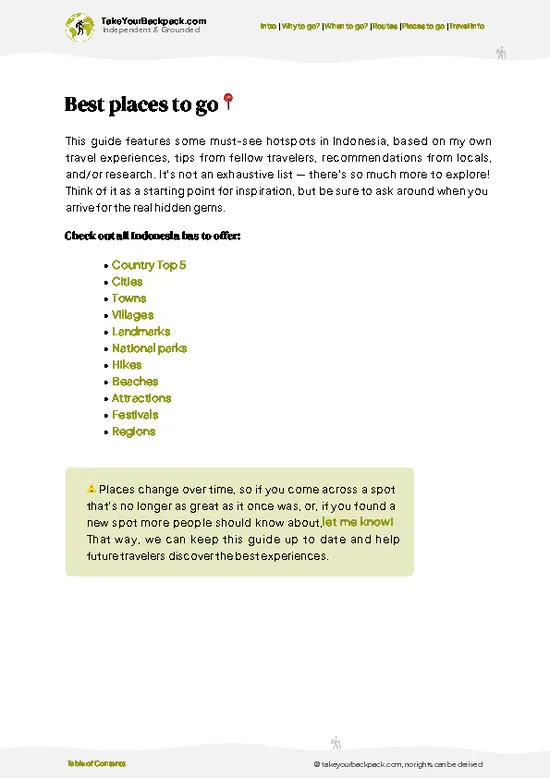
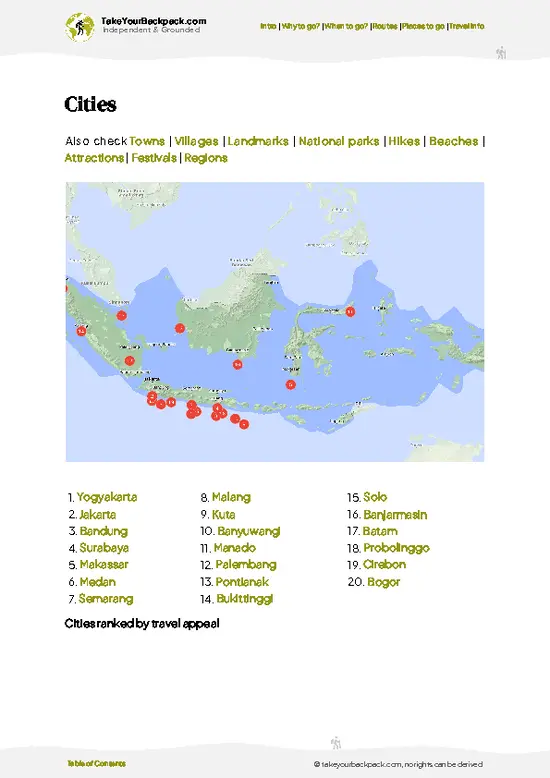
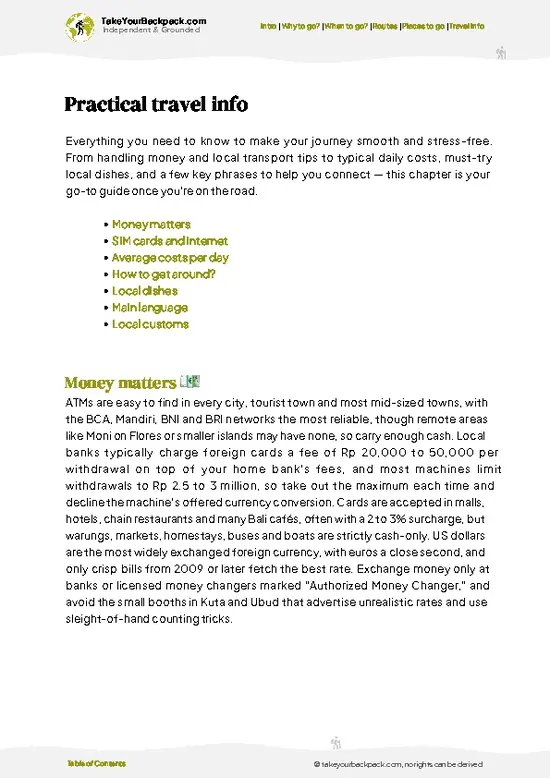
example page 0 from our offline Travel Guide for Indonesia
example page 1 from our offline Travel Guide for Indonesia
example page 2 from our offline Travel Guide for Indonesia
example page 3 from our offline Travel Guide for Indonesia
example page 4 from our offline Travel Guide for Indonesia
example page 5 from our offline Travel Guide for Indonesia
example page 6 from our offline Travel Guide for Indonesia
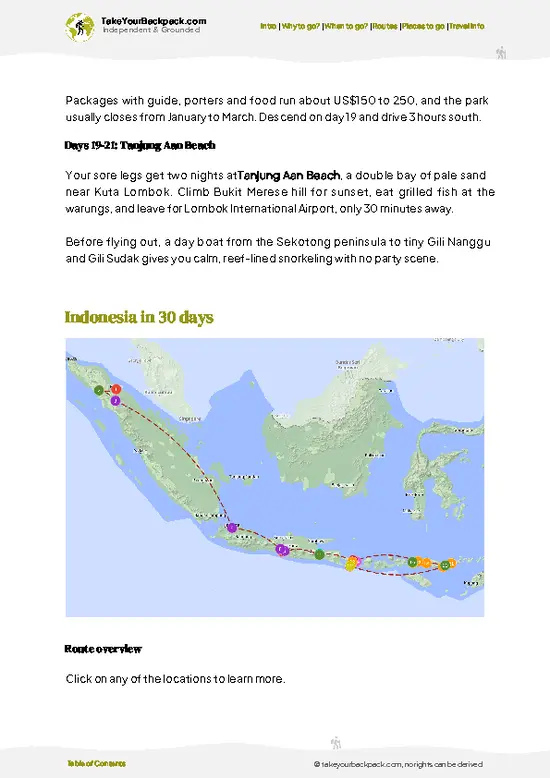
example page 7 from our offline Travel Guide for Indonesia
Loading the map 🌍
CLICK TO FILTER
cities
towns
villages
landmarks
national parks
hikes
beaches
attractions
festivals
regions
SHOW COUNTRY’S BESTSHOW ALL

✨ Why go?
Ranked #15 region in Indonesia
What makes it a must-see region

Maratua Island works as a slow-travel hub because it combines multiple rewards in one compact location: world-class snorkeling and diving in the lagoon and beyond, jungle trekking through limestone terrain, and genuine interaction with local Bajau communities. The island's isolation is its strength; you can base yourself here for several days and explore different sites without constant relocation. Transport between dive spots and snorkel sites is straightforward by boat, and the lack of road infrastructure actually simplifies logistics. You get nature and culture without the infrastructure fatigue of larger islands. The reef system is healthy and accessible, making it ideal for both beginners and experienced divers seeking something beyond the typical tourist circuit.

💡 HighlightsTop highlights of Maratua Island

  1. Maratua Atoll Coral Gardens: The island sits inside a massive atoll with pristine coral formations in the lagoon. Snorkeling directly from shore reaches healthy hard and soft corals, with schools of reef fish and occasional sea turtles. No boat needed for entry-level exploration.
  2. Paal Island (Pulau Paal): A small island within the atoll, a 15-minute boat ride away, known for white sand and calm lagoon water. Local fishermen base themselves here, and the lack of permanent tourism infrastructure keeps it quiet and authentic.
  3. Kakaban Island: Famous for its landlocked saltwater lake filled with millions of stingless jellyfish. A 30-minute boat ride from Maratua, it's a surreal swim through harmless creatures. The lake's isolation created a unique ecosystem found nowhere else in Indonesia.
  4. Derawan
… read more 👉
  1. Maratua Atoll Coral Gardens: The island sits inside a massive atoll with pristine coral formations in the lagoon. Snorkeling directly from shore reaches healthy hard and soft corals, with schools of reef fish and occasional sea turtles. No boat needed for entry-level exploration.
  2. Paal Island (Pulau Paal): A small island within the atoll, a 15-minute boat ride away, known for white sand and calm lagoon water. Local fishermen base themselves here, and the lack of permanent tourism infrastructure keeps it quiet and authentic.
  3. Kakaban Island: Famous for its landlocked saltwater lake filled with millions of stingless jellyfish. A 30-minute boat ride from Maratua, it's a surreal swim through harmless creatures. The lake's isolation created a unique ecosystem found nowhere else in Indonesia.
  4. Derawan Island: The closest major island (45 minutes by boat), home to a sea turtle conservation center and nesting beaches. Turtles come ashore year-round, and the center offers genuine insight into local conservation efforts without the circus of larger facilities.
  5. Sangalaki Island: Another nearby atoll island (1 hour by boat) with excellent house reef diving and a quieter vibe than Derawan. Manta rays appear seasonally, and the island has minimal development, making it feel remote despite easy access.
  6. Maratua's House Reef: The coral wall drops steeply just offshore from the main settlement. Divers and snorkelers encounter barracuda, grouper, and occasional sharks in clear water. Entry is straightforward from the beach, making it accessible to all skill levels.
  7. Tanjung Batu (Rocky Point): A local fishing spot on Maratua's eastern shore, less visited by tourists. The rocky outcrops create interesting snorkeling terrain, and you'll see working fishermen rather than tour groups. Sunrise here is quiet and unrushed.
  8. Maratua Lagoon Mangrove Edges: The shallow mangrove areas on the lagoon's perimeter host juvenile fish, rays, and occasional dolphins. Local guides know the best spots, and exploring by small boat or kayak feels intimate and off the typical tourist circuit.
  9. Nabire Beach (Pantai Nabire): A long, sandy beach on Maratua's western side with calm lagoon water. It's where locals swim and relax, not a tourist beach, making it a genuine window into island life without the resort atmosphere.
  10. Maratua's Night Dive Sites: Several reef sections come alive after dark with nocturnal species, bioluminescent plankton, and hunting behavior. Local dive operators run these regularly, and the experience reveals an entirely different reef ecosystem from daytime visits.
I'd start with Kakaban Island first. The stingless jellyfish lake is genuinely one-of-a-kind, and doing it early means you're not chasing it as an afterthought when weather or boat schedules get tight.
Spotted a mistake or missing something? Contact us.

⌛️ 5 daysSeeing the highlights in 5 days

Day 1: Maratua Arrival and Lagoon Orientation: Most boats from Berau or Tanjung Redeb arrive in the late morning or early afternoon. Use your first day to settle into accommodation, walk the main settlement, and snorkel the house reef directly from shore. The lagoon's calm water and accessible coral mean you can start exploring immediately without a guide. Eat dinner with other travelers at a local warung to get current information on boat schedules and which islands are running trips the next day.

Day 2: Kakaban Island and Jellyfish Lake: Book a boat trip early. Kakaban sits 30 minutes away and the stingless jellyfish lake is the island's anchor experience. Swim among millions of harmless creatures in water that feels otherworldly. The boat ride back gives you time to process what you've … read more 👉
Day 1: Maratua Arrival and Lagoon Orientation: Most boats from Berau or Tanjung Redeb arrive in the late morning or early afternoon. Use your first day to settle into accommodation, walk the main settlement, and snorkel the house reef directly from shore. The lagoon's calm water and accessible coral mean you can start exploring immediately without a guide. Eat dinner with other travelers at a local warung to get current information on boat schedules and which islands are running trips the next day.

Day 2: Kakaban Island and Jellyfish Lake: Book a boat trip early. Kakaban sits 30 minutes away and the stingless jellyfish lake is the island's anchor experience. Swim among millions of harmless creatures in water that feels otherworldly. The boat ride back gives you time to process what you've just done. Spend the evening diving or snorkeling the house reef again, now with better understanding of the atoll's layout.

Day 3: Derawan and Turtle Conservation: A 45-minute boat ride reaches Derawan Island, where the sea turtle center operates openly. You'll see nesting turtles, hatchlings, and rehabilitation efforts without the staged feel of larger facilities. The island's house reef is excellent, and staying overnight on Derawan (or returning to Maratua) gives you flexibility. Off-Path Reward: Ask your boat operator about Sangalaki Island on the return journey. A quick stop there adds manta ray habitat and a quieter atoll experience to your itinerary without major detour.

Day 4: Deep Reef Diving or Mangrove Exploration: If you dive, book a morning dive on Maratua's wall or a nearby site. If snorkeling is your focus, explore the mangrove edges by small boat or kayak with a local guide. The mangroves host juvenile fish and rays, and the pace is slow enough to notice details. Afternoon: rest, eat, and prepare for your final day.

Day 5: Departure or Extended Exploration: Most boats leave in the morning. If your schedule allows, stay another night and use the day for a night dive or a return to your favorite site. The must-do moment is watching sunrise from Tanjung Batu while fishermen cast nets. It captures why Maratua works: you're not watching tourism happen; you're watching the island live.

🌤️ When to go?Best time to visit Maratua Island

  • Dry Season (May to September): The best window for visiting. Seas are calm, visibility underwater reaches 20 to 30 meters, and weather is stable with temperatures around 26 to 28°C (79 to 82°F). Daylight runs roughly 12 hours. Crowds peak in July and August, pushing accommodation prices up 20 to 30 percent.
  • Shoulder Months (April, October): Fewer tourists than peak season, still decent weather, and prices drop 10 to 15 percent. Occasional rain but rarely all-day downpours. Water visibility stays good at 15 to 25 meters.
  • Wet Season (November to March): Heavy rainfall, rough seas, and limited visibility (5 to 10 meters underwater) make diving and snorkeling less appealing. Temperatures hover around 27 to 29°C (81 to 84°F). Accommodation rates fall significantly, and the island feels quieter. Boat
… read more 👉
  • Dry Season (May to September): The best window for visiting. Seas are calm, visibility underwater reaches 20 to 30 meters, and weather is stable with temperatures around 26 to 28°C (79 to 82°F). Daylight runs roughly 12 hours. Crowds peak in July and August, pushing accommodation prices up 20 to 30 percent.
  • Shoulder Months (April, October): Fewer tourists than peak season, still decent weather, and prices drop 10 to 15 percent. Occasional rain but rarely all-day downpours. Water visibility stays good at 15 to 25 meters.
  • Wet Season (November to March): Heavy rainfall, rough seas, and limited visibility (5 to 10 meters underwater) make diving and snorkeling less appealing. Temperatures hover around 27 to 29°C (81 to 84°F). Accommodation rates fall significantly, and the island feels quieter. Boat schedules become unpredictable.
Book transport to Maratua in advance during dry season; boats fill quickly and schedules tighten when weather turns rough.


source: climatestotravel.comJANJanuary: fair for travelingFEBFebruary: fair for travelingMARMarch: fair for travelingAPRApril: highly recommended for travelingMAYMay: excellent for travelingJUNJune: excellent for travelingJULJuly: highly recommended for travelingAUGAugust: highly recommended for travelingSEPSeptember: excellent for travelingOCTOctober: highly recommended for travelingNOVNovember: fair for travelingDECDecember: fair for traveling
when-to-go

✈️ The backpacker research shortcutIndonesia Travel Guide

An offline-friendly backpacking guide with optimized travel routes, ranked highlights, transport advice, and the best areas to stay.
example page 0 from our offline Travel Guide for Indonesia
example page 1 from our offline Travel Guide for Indonesia
example page 2 from our offline Travel Guide for Indonesia
example page 3 from our offline Travel Guide for Indonesia
example page 4 from our offline Travel Guide for Indonesia
example page 5 from our offline Travel Guide for Indonesia
example page 6 from our offline Travel Guide for Indonesia
example page 7 from our offline Travel Guide for Indonesia
The digital guide (460 pages) contains:
✅ 153 highlights, ranked by travel appeal
✅ Optimized 14, 21 & 30-day travel routes
✅ Cities, national parks, landmarks, beaches
✅ How to get around
✅ Offline-friendly for travel without Wi-Fi
👉 Click to see all 30+ guide features

📅 Plan smarter in minutes, not weeks
✅ Month by month travel advice
✅ Festivals & national holidays
✅ Budget expectations

🗺️ Go to the right places, skip the overrated ones
✅ Honest pros & cons of destinations
✅ Top hikes, parks & viewpoints
✅ Lesser-known places most travelers miss
✅ Clear “worth it vs skip it” guidance

🛏️ Travel smoothly without rookie mistakes
✅ Best areas to stay
✅ Transport systems explained simply
✅ Common scams & safety advice
✅ SIM cards, money & practical tips

🌍 Understand the country, not just visit it
✅ Culture & traditions
✅ 52 Essential phrases & customs
✅ Festivals worth planning around
✅ Traveler-friendly historical context
✅ Insights that make places more meaningful

📱 Built for real travel conditions
✅ Fully downloadable PDF
✅ Works completely offline
✅ Optimized for phone use
✅ Useful in remote areas & buses
✅ Everything in one place
Stop searching, start planning
Get instant access to your full guide. 30‑day money-back guarantee.
+ Add another guide for just

By proceeding you agree to our terms.
Sent to your inbox immediately after payment • 100% Secure Checkout
Best Backpacking Travel Advisor 2025 tourism awardBest Backpacking
Travel Advisor
2025
What others say about Take Your Backpack Guides:
⭐⭐⭐⭐⭐
Fantastic, amazing amount of information!
⭐⭐⭐⭐⭐
My goodness this is amazing, it's what I've been looking for hats off too you!
⭐⭐⭐⭐⭐
I think this is absolutely BRILLIANT
⭐⭐⭐⭐
Very complete and informative. It's still missing places, but I gotta to commend you
⭐⭐⭐⭐⭐
This is truly amazing, thank you, can't wait to explore it with my kids!
⭐⭐⭐⭐⭐
Awesome resource, thank you!
⭐⭐⭐⭐⭐
This is amazing! Can't wait to explore the ones I haven't seen
⭐⭐⭐⭐
I love this! Well done, great idea.
⭐⭐⭐⭐⭐
Thanks for taking the time to make this gem!
⭐⭐⭐⭐⭐
This might be the best website I've ever seen.
⭐⭐⭐⭐⭐
Congratulations, and thank you so much for your work; it's incredibly valuable.
⭐⭐⭐⭐
In all seriousness I think you did a great job pointing out the important spots
⭐⭐⭐⭐⭐
10/10 very good
⭐⭐⭐⭐⭐
As someone who's only just starting to visit regularly this is awesome, thank you.
⭐⭐⭐⭐
Thank you very much! I'm going to visit my dad, it's going to be very useful!
⭐⭐⭐⭐⭐
This is really cool! We'll be travelling for the first time and this definitely come in handy.
⭐⭐⭐⭐⭐
You are now our minister of culture, congratulations 👨‍💼
⭐⭐⭐⭐⭐
Just wanted to tell you that this is a pearl! Going to follow your recommendations.
⭐⭐⭐⭐⭐
This is so cool. I'll definitely be using the resource for my travels soon.
⭐⭐⭐⭐⭐
This is very impressive! Good work.
⭐⭐⭐⭐⭐
This is an amazing and informative site. Very well done!

🛏️ Where to stay?How to pick the right area

Stay in the main village on Maratua Island itself, where guesthouses cluster near the dock and offer direct access to guides, boats, and other travelers. The village is small enough to navigate on foot but social enough to find company for snorkeling or diving. Guesthouses range from basic fan-cooled rooms (US$12 to 20 per night) to slightly more comfortable options with private bathrooms (US$25 to 40). For a deeper experience, arrange a homestay with a Bajau family in a traditional stilt house; this costs US$15 to 30 per night and includes meals and cultural immersion. The village has no nightlife … read more 👉
Stay in the main village on Maratua Island itself, where guesthouses cluster near the dock and offer direct access to guides, boats, and other travelers. The village is small enough to navigate on foot but social enough to find company for snorkeling or diving. Guesthouses range from basic fan-cooled rooms (US$12 to 20 per night) to slightly more comfortable options with private bathrooms (US$25 to 40). For a deeper experience, arrange a homestay with a Bajau family in a traditional stilt house; this costs US$15 to 30 per night and includes meals and cultural immersion. The village has no nightlife or tourist infrastructure, which is exactly the point; you're here to dive, snorkel, and rest between water days.

🚌 Getting aroundHow to get from A to B

The biggest mistake is assuming you can island-hop freely without pre-booking boats; irregular schedules and weather delays eat days and money fast. Most backpackers rely on speedboats and local fishing boats arranged through guesthouses or dive operators, which is reliable but requires advance notice.

  • Speedboat from Berau to Maratua: US$25 to 40 per person, 2 to 3 hours, runs most mornings; book the day before to secure a seat and confirm departure.
  • Local Fishing Boats for Island Hops: US$8 to 15 per person to nearby islands like Kakaban or Derawan, 30 to 45 minutes, slower and less comfortable but cheaper; negotiate directly with boat owners at the dock.
  • Private Boat Charter: US$60 to 100 per day for a small boat and guide, gives you flexibility to visit multiple sites and remote islands
… read more 👉
The biggest mistake is assuming you can island-hop freely without pre-booking boats; irregular schedules and weather delays eat days and money fast. Most backpackers rely on speedboats and local fishing boats arranged through guesthouses or dive operators, which is reliable but requires advance notice.

  • Speedboat from Berau to Maratua: US$25 to 40 per person, 2 to 3 hours, runs most mornings; book the day before to secure a seat and confirm departure.
  • Local Fishing Boats for Island Hops: US$8 to 15 per person to nearby islands like Kakaban or Derawan, 30 to 45 minutes, slower and less comfortable but cheaper; negotiate directly with boat owners at the dock.
  • Private Boat Charter: US$60 to 100 per day for a small boat and guide, gives you flexibility to visit multiple sites and remote islands on your schedule.
  • Dive Operator Boats: If diving, operators include transport to dive sites (US$40 to 70 per dive); this is often the most reliable option and includes a guide.
Book transport through your guesthouse the evening before; it saves time and ensures the boat actually departs. Bring cash in Indonesian rupiah; few places accept cards.

🍲 FoodEating & Drinking in Maratua Island

Food on Maratua revolves around fresh seafood: grilled fish, squid, and prawns caught that morning, served with rice and sambal (chili paste). Breakfast is typically nasi goreng (fried rice) or roti (flatbread) with strong coffee. The local specialty is trepang (sea cucumber), dried and sold to mainland traders, but fresh versions appear in guesthouse meals. Eat at warung (small family-run cafés) near the dock where fishermen eat; prices run US$2 to 4 per meal and quality is high because turnover is fast. Bajau cooking emphasizes coconut milk, turmeric, and whatever the sea provides that day. Drinking water comes bottled; ask your guesthouse for recommendations. There are no tourist restaurants or chains; every meal connects you to the island's actual food culture and fishing rhythm.

FAQCommon questions from travelers

Five to seven days is ideal: two days for arrival and lagoon orientation, one full day for Kakaban Island and the jellyfish lake, one day for nearby islands like Derawan, and one or two days for diving, trekking, or simply resting. Most backpackers spend 4 to 6 nights on the island.
Boats are your only option. Speedboats connect Maratua to Berau on the mainland (2 to 3 hours, US$25 to 40), and local fishing boats or dive operator boats move you between nearby islands like Kakaban (30 minutes), Derawan (45 minutes), and Sangalaki. Book all transport through your guesthouse the evening before departure.
Maratua is known for the Kakaban jellyfish lake, a landlocked atoll where millions of stingless jellyfish drift in turquoise water, and for world-class diving and snorkeling in pristine coral gardens. It's also a gateway to the broader Berau atoll system and a stronghold of Bajau sea-nomad culture, making it one of Indonesia's most authentic and least-touristed marine destinations.
⚠️ Things can change over time, so always validate details locally before you go.

Other Indonesian regions near Maratua Island

Explore more nearby:

  • Derawan Islands—Manta rays, jellyfish lake, Berau sandbars, stilt guesthouses| 17 km away
  • Sulawesi—weaving traditions, highland cultures, intricate coastline| 506 km away
  • Tana Toraja—cliff graves, tongkonan houses, ritual ceremonies| 605 km away

💡 Not sure where to go next?
Create a personalized itinerary for Indonesia including Maratua Island and the places that fit your trip.

Generate my itinerary

👉 Discover all regions

Or checkout all Indonesia has to offer (think cities, towns, villages, national parks, hikes, beaches, festivals)
Country photo of Indonesia

We 💚 feedbackWhat to keep in mind

Maratua rewards slow travel and water time in ways few Indonesian islands still do. The catch is that getting here requires planning and patience, and the island has minimal infrastructure for comfort-seekers. If you're willing to embrace both, you'll find something rare.

✈️ When did I visit Indonesia?
As part of my 1.5 year travel around the world trip, I visited Indonesia twice (and it was worth it): first in September 2015 and a bit later again in January and February 2016.

✍️ Help improve this page!
The information on this page is based on my own backpacking experience in Indonesia, supplemented with up-to-date research and feedback from other travelers. Travel details can change, so if you notice anything outdated or incomplete, feel free to let me know.


🙋‍♂️ Give feedback

👋 Meet the founderWho’s Behind Take Your Backpack?

Johan, backpacker and founder of TakeYourBackpackHi, I’m Johan (Netherlands 🇳🇱), the creator of TakeYourBackpack. Over the past 3 decades, I’ve backpacked through 90+ countries across six continents, gaining extensive experience with independent travel, long-term trips, and overland routes.

This site is built on a combination of firsthand travel experience and carefully curated insights from other backpackers. Many guides are based on places I’ve personally visited, while others bring together tips, observations, and practical advice shared by trusted travelers I’ve met along the way.

The goal is to provide realistic, experience-driven guidance — not generic itineraries — so you can explore destinations with better context, clearer expectations, and more confidence.