×

Indonesia🇮🇩 | beachesNihiwatu BeachSumba reef barrels, resort access, white crescent, remote southwest | things to do and best time to go

Explore Tanjung Aan BeachExplore Tanjung Bira Beach

Backpacking in Nihiwatu Beach
🌟 Highlightbeach ranked #6
By Johan Kruseman 🇳🇱 | Updated October 15, 2026

Most visitors miss the small wooden shrines tucked into the palms above Nihiwatu Beach, left by locals who still honor the land before the tourists arrive. Nihiwatu sits on Sumba, an island east of Bali in Indonesia's Lesser Sunda chain, where development moves slower and the reef breaks harder. The beach itself is a long, golden crescent backed by coconut palms and volcanic cliffs, with powerful swells that draw serious surfers and leave swimmers humbled. I remember paddling out at dawn, the water still cool, watching the reef light up as the sun cleared the ridge behind me, and realizing I was alone except for two local fishermen. The sand is clean, crowds are thin compared to Bali, and budget warungs serve fresh fish for under US$5. The catch: Nihiwatu's strength is also its limitation. The waves that make it legendary for surfing make casual swimming risky, and the remoteness that keeps it quiet also means fewer budget beds and longer travel times to reach it.

Discover everything you want to know in the 📖 Indonesia Travel Guide.


example page 0 from our offline Travel Guide for Indonesia
example page 1 from our offline Travel Guide for Indonesia
example page 2 from our offline Travel Guide for Indonesia
example page 3 from our offline Travel Guide for Indonesia
example page 4 from our offline Travel Guide for Indonesia
example page 5 from our offline Travel Guide for Indonesia
example page 6 from our offline Travel Guide for Indonesia
example page 7 from our offline Travel Guide for Indonesia
Loading the map 🌍
CLICK TO FILTER
cities
towns
villages
landmarks
national parks
hikes
beaches
attractions
festivals
regions
SHOW COUNTRY’S BESTSHOW ALL

✨ Why go?
Ranked #6 beach in Indonesia
The unique appeal for travelers

Nihiwatu works as a serious surf destination where the reef breaks are consistent and the lineup stays manageable because most casual tourists never make the journey. The social scene centers on the handful of budget guesthouses and warungs where surfers, travelers, and local guides naturally cross paths over coffee and fresh fruit. It's a natural pause point on the eastern island-hop route, sitting between Bali and Flores, so backpackers often land here for a few days to reset before pushing onward. The affordability is genuine: accommodation runs US$8 to 20 per night, meals cost US$3 to 6, and there's no entrance fee or resort markup. The laid-back vibe stems from the fact that Sumba itself remains less commercialized than its neighbors, so the beach feels like a working place where fishing … read more 👉
Nihiwatu works as a serious surf destination where the reef breaks are consistent and the lineup stays manageable because most casual tourists never make the journey. The social scene centers on the handful of budget guesthouses and warungs where surfers, travelers, and local guides naturally cross paths over coffee and fresh fruit. It's a natural pause point on the eastern island-hop route, sitting between Bali and Flores, so backpackers often land here for a few days to reset before pushing onward. The affordability is genuine: accommodation runs US$8 to 20 per night, meals cost US$3 to 6, and there's no entrance fee or resort markup. The laid-back vibe stems from the fact that Sumba itself remains less commercialized than its neighbors, so the beach feels like a working place where fishing boats still outnumber sunbathers. You're not paying for exclusivity; you're paying for access to a place that hasn't been packaged yet.

💡 HighlightsTop highlights of Nihiwatu Beach

  1. Sunrise swims in glassy water. The beach faces east, so mornings deliver flat, clear conditions perfect for a solo swim before the day heats up. The light hits the sand in shades of amber and gold, and the water stays cool enough to stay in for an hour without overheating.
  2. Reef snorkeling at the southern point. Swim out 50 to 100 meters from the rocks at the beach's south end to find coral heads, parrotfish, and occasional reef sharks that ignore swimmers. Visibility runs 15 to 25 meters on calm days. Bring your own snorkel; rental shops are sparse.
  3. Watching the fishing boats return at dusk. Local wooden boats come in around 5 to 6 p.m., their hulls loaded with the day's catch. The crews sort fish on the sand while the light fades. It's a working beach moment, not a tourist spectacle, and the
… read more 👉
  1. Sunrise swims in glassy water. The beach faces east, so mornings deliver flat, clear conditions perfect for a solo swim before the day heats up. The light hits the sand in shades of amber and gold, and the water stays cool enough to stay in for an hour without overheating.
  2. Reef snorkeling at the southern point. Swim out 50 to 100 meters from the rocks at the beach's south end to find coral heads, parrotfish, and occasional reef sharks that ignore swimmers. Visibility runs 15 to 25 meters on calm days. Bring your own snorkel; rental shops are sparse.
  3. Watching the fishing boats return at dusk. Local wooden boats come in around 5 to 6 p.m., their hulls loaded with the day's catch. The crews sort fish on the sand while the light fades. It's a working beach moment, not a tourist spectacle, and the energy shifts entirely once they arrive.
  4. Cliff-top walks to neighboring coves. Trails run south along the bluffs to smaller, quieter beaches tucked below. The walk takes 30 to 45 minutes depending on how far you go. Bring water; there's no shade and the sun reflects hard off the rock.
  5. Night swimming under stars. On moonless nights, the water glows faintly with bioluminescence when you move through it. It's rare and depends on plankton blooms, but when it happens, it's genuinely worth staying up for. Check with locals about recent sightings before planning around it.


I'd pick the reef snorkeling first. It's the one thing Nihiwatu does better than most beaches on the island, and it requires no gear beyond what you can carry. The reef is close enough to reach on your own, far enough out to feel like an expedition, and the marine life is dense without being crowded with tour boats.
Spotted a mistake or missing something? Contact us.

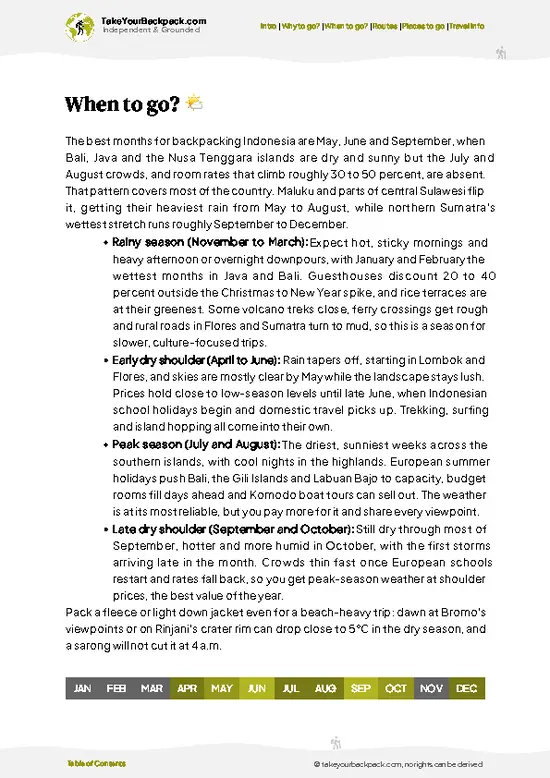
🌤️ When to go?Choosing the right time of year

  • Dry Season (April to October): The best window for visiting. Expect temperatures around 28 to 32°C (82 to 90°F), consistent offshore winds that groom the reef breaks, and minimal rain. Crowds peak in July and August, but Nihiwatu never feels packed. Prices stay steady.
  • Wet Season (November to March): Heavier rainfall, higher humidity, and temperatures around 26 to 30°C (79 to 86°F). Swells can turn chaotic and unpredictable. Accommodation prices drop 10 to 20 percent, and the beach feels emptier, but conditions are less reliable for swimming or surfing.
  • Shoulder Months (April, May, September, October): Sweet spot for fewer crowds and stable weather. Daylight runs roughly 12 hours year-round near the equator, so sunrise and sunset timing stays consistent.
Visit during the dry season if you want … read more 👉
  • Dry Season (April to October): The best window for visiting. Expect temperatures around 28 to 32°C (82 to 90°F), consistent offshore winds that groom the reef breaks, and minimal rain. Crowds peak in July and August, but Nihiwatu never feels packed. Prices stay steady.
  • Wet Season (November to March): Heavier rainfall, higher humidity, and temperatures around 26 to 30°C (79 to 86°F). Swells can turn chaotic and unpredictable. Accommodation prices drop 10 to 20 percent, and the beach feels emptier, but conditions are less reliable for swimming or surfing.
  • Shoulder Months (April, May, September, October): Sweet spot for fewer crowds and stable weather. Daylight runs roughly 12 hours year-round near the equator, so sunrise and sunset timing stays consistent.
Visit during the dry season if you want reliable conditions; come in the wet season if you prioritize solitude and lower prices.


source: climatestotravel.comJANJanuary: fair for travelingFEBFebruary: fair for travelingMARMarch: fair for travelingAPRApril: fair for travelingMAYMay: highly recommended for travelingJUNJune: excellent for travelingJULJuly: excellent for travelingAUGAugust: excellent for travelingSEPSeptember: highly recommended for travelingOCTOctober: fair for travelingNOVNovember: fair for travelingDECDecember: fair for traveling
indonesia-beach-nihiwatu-beach
© Google |

✈️ The backpacker research shortcutIndonesia Travel Guide

An offline-friendly backpacking guide with optimized travel routes, ranked highlights, transport advice, and the best areas to stay.
example page 0 from our offline Travel Guide for Indonesia
example page 1 from our offline Travel Guide for Indonesia
example page 2 from our offline Travel Guide for Indonesia
example page 3 from our offline Travel Guide for Indonesia
example page 4 from our offline Travel Guide for Indonesia
example page 5 from our offline Travel Guide for Indonesia
example page 6 from our offline Travel Guide for Indonesia
example page 7 from our offline Travel Guide for Indonesia
The digital guide (460 pages) contains:
✅ 153 highlights, ranked by travel appeal
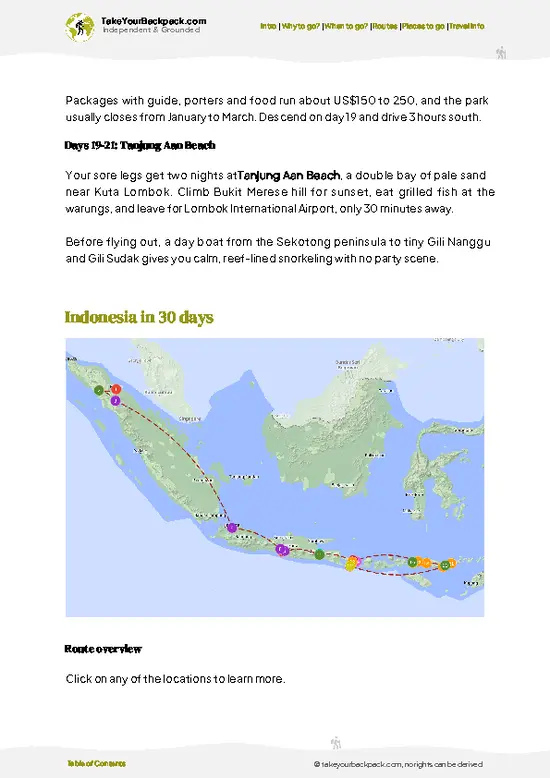
✅ Optimized 14, 21 & 30-day travel routes
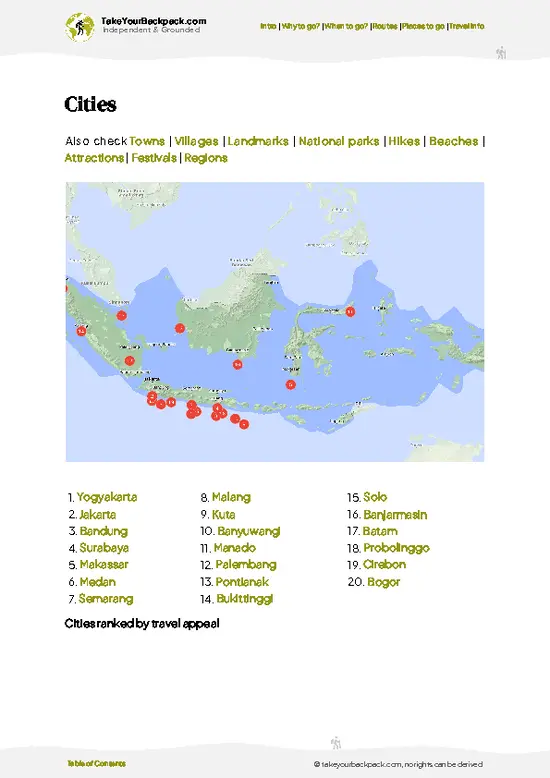
✅ Cities, national parks, landmarks, beaches
✅ How to get around
✅ Offline-friendly for travel without Wi-Fi
👉 Click to see all 30+ guide features

📅 Plan smarter in minutes, not weeks
✅ Month by month travel advice
✅ Festivals & national holidays
✅ Budget expectations

🗺️ Go to the right places, skip the overrated ones
✅ Honest pros & cons of destinations
✅ Top hikes, parks & viewpoints
✅ Lesser-known places most travelers miss
✅ Clear “worth it vs skip it” guidance

🛏️ Travel smoothly without rookie mistakes
✅ Best areas to stay
✅ Transport systems explained simply
✅ Common scams & safety advice
✅ SIM cards, money & practical tips

🌍 Understand the country, not just visit it
✅ Culture & traditions
✅ 52 Essential phrases & customs
✅ Festivals worth planning around
✅ Traveler-friendly historical context
✅ Insights that make places more meaningful

📱 Built for real travel conditions
✅ Fully downloadable PDF
✅ Works completely offline
✅ Optimized for phone use
✅ Useful in remote areas & buses
✅ Everything in one place
Stop searching, start planning
Get instant access to your full guide. 30‑day money-back guarantee.
+ Add another guide for just

By proceeding you agree to our terms.
Sent to your inbox immediately after payment • 100% Secure Checkout
Best Backpacking Travel Advisor 2025 tourism awardBest Backpacking
Travel Advisor
2025
What others say about Take Your Backpack Guides:
⭐⭐⭐⭐⭐
Fantastic, amazing amount of information!
⭐⭐⭐⭐⭐
My goodness this is amazing, it's what I've been looking for hats off too you!
⭐⭐⭐⭐⭐
I think this is absolutely BRILLIANT
⭐⭐⭐⭐
Very complete and informative. It's still missing places, but I gotta to commend you
⭐⭐⭐⭐⭐
This is truly amazing, thank you, can't wait to explore it with my kids!
⭐⭐⭐⭐⭐
Awesome resource, thank you!
⭐⭐⭐⭐⭐
This is amazing! Can't wait to explore the ones I haven't seen
⭐⭐⭐⭐
I love this! Well done, great idea.
⭐⭐⭐⭐⭐
Thanks for taking the time to make this gem!
⭐⭐⭐⭐⭐
This might be the best website I've ever seen.
⭐⭐⭐⭐⭐
Congratulations, and thank you so much for your work; it's incredibly valuable.
⭐⭐⭐⭐
In all seriousness I think you did a great job pointing out the important spots
⭐⭐⭐⭐⭐
10/10 very good
⭐⭐⭐⭐⭐
As someone who's only just starting to visit regularly this is awesome, thank you.
⭐⭐⭐⭐
Thank you very much! I'm going to visit my dad, it's going to be very useful!
⭐⭐⭐⭐⭐
This is really cool! We'll be travelling for the first time and this definitely come in handy.
⭐⭐⭐⭐⭐
You are now our minister of culture, congratulations 👨‍💼
⭐⭐⭐⭐⭐
Just wanted to tell you that this is a pearl! Going to follow your recommendations.
⭐⭐⭐⭐⭐
This is so cool. I'll definitely be using the resource for my travels soon.
⭐⭐⭐⭐⭐
This is very impressive! Good work.
⭐⭐⭐⭐⭐
This is an amazing and informative site. Very well done!

🛏️ Where to stay?Best areas and accommodation options

Budget guesthouses cluster in the small settlement just inland from the beach, within a 5 to 10 minute walk of the sand. This area has the highest concentration of backpacker beds, shared kitchens, and social common spaces where travelers naturally meet. Rooms run US$8 to 18 per night for basic fan-cooled options, and US$15 to 25 for rooms with air conditioning. The settlement also has the most reliable warung access and the easiest connection to local guides and boat operators. Staying here puts you close enough to catch dawn swells without a commute, but far enough back that you're not paying … read more 👉
Budget guesthouses cluster in the small settlement just inland from the beach, within a 5 to 10 minute walk of the sand. This area has the highest concentration of backpacker beds, shared kitchens, and social common spaces where travelers naturally meet. Rooms run US$8 to 18 per night for basic fan-cooled options, and US$15 to 25 for rooms with air conditioning. The settlement also has the most reliable warung access and the easiest connection to local guides and boat operators. Staying here puts you close enough to catch dawn swells without a commute, but far enough back that you're not paying beachfront markup. A few guesthouses sit directly on the sand, but they cost more and offer less social infrastructure. The inland area is safer for valuables, has better lighting at night, and feels more integrated with local life. If you're traveling solo or want to meet other backpackers, base yourself in the main settlement; if you prioritize quiet and direct beach access, negotiate a room in one of the beachfront spots.

🛡️ SafetyScams, Hazards, and Annoyances

Nihiwatu's main hazard is the reef itself. The break that makes it famous for surfing is shallow and sharp, so swimmers and snorkelers need to stay in designated shallow zones or go with a local guide who knows the safe entry points. Currents can run strong during incoming tide, especially near the reef channel. The water is warm year-round, so hypothermia isn't a concern, but sun exposure is intense; reef cuts are common and can get infected in the tropical heat, so bring a first aid kit and rinse any scrapes with fresh water immediately. Jellyfish are rare but not impossible, particularly after storms. The beach itself is safe for walking at any hour, and theft is uncommon, though leaving valuables unattended on the sand is unwise anywhere. Local fishermen and guides are reliable sources … read more 👉
Nihiwatu's main hazard is the reef itself. The break that makes it famous for surfing is shallow and sharp, so swimmers and snorkelers need to stay in designated shallow zones or go with a local guide who knows the safe entry points. Currents can run strong during incoming tide, especially near the reef channel. The water is warm year-round, so hypothermia isn't a concern, but sun exposure is intense; reef cuts are common and can get infected in the tropical heat, so bring a first aid kit and rinse any scrapes with fresh water immediately. Jellyfish are rare but not impossible, particularly after storms. The beach itself is safe for walking at any hour, and theft is uncommon, though leaving valuables unattended on the sand is unwise anywhere. Local fishermen and guides are reliable sources of real-time information about conditions; ask them before entering the water. The biggest risk is overestimating your ability in powerful water, so be honest about your swimming or surfing skill level.

FAQTraveler FAQ

Fly into Bali, then take a domestic flight from Denpasar to Tambolaka Airport on Sumba (roughly 1.5 hours, US$40 to 80 one-way). From Tambolaka, hire a driver or join a shared minibus to Nihiwatu (about 2 to 3 hours, US$15 to 25 per person). Alternatively, take a ferry from Bali to Lombok, then another ferry to Sumbawa, then to Sumba, but this route takes 2 to 3 days and is rarely faster or cheaper than flying.
Nihiwatu is excellent for surfing, with a consistent reef break that works April through October. Swimming is possible in the shallow reef flat during calm conditions, but the main break is powerful and not suitable for casual swimmers. Snorkeling is good on the shallow reef in the early morning before wind picks up, with visibility typically 10 to 15 meters.
Yes, Nihiwatu Beach is free to visit and swim. There is no entrance fee, parking fee, or resort charge. You pay only for accommodation, food, and any guide services you hire for surfing lessons or fishing trips.
⚠️ Things can change over time, so always validate details locally before you go.

Other Indonesian beaches near Nihiwatu Beach

Explore more nearby:

  • Pantai Tanjung Meriam—coastal cliffs, quiet coves, local fishing| 131 km away
  • Pink Beach—rosy sand, shallow reefs, Komodo proximity| 131 km away
  • Labuan Bajo Beach—Flores harbor, Komodo gateway, liveaboard docks, rocky shoreline| 157 km away

💡 Not sure where to go next?
Create a personalized itinerary for Indonesia including Nihiwatu Beach and the places that fit your trip.

Generate my itinerary

👉 Discover all beaches

Or checkout all Indonesia has to offer (think cities, towns, villages, national parks, hikes, beaches, festivals)
Country photo of Indonesia

We 💚 feedbackFinal thoughts on visiting Nihiwatu Beach

Nihiwatu rewards the effort it takes to reach it. The reef breaks are legitimate, the vibe is genuine, and you'll meet travelers who actually chose to be here rather than defaulting to Bali. The trade-off is that it's remote enough to require planning, and the powerful water means it's not a place to learn to swim or surf from scratch.

✈️ When did I visit Indonesia?
As part of my 1.5 year travel around the world trip, I visited Indonesia twice (and it was worth it): first in September 2015 and a bit later again in January and February 2016.

✍️ Help improve this page!
The information on this page is based on my own backpacking experience in Indonesia, supplemented with up-to-date research and feedback from other travelers. Travel details can change, so if you notice anything outdated or incomplete, feel free to let me know.


🙋‍♂️ Give feedback

👋 Meet the founderWho’s Behind Take Your Backpack?

Johan, backpacker and founder of TakeYourBackpackHi, I’m Johan (Netherlands 🇳🇱), the creator of TakeYourBackpack. Over the past 3 decades, I’ve backpacked through 90+ countries across six continents, gaining extensive experience with independent travel, long-term trips, and overland routes.

This site is built on a combination of firsthand travel experience and carefully curated insights from other backpackers. Many guides are based on places I’ve personally visited, while others bring together tips, observations, and practical advice shared by trusted travelers I’ve met along the way.

The goal is to provide realistic, experience-driven guidance — not generic itineraries — so you can explore destinations with better context, clearer expectations, and more confidence.