×

Indonesia🇮🇩 | best beachesTop-Rated 10 beaches in Indonesia

Indonesia has more than 17,000 islands, and the beaches change character almost every time you hop a ferry. Bali delivers surf breaks, beach clubs and warung lunches on a well-oiled tourist circuit. Lombok and the Gili Islands run quieter, with white sand and cheaper bungalows. Head east to Flores, Komodo and Raja Ampat and you trade easy logistics for pink sand, reef-fringed coves and boats as your only transport.

Costs swing with the map. A beachfront bungalow on Sumatra’s Banyak Islands or in Sulawesi can run US$10 to 20 a night, while a Seminyak beach club day easily tops that. Access follows the same logic: Bali and the Gilis need a scooter or a short boat, while Maluku and Papua demand flights, longboats and patience.

For backpackers and independent travelers, that spread is the fun. You can chase waves in the Mentawais, swim with turtles off the Gilis, or camp on a deserted Sumbawa shore. Crowds thin fast once you leave Java, Bali and Lombok behind. Pick your island group by the kind of day you want, then go find it.

By Johan Kruseman 🇳🇱 | Updated October 19, 2026
Explore the best attractions in Indonesia

Why go?Understanding Their Importance

Indonesia is the world’s largest archipelago, which means coastline on a scale few countries can touch, and it sits right on the equator, so water temperatures hold around 27 to 30°C nearly all year. That warmth feeds the Coral Triangle, the most biodiverse marine zone on the planet, so snorkeling a house reef here often beats diving elsewhere. Volcanic geology adds the twist: black sand beaches sit alongside white coral-sand shores, sometimes within a few hours of each other.

The Indian Ocean side, facing open swell, produces some of the planet’s best surf and also strong currents. The sheltered seas of the Flores, Banda and Java waters give calm, clear swimming. Knowing which ocean you face is the biggest single factor in whether a beach suits swimming, surfing or simply lounging.

Culture … read more 👉
Indonesia is the world’s largest archipelago, which means coastline on a scale few countries can touch, and it sits right on the equator, so water temperatures hold around 27 to 30°C nearly all year. That warmth feeds the Coral Triangle, the most biodiverse marine zone on the planet, so snorkeling a house reef here often beats diving elsewhere. Volcanic geology adds the twist: black sand beaches sit alongside white coral-sand shores, sometimes within a few hours of each other.

The Indian Ocean side, facing open swell, produces some of the planet’s best surf and also strong currents. The sheltered seas of the Flores, Banda and Java waters give calm, clear swimming. Knowing which ocean you face is the biggest single factor in whether a beach suits swimming, surfing or simply lounging.

Culture shapes the experience too. Indonesia is the world’s most populous Muslim-majority country, and Bali is a Hindu enclave with its own temple calendar. In Aceh, Sharia rules apply, and in conservative areas beachwear expectations are stricter than at a Kuta sunset. Elsewhere, locals swim in T-shirts and shorts, and a modest cover-up away from tourist strips is simply good manners. Ceremonies and holidays can close beach access or fill the sand with families, so plan around them.

Infrastructure is uneven by design. Bali and the Gilis have ATMs, ferries, cafes and dive shops in abundance. Remote islands may offer homestays, shared meals and one boat a day. Plastic waste, especially during the wet season when currents push debris onto west-facing shores, is a real issue on some coasts, and cleanup varies by location.

Before choosing Indonesia for beaches, accept that distance is the cost. Getting between island groups takes flights or long ferries, so choosing a region or two beats chasing everything. Done that way, you get warm water, cheap food, and a different coastline at every stop.
Our Approach to Ranking
The list of best beaches in Indonesia is created based on beauty, vibe, water quality, activities, and surrounding scenery. If you feel a beach is missing in this list, please let us know.

When to go?Best Time to Visit Indonesia for beaches

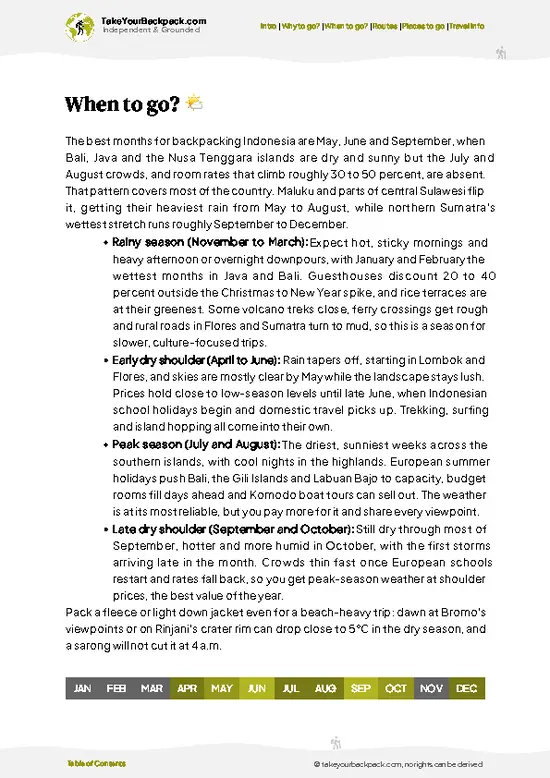
Best months for Indonesian beaches: The best beach months across most of Indonesia are May to September, when the dry season brings clear skies, calm seas and low humidity in Bali, Lombok, the Gilis, Flores, Komodo and Nusa Tenggara. Daytime temperatures sit around 28 to 32°C, water stays near 26 to 29°C, and rainfall in Bali drops to roughly 40 to 100 mm a month, compared with 300 mm or more in the wet months.

Shoulder seasons and the wet months: April and October are the shoulder months to chase. Rain is lighter, crowds are thinner, and room rates can run 10 to 30 percent below peak. November to March is the wet season in Bali, Lombok, Java and Nusa Tenggara. Expect afternoon downpours, choppy crossings and, on some coasts, washed-up debris. Boats to remote islands may reduce runs or cancel … read more 👉
Best months for Indonesian beaches: The best beach months across most of Indonesia are May to September, when the dry season brings clear skies, calm seas and low humidity in Bali, Lombok, the Gilis, Flores, Komodo and Nusa Tenggara. Daytime temperatures sit around 28 to 32°C, water stays near 26 to 29°C, and rainfall in Bali drops to roughly 40 to 100 mm a month, compared with 300 mm or more in the wet months.

Shoulder seasons and the wet months: April and October are the shoulder months to chase. Rain is lighter, crowds are thinner, and room rates can run 10 to 30 percent below peak. November to March is the wet season in Bali, Lombok, Java and Nusa Tenggara. Expect afternoon downpours, choppy crossings and, on some coasts, washed-up debris. Boats to remote islands may reduce runs or cancel when swells build, and Komodo area visibility can drop.

Regional exceptions: Indonesia does not run on one calendar. Raja Ampat and the Maluku islands are best from October to April, when seas calm there while the south gets wet. The Banda Sea region is calmest roughly April to November. Sumatra’s west coast and the Mentawais serve up surf from around April to October, though conditions stay good for waves and swimming isn’t always ideal. Sumatra’s Banyak and Weh islands tend to be most settled from roughly January to April and June to September, respectively, so check the local pattern before booking.

Peak periods and prices: Peak pricing hits July and August, plus Christmas to New Year. Bali and the Gilis fill up, and bungalows that cost US$15 to 25 in the quiet months can reach US$40 or more. Book ahead for those weeks, especially for fast boats. Indonesian school holidays and long weekends crowd closer beaches, with Java’s coasts packed around Idul Fitri. During Ramadan, which moves about 11 days earlier each year, daytime food stalls in conservative areas may close, though tourist zones stay open.

Bali’s Nyepi, the Day of Silence in March or April, shuts the entire island for 24 hours: no flights, no beach access, no going outside. Arrive a day early or leave the day before. For the best mix of weather, price and space, aim for the edges of the dry season.

beach hoppingPlanning Your Route Efficiently

How long a multi-beach trip takes: A trip linking several beaches in Indonesia needs 14 to 21 days, and three weeks lets you cover two or three regions without sprinting. Anything under ten days works best as a single island group, because the distances are large and every transfer eats half a day.

Which regions group well: The classic cluster runs Bali, the Nusa islands, Lombok and the Gilis. Fast boats link them in 45 minutes to 2.5 hours, and Bali’s Ngurah Rai airport handles onward flights. A second cluster stretches east: Lombok to Sumbawa, Komodo and Flores by flight to Labuan Bajo (about 1 to 1.5 hours from Bali or Lombok) or by a multi-day boat. Raja Ampat and Maluku sit far apart from both, reached via Sorong, Ambon or Makassar hubs, and merit their own trip.

Direction of travel: … read more 👉
How long a multi-beach trip takes: A trip linking several beaches in Indonesia needs 14 to 21 days, and three weeks lets you cover two or three regions without sprinting. Anything under ten days works best as a single island group, because the distances are large and every transfer eats half a day.

Which regions group well: The classic cluster runs Bali, the Nusa islands, Lombok and the Gilis. Fast boats link them in 45 minutes to 2.5 hours, and Bali’s Ngurah Rai airport handles onward flights. A second cluster stretches east: Lombok to Sumbawa, Komodo and Flores by flight to Labuan Bajo (about 1 to 1.5 hours from Bali or Lombok) or by a multi-day boat. Raja Ampat and Maluku sit far apart from both, reached via Sorong, Ambon or Makassar hubs, and merit their own trip.

Direction of travel: Travel west to east when you can. Start in Bali with its easy infrastructure, ATMs and big choice of rooms, then move to Lombok and the Gilis, then fly to Labuan Bajo for Komodo and Flores. The trip gets wilder, simpler and quieter as you go, and you can calibrate your gear and budget on the way. Flying out of Labuan Bajo or Lombok back to Bali for an international flight is simple, so build in a buffer.

Time per stop: Give each stop three to five days. Two nights barely covers the transfer, the first-day recovery and one proper beach day. In remote areas such as Komodo or Raja Ampat, allow four to seven days, since boat trips depend on tides and weather. Typical transfers: 2 to 4 hours between Bali and the Gilis including waiting, 1 to 1.5 hours flying Bali to Labuan Bajo, and a full day to reach Sorong from Jakarta or Makassar by air.

Planning mistakes and fixes: The most common error is stacking too many islands. Seven stops in ten days means spending most of it on docks. Choose two or three regions instead. Another trap is ignoring the monsoon: a route that is perfect in July can be rough in January, so match regions to season. Fast boats also cancel in rough seas, so never schedule a ferry the same day as an international flight. Leave a 24-hour cushion, book flights to remote hubs early, and carry cash, since ATMs thin out beyond the main islands.

The ListThe Best beaches of Indonesia

1 Kuta Beach

Long surf beach, airport proximity, board rentals, crowded promenade

Book a group lesson on forgiving shore breaks, then walk the long sweep of sand toward the sunset hawkers and shops.

2 Seminyak Beach

boutique hotels, sunset bars, wide sands

Walk a broad beach lined with upscale spots, enjoy a mix of dining and nightlife, and find a more polished alternative to Kuta.

3 Gili Trawangan

Party strip, night market, turtle point, dive shops

Book a dive or snorkel trip to the turtle sites by day, then browse the night market food stalls near the harbor.

4 Jimbaran Beach

Seafood grills, airport-side bay, sunset tables, gentle surf

Choose your catch from the day’s display and eat with toes in the sand as planes descend over the bay.

5 Canggu Beach

Grey volcanic sand, beginner waves, surf schools, beach clubs

Rent a board for a first lesson on mellow rolling waves, then settle into a beachfront bar as the dark sand cools.

6 Nihiwatu Beach

Sumba reef barrels, resort access, white crescent, remote southwest

Arrange access through the resort to this long white crescent, where powerful reef waves break for experienced surfers only.

indonesia-beach-nihiwatu-beach
© Google |

7 Pink Beach

rosy sand, shallow reefs, Komodo proximity

See sand colored by crushed coral, snorkel in clear shallows, and visit as part of a trip to Komodo National Park.

8 Tanjung Aan Beach

crescent bay, powdery sand, gentle waves

Relax on a curved shoreline with fine sand underfoot, swim in mild surf, and find basic warungs for snacks and shade.

9 Balangan Beach

Uluwatu-side surf break, cliff warungs, sunset crowds, low-tide reef

Walk down the cliff steps at low tide to watch surfers work the left-hand reef while beach cafés fill up before dusk.

10 Dreamland Beach

White sand pocket, limestone cliffs, steep access stairs, lounger rows

Descend a long staircase to a small cove framed by rock walls, with enough surf to bodysurf if the tide allows.

11 Tanjung Bira Beach

white sand, boat building, clear water

Swim in transparent shallows, observe traditional wooden boat construction, and enjoy a beach popular with both locals and travelers.

indonesia-beach-tanjung-bira-beach
© Google |

12 Pantai Ora

Seram north coast, stilt bungalows, powder sand, jungle backdrop

Sleep in a bungalow over clear water on Seram’s coast and snorkel straight off the deck, with the jungle close behind.

indonesia-beach-pantai-ora
© Google |

13 Tanjung Tinggi Beach

granite boulders, turquoise shallows, calm swimming

Wade into gentle waters framed by massive stones, with easy access for families and a landscape that feels distinctly different from other coasts.

14 Pantai Tanjung Kelayang

offshore islets, shallow waters, boat excursions

Set out on short boat rides to nearby islands, swim in gentle surf, and find plenty of shaded spots for a midday break.

15 Pantai Tanjung Lesung

volcanic views, soft sand, relaxed resorts

Unwind on a broad, sandy shore with distant volcanoes on the horizon and a slower pace than most popular beaches in Java.

16 Pantai Tanjung Papuma

rocky headlands, fishing boats, forest backdrop

Watch local fishermen at work, explore tide pools among dramatic rocks, and enjoy a beach bordered by dense green hills.

17 Pantai Tanjung Setia

consistent surf, remote location, basic homestays

Catch reliable waves far from city life, stay in simple accommodations, and experience a surf scene that remains largely under the radar.

18 Pantai Klayar

Gunung Kidul cliffs, sea-spout rock, white sand, karst coast

Climb the rock formation to hear waves surge through a hole in the stone and spray upward, then rest on pale sand.

19 Buyutan Beach

Pacitan white sand, tall cliffs, crown-shaped rock, quiet shoreline

Pause on a calm stretch of Pacitan’s Indian Ocean coast in East Java, where tall cliffs frame white sand and few visitors stop.

20 Pantai Banyu Tibo

Waterfall-to-sea flow, East Java cove, rocky pools, short trail

Follow a short trail to freshwater cascading over a cliff straight into the ocean, with small pools to cool off in.

21 Pantai Pasir Panjang

long coastline, golden sand, minimal crowds

Walk for kilometers along an uninterrupted stretch of sand, rarely encountering other travelers and enjoying open space for solitude.

22 Pantai Tanjung Bloam

cliffside views, rugged coastline, turtle nesting

Observe sea turtles during nesting season, take in dramatic coastal scenery, and find few facilities beyond the essentials.

23 Pantai Tanjung Layar

twin rock formations, tidal pools, sunset spot

Arrive at low tide to explore shallow pools, photograph distinctive rocks, and stay for evening colors over the water.

24 Pantai Tanjung Meriam

coastal cliffs, quiet coves, local fishing

Hike along rugged edges, discover small inlets used by fishermen, and enjoy a tranquil setting with little tourist infrastructure.

25 Sukamade Beach

turtle sanctuary, remote forest, black sand

Join guided night walks to observe nesting turtles, reach the beach by rugged track, and stay in simple park-run lodges.

Think you know Indonesia?

Prove you’re a true local — uncover 15 lesser-known beaches in Indonesia that locals tend to keep to themselves.
Loading the map 🌍

Expert viewPro Tips for Exploring the Best

How many beaches to plan for: Plan on four to six beaches for a trip of three to four weeks, and let the rest of your time float. Indonesia is spread over more than 17,000 islands, and the gaps between beach regions are measured in ferry rides, domestic flights and long waits at harbors, not in easy bus hops. Every extra beach costs you a travel day, and a travel day is a day you are not in the water. Two or three nights per beach is the minimum for the place to sink in. Four or five nights is better where the sea is the main event, such as a snorkeling island or a surf break where conditions change by the hour.
Beach-hopping at speed also burns money. Fast boats, airport transfers and last-minute flights add up quickly, and the savings you made on a US$10 room vanish in one afternoon at a … read more 👉
How many beaches to plan for: Plan on four to six beaches for a trip of three to four weeks, and let the rest of your time float. Indonesia is spread over more than 17,000 islands, and the gaps between beach regions are measured in ferry rides, domestic flights and long waits at harbors, not in easy bus hops. Every extra beach costs you a travel day, and a travel day is a day you are not in the water. Two or three nights per beach is the minimum for the place to sink in. Four or five nights is better where the sea is the main event, such as a snorkeling island or a surf break where conditions change by the hour.
Beach-hopping at speed also burns money. Fast boats, airport transfers and last-minute flights add up quickly, and the savings you made on a US$10 room vanish in one afternoon at a ferry ticket window.
Choosing the kind of beach that fits you: Indonesian beaches fall into a few clear types, and picking your type matters more than picking a name. Surf beaches on the south-facing coasts of Bali, Lombok, Sumba and the Mentawai and Nias islands come with reef breaks, strong currents and a social scene built around boards and sunrise sessions. They suit you if you surf or want to learn, and they are usually poor for casual swimming. Reef and snorkeling beaches, found on the Gilis, around Flores and Komodo, in Raja Ampat, Wakatobi and Bunaken, put the good stuff just offshore. Pick these if you want to spend hours face-down in clear water.
Sunset and social beaches on southern Bali are the easiest: food everywhere, rental scooters, beach bars, sunbeds. They cost more and draw the biggest crowds. Remote and sparsely visited beaches in eastern Indonesia, Sumbawa, Sumba, the Maluku islands and parts of Sulawesi hand you empty sand and long stretches of nothing, but they ask for patience, cash and a tolerance for basic rooms with no air-conditioning.
If this is your first big Asian trip, anchor yourself in one easy, well-served region and add one remote stop to stretch yourself. If you are on a tight budget, favor beaches with free access and cheap homestays, mostly on Lombok, Java and the quieter parts of Sulawesi. Divers and snorkelers should spend their money on the reef regions and accept simpler beds on land.
What it costs per day and per visit: A comfortable backpacker budget runs about Rp 400,000 to 700,000 a day (US$25 to 45) in the popular areas, covering a dorm bed or simple fan room, local meals, a scooter and a bit of activity money. Bali’s busiest coastal strips push toward the top of that range or past it. Cheaper islands such as Lombok’s south, Sumbawa and Sulawesi can drop closer to Rp 300,000 to 450,000 (US$18 to 28). Remote reef regions like Raja Ampat flip the picture, with homestay packages commonly Rp 600,000 to 1,000,000 (US$37 to 62) a day once boat transfers are included.
Individual beach visits are often free, but small costs appear at the edges. Village-run beaches commonly charge Rp 5,000 to 25,000 for entry or parking, and the more developed ones ask for up to Rp 50,000. Sunbed hire runs Rp 50,000 to 100,000, and beach clubs usually want a minimum spend of Rp 100,000 to 300,000. Snorkel gear rental costs around Rp 50,000 to 100,000 a day, and a surfboard Rp 50,000 to 150,000. A scooter is Rp 70,000 to 100,000 a day plus fuel. Boat trips to offshore snorkel spots run roughly Rp 150,000 to 400,000 shared, and private boats cost more. Fast boats between islands such as Bali and the Gilis cost around Rp 250,000 to 700,000 one way depending on operator and season. National park and marine park fees in places like Komodo and Raja Ampat are much higher for foreigners than for Indonesians, so budget extra there and carry cash.
ATMs thin out quickly away from the main tourist hubs. Withdraw before you board the ferry.
Safety on the sand and in the water: The biggest danger is the sea itself. Many Indonesian beaches have strong rip currents, particularly on the Indian Ocean side, and lifeguards are rare outside the busiest Bali stretches. Red flags mean it, and a calm-looking surface can hide a channel pulling seaward. Swim where locals swim, and treat surf beaches as places to watch unless you know the break. Reef-edge beaches bring sea urchins and sharp coral, so reef shoes pay for themselves, and rinse any cut right away because tropical scrapes infect fast.
Sun at these latitudes is brutal from about 10 a.m. to 3 p.m. Carry a rash vest, a hat and plenty of water. Take reef-safe sunscreen, which also protects the coral you came to see. Tourist-area beaches see occasional bag theft from unattended towels, so leave valuables in your room and use a small dry bag for essentials. Tidal flats can leave some beaches almost water-free at low tide, so check tide tables before you plan a swim.
Cultural rules that shape your day: Indonesia is the world’s largest Muslim-majority country, and beach behavior shifts with the place. Swimwear is normal in Bali and the Gilis. In conservative regions such as Aceh, parts of Lombok’s villages and many Sulawesi and Java coastal communities, swim in shorts and a T-shirt or cover up as soon as you leave the water. Topless sunbathing is not acceptable anywhere and can lead to trouble with authorities. Ask before photographing local families, and ask permission before flying a drone, since rules vary and some areas require approval.
During Ramadan, daytime eating spots can be closed in more conservative areas, so carry snacks and eat discreetly. On Bali, Nyepi, the Day of Silence in spring, closes beaches entirely to everyone for 24 hours, and airport and roads shut down as well. Plan for it or you will be stuck in your accommodation.
Plastic washing ashore is a real problem on some west-facing beaches during the rainy season, so a beach cleanup stop might replace your photos. Carry your own rubbish out. Do these things, and Indonesia’s coastline pays you back with water so clear, shoreline so varied and mornings so quiet that the planning feels small.

✈️ The backpacker research shortcutIndonesia Travel Guide

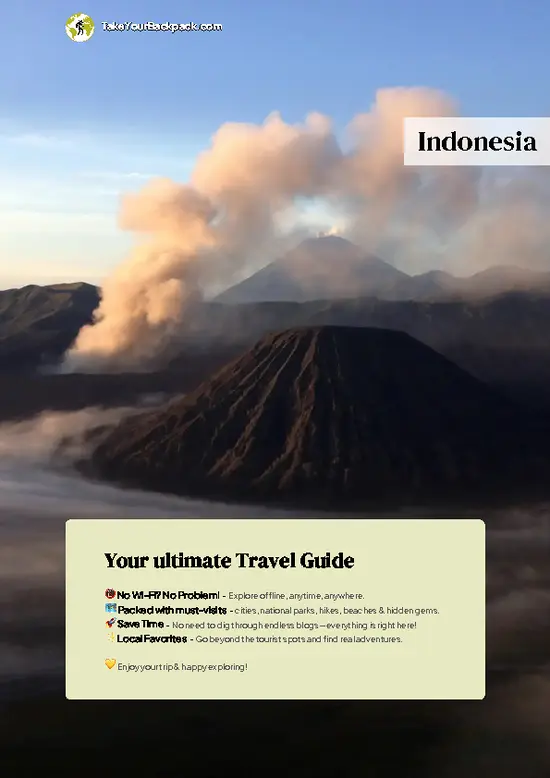
An offline-friendly backpacking guide with optimized travel routes, ranked highlights, transport advice, and the best areas to stay.
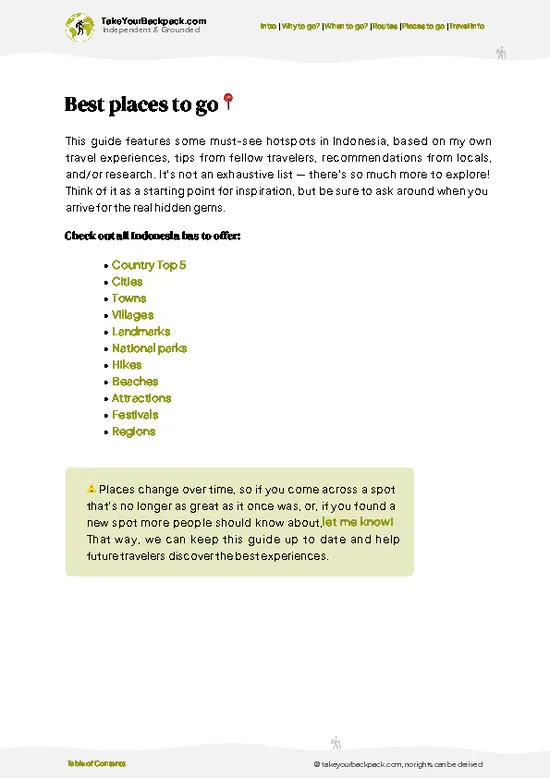
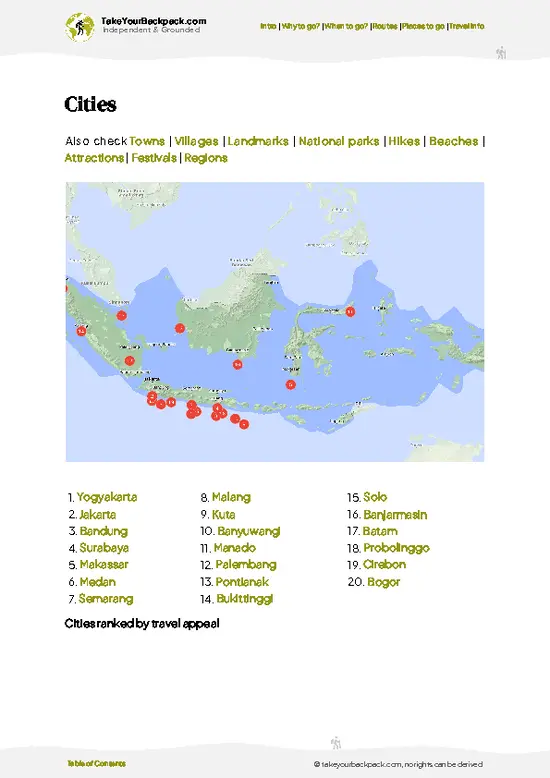
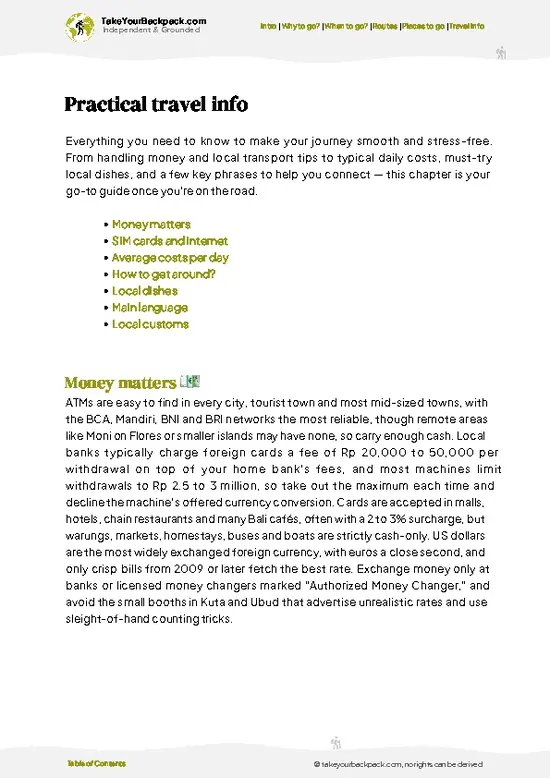
example page 0 from our offline Travel Guide for Indonesia
example page 1 from our offline Travel Guide for Indonesia
example page 2 from our offline Travel Guide for Indonesia
example page 3 from our offline Travel Guide for Indonesia
example page 4 from our offline Travel Guide for Indonesia
example page 5 from our offline Travel Guide for Indonesia
example page 6 from our offline Travel Guide for Indonesia
example page 7 from our offline Travel Guide for Indonesia
The digital guide (460 pages) contains:
✅ 153 highlights, ranked by travel appeal
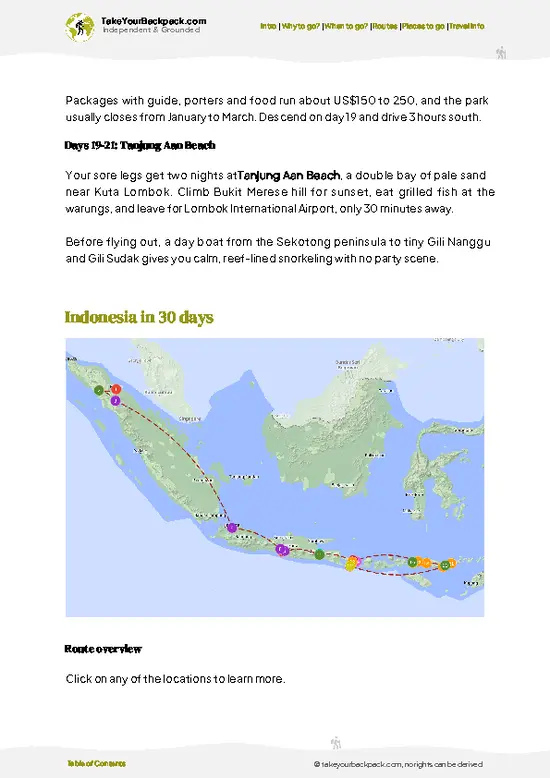
✅ Optimized 14, 21 & 30-day travel routes
✅ Cities, national parks, landmarks, beaches
✅ How to get around
✅ Offline-friendly for travel without Wi-Fi
👉 Click to see all 30+ guide features

📅 Plan smarter in minutes, not weeks
✅ Month by month travel advice
✅ Festivals & national holidays
✅ Budget expectations

🗺️ Go to the right places, skip the overrated ones
✅ Honest pros & cons of destinations
✅ Top hikes, parks & viewpoints
✅ Lesser-known places most travelers miss
✅ Clear “worth it vs skip it” guidance

🛏️ Travel smoothly without rookie mistakes
✅ Best areas to stay
✅ Transport systems explained simply
✅ Common scams & safety advice
✅ SIM cards, money & practical tips

🌍 Understand the country, not just visit it
✅ Culture & traditions
✅ 52 Essential phrases & customs
✅ Festivals worth planning around
✅ Traveler-friendly historical context
✅ Insights that make places more meaningful

📱 Built for real travel conditions
✅ Fully downloadable PDF
✅ Works completely offline
✅ Optimized for phone use
✅ Useful in remote areas & buses
✅ Everything in one place
Stop searching, start planning
Get instant access to your full guide. 30‑day money-back guarantee.
+ Add another guide for just

By proceeding you agree to our terms.
Sent to your inbox immediately after payment • 100% Secure Checkout
Best Backpacking Travel Advisor 2025 tourism awardBest Backpacking
Travel Advisor
2025
What others say about Take Your Backpack Guides:
⭐⭐⭐⭐⭐
Fantastic, amazing amount of information!
⭐⭐⭐⭐⭐
My goodness this is amazing, it's what I've been looking for hats off too you!
⭐⭐⭐⭐⭐
I think this is absolutely BRILLIANT
⭐⭐⭐⭐
Very complete and informative. It's still missing places, but I gotta to commend you
⭐⭐⭐⭐⭐
This is truly amazing, thank you, can't wait to explore it with my kids!
⭐⭐⭐⭐⭐
Awesome resource, thank you!
⭐⭐⭐⭐⭐
This is amazing! Can't wait to explore the ones I haven't seen
⭐⭐⭐⭐
I love this! Well done, great idea.
⭐⭐⭐⭐⭐
Thanks for taking the time to make this gem!
⭐⭐⭐⭐⭐
This might be the best website I've ever seen.
⭐⭐⭐⭐⭐
Congratulations, and thank you so much for your work; it's incredibly valuable.
⭐⭐⭐⭐
In all seriousness I think you did a great job pointing out the important spots
⭐⭐⭐⭐⭐
10/10 very good
⭐⭐⭐⭐⭐
As someone who's only just starting to visit regularly this is awesome, thank you.
⭐⭐⭐⭐
Thank you very much! I'm going to visit my dad, it's going to be very useful!
⭐⭐⭐⭐⭐
This is really cool! We'll be travelling for the first time and this definitely come in handy.
⭐⭐⭐⭐⭐
You are now our minister of culture, congratulations 👨‍💼
⭐⭐⭐⭐⭐
Just wanted to tell you that this is a pearl! Going to follow your recommendations.
⭐⭐⭐⭐⭐
This is so cool. I'll definitely be using the resource for my travels soon.
⭐⭐⭐⭐⭐
This is very impressive! Good work.
⭐⭐⭐⭐⭐
This is an amazing and informative site. Very well done!

🛏️ Where to stay?Top Places to Consider Staying

Indonesia has a deep supply of hostels and family-run guesthouses (homestays), with dorm beds typically running Rp 100,000 to 250,000 (US$6 to 15) and simple private rooms from about Rp 200,000 (US$12). On Bali, Canggu has the most design-forward hostels, surf breaks and late bars but also clogged scooter traffic, Kuta is the cheapest and loudest base and is close to the airport, and Ubud trades nightlife for quiet rice-field lanes, yoga studios and easy access to temples. In Yogyakarta, Sosrowijayan puts you steps from Malioboro and the train station in cheap but noisy alleys, while Prawirotaman is calmer, leafier and better for cafes, and on Lombok and the Gili Islands you will find hostels … read more 👉
Indonesia has a deep supply of hostels and family-run guesthouses (homestays), with dorm beds typically running Rp 100,000 to 250,000 (US$6 to 15) and simple private rooms from about Rp 200,000 (US$12). On Bali, Canggu has the most design-forward hostels, surf breaks and late bars but also clogged scooter traffic, Kuta is the cheapest and loudest base and is close to the airport, and Ubud trades nightlife for quiet rice-field lanes, yoga studios and easy access to temples. In Yogyakarta, Sosrowijayan puts you steps from Malioboro and the train station in cheap but noisy alleys, while Prawirotaman is calmer, leafier and better for cafes, and on Lombok and the Gili Islands you will find hostels clustered along the main beach strips, where Gili Trawangan is the party island and Gili Air the mellow one.

If you enjoy meeting fellow travelers, consider choosing hostels with high ratings for atmosphere. On the other hand, if you prefer having your own space, a hotel might be a better option.

IndonesiaMore Places Across Indonesia

👋 Meet the founderWho’s Behind Take Your Backpack?

Johan, backpacker and founder of TakeYourBackpackHi, I’m Johan (Netherlands 🇳🇱), the creator of TakeYourBackpack. Over the past 3 decades, I’ve backpacked through 90+ countries across six continents, gaining extensive experience with independent travel, long-term trips, and overland routes.

This site is built on a combination of firsthand travel experience and carefully curated insights from other backpackers. Many guides are based on places I’ve personally visited, while others bring together tips, observations, and practical advice shared by trusted travelers I’ve met along the way.

The goal is to provide realistic, experience-driven guidance — not generic itineraries — so you can explore destinations with better context, clearer expectations, and more confidence.