×

Indonesia🇮🇩 | citiesPalubay views, mountain backdrop, Central Sulawesi hub | things to do and best time to go

Explore PekanbaruExplore Gorontalo

Backpacking in Palu
👀 For curious travelerscity ranked #38
By Johan Kruseman 🇳🇱 | Updated June 7, 2026

Most people skip Palu on Sulawesi’s central coast, but here’s the twist: it’s one of the cheapest, easiest launchpads for wild, off-grid adventures into Central Sulawesi’s mountains and bays. The city itself is low-key: a long, dusty bayfront, a few mosques and monuments, simple warungs, and a seafront park where locals hang at sunset. It’s safe but conservative, nightlife is almost nonexistent, and you’ll meet more NGO workers than backpackers, unlike buzzy Makassar or touristy Manado. Palu feels raw, practical, and oddly addictive if you like being the only traveler in sight.

Discover everything you want to know in the 📖 Indonesia Travel Guide.
Loading the map 🌍
CLICK TO FILTER
cities
towns
landmarks
national parks
hikes
beaches
attractions
festivals
regions
SHOW COUNTRY’S BESTSHOW ALL

✨ Why go?
Ranked #38 city in Indonesia
Why visitors keep coming back

Palu is a strategic basecamp for backpackers exploring Central Sulawesi. The city offers a mix of affordable hostels and local eateries, making it easy to stretch your budget. Its walkability means you can dive into the local vibe without needing a taxi. While the nightlife is laid-back, it’s perfect for unwinding after a day of adventure. Plus, Palu serves as a launchpad for day trips to stunning natural sites, allowing you to maximize your time. If you’re looking for a place that balances comfort and value, Palu fits the bill, but it’s best as a stopover rather than a destination.
Want to include Palu in your Indonesia route?
Create a personalized Indonesia itinerary that includes Palu and the places that fit your trip — based on your travel style, budget, and available time. Get your route in seconds.

Generate my trip

💡 HighlightsEssential experiences to have while visiting Palu

  • Pantai Talise (Talise Beach) — Palu’s long bayfront with a palm-lined promenade, soft sand and famously dramatic sunsets; great for a late-afternoon stroll, street food snacks, and people-watching with the bay and city skyline as a backdrop.
  • Museum Negeri Sulawesi Tengah (Central Sulawesi Museum) — compact but solid collection of Kaili ethnography, megalithic photos, local textiles and colonial-era artifacts; good place to get context on the people and history before exploring the city.
  • Masjid Agung Darussalam Palu (Great Mosque) — the city’s principal mosque with distinctive architecture and an active community; worth a respectful visit to observe daily life, local Islamic practice, and the mosque’s courtyard vibe.
  • Gereja Katedral Santa Maria Palu (Palu Cathedral) — the main Catholic
read more 👉
  • Pantai Talise (Talise Beach) — Palu’s long bayfront with a palm-lined promenade, soft sand and famously dramatic sunsets; great for a late-afternoon stroll, street food snacks, and people-watching with the bay and city skyline as a backdrop.
  • Museum Negeri Sulawesi Tengah (Central Sulawesi Museum) — compact but solid collection of Kaili ethnography, megalithic photos, local textiles and colonial-era artifacts; good place to get context on the people and history before exploring the city.
  • Masjid Agung Darussalam Palu (Great Mosque) — the city’s principal mosque with distinctive architecture and an active community; worth a respectful visit to observe daily life, local Islamic practice, and the mosque’s courtyard vibe.
  • Gereja Katedral Santa Maria Palu (Palu Cathedral) — the main Catholic church in town, an important focal point for the Christian community; the building and surrounding area give insight into Palu’s religious diversity.
  • Kebun Kopi Poboya (Poboya Coffee Hill) — short drive from the city center to small coffee plots and roadside cafés that roast Sulawesi beans; brings good views over the bay and a chance to sample local kopi susu while chatting with growers.
  • Pelabuhan Pantoloan (Pantoloan Port & Fish Market) — lively waterfront port where small boats land the day’s catch; early-morning fish market scenes and inexpensive seafood stalls make this a sensory, local experience.
  • Pasar Sentral Palu (Central Traditional Market) — colourful, bustling market selling produce, spices, sea products and Kaili textiles; the best place to feel the city’s pulse, bargain for snacks, and watch daily trade in action.
  • Kampung Nelayan Kayubura (Kayubura Fishing Village & Promenade) — small fishing community beside Talise where you can see traditional boats, local fish processing and seaside life up close; quieter and more authentic than the main tourist strip.
  • Rumah Adat Kaili / Pusat Kebudayaan Lokal (Kaili Traditional House & Cultural Spots) — local cultural centers and community houses where you can see traditional Kaili weaving, dance or ceremonies if timings align; valuable for understanding local identity and crafts.
  • Taman Kota Palu (Palu City Park / Bayfront Green Spaces) — the green lungs along the waterfront with benches, playgrounds and night stalls; simple, social places where families meet, street food vendors operate and sunsets are shared.
A few worthwhile day trips outside Palu: the beaches and snorkeling spots around nearby Donggala, the megaliths and forest trails of Lore Lindu National Park (a longer day), and smaller coastal villages along Palu Bay — my personal favourite for a quick escape is the Donggala coastline for easy snorkeling and relaxed beach time.
Spotted a mistake or missing something? Contact us.

🏘️ NeighborhoodsHow different areas shape the experience

Palu offers a mix of urban energy and natural beauty, perfect for backpackers seeking adventure and culture.

Kota Palu: The city center buzzes with life. It’s affordable, with plenty of street food options. Walkable streets make it easy to explore local markets and cafes. Nightlife is lively but not overwhelming, ideal for socializing without the chaos. Great for short stays.

Tanjung Karang: This coastal area is quieter, perfect for those wanting to unwind. It’s a bit pricier, but the beachfront views are worth it. Transport options are limited, so plan to stay longer if you want to soak in the scenery.

Palu Bay: A blend of local charm and tourist amenities. It’s walkable, with a range of accommodations. The nightlife is laid-back, making it suitable for both short and extended visits.

⌛️ 1 day1-day itinerary for Palu

Palu, Indonesia, is a city that pulses with life, nestled between lush hills and the sea. It’s a blend of rich culture and stunning landscapes, making it a perfect spot for a day of exploration.

Start your morning in the bustling neighborhood of Talise. Grab a traditional breakfast of nasi goreng at a local warung, where the aroma of spices fills the air. After fueling up, stroll along the beach, soaking in the sunrise and the vibrant energy of locals starting their day.

In the afternoon, head to the iconic Donggala Beach. It’s a short drive, but the views are worth it. Swim in the clear waters or simply relax on the sand. For a unique experience, visit the nearby underwater sculpture park, a hidden treasure that’s often overlooked by tourists.

As evening falls, return to Palu and explore … read more 👉
Palu, Indonesia, is a city that pulses with life, nestled between lush hills and the sea. It’s a blend of rich culture and stunning landscapes, making it a perfect spot for a day of exploration.

Start your morning in the bustling neighborhood of Talise. Grab a traditional breakfast of nasi goreng at a local warung, where the aroma of spices fills the air. After fueling up, stroll along the beach, soaking in the sunrise and the vibrant energy of locals starting their day.

In the afternoon, head to the iconic Donggala Beach. It’s a short drive, but the views are worth it. Swim in the clear waters or simply relax on the sand. For a unique experience, visit the nearby underwater sculpture park, a hidden treasure that’s often overlooked by tourists.

As evening falls, return to Palu and explore the lively market in the center. The colors, sounds, and smells create an atmosphere that’s electric. Sample street food, like grilled fish, while chatting with friendly vendors. This day in Palu isn’t just about sights; it’s about immersing yourself in the local rhythm.
Turn your Palu visit into an Indonesia adventure
Build a complete Indonesia route with Palu, hidden gems, must-see destinations, and realistic travel times included.

Generate my trip

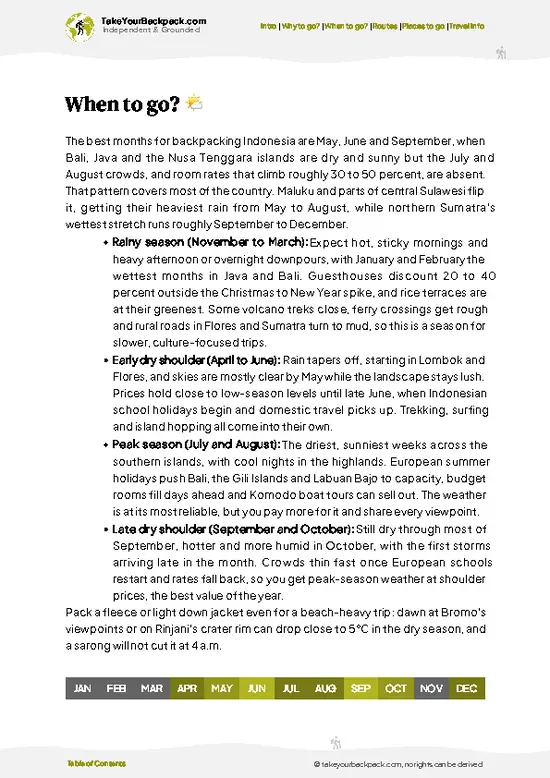
🌤️ When to go?Seasonal considerations and timing


  • Weather: Palu’s dry season runs from May to September, offering clear skies and minimal rain—ideal for trekking and outdoor activities. The wet season, October to April, brings heavy rains and humidity, making trails slippery and less enjoyable.

  • Temperature: Expect daytime highs around 28-32°C (82-90°F) year-round, with nights cooling slightly to 22-24°C (72-75°F). The dry season feels more comfortable due to lower humidity.

  • Daylight Hours: Roughly 11-12 hours of daylight year-round, with sunrise around 6 AM and sunset near 6 PM, giving you consistent time for exploration.

  • Crowds: Tourist numbers peak during the dry season, especially July and August, so expect busier trails and higher accommodation demand.

  • Seasonal Activities: Dry months are best for diving, hiking, and cultural
read more 👉

  • Weather: Palu’s dry season runs from May to September, offering clear skies and minimal rain—ideal for trekking and outdoor activities. The wet season, October to April, brings heavy rains and humidity, making trails slippery and less enjoyable.

  • Temperature: Expect daytime highs around 28-32°C (82-90°F) year-round, with nights cooling slightly to 22-24°C (72-75°F). The dry season feels more comfortable due to lower humidity.

  • Daylight Hours: Roughly 11-12 hours of daylight year-round, with sunrise around 6 AM and sunset near 6 PM, giving you consistent time for exploration.

  • Crowds: Tourist numbers peak during the dry season, especially July and August, so expect busier trails and higher accommodation demand.

  • Seasonal Activities: Dry months are best for diving, hiking, and cultural festivals, while the wet season limits outdoor options but offers lush landscapes and fewer tourists.

  • Price Fluctuations: Prices for lodging and tours spike in the dry season’s peak months; traveling just before or after can save money without sacrificing weather quality.


Pro-tip: Aim for late April or early October to catch the tail ends of the dry season—good weather, fewer crowds, and better deals.


source: climatestotravel.comJANJanuary: fair for travelingFEBFebruary: fair for travelingMARMarch: fair for travelingAPRApril: good for travelingMAYMay: excellent for travelingJUNJune: excellent for travelingJULJuly: highly recommended for travelingAUGAugust: highly recommended for travelingSEPSeptember: excellent for travelingOCTOctober: good for travelingNOVNovember: fair for travelingDECDecember: fair for traveling
when-to-go

✈️ The backpacker research shortcutIndonesia Travel Guide

An offline-friendly backpacking guide with optimized travel routes, ranked highlights, transport advice, and the best areas to stay.
example page 0 from our offline Travel Guide for Indonesiaexample page 1 from our offline Travel Guide for Indonesiaexample page 2 from our offline Travel Guide for Indonesiaexample page 3 from our offline Travel Guide for Indonesiaexample page 4 from our offline Travel Guide for Indonesiaexample page 5 from our offline Travel Guide for Indonesiaexample page 6 from our offline Travel Guide for Indonesiaexample page 7 from our offline Travel Guide for Indonesia
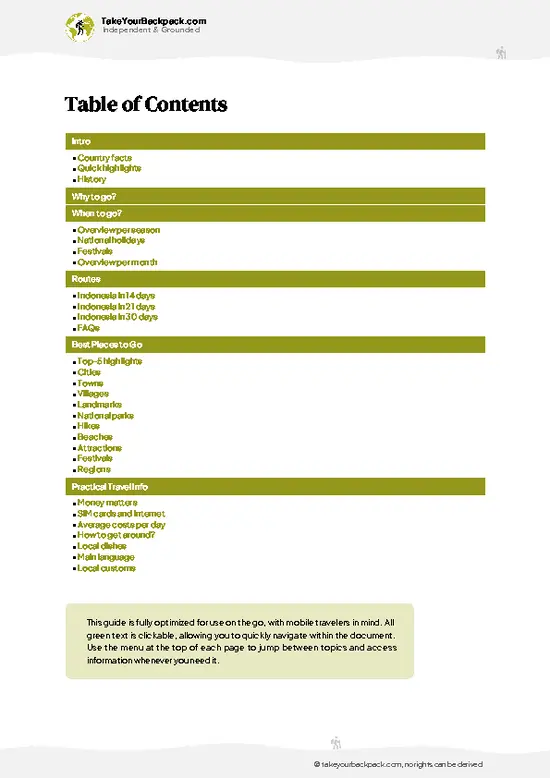
The digital guide (550 pages) contains:
155 highlights, ranked by travel appeal
Optimized 14, 21 & 30-day travel routes
Cities, national parks, landmarks, beaches
How to get around
Offline-friendly for travel without Wi-Fi
👉 Click to see all 30+ guide features

📅 Plan smarter in minutes, not weeks
Month by month travel advice
Festivals & national holidays
Budget expectations

🗺️ Go to the right places, skip the overrated ones
Honest pros & cons of destinations
Top hikes, parks & viewpoints
Lesser-known places most travelers miss
Clear “worth it vs skip it” guidance

🛏️ Travel smoothly without rookie mistakes
Best areas to stay
Transport systems explained simply
Common scams & safety advice
SIM cards, money & practical tips

🌍 Understand the country, not just visit it
Culture & traditions
52 Essential phrases & customs
Festivals worth planning around
Traveler-friendly historical context
Insights that make places more meaningful

📱 Built for real travel conditions
Fully downloadable PDF
Works completely offline
Optimized for phone use
Useful in remote areas & buses
Everything in one place
Save weeks of stressful planning
Get instant access to your full guide. 30‑day money-back guarantee.


By proceeding you agree to our terms.
Sent to your inbox immediately after payment • 100% Secure Checkout
Best Backpacking Travel Advisor 2025 tourism awardBest Backpacking
Travel Advisor
2025
What others say about Take Your Backpack Guides:
⭐⭐⭐⭐⭐
Fantastic, amazing amount of information!
⭐⭐⭐⭐⭐
My goodness this is amazing, it's what I've been looking for hats off too you!
⭐⭐⭐⭐⭐
I think this is absolutely BRILLIANT
⭐⭐⭐⭐
Very complete and informative. It's still missing places, but I gotta to commend you
⭐⭐⭐⭐⭐
This is truly amazing, thank you, can't wait to explore it with my kids!
⭐⭐⭐⭐⭐
Awesome resource, thank you!
⭐⭐⭐⭐⭐
This is amazing! Can't wait to explore the ones I haven't seen
⭐⭐⭐⭐
I love this! Well done, great idea.
⭐⭐⭐⭐⭐
Thanks for taking the time to make this gem!
⭐⭐⭐⭐⭐
This might be the best website I've ever seen.
⭐⭐⭐⭐⭐
Congratulations, and thank you so much for your work; it's incredibly valuable.
⭐⭐⭐⭐
In all seriousness I think you did a great job pointing out the important spots
⭐⭐⭐⭐⭐
10/10 very good
⭐⭐⭐⭐⭐
As someone who's only just starting to visit regularly this is awesome, thank you.
⭐⭐⭐⭐
Thank you very much! I'm going to visit my dad, it's going to be very useful!
⭐⭐⭐⭐⭐
This is really cool! We'll be travelling for the first time and this definitely come in handy.
⭐⭐⭐⭐⭐
You are now our minister of culture, congratulations 👨‍💼
⭐⭐⭐⭐⭐
Just wanted to tell you that this is a pearl! Going to follow your recommendations.
⭐⭐⭐⭐⭐
This is so cool. I'll definitely be using the resource for my travels soon.
⭐⭐⭐⭐⭐
This is very impressive! Good work.
⭐⭐⭐⭐⭐
This is an amazing and informative site. Very well done!

🛏️ Where to stay?Choosing the right base

In Palu, the sweet spot for backpackers is the downtown area around Jalan Kartini and Jalan Diponegoro. This zone strikes a smart balance between safety and social buzz, making it a magnet for solo travelers and budget adventurers. You’ll find enough hostels here to keep options open without the chaos of tourist traps. Streets hum with local eateries and small markets, so you’re never far from authentic flavors or a casual hangout. Compared to the quieter, more residential outskirts, downtown keeps you plugged into the city’s pulse without sacrificing comfort or wallet-friendliness. It’s where … read more 👉
In Palu, the sweet spot for backpackers is the downtown area around Jalan Kartini and Jalan Diponegoro. This zone strikes a smart balance between safety and social buzz, making it a magnet for solo travelers and budget adventurers. You’ll find enough hostels here to keep options open without the chaos of tourist traps. Streets hum with local eateries and small markets, so you’re never far from authentic flavors or a casual hangout. Compared to the quieter, more residential outskirts, downtown keeps you plugged into the city’s pulse without sacrificing comfort or wallet-friendliness. It’s where convenience meets connection—exactly what you want when you’re backpacking smart.

🚌 Getting aroundGetting around like a local

Palu moves at its own rhythm—neither a frantic rush nor a slow crawl, but a blend of laid-back local pace and bursts of organized hustle. The city’s pulse is marked by a mix of informal, flexible timing and pockets of strict schedules, especially around transit hubs. You’ll find that patience and adaptability are your best allies here. The trade-off game in Palu is about balancing time against cost and comfort, with each transit choice revealing a different slice of the city’s character.


  • Walking: The most straightforward and free option. Palu’s central areas are compact enough to explore on foot, giving you full control over your pace and route. Ideal for short distances and soaking in street life, but not practical for longer hauls.

  • Angkot (Minibus): Runs roughly from 6 AM to 7 PM,
read more 👉
Palu moves at its own rhythm—neither a frantic rush nor a slow crawl, but a blend of laid-back local pace and bursts of organized hustle. The city’s pulse is marked by a mix of informal, flexible timing and pockets of strict schedules, especially around transit hubs. You’ll find that patience and adaptability are your best allies here. The trade-off game in Palu is about balancing time against cost and comfort, with each transit choice revealing a different slice of the city’s character.


  • Walking: The most straightforward and free option. Palu’s central areas are compact enough to explore on foot, giving you full control over your pace and route. Ideal for short distances and soaking in street life, but not practical for longer hauls.

  • Angkot (Minibus): Runs roughly from 6 AM to 7 PM, fares hover around IDR 3,000–5,000. It’s slow and crowded but dirt cheap, perfect if you’re not in a rush and want to experience local daily life up close.

  • Ojek (Motorcycle Taxi): Available 24/7, prices vary by distance but expect IDR 10,000–20,000 for typical city rides. Faster and more flexible than angkot, but less comfortable and riskier in traffic. Great for tight schedules or when angkot routes don’t match your destination.

  • Taxi: Metered taxis are scarce and often pricier, around IDR 50,000+ for common trips. Offers comfort and direct routes but at a significant cost premium. Best reserved for late-night rides or when time is critical.

👛 Costs (as of 23 December 2024)How expensive it really is

Backpacking in Palu, Indonesia, offers a clear trade-off between cost and comfort, with prices that reflect its status as a less-touristy city in Sulawesi. Here’s the breakdown to help you strategize your spending:
  • Dorm Accommodation (High Season): Expect to pay around $8 to $12 per night. High season sees a slight bump due to demand, but options remain basic and functional rather than luxurious.
  • Dorm Accommodation (Off-Season): Prices drop to about $5 to $8 per night. Off-season is quieter, so you can negotiate or find last-minute deals easily.
  • Meals: Street food and local warungs dominate the scene. Budget around $2 to $5 for a filling meal. Western-style cafes or restaurants will push this up to $7 or more, but they’re rare and usually pricier.
  • Local Transport: Motorbike taxis (ojeks)
read more 👉
Backpacking in Palu, Indonesia, offers a clear trade-off between cost and comfort, with prices that reflect its status as a less-touristy city in Sulawesi. Here’s the breakdown to help you strategize your spending:
  • Dorm Accommodation (High Season): Expect to pay around $8 to $12 per night. High season sees a slight bump due to demand, but options remain basic and functional rather than luxurious.
  • Dorm Accommodation (Off-Season): Prices drop to about $5 to $8 per night. Off-season is quieter, so you can negotiate or find last-minute deals easily.
  • Meals: Street food and local warungs dominate the scene. Budget around $2 to $5 for a filling meal. Western-style cafes or restaurants will push this up to $7 or more, but they’re rare and usually pricier.
  • Local Transport: Motorbike taxis (ojeks) are the go-to, costing roughly $0.50 to $1.50 per short ride. Renting a motorbike yourself runs about $5 to $7 per day, giving you freedom but requiring confidence in local traffic.
  • City Transport Pass: Palu doesn’t have a formal city transport pass system. Public minivans (angkots) charge about $0.30 to $0.50 per trip, making them the cheapest option if you can navigate the routes.
  • Basic Activities/Entry Fees: Most cultural sites and natural attractions charge between $1 and $3. Some parks or guided tours might be closer to $5 to $10, but these are optional and often negotiable.
  • Miscellaneous Expenses: Budget $1 to $3 for essentials like bottled water, snacks, or small toiletries. Internet cafes or SIM cards are cheap, around $1 to $2 for basic data packages.

In total, a daily budget for backpacking in Palu ranges from about $12 on the leanest days to $25 if you lean into a bit more comfort or activity. This city rewards those who embrace simplicity and local rhythms, turning every dollar saved into more time exploring rather than stressing over expenses.


source: indonesia.travel
⚠️ Prices can change and everyone travels differently, so take this as a rough guide. Hope it helps you plan your adventure!

🚌 Day tripsExploring the surroundings

Palu, Indonesia is a strategic launchpad for some incredible day trips that pack a punch without draining your wallet or time.

Tanjung Karang Beach
Just a 30-minute ride from Palu, Tanjung Karang Beach offers a slice of paradise with its soft sands and clear waters. It’s perfect for a relaxing day of swimming or sunbathing. Grab a local lunch from nearby warungs for under $5, and don’t forget your snorkeling gear; the underwater life is surprisingly vibrant. Many first-timers miss the early morning light, which is ideal for photos.


Lore Lindu National Park
A bit further out, about an hour and a half from Palu, Lore Lindu is a treasure trove for nature lovers. The park is home to unique flora and fauna, plus ancient megaliths that tell stories of the past. Entry is around $10, and … read more 👉
Palu, Indonesia is a strategic launchpad for some incredible day trips that pack a punch without draining your wallet or time.

Tanjung Karang Beach
Just a 30-minute ride from Palu, Tanjung Karang Beach offers a slice of paradise with its soft sands and clear waters. It’s perfect for a relaxing day of swimming or sunbathing. Grab a local lunch from nearby warungs for under $5, and don’t forget your snorkeling gear; the underwater life is surprisingly vibrant. Many first-timers miss the early morning light, which is ideal for photos.


Lore Lindu National Park
A bit further out, about an hour and a half from Palu, Lore Lindu is a treasure trove for nature lovers. The park is home to unique flora and fauna, plus ancient megaliths that tell stories of the past. Entry is around $10, and you can easily spend the day hiking the trails. Just be aware that the weather can change quickly, so pack a light rain jacket.


Sigi Valley
Only an hour from Palu, Sigi Valley is a stunning escape into lush landscapes and traditional villages. You can rent a motorbike for about $10 and explore at your own pace. The valley is less touristy, giving you a genuine feel for local life. A common mistake is underestimating the time needed to wander; take your time to soak it all in.
Want to know what more Indonesia offers?
The Indonesia Travel Guide describes 155 highlights, from cities to national parks, from beaches to hikes

Get the Travel Guide -

🍲 FoodEating & Drinking in Palu

In Palu, local cuisine is a vibrant tapestry of flavors. Dive into Ikan Bakar, grilled fish marinated in spices, served with a side of sambal that packs a punch. Don’t miss Sate—skewered meat grilled to perfection, often enjoyed with a sweet peanut sauce.

Street food stalls are your best bet for authentic bites. The night markets buzz with energy, offering everything from fried snacks to fresh fruit juices.

When it comes to drinks, try Es Kelapa Muda, a refreshing young coconut drink that’s a lifesaver in the heat.

Etiquette is relaxed; share food and enjoy the communal vibe. Just remember, it’s all about savoring the moment!

🛡️ SafetyTraveler Safety Guide

Palu is generally safe for backpackers, but a few areas require extra awareness, especially after dark. Stick to well-lit streets and avoid quiet alleys. Solo travelers should trust their instincts; if something feels off, it probably is.

Scams are rare, but be cautious with unofficial taxi services. Always agree on a fare beforehand. Everyday annoyances include persistent street vendors; a polite but firm “no, thank you” usually does the trick. Carry yourself confidently, and you’ll navigate Palu like a pro.

Other Indonesian cities near Palu

Explore more nearby:

  • Tana Toraja—cliff graves, tongkonan houses, ritual ceremonies| 246 km away
  • Samarinda—Mahakam River, coal barges, Dayak crafts| 310 km away
  • Gorontalo—northern Sulawesi, colonial relics, lakefront| 384 km away

💡 Not sure where to go next?
Create a personalized itinerary for Indonesia including Palu and the places that fit your trip.

Generate my itinerary

👉 Discover all cities

Or checkout all Indonesia has to offer (think cities, towns, villages, national parks, hikes, beaches, festivals)
Country photo of Indonesia

We 💚 feedbackFinal thoughts on visiting Palu

Palu’s charm lies in its warm, welcoming locals and the stunning natural backdrop of mountains and sea. But be ready for some logistical quirks—transport can be tricky, and English isn’t widely spoken. Embrace the adventure, and you’ll find it’s worth the effort.

✈️ When did I visit Indonesia?
As part of my 1.5 year travel around the world trip, I visited Indonesia twice (and it was worth it. First in September 2015 and a bit later again in January and February 2016.

✍️ Help improve this page!
The information on this page is based on my own backpacking experience in Indonesia, supplemented with up-to-date research and feedback from other travelers. Travel details can change, so if you notice anything outdated or incomplete, feel free to let me know.


🙋‍♂️ Give feedback

👋 Meet the founderWho’s Behind Take Your Backpack?

Johan, backpacker and founder of TakeYourBackpackHi, I’m Johan (Netherlands 🇳🇱), the creator of TakeYourBackpack. Over the past decade, I’ve backpacked through 80+ countries across six continents, gaining extensive experience with independent travel, long-term trips, and overland routes.

This site is built on a combination of firsthand travel experience and carefully curated insights from other backpackers. Many guides are based on places I’ve personally visited, while others bring together tips, observations, and practical advice shared by trusted travelers I’ve met along the way.

The goal is to provide realistic, experience-driven guidance — not generic itineraries — so you can explore destinations with better context, clearer expectations, and more confidence.

Get full Indonesia guide •
Instant download • 155 highlights • Full Offline guide