×

Indonesia🇮🇩 | best citiesTop-Rated 10 cities in Indonesia

Indonesia stacks more than 17,000 islands into one sprawling country, and its cities refuse to behave alike. Java packs the big, loud, deeply historic urban centers: sultanate capitals, colonial ports and mountain towns where trains, buses and ride-hailing apps make independent travel easy and a day costs very little. Bali swaps that grit for tourist-ready town life, with surf crowds, scooters in every lane and prices that climb fast along the coast. Sumatra and Sulawesi deliver rougher, slower, wilder gateways to highlands, volcanic lakes and tribal heartlands, where English fades and long bus rides become part of the adventure. Kalimantan and Papua sit at the far edge, with high costs, thin transport and jungle at the city limits.

The differences land hard on a backpacker's trip. Expect humid heat almost everywhere, call-to-prayer mornings in the Muslim-majority west and Hindu temple offerings on Bali's pavements. Crowds peak on Bali and in Yogyakarta, while the outer islands stay quiet. Pick your region first, then your pace: Java for culture and value, Bali for comfort and company, the outer islands for the thrill of figuring it out yourself.

By Johan Kruseman 🇳🇱 | Updated October 19, 2026
Explore the best towns in Indonesia

Why go?Understanding Their Importance

Indonesia is a country built from volcanoes, sea lanes and trade winds, and its cities grew out of that geography. Fertile volcanic soil, especially on Java, fed dense populations and powerful kingdoms centuries ago, which is why Java holds well over half of the country's 275 million people and the largest urban clusters on the map. Ports on the Strait of Malacca and the Java Sea pulled in Indian, Chinese, Arab and later Portuguese and Dutch traders, so city centers layer mosques, temples, Chinese shophouses and colonial boulevards on top of each other. Expect that mix to feel different from one island to the next.

The country has more than 700 languages, and Bahasa Indonesia ties it together as the shared tongue. Learn a few phrases and doors open: vendors slow down, prices soften, strangers … read more 👉
Indonesia is a country built from volcanoes, sea lanes and trade winds, and its cities grew out of that geography. Fertile volcanic soil, especially on Java, fed dense populations and powerful kingdoms centuries ago, which is why Java holds well over half of the country's 275 million people and the largest urban clusters on the map. Ports on the Strait of Malacca and the Java Sea pulled in Indian, Chinese, Arab and later Portuguese and Dutch traders, so city centers layer mosques, temples, Chinese shophouses and colonial boulevards on top of each other. Expect that mix to feel different from one island to the next.

The country has more than 700 languages, and Bahasa Indonesia ties it together as the shared tongue. Learn a few phrases and doors open: vendors slow down, prices soften, strangers invite you to sit. Religion shapes the rhythm of urban days. Most of the country is Muslim, Bali is Hindu, and parts of Sulawesi, North Sumatra and Papua are largely Christian, so festivals, dress norms and opening hours shift with the region.

Be clear-eyed about the downsides before you commit. Distances are huge, domestic flights often replace overland travel, and inter-island ferries run slower than the map suggests. Traffic in the big metros can swallow hours, pavements are patchy, and air pollution in Jakarta and other large centers can sting the throat. Heat and humidity sit around 30 to 33°C by day in the lowlands, so cities reward early starts and long midday breaks.

The upside is value and variety. Ride-hailing apps like Gojek and Grab work in most large cities, street food costs a few dollars a meal, and homestays and hostels keep daily costs low. Trains on Java are reliable and scenic. Outside Java and Bali, you trade comfort for access to places few travelers reach. Choose Indonesia for cities if you want character, food, living traditions and a little friction. Skip it if you want seamless, walkable, air-conditioned urban polish.
Evaluating the Top Choices
The list of best cities in Indonesia is created based on culture, vibe, attractions, transport ease, and local charm. If you feel a city is missing in this list, please let us know.

When to go?Best Time to Visit Indonesia for cities

Best Months for Cities: The best months for Indonesian cities are May to September, when the dry season brings lower humidity, clearer skies and far fewer rain-soaked afternoons. Across Java, Bali and Nusa Tenggara, that window means sunny days around 28 to 32°C in the lowlands, with cooler nights in highland towns, sometimes 15 to 20°C. Walking tours, temple visits and street-food crawls become a pleasure instead of a sweaty gamble.

Wet Season and Regional Differences: The wet season runs roughly November to March across Java, Bali and Sumatra's south, with monthly rainfall often 300 to 400 mm in Jakarta and Java's interior. Rain usually arrives as heavy afternoon downpours, not all-day gray, so mornings can still be productive. Flooding hits low-lying parts of Jakarta and other northern … read more 👉
Best Months for Cities: The best months for Indonesian cities are May to September, when the dry season brings lower humidity, clearer skies and far fewer rain-soaked afternoons. Across Java, Bali and Nusa Tenggara, that window means sunny days around 28 to 32°C in the lowlands, with cooler nights in highland towns, sometimes 15 to 20°C. Walking tours, temple visits and street-food crawls become a pleasure instead of a sweaty gamble.

Wet Season and Regional Differences: The wet season runs roughly November to March across Java, Bali and Sumatra's south, with monthly rainfall often 300 to 400 mm in Jakarta and Java's interior. Rain usually arrives as heavy afternoon downpours, not all-day gray, so mornings can still be productive. Flooding hits low-lying parts of Jakarta and other northern Java coasts, and traffic stalls when it does. Northern Sumatra, parts of Kalimantan and Sulawesi run on different patterns, with rain spread more evenly through the year, and the Maluku islands see their wettest period around June to August, the reverse of Java.

Shoulder Seasons: April to May and October are the shoulder seasons. Showers return in short bursts, crowds thin out, and hotel rates on Bali and in Yogyakarta drop by roughly 10 to 30 percent compared with peak dates. These months suit travelers who want good weather without the jostle.

Peak Periods That Change Plans: Peak pricing hits July and August and the Christmas to New Year stretch, when Australian, European and domestic holidaymakers fill Bali and Java's heritage towns. Book beds and trains a few weeks ahead then. Ramadan shifts every year by about 11 days, and during it many local eateries close by day in conservative cities, nightlife quiets down, and sunset brings lively food markets. Eid al-Fitr, the holiday that follows, triggers the mudik mass exodus, with trains, buses, ferries and flights sold out and prices jumping, so avoid inter-city travel around that week unless booked well in advance. Bali's Nyepi, the Day of Silence in March or April, shuts the island's airport and streets for 24 hours, and tourists must stay in their accommodation.

city hoppingPlanning Your Route Efficiently

How Long a Multi-City Trip Takes: A trip combining several cities in Indonesia needs 14 to 28 days, because distances are enormous and transfers eat half-days. The map fools people: two cities that look close can mean a ferry, a flight and a long drive. Think in regional clusters and move in one steady direction rather than zigzagging.

Grouping Regions and Direction of Travel: The most natural cluster is Java to Bali. Start in Jakarta, then move east by train through Bandung, Yogyakarta and Surabaya, finishing with a short flight or the Banyuwangi ferry into Bali. Trains between big Javanese cities take roughly 3 to 9 hours, and economy to executive fares generally run US$8 to 30, with the longest legs at the top of that range. Heading west to east matches the flow of rail lines, ferries … read more 👉
How Long a Multi-City Trip Takes: A trip combining several cities in Indonesia needs 14 to 28 days, because distances are enormous and transfers eat half-days. The map fools people: two cities that look close can mean a ferry, a flight and a long drive. Think in regional clusters and move in one steady direction rather than zigzagging.

Grouping Regions and Direction of Travel: The most natural cluster is Java to Bali. Start in Jakarta, then move east by train through Bandung, Yogyakarta and Surabaya, finishing with a short flight or the Banyuwangi ferry into Bali. Trains between big Javanese cities take roughly 3 to 9 hours, and economy to executive fares generally run US$8 to 30, with the longest legs at the top of that range. Heading west to east matches the flow of rail lines, ferries and onward flights from Denpasar, which makes the trip smoother. From Bali, hop on a 1 to 2 hour flight to Lombok, Flores or Makassar if you want to push into Nusa Tenggara or Sulawesi. Sumatra works best as its own trip: fly into Medan or Padang, and plan 5 to 8 days there, since overland distances run 8 to 15 hours by bus on winding roads.

Time Per Stop: Give large cultural and historical cities 2 to 4 nights each, enough for sights, food and a day trip. Smaller highland towns and gateway stops work with 1 to 2 nights. Build in a buffer day before any international flight, because delays are common.

Planning Mistakes to Skip: The classic error is cramming too many stops into too few days. Four cities in ten days means three travel days eaten by airports and highways. Choose fewer places and stay longer. Another is trusting Google Maps drive times on Java and Sumatra, where traffic can double them, so add 30 to 50 percent. Travelers also book tight connections between ferries and flights; leave at least 4 hours between them. Finally, the holiday rush around Eid and Christmas can wreck any rigid plan, so book trains and flights early, and keep your schedule loose enough to absorb a cancelled ferry.

The ListThe Best cities of Indonesia

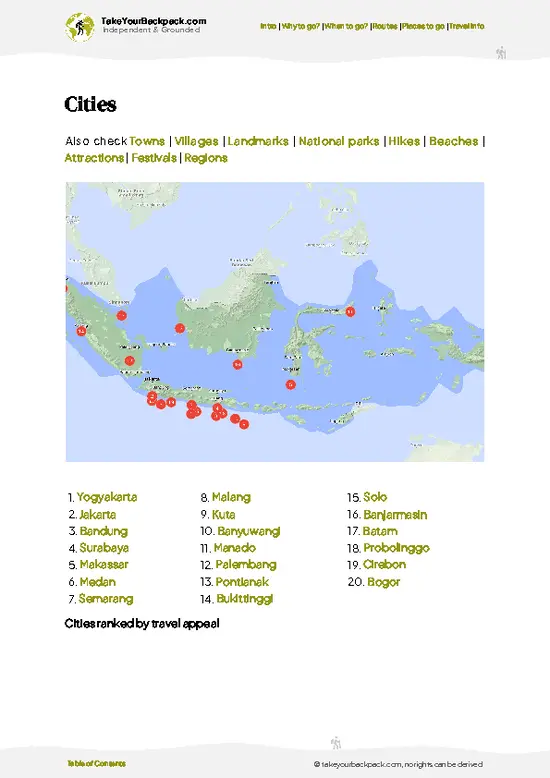
1 Yogyakarta

royal palace, batik workshops, street art

Immerse yourself in Javanese culture, visit ancient temples, and wander neighborhoods filled with artists and traditional crafts.

2 Jakarta

Kota Tua, KRL commuter trains, mega-mall culture, street food

Ride the commuter rail to the Dutch-era old town, cross the city to Istiqlal Mosque, and eat nasi goreng from late-night carts.

indonesia-city-jakarta
© Google |

3 Bandung

Factory outlets, volcanic highlands, Art Deco, tea plantations

Walk Braga Street past 1920s Dutch buildings, then ride up to Tangkuban Perahu crater and the tea estates around Ciwidey.

4 Surabaya

port city, colonial remnants, Arab quarter

Trace the city’s trading history through its old districts, sample local delicacies, and explore a blend of cultures along the river.

5 Makassar

seafood markets, fort ruins, waterfront promenade

Dine on fresh catch by the harbor, visit centuries-old forts, and watch daily life unfold along the Sulawesi coast.

6 Medan

Chinese shophouses, mosque domes, culinary crossroads

Sample spicy street food, admire diverse architecture, and use the city as a gateway to Sumatra’s natural wonders.

7 Semarang

Dutch warehouses, Chinatown, hilltop views

Climb to panoramic city overlooks, explore a historic port, and discover a blend of Javanese and Chinese influences.

8 Malang

colonial lanes, university town, cool climate

Stroll through tree-shaded avenues, encounter a lively student scene, and use the city as a base for exploring volcanic landscapes.

indonesia-city-malang
© Google |

9 Kuta

surf beaches, nightlife strips, street markets

Join the crowds on wide sandy shores, browse for bargains in busy lanes, and experience the area’s relentless energy after sunset.

10 Banyuwangi

Ijen blue fire, Bali ferry, Osing culture, Alas Purwo

Start a night hike up Ijen to see blue sulfur flames, then catch the short ferry across the strait to Bali.

11 Manado

diving hubs, volcanic backdrop, Minahasan cuisine

Dive world-class reefs, sample spicy northern dishes, and explore a city framed by mountains and the sea.

12 Palembang

Musi River, floating houses, songket weaving

Travel by riverboat past stilted homes, taste local fish cakes, and observe traditional textile artisans at work.

13 Pontianak

equator monument, riverfront, Dayak heritage

Stand on the equator, explore riverside neighborhoods, and encounter indigenous culture in West Kalimantan’s capital.

14 Bukittinggi

Minangkabau highlands, Jam Gadang, Harau canyon, rendang

Look out over Sianok Canyon, watch the clock tower at Jam Gadang, and try rendang cooked the way Minangkabau families make it.

15 Solo

kraton palace, gamelan halls, batik markets

Attend classical performances, browse textile stalls, and experience a quieter side of Javanese tradition.

16 Banjarmasin

Floating markets, Barito delta, canal stilt houses, sungai life

Board a klotok at dawn to reach the Lok Baintan floating market, then eat soto Banjar beside the wide Martapura River.

17 Batam

Singapore ferries, Riau Islands, seafood, factory hub

Take the 45-minute ferry from Singapore, eat chili crab-style seafood at Nongsa, and use the city as a visa-run or transit stop.

18 Probolinggo

Bromo gateway, fishing port, mangrove trails

Use the city as a launch point for volcano hikes, visit bustling docks, and explore coastal wetlands.

19 Cirebon

Sultan palaces, batik megamendung, coastal Java, empal gentong

Tour the Kasepuhan and Kanoman palaces, buy cloud-pattern batik in Trusmi village, and order a bowl of empal gentong beef soup.

20 Bogor

Botanical garden, Presidential Palace, rain city, Jakarta escape

Spend a morning among the 87-hectare Botanic Gardens, then taste asinan and laksa Bogor in a cooler, wetter town an hour from Jakarta.

21 Samarinda

Mahakam River, coal barges, Dayak crafts

Watch river traffic from the banks, visit craft markets, and experience the gateway to East Kalimantan’s interior.

22 Jayapura

Papua gateway, Lake Sentani, Cycloop mountains, Pacific border

Fly in over Lake Sentani, arrange permits for the highlands, and cross to Skouw to see the Papua New Guinea border.

23 Ternate

volcano island, clove plantations, sultan’s palace

Circle a volcanic isle, walk through fragrant groves, and learn about the spice trade’s legacy in the sultan’s city.

24 Gorontalo

Sulawesi north coast, Otanaha fort, binte soup, Togean boats

Visit the Portuguese-era Otanaha fortress above Lake Limboto, then use the town as a base for boats toward the Togean Islands.

25 Atambua

East Timor border, Belu highlands, ikat weaving, Motaain crossing

Cross toward Timor-Leste at Motaain, browse Belu woven cloth in local markets, and use the town as a rough stop on the Flores to Timor route.

26 Kendari

Southeast Sulawesi hub, Kendari Bay, Wakatobi flights, sinonggi

Use the bay-side capital to connect with flights and ferries toward Wakatobi, and try sinonggi, a sago porridge served with fish soup.

27 Manokwari

Cenderawasih Bay, rainforest hills, missionary sites

Explore Papua’s coastal capital, visit historic churches, and access biodiverse forests and marine parks.

28 Palu

bay views, mountain backdrop, Central Sulawesi hub

Look out over a sweeping bay, use the city as a base for highland treks, and experience Sulawesi’s crossroads.

29 Tarakan

mangrove forests, oil history, border trade

Walk boardwalks through tidal forests, learn about wartime oil, and observe cross-border commerce with Malaysia.

30 Bitung

Lembeh Strait, muck diving, fishing port, Manado gateway

Book a dive trip to Lembeh Strait for frogfish, mimic octopus, and other small marine life, with the port town as your staging point.

31 Sumbawa Besar

sultan’s palace, buffalo markets, rural gateway

Visit a historic palace, witness traditional livestock trading, and prepare for journeys into Sumbawa’s countryside.

32 Sumenep

Madura palace, salt pans, island ferries

Tour royal compounds, see salt production, and catch boats to the scattered islands off Madura.

33 Tual

island port, Muslim communities, coral reefs

Board ferries to distant islands, observe daily life shaped by the sea, and snorkel in clear waters teeming with marine life.

34 Waingapu

dry savannah, traditional villages, horse culture

Travel across open grasslands, visit remote settlements with thatched roofs, and witness the island’s strong connection to horses and ritual.

35 Timika

mining hub, Mimika culture, airport gateway

Arrive in a resource-driven city, meet indigenous communities, and use Timika as a staging point for Papua’s interior.

36 Pagar Alam

tea plantations, cool mountain air, megalithic sites

Hike through misty highlands, discover ancient stone relics scattered in fields, and watch daily life unfold among terraced tea gardens.

37 Baubau

Buton Sultanate, Wakatobi access, Kraton Buton, cassava dishes

Climb to the Buton Sultanate fortress walls, among the largest in Indonesia, before boarding boats toward the Tukangbesi reefs.

38 Ambon

Spice Islands gateway, Banda Sea diving, Pattimura heritage, fish markets

Catch a boat to the clove and nutmeg islands, dive reefs close to the harbor, and eat grilled tuna with colo-colo sambal.

39 Merauke

southernmost city, savanna plains, border crossing

Travel to Indonesia’s far south, see open grasslands, and cross into Papua New Guinea from this frontier town.

40 Singkawang

Chinese temples, lantern festivals, street snacks

Experience vibrant cultural celebrations, wander through temple-filled neighborhoods, and try snacks unique to West Kalimantan.

Think you know Indonesia?

Prove you’re a true local — uncover 30 lesser-known cities in Indonesia that locals tend to keep to themselves.
Loading the map 🌍

Expert viewPro Tips for Exploring the Best

How many cities to build into a trip: Three to four cities is the number I advise for a trip of two to four weeks. Indonesia is spread over more than 17,000 islands, and every extra city usually means a flight, a ferry or a long day on the road. Two cities with room to breathe beat six that blur into airport queues. Cap it at one city per week and you keep the energy for the side trips that make the country fun.
Choosing the kind of city for your travel style: Indonesian cities fall into rough families, and picking among them matters more than ticking off names. Court cities on Java, with sultans’ palaces, batik workshops and gamelan rehearsals, suit culture-hungry travelers who want history without a tour bus. Big metropolitan hubs offer the best food range, rooftop bars, museums and the cheapest … read more 👉
How many cities to build into a trip: Three to four cities is the number I advise for a trip of two to four weeks. Indonesia is spread over more than 17,000 islands, and every extra city usually means a flight, a ferry or a long day on the road. Two cities with room to breathe beat six that blur into airport queues. Cap it at one city per week and you keep the energy for the side trips that make the country fun.
Choosing the kind of city for your travel style: Indonesian cities fall into rough families, and picking among them matters more than ticking off names. Court cities on Java, with sultans’ palaces, batik workshops and gamelan rehearsals, suit culture-hungry travelers who want history without a tour bus. Big metropolitan hubs offer the best food range, rooftop bars, museums and the cheapest onward flights, but traffic and heat will wear you down fast. Highland and market towns deliver cool nights, volcano views and local life, and they fit slow travelers. Beach-and-surf towns and island service towns are the easiest for first-timers, with English everywhere and dorm beds on every corner, but they carry the biggest crowds and the highest prices. If you crave a social scene, lean toward the tourist hubs. If you want to be the only foreigner in a warung, lean toward the Javanese interior, Sulawesi or Sumatra.
What it costs per day: Budget US$25 to 40 a day on Java and most of Sumatra and Sulawesi. That covers a fan or air-conditioned private room at Rp 150,000 to 300,000 (roughly US$9 to 18), meals at warungs for Rp 15,000 to 40,000 (US$1 to 2.50) each, and local transport. Bali and the Gili and Lombok resort strips push the same style to US$35 to 60 a day, with dorm beds at Rp 100,000 to 200,000 (US$6 to 12) and cafe meals at Rp 60,000 to 120,000 (US$4 to 7.50). Jakarta sits between the two.
Per visit, expect small extras. Palace and museum entry for foreigners usually runs Rp 20,000 to 100,000 (US$1.25 to 6), and temple complexes charge more. Local guides cost Rp 250,000 to 600,000 (US$15 to 37) for a half day, which is worth paying at heritage sites where context transforms a pile of stone into a story. Ride-hailing apps Gojek and Grab cost Rp 10,000 to 50,000 (US$0.60 to 3) for most city hops, and a domestic flight between islands often costs Rp 600,000 to 1,500,000 (US$37 to 90) if booked a few weeks ahead. Air-conditioned trains on Java are the best value in the country, around Rp 100,000 to 400,000 (US$6 to 25) depending on distance and class.
Crowds and the honest price of popularity: Be straight with yourself about crowds. Tourist-heavy cities fill from July to August and around Christmas and New Year, and prices for rooms climb 30 to 100 percent. Big cities also mean serious traffic. A 10 km ride can take an hour at rush time, so build in buffer before flights. Skip the crowds by arriving early. Palaces, markets and temples are quiet and cool at 7 to 8 a.m., and the light is better for photos. Then retreat to a cafe in the afternoon heat, when the humidity peaks.
Safety and street sense: Indonesian cities are generally friendly, and violent crime against travelers is uncommon. Petty theft is the real risk. Phone snatching from motorbikes happens in the larger hubs, so carry your phone on the side away from the road and keep it out at crossings. Use Gojek or Grab, or insist on the meter with a Blue Bird taxi, since unlicensed drivers at airports and stations overcharge. Money changers with rates that look too good usually shortchange you on the count, so use bank ATMs and count notes twice.
Traffic is the biggest physical danger. Scooter accidents are the most common serious injury among visitors, so wear a helmet and think hard before renting a bike, particularly without an international permit that covers motorcycles. Without it, insurance may refuse a claim. Cross roads steadily and predictably, because riders flow around a walker who keeps pace. Stay out of the water in city canals and avoid ice of unknown origin if your stomach is sensitive. Bottled or refilled water is standard.
Earthquakes and volcanic activity are part of life along the Ring of Fire. Download the BMKG app for alerts, and check volcano status before heading into the highlands.
Cultural rules that earn you smiles: Indonesia is the world’s largest Muslim-majority country, though Bali is mostly Hindu and parts of Sulawesi, Flores and North Sumatra are largely Christian. Dress covers shoulders and knees in most cities, and for mosques and palaces you need it. Women often carry a light scarf. Remove shoes before entering homes and places of worship. Use your right hand to give, take and eat, and avoid pointing with a finger or your foot. Friday midday prayers pause business in many places, and Ramadan shifts daytime eating habits. Many warungs close until sunset, though tourist cafes stay open. Eating discreetly in public is polite, and evenings are lively with night markets and feasts.
Public displays of affection draw frowns outside tourist zones. Alcohol is available in tourist areas and hotels but scarce and pricey in conservative cities. Drug laws are severe, and penalties can include long prison terms, so decline anything offered on the street. Photographing people is usually welcomed with a smile, but ask first for women, worshippers and ceremonies. Learning a few Bahasa Indonesia phrases (terima kasih, permisi, berapa harganya) will open doors faster than any gadget. Bargain with humor at markets, aim for a fair deal rather than rock bottom, and keep fixed-price places in mind where haggling would be rude.
The details that justify the journey: The crowds and the heat are real, yet the payoff is hard to match. Where else do you eat satay grilled over coconut husk at a roadside cart for under US$2, then watch a shadow puppet performance with gamelan rolling through the night? Expect the call to prayer at dawn, the fragrance of clove cigarettes and frying shallots, and the delighted stares when you try sambal at full strength. Come with a flexible plan, a light scarf, small bills and curiosity, and the cities pay you back every day.

✈️ The backpacker research shortcutIndonesia Travel Guide

An offline-friendly backpacking guide with optimized travel routes, ranked highlights, transport advice, and the best areas to stay.
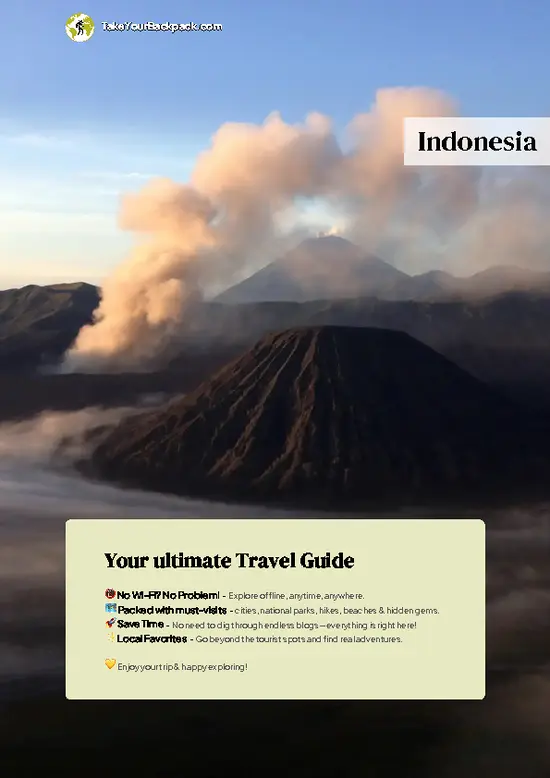
example page 0 from our offline Travel Guide for Indonesia
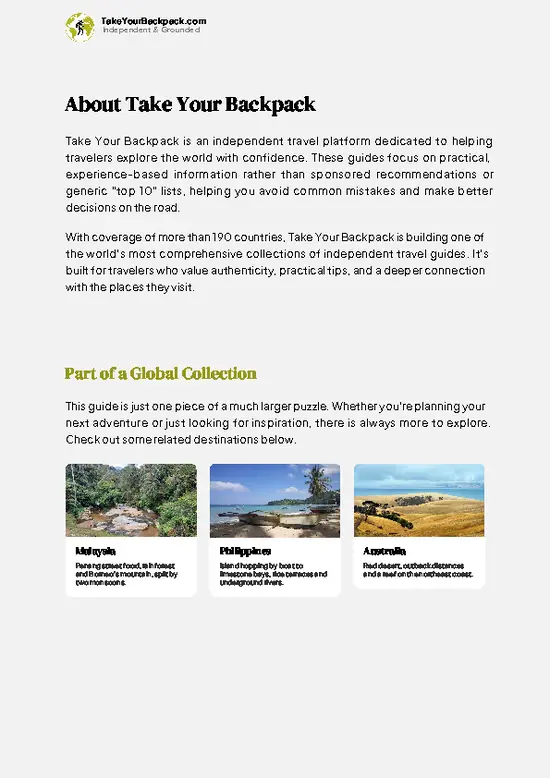
example page 1 from our offline Travel Guide for Indonesia
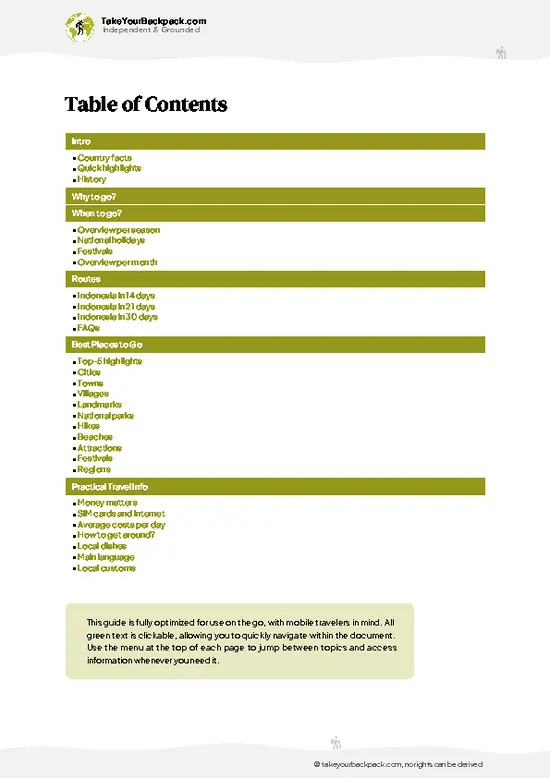
example page 2 from our offline Travel Guide for Indonesia
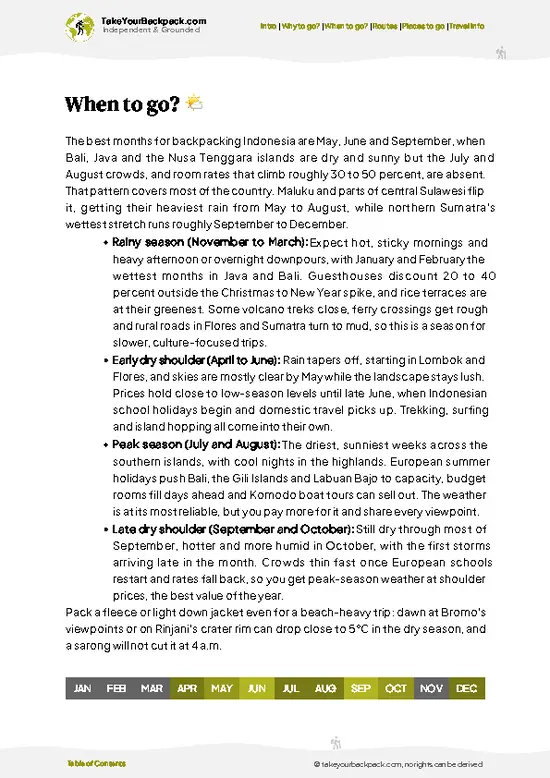
example page 3 from our offline Travel Guide for Indonesia
example page 4 from our offline Travel Guide for Indonesia
example page 5 from our offline Travel Guide for Indonesia
example page 6 from our offline Travel Guide for Indonesia
example page 7 from our offline Travel Guide for Indonesia
The digital guide (460 pages) contains:
✅ 153 highlights, ranked by travel appeal
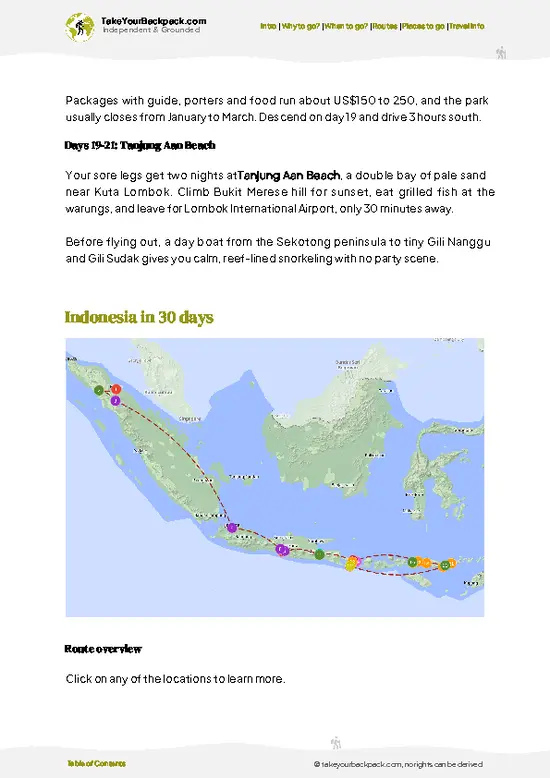
✅ Optimized 14, 21 & 30-day travel routes
✅ Cities, national parks, landmarks, beaches
✅ How to get around
✅ Offline-friendly for travel without Wi-Fi
👉 Click to see all 30+ guide features

📅 Plan smarter in minutes, not weeks
✅ Month by month travel advice
✅ Festivals & national holidays
✅ Budget expectations

🗺️ Go to the right places, skip the overrated ones
✅ Honest pros & cons of destinations
✅ Top hikes, parks & viewpoints
✅ Lesser-known places most travelers miss
✅ Clear “worth it vs skip it” guidance

🛏️ Travel smoothly without rookie mistakes
✅ Best areas to stay
✅ Transport systems explained simply
✅ Common scams & safety advice
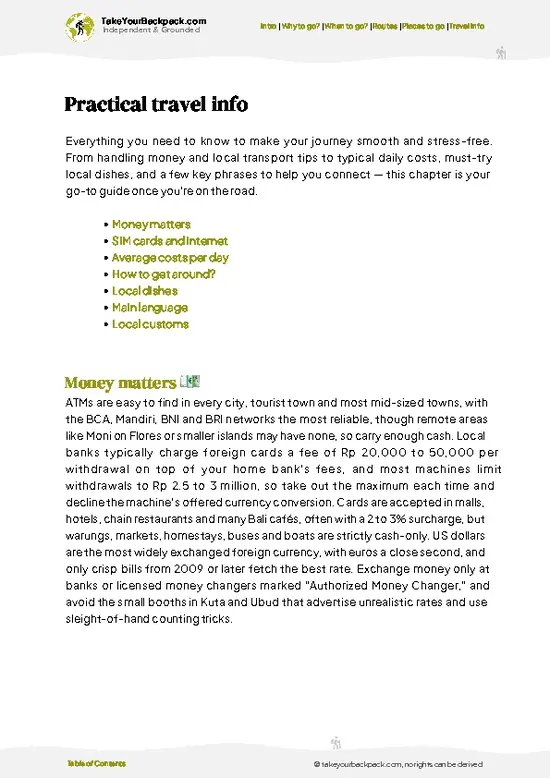
✅ SIM cards, money & practical tips

🌍 Understand the country, not just visit it
✅ Culture & traditions
✅ 52 Essential phrases & customs
✅ Festivals worth planning around
✅ Traveler-friendly historical context
✅ Insights that make places more meaningful

📱 Built for real travel conditions
✅ Fully downloadable PDF
✅ Works completely offline
✅ Optimized for phone use
✅ Useful in remote areas & buses
✅ Everything in one place
Stop searching, start planning
Get instant access to your full guide. 30‑day money-back guarantee.
+ Add another guide for just

By proceeding you agree to our terms.
Sent to your inbox immediately after payment • 100% Secure Checkout
Best Backpacking Travel Advisor 2025 tourism awardBest Backpacking
Travel Advisor
2025
What others say about Take Your Backpack Guides:
⭐⭐⭐⭐⭐
Fantastic, amazing amount of information!
⭐⭐⭐⭐⭐
My goodness this is amazing, it's what I've been looking for hats off too you!
⭐⭐⭐⭐⭐
I think this is absolutely BRILLIANT
⭐⭐⭐⭐
Very complete and informative. It's still missing places, but I gotta to commend you
⭐⭐⭐⭐⭐
This is truly amazing, thank you, can't wait to explore it with my kids!
⭐⭐⭐⭐⭐
Awesome resource, thank you!
⭐⭐⭐⭐⭐
This is amazing! Can't wait to explore the ones I haven't seen
⭐⭐⭐⭐
I love this! Well done, great idea.
⭐⭐⭐⭐⭐
Thanks for taking the time to make this gem!
⭐⭐⭐⭐⭐
This might be the best website I've ever seen.
⭐⭐⭐⭐⭐
Congratulations, and thank you so much for your work; it's incredibly valuable.
⭐⭐⭐⭐
In all seriousness I think you did a great job pointing out the important spots
⭐⭐⭐⭐⭐
10/10 very good
⭐⭐⭐⭐⭐
As someone who's only just starting to visit regularly this is awesome, thank you.
⭐⭐⭐⭐
Thank you very much! I'm going to visit my dad, it's going to be very useful!
⭐⭐⭐⭐⭐
This is really cool! We'll be travelling for the first time and this definitely come in handy.
⭐⭐⭐⭐⭐
You are now our minister of culture, congratulations 👨‍💼
⭐⭐⭐⭐⭐
Just wanted to tell you that this is a pearl! Going to follow your recommendations.
⭐⭐⭐⭐⭐
This is so cool. I'll definitely be using the resource for my travels soon.
⭐⭐⭐⭐⭐
This is very impressive! Good work.
⭐⭐⭐⭐⭐
This is an amazing and informative site. Very well done!

🛏️ Where to stay?Best Places to Stay in Indonesia

Indonesia has a deep supply of hostels and family-run guesthouses (homestays), with dorm beds typically running Rp 100,000 to 250,000 (US$6 to 15) and simple private rooms from about Rp 200,000 (US$12). On Bali, Canggu has the most design-forward hostels, surf breaks and late bars but also clogged scooter traffic, Kuta is the cheapest and loudest base and is close to the airport, and Ubud trades nightlife for quiet rice-field lanes, yoga studios and easy access to temples. In Yogyakarta, Sosrowijayan puts you steps from Malioboro and the train station in cheap but noisy alleys, while Prawirotaman is calmer, leafier and better for cafes, and on Lombok and the Gili Islands you will find hostels … read more 👉
Indonesia has a deep supply of hostels and family-run guesthouses (homestays), with dorm beds typically running Rp 100,000 to 250,000 (US$6 to 15) and simple private rooms from about Rp 200,000 (US$12). On Bali, Canggu has the most design-forward hostels, surf breaks and late bars but also clogged scooter traffic, Kuta is the cheapest and loudest base and is close to the airport, and Ubud trades nightlife for quiet rice-field lanes, yoga studios and easy access to temples. In Yogyakarta, Sosrowijayan puts you steps from Malioboro and the train station in cheap but noisy alleys, while Prawirotaman is calmer, leafier and better for cafes, and on Lombok and the Gili Islands you will find hostels clustered along the main beach strips, where Gili Trawangan is the party island and Gili Air the mellow one.

If you enjoy meeting fellow travelers, consider choosing hostels with high ratings for atmosphere. On the other hand, if you prefer having your own space, a hotel might be a better option.

IndonesiaExplore Indonesia

👋 Meet the founderWho’s Behind Take Your Backpack?

Johan, backpacker and founder of TakeYourBackpackHi, I’m Johan (Netherlands 🇳🇱), the creator of TakeYourBackpack. Over the past 3 decades, I’ve backpacked through 90+ countries across six continents, gaining extensive experience with independent travel, long-term trips, and overland routes.

This site is built on a combination of firsthand travel experience and carefully curated insights from other backpackers. Many guides are based on places I’ve personally visited, while others bring together tips, observations, and practical advice shared by trusted travelers I’ve met along the way.

The goal is to provide realistic, experience-driven guidance — not generic itineraries — so you can explore destinations with better context, clearer expectations, and more confidence.