×

Indonesia🇮🇩 | festivalsPasola Festivalhorseback jousting, Sumba rituals, spear games | things to do and best time to go

Explore Toraja International Festival of CultureExplore Galungan

Backpacking in Pasola
🌟 Highlightfestival ranked #7
By Johan Kruseman 🇳🇱 | Updated October 4, 2026

Most travelers miss that Pasola Festival happens in February or March, when prices across Indonesia drop and crowds thin out, giving you a genuine edge if you plan around it. Pasola takes place on the island of Sumba, in East Nusa Tenggara, where two villages stage a centuries-old mounted combat ritual that feels like stepping into a different century. Young men on horseback charge at each other with blunt spears in a controlled frenzy, their horses wheeling and rearing while thousands of locals cheer from the sidelines. I remember the dust rising thick enough to blur the riders, the percussion of hooves and the raw energy of the crowd pressing close, everyone moving as one organism. The festival is raw, unpolished, and genuinely local, not staged for tourists. It's a window into Sumbanese culture that rewards the effort to get there.

Discover everything you want to know in the 📖 Indonesia Travel Guide.


example page 0 from our offline Travel Guide for Indonesia
example page 1 from our offline Travel Guide for Indonesia
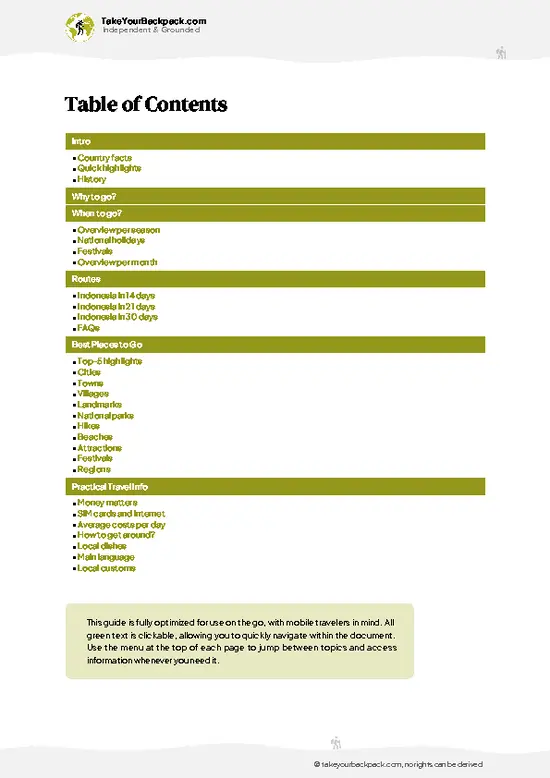
example page 2 from our offline Travel Guide for Indonesia
example page 3 from our offline Travel Guide for Indonesia
example page 4 from our offline Travel Guide for Indonesia
example page 5 from our offline Travel Guide for Indonesia
example page 6 from our offline Travel Guide for Indonesia
example page 7 from our offline Travel Guide for Indonesia
Loading the map 🌍
CLICK TO FILTER
cities
towns
villages
landmarks
national parks
hikes
beaches
attractions
festivals
regions
SHOW COUNTRY’S BESTSHOW ALL

✨ Why go?
Ranked #7 festival in Indonesia
What sets this place apart

Pasola draws backpackers because it's a raw cultural event, not a packaged tourist spectacle. The festival offers temporary community with other travelers and locals in a setting few outsiders witness. You're watching centuries-old ritual unfold on horseback across rice fields, not sitting in stadium bleachers. The cost is low compared to major music festivals elsewhere, and the timing slots naturally into Southeast Asia circuits. Backpackers base themselves in nearby towns, making it easy to combine with island hopping or longer stays in Nusa Tenggara. The energy is social without being forced: you camp, share meals, swap stories with people who came for the same reason you did. It's the kind of event that reshapes how you think about travel.

💡 HighlightsMust-see experiences and standout moments

  1. The Pasola Charge Itself: Young men on horseback gallop across flooded rice fields in a controlled clash, hurling blunt bamboo spears at each other. It's part ritual fertility rite, part martial tradition, and entirely hypnotic to witness from the field's edge. The dust, the shouts, the organized chaos make it unforgettable.
  2. Sunrise Over the Rice Fields: Arrive before dawn to watch the landscape transform from shadow to gold. The fields fill with spectators, horses, and energy as light spreads. This quiet moment before the charge is when the scale of the event becomes real.
  3. Local Food Stalls and Communal Eating: The festival grounds fill with vendors selling soto ayam, grilled fish, and sticky rice. Eating shoulder-to-shoulder with locals and other travelers creates natural conversation and
… read more 👉
  1. The Pasola Charge Itself: Young men on horseback gallop across flooded rice fields in a controlled clash, hurling blunt bamboo spears at each other. It's part ritual fertility rite, part martial tradition, and entirely hypnotic to witness from the field's edge. The dust, the shouts, the organized chaos make it unforgettable.
  2. Sunrise Over the Rice Fields: Arrive before dawn to watch the landscape transform from shadow to gold. The fields fill with spectators, horses, and energy as light spreads. This quiet moment before the charge is when the scale of the event becomes real.
  3. Local Food Stalls and Communal Eating: The festival grounds fill with vendors selling soto ayam, grilled fish, and sticky rice. Eating shoulder-to-shoulder with locals and other travelers creates natural conversation and connection you won't find in restaurants.
  4. The Ceremonial Preparation: Hours before the charge, watch riders prepare their horses, adjust spears, and perform rituals. This backstage access reveals the seriousness and tradition underneath what outsiders see as spectacle.
  5. Staying in Local Homestays: Sleep in family homes in villages near the festival grounds. You wake to roosters, eat breakfast with your host family, and leave with actual relationships rather than hotel receipts.
I'd pick the charge itself first because it's the reason the festival exists. Everything else radiates from that moment.
Spotted a mistake or missing something? Contact us.

🌤️ When to go?When is the celebration of Pasola Festival?

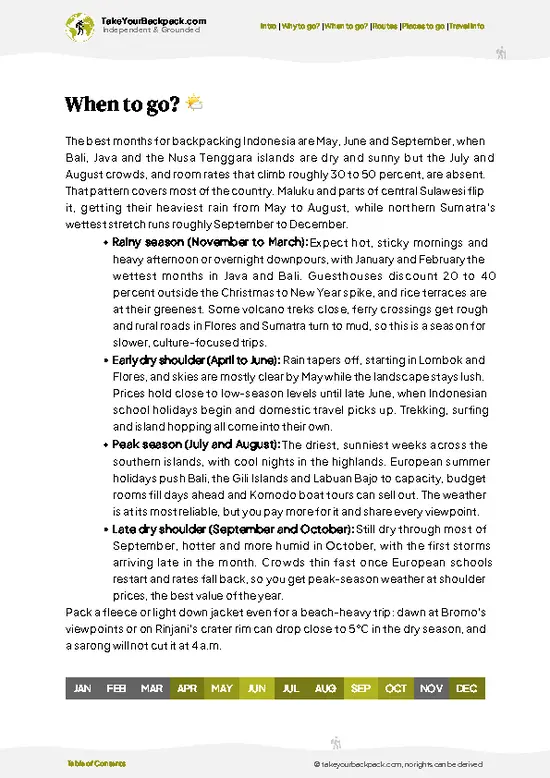
  • February to March: Pasola occurs during the dry season, with clear skies and temperatures around 28 to 32°C (82 to 90°F). This is the ideal window, with minimal rain and excellent visibility for watching the ritual. Crowds are smaller than at major festivals elsewhere, and accommodation prices are at their lowest across Indonesia.
  • April onwards: The wet season begins, bringing afternoon downpours that can disrupt the festival schedule or make travel to Sumba unpredictable. Humidity rises and temperatures stay warm but feel heavier.
  • Daylight: February and March offer roughly 12 hours of daylight, enough for full days of exploration before and after the main event.
Book accommodation 4 to 6 weeks ahead if traveling during Pasola week itself, though the island remains quiet and affordable outside the festival dates.

source: climatestotravel.comJANJanuary: not recommended for travelingFEBFebruary: excellent for travelingMARMarch: excellent for travelingAPRApril: not recommended for travelingMAYMay: not recommended for travelingJUNJune: not recommended for travelingJULJuly: not recommended for travelingAUGAugust: not recommended for travelingSEPSeptember: not recommended for travelingOCTOctober: not recommended for travelingNOVNovember: not recommended for travelingDECDecember: not recommended for traveling

✈️ The backpacker research shortcutIndonesia Travel Guide

An offline-friendly backpacking guide with optimized travel routes, ranked highlights, transport advice, and the best areas to stay.
example page 0 from our offline Travel Guide for Indonesia
example page 1 from our offline Travel Guide for Indonesia
example page 2 from our offline Travel Guide for Indonesia
example page 3 from our offline Travel Guide for Indonesia
example page 4 from our offline Travel Guide for Indonesia
example page 5 from our offline Travel Guide for Indonesia
example page 6 from our offline Travel Guide for Indonesia
example page 7 from our offline Travel Guide for Indonesia
The digital guide (469 pages) contains:
✅ 153 highlights, ranked by travel appeal
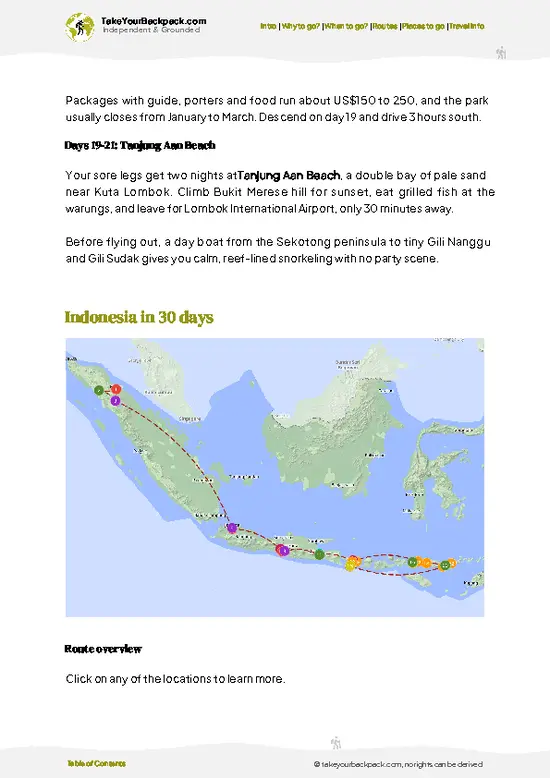
✅ Optimized 14, 21 & 30-day travel routes
✅ Cities, national parks, landmarks, beaches
✅ How to get around
✅ Offline-friendly for travel without Wi-Fi
👉 Click to see all 30+ guide features

📅 Plan smarter in minutes, not weeks
✅ Month by month travel advice
✅ Festivals & national holidays
✅ Budget expectations

🗺️ Go to the right places, skip the overrated ones
✅ Honest pros & cons of destinations
✅ Top hikes, parks & viewpoints
✅ Lesser-known places most travelers miss
✅ Clear “worth it vs skip it” guidance

🛏️ Travel smoothly without rookie mistakes
✅ Best areas to stay
✅ Transport systems explained simply
✅ Common scams & safety advice
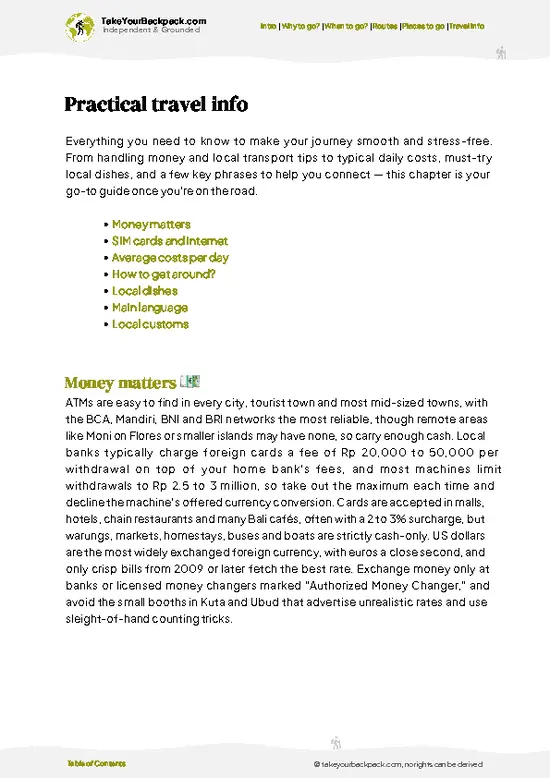
✅ SIM cards, money & practical tips

🌍 Understand the country, not just visit it
✅ Culture & traditions
✅ 52 Essential phrases & customs
✅ Festivals worth planning around
✅ Traveler-friendly historical context
✅ Insights that make places more meaningful

📱 Built for real travel conditions
✅ Fully downloadable PDF
✅ Works completely offline
✅ Optimized for phone use
✅ Useful in remote areas & buses
✅ Everything in one place
Stop searching, start planning
Get instant access to your full guide. 30‑day money-back guarantee.
+ Add another guide for just

By proceeding you agree to our terms.
Sent to your inbox immediately after payment • 100% Secure Checkout
Best Backpacking Travel Advisor 2025 tourism awardBest Backpacking
Travel Advisor
2025
What others say about Take Your Backpack Guides:
⭐⭐⭐⭐⭐
Fantastic, amazing amount of information!
⭐⭐⭐⭐⭐
My goodness this is amazing, it's what I've been looking for hats off too you!
⭐⭐⭐⭐⭐
I think this is absolutely BRILLIANT
⭐⭐⭐⭐
Very complete and informative. It's still missing places, but I gotta to commend you
⭐⭐⭐⭐⭐
This is truly amazing, thank you, can't wait to explore it with my kids!
⭐⭐⭐⭐⭐
Awesome resource, thank you!
⭐⭐⭐⭐⭐
This is amazing! Can't wait to explore the ones I haven't seen
⭐⭐⭐⭐
I love this! Well done, great idea.
⭐⭐⭐⭐⭐
Thanks for taking the time to make this gem!
⭐⭐⭐⭐⭐
This might be the best website I've ever seen.
⭐⭐⭐⭐⭐
Congratulations, and thank you so much for your work; it's incredibly valuable.
⭐⭐⭐⭐
In all seriousness I think you did a great job pointing out the important spots
⭐⭐⭐⭐⭐
10/10 very good
⭐⭐⭐⭐⭐
As someone who's only just starting to visit regularly this is awesome, thank you.
⭐⭐⭐⭐
Thank you very much! I'm going to visit my dad, it's going to be very useful!
⭐⭐⭐⭐⭐
This is really cool! We'll be travelling for the first time and this definitely come in handy.
⭐⭐⭐⭐⭐
You are now our minister of culture, congratulations 👨‍💼
⭐⭐⭐⭐⭐
Just wanted to tell you that this is a pearl! Going to follow your recommendations.
⭐⭐⭐⭐⭐
This is so cool. I'll definitely be using the resource for my travels soon.
⭐⭐⭐⭐⭐
This is very impressive! Good work.
⭐⭐⭐⭐⭐
This is an amazing and informative site. Very well done!

🛏️ Where to stay?Where staying makes the most sense

The festival takes place in two main villages: Wainyapu and Lamboya, both in West Sumba. Staying in or near these villages puts you close to the action, though accommodation is basic. Wainyapu has a handful of simple guesthouses and homestays catering to backpackers, with rooms at budget rates. Lamboya offers similar options. For more comfort and reliable amenities, Waikabubak, the nearest town about 30 to 40 kilometers away, has more established budget hotels and hostels popular with travelers. The trade-off is a 1 to 1.5 hour drive to the festival each day, but you'll find better food, reliable … read more 👉
The festival takes place in two main villages: Wainyapu and Lamboya, both in West Sumba. Staying in or near these villages puts you close to the action, though accommodation is basic. Wainyapu has a handful of simple guesthouses and homestays catering to backpackers, with rooms at budget rates. Lamboya offers similar options. For more comfort and reliable amenities, Waikabubak, the nearest town about 30 to 40 kilometers away, has more established budget hotels and hostels popular with travelers. The trade-off is a 1 to 1.5 hour drive to the festival each day, but you'll find better food, reliable electricity, and a social backpacker scene. Many travelers base themselves in Waikabubak and day-trip to the villages. If you want full immersion, staying in the villages means sharing space with locals, eating communal meals, and waking to roosters. Either way, book ahead during festival week; outside that period, rooms are plentiful and cheap.

👛 Costs (as of 4 October 2026)What things cost and how to budget

Attending Pasola costs far less than major festivals elsewhere, though accommodation and transport add up quickly if you're not strategic. Festival entry itself is minimal, but getting to the remote location and staying nearby for several days shapes your budget.
CategoryBudget RangeLocal Reality
Festival ticketsFree to USD 5No formal gate fee; locals may ask for small donations. Organized viewing areas sometimes charge USD 3 to 5.
AccommodationUSD 8 to 25 per nightHomestays and basic guesthouses near festival grounds cost USD 8 to 15. Hotels in larger towns (Waikabubak, Mataram) run USD 20 to 25.
Local transportUSD 2 to 8 per dayOjek (motorcycle taxi) rides cost USD 2 to 5. Renting a scooter runs USD 5 to 8 daily.
Food & drinksUSD 6 to 12 per dayStreet food and stalls cost USD 1 to 3 per meal.
… read more 👉
Attending Pasola costs far less than major festivals elsewhere, though accommodation and transport add up quickly if you're not strategic. Festival entry itself is minimal, but getting to the remote location and staying nearby for several days shapes your budget.
CategoryBudget RangeLocal Reality
Festival ticketsFree to USD 5No formal gate fee; locals may ask for small donations. Organized viewing areas sometimes charge USD 3 to 5.
AccommodationUSD 8 to 25 per nightHomestays and basic guesthouses near festival grounds cost USD 8 to 15. Hotels in larger towns (Waikabubak, Mataram) run USD 20 to 25.
Local transportUSD 2 to 8 per dayOjek (motorcycle taxi) rides cost USD 2 to 5. Renting a scooter runs USD 5 to 8 daily.
Food & drinksUSD 6 to 12 per dayStreet food and stalls cost USD 1 to 3 per meal. Restaurant meals in towns run USD 4 to 8.
MiscellaneousUSD 5 to 15Guides, photos, small purchases, and unexpected transport add up. Budget for contingencies.
The biggest hidden cost is reaching the festival. Flights to Bali, then onward to Sumba or Lombok, plus ferries or domestic flights, easily exceed USD 150 to 300 depending on your starting point. Plan accommodation for at least three days to justify the journey.
⚠️ Prices can change and everyone travels differently, so take this as a rough guide. Hope it helps you plan your adventure!

🍲 FoodLocal Flavors for Backpackers

Food at Pasola is communal and straightforward. Soto ayam (turmeric chicken soup) and grilled fish dominate the stalls, served with rice or sticky rice cakes. Satay vendors work the crowds, and fresh fruit like mangoes and papayas appear throughout the day. Drinks are mostly sweet tea, coffee, and bottled water; alcohol is minimal and not the focus.

What's worth trying is anything cooked fresh on-site rather than pre-made. The rice field vendors cook to order, and the quality varies wildly, but that's part of the experience. Eat where locals eat: if a stall has a line of Indonesian families, the food is reliable and cheap.

Bring cash in small denominations. Most vendors don't take cards, and change can be slow during peak hours. Portions are generous by backpacker standards, so one meal … read more 👉
Food at Pasola is communal and straightforward. Soto ayam (turmeric chicken soup) and grilled fish dominate the stalls, served with rice or sticky rice cakes. Satay vendors work the crowds, and fresh fruit like mangoes and papayas appear throughout the day. Drinks are mostly sweet tea, coffee, and bottled water; alcohol is minimal and not the focus.

What's worth trying is anything cooked fresh on-site rather than pre-made. The rice field vendors cook to order, and the quality varies wildly, but that's part of the experience. Eat where locals eat: if a stall has a line of Indonesian families, the food is reliable and cheap.

Bring cash in small denominations. Most vendors don't take cards, and change can be slow during peak hours. Portions are generous by backpacker standards, so one meal often stretches into two. The festival rhythm means eating happens early (breakfast by 6 a.m., lunch by noon) because the charge happens mid-morning and the crowds disperse by afternoon.

FAQFrequently asked questions about Pasola

Pasola Festival takes place in February or March each year, with exact dates varying based on the Sumbanese lunar calendar. The festival typically lasts 2 to 3 days, though ceremonies and preparations extend the cultural event across a longer period. Check with local tourism offices or your guesthouse for the specific year's dates, as they're announced closer to the season.
Entry to Pasola is free or costs only a few dollars for organized viewing areas. The main expenses are reaching Sumba (USD 40 to 100 for flights from Bali), accommodation (USD 8 to 20 per night), and daily food and transport (USD 7 to 20 per day). Total cost for a 5-day trip averages USD 150 to 250 for independent backpackers.
Tickets aren't required in advance for most viewing areas; you can watch from public spaces for free. If you want organized seating or a guide, book through your guesthouse or a local tour operator a few days ahead. Accommodation during festival week should be booked 4 to 6 weeks in advance, as rooms fill quickly in the villages and nearby towns.
⚠️ Things can change over time, so always validate details locally before you go.

Other Indonesian festivals near Pasola

Explore more nearby:

  • Bau Nyale Festival—Seger beach, Lombok, sea worms, dawn ritual| 349 km away
  • Bali Arts Festival—Denpasar, Taman Werdhi Budaya, gamelan, month-long parades| 472 km away
  • Nyepi Festival—Ogoh-ogoh effigies, day of silence, airport closure, Bali| 474 km away

💡 Not sure where to go next?
Create a personalized itinerary for Indonesia including Pasola and the places that fit your trip.

Generate my itinerary

👉 Discover all festivals

Or checkout all Indonesia has to offer (think cities, towns, villages, national parks, hikes, beaches, festivals)
Country photo of Indonesia

We 💚 feedbackWhat to keep in mind

Pasola is worth the effort because you're witnessing living tradition, not a performance staged for tourists. The drawback is real: the location is remote, transport is slow, and the festival depends on weather and local schedules that don't always align with backpacker timelines. Go with flexibility built in.

✈️ When did I visit Indonesia?
As part of my 1.5 year travel around the world trip, I visited Indonesia twice (and it was worth it): first in September 2015 and a bit later again in January and February 2016.

✍️ Help improve this page!
The information on this page is based on my own backpacking experience in Indonesia, supplemented with up-to-date research and feedback from other travelers. Travel details can change, so if you notice anything outdated or incomplete, feel free to let me know.


🙋‍♂️ Give feedback

👋 Meet the founderWho’s Behind Take Your Backpack?

Johan, backpacker and founder of TakeYourBackpackHi, I’m Johan (Netherlands 🇳🇱), the creator of TakeYourBackpack. Over the past 3 decades, I’ve backpacked through 90+ countries across six continents, gaining extensive experience with independent travel, long-term trips, and overland routes.

This site is built on a combination of firsthand travel experience and carefully curated insights from other backpackers. Many guides are based on places I’ve personally visited, while others bring together tips, observations, and practical advice shared by trusted travelers I’ve met along the way.

The goal is to provide realistic, experience-driven guidance — not generic itineraries — so you can explore destinations with better context, clearer expectations, and more confidence.