×

Indonesia🇮🇩 | townsRutengrice terraces, cool highlands, Manggarai culture | things to do and best time to go

Explore MaumereExplore Larantuka

Backpacking in Ruteng
👍 Recommendedtown ranked #5
By Johan Kruseman 🇳🇱 | Updated September 4, 2026

Your sandals scrape on damp cobblestones as church bells ring somewhere above the mist, clove-scented smoke from a warung grill drifting through cool mountain air. This is Ruteng, a highland town in central Flores, eastern Indonesia, sitting between Labuan Bajo’s dive boats and Bajawa’s volcano country. For backpackers, it’s more waystation than headline act, but a useful and oddly charming one. The town itself is compact and walkable, with a sleepy Catholic-colonial feel, a busy morning market, and rice-terrace viewpoints like Cancar a short ojek ride away. It’s quieter and more conservative than Labuan Bajo, with early nights, a handful of simple guesthouses, and just enough cafés to open a laptop or swap stories with the few other travelers passing through. Bemos and buses make it easy to arrive and leave, prices are friendly, and the vibe is safe, practical, and pleasantly low-key rather than thrilling.

Discover everything you want to know in the 📖 Indonesia Travel Guide.
Loading the map 🌍
CLICK TO FILTER
cities
towns
landmarks
national parks
hikes
beaches
attractions
festivals
regions
SHOW COUNTRY’S BESTSHOW ALL

✨ Why go?
Ranked #5 town in Indonesia
Why visitors keep coming back

Ruteng serves as a gateway for backpackers seeking the natural beauty and cultural richness of Flores. Nestled in the mountains, it’s an ideal base for hikes to nearby Komodo National Park or the stunning Wae Rebo village. The cool mountain air and lush greenery create a refreshing backdrop, making the effort to get here worthwhile.

The town itself is walkable, with small-scale hostels and guesthouses that offer a cozy atmosphere. You’ll find friendly locals serving up delicious street food, from spicy sambal to fresh nasi goreng, which adds a layer of authenticity to your stay.

Backpackers often linger here for a few days, soaking in the laid-back vibe and connecting with fellow travelers. It’s particularly appealing to slow travelers and solo adventurers who appreciate a quieter scene … read more 👉
Ruteng serves as a gateway for backpackers seeking the natural beauty and cultural richness of Flores. Nestled in the mountains, it’s an ideal base for hikes to nearby Komodo National Park or the stunning Wae Rebo village. The cool mountain air and lush greenery create a refreshing backdrop, making the effort to get here worthwhile.

The town itself is walkable, with small-scale hostels and guesthouses that offer a cozy atmosphere. You’ll find friendly locals serving up delicious street food, from spicy sambal to fresh nasi goreng, which adds a layer of authenticity to your stay.

Backpackers often linger here for a few days, soaking in the laid-back vibe and connecting with fellow travelers. It’s particularly appealing to slow travelers and solo adventurers who appreciate a quieter scene over bustling nightlife. The social atmosphere is warm but not overwhelming, making it easy to strike up conversations without feeling pressured.

In short, Ruteng is a practical stop that rewards those willing to embrace its charm and serenity.
Want to include Ruteng in your Indonesia route?
Create a personalized Indonesia itinerary that includes Ruteng and the places that fit your trip — based on your travel style, budget, and available time. Get your route in seconds.

Generate my trip

💡 HighlightsDon't-miss highlights and experiences

  • Pasar Ruteng (Ruteng Market) — The town’s bustling central market where farmers, traders and ikat sellers converge every morning; best place to see daily Manggarai life, sample local snacks, and pick up fresh produce and handwoven textiles at local prices.
  • Katedral Santo Yosef Ruteng (St. Joseph Cathedral) — Ruteng’s principal Catholic church and an important community focal point; visit to observe local worship practices, admire the building’s role in town life, and feel the strong Catholic heritage that shapes Flores culture.
  • Ikat weaving workshops and shops (central Ruteng) — Small family-run workshops and cooperatives clustered around the market and main roads where you can watch Manggarai weavers at work, learn about motifs and techniques, and buy authentic ikat directly from makers.
read more 👉
  • Pasar Ruteng (Ruteng Market) — The town’s bustling central market where farmers, traders and ikat sellers converge every morning; best place to see daily Manggarai life, sample local snacks, and pick up fresh produce and handwoven textiles at local prices.
  • Katedral Santo Yosef Ruteng (St. Joseph Cathedral) — Ruteng’s principal Catholic church and an important community focal point; visit to observe local worship practices, admire the building’s role in town life, and feel the strong Catholic heritage that shapes Flores culture.
  • Ikat weaving workshops and shops (central Ruteng) — Small family-run workshops and cooperatives clustered around the market and main roads where you can watch Manggarai weavers at work, learn about motifs and techniques, and buy authentic ikat directly from makers.
  • Lapangan / Town Field (Ruteng public square) — The open field used for football, ceremonies and evening street food stalls; a great place to hang out after sunset, catch local events, and see ordinary Ruteng people socializing away from tourist trails.
For day trips outside Ruteng but close by: the Cancar spiderweb rice fields, Liang Bua (the archaeological cave), and the Mbaru Niang village of Wae Rebo — my personal favorite is Wae Rebo.
Spotted a mistake or missing something? Contact us.

Things to do near Ruteng

Ratings based on Tripadvisor reviews. When you book through this link, you support our work at no extra cost to you.

🏘️ NeighborhoodsNeighborhood guide to Ruteng

Ruteng, a charming town in Flores, Indonesia, offers a unique blend of culture and nature. Each neighborhood has its own character, catering to different backpacker needs.

Ruteng Center
This is the heart of the town, buzzing with local markets and eateries. The vibe is lively, especially in the mornings when vendors set up their stalls. It’s walkable, with most attractions within a 15-minute stroll. Budget-friendly guesthouses line the streets, making it ideal for short stays. Nightlife is low-key; think quiet cafes rather than bars.

Pasar Ruteng
Adjacent to the main market, this area is perfect for those who want to immerse themselves in local life. The scent of fresh produce fills the air, and you can find affordable meals at street stalls. It’s a bit busier, but the energy is infectious. … read more 👉
Ruteng, a charming town in Flores, Indonesia, offers a unique blend of culture and nature. Each neighborhood has its own character, catering to different backpacker needs.

Ruteng Center
This is the heart of the town, buzzing with local markets and eateries. The vibe is lively, especially in the mornings when vendors set up their stalls. It’s walkable, with most attractions within a 15-minute stroll. Budget-friendly guesthouses line the streets, making it ideal for short stays. Nightlife is low-key; think quiet cafes rather than bars.

Pasar Ruteng
Adjacent to the main market, this area is perfect for those who want to immerse themselves in local life. The scent of fresh produce fills the air, and you can find affordable meals at street stalls. It’s a bit busier, but the energy is infectious. Great for longer stays if you want to experience daily routines. Transport options are plentiful, with easy access to local buses.

Watu Wawer
A quieter neighborhood on the outskirts, Watu Wawer is ideal for those seeking peace after a day of exploring. The lush surroundings offer a serene atmosphere, perfect for reflection. Accommodations here tend to be slightly pricier but come with better amenities. It’s less walkable, so renting a scooter is advisable. This area suits longer stays, especially for nature lovers.

Golo Curu
This area is known for its stunning views and hiking trails. It’s a bit remote, but the payoff is breathtaking landscapes. Accommodations are limited but cozy. If you’re looking for adventure, this is your spot. Transport can be tricky, so plan ahead. Perfect for those wanting a mix of tranquility and outdoor activity.

⌛️ 1 day1-day itinerary for Ruteng

Ruteng, a charming town in the heart of Flores, Indonesia, is a tapestry of lush hills, vibrant culture, and a slower pace of life that invites exploration. The air is often crisp, filled with the scent of damp earth after morning rain, and the locals greet you with warm smiles. This is a place where the beauty feels earned, and every corner has a story waiting to be uncovered.

Start your day early at the bustling market in the center of town. The vibrant colors of fresh produce and the chatter of vendors create an electric atmosphere. Grab a traditional breakfast of *nasi goreng* (fried rice) from a local stall. The smoky aroma wafts through the air, and the first bite is a burst of flavor that sets the tone for your adventure.

After breakfast, head to the nearby Ruteng Pu’u Cultural Park. … read more 👉
Ruteng, a charming town in the heart of Flores, Indonesia, is a tapestry of lush hills, vibrant culture, and a slower pace of life that invites exploration. The air is often crisp, filled with the scent of damp earth after morning rain, and the locals greet you with warm smiles. This is a place where the beauty feels earned, and every corner has a story waiting to be uncovered.

Start your day early at the bustling market in the center of town. The vibrant colors of fresh produce and the chatter of vendors create an electric atmosphere. Grab a traditional breakfast of *nasi goreng* (fried rice) from a local stall. The smoky aroma wafts through the air, and the first bite is a burst of flavor that sets the tone for your adventure.

After breakfast, head to the nearby Ruteng Pu’u Cultural Park. This spot is often overlooked by tourists, but it’s a treasure trove of traditional Manggarai houses and local crafts. As you stroll through the park, the intricate wood carvings and the sound of rustling leaves create a serene backdrop. Take your time here; the stories embedded in the architecture are worth savoring.

In the afternoon, make your way to the iconic Cunca Wulang Waterfall. The hike is a bit challenging, with steep paths and rocky terrain, but the reward is a stunning cascade of water surrounded by lush greenery. The cool mist on your skin and the sound of rushing water is invigorating. Pack a light lunch to enjoy by the water; it’s a perfect spot to recharge.

As evening approaches, return to Ruteng and explore the local eateries. Try *ikan bakar* (grilled fish) at a small warung. The smoky flavor, paired with a side of spicy sambal, is a culinary delight.

End your day by watching the sunset from the hills overlooking the town. The sky transforms into a canvas of oranges and purples, a fitting conclusion to a day filled with discovery. Ruteng may not be on every tourist’s radar, but its charm and authenticity make it a place worth experiencing.
Turn your Ruteng visit into an Indonesia adventure
Build a complete Indonesia route with Ruteng, hidden gems, must-see destinations, and realistic travel times included.

Generate my trip

🌤️ When to go?When to go for the best experience


  • Weather: Ruteng’s dry season runs from May to September, offering clear skies and minimal rain—perfect for trekking and exploring without soggy boots or slippery trails. The wet season, October to April, brings heavy downpours that can turn paths into mudslides and obscure views.

  • Temperature: Expect mild days around 20-25°C (68-77°F) year-round, with cooler nights dipping to 15°C (59°F). The dry season feels fresher and less humid, making outdoor activities more comfortable and less draining.

  • Daylight Hours: Near the equator, daylight stays steady at about 12 hours daily. This consistency means you can plan hikes and sightseeing without worrying about early sunsets cutting your day short.

  • Crowds: Tourist numbers peak during the dry season, especially July and August, when international
read more 👉

  • Weather: Ruteng’s dry season runs from May to September, offering clear skies and minimal rain—perfect for trekking and exploring without soggy boots or slippery trails. The wet season, October to April, brings heavy downpours that can turn paths into mudslides and obscure views.

  • Temperature: Expect mild days around 20-25°C (68-77°F) year-round, with cooler nights dipping to 15°C (59°F). The dry season feels fresher and less humid, making outdoor activities more comfortable and less draining.

  • Daylight Hours: Near the equator, daylight stays steady at about 12 hours daily. This consistency means you can plan hikes and sightseeing without worrying about early sunsets cutting your day short.

  • Crowds: Tourist numbers peak during the dry season, especially July and August, when international travelers flock here. Visiting just before or after this window means fewer people on trails and in town, letting you soak in the atmosphere without elbowing through groups.

  • Seasonal Activities: The dry months align with local festivals and traditional ceremonies, adding cultural richness to your visit. Wet season activities are limited by weather but offer lush, vibrant landscapes if you don’t mind the rain.

  • Price Fluctuations: Accommodation and transport costs rise during the dry season’s peak months. Booking in shoulder seasons can save money while still enjoying decent weather and fewer crowds.


Pro-tip: Aim for late April or early October—just outside the heavy rains and tourist rush—to catch Ruteng’s green landscapes with manageable weather and a quieter vibe.


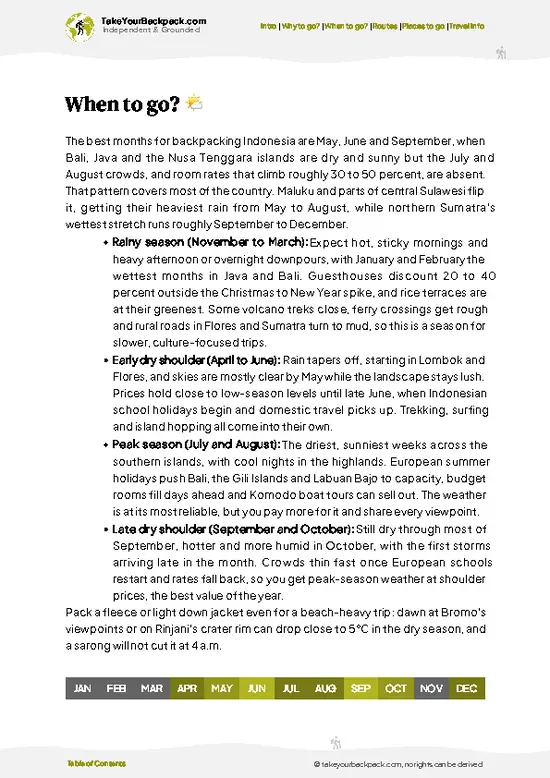
source: climatestotravel.comJANJanuary: fair for travelingFEBFebruary: fair for travelingMARMarch: fair for travelingAPRApril: good for travelingMAYMay: highly recommended for travelingJUNJune: highly recommended for travelingJULJuly: excellent for travelingAUGAugust: excellent for travelingSEPSeptember: highly recommended for travelingOCTOctober: good for travelingNOVNovember: fair for travelingDECDecember: fair for traveling
when-to-go

✈️ The backpacker research shortcutIndonesia Travel Guide

An offline-friendly backpacking guide with optimized travel routes, ranked highlights, transport advice, and the best areas to stay.
example page 0 from our offline Travel Guide for Indonesia
example page 1 from our offline Travel Guide for Indonesia
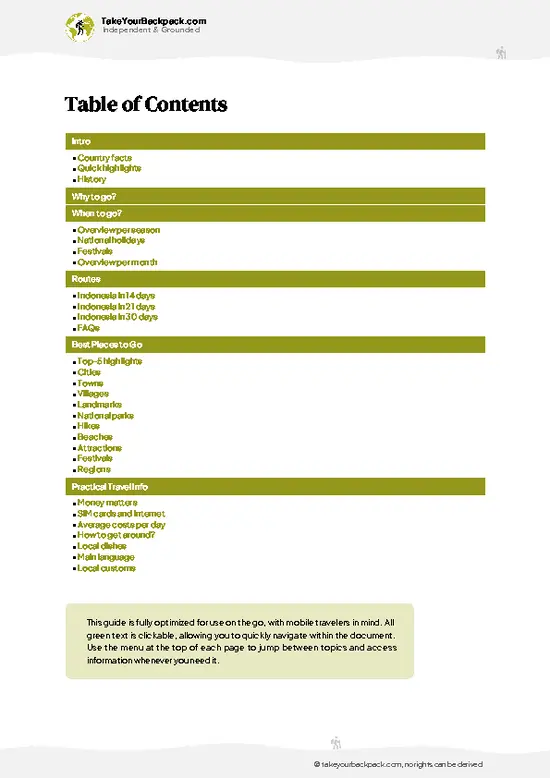
example page 2 from our offline Travel Guide for Indonesia
example page 3 from our offline Travel Guide for Indonesia
example page 4 from our offline Travel Guide for Indonesia
example page 5 from our offline Travel Guide for Indonesia
example page 6 from our offline Travel Guide for Indonesia
example page 7 from our offline Travel Guide for Indonesia
The digital guide (546 pages) contains:
156 highlights, ranked by travel appeal
Optimized 14, 21 & 30-day travel routes
Cities, national parks, landmarks, beaches
How to get around
Offline-friendly for travel without Wi-Fi
👉 Click to see all 30+ guide features

📅 Plan smarter in minutes, not weeks
Month by month travel advice
Festivals & national holidays
Budget expectations

🗺️ Go to the right places, skip the overrated ones
Honest pros & cons of destinations
Top hikes, parks & viewpoints
Lesser-known places most travelers miss
Clear “worth it vs skip it” guidance

🛏️ Travel smoothly without rookie mistakes
Best areas to stay
Transport systems explained simply
Common scams & safety advice
SIM cards, money & practical tips

🌍 Understand the country, not just visit it
Culture & traditions
52 Essential phrases & customs
Festivals worth planning around
Traveler-friendly historical context
Insights that make places more meaningful

📱 Built for real travel conditions
Fully downloadable PDF
Works completely offline
Optimized for phone use
Useful in remote areas & buses
Everything in one place
Save weeks of stressful planning
Get instant access to your full guide. 30‑day money-back guarantee.
+ Add another guide for just US$7.80

By proceeding you agree to our terms.
Sent to your inbox immediately after payment • 100% Secure Checkout
Best Backpacking Travel Advisor 2025 tourism awardBest Backpacking
Travel Advisor
2025
What others say about Take Your Backpack Guides:
⭐⭐⭐⭐⭐
Fantastic, amazing amount of information!
⭐⭐⭐⭐⭐
My goodness this is amazing, it's what I've been looking for hats off too you!
⭐⭐⭐⭐⭐
I think this is absolutely BRILLIANT
⭐⭐⭐⭐
Very complete and informative. It's still missing places, but I gotta to commend you
⭐⭐⭐⭐⭐
This is truly amazing, thank you, can't wait to explore it with my kids!
⭐⭐⭐⭐⭐
Awesome resource, thank you!
⭐⭐⭐⭐⭐
This is amazing! Can't wait to explore the ones I haven't seen
⭐⭐⭐⭐
I love this! Well done, great idea.
⭐⭐⭐⭐⭐
Thanks for taking the time to make this gem!
⭐⭐⭐⭐⭐
This might be the best website I've ever seen.
⭐⭐⭐⭐⭐
Congratulations, and thank you so much for your work; it's incredibly valuable.
⭐⭐⭐⭐
In all seriousness I think you did a great job pointing out the important spots
⭐⭐⭐⭐⭐
10/10 very good
⭐⭐⭐⭐⭐
As someone who's only just starting to visit regularly this is awesome, thank you.
⭐⭐⭐⭐
Thank you very much! I'm going to visit my dad, it's going to be very useful!
⭐⭐⭐⭐⭐
This is really cool! We'll be travelling for the first time and this definitely come in handy.
⭐⭐⭐⭐⭐
You are now our minister of culture, congratulations 👨‍💼
⭐⭐⭐⭐⭐
Just wanted to tell you that this is a pearl! Going to follow your recommendations.
⭐⭐⭐⭐⭐
This is so cool. I'll definitely be using the resource for my travels soon.
⭐⭐⭐⭐⭐
This is very impressive! Good work.
⭐⭐⭐⭐⭐
This is an amazing and informative site. Very well done!

🛏️ Where to stay?Best areas to stay in Indonesia

In Ruteng, the best spot for backpackers is the area around the town center, especially near the main market and the small streets that fan out from it. This zone pulses with local life—early mornings bring the scent of fresh coffee and spices from street vendors, while evenings cool down with the chatter of locals and travelers swapping stories over simple meals. It’s safe, thanks to the steady presence of locals and a low crime rate, which means you can wander without that nagging sense of watchfulness.

This neighborhood is where budget travelers naturally gravitate because it offers a handful … read more 👉
In Ruteng, the best spot for backpackers is the area around the town center, especially near the main market and the small streets that fan out from it. This zone pulses with local life—early mornings bring the scent of fresh coffee and spices from street vendors, while evenings cool down with the chatter of locals and travelers swapping stories over simple meals. It’s safe, thanks to the steady presence of locals and a low crime rate, which means you can wander without that nagging sense of watchfulness.

This neighborhood is where budget travelers naturally gravitate because it offers a handful of hostels and guesthouses that cater to solo adventurers and small groups. The vibe here is relaxed but social—common areas in hostels often become impromptu meeting spots, where you can connect with others planning hikes or cultural excursions. Compared to the quieter residential outskirts, staying here means you’re plugged into the heartbeat of Ruteng, with easy access to local eateries, transport options, and the starting points for trekking trips into the surrounding hills.

Avoid the more isolated neighborhoods on the town’s edge—they’re quieter but lack the social buzz and practical conveniences that make backpacking smoother. Staying central means you’re not just passing through Ruteng; you’re living it, with every step revealing layers of daily life and local warmth.

🚌 Getting aroundGetting around like a local

Ruteng moves at its own rhythm—less a strict timetable, more a pulse you catch by tuning in. The air carries a mix of damp earth and wood smoke, and the streets hum with the chatter of locals who know when to pause and when to push forward. It’s not chaos, but a flexible flow where buses might leave when full, and motorbikes dart through narrow alleys with practiced ease. Your best bet is to lean into this rhythm, letting intuition guide you while knowing the core transit options that keep Ruteng connected without draining your wallet.


  • Walking: Ruteng’s compact center is best explored on foot. The cobbled streets and uneven sidewalks demand sturdy shoes, but walking lets you soak in the scent of wet stone and hear the clatter of market life up close. Most key spots are within 20 minutes
read more 👉
Ruteng moves at its own rhythm—less a strict timetable, more a pulse you catch by tuning in. The air carries a mix of damp earth and wood smoke, and the streets hum with the chatter of locals who know when to pause and when to push forward. It’s not chaos, but a flexible flow where buses might leave when full, and motorbikes dart through narrow alleys with practiced ease. Your best bet is to lean into this rhythm, letting intuition guide you while knowing the core transit options that keep Ruteng connected without draining your wallet.


  • Walking: Ruteng’s compact center is best explored on foot. The cobbled streets and uneven sidewalks demand sturdy shoes, but walking lets you soak in the scent of wet stone and hear the clatter of market life up close. Most key spots are within 20 minutes of each other, making this the cheapest and most immersive way to get around.


  • Angkot (Shared Minivans): These are the budget traveler’s lifeline, running from early morning around 6:30 AM until dusk at 6 PM. Fares hover around 5,000 IDR ($0.30), and while they don’t run on a strict schedule, they leave once full—so timing your arrival at the stop is part art, part luck. Expect a bumpy ride on narrow roads, but it’s the fastest way to reach nearby villages.


  • Motorbike Taxi (Ojek): For short hops or when angkots aren’t convenient, ojeks offer quick, flexible rides. Negotiate fares upfront—usually between 10,000 and 20,000 IDR ($0.70-$1.40) depending on distance. The wind, the scent of rain on leaves, and the speed make this a sensory-rich way to navigate tight spots or catch a sunset from a hilltop.


  • Rental Motorbike: If you’re comfortable on two wheels, renting a motorbike is a game-changer. Daily rates start around 70,000 IDR ($4.50). This gives you freedom to chase light and shadow across the landscape, but be ready for uneven roads and unpredictable weather. It’s the pro move for those who want to explore beyond Ruteng’s core on their own schedule.


  • Local Buses to Surrounding Areas: For longer trips, local buses depart from the main terminal sporadically between 7 AM and 5 PM. Tickets cost roughly 20,000–30,000 IDR ($1.30–$2). These buses are slower and less comfortable but offer a raw, authentic glimpse of daily life as you roll through villages and rice paddies.

👛 Costs (as of 4 September 2026)Typical daily expenses

Backpacking in Ruteng, Indonesia, offers a laid-back vibe with costs that reflect its off-the-beaten-path charm. Here’s what you can expect to spend daily as an independent traveler.
  • Dorm Accommodation: Dorm beds in basic guesthouses or hostels usually run between $5 and $10 USD per night. These places are simple but clean, often with shared bathrooms and a fan rather than air conditioning. The light filtering through wooden shutters and the faint scent of drying coffee beans outside set a relaxed tone for your stay.
  • Meals: Local warungs serve hearty meals for $1.50 to $3.50 USD. Expect rice, fresh vegetables, and grilled fish or chicken, often accompanied by sambal that wakes up your taste buds. Street snacks like fried tempeh or sweet pisang goreng cost under a dollar, making it easy to
read more 👉
Backpacking in Ruteng, Indonesia, offers a laid-back vibe with costs that reflect its off-the-beaten-path charm. Here’s what you can expect to spend daily as an independent traveler.
  • Dorm Accommodation: Dorm beds in basic guesthouses or hostels usually run between $5 and $10 USD per night. These places are simple but clean, often with shared bathrooms and a fan rather than air conditioning. The light filtering through wooden shutters and the faint scent of drying coffee beans outside set a relaxed tone for your stay.
  • Meals: Local warungs serve hearty meals for $1.50 to $3.50 USD. Expect rice, fresh vegetables, and grilled fish or chicken, often accompanied by sambal that wakes up your taste buds. Street snacks like fried tempeh or sweet pisang goreng cost under a dollar, making it easy to eat well without splurging.
  • Local Transport: Getting around Ruteng is mostly on foot or by ojek (motorcycle taxi). Short rides cost about $0.50 to $1.50 USD. Renting a scooter for the day is around $5 to $7 USD, giving you freedom to explore nearby rice terraces and traditional villages at your own pace.
  • Basic Activities/Entry Fees: Entrance to local attractions like the spider web rice fields or traditional markets typically costs $1 to $3 USD. Guided tours or cultural performances might push this to $5 to $10 USD, but many sights are free or just a small donation.
  • Miscellaneous Expenses: Bottled water, snacks, or occasional coffee runs add up to about $1 to $3 USD daily. Internet cafes or SIM cards for data are affordable, around $2 to $4 USD for decent coverage.

All told, you’re looking at roughly $10 to $25 USD per day to cover the essentials in Ruteng. This range keeps you comfortably on the local track without cutting corners on experience. The modest costs here reward you with a slower pace and genuine encounters, where the scent of wet earth after rain and the soft chatter in markets become part of your daily rhythm.


source: indonesia.travel
⚠️ Prices can change and everyone travels differently, so take this as a rough guide. Hope it helps you plan your adventure!

🚌 Day tripsShort trips worth adding

Ruteng, a charming town in Flores, Indonesia, serves as a fantastic base for day trips that reveal the island’s rich culture and stunning landscapes. Here are some worthwhile excursions that will make your backpacking adventure truly memorable.

Wae Rebo Village
A trek to Wae Rebo is like stepping into a postcard. The journey takes about 3-4 hours on foot, winding through lush hills and coffee plantations. The village, known for its traditional cone-shaped houses, offers a glimpse into the indigenous Manggarai culture. You’ll be greeted by the warm smiles of locals, and the aroma of freshly brewed coffee fills the air. The best time to visit is during the dry season, from April to October, when the trails are less muddy. A common mistake? Underestimating the trek’s difficulty; wear sturdy … read more 👉
Ruteng, a charming town in Flores, Indonesia, serves as a fantastic base for day trips that reveal the island’s rich culture and stunning landscapes. Here are some worthwhile excursions that will make your backpacking adventure truly memorable.

Wae Rebo Village
A trek to Wae Rebo is like stepping into a postcard. The journey takes about 3-4 hours on foot, winding through lush hills and coffee plantations. The village, known for its traditional cone-shaped houses, offers a glimpse into the indigenous Manggarai culture. You’ll be greeted by the warm smiles of locals, and the aroma of freshly brewed coffee fills the air. The best time to visit is during the dry season, from April to October, when the trails are less muddy. A common mistake? Underestimating the trek’s difficulty; wear sturdy shoes and pack water.


Ranamese Lake
Just a short ride from Ruteng, Ranamese Lake is a serene escape. The drive takes about 30 minutes, and once you arrive, the cool breeze and the scent of pine trees envelop you. You can rent a canoe for a few bucks and paddle around the lake, soaking in the tranquility. Bring a picnic to enjoy by the water’s edge. The best time to go is early morning when the mist rises off the lake, creating a magical atmosphere. Many first-timers miss the chance to explore the surrounding trails, which offer stunning views of the lake from above.


Spider Web Rice Fields
A visit to the Spider Web Rice Fields is a must for any backpacker. Located about 30 minutes from Ruteng, these fields are a marvel of agricultural ingenuity, laid out in a unique pattern that resembles a spider’s web. The vibrant green terraces are best seen in the late afternoon light, which casts a golden hue over the landscape. Bring your camera and take a leisurely stroll through the fields, but be mindful of the farmers at work. A common mistake is to rush through; take your time to appreciate the intricate details of this living artwork.


Todo Village
For a taste of local life, head to Todo Village, just 20 minutes from Ruteng. This small village is rich in history and culture, with traditional houses and vibrant ceremonies. Spend a few hours wandering the narrow paths, chatting with locals, and sampling homemade snacks. The best time to visit is during local festivals, which occur throughout the year. Many backpackers overlook this spot, thinking it’s just another village, but the authentic experience here is truly rewarding.
Want to know what more Indonesia offers?
The Indonesia Travel Guide describes 156 highlights, from cities to national parks, from beaches to hikes

Get the Travel Guide -

🛡️ SafetyTraveler Safety Guide

Ruteng is generally safe, but a few practical tips can enhance your experience. The town’s main streets are well-trodden, but stray into quieter alleys, especially at night, and keep your wits about you. Solo travelers should stick to well-lit areas after dark; the atmosphere shifts, and it’s easy to feel isolated.

Watch for common scams, like overly friendly locals offering to guide you for a fee. A polite but firm “no, thank you” usually suffices. Street vendors can be persistent, but a smile and a shake of the head will often do the trick.

Keep your belongings close, especially in crowded markets. The scent of fresh produce can distract you, but a quick glance at your bag can save you hassle. Embrace the local vibe, engage with the community, and you’ll find that the minor annoyances … read more 👉
Ruteng is generally safe, but a few practical tips can enhance your experience. The town’s main streets are well-trodden, but stray into quieter alleys, especially at night, and keep your wits about you. Solo travelers should stick to well-lit areas after dark; the atmosphere shifts, and it’s easy to feel isolated.

Watch for common scams, like overly friendly locals offering to guide you for a fee. A polite but firm “no, thank you” usually suffices. Street vendors can be persistent, but a smile and a shake of the head will often do the trick.

Keep your belongings close, especially in crowded markets. The scent of fresh produce can distract you, but a quick glance at your bag can save you hassle. Embrace the local vibe, engage with the community, and you’ll find that the minor annoyances are just part of the journey, leading to richer interactions and stories.

FAQTraveler FAQ

Yes, Ruteng is worth visiting for its unique traditional Manggarai culture and scenic landscapes, including the spider web rice fields. It offers a quieter, less touristy experience compared to other parts of Flores. Many backpackers use it as a base to explore nearby natural attractions like Cunca Wulang waterfall.
2 to 3 days are sufficient to explore Ruteng and its surroundings thoroughly. This allows time to visit local markets, traditional villages, and nearby natural sites without rushing. Staying longer is only necessary if you plan extensive trekking or cultural immersion.
Yes, Ruteng can be visited as a day trip from Labuan Bajo, which is about 70 kilometers away and takes around 2.5 to 3 hours by car. However, the travel time makes it a long day, so an overnight stay is recommended for a more relaxed visit.
⚠️ Things can change over time, so always validate details locally before you go.

Other Indonesian towns near Ruteng

Explore more nearby:

  • Labuan Bajo—harbor sunsets, Komodo gateway, seafood markets| 66 km away
  • Ende—coastal market, volcanic backdrop, independence history| 133 km away
  • Maumere—bay views, weaving villages, post-earthquake rebuild| 192 km away

💡 Not sure where to go next?
Create a personalized itinerary for Indonesia including Ruteng and the places that fit your trip.

Generate my itinerary

👉 Discover all towns

Or checkout all Indonesia has to offer (think cities, towns, villages, national parks, hikes, beaches, festivals)
Country photo of Indonesia

We 💚 feedbackIs it worth it?

Ruteng’s charm lies in its cool mountain air and the rich tapestry of local culture. You can wander through vibrant markets, where the scent of fresh spices mingles with the laughter of vendors. But brace yourself for the roads—getting here can be a bumpy ride, literally. The journey might test your patience, but once you’re surrounded by lush hills and warm smiles, you’ll know it was worth every jolt.

✈️ When did I visit Indonesia?
As part of my 1.5 year travel around the world trip, I visited Indonesia twice (and it was worth it. First in September 2015 and a bit later again in January and February 2016.

✍️ Help improve this page!
The information on this page is based on my own backpacking experience in Indonesia, supplemented with up-to-date research and feedback from other travelers. Travel details can change, so if you notice anything outdated or incomplete, feel free to let me know.


🙋‍♂️ Give feedback

👋 Meet the founderWho’s Behind Take Your Backpack?

Johan, backpacker and founder of TakeYourBackpackHi, I’m Johan (Netherlands 🇳🇱), the creator of TakeYourBackpack. Over the past decade, I’ve backpacked through 80+ countries across six continents, gaining extensive experience with independent travel, long-term trips, and overland routes.

This site is built on a combination of firsthand travel experience and carefully curated insights from other backpackers. Many guides are based on places I’ve personally visited, while others bring together tips, observations, and practical advice shared by trusted travelers I’ve met along the way.

The goal is to provide realistic, experience-driven guidance — not generic itineraries — so you can explore destinations with better context, clearer expectations, and more confidence.

Get full Indonesia guide •
Instant download • 156 highlights • Full Offline guide