×

Indonesia🇮🇩 | citiesTernatevolcano island, clove plantations, sultan’s palace | things to do and best time to go

Explore AmbonExplore Banyuwangi

Backpacking in Ternate
👍 Recommendedcity ranked #25
By Johan Kruseman 🇳🇱 | Updated October 15, 2026

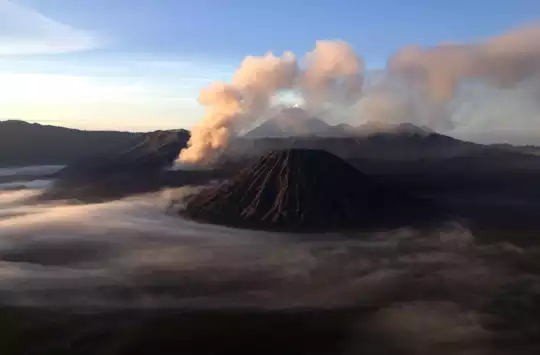
Ternate forces a choice: spend three days island-hopping through the Maluku archipelago or anchor yourself in one place and go deep. That decision shapes your entire trip. Ternate sits in Indonesia's far northeast, a volcanic island that once dominated the global spice trade. The city itself is compact, walkable, and refreshingly free of tourist crowds. I remember standing on the waterfront at dawn, watching fishermen haul nets while the cone of Mount Gamalama rose sharp against the sky, and thinking: this is what Indonesia feels like before the guidebooks arrive. Ternate suits explorers seeking authentic archipelago culture over comfort, and those with time to slow down. The trade-off is real: fewer creature comforts than Bali, but far more genuine encounters.

Discover everything you want to know in the 📖 Indonesia Travel Guide.


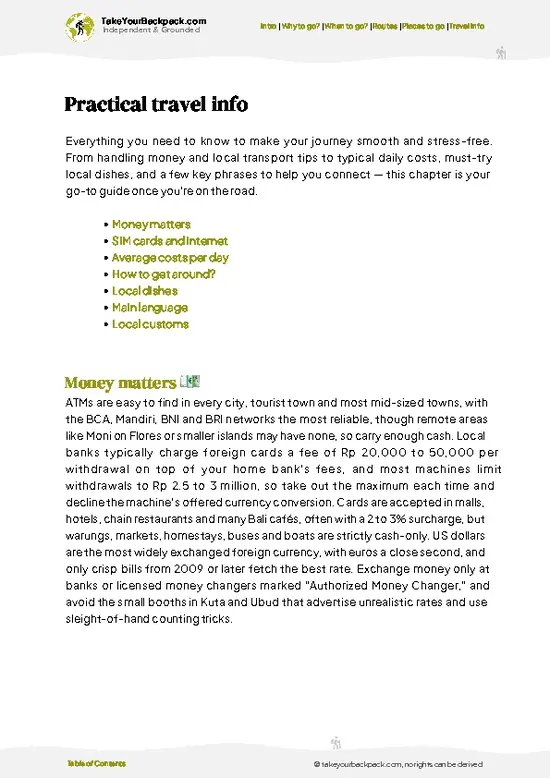
example page 0 from our offline Travel Guide for Indonesia
example page 1 from our offline Travel Guide for Indonesia
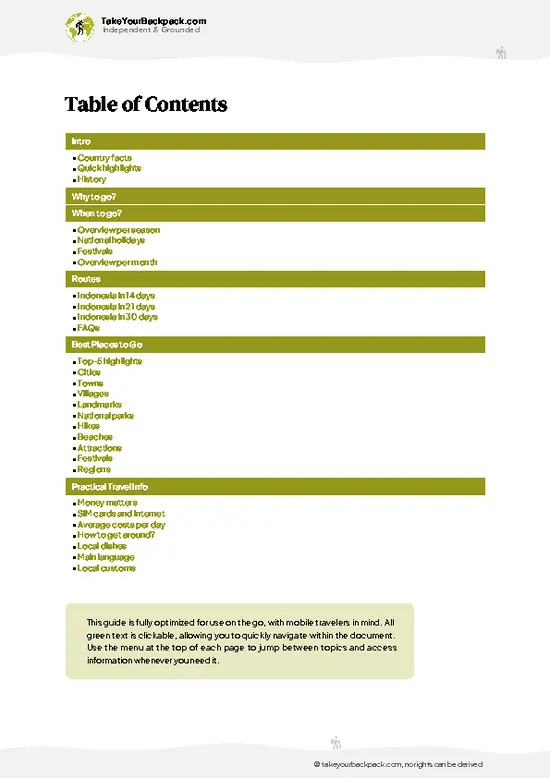
example page 2 from our offline Travel Guide for Indonesia
example page 3 from our offline Travel Guide for Indonesia
example page 4 from our offline Travel Guide for Indonesia
example page 5 from our offline Travel Guide for Indonesia
example page 6 from our offline Travel Guide for Indonesia
example page 7 from our offline Travel Guide for Indonesia
Loading the map 🌍
CLICK TO FILTER
cities
towns
villages
landmarks
national parks
hikes
beaches
attractions
festivals
regions
SHOW COUNTRY’S BESTSHOW ALL

✨ Why go?
Ranked #25 city in Indonesia
Reasons people choose to visit here

Ternate works as a basecamp for island exploration in the Maluku Islands, with day trips to nearby volcanic peaks, spice plantations, and untouched beaches. The city itself offers walkable streets, colonial architecture, and a working fishing port that feels lived-in rather than staged. Hostels are basic but social, and local food is cheap and excellent. The real draw is onward travel: ferries connect to Tidore, Halmahera, and beyond, making Ternate a natural hub for backpackers building a multi-island route. It's not a destination to linger for a week, but a strategic stop that rewards curiosity and rewards those willing to take local boats to places most tourists never reach.

💡 HighlightsWhat this place is best known for

  1. Fort Oranye: This Dutch colonial fortress dominates the waterfront and offers sweeping views of the Banda Sea. Walk the ramparts, explore the cannons, and imagine the spice trade wars that shaped this island. The museum inside covers local history. Best visited early morning to avoid crowds and heat. Free entry, 1 to 2 hours.
  2. Gamalama Volcano: Ternate's iconic smoking cone rises 1,715 meters and can be summited in a full day hike (6 to 8 hours round trip). The trek passes through clove plantations and cloud forest; views from the rim stretch across the Moluccas. Start before dawn. US$15 to 25 with a local guide (essential for safety and navigation).
  3. Kedaton Palace: The sultan's residence reflects Ternate's Islamic sultanate heritage and Portuguese, Dutch, and Arab influences. The palace is modest
… read more 👉
  1. Fort Oranye: This Dutch colonial fortress dominates the waterfront and offers sweeping views of the Banda Sea. Walk the ramparts, explore the cannons, and imagine the spice trade wars that shaped this island. The museum inside covers local history. Best visited early morning to avoid crowds and heat. Free entry, 1 to 2 hours.
  2. Gamalama Volcano: Ternate's iconic smoking cone rises 1,715 meters and can be summited in a full day hike (6 to 8 hours round trip). The trek passes through clove plantations and cloud forest; views from the rim stretch across the Moluccas. Start before dawn. US$15 to 25 with a local guide (essential for safety and navigation).
  3. Kedaton Palace: The sultan's residence reflects Ternate's Islamic sultanate heritage and Portuguese, Dutch, and Arab influences. The palace is modest but historically significant; guided tours explain the royal lineage and local governance. Mornings are quieter. US$3 to 5, 45 minutes to 1 hour.
  4. Spice Markets (Pasar Ikan and surrounding areas): Cloves, nutmeg, and mace are still traded here, and the sensory chaos is authentic. Haggle, sample dried spices, and chat with traders who've worked these stalls for decades. Go early before midday heat. Free to browse, US$2 to 8 for small purchases, 1 to 2 hours.
  5. Lake Laguna (Danau Laguna): A freshwater crater lake surrounded by lush forest, about 30 minutes from town by motorbike or car. Swim, kayak, or simply sit and watch the water. Far fewer tourists than coastal spots. US$5 to 10 transport, free entry, 2 to 4 hours.
  6. Ternate City Museum (Museum Negeri Ternate): Housed in a restored colonial building, it covers sultanate history, the spice trade, and local culture through artifacts and photographs. Labeling is minimal but the building itself is worth seeing. Weekday mornings are least crowded. US$2 to 3, 1 to 1.5 hours.
  7. Tolire Besar and Tolire Kecil Lakes: Twin crater lakes on the island's eastern side, reached by a scenic 45-minute drive. Both are swimmable; Tolire Besar is larger and more developed, while Tolire Kecil feels more remote. Bring snacks and water. US$5 to 8 transport, free entry, 3 to 5 hours.
Beyond the city, Halmahera's Aketajawe-Lolobata National Park offers pristine rainforest and endemic wildlife, while the nearby island of Tidore (a 30-minute ferry) mirrors Ternate's history as a rival sultanate. I'd explore Tidore first because the ferry ride itself is part of the experience, and the contrast between the two sultanates makes each more meaningful.
Spotted a mistake or missing something? Contact us.

🏘️ NeighborhoodsKey areas and districts to know

  • Kota Ternate (City Center): The pulse of the island, where colonial architecture meets modern commerce. Walk past the Sultan's Palace, explore the waterfront markets, and grab street food at the harbor. Lively during the day, quieter at night. Highly walkable, compact, and where most backpackers base themselves for easy access to ferries and shops.
  • Kalumata: A residential neighborhood with a slower rhythm, offering local warungs and genuine street life away from tourist zones. Less walkable than the center but rewarding for those seeking authentic daily rhythms. Cheaper accommodation and meals here stretch your budget further than the city center.
  • Dufa-Dufa: The beachside escape, where you can swim and watch fishing boats. Quieter than downtown, with a handful of guesthouses and seafood spots.
… read more 👉
  • Kota Ternate (City Center): The pulse of the island, where colonial architecture meets modern commerce. Walk past the Sultan's Palace, explore the waterfront markets, and grab street food at the harbor. Lively during the day, quieter at night. Highly walkable, compact, and where most backpackers base themselves for easy access to ferries and shops.
  • Kalumata: A residential neighborhood with a slower rhythm, offering local warungs and genuine street life away from tourist zones. Less walkable than the center but rewarding for those seeking authentic daily rhythms. Cheaper accommodation and meals here stretch your budget further than the city center.
  • Dufa-Dufa: The beachside escape, where you can swim and watch fishing boats. Quieter than downtown, with a handful of guesthouses and seafood spots. A short walk or cheap ojek ride from the center, it trades convenience for peace and costs slightly less.

⌛️ 1 day1-day itinerary for Ternate

Ternate is a compact island where history, nature, and daily life intersect within walking distance. A single day reveals the city's rhythm and sets up longer explorations. 7:00 AM: Waterfront near the fish market. Arrive early to watch the catch being unloaded and sorted. The energy is genuine, the light is perfect, and you'll see how the city actually works. Walk north along the harbor for 20 minutes. 8:30 AM: Fort Oranye. Climb the stone walls, read the plaques, and look across the strait toward Tidore. The fortress is quiet this early. Descend and walk inland toward the city center, about 15 minutes. 10:00 AM: Ternate City Museum. Spend an hour with sultanate artifacts and spice-trade history. Exit and grab coffee and a pastry at a local warung nearby. 12:00 PM: Kedaton Palace exterior. … read more 👉
Ternate is a compact island where history, nature, and daily life intersect within walking distance. A single day reveals the city's rhythm and sets up longer explorations. 7:00 AM: Waterfront near the fish market. Arrive early to watch the catch being unloaded and sorted. The energy is genuine, the light is perfect, and you'll see how the city actually works. Walk north along the harbor for 20 minutes. 8:30 AM: Fort Oranye. Climb the stone walls, read the plaques, and look across the strait toward Tidore. The fortress is quiet this early. Descend and walk inland toward the city center, about 15 minutes. 10:00 AM: Ternate City Museum. Spend an hour with sultanate artifacts and spice-trade history. Exit and grab coffee and a pastry at a local warung nearby. 12:00 PM: Kedaton Palace exterior. Walk past the palace gates and photograph the gardens from the street. Continue downhill toward the waterfront. 1:30 PM: Lunch at a waterfront warung. Eat grilled fish or nasi kuning (yellow rice) while watching boats. Cost is US$2 to 4. 3:00 PM: Gamlamo Beach. Take a local ojek (motorcycle taxi) east for 15 minutes (US$1 to 2). Swim or rest on black sand. Return to the city center by 5:00 PM.

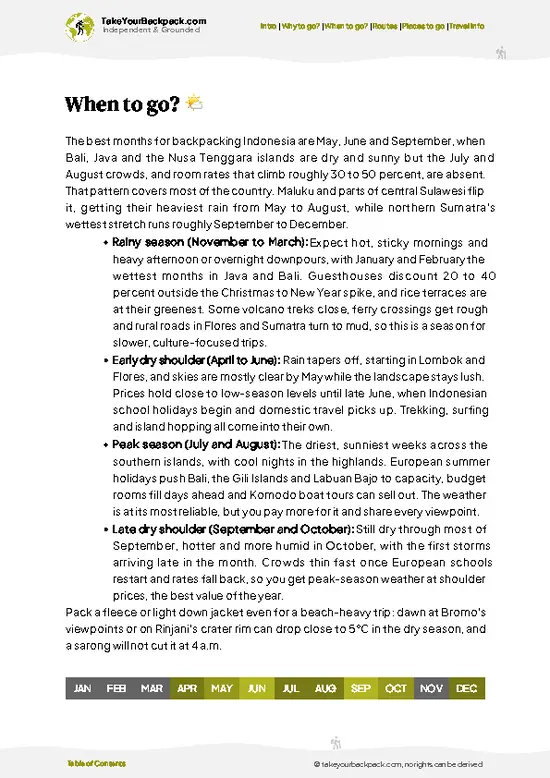
🌤️ When to go?Weather, crowds, and seasonal trade-offs

  • Dry Season (May to September): Best time to visit. Temperatures hover around 26 to 28°C (79 to 82°F), with minimal rain and clear skies ideal for island exploration. Crowds peak in July and August, pushing prices up slightly.
  • Wet Season (November to March): Heavy rainfall, 27 to 29°C (81 to 84°F), and rough seas limit day trips. Fewer tourists mean lower accommodation and food prices, but ferry schedules become unpredictable.
  • Shoulder Months (April, October): Transitional weather with occasional showers. Fewer crowds, stable prices, and reliable transport make these sweet spots for budget travelers.
Visit during May to September for the most reliable conditions and easiest logistics.

source: climatestotravel.comJANJanuary: fair for travelingFEBFebruary: fair for travelingMARMarch: fair for travelingAPRApril: fair for travelingMAYMay: highly recommended for travelingJUNJune: excellent for travelingJULJuly: excellent for travelingAUGAugust: excellent for travelingSEPSeptember: highly recommended for travelingOCTOctober: excellent for travelingNOVNovember: fair for travelingDECDecember: fair for traveling
when-to-go

✈️ The backpacker research shortcutIndonesia Travel Guide

An offline-friendly backpacking guide with optimized travel routes, ranked highlights, transport advice, and the best areas to stay.
example page 0 from our offline Travel Guide for Indonesia
example page 1 from our offline Travel Guide for Indonesia
example page 2 from our offline Travel Guide for Indonesia
example page 3 from our offline Travel Guide for Indonesia
example page 4 from our offline Travel Guide for Indonesia
example page 5 from our offline Travel Guide for Indonesia
example page 6 from our offline Travel Guide for Indonesia
example page 7 from our offline Travel Guide for Indonesia
The digital guide (460 pages) contains:
✅ 153 highlights, ranked by travel appeal
✅ Optimized 14, 21 & 30-day travel routes
✅ Cities, national parks, landmarks, beaches
✅ How to get around
✅ Offline-friendly for travel without Wi-Fi
👉 Click to see all 30+ guide features

📅 Plan smarter in minutes, not weeks
✅ Month by month travel advice
✅ Festivals & national holidays
✅ Budget expectations

🗺️ Go to the right places, skip the overrated ones
✅ Honest pros & cons of destinations
✅ Top hikes, parks & viewpoints
✅ Lesser-known places most travelers miss
✅ Clear “worth it vs skip it” guidance

🛏️ Travel smoothly without rookie mistakes
✅ Best areas to stay
✅ Transport systems explained simply
✅ Common scams & safety advice
✅ SIM cards, money & practical tips

🌍 Understand the country, not just visit it
✅ Culture & traditions
✅ 52 Essential phrases & customs
✅ Festivals worth planning around
✅ Traveler-friendly historical context
✅ Insights that make places more meaningful

📱 Built for real travel conditions
✅ Fully downloadable PDF
✅ Works completely offline
✅ Optimized for phone use
✅ Useful in remote areas & buses
✅ Everything in one place
Stop searching, start planning
Get instant access to your full guide. 30‑day money-back guarantee.
+ Add another guide for just

By proceeding you agree to our terms.
Sent to your inbox immediately after payment • 100% Secure Checkout
Best Backpacking Travel Advisor 2025 tourism awardBest Backpacking
Travel Advisor
2025
What others say about Take Your Backpack Guides:
⭐⭐⭐⭐⭐
Fantastic, amazing amount of information!
⭐⭐⭐⭐⭐
My goodness this is amazing, it's what I've been looking for hats off too you!
⭐⭐⭐⭐⭐
I think this is absolutely BRILLIANT
⭐⭐⭐⭐
Very complete and informative. It's still missing places, but I gotta to commend you
⭐⭐⭐⭐⭐
This is truly amazing, thank you, can't wait to explore it with my kids!
⭐⭐⭐⭐⭐
Awesome resource, thank you!
⭐⭐⭐⭐⭐
This is amazing! Can't wait to explore the ones I haven't seen
⭐⭐⭐⭐
I love this! Well done, great idea.
⭐⭐⭐⭐⭐
Thanks for taking the time to make this gem!
⭐⭐⭐⭐⭐
This might be the best website I've ever seen.
⭐⭐⭐⭐⭐
Congratulations, and thank you so much for your work; it's incredibly valuable.
⭐⭐⭐⭐
In all seriousness I think you did a great job pointing out the important spots
⭐⭐⭐⭐⭐
10/10 very good
⭐⭐⭐⭐⭐
As someone who's only just starting to visit regularly this is awesome, thank you.
⭐⭐⭐⭐
Thank you very much! I'm going to visit my dad, it's going to be very useful!
⭐⭐⭐⭐⭐
This is really cool! We'll be travelling for the first time and this definitely come in handy.
⭐⭐⭐⭐⭐
You are now our minister of culture, congratulations 👨‍💼
⭐⭐⭐⭐⭐
Just wanted to tell you that this is a pearl! Going to follow your recommendations.
⭐⭐⭐⭐⭐
This is so cool. I'll definitely be using the resource for my travels soon.
⭐⭐⭐⭐⭐
This is very impressive! Good work.
⭐⭐⭐⭐⭐
This is an amazing and informative site. Very well done!

🛏️ Where to stay?Best areas and accommodation options

Base yourself in Kota Ternate (the city center) for the best balance of budget, safety, and access. Hostels and budget guesthouses cluster here, offering dorm beds at US$8 to 12 and private rooms at US$12 to 18. The area is safe at night, walkable, and steps from ferries, markets, and transport hubs. Kalumata offers slightly cheaper beds (US$6 to 10) and a quieter vibe if you prioritize peace over convenience, though you'll spend more on transport to reach the center. Either choice puts you within easy reach of day trips and local life.

🚌 Getting aroundGetting around like a local

Most backpackers assume they can easily rent a scooter or walk everywhere, but Ternate's steep hills, narrow alleys, and limited road infrastructure make this costly in time and frustration. Instead, embrace the island's compact size and rely on cheap, frequent transport. The city is walkable in the center, but distances between neighborhoods demand alternatives.

  • Walking: Free and practical for the city center and waterfront. Steep terrain and heat make longer distances exhausting; best for exploring neighborhoods and markets.
  • Ojek (motorcycle taxi): US$1 to 2 per ride, fast, and the most flexible option. Negotiate fares beforehand or use a local's phone to call one. Operates dawn to late evening.
  • Public minibuses (angkot): US$0.30 to 0.50 per ride, slow but cheap and social. Routes are informal;
… read more 👉
Most backpackers assume they can easily rent a scooter or walk everywhere, but Ternate's steep hills, narrow alleys, and limited road infrastructure make this costly in time and frustration. Instead, embrace the island's compact size and rely on cheap, frequent transport. The city is walkable in the center, but distances between neighborhoods demand alternatives.

  • Walking: Free and practical for the city center and waterfront. Steep terrain and heat make longer distances exhausting; best for exploring neighborhoods and markets.
  • Ojek (motorcycle taxi): US$1 to 2 per ride, fast, and the most flexible option. Negotiate fares beforehand or use a local's phone to call one. Operates dawn to late evening.
  • Public minibuses (angkot): US$0.30 to 0.50 per ride, slow but cheap and social. Routes are informal; ask locals or your guesthouse for directions. Runs 6 a.m. to 6 p.m.
  • Ferries to nearby islands: US$2 to 8 depending on destination, 30 minutes to 2 hours. Depart early morning; schedules vary seasonally. Essential for day trips.
  • Rental scooter: US$5 to 8 per day, but roads are rough and hills steep. Only worthwhile if you're confident and plan multiple trips outside the city.

👛 Costs (as of 15 October 2026)What things cost and how to budget

Budget backpackers spend US$25 to 40 daily in Ternate, covering basic accommodation, street food, and local transport. The island's remoteness keeps prices moderate compared to Java or Bali, though imported goods cost more.
CategoryBudget RangeLocal Reality
Dorm accommodation (high season)US$10 to 16Guesthouses and hostels cluster near the port; rooms are simple but clean, often with shared bathrooms
Dorm accommodation (off-season)US$8 to 12Discounts are common May to August; negotiate for stays over three nights
MealsUS$2 to 5Street stalls and warungs serve rice, fish, and vegetables; sit-down restaurants cost US$4 to 8
Local transportUS$0.50 to 2Minibuses (angkots) run fixed routes; motorbike taxis charge by distance, typically US$1 to 3 per ride
City transport passNone availablePay per journey;
… read more 👉
Budget backpackers spend US$25 to 40 daily in Ternate, covering basic accommodation, street food, and local transport. The island's remoteness keeps prices moderate compared to Java or Bali, though imported goods cost more.
CategoryBudget RangeLocal Reality
Dorm accommodation (high season)US$10 to 16Guesthouses and hostels cluster near the port; rooms are simple but clean, often with shared bathrooms
Dorm accommodation (off-season)US$8 to 12Discounts are common May to August; negotiate for stays over three nights
MealsUS$2 to 5Street stalls and warungs serve rice, fish, and vegetables; sit-down restaurants cost US$4 to 8
Local transportUS$0.50 to 2Minibuses (angkots) run fixed routes; motorbike taxis charge by distance, typically US$1 to 3 per ride
City transport passNone availablePay per journey; no multi-day passes exist
Basic activities and entry feesUS$2 to 8Fort visits and museum entries are cheap; guided hikes and boat trips cost US$15 to 40
Miscellaneous expensesUS$2 to 5Coffee, snacks, and incidentals; SIM cards cost US$2 to 3
Total Daily BudgetUS$25 to 40Comfortable on US$30 to 35 if you skip paid tours and cook occasionally in hostel kitchens
Cook one meal a day in your hostel kitchen to stretch your budget further.
⚠️ Prices can change and everyone travels differently, so take this as a rough guide. Hope it helps you plan your adventure!

🚌 Day tripsExploring the surroundings

Halmahera's Rainforest Interior
The volcanic spine of Halmahera, Ternate's larger neighbor across the strait, holds dense jungle and sulfur-hot springs that few tourists reach. A local guide is essential; hire one through your hostel or ask at the ferry terminal. The round trip takes 8 to 10 hours including a 30-minute ferry crossing (US$2 to 3), guide fees (US$25 to 40 for a group), and basic meals. Go during the dry season (May to September) when trails aren't waterlogged. First-timers often underestimate how humid and slow the walking is; pace yourself and bring twice the water you think you'll need.


Tidore's Fort and Spice Markets
Tidore, Ternate's historical rival just 20 minutes by ferry, preserves Dutch colonial forts and a working spice trade that shaped the region's past. Walk the … read more 👉
Halmahera's Rainforest Interior
The volcanic spine of Halmahera, Ternate's larger neighbor across the strait, holds dense jungle and sulfur-hot springs that few tourists reach. A local guide is essential; hire one through your hostel or ask at the ferry terminal. The round trip takes 8 to 10 hours including a 30-minute ferry crossing (US$2 to 3), guide fees (US$25 to 40 for a group), and basic meals. Go during the dry season (May to September) when trails aren't waterlogged. First-timers often underestimate how humid and slow the walking is; pace yourself and bring twice the water you think you'll need.


Tidore's Fort and Spice Markets
Tidore, Ternate's historical rival just 20 minutes by ferry, preserves Dutch colonial forts and a working spice trade that shaped the region's past. Walk the waterfront, climb to Fort Belgica for views, and browse the spice warehouses where locals still trade cloves and nutmeg. Ferry costs US$2 to 3 return; budget US$8 to 12 total including a simple lunch and entry fees. The trip works year-round, though the dry season offers clearer skies. The mistake: arriving without cash; few vendors accept cards, and the ATM near the ferry can run dry.


Lake Tolire and Volcanic Crater Lakes
Ternate's crater lakes sit in the island's interior, reachable by motorbike taxi or on foot. Lake Tolire Besar, the largest, sits in a dramatic volcanic bowl and stays cool even in heat. A half-day trip costs US$15 to 25 including transport and a basic guide; the walk from the road takes 45 minutes. Best visited in the dry season when paths are passable. The payoff is solitude and water clear enough to see the crater's underwater contours.

🍲 FoodWhat to Eat & Drink

Ternate's cuisine reflects its position at the crossroads of spice trade routes. Clove appears in everything from rice dishes to drinks; the island produces some of the world's finest. Try tinutuan, a savory rice porridge eaten for breakfast, and cakalang fufu, smoked fish that's a local staple. Fresh seafood dominates: grilled fish, squid, and shrimp at harbor warungs cost US$2 to 4 per plate. Sago, a starch made from palm, appears in soups and side dishes. Backpackers eat at open-air warungs near the market and waterfront, where meals run US$1.50 to 3. Coffee culture is strong; local kopi is thick, sweet, and cheap. Eating with your right hand and sharing dishes is customary.

🛡️ SafetySafety Tips and Common Scams in Ternate

Ternate is genuinely safe for backpackers. Petty theft is rare, and violent crime against travelers is not a realistic concern. The main annoyances are minor: overcharging at markets if you look obviously foreign (ask locals for fair prices), and occasional aggressive touts near the ferry terminal (a firm 'no thank you' works). Solo travel, including at night, is fine in the city center and residential areas. Avoid walking alone on unlit roads late at night, not from danger but from poor visibility and uneven terrain. Use common sense with valuables on crowded ferries and in markets, as you would anywhere.

FAQFrequently asked questions about Ternate

Two to three days is ideal. One day covers the main sights (Fort Oranye, the museum, the waterfront), but a second day allows a hike up Mount Gamalama or a boat trip to Pulau Moti's spice gardens. A third day opens up a ferry to Tidore or Halmahera.
Yes, Ternate is safe for solo backpackers. Petty theft is rare, locals are accustomed to travelers, and the city is small enough to navigate confidently on foot. Standard precautions apply: avoid displaying valuables and stay aware at night, especially near the harbor.
Ternate is known for its role in the global spice trade, its active volcano (Mount Gamalama), and its sultanate history. It's also a basecamp for exploring the Maluku Islands and a place where colonial architecture, fishing culture, and volcanic landscape converge in one walkable city.
⚠️ Things can change over time, so always validate details locally before you go.

Other Indonesian cities near Ternate

Explore more nearby:

  • Bitung—Lembeh Strait, muck diving, fishing port, Manado gateway| 252 km away
  • Manado—diving hubs, volcanic backdrop, Minahasan cuisine| 290 km away
  • Gorontalo—Sulawesi north coast, Otanaha fort, binte soup, Togean boats| 479 km away

💡 Not sure where to go next?
Create a personalized itinerary for Indonesia including Ternate and the places that fit your trip.

Generate my itinerary

👉 Discover all cities

Or checkout all Indonesia has to offer (think cities, towns, villages, national parks, hikes, beaches, festivals)
Country photo of Indonesia

We 💚 feedbackParting advice and final tips

Ternate rewards history buffs and spice-trade enthusiasts with genuine colonial architecture and a living sultanate culture that few travelers encounter. The catch is that infrastructure is basic, and getting around requires patience and local knowledge.

✈️ When did I visit Indonesia?
As part of my 1.5 year travel around the world trip, I visited Indonesia twice (and it was worth it): first in September 2015 and a bit later again in January and February 2016.

✍️ Help improve this page!
The information on this page is based on my own backpacking experience in Indonesia, supplemented with up-to-date research and feedback from other travelers. Travel details can change, so if you notice anything outdated or incomplete, feel free to let me know.


🙋‍♂️ Give feedback

👋 Meet the founderWho’s Behind Take Your Backpack?

Johan, backpacker and founder of TakeYourBackpackHi, I’m Johan (Netherlands 🇳🇱), the creator of TakeYourBackpack. Over the past 3 decades, I’ve backpacked through 90+ countries across six continents, gaining extensive experience with independent travel, long-term trips, and overland routes.

This site is built on a combination of firsthand travel experience and carefully curated insights from other backpackers. Many guides are based on places I’ve personally visited, while others bring together tips, observations, and practical advice shared by trusted travelers I’ve met along the way.

The goal is to provide realistic, experience-driven guidance — not generic itineraries — so you can explore destinations with better context, clearer expectations, and more confidence.