



×

Indonesia🇮🇩 | attractionsUluwatu Templeclifftop shrine, ocean panorama, Kecak dance | things to do and best time to go

Explore Taman Mini Indonesia IndahExplore Tanah Lot Temple

Backpacking in Uluwatu Temple
🏆 Top pickattraction ranked #2
By Johan Kruseman 🇳🇱 | Updated June 3, 2026

You’ve seen the photos: sunset, cliff, temple, zero people in sight. Here’s the curveball—Uluwatu Temple is swarming with monkeys that are less “spiritual guardians” and more “petty thieves,” and the crowds can rival a music festival by 5 p.m. Uluwatu Temple sits on the southwestern tip of Bali, Indonesia, perched on a limestone cliff that drops straight into the Indian Ocean. For backpackers, the temple is a paradox. The setting is jaw-dropping—yes, the ocean really does look that blue, and the Kecak fire dance at dusk is as hypnotic as promised. But you’re not getting a meditative, empty moment here unless you show up at sunrise or in the off-season. Entry fees are higher than most Balinese temples, and the vibe is more “tourist conveyor belt” than “hidden sanctuary.” Still, the raw drama of the cliffs and the wild energy of the place—especially when the wind picks up and the waves smash below—make it worth elbowing through the selfie sticks. Just keep your sunglasses in your pocket.

Discover everything you want to know in the 📖 Indonesia Travel Guide.
Loading the map 🌍
CLICK TO FILTER
cities
towns
landmarks
national parks
hikes
beaches
attractions
festivals
regions
SHOW COUNTRY’S BESTSHOW ALL

✨ Why go?
Ranked #2 attraction in Indonesia
The unique appeal for travelers

Uluwatu Temple is not just another postcard spot plastered across Instagram—it’s a heavyweight in Indonesia’s cultural and spiritual lineup. Yes, it’s crowded, especially at sunset, and the entrance fee isn’t exactly pocket change for a backpacker. But here’s the kicker: this place is a living, breathing piece of Balinese history perched dramatically on a cliff 70 meters above the Indian Ocean. The temple’s ancient roots trace back centuries, serving as a guardian against evil spirits, which adds a layer of depth beyond the usual tourist checklist.

What hooks backpackers is the raw, unfiltered energy of the place. The cliffside views slam you with the power of nature—waves crashing below, wind whipping through the trees—and the traditional Kecak fire dance performed here isn’t just a show; … read more 👉
Uluwatu Temple is not just another postcard spot plastered across Instagram—it’s a heavyweight in Indonesia’s cultural and spiritual lineup. Yes, it’s crowded, especially at sunset, and the entrance fee isn’t exactly pocket change for a backpacker. But here’s the kicker: this place is a living, breathing piece of Balinese history perched dramatically on a cliff 70 meters above the Indian Ocean. The temple’s ancient roots trace back centuries, serving as a guardian against evil spirits, which adds a layer of depth beyond the usual tourist checklist.

What hooks backpackers is the raw, unfiltered energy of the place. The cliffside views slam you with the power of nature—waves crashing below, wind whipping through the trees—and the traditional Kecak fire dance performed here isn’t just a show; it’s a ritual that pulls you into the island’s soul. It’s a milestone on the classic Bali route, a spot where you can feel the pulse of the island’s spirituality and natural force in one go. The effort to get here—navigating the crowds, paying the fee, timing your visit—is worth every second for the authentic jolt of culture and adrenaline you get in return.
Want to include Uluwatu Temple in your Indonesia route?
Create a personalized Indonesia itinerary that includes Uluwatu Temple and the places that fit your trip — based on your travel style, budget, and available time. Get your route in seconds.

Generate my trip

💡 HighlightsTop highlights of Uluwatu Temple

1. Kecak Fire Dance at Sunset
Forget the Instagram reels of perfectly framed silhouettes—this is raw, communal theater, not a private show. You’ll be packed shoulder-to-shoulder on stone steps with hundreds of others, but the energy is electric. The Kecak dance isn’t just a performance; it’s a trance ritual, with a chorus of bare-chested men chanting “cak-cak-cak” in hypnotic waves as the sun bleeds into the Indian Ocean. The fire, the sweat, the mythic Ramayana story—this is spectacle with teeth. Yes, it’s touristy, but it’s also genuinely thrilling. If you only do one thing at Uluwatu, make it this. (Personal favorite—no contest.)


2. The Cliff-Edge Walks
Here’s the real secret: the best views aren’t from the temple itself, but from the narrow, sometimes crumbling paths that snake along the … read more 👉
1. Kecak Fire Dance at Sunset
Forget the Instagram reels of perfectly framed silhouettes—this is raw, communal theater, not a private show. You’ll be packed shoulder-to-shoulder on stone steps with hundreds of others, but the energy is electric. The Kecak dance isn’t just a performance; it’s a trance ritual, with a chorus of bare-chested men chanting “cak-cak-cak” in hypnotic waves as the sun bleeds into the Indian Ocean. The fire, the sweat, the mythic Ramayana story—this is spectacle with teeth. Yes, it’s touristy, but it’s also genuinely thrilling. If you only do one thing at Uluwatu, make it this. (Personal favorite—no contest.)


2. The Cliff-Edge Walks
Here’s the real secret: the best views aren’t from the temple itself, but from the narrow, sometimes crumbling paths that snake along the cliff’s edge. The drop is sheer, the ocean is relentless, and the wind will try to steal your hat. You’ll dodge monkeys (more on them in a second) and selfie-stick armies, but the payoff is a panorama that feels like the edge of the world. The scale is humbling—this is the kind of place that makes you feel small in the best way.


3. Monkey Mayhem
The macaques here are not the cute sidekicks you see in travel brochures. They’re seasoned pickpockets with a taste for sunglasses, hats, and anything remotely edible. Watching them in action is part comedy, part cautionary tale. The real entertainment is the standoff between tourists and monkeys—just keep your valuables zipped up and enjoy the show. It’s chaotic, unpredictable, and pure Bali.


4. The Temple’s Inner Sanctum (from Afar)
Here’s the honest truth: unless you’re Balinese and coming to pray, you won’t be allowed into the actual heart of the temple. But that’s not the point. The real magic is in the setting—perched on a 70-meter cliff, battered by sea spray, with centuries-old stonework weathered by salt and sun. The sense of place is palpable. You’re not here for ornate carvings; you’re here for atmosphere and the feeling that this spot has mattered for a thousand years.


5. Ocean Thunder Below
Most people miss this: take a moment to just listen. The waves below Uluwatu aren’t gentle—they’re thunderous, relentless, and they shape the entire mood of the place. Stand at the edge and let the sound swallow you. It’s nature’s own soundtrack, and it’s as much a part of Uluwatu as the temple itself.
Spotted a mistake or missing something? Contact us.

Things to do around Uluwatu Temple

Ratings based on Tripadvisor reviews. When you book through this link, you support our work at no extra cost to you.

🌤️ When to go?Weather, crowds, and seasonal trade-offs


  • Weather: The dry season from May to September is your best bet for clear skies and minimal rain. Uluwatu gets a pounding wet season from November through March, which can turn the cliffs slippery and the views foggy.

  • Temperature: Expect a steady tropical warmth year-round, hovering between 27°C and 32°C (81°F to 90°F). Nights cool slightly but rarely dip below 24°C (75°F), so pack light but bring a cover-up for the breeze off the ocean.

  • Daylight Hours: Daylight stays consistent, roughly 11 to 12 hours daily. Sunrise is around 6:30 AM, sunset close to 6:30 PM, giving you plenty of time to explore before the famous Kecak fire dance at dusk.

  • Crowds: July and August are peak months, packed with tourists chasing the dry season sun. If you want fewer selfie sticks and more breathing room,
read more 👉

  • Weather: The dry season from May to September is your best bet for clear skies and minimal rain. Uluwatu gets a pounding wet season from November through March, which can turn the cliffs slippery and the views foggy.

  • Temperature: Expect a steady tropical warmth year-round, hovering between 27°C and 32°C (81°F to 90°F). Nights cool slightly but rarely dip below 24°C (75°F), so pack light but bring a cover-up for the breeze off the ocean.

  • Daylight Hours: Daylight stays consistent, roughly 11 to 12 hours daily. Sunrise is around 6:30 AM, sunset close to 6:30 PM, giving you plenty of time to explore before the famous Kecak fire dance at dusk.

  • Crowds: July and August are peak months, packed with tourists chasing the dry season sun. If you want fewer selfie sticks and more breathing room, aim for shoulder months like May or September.

  • Seasonal Activities: The dry season hosts the best surf conditions and the iconic Kecak dance performances at sunset. The wet season sees fewer events and limited access due to slippery paths.

  • Price Fluctuations: Expect higher prices for accommodations and tours during the dry season, especially July and August. The wet season offers bargains but at the cost of less reliable weather and fewer activities.


Pro-tip: Visit in late May or early September to dodge the crowds and enjoy near-perfect weather without the premium price tag.


source: climatestotravel.comJANJanuary: fair for travelingFEBFebruary: fair for travelingMARMarch: fair for travelingAPRApril: good for travelingMAYMay: highly recommended for travelingJUNJune: excellent for travelingJULJuly: excellent for travelingAUGAugust: excellent for travelingSEPSeptember: highly recommended for travelingOCTOctober: good for travelingNOVNovember: fair for travelingDECDecember: fair for traveling
when-to-go

✈️ The backpacker research shortcutIndonesia Travel Guide

An offline-friendly backpacking guide with optimized travel routes, ranked highlights, transport advice, and the best areas to stay.
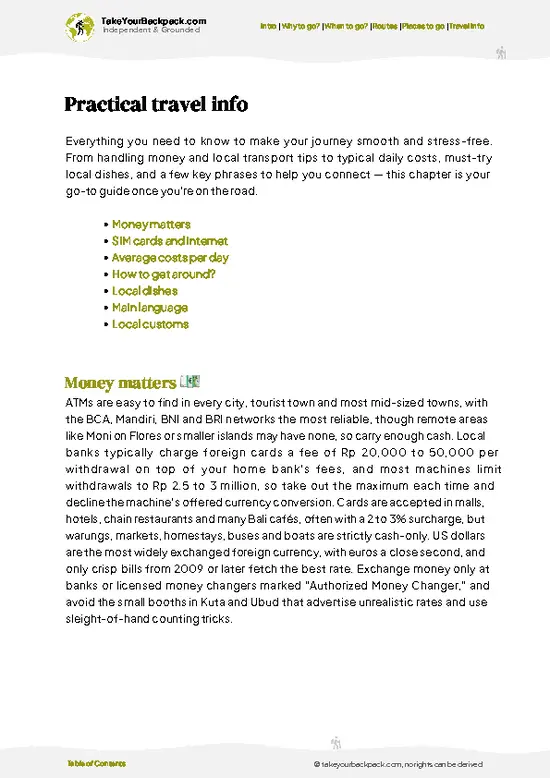
example page 0 from our offline Travel Guide for Indonesia
example page 1 from our offline Travel Guide for Indonesia
example page 2 from our offline Travel Guide for Indonesia
example page 3 from our offline Travel Guide for Indonesia
example page 4 from our offline Travel Guide for Indonesia
example page 5 from our offline Travel Guide for Indonesia
example page 6 from our offline Travel Guide for Indonesia
example page 7 from our offline Travel Guide for Indonesia
The digital guide (550 pages) contains:
155 highlights, ranked by travel appeal
Optimized 14, 21 & 30-day travel routes
Cities, national parks, landmarks, beaches
How to get around
Offline-friendly for travel without Wi-Fi
👉 Click to see all 30+ guide features

📅 Plan smarter in minutes, not weeks
Month by month travel advice
Festivals & national holidays
Budget expectations

🗺️ Go to the right places, skip the overrated ones
Honest pros & cons of destinations
Top hikes, parks & viewpoints
Lesser-known places most travelers miss
Clear “worth it vs skip it” guidance

🛏️ Travel smoothly without rookie mistakes
Best areas to stay
Transport systems explained simply
Common scams & safety advice
SIM cards, money & practical tips

🌍 Understand the country, not just visit it
Culture & traditions
52 Essential phrases & customs
Festivals worth planning around
Traveler-friendly historical context
Insights that make places more meaningful

📱 Built for real travel conditions
Fully downloadable PDF
Works completely offline
Optimized for phone use
Useful in remote areas & buses
Everything in one place
Save weeks of stressful planning
Get instant access to your full guide. 30‑day money-back guarantee.


By proceeding you agree to our terms.
Sent to your inbox immediately after payment • 100% Secure Checkout
Best Backpacking Travel Advisor 2025 tourism awardBest Backpacking
Travel Advisor
2025
What others say about Take Your Backpack Guides:
⭐⭐⭐⭐⭐
Fantastic, amazing amount of information!
⭐⭐⭐⭐⭐
My goodness this is amazing, it's what I've been looking for hats off too you!
⭐⭐⭐⭐⭐
I think this is absolutely BRILLIANT
⭐⭐⭐⭐
Very complete and informative. It's still missing places, but I gotta to commend you
⭐⭐⭐⭐⭐
This is truly amazing, thank you, can't wait to explore it with my kids!
⭐⭐⭐⭐⭐
Awesome resource, thank you!
⭐⭐⭐⭐⭐
This is amazing! Can't wait to explore the ones I haven't seen
⭐⭐⭐⭐
I love this! Well done, great idea.
⭐⭐⭐⭐⭐
Thanks for taking the time to make this gem!
⭐⭐⭐⭐⭐
This might be the best website I've ever seen.
⭐⭐⭐⭐⭐
Congratulations, and thank you so much for your work; it's incredibly valuable.
⭐⭐⭐⭐
In all seriousness I think you did a great job pointing out the important spots
⭐⭐⭐⭐⭐
10/10 very good
⭐⭐⭐⭐⭐
As someone who's only just starting to visit regularly this is awesome, thank you.
⭐⭐⭐⭐
Thank you very much! I'm going to visit my dad, it's going to be very useful!
⭐⭐⭐⭐⭐
This is really cool! We'll be travelling for the first time and this definitely come in handy.
⭐⭐⭐⭐⭐
You are now our minister of culture, congratulations 👨‍💼
⭐⭐⭐⭐⭐
Just wanted to tell you that this is a pearl! Going to follow your recommendations.
⭐⭐⭐⭐⭐
This is so cool. I'll definitely be using the resource for my travels soon.
⭐⭐⭐⭐⭐
This is very impressive! Good work.
⭐⭐⭐⭐⭐
This is an amazing and informative site. Very well done!

🛏️ Where to stay?Where staying makes the most sense

Uluwatu Temple is the kind of place that looks perfect on Instagram—dramatic cliffs, crashing waves, and that iconic sunset silhouette. But let’s cut through the hype: it’s crowded, especially late afternoon when every tourist bus seems to roll in. The entrance fee and parking can add up, and the temple itself is more about the vibe than a deep cultural dive. So why bother? Because the real magic isn’t just the temple; it’s the raw energy of the surrounding areas where backpackers actually hang out.

If you want to be close to Uluwatu Temple without getting swallowed by tourist mobs, look at the … read more 👉
Uluwatu Temple is the kind of place that looks perfect on Instagram—dramatic cliffs, crashing waves, and that iconic sunset silhouette. But let’s cut through the hype: it’s crowded, especially late afternoon when every tourist bus seems to roll in. The entrance fee and parking can add up, and the temple itself is more about the vibe than a deep cultural dive. So why bother? Because the real magic isn’t just the temple; it’s the raw energy of the surrounding areas where backpackers actually hang out.

If you want to be close to Uluwatu Temple without getting swallowed by tourist mobs, look at the villages of Pecatu and Padang Padang. Pecatu is quieter, with a laid-back vibe and enough warungs (local eateries) to keep your belly happy without breaking the bank. It’s safe, and you’ll find fellow travelers swapping stories over cheap Bintangs. Padang Padang, on the other hand, is a surfer’s playground with a social scene that’s easy to tap into. It’s a bit busier but still budget-friendly, and the beach here is a legit reward after a day of temple trekking.

Both spots offer a solid mix of safety, social opportunities, and access to the temple without the tourist trap feel. You’re not just visiting Uluwatu; you’re living the Bali coast experience that most travelers miss.

👛 Costs (as of 13 December 2024)Typical daily expenses

As of March 2026, the entrance fee for Uluwatu Temple is IDR 50,000 for adults and IDR 30,000 for children. The Kecak Dance performance requires a separate ticket priced at IDR 150,000 for adults and IDR 75,000 for children. Additional parking fees apply: IDR 4,000 for cars and IDR 2,000 for motorbikes.

source: uluwatutemple.id
⚠️ Prices can change and everyone travels differently, so take this as a rough guide. Hope it helps you plan your adventure!

Other Indonesian attractions near Uluwatu Temple

Explore more nearby:


💡 Not sure where to go next?
Create a personalized itinerary for Indonesia including Uluwatu Temple and the places that fit your trip.

Generate my itinerary

👉 Discover all attractions

Or checkout all Indonesia has to offer (think cities, towns, villages, national parks, hikes, beaches, festivals)
Country photo of Indonesia

We 💚 feedbackKey takeaways before you go

Uluwatu Temple is not just another sunset spot plastered all over Instagram—it’s a raw, cliffside experience where the ocean’s roar and ancient rituals collide. But brace yourself: the crowds can feel like a tidal wave, especially during peak hours, and entrance fees add up faster than you’d expect. Still, if you want to witness a traditional Kecak dance with the sun dipping behind endless blue waves, it’s worth carving out the time and patience.

✈️ When did I visit Indonesia?
As part of my 1.5 year travel around the world trip, I visited Indonesia twice (and it was worth it. First in September 2015 and a bit later again in January and February 2016.

✍️ Help improve this page!
The information on this page is based on my own backpacking experience in Indonesia, supplemented with up-to-date research and feedback from other travelers. Travel details can change, so if you notice anything outdated or incomplete, feel free to let me know.


🙋‍♂️ Give feedback

👋 Meet the founderWho’s Behind Take Your Backpack?

Johan, backpacker and founder of TakeYourBackpackHi, I’m Johan (Netherlands 🇳🇱), the creator of TakeYourBackpack. Over the past decade, I’ve backpacked through 80+ countries across six continents, gaining extensive experience with independent travel, long-term trips, and overland routes.

This site is built on a combination of firsthand travel experience and carefully curated insights from other backpackers. Many guides are based on places I’ve personally visited, while others bring together tips, observations, and practical advice shared by trusted travelers I’ve met along the way.

The goal is to provide realistic, experience-driven guidance — not generic itineraries — so you can explore destinations with better context, clearer expectations, and more confidence.

Get full Indonesia guide •
Instant download • 155 highlights • Full Offline guide