×

Indonesia🇮🇩 | best attractionsTop-Rated 10 attractions in Indonesia

Indonesia’s attractions defy simple categorization, shaped by its sprawling archipelago of over 17,000 islands and a climate that swings between wet and dry seasons with regional quirks. For backpackers and independent travelers, this means the choice of destination isn’t just about ticking off famous spots but matching the vibe, budget, and travel logistics to your style. The bustling streets of Jakarta or the cultural heart of Yogyakarta offer a different rhythm than the remote beaches of the Mentawai Islands or the volcanic trails of Flores. Each region demands a different approach to safety, transport, and timing—wet season rains can turn dirt roads into mud traps in Sulawesi, while Bali’s high season crowds push prices and dilute the local feel. Choosing the right attraction impacts more than your itinerary; it shapes your entire experience, from how deeply you connect with local communities to how easily you navigate between spots. Independent travel in Indonesia rewards those who look beyond the glossy Instagram shots and embrace the physical challenge of reaching less-trodden paths, where the real character of the country reveals itself in the sweat, the smiles, and the stories shared along the way.

By Johan Kruseman 🇳🇱 | Updated June 1, 2026
Explore the best festivals in Indonesia

Why go?Understanding Their Importance

Indonesia’s attractions demand a mindset that balances ambition with patience. This sprawling archipelago, made up of over 17,000 islands, offers a scale of diversity that few countries can match. The sheer geographic spread means that reaching many of its most compelling sites involves significant travel time, often by boat or small plane, which can test even the most seasoned traveler’s stamina. Yet, this logistical challenge is inseparable from the reward: a chance to dive deep into environments and cultures that have evolved in relative isolation, creating experiences that feel untouched by the usual tourist churn.

The country’s unique position on the equator gifts it with a tropical climate that shapes every attraction. Lush rainforests, active volcanoes, and vibrant coral reefs are … read more 👉
Indonesia’s attractions demand a mindset that balances ambition with patience. This sprawling archipelago, made up of over 17,000 islands, offers a scale of diversity that few countries can match. The sheer geographic spread means that reaching many of its most compelling sites involves significant travel time, often by boat or small plane, which can test even the most seasoned traveler’s stamina. Yet, this logistical challenge is inseparable from the reward: a chance to dive deep into environments and cultures that have evolved in relative isolation, creating experiences that feel untouched by the usual tourist churn.

The country’s unique position on the equator gifts it with a tropical climate that shapes every attraction. Lush rainforests, active volcanoes, and vibrant coral reefs are not just backdrops but active players in the story of Indonesia’s appeal. However, this climate also demands careful timing; the wet season can turn remote trails into muddy quagmires and make sea travel unpredictable. Travelers must weigh the thrill of exploring during the off-peak months against the practical difficulties that come with heavy rains and limited infrastructure.

Indonesia’s cultural fabric is woven from hundreds of ethnic groups and languages, layered with centuries of Hindu, Buddhist, Islamic, and colonial influences. This complexity means that attractions here are not just about visual spectacle but about engaging with living traditions and histories that resist easy categorization. The trade-off is that understanding these layers often requires more than a cursory visit; it calls for time and openness to local contexts that can feel demanding but ultimately enrich the journey.

Infrastructure varies wildly across the archipelago. While some areas boast well-developed roads, airports, and accommodations, others remain stubbornly off-grid. This unevenness forces travelers to choose between comfort and immersion. Opting for the latter often means embracing basic conditions and slower travel rhythms, but it also opens doors to encounters and landscapes that remain largely free from commercialization.

In sum, Indonesia’s attractions matter because they challenge the traveler to engage fully—with distance, climate, culture, and infrastructure all shaping the experience. The country rewards those willing to navigate its complexities with encounters that are rare and deeply rooted in place, rather than polished snapshots designed for social media. The real magic lies in the effort to reach beyond convenience and surface-level tourism, stepping into a world where every journey is as meaningful as the destination itself.
Our Approach to Ranking
The list of best attractions in Indonesia is created based on cultural significance or entertainment value. If you feel a attraction is missing in this list, please let us know.

When to go?Best Time to Visit Indonesia for attractions

Seasonal Rhythms Shape the Experience

Indonesia’s attractions don’t exist in a vacuum; they’re deeply tied to the country’s tropical climate, which swings between two dominant seasons: wet and dry. The dry season, typically stretching from April through October, offers the clearest skies and the most reliable conditions for exploring. This is when trails stay firm, beaches are sun-drenched, and cultural festivals often align with drier weather, making it the natural magnet for travelers chasing uninterrupted adventure.

But the dry season isn’t a free pass to solitude. It’s the peak window when crowds swell and prices spike, especially at well-known spots. Expect to share popular viewpoints and trails with fellow explorers, and book accommodations well in advance to avoid last-minute headaches. … read more 👉

Seasonal Rhythms Shape the Experience

Indonesia’s attractions don’t exist in a vacuum; they’re deeply tied to the country’s tropical climate, which swings between two dominant seasons: wet and dry. The dry season, typically stretching from April through October, offers the clearest skies and the most reliable conditions for exploring. This is when trails stay firm, beaches are sun-drenched, and cultural festivals often align with drier weather, making it the natural magnet for travelers chasing uninterrupted adventure.

But the dry season isn’t a free pass to solitude. It’s the peak window when crowds swell and prices spike, especially at well-known spots. Expect to share popular viewpoints and trails with fellow explorers, and book accommodations well in advance to avoid last-minute headaches. The trade-off here is straightforward: better weather comes with a busier, pricier scene.

Then there’s the wet season, roughly November through March, which flips the script. Rainfall intensifies, sometimes in sudden, heavy bursts that can turn dirt paths into slippery challenges and cloud the vistas that draw visitors. Yet, this period isn’t just a washout. The landscape transforms—jungles deepen in green, waterfalls surge, and fewer tourists mean a quieter, more intimate encounter with the environment. Prices dip, and accommodations are easier to snag, but the unpredictability of weather demands flexibility and a readiness to pivot plans.

The shoulder months—those transitional periods at the edges of the wet and dry seasons—offer a nuanced balance. Rainfall tapers off or begins to build, and the crowds thin out, creating pockets of opportunity for those willing to accept occasional showers in exchange for lower costs and less competition. These windows require a keen eye on weather patterns and a willingness to embrace the occasional damp day without letting it derail the entire trip.

Travelers should also weigh how seasonality impacts specific activities. For instance, marine visibility fluctuates with the seasons, influencing diving and snorkeling quality. Similarly, trekking conditions can swing dramatically, with some routes becoming inaccessible or hazardous during peak rains. Understanding these shifts helps avoid disappointment and ensures that the physical effort of reaching a destination is rewarded by the experience itself.

In short, timing your visit to Indonesia’s attractions is a strategic dance with nature’s cycles. The dry season promises reliability but demands early planning and tolerance for crowds. The wet season offers solitude and lushness but requires adaptability and a tolerance for weather’s whims. Shoulder seasons sit in between, offering a compromise that can pay off for the prepared and patient. This interplay between climate, crowd, and cost is the real magic behind the journey—far beyond the polished snapshots.

attraction hoppingPlanning Your Route Efficiently

Mapping Indonesia’s Vast Appeal

Indonesia sprawls across thousands of islands, each with its own rhythm and draw. The key to combining its best attractions lies in recognizing natural clusters—think Java’s cultural heart, Bali’s coastal allure, and the wild frontiers of Sumatra or Sulawesi. Tackling these regions in a logical sequence minimizes backtracking and wasted travel time. Start with a major hub like Jakarta or Denpasar, then fan out to nearby highlights before hopping to the next cluster. This approach respects the country’s geography and keeps momentum alive.

Balancing Time and Experience

Each stop demands a realistic chunk of time. Cultural cities and heritage sites often require at least two full days to absorb their layers without rushing. Nature-heavy destinations—volcano … read more 👉

Mapping Indonesia’s Vast Appeal

Indonesia sprawls across thousands of islands, each with its own rhythm and draw. The key to combining its best attractions lies in recognizing natural clusters—think Java’s cultural heart, Bali’s coastal allure, and the wild frontiers of Sumatra or Sulawesi. Tackling these regions in a logical sequence minimizes backtracking and wasted travel time. Start with a major hub like Jakarta or Denpasar, then fan out to nearby highlights before hopping to the next cluster. This approach respects the country’s geography and keeps momentum alive.

Balancing Time and Experience

Each stop demands a realistic chunk of time. Cultural cities and heritage sites often require at least two full days to absorb their layers without rushing. Nature-heavy destinations—volcano treks, jungle treks, or diving spots—call for three or more days to truly engage with the environment and recover from travel fatigue. Trying to cram too many islands or attractions into a short window leads to a checklist mentality, where the journey becomes a blur of airports and taxis rather than a meaningful exploration.

Common Pitfalls in Multi-Stop Planning

A frequent mistake is underestimating Indonesia’s travel logistics. Flights between islands can be irregular, and delays are common. Overloading your itinerary with distant stops ignores the time lost in transit and the energy drained by constant movement. Another trap is chasing every “must-see” without considering the physical and mental toll. This often results in superficial visits that miss the essence of a place. Prioritize depth over breadth to avoid burnout and disappointment.

Negotiating Trade-Offs

Speed versus depth is the perennial tension. Zooming through multiple islands offers bragging rights but sacrifices the immersive moments that make Indonesia unforgettable. Budget versus comfort also shapes choices: budget travelers might endure longer ferry rides and basic accommodations, while those seeking comfort pay a premium for flights and boutique stays that save time and energy. Effort versus reward is another axis—some remote spots demand tough journeys but repay with solitude and raw beauty, while accessible attractions offer convenience at the cost of crowds.

Strategic Flexibility and Pacing

Flexibility is the secret weapon. Build buffer days to absorb delays or to linger where the vibe clicks. Avoid rigid schedules that force you to abandon a place prematurely. Instead, design a framework that allows for spontaneous detours or extra rest. This mindset transforms the trip from a race into a series of rewarding chapters. The goal is a rhythm that matches Indonesia’s vastness and diversity, letting travelers savor the country’s contrasts without feeling rushed or overwhelmed.

The ListThe Best attractions of Indonesia

1 Borobudur Temple Compounds

Buddhist stupas, stone reliefs, sunrise panorama

Ascend ancient terraces lined with carvings, experiencing early morning light over volcanic plains and centuries-old Buddhist monuments.

2 Uluwatu Temple

clifftop shrine, ocean panorama, Kecak dance

Walk along dramatic cliffs to a temple overlooking the Indian Ocean, then watch traditional performances at sunset.

3 Tanah Lot Temple

sea temple, tidal rock, sunset views

Watch waves crash around a centuries-old shrine perched on an offshore rock, especially striking at dusk.

4 Besakih Great Temple

mother temple, sacred courtyards, panoramic views

Walk through the largest Balinese Hindu temple, observing intricate architecture and religious processions on the island’s highest mountain.

5 Tirta Empul Temple

spring-fed pools, ritual bathing, Balinese architecture

Participate in or observe purification ceremonies in a temple complex centered on natural springs and ornate stonework.

6 Ulun Danu Bratan

lakeside temple, mountain backdrop, floating shrines

Photograph iconic multi-roofed temples reflected in calm waters, set against misty peaks on Lake Bratan’s shore.

7 Tirta Gangga

water palace, koi ponds, stone fountains

Stroll among reflective pools, stepping stones, and lush gardens in a former royal retreat in eastern Bali.

8 Sacred Monkey Forest Sanctuary

macaque troops, mossy temples, jungle boardwalks

Walk shaded paths among free-roaming monkeys, ancient statues, and vine-draped shrines in the heart of Ubud.

9 Taman Mini Indonesia Indah

regional pavilions, cultural displays, miniature landmarks

Travel across Indonesia’s diverse traditions in one park, with replica houses, museums, and themed gardens.

10 Taman Sari Water Castle

royal pools, underground passages, 18th-century ruins

Wander through former bathing complexes and hidden tunnels built for the Yogyakarta sultanate’s leisure and defense.

11 Yogyakarta Palace

royal residence, Javanese court, cultural performances

Tour ceremonial halls and museum rooms, observing daily routines and arts of the sultan’s household in central Yogyakarta.

12 Taman Budaya Garuda Wisnu Kencana

giant statue, cultural park, open-air amphitheater

Stroll among monumental sculptures and attend dance performances in a sprawling park dedicated to Balinese mythology.

13 Bali Safari & Marine Park

safari tram, wildlife habitats, aquatic shows

Ride through themed zones to see Asian and African animals, then watch scheduled performances and explore aquarium displays.

14 Bali Bird Park

tropical aviaries, rare bird species, conservation exhibits

Observe hundreds of Southeast Asian and Papua birds in landscaped enclosures, with opportunities to join feeding sessions and educational talks.

15 Goa Gajah

rock-cut cave, ancient carvings, bathing pools

Enter a centuries-old sanctuary featuring a demon-mouthed entrance, meditation chambers, and mossy stone relics.

16 Trans Studio Bandung

indoor theme park, thrill rides, entertainment zones

Spend hours on roller coasters, interactive attractions, and live shows in one of Southeast Asia’s largest indoor parks.

17 Jatim Park Complex

theme park rides, science exhibits, family attractions

Spend a day exploring interactive displays, amusement rides, and animal zones designed for all ages in East Java.

18 National Museum of Indonesia

archaeological treasures, ethnographic displays, bronze collection

Survey millennia of Indonesian culture through artifacts, textiles, and sculptures in a comprehensive museum near Merdeka Square.

19 Jakarta History Museum

Dutch town hall, period artifacts, Fatahillah Square

Browse rooms filled with colonial-era objects and learn about Jakarta’s urban evolution in a landmark building.

20 Museum MACAN

contemporary art, rotating exhibitions, international artists

View modern and contemporary works from Indonesia and abroad in a spacious, climate-controlled gallery west of Jakarta.

21 House of Sampoerna Museum

cigarette factory, colonial mansion, clove heritage

Watch hand-rolled cigarette production and explore exhibits on Surabaya’s industrial and family history in an art deco building.

22 Fort Vredeburg Museum

colonial fortress, diorama galleries, independence history

Walk through preserved Dutch-era walls and view exhibits detailing Indonesia’s struggle for independence in central Yogyakarta.

23 Taman Ismail Marzuki Arts Center

art galleries, planetarium, performance halls

Attend exhibitions, concerts, and film screenings in a multi-venue complex serving as Jakarta’s main arts hub.

24 Gedung Kesenian Jakarta

historic theater, classical performances, neoclassical façade

Attend music, dance, or drama events in a 19th-century venue known for its acoustics and architectural details.

25 Besakih

temple complex, Mount Agung slopes, Balinese ceremonies

Climb terraced steps to explore multiple shrines and courtyards, often witnessing local rituals against a volcanic backdrop.

26 Spring water of Narmada

holy springs, bathing pools, temple gardens

Bathe in cool, clear water believed to have spiritual properties, surrounded by landscaped grounds and traditional pavilions.

27 Coffee plantation in Gombeng Sari

coffee fields, processing tours, tasting sessions

Tour working plantations to learn about cultivation, observe roasting techniques, and sample local beans in a rural setting.

28 Kali Sawah rafting

river rapids, jungle scenery, guided adventure

Paddle through swift currents and lush riverbanks, navigating moderate rapids with experienced guides in rural Bali.

29 Lingsar rafting

mountain river, scenic valleys, group excursions

Experience a mix of gentle and challenging stretches on a clear river, passing rice paddies and forested hills in Lombok.

Think you know Indonesia?

Prove you’re a true local — uncover 19 lesser-known attractions in Indonesia that locals tend to keep to themselves.
Loading the map 🌍

Expert viewPro Tips for Exploring the Best

Expect crowds, but not just the selfie kind

Indonesia’s attractions often come with a built-in audience. The postcard-perfect beaches, volcanic peaks, and ancient temples draw steady streams of visitors, especially during peak seasons. You’ll find yourself shoulder-to-shoulder with other travelers at the most famous spots. That’s the trade-off: the iconic views come with crowds that can test your patience and your photo skills. But here’s the kicker—those crowds don’t tell the whole story. The real magic unfolds when you push beyond the main drag. Venture a little off the beaten path, and you’ll discover quieter corners where local life pulses with a rhythm untouched by tourism’s spotlight. This means planning your days to hit popular sites early or late, or mixing in lesser-known attractions … read more 👉

Expect crowds, but not just the selfie kind

Indonesia’s attractions often come with a built-in audience. The postcard-perfect beaches, volcanic peaks, and ancient temples draw steady streams of visitors, especially during peak seasons. You’ll find yourself shoulder-to-shoulder with other travelers at the most famous spots. That’s the trade-off: the iconic views come with crowds that can test your patience and your photo skills. But here’s the kicker—those crowds don’t tell the whole story. The real magic unfolds when you push beyond the main drag. Venture a little off the beaten path, and you’ll discover quieter corners where local life pulses with a rhythm untouched by tourism’s spotlight. This means planning your days to hit popular sites early or late, or mixing in lesser-known attractions to balance the experience. It’s not about avoiding people altogether; it’s about timing and choice.

How many attractions to tackle—and how to prioritize

Indonesia is vast, with thousands of islands and a dizzying array of cultural and natural sites. Trying to see it all is a recipe for burnout. Instead, aim for a handful of attractions that offer contrasting experiences. Three to five major stops strike a good balance. This allows you to absorb the local vibe, engage with the environment, and avoid the trap of rushing through highlights like a checklist. Prioritize based on what moves you—whether that’s hiking active volcanoes, exploring traditional villages, or diving into underwater worlds. Factor in travel time between islands or regions, which can be longer and less predictable than you expect. Ferries, small planes, and local transport add layers of complexity and cost. Budget accordingly—not just money, but energy and patience.

Budgeting for the real Indonesia

Indonesia’s reputation as a budget destination is mostly true, but the devil’s in the details. Entrance fees to major attractions are generally affordable, but costs can escalate with guided tours, transport, and accommodation in tourist hotspots. Local food and markets offer excellent value, but eating near popular sites often means inflated prices. If you want to stretch your budget, embrace local transport and street food, but be ready for some unpredictability in schedules and quality. On the flip side, splurging on a guided trek or a dive trip can unlock experiences that solo travel won’t easily deliver. The key is to decide what’s worth the splurge for you and where you can cut corners without losing the essence of the experience.

Time investment: More than just days on a calendar

Don’t underestimate the time it takes to truly engage with Indonesia’s attractions. Travel between islands alone can eat up a day or more, depending on your route and mode of transport. Add to that the time needed to acclimate to local conditions—humidity, heat, and the slower pace of life—and you’ll see why squeezing too many stops into a short trip dilutes the experience. A week might let you scratch the surface of one region, while two or three weeks open the door to a richer, layered journey. The payoff comes when you allow yourself to linger, to watch the sun set over a volcanic ridge or to share a meal with locals who aren’t just vendors but keepers of tradition.

Regional variation demands flexible planning

Indonesia isn’t a monolith. The cultural fabric, infrastructure quality, and even climate vary dramatically from one island to another. Some regions boast well-maintained roads and reliable transport, making it easier to hop between attractions. Others require patience and a spirit of adventure, with bumpy rides, limited signage, and fewer English speakers. This means your itinerary needs to be flexible. Build in buffer days for unexpected delays or spontaneous detours. Learn a few local phrases and customs to smooth interactions—Indonesians appreciate effort and respect, which can open doors you didn’t expect. Safety-wise, most tourist areas are stable, but remote regions might lack medical facilities or reliable communication. Always have a backup plan and travel insurance that covers evacuation if you’re heading off-grid.

Safety and cultural respect: Non-negotiables

Indonesia’s diversity is its strength, but it also means cultural norms can shift dramatically from one place to another. Dress modestly when visiting religious sites, and observe local customs around photography and behavior. This isn’t about being a visitor who sticks out awkwardly; it’s about showing respect that enriches your experience and keeps you out of trouble. On the safety front, petty theft can happen in crowded areas, so keep your belongings close and your wits about you. Natural hazards like strong currents, volcanic activity, and tropical diseases require vigilance. Don’t push your limits just to tick off an attraction. Listen to local advice and guides—they know the terrain and conditions better than any guidebook.

The physical journey is part of the reward

Indonesia demands movement. Whether you’re trekking through jungle trails, navigating bustling markets, or hopping between islands, the physical effort is part of the story. This isn’t a place to expect seamless luxury or instant gratification. The bumps, delays, and sweat are the price of admission to something deeper. I remember a trek where the path was muddy and steep, the air thick with humidity, but reaching the summit to watch the sunrise over a smoking crater was worth every labored breath. That moment wasn’t just about the view; it was about the struggle, the anticipation, and the shared smiles with fellow travelers who’d earned the same reward.

Authenticity over Instagram perfection

Forget the polished images that flood social media. Indonesia’s real charm is in the imperfect moments—the cracked temple walls covered in moss, the chatter of children playing in rice paddies, the smell of spices in a roadside warung. These are the details that linger long after the trip ends. To catch them, you need to slow down, talk to locals, and sometimes get lost. The best attractions aren’t just sights; they’re experiences that engage your senses and challenge your assumptions. They require curiosity and a willingness to embrace the unexpected.

Final word: Embrace the trade-offs

Traveling Indonesia means balancing ambition with realism. You can’t see everything, and trying to do so will leave you exhausted and disappointed. Instead, pick a few attractions that resonate with you, plan for the quirks of local transport and infrastructure, and budget for both comfort and splurges that enhance your journey. Respect the culture, stay safe, and be ready to sweat a little. The payoff is a trip that’s rich in stories, challenges, and moments that no filter can capture.

✈️ The backpacker research shortcutIndonesia Travel Guide

An offline-friendly backpacking guide with optimized travel routes, ranked highlights, transport advice, and the best areas to stay.
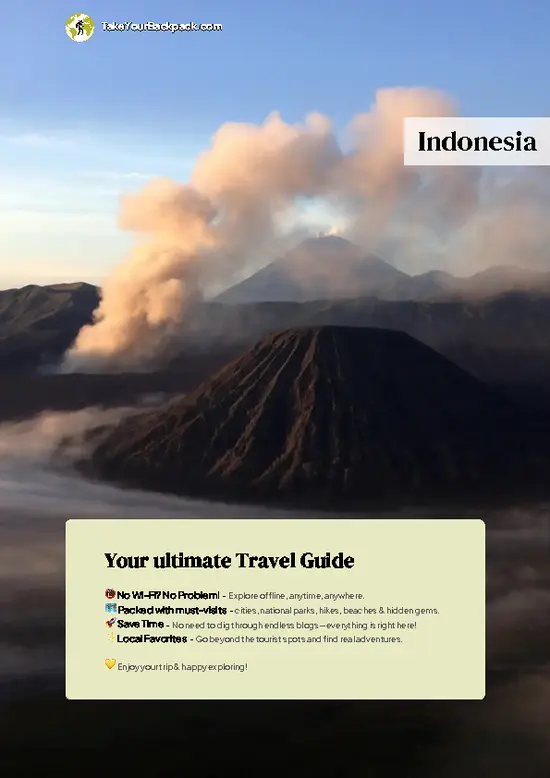
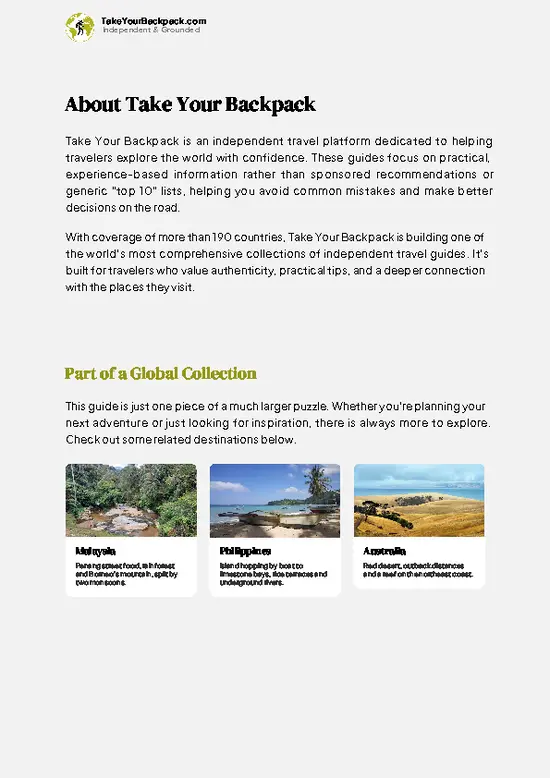
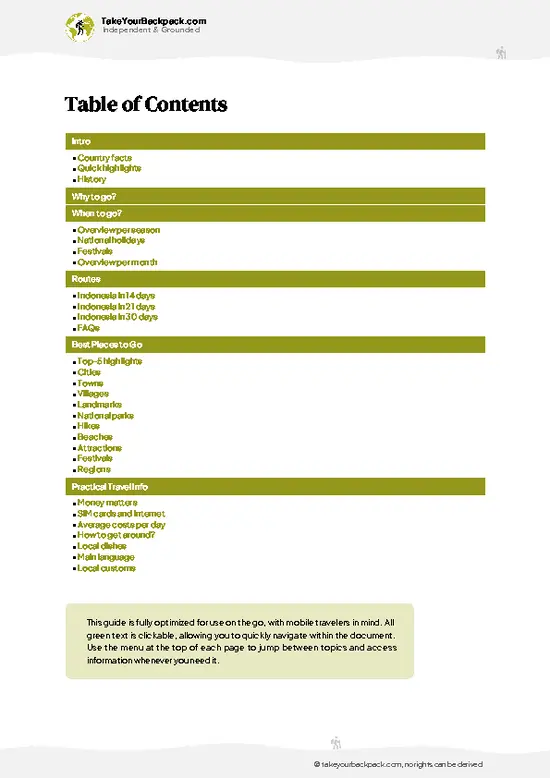
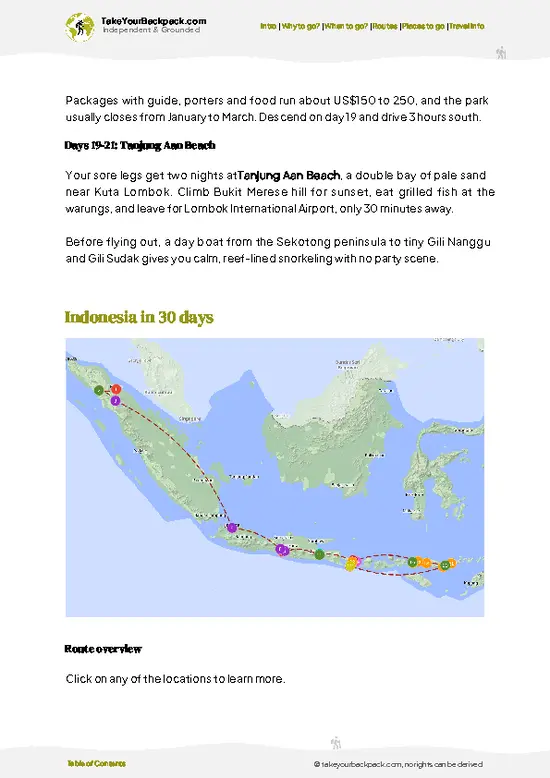
example page 0 from our offline Travel Guide for Indonesiaexample page 1 from our offline Travel Guide for Indonesiaexample page 2 from our offline Travel Guide for Indonesiaexample page 3 from our offline Travel Guide for Indonesiaexample page 4 from our offline Travel Guide for Indonesiaexample page 5 from our offline Travel Guide for Indonesiaexample page 6 from our offline Travel Guide for Indonesiaexample page 7 from our offline Travel Guide for Indonesia
The digital guide (550 pages) contains:
155 highlights, ranked by travel appeal
Optimized 14, 21 & 30-day travel routes
Cities, national parks, landmarks, beaches
How to get around
Offline-friendly for travel without Wi-Fi
👉 Click to see all 30+ guide features

📅 Plan smarter in minutes, not weeks
Month by month travel advice
Festivals & national holidays
Budget expectations

🗺️ Go to the right places, skip the overrated ones
Honest pros & cons of destinations
Top hikes, parks & viewpoints
Lesser-known places most travelers miss
Clear “worth it vs skip it” guidance

🛏️ Travel smoothly without rookie mistakes
Best areas to stay
Transport systems explained simply
Common scams & safety advice
SIM cards, money & practical tips

🌍 Understand the country, not just visit it
Culture & traditions
52 Essential phrases & customs
Festivals worth planning around
Traveler-friendly historical context
Insights that make places more meaningful

📱 Built for real travel conditions
Fully downloadable PDF
Works completely offline
Optimized for phone use
Useful in remote areas & buses
Everything in one place
Save weeks of stressful planning
Get instant access to your full guide. 30‑day money-back guarantee.


By proceeding you agree to our terms.
Sent to your inbox immediately after payment • 100% Secure Checkout
Best Backpacking Travel Advisor 2025 tourism awardBest Backpacking
Travel Advisor
2025
What others say about Take Your Backpack Guides:
⭐⭐⭐⭐⭐
Fantastic, amazing amount of information!
⭐⭐⭐⭐⭐
My goodness this is amazing, it's what I've been looking for hats off too you!
⭐⭐⭐⭐⭐
I think this is absolutely BRILLIANT
⭐⭐⭐⭐
Very complete and informative. It's still missing places, but I gotta to commend you
⭐⭐⭐⭐⭐
This is truly amazing, thank you, can't wait to explore it with my kids!
⭐⭐⭐⭐⭐
Awesome resource, thank you!
⭐⭐⭐⭐⭐
This is amazing! Can't wait to explore the ones I haven't seen
⭐⭐⭐⭐
I love this! Well done, great idea.
⭐⭐⭐⭐⭐
Thanks for taking the time to make this gem!
⭐⭐⭐⭐⭐
This might be the best website I've ever seen.
⭐⭐⭐⭐⭐
Congratulations, and thank you so much for your work; it's incredibly valuable.
⭐⭐⭐⭐
In all seriousness I think you did a great job pointing out the important spots
⭐⭐⭐⭐⭐
10/10 very good
⭐⭐⭐⭐⭐
As someone who's only just starting to visit regularly this is awesome, thank you.
⭐⭐⭐⭐
Thank you very much! I'm going to visit my dad, it's going to be very useful!
⭐⭐⭐⭐⭐
This is really cool! We'll be travelling for the first time and this definitely come in handy.
⭐⭐⭐⭐⭐
You are now our minister of culture, congratulations 👨‍💼
⭐⭐⭐⭐⭐
Just wanted to tell you that this is a pearl! Going to follow your recommendations.
⭐⭐⭐⭐⭐
This is so cool. I'll definitely be using the resource for my travels soon.
⭐⭐⭐⭐⭐
This is very impressive! Good work.
⭐⭐⭐⭐⭐
This is an amazing and informative site. Very well done!

🛏️ Where to stay?Best Places to Stay in Indonesia

Yes — hostels and budget guesthouses are widespread across Indonesia, especially in Bali, Yogyakarta, Jakarta, the Gili Islands, Lombok and Labuan Bajo.
In Bali search Kuta (very cheap and beach-close but crowded/noisy), Seminyak (more amenities, slightly pricier), Canggu (surf cafes, chilled vibe but farther from major transport) and Ubud (quiet, cultural and inland so extra travel time to beaches); Yogyakarta’s Malioboro and Prawirotaman put you close to temples and street food but can be busy at night; Jakarta’s Kemang and Menteng offer nightlife and transport links but suffer heavy traffic and are less walkable; the Gili Islands have abundant dorms with Gili Trawangan as the party hub … read more 👉
Yes — hostels and budget guesthouses are widespread across Indonesia, especially in Bali, Yogyakarta, Jakarta, the Gili Islands, Lombok and Labuan Bajo.
In Bali search Kuta (very cheap and beach-close but crowded/noisy), Seminyak (more amenities, slightly pricier), Canggu (surf cafes, chilled vibe but farther from major transport) and Ubud (quiet, cultural and inland so extra travel time to beaches); Yogyakarta’s Malioboro and Prawirotaman put you close to temples and street food but can be busy at night; Jakarta’s Kemang and Menteng offer nightlife and transport links but suffer heavy traffic and are less walkable; the Gili Islands have abundant dorms with Gili Trawangan as the party hub and Gili Air quieter for diving; Lombok Kuta is a budget surf base and Labuan Bajo has dorms for Komodo trips though prices spike in peak season.

If you enjoy meeting fellow travelers, consider choosing hostels with high ratings for atmosphere. On the other hand, if you prefer having your own space, a hotel might be a better option.

IndonesiaExplore Indonesia

👋 Meet the founderWho’s Behind Take Your Backpack?

Johan, backpacker and founder of TakeYourBackpackHi, I’m Johan (Netherlands 🇳🇱), the creator of TakeYourBackpack. Over the past decade, I’ve backpacked through 80+ countries across six continents, gaining extensive experience with independent travel, long-term trips, and overland routes.

This site is built on a combination of firsthand travel experience and carefully curated insights from other backpackers. Many guides are based on places I’ve personally visited, while others bring together tips, observations, and practical advice shared by trusted travelers I’ve met along the way.

The goal is to provide realistic, experience-driven guidance — not generic itineraries — so you can explore destinations with better context, clearer expectations, and more confidence.

Get full Indonesia guide •
Instant download • 155 highlights • Full Offline guide