×

Iran🇮🇷 | festivalsAshuramourning processions, black attire, ritual theater | things to do and best time to go

Explore Chaharshanbe SuriExplore Yalda Night

Backpacking in Ashura
🏆 Top pickfestival ranked #3
By Johan Kruseman 🇳🇱 | Updated September 4, 2026

Most people picture Ashura as a single chaotic day in one city; in reality it’s a ten‑day build‑up across Iran, with Ashura itself peaking in places like Yazd, Shiraz, and especially smaller towns where processions take over entire streets. This is a raw, religious mourning ritual: chest‑beating chants, slow drums, elegies over loudspeakers, passion plays, and free food for all. Backpackers who handle crowds, emotion, and long nights on their feet will find it powerful; anyone chasing lighthearted party energy should skip it.

Discover everything you want to know in the 📖 Iran Travel Guide.
Safety warning

The current risk level for Iran is high. Check the advice before going.


Get your Iran guide
118 ranked highlights, routes & tips, works offline (412 pages)
Loading the map 🌍
CLICK TO FILTER
cities
towns
villages
landmarks
national parks
hikes
beaches
attractions
festivals
regions
SHOW COUNTRY’S BESTSHOW ALL

✨ Why go?
Ranked #3 festival in Iran
What makes it a must-see festival

Backpackers plan their routes around the Ashura festival in Iran for a reason. This event pulses with social energy, drawing people into a temporary community that feels electric. You’re not just a spectator; you’re part of a cultural immersion that’s hard to replicate. The affordability of Ashura compared to similar global events means you can dive deep without breaking the bank. Plus, it seamlessly fits into longer travel plans, enriching your journey with layers of experience and connection. Don’t miss this chance to feel the heartbeat of a culture while you explore.
Want to include Ashura in your Iran route?
Create a personalized Iran itinerary that includes Ashura and the places that fit your trip — based on your travel style, budget, and available time. Get your route in seconds.

Generate my trip

💡 HighlightsThe experiences that define the visit

  • Massive public processions (juloos) — Miles-long lines of people moving through streets, chanting and beating their chests in unison. The scale and collective intensity — strangers crying, elders leading, kids watching solemnly — make it a very raw, public display of grief you don’t see in everyday life.
  • Ta’ziyeh (passion plays) — Live dramatic reenactments of the Karbala story performed in simple squares or makeshift stages. They mix theatre, ritual and improvised acting, so the story feels immediate and surprisingly emotional even if you don’t know all the details.
  • Noha and elegy recitations — Solo chanters and groups deliver mournful poems and call-and-response laments. The sound — low, rhythmic, often a cappella or with simple drums — creates a haunting atmosphere that hangs over neighborhoods
read more 👉
  • Massive public processions (juloos) — Miles-long lines of people moving through streets, chanting and beating their chests in unison. The scale and collective intensity — strangers crying, elders leading, kids watching solemnly — make it a very raw, public display of grief you don’t see in everyday life.
  • Ta’ziyeh (passion plays) — Live dramatic reenactments of the Karbala story performed in simple squares or makeshift stages. They mix theatre, ritual and improvised acting, so the story feels immediate and surprisingly emotional even if you don’t know all the details.
  • Noha and elegy recitations — Solo chanters and groups deliver mournful poems and call-and-response laments. The sound — low, rhythmic, often a cappella or with simple drums — creates a haunting atmosphere that hangs over neighborhoods for days.
  • Nazri and communal feeding — Households and volunteer tents hand out free food, tea and water to anyone passing by. The generosity is part of the ritual; sharing a bowl at a nazr tent is as much social solidarity as it is sustenance, and it’s one of the most human, grounding parts of Ashura.
  • Alams, flags and ritual symbols — Ornate standards, banners, replica tombs and other symbolic objects carried in procession give the event strong visual identity. Local variations — different flag styles, small theatrical props, or even controlled ritual expressions of grief in some communities — make each town’s observance feel distinct.
Spotted a mistake or missing something? Contact us.

🌤️ When to go?When is the celebration of Ashura?


  • Topic: Weather – Aim for late autumn when Iran cools down from summer’s scorch. Expect 10-20°C (50-68°F), perfect for long days on foot without overheating or freezing.

  • Topic: Daylight Hours – Shorter days in autumn mean less daylight, but the festival’s rituals often stretch into the evening, so pack a headlamp and embrace the night energy.

  • Topic: Crowds – Ashura draws massive local crowds, especially in major cities like Tehran and Mashhad. Smaller towns offer a more intimate experience but still expect packed streets.

  • Topic: Seasonal Activities – The festival’s intense religious processions dominate, so side trips to nature or quiet spots are limited. Plan rest days accordingly.

  • Topic: Price Fluctuations – Accommodation and transport spike during Ashura’s peak days. Book early
read more 👉

  • Topic: Weather – Aim for late autumn when Iran cools down from summer’s scorch. Expect 10-20°C (50-68°F), perfect for long days on foot without overheating or freezing.

  • Topic: Daylight Hours – Shorter days in autumn mean less daylight, but the festival’s rituals often stretch into the evening, so pack a headlamp and embrace the night energy.

  • Topic: Crowds – Ashura draws massive local crowds, especially in major cities like Tehran and Mashhad. Smaller towns offer a more intimate experience but still expect packed streets.

  • Topic: Seasonal Activities – The festival’s intense religious processions dominate, so side trips to nature or quiet spots are limited. Plan rest days accordingly.

  • Topic: Price Fluctuations – Accommodation and transport spike during Ashura’s peak days. Book early or stay on the outskirts to dodge inflated costs.


Pro-tip: Lock in your travel dates around Ashura’s exact day but arrive early to catch the build-up and avoid last-minute price hikes.


source: climatestotravel.comJANJanuary: not recommended for travelingFEBFebruary: not recommended for travelingMARMarch: not recommended for travelingAPRApril: not recommended for travelingMAYMay: not recommended for travelingJUNJune: not recommended for travelingJULJuly: not recommended for travelingAUGAugust: not recommended for travelingSEPSeptember: highly recommended for travelingOCTOctober: highly recommended for travelingNOVNovember: not recommended for travelingDECDecember: not recommended for traveling

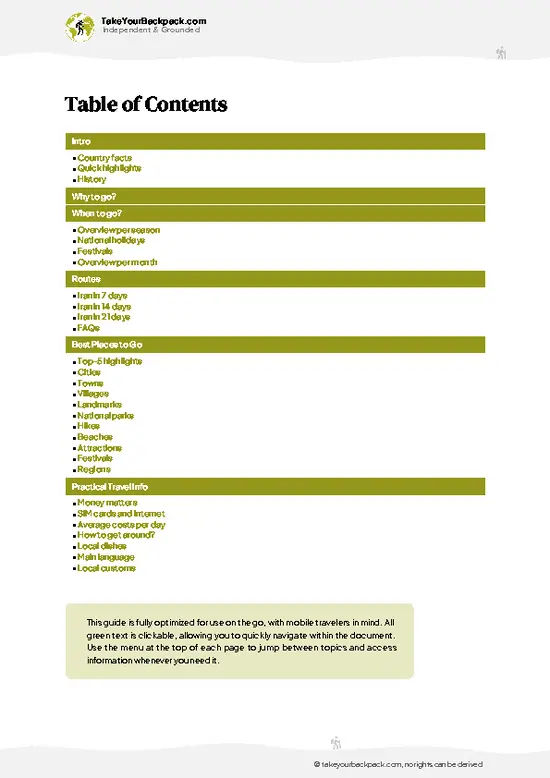
✈️ The backpacker research shortcutIran Travel Guide

An offline-friendly backpacking guide with optimized travel routes, ranked highlights, transport advice, and the best areas to stay.
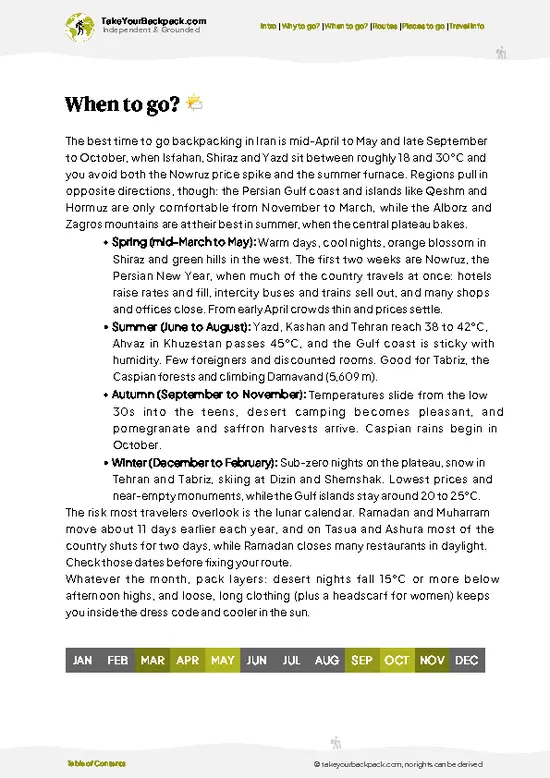
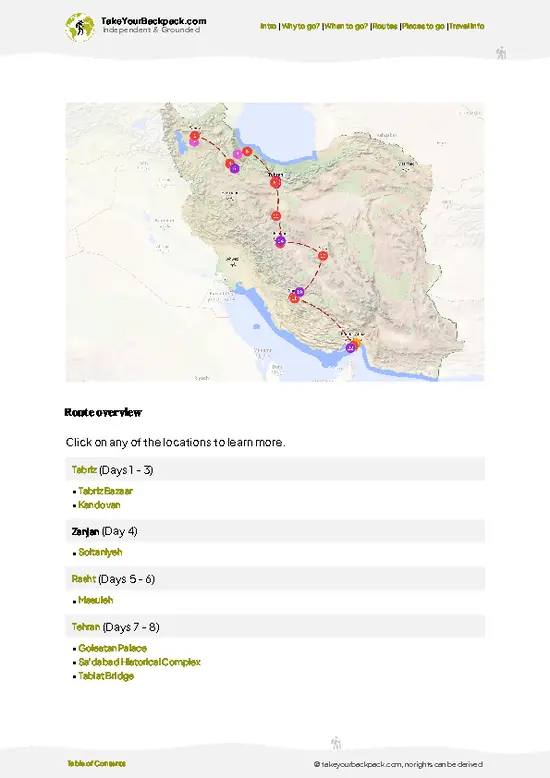
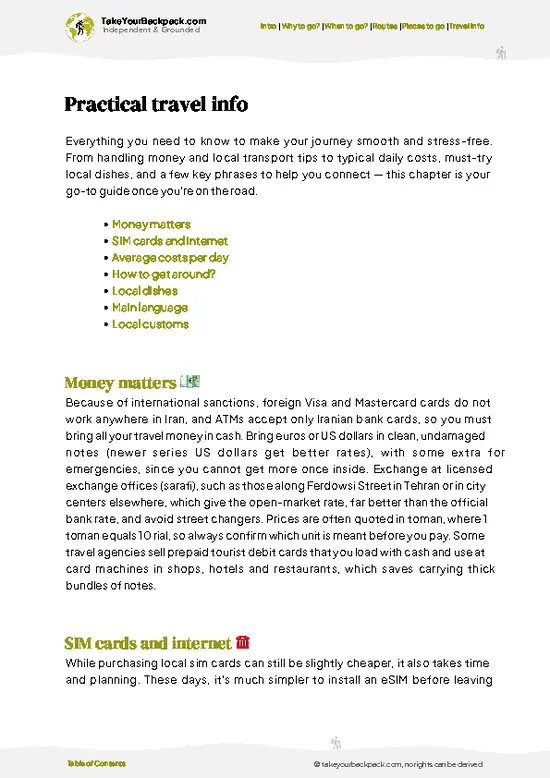
example page 0 from our offline Travel Guide for Iran
example page 1 from our offline Travel Guide for Iran
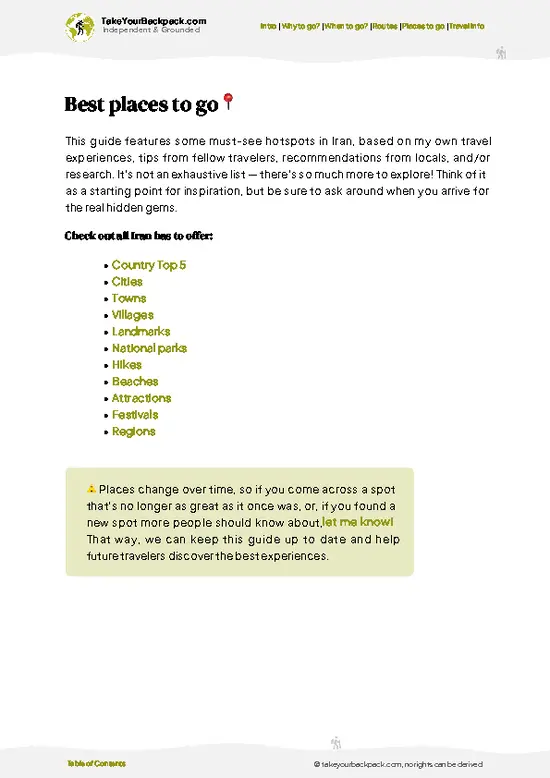
example page 2 from our offline Travel Guide for Iran
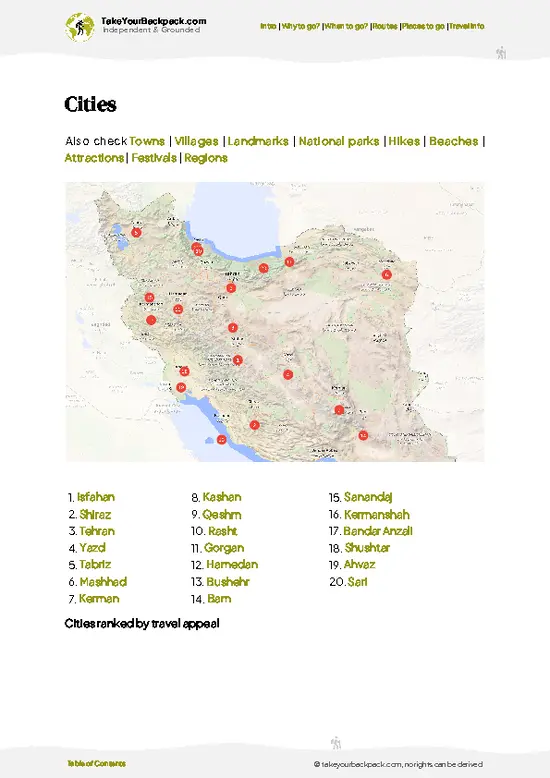
example page 3 from our offline Travel Guide for Iran
example page 4 from our offline Travel Guide for Iran
example page 5 from our offline Travel Guide for Iran
example page 6 from our offline Travel Guide for Iran
example page 7 from our offline Travel Guide for Iran
The digital guide (412 pages) contains:
118 highlights, ranked by travel appeal
Optimized 7, 14 & 21-day travel routes
Cities, national parks, landmarks, beaches
How to get around
Offline-friendly for travel without Wi-Fi
👉 Click to see all 30+ guide features

📅 Plan smarter in minutes, not weeks
Month by month travel advice
Festivals & national holidays
Budget expectations

🗺️ Go to the right places, skip the overrated ones
Honest pros & cons of destinations
Top hikes, parks & viewpoints
Lesser-known places most travelers miss
Clear “worth it vs skip it” guidance

🛏️ Travel smoothly without rookie mistakes
Best areas to stay
Transport systems explained simply
Common scams & safety advice
SIM cards, money & practical tips

🌍 Understand the country, not just visit it
Culture & traditions
52 Essential phrases & customs
Festivals worth planning around
Traveler-friendly historical context
Insights that make places more meaningful

📱 Built for real travel conditions
Fully downloadable PDF
Works completely offline
Optimized for phone use
Useful in remote areas & buses
Everything in one place
Save weeks of stressful planning
Get instant access to your full guide. 30‑day money-back guarantee.
+ Add another guide for just US$7.80

By proceeding you agree to our terms.
Sent to your inbox immediately after payment • 100% Secure Checkout
Best Backpacking Travel Advisor 2025 tourism awardBest Backpacking
Travel Advisor
2025
What others say about Take Your Backpack Guides:
⭐⭐⭐⭐⭐
Fantastic, amazing amount of information!
⭐⭐⭐⭐⭐
My goodness this is amazing, it's what I've been looking for hats off too you!
⭐⭐⭐⭐⭐
I think this is absolutely BRILLIANT
⭐⭐⭐⭐
Very complete and informative. It's still missing places, but I gotta to commend you
⭐⭐⭐⭐⭐
This is truly amazing, thank you, can't wait to explore it with my kids!
⭐⭐⭐⭐⭐
Awesome resource, thank you!
⭐⭐⭐⭐⭐
This is amazing! Can't wait to explore the ones I haven't seen
⭐⭐⭐⭐
I love this! Well done, great idea.
⭐⭐⭐⭐⭐
Thanks for taking the time to make this gem!
⭐⭐⭐⭐⭐
This might be the best website I've ever seen.
⭐⭐⭐⭐⭐
Congratulations, and thank you so much for your work; it's incredibly valuable.
⭐⭐⭐⭐
In all seriousness I think you did a great job pointing out the important spots
⭐⭐⭐⭐⭐
10/10 very good
⭐⭐⭐⭐⭐
As someone who's only just starting to visit regularly this is awesome, thank you.
⭐⭐⭐⭐
Thank you very much! I'm going to visit my dad, it's going to be very useful!
⭐⭐⭐⭐⭐
This is really cool! We'll be travelling for the first time and this definitely come in handy.
⭐⭐⭐⭐⭐
You are now our minister of culture, congratulations 👨‍💼
⭐⭐⭐⭐⭐
Just wanted to tell you that this is a pearl! Going to follow your recommendations.
⭐⭐⭐⭐⭐
This is so cool. I'll definitely be using the resource for my travels soon.
⭐⭐⭐⭐⭐
This is very impressive! Good work.
⭐⭐⭐⭐⭐
This is an amazing and informative site. Very well done!

🛏️ Where to stay?Best areas to stay in Iran

Stay in the heart of Tehran for the Ashura festival. The bustling neighborhoods around Imam Khomeini Square are alive with energy. You’ll find a mix of budget-friendly accommodations and a vibrant backpacker scene.

Head to the historic district of Isfahan for a more traditional vibe. The local guesthouses here offer a cozy atmosphere and easy access to the festivities.

In Shiraz, the area near the Nasir al-Mulk Mosque is perfect for mingling with fellow travelers. You’ll soak in the culture while enjoying the camaraderie of like-minded adventurers.

These spots keep you close to the action … read more 👉
Stay in the heart of Tehran for the Ashura festival. The bustling neighborhoods around Imam Khomeini Square are alive with energy. You’ll find a mix of budget-friendly accommodations and a vibrant backpacker scene.

Head to the historic district of Isfahan for a more traditional vibe. The local guesthouses here offer a cozy atmosphere and easy access to the festivities.

In Shiraz, the area near the Nasir al-Mulk Mosque is perfect for mingling with fellow travelers. You’ll soak in the culture while enjoying the camaraderie of like-minded adventurers.

These spots keep you close to the action while preserving your budget and spirit for exploration.

👛 Costs (as of 4 September 2026)Typical daily expenses

Attending the Ashura festival in Iran is a powerful experience, but it comes with its own set of costs that can catch you off guard. Here’s how to navigate the budget landscape like a pro:
  • Festival Tickets: The good news? There’s no entry fee for the main events. Ashura is a deeply cultural and religious observance, so you can immerse yourself in the processions and rituals without shelling out cash. Just be prepared for the crowds and the intensity of the experience.
  • Accommodation: Prices vary widely. In major cities like Tehran or Isfahan, expect to pay between €20 to €50 per night for a decent hotel or guesthouse. If you’re feeling adventurous, hostels can be found for as low as €10. Book ahead, especially during the festival, as places fill up fast.
  • Local Transport: Public transport is your
read more 👉
Attending the Ashura festival in Iran is a powerful experience, but it comes with its own set of costs that can catch you off guard. Here’s how to navigate the budget landscape like a pro:
  • Festival Tickets: The good news? There’s no entry fee for the main events. Ashura is a deeply cultural and religious observance, so you can immerse yourself in the processions and rituals without shelling out cash. Just be prepared for the crowds and the intensity of the experience.
  • Accommodation: Prices vary widely. In major cities like Tehran or Isfahan, expect to pay between €20 to €50 per night for a decent hotel or guesthouse. If you’re feeling adventurous, hostels can be found for as low as €10. Book ahead, especially during the festival, as places fill up fast.
  • Local Transport: Public transport is your friend. Buses and metro rides are incredibly affordable, typically costing around €0.50 to €1 per trip. Taxis are also available, but negotiate the fare beforehand; a short ride should cost you about €2 to €5. Keep some cash handy for convenience.
  • Food & Drinks: Street food is where the magic happens. You can grab a hearty meal for about €3 to €7. Restaurants vary, with mid-range options around €10 to €20 per meal. Don’t miss out on local specialties, but be mindful of hygiene—look for busy stalls to ensure freshness.
  • Miscellaneous Expenses: Budget for souvenirs and small purchases. A few euros will get you local crafts or snacks. Also, consider setting aside around €10 to €15 for unexpected costs, like tips or entry fees to smaller sites that might pop up during your travels.

Keep these costs in mind to preserve your energy and budget for the moments that truly matter. Embrace the chaos of Ashura, and let the experience unfold without the stress of hidden expenses.


source: irantravelingcenter.com
⚠️ Prices can change and everyone travels differently, so take this as a rough guide. Hope it helps you plan your adventure!

🍲 FoodEating & Drinking in Ashura

At the Ashura festival in Iran, food is a communal experience. You’ll find hearty stews like *ghormeh sabzi* and *ash reshteh*, simmering in massive pots. Don’t miss the sweet pastries like *baklava* and *saffron ice cream*—they’re not just treats; they’re part of the celebration.

Be ready to share. It’s customary to offer food to those around you, creating a sense of unity. Lines can get long, so patience is key. Bring cash; many stalls don’t accept cards. Serving sizes are generous, so pace yourself—this isn’t just a meal; it’s a feast for the senses. Dive in and savor every bite!

FAQFrequently asked questions about Ashura

Ashura takes place on the 10th day of Muharram, the first month of the Islamic lunar calendar, which shifts about 10-12 days earlier each year in the Gregorian calendar. It usually lasts for one day but is part of a larger 10-day mourning period called Muharram.
Attending Ashura is free of charge as it is a religious observance and public event in Iran. Costs may arise only from travel, accommodation, and personal expenses during the festival period.
No, you do not need tickets in advance to attend Ashura. It is a public religious event held in open spaces, mosques, and streets, accessible to all without prior registration or tickets.
⚠️ Things can change over time, so always validate details locally before you go.

Other Iranian festivals near Ashura

Explore more nearby:

  • Nowruz—spring equinox, Haft-Seen table, family visits
  • Chaharshanbe Suri—fire jumping, street gatherings, festive noise
  • Yalda Night—winter solstice, pomegranate, poetry readings

💡 Not sure where to go next?
Create a personalized itinerary for Iran including Ashura and the places that fit your trip.

Generate my itinerary

👉 Discover all festivals

Or checkout all Iran has to offer (think cities, towns, villages, national parks, hikes, beaches, festivals)
Country photo of Iran

We 💚 feedbackKey takeaways before you go

Ashura in Iran is electric. The passion in the streets is palpable, but be ready for crowds that can drain your energy. The best surprise? The warmth of locals who invite you into their rituals. Embrace it, but pace yourself—this isn’t a sprint; it’s a marathon.

✍️ Help improve this page!
The information on this page is based on in-depth research, insights shared by experienced travelers, and feedback from the local travel community in Iran. While every effort is made to keep the information accurate and current, conditions can change — so if you spot anything incorrect or outdated, please get in touch.


🙋‍♂️ Give feedback

👋 Meet the founderWho’s Behind Take Your Backpack?

Johan, backpacker and founder of TakeYourBackpackHi, I’m Johan (Netherlands 🇳🇱), the creator of TakeYourBackpack. Over the past decade, I’ve backpacked through 80+ countries across six continents, gaining extensive experience with independent travel, long-term trips, and overland routes.

This site is built on a combination of firsthand travel experience and carefully curated insights from other backpackers. Many guides are based on places I’ve personally visited, while others bring together tips, observations, and practical advice shared by trusted travelers I’ve met along the way.

The goal is to provide realistic, experience-driven guidance — not generic itineraries — so you can explore destinations with better context, clearer expectations, and more confidence.

Get full Iran guide •
Instant download • 118 highlights • Full Offline guide