v2.webp)
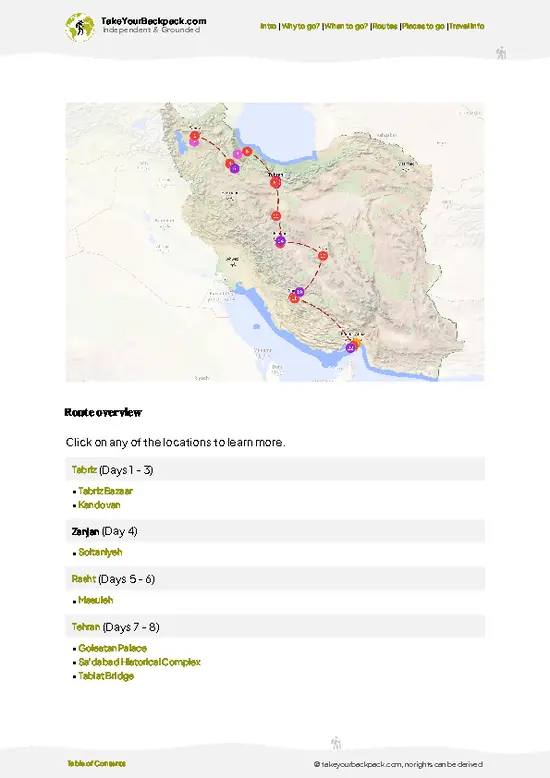
- Masouleh village — A jaw-dropping stepped village where roofs double as streets; houses cling to the mountain so you walk “up” through people’s front yards. The architecture, mossy stone alleys and local handicrafts make it a one-of-a-kind mountain town you won’t confuse with anywhere else in Iran.
- Rudkhan Castle (Qal’eh Rudkhan) — A brick-and-stone medieval fortress wrapped in Hyrcanian forest. The uphill hike through ferns and plane trees ends at crenellated walls with views over misty valleys; history feels lived-in rather than sanitized for tourists.
- Bandar-e Anzali Lagoon (Anzali Wetland) — Vast reed beds, migrating birds and tiny fishing communities accessible by wooden piers and small boats. Early-morning boat trips and local fish markets give a real sense of the coastal-marsh lifestyle
- Masouleh village — A jaw-dropping stepped village where roofs double as streets; houses cling to the mountain so you walk “up” through people’s front yards. The architecture, mossy stone alleys and local handicrafts make it a one-of-a-kind mountain town you won’t confuse with anywhere else in Iran.
- Rudkhan Castle (Qal’eh Rudkhan) — A brick-and-stone medieval fortress wrapped in Hyrcanian forest. The uphill hike through ferns and plane trees ends at crenellated walls with views over misty valleys; history feels lived-in rather than sanitized for tourists.
- Bandar-e Anzali Lagoon (Anzali Wetland) — Vast reed beds, migrating birds and tiny fishing communities accessible by wooden piers and small boats. Early-morning boat trips and local fish markets give a real sense of the coastal-marsh lifestyle unique to southern Caspian shores.
- Lahijan tea terraces and tea villages — Rolling, emerald tea fields clinging to hills above Lahijan. Walk between bushes with tea pickers, drink fresh-brewed black tea in tiny village teahouses and learn how Gilan’s microclimate makes Iranian tea taste different from anywhere else in the country.
- Heyran Pass — Two high-altitude viewpoints hugging the border with Azerbaijan, with steep hairpins, cedar copses and small roadside teahouses. It’s a short-stop landscape: dramatic mountain panoramas and cold-air tea that feel more like a borderland escape than a curated lookout.
- Manjil wind farm and Rudbar olive country — A combo of surreal, towering windmills and low, centuries-old olive groves where locals press oil by traditional methods. The contrast—modern turbines against ancient orchards—plus tasting real, locally pressed olive oil is a distinctly Gilan experience.
- Asalem-Khalkhal Road (the Asalem scenic drive) — One of Iran’s most beautiful drives: a narrow ribbon of road through primeval beech and hornbeam forest with surprise viewpoints, little roadside tea stalls and near-empty photo stops. The drive itself is the attraction—don’t rush it.
- Masal highlands and the “cloud sea” (hidden gem) — Rugged meadows above Masal where, on the right mornings, clouds pool in the valleys and you’re walking in sunlight above a white ocean. Locals haul you up little trails at dawn; it’s atmospheric, quiet and not overrun by buses.
- Visadar Waterfall near Masal (hidden gem) — A tall plunge framed by steep forested slopes and wooden viewing platforms. It’s less famous than coastal attractions, so you can usually enjoy the thunder of water and the green canyon with only a handful of locals around.
- Fuman village life and kolucheh workshops (hidden gem) — Fuman is where Gilaki baking traditions meet everyday life: try hands-on kolucheh (local cookie) making in small family bakeries, wander rice paddies, and sample dishes that Gilanis cook at home—simple, oily, fragrant and very local. It’s the culinary side of Gilan that guidebooks often skip.
Spotted a mistake or missing something? Contact us.

 Best Backpacking
.jpg) Hi, I’m Johan (Netherlands 🇳🇱), the creator of TakeYourBackpack. Over the past 3 decades, I’ve backpacked through 90+ countries across six continents, gaining extensive experience with independent travel, long-term trips, and overland routes.
Hi, I’m Johan (Netherlands 🇳🇱), the creator of TakeYourBackpack. Over the past 3 decades, I’ve backpacked through 90+ countries across six continents, gaining extensive experience with independent travel, long-term trips, and overland routes.