×

Iran🇮🇷 | best regionsExplore the 2 Best regions in Iran

Exploring the best regions in Iran is essential for any backpacker or independent traveler looking to dive deep into the country’s rich tapestry. Iran’s diverse landscapes range from the rugged Alborz mountains to the vast Dasht-e Kavir desert, each region offering a unique climate and cultural character.

Choosing the right area affects everything from your budget to your safety and the overall vibe of your journey. For instance, the bustling streets of Tehran contrast sharply with the serene beauty of Isfahan or the ancient ruins of Persepolis. Seasonal nuances also play a crucial role; summer can be scorching in the south, while the north offers a milder climate.

Understanding these regional differences not only enhances your travel experience but also ensures you immerse yourself in the local culture, maximizing your adventure while preserving your energy and funds for the moments that truly matter.

By Johan Kruseman 🇳🇱 | Updated June 14, 2026
Explore the best cities in Iran

Why go?Why These region Stand Out

Iran’s regions are a tapestry of climatic diversity, cultural character, and landscapes that set it apart from many other countries. The vastness of its geography means you can experience everything from arid deserts to lush forests within a single journey. This variety not only enriches the travel experience but also presents unique challenges. Travelers must weigh the trade-offs between distance and depth. For instance, traversing from the Caspian Sea to the Persian Gulf can take considerable time, yet the breadth of experiences gained is often worth the effort.

Culturally, Iran is a mosaic of ethnicities and traditions, each region offering distinct flavors of hospitality, cuisine, and art. This cultural richness is a double-edged sword; while it provides a deeper understanding of the … read more 👉
Iran’s regions are a tapestry of climatic diversity, cultural character, and landscapes that set it apart from many other countries. The vastness of its geography means you can experience everything from arid deserts to lush forests within a single journey. This variety not only enriches the travel experience but also presents unique challenges. Travelers must weigh the trade-offs between distance and depth. For instance, traversing from the Caspian Sea to the Persian Gulf can take considerable time, yet the breadth of experiences gained is often worth the effort.

Culturally, Iran is a mosaic of ethnicities and traditions, each region offering distinct flavors of hospitality, cuisine, and art. This cultural richness is a double-edged sword; while it provides a deeper understanding of the Iranian identity, it also requires a commitment to immersive experiences that may not always be easily accessible. The infrastructure varies significantly; major cities are well-connected, but remote areas may lack the same level of amenities. This disparity can impact travel plans, making it essential to plan routes carefully.

Climatic factors also play a crucial role. The best times to visit certain regions can differ dramatically, affecting not just comfort but also the availability of activities. For example, the mountainous regions are best explored in spring and fall, while the southern coasts thrive in winter. Understanding these nuances is vital for maximizing your journey.

In summary, Iran’s regions offer a wealth of experiences that are both rewarding and complex. The key is to navigate the constraints and trade-offs wisely, ensuring that the moments that truly matter are preserved for exploration.
Behind the Scenes of Selection
The list of best regions in Iran is created based on landscapes, local culture, attractions, vibes, and overall appeal. If you feel a region is missing in this list, please let us know.

When to go?When to Plan Your Trip

Climate Variation
Iran’s climate is as diverse as its landscapes. Expect extremes: scorching summers in the south and frigid winters in the north. The country generally experiences four distinct seasons, but regional variations can be significant. In the central plateau, summer temperatures can soar, while the mountainous areas may still have snow. Understanding these patterns is crucial for planning.

Optimal Months
The best time to visit is typically spring and fall. During these months, temperatures are mild, making exploration comfortable. Spring brings blooming landscapes, while fall offers vibrant foliage. These seasons also align with many cultural festivals, enriching the travel experience.

Shoulder Seasons
Traveling in the shoulder seasons—late spring and early fall—can be a … read more 👉
Climate Variation
Iran’s climate is as diverse as its landscapes. Expect extremes: scorching summers in the south and frigid winters in the north. The country generally experiences four distinct seasons, but regional variations can be significant. In the central plateau, summer temperatures can soar, while the mountainous areas may still have snow. Understanding these patterns is crucial for planning.

Optimal Months
The best time to visit is typically spring and fall. During these months, temperatures are mild, making exploration comfortable. Spring brings blooming landscapes, while fall offers vibrant foliage. These seasons also align with many cultural festivals, enriching the travel experience.

Shoulder Seasons
Traveling in the shoulder seasons—late spring and early fall—can be a savvy choice. Crowds thin out, and prices often drop. However, be prepared for unpredictable weather. Late spring can still have lingering rains, while early fall may bring heat waves. Weigh the benefits of fewer tourists against the potential for less-than-ideal conditions.

Peak Periods
Summer is peak travel time for many, especially in the cooler northern regions. However, this comes with a trade-off: higher prices and larger crowds. If you choose to visit during this time, plan for early starts to avoid the heat and ensure access to popular attractions.

Seasonal Constraints
Winter can be harsh in many areas, limiting accessibility. Snow can block mountain passes, and some attractions may close. Conversely, the southern regions remain warm but can be crowded during holidays. Understanding these seasonal constraints will help in crafting a well-paced itinerary that maximizes comfort and experience.

region hoppingHow to Combine regions Into One Trip

Combining Regions in Iran requires a strategic approach. Start by clustering regions based on proximity and travel routes. For instance, consider grouping Tehran, Isfahan, and Yazd together. This creates a logical loop that minimizes backtracking. Traveling from Tehran to Isfahan, then to Yazd, and back to Tehran is efficient and allows for a rich experience without feeling rushed.

Timing is crucial. Allocate at least two to three days in major cities like Isfahan and Shiraz. These places are packed with history and culture. Rushing through them means missing the essence. Smaller towns can often be explored in a day or two, but don’t underestimate the charm of local interactions.

Common pitfalls include over-scheduling. Many travelers try to cram too much into their itinerary, leading to … read more 👉
Combining Regions in Iran requires a strategic approach. Start by clustering regions based on proximity and travel routes. For instance, consider grouping Tehran, Isfahan, and Yazd together. This creates a logical loop that minimizes backtracking. Traveling from Tehran to Isfahan, then to Yazd, and back to Tehran is efficient and allows for a rich experience without feeling rushed.

Timing is crucial. Allocate at least two to three days in major cities like Isfahan and Shiraz. These places are packed with history and culture. Rushing through them means missing the essence. Smaller towns can often be explored in a day or two, but don’t underestimate the charm of local interactions.

Common pitfalls include over-scheduling. Many travelers try to cram too much into their itinerary, leading to exhaustion. It’s tempting to tick off every site, but depth often trumps breadth. Prioritize experiences that resonate with you.

Trade-offs are inevitable. Speed versus depth is a constant negotiation. If time is tight, you might sacrifice comfort for efficiency. However, this can lead to a less enjoyable experience. Budget constraints can also dictate choices. Opt for local transport to save money, but be prepared for longer travel times.

Flexibility is your ally. Allow for spontaneous detours. You might stumble upon a local festival or a hidden café that transforms your trip. Strategic planning is essential, but don’t let it box you in. Embrace the unexpected.

In Iran, the journey is as significant as the destination. Balancing these elements will ensure a rewarding experience that captures the heart of this remarkable country.

The ListMust-Visit regions in Iran

1 Zagros Mountains

Alpine valleys, nomadic camps, rugged limestone peaks

Traverse winding passes and remote plateaus, encountering shifting climates, scattered villages, and the traditions of pastoral communities.

2 Gilan

Caspian coastline, tea plantations, forest villages

Wander through misty hills and lush valleys, where rice paddies meet dense woodlands and local markets brim with seasonal produce.

Loading the map 🌍

Expert viewExpert Commentary on regions

Geographic Diversity
Iran is a land of contrasts. From the arid deserts of Yazd to the lush forests of Gilan, each region offers a unique flavor. You can’t just hop from one to another without considering the vast distances and varying climates. If you’re planning to explore, aim for three to four regions. This gives you enough time to soak in the local culture without feeling rushed. Each area has its own rhythm, and you’ll want to sync up with that.

Transport Between Regions
Getting around can be a mixed bag. While major cities are well-connected by buses and trains, rural areas might require a bit more effort. Expect longer travel times than you might anticipate. For instance, a bus ride from one region to another can take several hours, and that’s if you’re lucky with the schedule. … read more 👉
Geographic Diversity
Iran is a land of contrasts. From the arid deserts of Yazd to the lush forests of Gilan, each region offers a unique flavor. You can’t just hop from one to another without considering the vast distances and varying climates. If you’re planning to explore, aim for three to four regions. This gives you enough time to soak in the local culture without feeling rushed. Each area has its own rhythm, and you’ll want to sync up with that.

Transport Between Regions
Getting around can be a mixed bag. While major cities are well-connected by buses and trains, rural areas might require a bit more effort. Expect longer travel times than you might anticipate. For instance, a bus ride from one region to another can take several hours, and that’s if you’re lucky with the schedule. Always check local transport options ahead of time. If you’re in a hurry, consider hiring a private driver, but be prepared for the cost. It’s a trade-off between convenience and budget.

Cultural Variation
Cultural experiences vary dramatically from one region to another. In the south, you’ll find a warm hospitality that’s hard to beat, while the north offers a more reserved but equally rich cultural tapestry. This variation can affect your interactions and overall experience. If you’re looking for authentic encounters, spend time in local markets or attend regional festivals. Just remember that customs can differ widely; what’s acceptable in one area might be frowned upon in another. Always approach with respect and an open mind.

Pacing Trade-Offs
Pacing is crucial. If you try to cram too much into your itinerary, you’ll miss the essence of each region. Take your time. A week in one area can yield deeper insights than a whirlwind tour of five. You’ll want to balance your desire to see more with the need to truly experience what’s in front of you. If you’re short on time, prioritize regions that resonate with your interests—be it history, nature, or cuisine.

Safety & Cultural Considerations
Safety is generally not a major concern in Iran, but it’s wise to stay aware of local customs and dress codes. Modesty is key, especially in rural areas. Women should wear a headscarf and loose-fitting clothing, while men should avoid shorts. This isn’t just about following rules; it’s about showing respect for the culture. Engaging with locals can be a rewarding experience, but be mindful of sensitive topics. Politics can be a minefield, so steer clear unless you’re well-informed and invited into the conversation.

Planning & Prioritizing Regions
When planning your trip, consider what you want to get out of it. If you’re drawn to history, regions like Isfahan and Shiraz should be on your radar. For natural beauty, head north to the Caspian Sea or the Alborz mountains. Each region has its own unique offerings, so do your homework. Look for local guides who can provide insights that you won’t find in a guidebook. They can help you navigate the nuances of each area and enhance your experience.

Budget & Effort
Budgeting in Iran can be tricky. While some areas are affordable, others can surprise you with hidden costs. Entrance fees to historical sites can add up, and if you’re not careful, transportation can eat into your funds. Factor in meals, which can range from street food to fine dining. You’ll want to allocate your budget wisely, prioritizing experiences that matter most to you.

Final Thoughts
Ultimately, the key to enjoying Iran is to embrace its diversity. Each region has its own story to tell, and the more you engage with them, the richer your experience will be. Don’t rush; let the country unfold at its own pace. You’ll find that the moments that truly matter often come when you least expect them. Whether it’s sharing a meal with a local family or watching the sunset over a desert landscape, these are the experiences that will stay with you long after you leave.

✈️ The backpacker research shortcutIran Travel Guide

An offline-friendly backpacking guide with optimized travel routes, ranked highlights, transport advice, and the best areas to stay.
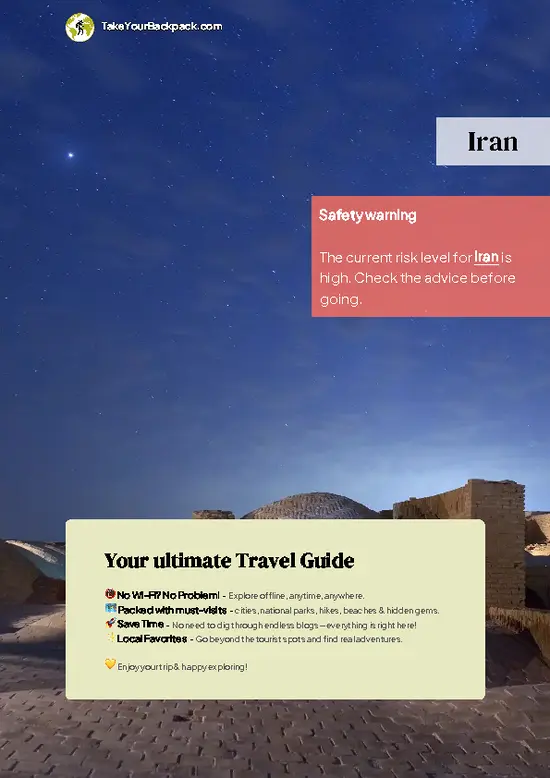
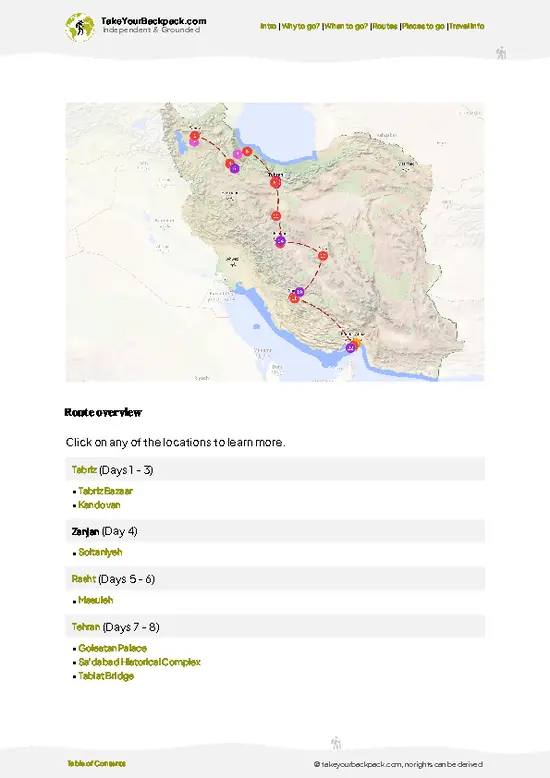
example page 0 from our offline Travel Guide for Iran
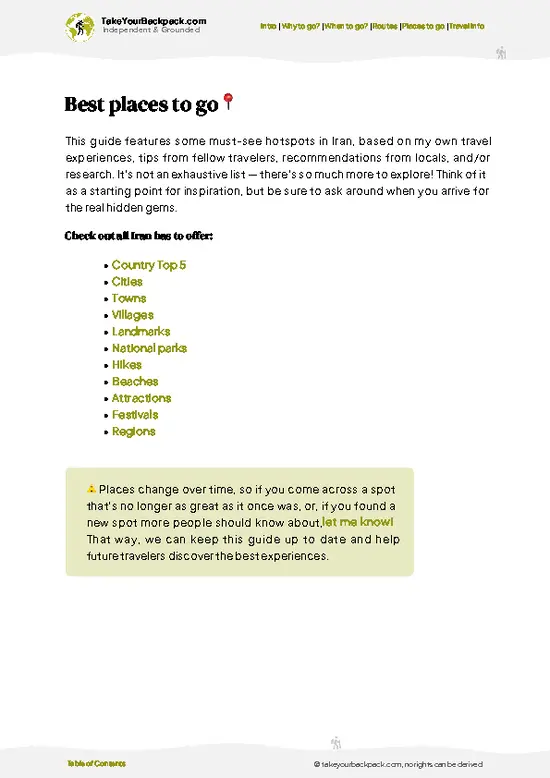
example page 1 from our offline Travel Guide for Iran
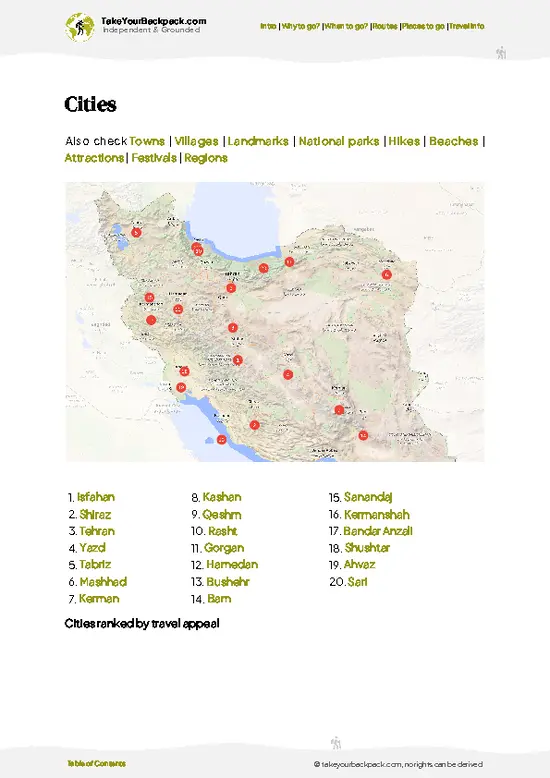
example page 2 from our offline Travel Guide for Iran
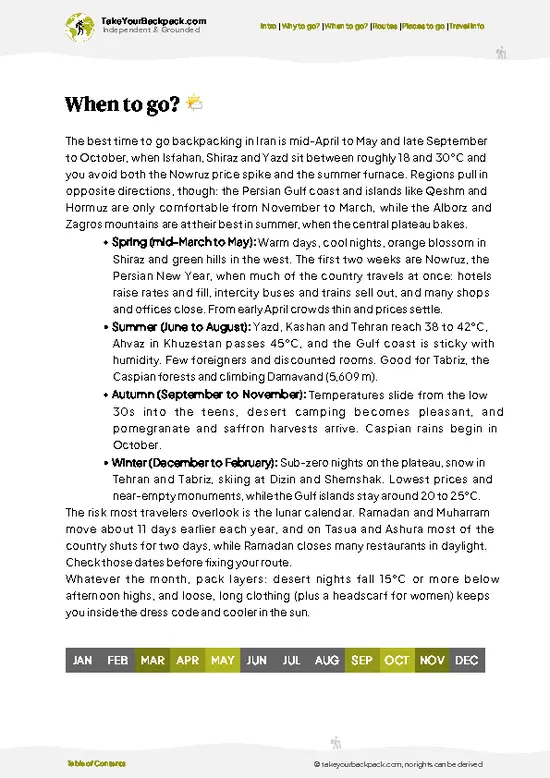
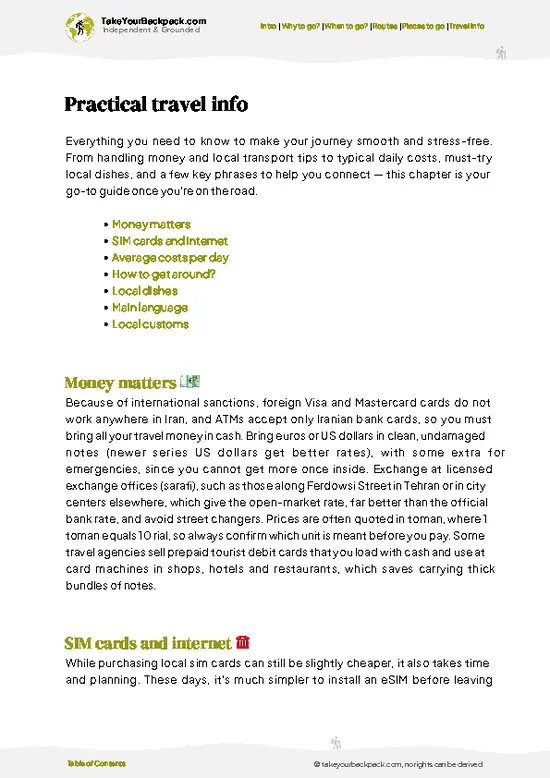
example page 3 from our offline Travel Guide for Iran
example page 4 from our offline Travel Guide for Iran
example page 5 from our offline Travel Guide for Iran
example page 6 from our offline Travel Guide for Iran
example page 7 from our offline Travel Guide for Iran
The digital guide (419 pages) contains:
121 highlights, ranked by travel appeal
Optimized 7, 14 & 21-day travel routes
Cities, national parks, landmarks, beaches
How to get around
Offline-friendly for travel without Wi-Fi
👉 Click to see all 30+ guide features

📅 Plan smarter in minutes, not weeks
Month by month travel advice
Festivals & national holidays
Budget expectations

🗺️ Go to the right places, skip the overrated ones
Honest pros & cons of destinations
Top hikes, parks & viewpoints
Lesser-known places most travelers miss
Clear “worth it vs skip it” guidance

🛏️ Travel smoothly without rookie mistakes
Best areas to stay
Transport systems explained simply
Common scams & safety advice
SIM cards, money & practical tips

🌍 Understand the country, not just visit it
Culture & traditions
52 Essential phrases & customs
Festivals worth planning around
Traveler-friendly historical context
Insights that make places more meaningful

📱 Built for real travel conditions
Fully downloadable PDF
Works completely offline
Optimized for phone use
Useful in remote areas & buses
Everything in one place
Save weeks of stressful planning
Get instant access to your full guide. 30‑day money-back guarantee.


By proceeding you agree to our terms.
Sent to your inbox immediately after payment • 100% Secure Checkout
Best Backpacking Travel Advisor 2025 tourism awardBest Backpacking
Travel Advisor
2025
What others say about Take Your Backpack Guides:
⭐⭐⭐⭐⭐
Fantastic, amazing amount of information!
⭐⭐⭐⭐⭐
My goodness this is amazing, it's what I've been looking for hats off too you!
⭐⭐⭐⭐⭐
I think this is absolutely BRILLIANT
⭐⭐⭐⭐
Very complete and informative. It's still missing places, but I gotta to commend you
⭐⭐⭐⭐⭐
This is truly amazing, thank you, can't wait to explore it with my kids!
⭐⭐⭐⭐⭐
Awesome resource, thank you!
⭐⭐⭐⭐⭐
This is amazing! Can't wait to explore the ones I haven't seen
⭐⭐⭐⭐
I love this! Well done, great idea.
⭐⭐⭐⭐⭐
Thanks for taking the time to make this gem!
⭐⭐⭐⭐⭐
This might be the best website I've ever seen.
⭐⭐⭐⭐⭐
Congratulations, and thank you so much for your work; it's incredibly valuable.
⭐⭐⭐⭐
In all seriousness I think you did a great job pointing out the important spots
⭐⭐⭐⭐⭐
10/10 very good
⭐⭐⭐⭐⭐
As someone who's only just starting to visit regularly this is awesome, thank you.
⭐⭐⭐⭐
Thank you very much! I'm going to visit my dad, it's going to be very useful!
⭐⭐⭐⭐⭐
This is really cool! We'll be travelling for the first time and this definitely come in handy.
⭐⭐⭐⭐⭐
You are now our minister of culture, congratulations 👨‍💼
⭐⭐⭐⭐⭐
Just wanted to tell you that this is a pearl! Going to follow your recommendations.
⭐⭐⭐⭐⭐
This is so cool. I'll definitely be using the resource for my travels soon.
⭐⭐⭐⭐⭐
This is very impressive! Good work.
⭐⭐⭐⭐⭐
This is an amazing and informative site. Very well done!

🛏️ Where to stay?Where to Stay: Iran Edition

Yes — hostels, budget guesthouses and traditional homestay-style accommodations are widely available in Iran’s main tourist cities, especially Tehran, Isfahan, Shiraz, Yazd, Tabriz, Kashan and Mashhad.
In Tehran look around Valiasr/Vanak and Tajrish for best transport links and more nightlife but expect traffic and higher rates; in Isfahan stay by the historic center for walking access to major sights though it’s busier and quieter at night; Shiraz’s bazaar/Vakil area puts you by gardens and markets but can be sleepy after dark; Yazd’s old town (Fahadan) offers atmospheric traditional houses with narrow alleys that feel quieter; Tabriz clusters around the historic bazaar with good budget supply … read more 👉
Yes — hostels, budget guesthouses and traditional homestay-style accommodations are widely available in Iran’s main tourist cities, especially Tehran, Isfahan, Shiraz, Yazd, Tabriz, Kashan and Mashhad.
In Tehran look around Valiasr/Vanak and Tajrish for best transport links and more nightlife but expect traffic and higher rates; in Isfahan stay by the historic center for walking access to major sights though it’s busier and quieter at night; Shiraz’s bazaar/Vakil area puts you by gardens and markets but can be sleepy after dark; Yazd’s old town (Fahadan) offers atmospheric traditional houses with narrow alleys that feel quieter; Tabriz clusters around the historic bazaar with good budget supply but colder winters; Kashan’s historic quarter is ideal for traditional houses and desert trips but has limited nightlife.
Expect some hostels to offer gender‑segregated dorms or women‑only rooms, observe strict public dress codes in common areas, and book ahead at peak times (Nowruz and summer) or take a private room for more flexibility.

If you enjoy meeting fellow travelers, consider choosing hostels with high ratings for atmosphere. On the other hand, if you prefer having your own space, a hotel might be a better option.

IranExplore Beyond This Category

👋 Meet the founderWho’s Behind Take Your Backpack?

Johan, backpacker and founder of TakeYourBackpackHi, I’m Johan (Netherlands 🇳🇱), the creator of TakeYourBackpack. Over the past decade, I’ve backpacked through 80+ countries across six continents, gaining extensive experience with independent travel, long-term trips, and overland routes.

This site is built on a combination of firsthand travel experience and carefully curated insights from other backpackers. Many guides are based on places I’ve personally visited, while others bring together tips, observations, and practical advice shared by trusted travelers I’ve met along the way.

The goal is to provide realistic, experience-driven guidance — not generic itineraries — so you can explore destinations with better context, clearer expectations, and more confidence.

Get full Iran guide •
Instant download • 121 highlights • Full Offline guide