
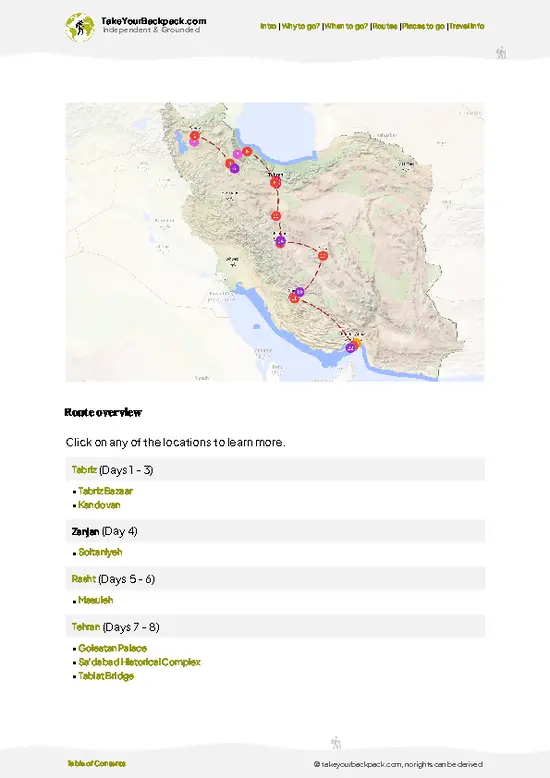

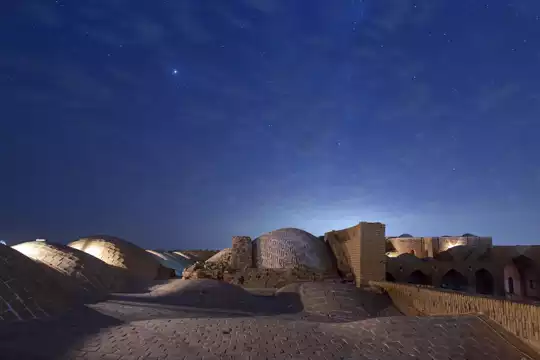
- Troglodyte cone houses — The reason you came: honeycomb-like volcanic cones carved into homes. Walking among them gives the clearest sense of how people adapted architecture to rock; great for photos and slow exploration.
- Living rock dwellings you can enter — Many cave-homes are still inhabited and some are open to visitors. Stepping inside shows real domestic life: low ceilings, niches, stone-hearths and the way families have modernized ancient spaces.
- Rock-house guesthouses (stay-in caves) — Several locals run simple guest rooms carved into the cones. Spending a night inside one is the quickest way to feel Kandovan’s atmosphere at dawn and after the day-tour crowds leave.
- Main pedestrian alleys and stepped lanes — The narrow stone streets that wind up the slope are the village’s social
- Troglodyte cone houses — The reason you came: honeycomb-like volcanic cones carved into homes. Walking among them gives the clearest sense of how people adapted architecture to rock; great for photos and slow exploration.
- Living rock dwellings you can enter — Many cave-homes are still inhabited and some are open to visitors. Stepping inside shows real domestic life: low ceilings, niches, stone-hearths and the way families have modernized ancient spaces.
- Rock-house guesthouses (stay-in caves) — Several locals run simple guest rooms carved into the cones. Spending a night inside one is the quickest way to feel Kandovan’s atmosphere at dawn and after the day-tour crowds leave.
- Main pedestrian alleys and stepped lanes — The narrow stone streets that wind up the slope are the village’s social spine. Follow them to find odd viewpoints, unexpected doorways, and everyday scenes you won’t see from the road.
- Cave teahouses and small cafés — Tea served in low rock rooms is a tiny luxury. These places are where locals gather — good for people-watching, trying simple local snacks, and practicing a few Persian phrases.
- Carpet and handicraft workshops — Small, family-run workshops sit right in the lanes. You can watch looms and sometimes see rugs in progress; the makers are usually happy to explain patterns and regional techniques if you ask politely.
- Panoramic viewpoints and terraces — Little ledges and terraces above the cones give compact but dramatic views of the valley and the formation of the cones. Best at sunrise or sunset when the shapes and colors pop.
- Traditional ovens and village baking spots — Look for communal stone/earth ovens and people baking local flatbreads. It’s a humble, sensory slice of daily life: heat, the smell of fresh bread, and friendly curiosity from bakers.
- Water channels, cisterns and carved rock infrastructure — The ways water is routed through and around the cones (simple channels, small cisterns) reveal older engineering and how the settlement sustained itself — small details, big insight.
- Home visits and local hospitality experiences — If you’re open and polite, residents sometimes invite travelers in for tea or a meal. Those spontaneous conversations — not a museum, just real life — are often the most memorable part of Kandovan.
Spotted a mistake or missing something? Contact us.

 Best Backpacking
 Hi, I’m Johan (Netherlands 🇳🇱), the creator of TakeYourBackpack. Over the past 3 decades, I’ve backpacked through 90+ countries across six continents, gaining extensive experience with independent travel, long-term trips, and overland routes.