×

Iraq🇮🇶 | regionsNinawa Plainsopen farmland, Assyrian villages, river crossings | things to do and best time to go

Explore Kurdistan RegionExplore Shengal Mountains

Backpacking in Ninawa Plains
👍 Recommendedregion ranked #3
By Johan Kruseman 🇳🇱 | Updated June 6, 2026

Ten years ago the Ninawa Plains felt like a rumor: half-ruined villages, checkpoints every few kilometers, and only aid workers and the boldest backpackers passing through. Today it’s calmer, more connected, and quietly rebuilding, but you still feel the weight of what happened here in a way you never will in Erbil’s cafés. The plains stretch east and north of Mosul in northern Iraq, a patchwork of Assyrian, Yazidi, Shabak, and Arab towns between the city and the low hills toward Dohuk and the Kurdistan Region.

For backpackers, it’s raw and real: cheap shared taxis, homely guesthouses if you know where to look, and almost no tour-bus sheen. That’s the upside and the downside. Transport is frequent but chaotic, English is rare, and war damage is still visible. Compared with safer, easier Dohuk or Erbil, Ninawa Plains trades comfort and nightlife for deep, sometimes heavy, authenticity.

Discover everything you want to know in the 📖 Iraq Travel Guide.
Safety warning

The current risk level for Iraq is high. Check the advice before going.


Get your Iraq guide
107 ranked highlights, routes & tips, works offline (375 pages)
Loading the map 🌍
CLICK TO FILTER
cities
towns
landmarks
national parks
hikes
beaches
attractions
festivals
regions
SHOW COUNTRY’S BESTSHOW ALL

✨ Why go?
Ranked #3 region in Iraq
Why Ninawa Plains should be on your travel list

The Ninawa Plains in Iraq are a backpacker’s playground, offering a unique blend of landscapes and experiences that keep you rooted without the hassle of constant relocation. Picture this: rolling plains, ancient ruins, and the majestic Zagros Mountains all within reach. You can hike, explore, and soak in the culture without feeling rushed.

Transport here is surprisingly flexible. Local buses and shared taxis make it easy to hop between towns like Mosul and Erbil, giving you the freedom to roam at your own pace. This isn’t just about ticking boxes; it’s about slow travel. You can savor the local cuisine, chat with residents, and truly absorb the rich history that permeates the air.

Mixing nature and culture is where Ninawa shines. One day you’re trekking through stunning landscapes, the … read more 👉
The Ninawa Plains in Iraq are a backpacker’s playground, offering a unique blend of landscapes and experiences that keep you rooted without the hassle of constant relocation. Picture this: rolling plains, ancient ruins, and the majestic Zagros Mountains all within reach. You can hike, explore, and soak in the culture without feeling rushed.

Transport here is surprisingly flexible. Local buses and shared taxis make it easy to hop between towns like Mosul and Erbil, giving you the freedom to roam at your own pace. This isn’t just about ticking boxes; it’s about slow travel. You can savor the local cuisine, chat with residents, and truly absorb the rich history that permeates the air.

Mixing nature and culture is where Ninawa shines. One day you’re trekking through stunning landscapes, the next you’re wandering through bustling bazaars or visiting ancient sites like Nimrud. Each moment is a chance to dive deeper into the soul of Iraq, making every choice feel like a high-value experience.
Want to include Ninawa Plains in your Iraq route?
Create a personalized Iraq itinerary that includes Ninawa Plains and the places that fit your trip — based on your travel style, budget, and available time. Get your route in seconds.

Generate my trip

💡 HighlightsThe experiences that define the visit

  • Alqosh — Tomb of the Prophet Nahum and hilltop old town: The small stone lanes, terraced views over the plains and the shrine said to be Jonah/Nahum’s tomb make Alqosh feel like a living time capsule of Syriac Christian life; great for wandering, rooftop views and chatting with locals over strong tea.
  • Rabban Hormizd Monastery (near Alqosh): One of the oldest Syriac monasteries in the area, clinging to the slopes above the village — its weathered stone, ancient inscriptions and mosaicked tombs give you a sense of centuries of devotional life that’s hard to find elsewhere.
  • Bakhdida / Qaraqosh old quarter and market: The largest Christian town on the plains; its rebuilt churches, buzzing local market and street food stalls offer an unvarnished view of community life and post-conflict revival
read more 👉
  • Alqosh — Tomb of the Prophet Nahum and hilltop old town: The small stone lanes, terraced views over the plains and the shrine said to be Jonah/Nahum’s tomb make Alqosh feel like a living time capsule of Syriac Christian life; great for wandering, rooftop views and chatting with locals over strong tea.
  • Rabban Hormizd Monastery (near Alqosh): One of the oldest Syriac monasteries in the area, clinging to the slopes above the village — its weathered stone, ancient inscriptions and mosaicked tombs give you a sense of centuries of devotional life that’s hard to find elsewhere.
  • Bakhdida / Qaraqosh old quarter and market: The largest Christian town on the plains; its rebuilt churches, buzzing local market and street food stalls offer an unvarnished view of community life and post-conflict revival — excellent for people-watching and sampling local breads and kebabs.
  • Mar Behnam Monastery (near Bakhdida): A dramatic medieval complex set amid olive groves — carved stonework, faded frescoes and the ruined cloisters make a powerful visit, especially if you arrive with a local guide who can explain the layered Christian and pre-Christian traditions tied to the site.
  • Mar Mattai (St. Matthew) Monastery on Mount Alfaf: Perched on a steep ridge, the monastery rewards the climb with unbeatable views across the plains and a hush of monks’ chants and incense; its isolated mountain setting and ancient library rooms feel uniquely Middle Eastern-monkish.
  • Bashiqa Hills and pine forests: A real local escape — pine-scented picnics, olive terraces and easy trails above the plains. Locals come here for weekend barbecues and cold springs; it’s a good counterpoint to ruined churches and tells.
  • Teleskuf / Telesquin (hidden gem): A smaller town that most visitors miss; narrow lanes, a lively Saturday market and several small, well-kept churches. It’s a place to see everyday village life, meet families rebuilding after hard years and sample homemade sweets from local vendors.
  • Bartella’s church trail and riverside lanes (hidden gem): Bartella sits beside a pleasant seasonal river and has a tight cluster of churches and old stone houses. Walk the riverside path, stop at a family café and you’ll hear oral histories and local songs that don’t make it into guidebooks.
  • Tel Keppe / Tel Kaif: An uphill, compact town with carved stone architecture and courtyard churches that reflect a distinct local style. It’s quieter than the better-known towns, so you can linger in old workshops and see stonemasons and carpenters at work.
  • Small farming villages and orchard routes (hidden gem): Drive the backroads between towns to see pomegranate, fig and olive groves, irrigation channels and roadside stalls selling fruit. Spending an afternoon in a farmhouse or helping with a harvest is one of the most authentic, non-touristy ways to understand the plains’ centuries-old agricultural rhythms.
Spotted a mistake or missing something? Contact us.
⌛️ 5 daysSeeing the highlights in 5 days

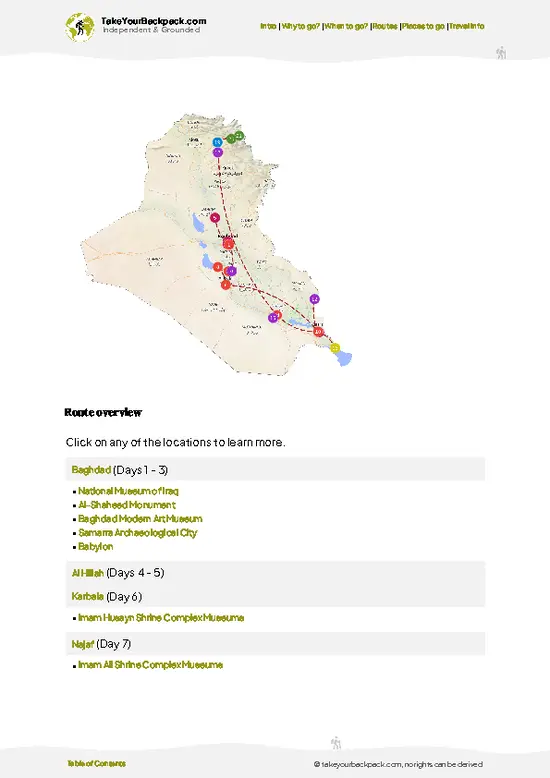
Day 1: Mosul
The journey kicks off in Mosul, a city steeped in history and resilience. You’ll want to spend your first day soaking in the atmosphere. The transport system here is a mix of shared taxis and local buses, which can be a bit chaotic but are your best bet for getting around. Start at the Great Mosque of al-Nuri, where you can feel the weight of history. The vibe is electric, and the locals are eager to share stories. This day sets the tone for your adventure, giving you a taste of the region’s spirit.

Day 2: Tal Afar
From Mosul, head to Tal Afar, about an hour away by taxi. The ride is smooth, and you’ll see the landscape shift, a reminder of the region’s diverse culture. Tal Afar is known for its unique architecture and rich Turkmen heritage. Spend the day wandering the old … read more 👉
Day 1: Mosul
The journey kicks off in Mosul, a city steeped in history and resilience. You’ll want to spend your first day soaking in the atmosphere. The transport system here is a mix of shared taxis and local buses, which can be a bit chaotic but are your best bet for getting around. Start at the Great Mosque of al-Nuri, where you can feel the weight of history. The vibe is electric, and the locals are eager to share stories. This day sets the tone for your adventure, giving you a taste of the region’s spirit.

Day 2: Tal Afar
From Mosul, head to Tal Afar, about an hour away by taxi. The ride is smooth, and you’ll see the landscape shift, a reminder of the region’s diverse culture. Tal Afar is known for its unique architecture and rich Turkmen heritage. Spend the day wandering the old city, where you can find local crafts and delicious street food. This is where you’ll start to understand the local customs and traditions, making it a worthwhile stop.

Day 3: Sinjar
Next, make your way to Sinjar, roughly a two-hour drive. The roads are decent, but be prepared for some delays. Sinjar is a place of profound significance, especially for the Yazidi community. Visit the Sinjar Mountains for breathtaking views and a sense of peace. This is an off-path reward; it’s not just about the sights but the stories that linger in the air.

Day 4: Amedi
Travel to Amedi, a hidden treasure perched on a hilltop. The journey takes about three hours, but the winding roads offer stunning vistas. Amedi’s charm lies in its ancient ruins and the warm hospitality of its people. Spend the night here to soak in the tranquility.

Day 5: Return to Mosul
Wrap up your trip by heading back to Mosul. This return leg is essential; it allows you to reflect on your journey and perhaps revisit a favorite spot. The must-do day is undoubtedly Day 1 in Mosul. It’s the heart of your experience, where the past and present collide, making it a trip worth taking.
Turn your Ninawa Plains visit into an Iraq adventure
Build a complete Iraq route with Ninawa Plains, hidden gems, must-see destinations, and realistic travel times included.

Generate my trip

🌤️ When to go?Choosing the right time of year


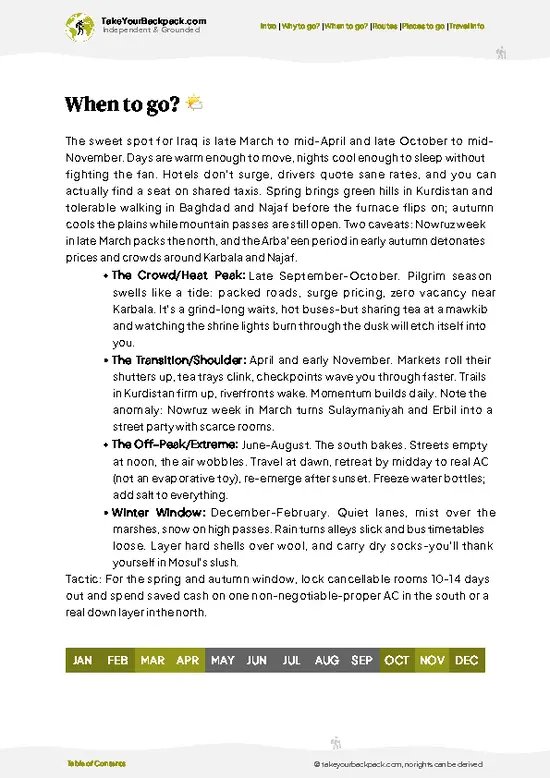
  • Weather: The Ninawa Plains bake under a scorching sun from June through August, with temps often soaring above 40°C (104°F). Not exactly your dream hiking weather. Spring (March to May) and autumn (September to November) bring milder, more forgiving conditions—think 15-25°C (59-77°F), perfect for long days on the trail without melting into your gear.

  • Temperature: Winter nights can dip to near freezing (0°C/32°F), so pack layers if you’re aiming for December through February. Daytime temps hover around 10-15°C (50-59°F), which is brisk but manageable if you’re prepared.

  • Daylight Hours: Spring and autumn offer a sweet spot with roughly 11-13 hours of daylight, giving you plenty of time to explore without rushing. Summer days stretch longer but come with that brutal heat penalty.

  • Crowds:
read more 👉

  • Weather: The Ninawa Plains bake under a scorching sun from June through August, with temps often soaring above 40°C (104°F). Not exactly your dream hiking weather. Spring (March to May) and autumn (September to November) bring milder, more forgiving conditions—think 15-25°C (59-77°F), perfect for long days on the trail without melting into your gear.

  • Temperature: Winter nights can dip to near freezing (0°C/32°F), so pack layers if you’re aiming for December through February. Daytime temps hover around 10-15°C (50-59°F), which is brisk but manageable if you’re prepared.

  • Daylight Hours: Spring and autumn offer a sweet spot with roughly 11-13 hours of daylight, giving you plenty of time to explore without rushing. Summer days stretch longer but come with that brutal heat penalty.

  • Crowds: The region isn’t exactly a tourist hotspot, but local festivals in spring can swell visitor numbers. If you want quiet trails, avoid those weekends. Otherwise, you’ll mostly have the plains to yourself.

  • Seasonal Activities: Spring is prime for wildflower spotting and birdwatching, while autumn brings harvest festivals and cooler trekking conditions. Winter’s quieter but offers a raw, stripped-back landscape for those craving solitude.

  • Price Fluctuations: Expect accommodation and transport costs to spike slightly during spring festivals and autumn harvest time. Winter is the low season, so if you’re flexible, that’s when you can snag the best deals.


Pro-tip: Aim for late March or early October—cool temps, long days, and fewer crowds. It’s the sweet spot where comfort meets value, and you’ll feel like you’ve cracked the code on Ninawa Plains backpacking.


source: climatestotravel.comJANJanuary: good for travelingFEBFebruary: good for travelingMARMarch: excellent for travelingAPRApril: excellent for travelingMAYMay: highly recommended for travelingJUNJune: below average for travelingJULJuly: below average for travelingAUGAugust: below average for travelingSEPSeptember: highly recommended for travelingOCTOctober: excellent for travelingNOVNovember: highly recommended for travelingDECDecember: good for traveling
when-to-go

✈️ The backpacker research shortcutIraq Travel Guide

An offline-friendly backpacking guide with optimized travel routes, ranked highlights, transport advice, and the best areas to stay.
example page 0 from our offline Travel Guide for Iraq
example page 1 from our offline Travel Guide for Iraq
example page 2 from our offline Travel Guide for Iraq
example page 3 from our offline Travel Guide for Iraq
example page 4 from our offline Travel Guide for Iraq
example page 5 from our offline Travel Guide for Iraq
example page 6 from our offline Travel Guide for Iraq
example page 7 from our offline Travel Guide for Iraq
The digital guide (375 pages) contains:
107 highlights, ranked by travel appeal
Optimized 5, 10 & 15-day travel routes
Cities, national parks, landmarks, beaches
How to get around
Offline-friendly for travel without Wi-Fi
👉 Click to see all 30+ guide features

📅 Plan smarter in minutes, not weeks
Month by month travel advice
Festivals & national holidays
Budget expectations

🗺️ Go to the right places, skip the overrated ones
Honest pros & cons of destinations
Top hikes, parks & viewpoints
Lesser-known places most travelers miss
Clear “worth it vs skip it” guidance

🛏️ Travel smoothly without rookie mistakes
Best areas to stay
Transport systems explained simply
Common scams & safety advice
SIM cards, money & practical tips

🌍 Understand the country, not just visit it
Culture & traditions
52 Essential phrases & customs
Festivals worth planning around
Traveler-friendly historical context
Insights that make places more meaningful

📱 Built for real travel conditions
Fully downloadable PDF
Works completely offline
Optimized for phone use
Useful in remote areas & buses
Everything in one place
Save weeks of stressful planning
Get instant access to your full guide. 30‑day money-back guarantee.


By proceeding you agree to our terms.
Sent to your inbox immediately after payment • 100% Secure Checkout
Best Backpacking Travel Advisor 2025 tourism awardBest Backpacking
Travel Advisor
2025
What others say about Take Your Backpack Guides:
⭐⭐⭐⭐⭐
Fantastic, amazing amount of information!
⭐⭐⭐⭐⭐
My goodness this is amazing, it's what I've been looking for hats off too you!
⭐⭐⭐⭐⭐
I think this is absolutely BRILLIANT
⭐⭐⭐⭐
Very complete and informative. It's still missing places, but I gotta to commend you
⭐⭐⭐⭐⭐
This is truly amazing, thank you, can't wait to explore it with my kids!
⭐⭐⭐⭐⭐
Awesome resource, thank you!
⭐⭐⭐⭐⭐
This is amazing! Can't wait to explore the ones I haven't seen
⭐⭐⭐⭐
I love this! Well done, great idea.
⭐⭐⭐⭐⭐
Thanks for taking the time to make this gem!
⭐⭐⭐⭐⭐
This might be the best website I've ever seen.
⭐⭐⭐⭐⭐
Congratulations, and thank you so much for your work; it's incredibly valuable.
⭐⭐⭐⭐
In all seriousness I think you did a great job pointing out the important spots
⭐⭐⭐⭐⭐
10/10 very good
⭐⭐⭐⭐⭐
As someone who's only just starting to visit regularly this is awesome, thank you.
⭐⭐⭐⭐
Thank you very much! I'm going to visit my dad, it's going to be very useful!
⭐⭐⭐⭐⭐
This is really cool! We'll be travelling for the first time and this definitely come in handy.
⭐⭐⭐⭐⭐
You are now our minister of culture, congratulations 👨‍💼
⭐⭐⭐⭐⭐
Just wanted to tell you that this is a pearl! Going to follow your recommendations.
⭐⭐⭐⭐⭐
This is so cool. I'll definitely be using the resource for my travels soon.
⭐⭐⭐⭐⭐
This is very impressive! Good work.
⭐⭐⭐⭐⭐
This is an amazing and informative site. Very well done!

🛏️ Where to stay?Choosing the right base

The Ninawa Plains are a treasure trove for the adventurous backpacker. Start in Mosul, a city that’s been reborn from its ashes. The Old City is buzzing with life, street vendors, and a palpable sense of history. You’ll find locals eager to share stories over a cup of tea. It’s a place where you can connect deeply, and the hospitality is genuine.

Next, consider Tal Afar. This town is less frequented but rich in culture. The architecture is a mix of Ottoman and Persian influences, and the vibe is laid-back. You’ll meet fellow travelers in the local markets, where bargaining is part of the fun. … read more 👉
The Ninawa Plains are a treasure trove for the adventurous backpacker. Start in Mosul, a city that’s been reborn from its ashes. The Old City is buzzing with life, street vendors, and a palpable sense of history. You’ll find locals eager to share stories over a cup of tea. It’s a place where you can connect deeply, and the hospitality is genuine.

Next, consider Tal Afar. This town is less frequented but rich in culture. The architecture is a mix of Ottoman and Persian influences, and the vibe is laid-back. You’ll meet fellow travelers in the local markets, where bargaining is part of the fun. It’s a great spot to soak up the local life without the touristy hustle.

Don’t overlook Sinjar, especially if you’re interested in the Yazidi culture. The community is welcoming, and you can learn about their traditions firsthand. The scenery is stunning, with mountains that invite exploration.

Timing is key. Visit during the cooler months, from October to March, to enjoy the outdoors without melting. Each of these spots offers a unique slice of life in the Ninawa Plains, making your journey not just a trip, but a rich experience.

🚌 Getting aroundHow to get around Ninawa Plains

The Ninawa Plains pulse with a rhythm that’s anything but predictable. Here, the air is thick with the scent of spices and the distant hum of bustling markets. You won’t find rigid schedules or sterile timetables; instead, it’s a dance of chaotic intuition. Locals know that the best way to navigate this land is to embrace spontaneity. Whether you’re heading to the ancient ruins of Nineveh or the vibrant streets of Mosul, the journey is as much a part of the experience as the destination itself.


  • Shared Taxis: These are your best bet for quick, budget-friendly travel. They zip around the region, often leaving when full. Expect to pay around 1,000-2,000 IQD for a ride, depending on distance. They’re fast and can be a bit cramped, but you’ll get a taste of local life.


  • Minibuses: A staple for
read more 👉
The Ninawa Plains pulse with a rhythm that’s anything but predictable. Here, the air is thick with the scent of spices and the distant hum of bustling markets. You won’t find rigid schedules or sterile timetables; instead, it’s a dance of chaotic intuition. Locals know that the best way to navigate this land is to embrace spontaneity. Whether you’re heading to the ancient ruins of Nineveh or the vibrant streets of Mosul, the journey is as much a part of the experience as the destination itself.


  • Shared Taxis: These are your best bet for quick, budget-friendly travel. They zip around the region, often leaving when full. Expect to pay around 1,000-2,000 IQD for a ride, depending on distance. They’re fast and can be a bit cramped, but you’ll get a taste of local life.


  • Minibuses: A staple for longer distances, minibuses connect major towns and cities. They typically run from early morning until late afternoon, costing about 3,000-5,000 IQD. While they can be slower due to frequent stops, they offer a more comfortable ride than shared taxis.


  • Motorbike Taxis: For the adventurous, these are a thrilling way to navigate the narrow streets of towns. Prices vary, but expect to pay around 1,500 IQD for short hops. They’re fast and can weave through traffic, but hold on tight!


  • Private Cars: If you’re feeling flush, hiring a private car can be a game-changer. Prices start around 50,000 IQD for a day’s rental. This option gives you flexibility and comfort, but it’s definitely a splurge compared to public transport.


  • Walking: Don’t underestimate the power of your own two feet. Many of the best sights are within walking distance in towns like Mosul. It’s free, and you’ll stumble upon local gems that you’d miss otherwise.


For a master tactical tip: always negotiate your fare before getting in any taxi or motorbike. It’s part of the game here, and knowing the local rates can save you a chunk of change. Embrace the flow, stay flexible, and let the Ninawa Plains reveal their secrets to you.

🍲 FoodEating & Drinking in Ninawa Plains

In the **Ninawa Plains**, food is a celebration of history and community. You’ll find **kebabs** sizzling on street corners, their smoky aroma mingling with the scent of fresh **flatbreads**. Don’t miss out on **masgouf**, a traditional grilled fish, often served with a side of tangy **tahini**. The flavors are bold, with spices that tell stories of ancient trade routes.

Markets are the heartbeat of the dining scene. Stroll through bustling bazaars where vendors hawk **dates**, **pomegranates**, and fragrant spices. Grab a quick bite of **falafel** or **shawarma** from a street cart—these are the real deal, bursting with flavor and served with a side of local hospitality.

Cafés are perfect for sipping **chai** or **qamar al-din**, a sweet apricot drink that cools the heat of the day. Dining … read more 👉
In the **Ninawa Plains**, food is a celebration of history and community. You’ll find **kebabs** sizzling on street corners, their smoky aroma mingling with the scent of fresh **flatbreads**. Don’t miss out on **masgouf**, a traditional grilled fish, often served with a side of tangy **tahini**. The flavors are bold, with spices that tell stories of ancient trade routes.

Markets are the heartbeat of the dining scene. Stroll through bustling bazaars where vendors hawk **dates**, **pomegranates**, and fragrant spices. Grab a quick bite of **falafel** or **shawarma** from a street cart—these are the real deal, bursting with flavor and served with a side of local hospitality.

Cafés are perfect for sipping **chai** or **qamar al-din**, a sweet apricot drink that cools the heat of the day. Dining here is communal; expect to share plates and stories.

When it comes to etiquette, it’s customary to eat with your right hand. Don’t be surprised if you’re invited to join a meal—accepting is a sign of respect. Embrace the warmth of the locals, and you’ll find that every bite is a connection to the land and its people.

Other Iraqi regions near Ninawa Plains

Explore more nearby:


💡 Not sure where to go next?
Create a personalized itinerary for Iraq including Ninawa Plains and the places that fit your trip.

Generate my itinerary

👉 Discover all regions

Or checkout all Iraq has to offer (think cities, towns, villages, national parks, hikes, beaches, festivals)
Country photo of Iraq

We 💚 feedbackParting advice and final tips

Ninawa Plains has a raw, unfiltered vibe that pulls you in. The sunsets? They’ll catch you off guard—fiery and vast, painting the sky like a masterpiece. But here’s the scoop: don’t rush. Take your time in the local markets; the flavors and stories are worth savoring. Just a heads-up: be respectful of local customs. It’s a tight-knit community, and a little courtesy goes a long way. Trust me, you’ll leave with more than just memories; you’ll carry a piece of their spirit with you.

✍️ Help improve this page!
The information on this page is based on in-depth research, insights shared by experienced travelers, and feedback from the local travel community in Iraq. While every effort is made to keep the information accurate and current, conditions can change — so if you spot anything incorrect or outdated, please get in touch.


🙋‍♂️ Give feedback

👋 Meet the founderWho’s Behind Take Your Backpack?

Johan, backpacker and founder of TakeYourBackpackHi, I’m Johan (Netherlands 🇳🇱), the creator of TakeYourBackpack. Over the past decade, I’ve backpacked through 80+ countries across six continents, gaining extensive experience with independent travel, long-term trips, and overland routes.

This site is built on a combination of firsthand travel experience and carefully curated insights from other backpackers. Many guides are based on places I’ve personally visited, while others bring together tips, observations, and practical advice shared by trusted travelers I’ve met along the way.

The goal is to provide realistic, experience-driven guidance — not generic itineraries — so you can explore destinations with better context, clearer expectations, and more confidence.

Get full Iraq guide •
Instant download • 107 highlights • Full Offline guide