×

Israel🇮🇱 | national parksBeit GuvrinBell caves, ancient dwellings, subterranean networks | things to do and best time to go

Explore Nahal KatlavExplore Caesarea

Backpacking in Beit Guvrin
🌟 Highlightnational park ranked #5
By Johan Kruseman 🇳🇱 | Updated September 23, 2026

Most online blurbs sell Beit Guvrin as “caves and archaeology,” but the surprise for backpackers is how little true hiking there is compared with how much time you’ll spend wandering short loops between excavated sites and bell caves. Beit Guvrin National Park sits in the Judean Lowlands, roughly between Jerusalem and Be’er Sheva, just off Route 35. It’s atmospheric, historically dense, and easy to reach by bus or hitching, but the entrance fee is high for what feels more like an open-air museum than a wilderness park, and camping inside the park isn’t really a thing. Expect limited shade, patchy wildlife sightings, and school groups. For real trails and views, I’d save my legs for nearby options like Ein Gedi or the Judean Desert cliffs and treat Beit Guvrin as a half-day cultural stop, not a core trekking goal.

Discover everything you want to know in the 📖 Israel Travel Guide.
Safety warning

The current risk level for Israel is high. Check the advice before going.


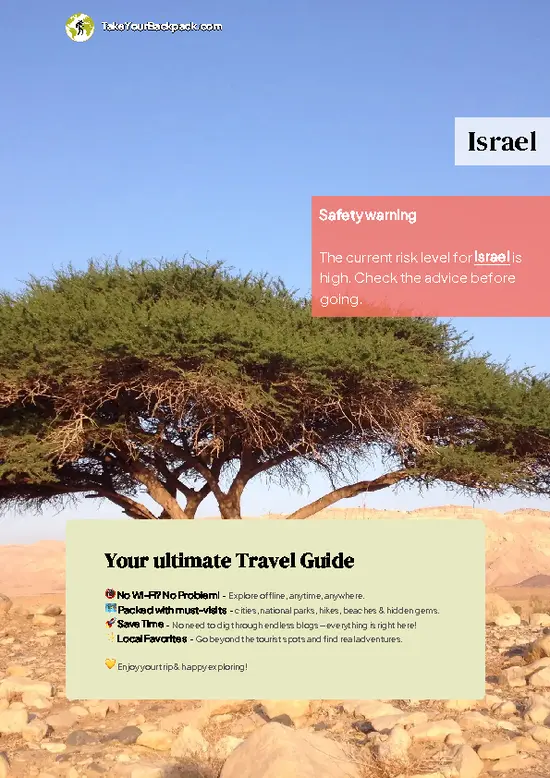
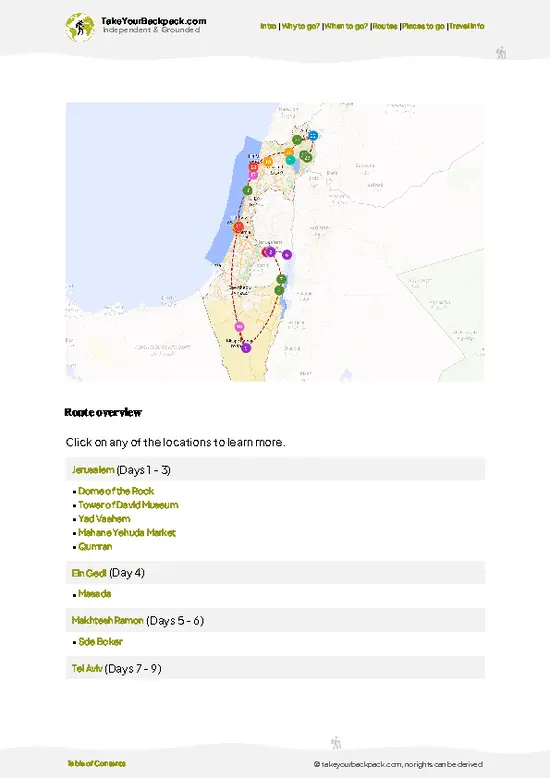
example page 0 from our offline Travel Guide for Israel
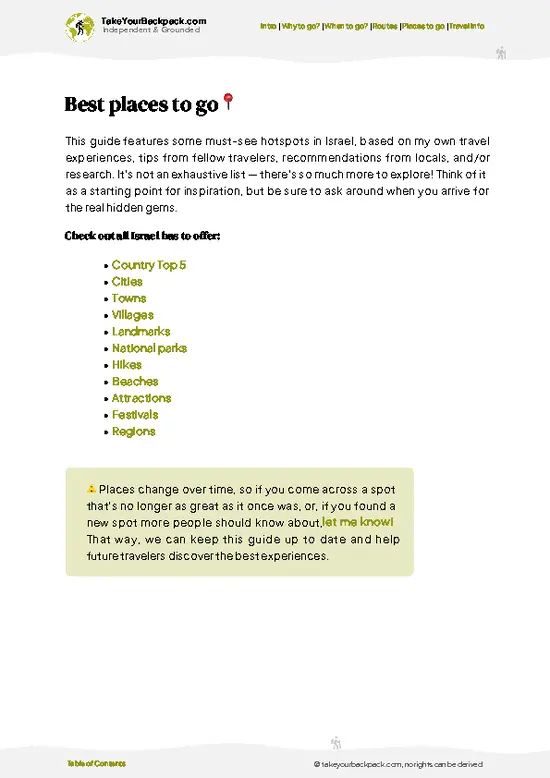
example page 1 from our offline Travel Guide for Israel
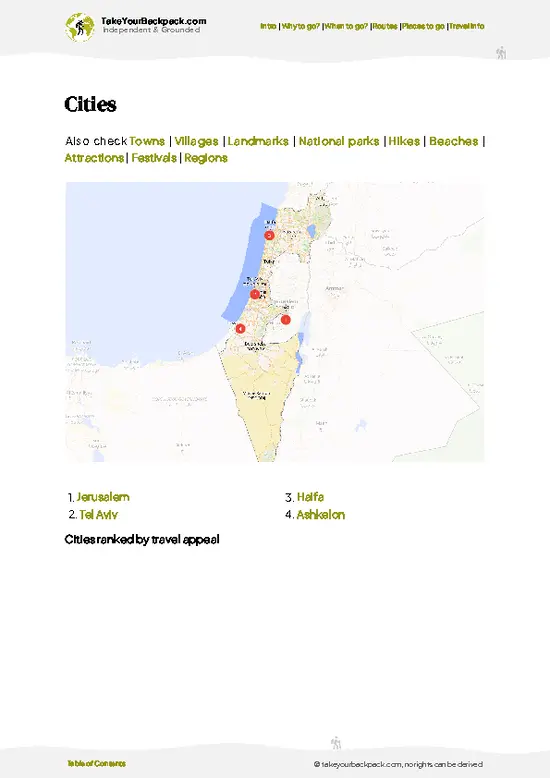
example page 2 from our offline Travel Guide for Israel
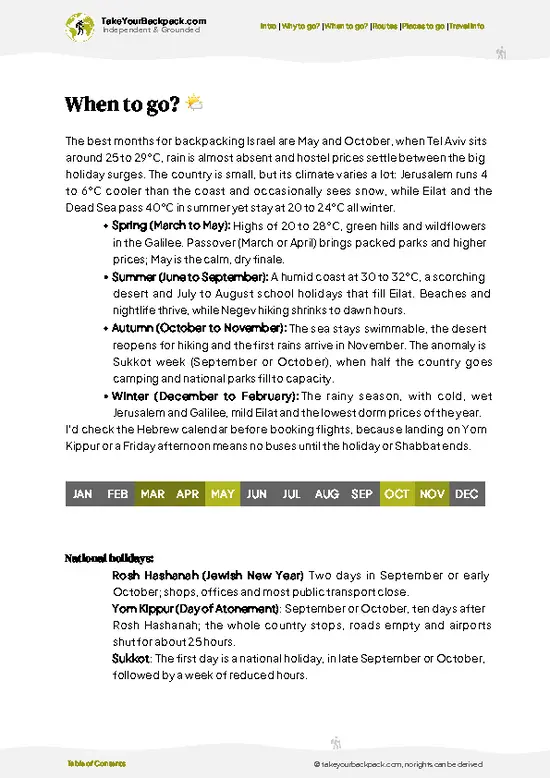
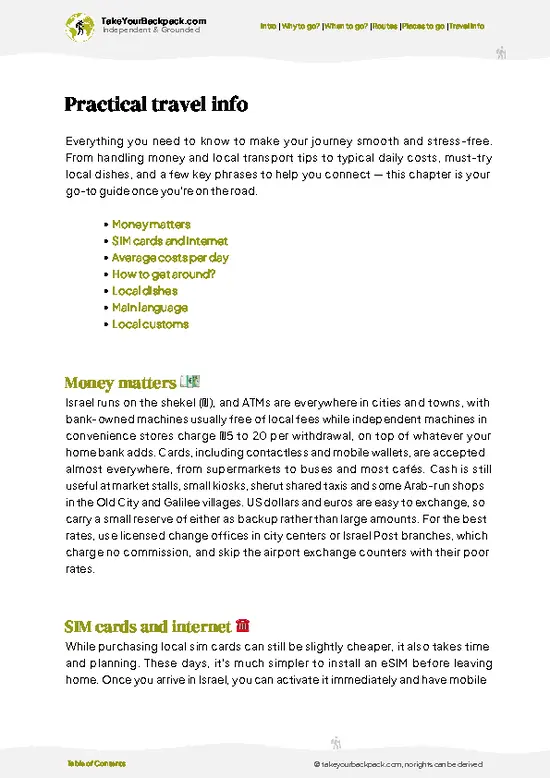
example page 3 from our offline Travel Guide for Israel
example page 4 from our offline Travel Guide for Israel
example page 5 from our offline Travel Guide for Israel
example page 6 from our offline Travel Guide for Israel
example page 7 from our offline Travel Guide for Israel
Loading the map 🌍
CLICK TO FILTER
cities
towns
villages
landmarks
national parks
hikes
beaches
attractions
festivals
regions
SHOW COUNTRY’S BESTSHOW ALL

✨ Why go?
Ranked #5 national park in Israel
What sets this place apart

Backpackers flock to Beit Guvrin for its blend of independent exploration and affordable options. The park offers a range of budget camping spots and nearby hostels, making it easy to stretch your funds. You can pitch a tent under the stars or find a cozy bed without breaking the bank.

The trail variety is another draw. From ancient caves to scenic hikes, there’s something for everyone. You can wander through history while soaking in the landscape.

What sets Beit Guvrin apart is its suitability for self-guided travelers. You won’t feel pressured to join a tour; the well-marked trails allow you to set your own pace. This freedom means you can truly connect with the surroundings without the distractions of a group. Just be mindful of the heat and pack plenty of water.

💡 HighlightsEssential experiences to have while exploring Beit Guvrin

  • Bell Caves — Huge, bell-shaped caverns hewn out of soft chalk; they feel almost sculptural, have surprising acoustics, and make for dramatic photos and shady cool-downs on a hot day. (Personal favorite — they look otherworldly when light hits the walls.)
  • Sidonian Burial Caves — Elaborate rock-cut tombs with carved chambers and niche patterns; eerie and beautiful, they give a real sense of the ancient, multicultural population that lived here.
  • Columbarium (Pigeon) Caves — Walls of hundreds or thousands of bottle-shaped niches used for raising pigeons and storing fertilizer; an unusual glimpse into practical ancient agriculture and clever reuse of underground space.
  • Maresha Tel and Hellenistic Streets — The surface ruins of the ancient town: streets, oil presses, cisterns and foundations
… read more 👉
  • Bell Caves — Huge, bell-shaped caverns hewn out of soft chalk; they feel almost sculptural, have surprising acoustics, and make for dramatic photos and shady cool-downs on a hot day. (Personal favorite — they look otherworldly when light hits the walls.)
  • Sidonian Burial Caves — Elaborate rock-cut tombs with carved chambers and niche patterns; eerie and beautiful, they give a real sense of the ancient, multicultural population that lived here.
  • Columbarium (Pigeon) Caves — Walls of hundreds or thousands of bottle-shaped niches used for raising pigeons and storing fertilizer; an unusual glimpse into practical ancient agriculture and clever reuse of underground space.
  • Maresha Tel and Hellenistic Streets — The surface ruins of the ancient town: streets, oil presses, cisterns and foundations you can walk among—good for imagining day-to-day life and for a relaxed historical stroll.
  • Roman Amphitheater and Period Ruins — The ruins and architectural fragments that show the Roman and later influences; a compact site but useful for context and nice from a photographer’s-eye viewpoint.
  • Underground Tunnel Network — Interconnected caves and tunnels you can explore on foot; cool temperature, strange light, and the chance to spot bats or echo your voice down a passage.
  • Trails, Lookouts & Bird Migration — Rim trails and open hill views across the Shephelah, great in spring for wildflowers and especially rewarding during migration season when raptors and flocks pass through—simple hiking with big skies.
Spotted a mistake or missing something? Contact us.
Things to do near Beit Guvrin

Ratings based on Tripadvisor reviews. When you book through this link, you support our work at no extra cost to you.

🌤️ When to go?Weather, crowds, and seasonal trade-offs

  • Weather: Spring (March to May) and autumn (September to November) offer the most comfortable conditions. Expect mild temperatures and low humidity, avoiding the harsh summer heat that can soar above 35°C (95°F).
  • Temperature: Summer days regularly hit 35-38°C (95-100°F), making hiking exhausting and dehydration a real risk. Winters are mild but can dip to 8°C (46°F) at night, so pack layers if visiting then.
  • Daylight Hours: Longer days in spring and autumn provide 11-13 hours of daylight, ideal for exploring caves and trails without rushing. Winter shortens daylight to about 10 hours, limiting exploration time.
  • Crowds: Peak tourist season aligns with Israeli holidays and weekends, especially in spring. Visiting on weekdays in shoulder seasons means fewer people and a quieter experience.
… read more 👉
  • Weather: Spring (March to May) and autumn (September to November) offer the most comfortable conditions. Expect mild temperatures and low humidity, avoiding the harsh summer heat that can soar above 35°C (95°F).
  • Temperature: Summer days regularly hit 35-38°C (95-100°F), making hiking exhausting and dehydration a real risk. Winters are mild but can dip to 8°C (46°F) at night, so pack layers if visiting then.
  • Daylight Hours: Longer days in spring and autumn provide 11-13 hours of daylight, ideal for exploring caves and trails without rushing. Winter shortens daylight to about 10 hours, limiting exploration time.
  • Crowds: Peak tourist season aligns with Israeli holidays and weekends, especially in spring. Visiting on weekdays in shoulder seasons means fewer people and a quieter experience.
  • Seasonal Activities: Spring brings wildflowers and active wildlife, enhancing the landscape’s appeal. Summer’s heat limits activity, while autumn offers clear skies perfect for stargazing in the park’s dark areas.
  • Price Fluctuations: Accommodation and transport costs spike during spring holidays and Jewish festivals. Booking outside these times can save you a significant chunk of your budget.

Pro-tip: Aim for late March or early October—temperatures are bearable, crowds thin, and the park’s natural features show their best side without draining your energy or wallet.


source: climatestotravel.comJANJanuary: good for travelingFEBFebruary: good for travelingMARMarch: highly recommended for travelingAPRApril: excellent for travelingMAYMay: excellent for travelingJUNJune: fair for travelingJULJuly: below average for travelingAUGAugust: below average for travelingSEPSeptember: highly recommended for travelingOCTOctober: excellent for travelingNOVNovember: highly recommended for travelingDECDecember: good for traveling
when-to-go

✈️ The backpacker research shortcutIsrael Travel Guide

An offline-friendly backpacking guide with optimized travel routes, ranked highlights, transport advice, and the best areas to stay.
example page 0 from our offline Travel Guide for Israel
example page 1 from our offline Travel Guide for Israel
example page 2 from our offline Travel Guide for Israel
example page 3 from our offline Travel Guide for Israel
example page 4 from our offline Travel Guide for Israel
example page 5 from our offline Travel Guide for Israel
example page 6 from our offline Travel Guide for Israel
example page 7 from our offline Travel Guide for Israel
The digital guide (287 pages) contains:
✅ 77 highlights, ranked by travel appeal
✅ Optimized 5, 10 & 15-day travel routes
✅ Cities, national parks, landmarks, beaches
✅ How to get around
✅ Offline-friendly for travel without Wi-Fi
👉 Click to see all 30+ guide features

📅 Plan smarter in minutes, not weeks
✅ Month by month travel advice
✅ Festivals & national holidays
✅ Budget expectations

🗺️ Go to the right places, skip the overrated ones
✅ Honest pros & cons of destinations
✅ Top hikes, parks & viewpoints
✅ Lesser-known places most travelers miss
✅ Clear “worth it vs skip it” guidance

🛏️ Travel smoothly without rookie mistakes
✅ Best areas to stay
✅ Transport systems explained simply
✅ Common scams & safety advice
✅ SIM cards, money & practical tips

🌍 Understand the country, not just visit it
✅ Culture & traditions
✅ 52 Essential phrases & customs
✅ Festivals worth planning around
✅ Traveler-friendly historical context
✅ Insights that make places more meaningful

📱 Built for real travel conditions
✅ Fully downloadable PDF
✅ Works completely offline
✅ Optimized for phone use
✅ Useful in remote areas & buses
✅ Everything in one place
Stop searching, start planning
Get instant access to your full guide. 30‑day money-back guarantee.
+ Add another guide for just

By proceeding you agree to our terms.
Sent to your inbox immediately after payment • 100% Secure Checkout
Best Backpacking Travel Advisor 2025 tourism awardBest Backpacking
Travel Advisor
2025
What others say about Take Your Backpack Guides:
⭐⭐⭐⭐⭐
Fantastic, amazing amount of information!
⭐⭐⭐⭐⭐
My goodness this is amazing, it's what I've been looking for hats off too you!
⭐⭐⭐⭐⭐
I think this is absolutely BRILLIANT
⭐⭐⭐⭐
Very complete and informative. It's still missing places, but I gotta to commend you
⭐⭐⭐⭐⭐
This is truly amazing, thank you, can't wait to explore it with my kids!
⭐⭐⭐⭐⭐
Awesome resource, thank you!
⭐⭐⭐⭐⭐
This is amazing! Can't wait to explore the ones I haven't seen
⭐⭐⭐⭐
I love this! Well done, great idea.
⭐⭐⭐⭐⭐
Thanks for taking the time to make this gem!
⭐⭐⭐⭐⭐
This might be the best website I've ever seen.
⭐⭐⭐⭐⭐
Congratulations, and thank you so much for your work; it's incredibly valuable.
⭐⭐⭐⭐
In all seriousness I think you did a great job pointing out the important spots
⭐⭐⭐⭐⭐
10/10 very good
⭐⭐⭐⭐⭐
As someone who's only just starting to visit regularly this is awesome, thank you.
⭐⭐⭐⭐
Thank you very much! I'm going to visit my dad, it's going to be very useful!
⭐⭐⭐⭐⭐
This is really cool! We'll be travelling for the first time and this definitely come in handy.
⭐⭐⭐⭐⭐
You are now our minister of culture, congratulations 👨‍💼
⭐⭐⭐⭐⭐
Just wanted to tell you that this is a pearl! Going to follow your recommendations.
⭐⭐⭐⭐⭐
This is so cool. I'll definitely be using the resource for my travels soon.
⭐⭐⭐⭐⭐
This is very impressive! Good work.
⭐⭐⭐⭐⭐
This is an amazing and informative site. Very well done!

🛏️ Where to stay?Best areas and accommodation options

Beit Guvrin National Park is a treasure trove of archaeological wonders, but finding the right place to stay can make or break your experience. Inside the park, there are no formal accommodations, so you’ll need to look at nearby options.

The closest town is Maresha, where you can find a few guesthouses and hostels that cater to backpackers. These spots offer basic amenities and a chance to meet fellow travelers. Kiryat Gat is another nearby option, with more hotels and motels, though it’s a bit further from the park.

If you’re up for a short drive, Be’er Sheva has a wider range of accommodations, … read more 👉
Beit Guvrin National Park is a treasure trove of archaeological wonders, but finding the right place to stay can make or break your experience. Inside the park, there are no formal accommodations, so you’ll need to look at nearby options.

The closest town is Maresha, where you can find a few guesthouses and hostels that cater to backpackers. These spots offer basic amenities and a chance to meet fellow travelers. Kiryat Gat is another nearby option, with more hotels and motels, though it’s a bit further from the park.

If you’re up for a short drive, Be’er Sheva has a wider range of accommodations, from budget hostels to more comfortable hotels. Staying here gives you access to local markets and eateries, which can enhance your trip.

Plan ahead. Some places fill up quickly, especially during peak seasons. Prioritize your budget and energy for the adventures inside the park, not just where you lay your head.

👛 Costs (as of 23 September 2026)Money, prices, and spending tips

Visiting Beit Guvrin National Park in Israel can be a rewarding experience, but it’s essential to be aware of the costs involved to avoid any surprises.

Entrance fees typically range from $8 to $12 USD per adult. Children often enjoy a reduced rate, usually around $5 USD. If you’re traveling with a family, consider that the park offers family tickets, which can save you a bit of money.

Parking is available, but it’s not always free. Expect to pay around $3 to $5 USD for a parking spot, depending on the season. If you plan to join a guided tour, factor in an additional $20 to $50 USD per person, depending on the tour’s length and inclusions.

Food options inside the park are limited. Bringing your own snacks or a packed lunch can save you cash and ensure you have something you enjoy. If you … read more 👉
Visiting Beit Guvrin National Park in Israel can be a rewarding experience, but it’s essential to be aware of the costs involved to avoid any surprises.

Entrance fees typically range from $8 to $12 USD per adult. Children often enjoy a reduced rate, usually around $5 USD. If you’re traveling with a family, consider that the park offers family tickets, which can save you a bit of money.

Parking is available, but it’s not always free. Expect to pay around $3 to $5 USD for a parking spot, depending on the season. If you plan to join a guided tour, factor in an additional $20 to $50 USD per person, depending on the tour’s length and inclusions.

Food options inside the park are limited. Bringing your own snacks or a packed lunch can save you cash and ensure you have something you enjoy. If you do decide to buy food, prices can be higher than average, so budget accordingly.

Lastly, keep in mind that some attractions within the park, like guided cave tours, may have additional fees. Always check ahead to avoid unexpected costs.

Planning ahead will help you focus on the stunning landscapes and rich history without worrying about your wallet.
⚠️ Prices can change and everyone travels differently, so take this as a rough guide. Hope it helps you plan your adventure!

🥾 TrailsScenic routes and wildlife spotting in Beit Guvrin

Beit Guvrin is a hidden gem for anyone looking to explore Israel’s natural beauty. The park is packed with fascinating landscapes, from rolling hills to ancient caves, making it a unique spot for hiking. You’ll find yourself wandering through lush greenery and rocky terrain, with plenty of opportunities to spot local wildlife like foxes, birds, and maybe even some shy reptiles.

One standout trail is Marsh Trail, which offers a lovely mix of scenery and history. Here are the details:
  • Length: 2.5 km
  • Estimated Duration: 1 hour
  • Difficulty Level: Easy
  • Key Features: Stunning views of the marshland, diverse
… read more 👉
Beit Guvrin is a hidden gem for anyone looking to explore Israel’s natural beauty. The park is packed with fascinating landscapes, from rolling hills to ancient caves, making it a unique spot for hiking. You’ll find yourself wandering through lush greenery and rocky terrain, with plenty of opportunities to spot local wildlife like foxes, birds, and maybe even some shy reptiles.

One standout trail is Marsh Trail, which offers a lovely mix of scenery and history. Here are the details:
  • Length: 2.5 km
  • Estimated Duration: 1 hour
  • Difficulty Level: Easy
  • Key Features: Stunning views of the marshland, diverse flora, and historical sites
  • Terrain: Mostly flat with well-marked paths

Another option is Caves Trail, perfect for those wanting a bit more adventure:
  • Length: 4 km
  • Estimated Duration: 2 hours
  • Difficulty Level: Moderate
  • Key Features: Explore ancient caves, unique rock formations, and archaeological sites
  • Terrain: Mixed; some rocky areas and elevation changes

Getting to Beit Guvrin is pretty straightforward. Public transport can drop you off at nearby towns, and from there, it’s a short taxi ride or a bit of a hike to the entrance. It’s not usually overcrowded, especially if you go during the week, but weekends can see a bit more foot traffic. As for the entrance fee, it’s quite reasonable, making it a budget-friendly option for those looking to immerse themselves in nature without breaking the bank.
⚠️ Hiking info can sometimes be outdated or inaccurate. Before you hit the trail, check the latest conditions with locals. If you do spot anything that's off, I'd love to hear from you, so I can update it for fellow travelers.

🛡️ SafetyStaying Safe: What Travelers Should Know

Beit Guvrin is generally straightforward for backpackers, but a few practical considerations can enhance your experience. The weather can shift quickly, especially in spring and fall, so pack layers to adapt. The terrain is mostly gentle, but some trails can be rocky or uneven, so sturdy footwear is essential.

Wildlife encounters are rare, but if you spot a snake, give it space and keep moving. Timing your hikes for early morning or late afternoon can help you avoid the heat and crowds.

Stay on marked trails to protect the delicate ecosystem and ensure you don’t lose your way. With a bit of preparation and respect for the environment, you can focus on enjoying the rich history and stunning landscapes without unnecessary stress.

FAQCommon questions from travelers

1 to 2 days are sufficient to explore Beit Guvrin National Park thoroughly. This allows time to visit key sites like the Bell Caves, Maresha ancient city, and the columbarium caves. Guided tours or self-guided walks can be completed within this timeframe.
Yes, you can visit Beit Guvrin without a car. Public buses run from nearby cities like Be'er Sheva and Kiryat Gat, but schedules may be limited, so plan accordingly. Alternatively, taxis or organized tours from major cities are options.
Yes, there is an entrance fee to Beit Guvrin National Park. The fee is approximately 28 NIS for adults and 14 NIS for children, with discounts for seniors and groups. No special permit is required beyond the entrance ticket.
⚠️ Things can change over time, so always validate details locally before you go.

Other Israeli national parks near Beit Guvrin

Explore more nearby:


💡 Not sure where to go next?
Create a personalized itinerary for Israel including Beit Guvrin and the places that fit your trip.

Generate my itinerary

👉 Discover all national parks

Or checkout all Israel has to offer (think cities, towns, villages, national parks, hikes, beaches, festivals)
Country photo of Israel

We 💚 feedbackIs it worth it?

Beit Guvrin is a treasure trove of ancient caves and history that pulls you in. Exploring the intricate tunnels and remnants of past civilizations is a genuine thrill. Just be aware: the heat can be relentless in summer, so plan your visits for early morning or late afternoon. This way, you’ll save your energy for those awe-inspiring moments instead of melting into the ground.

✈️ When did I visit Israel?
In October 2013 I visited Israel and the West Bank.

✍️ Help improve this page!
The information on this page is based on my own backpacking experience in Israel, supplemented with up-to-date research and feedback from other travelers. Travel details can change, so if you notice anything outdated or incomplete, feel free to let me know.


🙋‍♂️ Give feedback

👋 Meet the founderWho’s Behind Take Your Backpack?

Johan, backpacker and founder of TakeYourBackpackHi, I’m Johan (Netherlands 🇳🇱), the creator of TakeYourBackpack. Over the past 3 decades, I’ve backpacked through 90+ countries across six continents, gaining extensive experience with independent travel, long-term trips, and overland routes.

This site is built on a combination of firsthand travel experience and carefully curated insights from other backpackers. Many guides are based on places I’ve personally visited, while others bring together tips, observations, and practical advice shared by trusted travelers I’ve met along the way.

The goal is to provide realistic, experience-driven guidance — not generic itineraries — so you can explore destinations with better context, clearer expectations, and more confidence.