×

Israel🇮🇱 | attractionsEretz Israel Museumarchaeological digs, ethnography, ancient coins, craft workshops | things to do and best time to go

Explore Jaffa Old Port and Flea MarketExplore Palmach Museum

Backpacking in Eretz Israel Museum
👀 For curious travelersattraction ranked #13
By Johan Kruseman 🇳🇱 | Updated October 15, 2026

Here’s what nobody tells you: the Eretz Israel Museum sprawls across a leafy campus, and you can actually breathe here—no elbow-to-elbow shuffle like at the Old City or Masada’s summit at sunrise. It’s tucked in north Tel Aviv, a quick bus ride from the city’s chaos, but a world apart in pace. For backpackers, it’s a curveball: not cheap, but you get a time-travel buffet—ancient mosaics, glassblowing demos, even a real archaeological dig underfoot. Yes, school groups swarm in the mornings and the signage can be hit-or-miss, but the sheer range of hands-on history beats most “just look, don’t touch” museums. It’s not Instagram bait; it’s the real, layered story of Israel, minus the tourist stampede.

Discover everything you want to know in the 📖 Israel Travel Guide.
Safety warning

The current risk level for Israel is high. Check the advice before going.


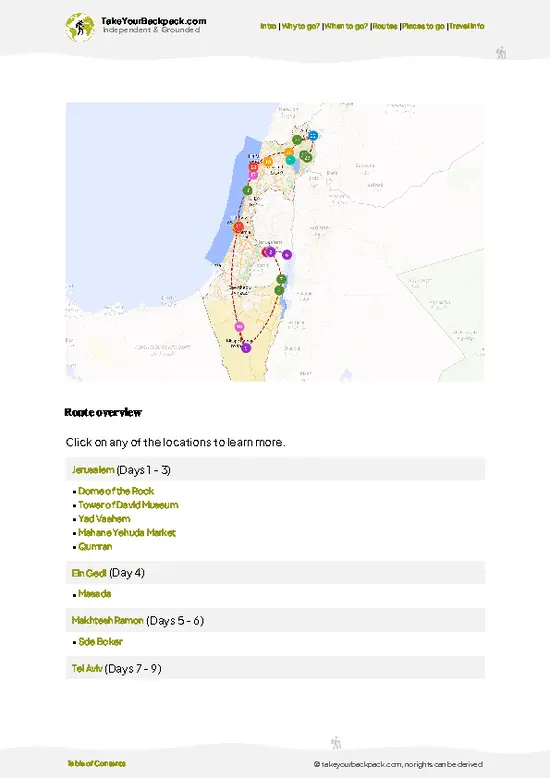
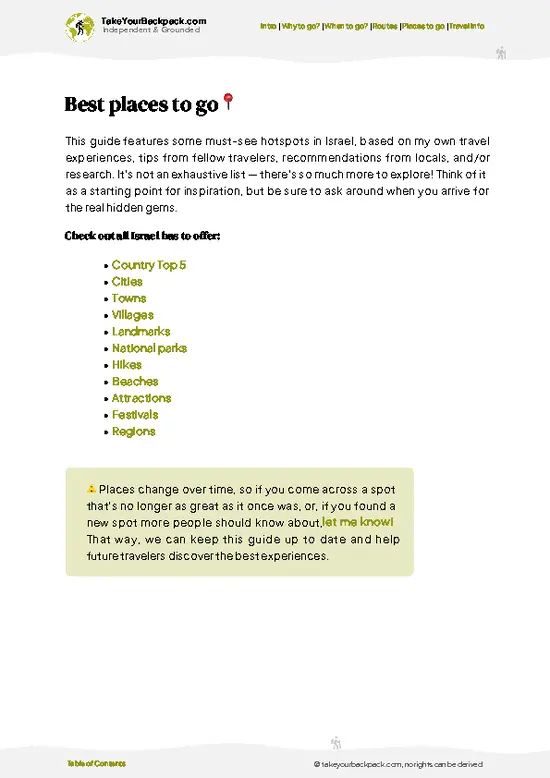
example page 0 from our offline Travel Guide for Israel
example page 1 from our offline Travel Guide for Israel
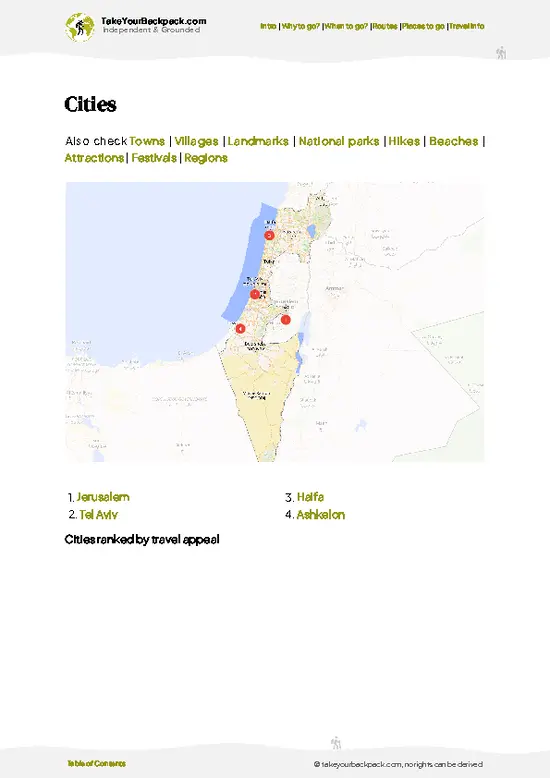
example page 2 from our offline Travel Guide for Israel
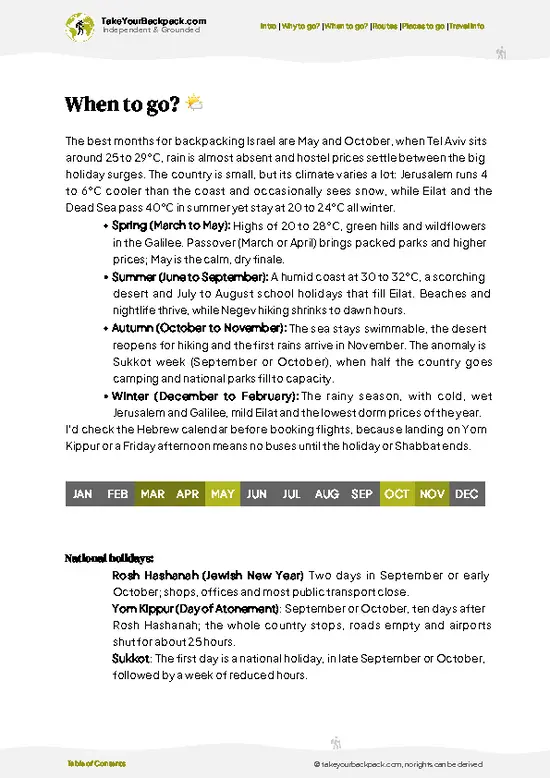
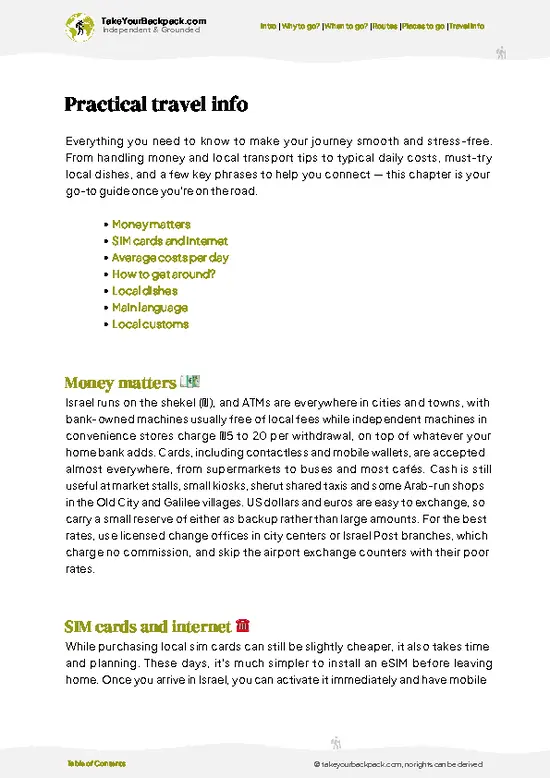
example page 3 from our offline Travel Guide for Israel
example page 4 from our offline Travel Guide for Israel
example page 5 from our offline Travel Guide for Israel
example page 6 from our offline Travel Guide for Israel
example page 7 from our offline Travel Guide for Israel
Loading the map 🌍
CLICK TO FILTER
cities
towns
villages
landmarks
national parks
hikes
beaches
attractions
festivals
regions
SHOW COUNTRY’S BESTSHOW ALL

✨ Why go?
Ranked #13 attraction in Israel
Why Eretz Israel Museum should be on your travel list

Backpackers often breeze past the flashy tourist traps, but the Eretz Israel Museum demands a stop. It’s not just another museum—it’s a deep dive into Israel’s layered history, from ancient artifacts to cutting-edge archaeology. Sure, it’s not the kind of place that floods your Instagram feed with selfies, but that’s exactly why it’s a breath of fresh air. The crowds here are manageable, and the entry fee is a solid investment in context and perspective. This museum isn’t about quick thrills; it’s about connecting dots—understanding the land’s cultural roots and complex identity. For anyone trekking through Israel, it’s a milestone that turns a country route into a meaningful journey, grounding your adventure in stories that outlast any sunset photo.

💡 HighlightsDon't-miss highlights and experiences

The Glass Pavilion
Skip the generic museum glass cases—here, you get a front-row seat to ancient glassblowing, with artifacts that survived Roman bonfires and centuries of sand. The collection is wild: perfume bottles, goblets, and even glass eyes. It’s not just pretty; it’s a crash course in how humans have always loved a bit of flair. If you’ve ever rolled your eyes at “ancient art,” this room will change your mind.

The “Tel Qasile” Archaeological Mound
This isn’t a diorama. You’re standing on a real, excavated Philistine city, right in the middle of Tel Aviv. Walk the actual streets, see the storage jars where ancient beer once fermented, and realize you’re treading on 3,000 years of urban hustle. It’s the opposite of sterile—dusty, sun-baked, and absolutely alive with history.

The … read more 👉
The Glass Pavilion
Skip the generic museum glass cases—here, you get a front-row seat to ancient glassblowing, with artifacts that survived Roman bonfires and centuries of sand. The collection is wild: perfume bottles, goblets, and even glass eyes. It’s not just pretty; it’s a crash course in how humans have always loved a bit of flair. If you’ve ever rolled your eyes at “ancient art,” this room will change your mind.

The “Tel Qasile” Archaeological Mound
This isn’t a diorama. You’re standing on a real, excavated Philistine city, right in the middle of Tel Aviv. Walk the actual streets, see the storage jars where ancient beer once fermented, and realize you’re treading on 3,000 years of urban hustle. It’s the opposite of sterile—dusty, sun-baked, and absolutely alive with history.

The Postal and Communication Pavilion
Sounds dry, right? Wrong. This is where you see the bones of human connection: ancient clay tablets, Morse code machines, and the battered mail trucks that once braved desert roads. It’s a time machine for anyone who’s ever waited for a message that mattered. The storytelling here is sharp and surprisingly moving.

The Ethnography and Folklore Pavilion
This is my personal favorite. Forget the sanitized “folk culture” you see in tourist shops. Here, you get battered wedding dresses, hand-carved amulets, and the kind of kitchen tools your great-grandmother might have wielded with pride. It’s messy, tactile, and honest—a reminder that real culture is lived, not curated.

The Planetarium
Not just for kids. The shows here are immersive, with a local twist: you’ll see the night sky as ancient shepherds did, and the narration doesn’t shy away from the cosmic questions. It’s a rare museum moment where you’re encouraged to look up and feel small—in the best way.
Spotted a mistake or missing something? Contact us.

🌤️ When to go?Weather, crowds, and seasonal trade-offs

  • Weather: The best time to visit Eretz Israel Museum is spring (March to May) or autumn (September to November). Summers scorch with highs often hitting 32-35°C (90-95°F), making outdoor exhibits a sweat-fest. Winters are mild but can be rainy, especially December to February.
  • Temperature: Spring and autumn offer comfortable temps around 20-25°C (68-77°F), perfect for wandering the open-air sections without overheating or freezing.
  • Daylight Hours: Longer days from April to September mean more time to explore, but beware the summer heat. Winter days are shorter, limiting your window for outdoor exhibits.
  • Crowds: Peak tourist season in summer and Jewish holidays brings crowds that can dilute the experience. Visiting midweek in shoulder seasons helps you avoid the crush.
  • Seasonal Activities:
… read more 👉
  • Weather: The best time to visit Eretz Israel Museum is spring (March to May) or autumn (September to November). Summers scorch with highs often hitting 32-35°C (90-95°F), making outdoor exhibits a sweat-fest. Winters are mild but can be rainy, especially December to February.
  • Temperature: Spring and autumn offer comfortable temps around 20-25°C (68-77°F), perfect for wandering the open-air sections without overheating or freezing.
  • Daylight Hours: Longer days from April to September mean more time to explore, but beware the summer heat. Winter days are shorter, limiting your window for outdoor exhibits.
  • Crowds: Peak tourist season in summer and Jewish holidays brings crowds that can dilute the experience. Visiting midweek in shoulder seasons helps you avoid the crush.
  • Seasonal Activities: Spring and autumn often feature special exhibitions and cultural events, adding layers to your visit beyond the permanent displays.
  • Price Fluctuations: Entry fees stay fairly stable year-round, but accommodation and flights spike in summer and holidays, so plan accordingly.
Pro-tip: Aim for late April or early October—cool weather, fewer tourists, and a richer cultural calendar make it the sweet spot for a genuine experience.


source: climatestotravel.comJANJanuary: fair for travelingFEBFebruary: fair for travelingMARMarch: excellent for travelingAPRApril: excellent for travelingMAYMay: excellent for travelingJUNJune: good for travelingJULJuly: fair for travelingAUGAugust: fair for travelingSEPSeptember: highly recommended for travelingOCTOctober: excellent for travelingNOVNovember: highly recommended for travelingDECDecember: fair for traveling
when-to-go

✈️ The backpacker research shortcutIsrael Travel Guide

An offline-friendly backpacking guide with optimized travel routes, ranked highlights, transport advice, and the best areas to stay.
example page 0 from our offline Travel Guide for Israel
example page 1 from our offline Travel Guide for Israel
example page 2 from our offline Travel Guide for Israel
example page 3 from our offline Travel Guide for Israel
example page 4 from our offline Travel Guide for Israel
example page 5 from our offline Travel Guide for Israel
example page 6 from our offline Travel Guide for Israel
example page 7 from our offline Travel Guide for Israel
The digital guide (287 pages) contains:
✅ 77 highlights, ranked by travel appeal
✅ Optimized 5, 10 & 15-day travel routes
✅ Cities, national parks, landmarks, beaches
✅ How to get around
✅ Offline-friendly for travel without Wi-Fi
👉 Click to see all 30+ guide features

📅 Plan smarter in minutes, not weeks
✅ Month by month travel advice
✅ Festivals & national holidays
✅ Budget expectations

🗺️ Go to the right places, skip the overrated ones
✅ Honest pros & cons of destinations
✅ Top hikes, parks & viewpoints
✅ Lesser-known places most travelers miss
✅ Clear “worth it vs skip it” guidance

🛏️ Travel smoothly without rookie mistakes
✅ Best areas to stay
✅ Transport systems explained simply
✅ Common scams & safety advice
✅ SIM cards, money & practical tips

🌍 Understand the country, not just visit it
✅ Culture & traditions
✅ 52 Essential phrases & customs
✅ Festivals worth planning around
✅ Traveler-friendly historical context
✅ Insights that make places more meaningful

📱 Built for real travel conditions
✅ Fully downloadable PDF
✅ Works completely offline
✅ Optimized for phone use
✅ Useful in remote areas & buses
✅ Everything in one place
Stop searching, start planning
Get instant access to your full guide. 30‑day money-back guarantee.
+ Add another guide for just

By proceeding you agree to our terms.
Sent to your inbox immediately after payment • 100% Secure Checkout
Best Backpacking Travel Advisor 2025 tourism awardBest Backpacking
Travel Advisor
2025
What others say about Take Your Backpack Guides:
⭐⭐⭐⭐⭐
Fantastic, amazing amount of information!
⭐⭐⭐⭐⭐
My goodness this is amazing, it's what I've been looking for hats off too you!
⭐⭐⭐⭐⭐
I think this is absolutely BRILLIANT
⭐⭐⭐⭐
Very complete and informative. It's still missing places, but I gotta to commend you
⭐⭐⭐⭐⭐
This is truly amazing, thank you, can't wait to explore it with my kids!
⭐⭐⭐⭐⭐
Awesome resource, thank you!
⭐⭐⭐⭐⭐
This is amazing! Can't wait to explore the ones I haven't seen
⭐⭐⭐⭐
I love this! Well done, great idea.
⭐⭐⭐⭐⭐
Thanks for taking the time to make this gem!
⭐⭐⭐⭐⭐
This might be the best website I've ever seen.
⭐⭐⭐⭐⭐
Congratulations, and thank you so much for your work; it's incredibly valuable.
⭐⭐⭐⭐
In all seriousness I think you did a great job pointing out the important spots
⭐⭐⭐⭐⭐
10/10 very good
⭐⭐⭐⭐⭐
As someone who's only just starting to visit regularly this is awesome, thank you.
⭐⭐⭐⭐
Thank you very much! I'm going to visit my dad, it's going to be very useful!
⭐⭐⭐⭐⭐
This is really cool! We'll be travelling for the first time and this definitely come in handy.
⭐⭐⭐⭐⭐
You are now our minister of culture, congratulations 👨‍💼
⭐⭐⭐⭐⭐
Just wanted to tell you that this is a pearl! Going to follow your recommendations.
⭐⭐⭐⭐⭐
This is so cool. I'll definitely be using the resource for my travels soon.
⭐⭐⭐⭐⭐
This is very impressive! Good work.
⭐⭐⭐⭐⭐
This is an amazing and informative site. Very well done!

🛏️ Where to stay?Choosing the right base

Forget the postcard-perfect image of the Eretz Israel Museum as a quiet, contemplative spot. Yes, it’s a cultural heavyweight, but it’s also smack in the middle of Tel Aviv’s hustle. If you want to be close, you’re stepping into a neighborhood that’s alive 24/7, which means noise, crowds, and a price tag that can bite if you’re not careful.

For backpackers, the real win is staying in the adjacent Florentin or Neve Tzedek districts. Florentin is gritty and artsy, packed with street art, dive bars, and a social scene that’s perfect for solo travelers looking to connect without the polished tourist … read more 👉
Forget the postcard-perfect image of the Eretz Israel Museum as a quiet, contemplative spot. Yes, it’s a cultural heavyweight, but it’s also smack in the middle of Tel Aviv’s hustle. If you want to be close, you’re stepping into a neighborhood that’s alive 24/7, which means noise, crowds, and a price tag that can bite if you’re not careful.

For backpackers, the real win is staying in the adjacent Florentin or Neve Tzedek districts. Florentin is gritty and artsy, packed with street art, dive bars, and a social scene that’s perfect for solo travelers looking to connect without the polished tourist veneer. Neve Tzedek, on the other hand, offers a safer, more laid-back vibe with charming narrow streets and affordable cafés where you can recharge after museum hours. Both areas give you authentic Tel Aviv life without the inflated costs or sterile hotel zones. You’re not just near the museum—you’re in the thick of the city’s real pulse.

👛 Costs (as of 15 October 2026)What things cost and how to budget

As of January 1, 2025, the Eretz Israel Museum in Tel Aviv has updated its entrance fees. An adult ticket is priced at 58 NIS (New Israeli Shekels), approximately €12 to €15. Children under 18 can enter for free, though payment is required for special exhibitions, events, the planetarium, and workshops. Students and senior citizens receive discounted rates upon presentation of valid ID. Residents of Tel Aviv are eligible for a reduced rate of 47 NIS (approximately €10 to €12) upon presenting their ID. Please note that children under 13 must be accompanied by an adult, and each adult may be accompanied by no more than three children. For the most current information, refer to the museum's official website.

source: eretzmuseum.org.il
⚠️ Prices can change and everyone travels differently, so take this as a rough guide. Hope it helps you plan your adventure!

FAQFrequently asked questions about Eretz Israel Museum

2 to 3 hours is sufficient to explore the main exhibits at Eretz Israel Museum. The museum covers archaeology, folklore, and crafts, so allocate more time if you want to see everything in detail.
Yes, the entrance fee is worth it for those interested in Israel's history and culture. Tickets cost around 40-50 ILS, offering access to diverse exhibits and a pleasant outdoor area.
Take bus lines 5, 18, or 19 to the museum from central Tel Aviv. The museum is located near the Tel Aviv University area, about 5 km from the city center, and is accessible by taxi or bike as well.
⚠️ Things can change over time, so always validate details locally before you go.

Other Israeli attractions near Eretz Israel Museum

Explore more nearby:


💡 Not sure where to go next?
Create a personalized itinerary for Israel including Eretz Israel Museum and the places that fit your trip.

Generate my itinerary

👉 Discover all attractions

Or checkout all Israel has to offer (think cities, towns, villages, national parks, hikes, beaches, festivals)
Country photo of Israel

We 💚 feedbackFinal thoughts on visiting Eretz Israel Museum

The Eretz Israel Museum isn’t your typical tourist stop—it’s a deep dive into Israel’s layered history with artifacts that tell stories no guidebook captures. But heads up: it’s sprawling and can feel overwhelming if you’re short on time. Go if you want to unpack the real textures of the land beyond the usual highlights.

✈️ When did I visit Israel?
In October 2013 I visited Israel and the West Bank.

✍️ Help improve this page!
The information on this page is based on my own backpacking experience in Israel, supplemented with up-to-date research and feedback from other travelers. Travel details can change, so if you notice anything outdated or incomplete, feel free to let me know.


🙋‍♂️ Give feedback

👋 Meet the founderWho’s Behind Take Your Backpack?

Johan, backpacker and founder of TakeYourBackpackHi, I’m Johan (Netherlands 🇳🇱), the creator of TakeYourBackpack. Over the past 3 decades, I’ve backpacked through 90+ countries across six continents, gaining extensive experience with independent travel, long-term trips, and overland routes.

This site is built on a combination of firsthand travel experience and carefully curated insights from other backpackers. Many guides are based on places I’ve personally visited, while others bring together tips, observations, and practical advice shared by trusted travelers I’ve met along the way.

The goal is to provide realistic, experience-driven guidance — not generic itineraries — so you can explore destinations with better context, clearer expectations, and more confidence.