×
Jerusalem

Israel🇮🇱 | citiesJerusalemwalled quarters, religious sites, stone alleyways | things to do and best time to go

Explore HaifaExplore Tel Aviv

Backpacking in Jerusalem
UNESCO World Heritage site
🏆 Top pickcity ranked #1
By Johan Kruseman 🇳🇱 | Updated September 4, 2026

Incense smoke curls around your face as you squeeze past a group of pilgrims, the stone under your boots polished glassy by centuries of feet. A muezzin’s call threads over church bells; someone shouts in Hebrew; a kid weaves through the crowd balancing a tray of sesame bread. Your backpack brushes a limestone wall and comes away dusted white. This is Jerusalem, high in the Judean hills in central Israel, between Tel Aviv and the Dead Sea, and it does not do “background noise.”

For backpackers, it’s intense and rewarding. History is everywhere, from the Old City alleys to the Israel Museum and Yad Vashem, but you also get Mahane Yehuda Market turning into a bar crawl at night and hostel rooftops where conversations go deep fast. It’s pricier and more serious-feeling than Tel Aviv, less chilled than Haifa, but still walkable, well-connected by light rail and buses, and generally safe if you stay aware. Meeting other travelers is easy in the hostel cluster near Jaffa Street; the vibe is charged, layered, sometimes heavy, but if you like your trips with meaning as well as falafel, Jerusalem hits hard.

Discover everything you want to know in the 📖 Israel Travel Guide.
Safety warning

The current risk level for Israel is high. Check the advice before going.


Get your Israel guide
81 ranked highlights, routes & tips, works offline (299 pages)
Loading the map 🌍
CLICK TO FILTER
cities
towns
villages
landmarks
national parks
hikes
beaches
attractions
festivals
regions
SHOW COUNTRY’S BESTSHOW ALL

✨ Why go?
Ranked #1 city in Israel
What makes this city worth visiting

Jerusalem is a backpacker’s hub that balances time, money, and comfort beautifully. First off, the highlights are plentiful, offering a rich tapestry of history and culture that can keep you engaged for days. But it’s not just about the sights; the city serves as an excellent basecamp for day trips to nearby destinations, making it a strategic stop on your route.

When it comes to accommodation, hostels here are not only affordable but also vibrant, often hosting fellow travelers eager to share stories and tips. You’ll find communal spaces that foster connections, which is a big plus for solo adventurers. The food scene is another draw, with street vendors and local eateries serving up delicious meals that won’t break the bank.

Jerusalem is incredibly walkable, allowing you to soak in the … read more 👉
Jerusalem is a backpacker’s hub that balances time, money, and comfort beautifully. First off, the highlights are plentiful, offering a rich tapestry of history and culture that can keep you engaged for days. But it’s not just about the sights; the city serves as an excellent basecamp for day trips to nearby destinations, making it a strategic stop on your route.

When it comes to accommodation, hostels here are not only affordable but also vibrant, often hosting fellow travelers eager to share stories and tips. You’ll find communal spaces that foster connections, which is a big plus for solo adventurers. The food scene is another draw, with street vendors and local eateries serving up delicious meals that won’t break the bank.

Jerusalem is incredibly walkable, allowing you to soak in the atmosphere without the hassle of public transport. As the sun sets, the nightlife offers a mix of laid-back bars and lively spots, perfect for unwinding after a day of exploration. Plus, onward travel is straightforward, with connections to other major cities in Israel. If you’re looking for a city that enriches your journey without overwhelming your schedule, Jerusalem is a solid choice.
Want to include Jerusalem in your Israel route?
Create a personalized Israel itinerary that includes Jerusalem and the places that fit your trip — based on your travel style, budget, and available time. Get your route in seconds.

Generate my trip

💡 HighlightsMust-see experiences and standout moments

  • Western Wall (Kotel) — The magnetic beating heart of Jewish Jerusalem: prayer notes tucked into ancient stones, intense, quiet moments and a living link to the Second Temple period. Go early or late to feel the different rhythms.
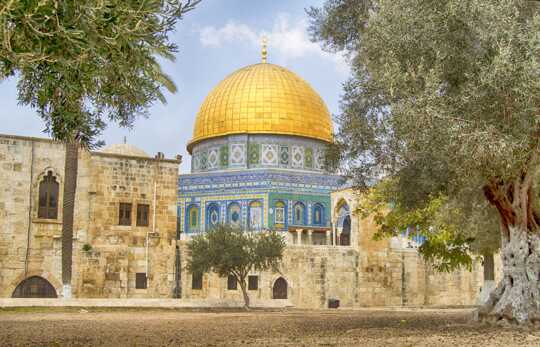
  • Temple Mount / Dome of the Rock (Al-Aqsa compound) — A breathtaking piece of medieval Islamic architecture and one of the world’s most contested holy places; the gold dome, the detailed mosaics and the views down over the Old City are unforgettable. Note visiting hours and entrance rules for non-Muslim visitors.
  • Church of the Holy Sepulchre — The claimed site of Jesus’ crucifixion and resurrection, a chaotic, candlelit maze of chapels where centuries of worship collide. It’s noisy, crowded, and deeply moving in equal measure.
  • Tower of David (Jerusalem Citadel)
read more 👉
  • Western Wall (Kotel) — The magnetic beating heart of Jewish Jerusalem: prayer notes tucked into ancient stones, intense, quiet moments and a living link to the Second Temple period. Go early or late to feel the different rhythms.
  • Temple Mount / Dome of the Rock (Al-Aqsa compound) — A breathtaking piece of medieval Islamic architecture and one of the world’s most contested holy places; the gold dome, the detailed mosaics and the views down over the Old City are unforgettable. Note visiting hours and entrance rules for non-Muslim visitors.
  • Church of the Holy Sepulchre — The claimed site of Jesus’ crucifixion and resurrection, a chaotic, candlelit maze of chapels where centuries of worship collide. It’s noisy, crowded, and deeply moving in equal measure.
  • Tower of David (Jerusalem Citadel) — A compact archaeological and history museum inside a striking citadel by Jaffa Gate; climb the ramparts at sunset for one of the best panoramas of the Old City and watch the Night Spectacular projection show if timing allows.
  • The Cardo & Jewish Quarter — Walk the restored Roman-Byzantine main street, duck into artisan shops and the Hurva Synagogue, and feel the city’s layers underfoot — Roman stones, medieval synagogues and lively modern cafés.
  • Israel Museum (Shrine of the Book & scale model) — Home of the Dead Sea Scrolls and a fantastic model of Second Temple Jerusalem; world-class archaeology, art and peaceful sculpture gardens make it a full, thought-provoking half day.
  • Yad Vashem — Israel’s Holocaust memorial and museum: powerful, expertly curated and built to be reflective rather than sensational. Allow several hours and come prepared for a heavy, important experience.
  • Mahane Yehuda Market (the Shuk) — A living, noisy market by day and a buzzy food-and-bar scene by night—fresh produce, local street food, mural-covered alleyways and a real cross-section of modern Jerusalem life.
  • Mount of Olives viewpoint & Garden of Gethsemane — For the classic skyline photo: the Mount’s terraces give sweeping views of the Old City, while the Garden of Gethsemane (ancient olive trees and the Church of All Nations) is quietly moving to visit.
  • Ein Kerem — A tucked-away, almost village-like neighborhood on Jerusalem’s southwest edge: stone lanes, small churches (like the Church of the Visitation), good cafés and an easy, restorative break from the city bustle.
For day trips just outside Jerusalem, consider Masada and the Dead Sea, Ein Gedi nature reserve, or Bethlehem; my personal favorite for sheer drama is Masada at sunrise.
Spotted a mistake or missing something? Contact us.

Things to do in Jerusalem

Ratings based on Tripadvisor reviews. When you book through this link, you support our work at no extra cost to you.

🏘️ NeighborhoodsKey areas and districts to know

Jerusalem is a city where ancient history meets vibrant modern life, and each neighborhood offers a unique flavor for backpackers. Here’s a breakdown to help you navigate your options.

Old City: This is the heart of Jerusalem, where history pulses through every stone. Expect a maze of narrow streets and bustling markets. It’s a bit pricier, especially for accommodation, but you can find hostels if you look hard. Walkability is high, but it can get crowded. Perfect for short stays; you’ll want to soak in the sights like the Western Wall and the Dome of the Rock.

Nachlaot: A charming, residential area filled with colorful houses and a bohemian vibe. It’s quieter than the Old City but still close enough to the action. Affordable hostels and guesthouses abound. Great for longer stays if you … read more 👉
Jerusalem is a city where ancient history meets vibrant modern life, and each neighborhood offers a unique flavor for backpackers. Here’s a breakdown to help you navigate your options.

Old City: This is the heart of Jerusalem, where history pulses through every stone. Expect a maze of narrow streets and bustling markets. It’s a bit pricier, especially for accommodation, but you can find hostels if you look hard. Walkability is high, but it can get crowded. Perfect for short stays; you’ll want to soak in the sights like the Western Wall and the Dome of the Rock.

Nachlaot: A charming, residential area filled with colorful houses and a bohemian vibe. It’s quieter than the Old City but still close enough to the action. Affordable hostels and guesthouses abound. Great for longer stays if you want to immerse yourself in local life. The nightlife is low-key, with cozy cafes and small bars.

Mahane Yehuda Market: This area is a feast for the senses. By day, it’s a bustling market; by night, it transforms into a lively nightlife hub with bars and eateries. Accommodation options are limited, but you can find nearby hostels. It’s walkable and perfect for those who want a mix of local culture and nightlife.

East Jerusalem: Rich in culture and history, this area offers a different perspective on the city. It’s less touristy and more affordable, but be mindful of safety. Public transport is accessible, making it easy to explore. Ideal for longer stays if you’re looking for a deeper connection to the local community.

⌛️ 1 dayWhat you can realistically do in a day

Jerusalem is a city where history breathes through every stone, a place where ancient and modern collide in a vibrant tapestry of cultures. It’s a living museum, rich with stories waiting to be uncovered. Spending a day here is like flipping through a well-worn book, each chapter revealing something new and profound.

Start your morning in the Old City, where the air is thick with the scent of spices and fresh bread. Head to the Western Wall, a site of deep spiritual significance. Take a moment to absorb the energy, then wander through the narrow streets of the Jewish Quarter. Stop by the Cardo, an ancient Roman road, and imagine the bustling marketplace it once was. Grab a coffee at a local café; the people-watching here is unbeatable.

As the sun climbs higher, make your way to the Mount … read more 👉
Jerusalem is a city where history breathes through every stone, a place where ancient and modern collide in a vibrant tapestry of cultures. It’s a living museum, rich with stories waiting to be uncovered. Spending a day here is like flipping through a well-worn book, each chapter revealing something new and profound.

Start your morning in the Old City, where the air is thick with the scent of spices and fresh bread. Head to the Western Wall, a site of deep spiritual significance. Take a moment to absorb the energy, then wander through the narrow streets of the Jewish Quarter. Stop by the Cardo, an ancient Roman road, and imagine the bustling marketplace it once was. Grab a coffee at a local café; the people-watching here is unbeatable.

As the sun climbs higher, make your way to the Mount of Olives. The panoramic view of the Old City is breathtaking, and the olive trees whisper tales of centuries past. If you’re feeling adventurous, take a short hike down to the Garden of Gethsemane. It’s a peaceful spot, often overlooked by tourists, where you can reflect amidst the ancient trees.

In the afternoon, dive into the vibrant atmosphere of the Mahane Yehuda Market. This isn’t just a place to shop; it’s a sensory overload. Sample fresh produce, indulge in local pastries, and chat with the vendors. The market is a microcosm of Jerusalem’s diverse culture, and you’ll leave with a full belly and a smile.

As evening approaches, head to the trendy neighborhood of Nachlaot. The winding streets are filled with charming architecture and local art. Find a cozy spot for dinner; the food scene here is eclectic, with options ranging from traditional Middle Eastern fare to modern twists.

End your day at the rooftop of a local bar, where you can sip a drink while watching the sunset paint the sky over the Old City. It’s a perfect way to reflect on the day’s adventures, feeling the pulse of a city that’s as layered as it is lively.
Turn your Jerusalem visit into an Israel adventure
Build a complete Israel route with Jerusalem, hidden gems, must-see destinations, and realistic travel times included.

Generate my trip

🌤️ When to go?Best time to visit Jerusalem


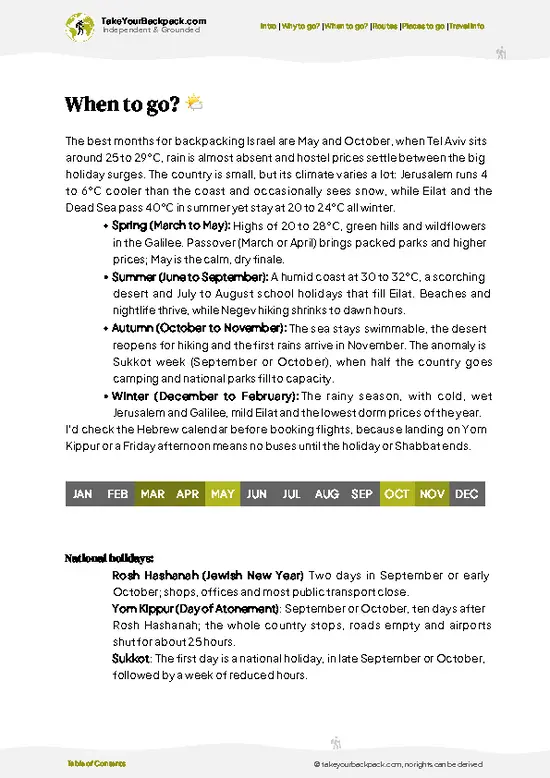
  • Weather: Jerusalem’s climate swings from hot, dry summers to cool, wet winters. Summer highs hit 30-35°C (86-95°F), which can drain your energy fast. Spring and autumn offer mild, pleasant weather around 20-25°C (68-77°F), perfect for hiking and city wandering without overheating or freezing.

  • Temperature: Winter nights can dip to 5°C (41°F), so pack layers if you visit December through February. Daylight temperatures hover around 12-15°C (54-59°F), making it crisp but manageable. Spring and fall days are warmer and more comfortable for long days outside.

  • Daylight Hours: Summer grants up to 14 hours of daylight, maximizing exploration time but also increasing heat exposure. Winter days shrink to about 10 hours, limiting sightseeing but offering cooler conditions and a different vibe.
read more 👉

  • Weather: Jerusalem’s climate swings from hot, dry summers to cool, wet winters. Summer highs hit 30-35°C (86-95°F), which can drain your energy fast. Spring and autumn offer mild, pleasant weather around 20-25°C (68-77°F), perfect for hiking and city wandering without overheating or freezing.

  • Temperature: Winter nights can dip to 5°C (41°F), so pack layers if you visit December through February. Daylight temperatures hover around 12-15°C (54-59°F), making it crisp but manageable. Spring and fall days are warmer and more comfortable for long days outside.

  • Daylight Hours: Summer grants up to 14 hours of daylight, maximizing exploration time but also increasing heat exposure. Winter days shrink to about 10 hours, limiting sightseeing but offering cooler conditions and a different vibe.

  • Crowds: Peak tourist seasons align with spring (March-May) and autumn (September-November), when festivals and religious holidays draw crowds. Winter is quieter but less predictable weather-wise. Summer sees local and international tourists but can feel overwhelming at key sites.

  • Seasonal Activities: Spring and autumn host cultural events and open-air markets, enriching your experience beyond sightseeing. Winter offers fewer events but a more introspective, calm atmosphere. Summer’s heat limits outdoor activities but is great for indoor museums and nightlife.

  • Price Fluctuations: Expect higher accommodation and flight prices during spring and autumn due to demand. Winter offers the best deals but requires flexibility with weather. Summer prices vary but can spike around major holidays.


Pro-tip: Target late March to early May or late September to early November for the smartest balance of weather, crowd size, and cost—this is when Jerusalem feels alive but not overrun, and your energy stays high for deep exploration.


source: climatestotravel.comJANJanuary: good for travelingFEBFebruary: good for travelingMARMarch: highly recommended for travelingAPRApril: excellent for travelingMAYMay: excellent for travelingJUNJune: good for travelingJULJuly: fair for travelingAUGAugust: fair for travelingSEPSeptember: highly recommended for travelingOCTOctober: excellent for travelingNOVNovember: highly recommended for travelingDECDecember: good for traveling
Israel&Palestine - Jerusalem

✈️ The backpacker research shortcutIsrael Travel Guide

An offline-friendly backpacking guide with optimized travel routes, ranked highlights, transport advice, and the best areas to stay.
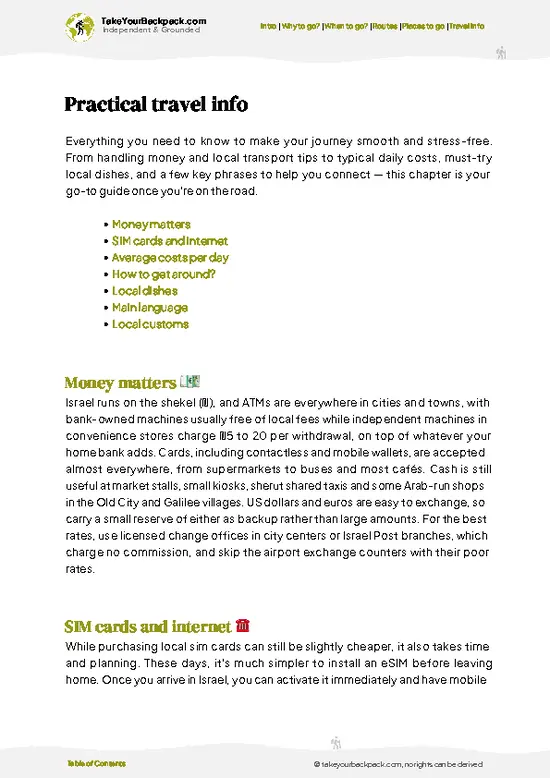
example page 0 from our offline Travel Guide for Israel
example page 1 from our offline Travel Guide for Israel
example page 2 from our offline Travel Guide for Israel
example page 3 from our offline Travel Guide for Israel
example page 4 from our offline Travel Guide for Israel
example page 5 from our offline Travel Guide for Israel
example page 6 from our offline Travel Guide for Israel
example page 7 from our offline Travel Guide for Israel
The digital guide (299 pages) contains:
81 highlights, ranked by travel appeal
Optimized 5, 10 & 15-day travel routes
Cities, national parks, landmarks, beaches
How to get around
Offline-friendly for travel without Wi-Fi
👉 Click to see all 30+ guide features

📅 Plan smarter in minutes, not weeks
Month by month travel advice
Festivals & national holidays
Budget expectations

🗺️ Go to the right places, skip the overrated ones
Honest pros & cons of destinations
Top hikes, parks & viewpoints
Lesser-known places most travelers miss
Clear “worth it vs skip it” guidance

🛏️ Travel smoothly without rookie mistakes
Best areas to stay
Transport systems explained simply
Common scams & safety advice
SIM cards, money & practical tips

🌍 Understand the country, not just visit it
Culture & traditions
52 Essential phrases & customs
Festivals worth planning around
Traveler-friendly historical context
Insights that make places more meaningful

📱 Built for real travel conditions
Fully downloadable PDF
Works completely offline
Optimized for phone use
Useful in remote areas & buses
Everything in one place
Save weeks of stressful planning
Get instant access to your full guide. 30‑day money-back guarantee.
+ Add another guide for just US$7.80

By proceeding you agree to our terms.
Sent to your inbox immediately after payment • 100% Secure Checkout
Best Backpacking Travel Advisor 2025 tourism awardBest Backpacking
Travel Advisor
2025
What others say about Take Your Backpack Guides:
⭐⭐⭐⭐⭐
Fantastic, amazing amount of information!
⭐⭐⭐⭐⭐
My goodness this is amazing, it's what I've been looking for hats off too you!
⭐⭐⭐⭐⭐
I think this is absolutely BRILLIANT
⭐⭐⭐⭐
Very complete and informative. It's still missing places, but I gotta to commend you
⭐⭐⭐⭐⭐
This is truly amazing, thank you, can't wait to explore it with my kids!
⭐⭐⭐⭐⭐
Awesome resource, thank you!
⭐⭐⭐⭐⭐
This is amazing! Can't wait to explore the ones I haven't seen
⭐⭐⭐⭐
I love this! Well done, great idea.
⭐⭐⭐⭐⭐
Thanks for taking the time to make this gem!
⭐⭐⭐⭐⭐
This might be the best website I've ever seen.
⭐⭐⭐⭐⭐
Congratulations, and thank you so much for your work; it's incredibly valuable.
⭐⭐⭐⭐
In all seriousness I think you did a great job pointing out the important spots
⭐⭐⭐⭐⭐
10/10 very good
⭐⭐⭐⭐⭐
As someone who's only just starting to visit regularly this is awesome, thank you.
⭐⭐⭐⭐
Thank you very much! I'm going to visit my dad, it's going to be very useful!
⭐⭐⭐⭐⭐
This is really cool! We'll be travelling for the first time and this definitely come in handy.
⭐⭐⭐⭐⭐
You are now our minister of culture, congratulations 👨‍💼
⭐⭐⭐⭐⭐
Just wanted to tell you that this is a pearl! Going to follow your recommendations.
⭐⭐⭐⭐⭐
This is so cool. I'll definitely be using the resource for my travels soon.
⭐⭐⭐⭐⭐
This is very impressive! Good work.
⭐⭐⭐⭐⭐
This is an amazing and informative site. Very well done!

🛏️ Where to stay?Best areas and accommodation options

Jerusalem’s backpacker sweet spot is a tight cluster of neighborhoods that balance safety, social buzz, and budget-friendly digs. The Old City’s edges, especially around the Jewish and Christian Quarters, pull in travelers who want to be steps from history and the pulse of pilgrimage traffic. It’s a place where you can wander ancient streets by day and swap stories with fellow travelers in hostels by night. The vibe here is intense and immersive, but expect a bit more hustle and tourist density.

Just outside the Old City walls, the Nahalat Shiva neighborhood offers a quieter, more local feel … read more 👉
Jerusalem’s backpacker sweet spot is a tight cluster of neighborhoods that balance safety, social buzz, and budget-friendly digs. The Old City’s edges, especially around the Jewish and Christian Quarters, pull in travelers who want to be steps from history and the pulse of pilgrimage traffic. It’s a place where you can wander ancient streets by day and swap stories with fellow travelers in hostels by night. The vibe here is intense and immersive, but expect a bit more hustle and tourist density.

Just outside the Old City walls, the Nahalat Shiva neighborhood offers a quieter, more local feel without sacrificing access. It’s a favorite among solo backpackers who want to blend into Jerusalem’s daily rhythm while still having easy access to social hostel scenes and affordable eateries. The streets here are lined with small cafes and markets, making it a great base for those who want to explore on foot and meet others in relaxed settings.

For those prioritizing comfort and a modern edge without breaking the bank, the German Colony is a solid choice. It’s a bit pricier but safer and more polished, with plenty of social spots that attract a younger crowd. The trade-off here is a little more money for a smoother, less chaotic experience.

Skip the more residential or ultra-quiet neighborhoods if you want to maximize social opportunities and budget options. Jerusalem’s best backpacker areas are where history, community, and affordability intersect—letting you dive deep without losing your footing.

🚌 Getting aroundHow to get from A to B

Jerusalem moves at its own rhythm—part ancient heartbeat, part modern pulse. It’s a city where time bends, shaped by centuries of tradition and the daily hustle of locals and pilgrims alike. You won’t find a perfectly synchronized clockwork here. Instead, expect a blend of rigid schedules clashing with spontaneous detours. The flow is a dance between urgency and patience, where a bus might show up early or late, and a walk can reveal unexpected corners that no map predicts. Understanding this dynamic is your first win: you’re not just navigating transit; you’re reading the city’s tempo, choosing when to push for speed, when to save money, and when to savor comfort.


  • Walking: The ultimate budget option and the best way to absorb Jerusalem’s layers. The Old City and many neighborhoods are
read more 👉
Jerusalem moves at its own rhythm—part ancient heartbeat, part modern pulse. It’s a city where time bends, shaped by centuries of tradition and the daily hustle of locals and pilgrims alike. You won’t find a perfectly synchronized clockwork here. Instead, expect a blend of rigid schedules clashing with spontaneous detours. The flow is a dance between urgency and patience, where a bus might show up early or late, and a walk can reveal unexpected corners that no map predicts. Understanding this dynamic is your first win: you’re not just navigating transit; you’re reading the city’s tempo, choosing when to push for speed, when to save money, and when to savor comfort.


  • Walking: The ultimate budget option and the best way to absorb Jerusalem’s layers. The Old City and many neighborhoods are compact enough to explore on foot, saving you money and letting you discover alleyways and street vendors missed by any bus route. It’s free, flexible, and often faster than waiting for transit in crowded areas.


  • Light Rail (Red Line): Runs roughly from 5:00 AM to midnight, with trains every 6-10 minutes during peak hours. A single ride costs about 6.90 ILS (~$2), making it affordable and relatively fast for crossing the city’s main north-south axis. It’s comfortable and air-conditioned but can get packed during rush hours. The light rail is your best bet for predictable timing and avoiding traffic jams.


  • Egged Buses: The backbone of Jerusalem’s public transit, with extensive routes covering the city and suburbs. Fares start at around 5.90 ILS (~$1.70) per ride. Buses run from about 5:00 AM until midnight, but frequency varies—some lines come every 10 minutes, others every 30. They’re slower than the light rail due to traffic and frequent stops but offer wider coverage. Comfort is basic, and expect crowded conditions during peak times.


  • Shared Taxis (Sherut): These minibuses run on fixed routes but depart only when full, which can be a gamble on timing. They operate 24/7, including Shabbat when other public transit shuts down, making them invaluable for late-night or weekend travel. Fares hover around 10-15 ILS (~$3-$4.50). They’re faster than buses on some routes but less comfortable and less predictable.


  • Private Taxis: The fastest and most comfortable option but also the priciest. Expect to pay 30-50 ILS (~$9-$15) for short trips within the city. Useful for tight schedules or when traveling in groups, but not ideal for budget travelers. Negotiating fares upfront is common, and traffic can still slow you down during rush hours.


Jerusalem’s transit system is a balancing act. Walking maximizes your immersion and saves cash but demands time and energy. The light rail offers a sweet spot of speed and cost, while buses extend your reach at the expense of comfort and punctuality. Sheruts fill the gaps when schedules falter, and taxis deliver convenience—if you’re willing to pay. Your challenge is to read the city’s pulse and pick the right mode for each moment, turning travel logistics into a strategic game where every choice shapes your experience.

👛 Costs (as of 4 September 2026)Typical daily expenses

Backpacking in Jerusalem means balancing your budget against the city’s unique blend of history, culture, and modern hustle. Here’s how the daily costs typically break down for an independent traveler navigating this complex city.
  • Dorm Accommodation (High Season): Expect to pay around $25 to $40 per night. High season, usually spring and fall, pushes prices up due to demand from tourists and pilgrims.
  • Dorm Accommodation (Off-Season): In the quieter winter months, dorm beds drop to about $15 to $25. It’s a solid way to save without sacrificing location or basic comfort.
  • Meals: Budget meals, like falafel or shawarma from street vendors or casual eateries, run about $5 to $10 per meal. If you mix in occasional sit-down meals, plan for $15 to $20 daily.
  • Local Transport: Single bus rides within
read more 👉
Backpacking in Jerusalem means balancing your budget against the city’s unique blend of history, culture, and modern hustle. Here’s how the daily costs typically break down for an independent traveler navigating this complex city.
  • Dorm Accommodation (High Season): Expect to pay around $25 to $40 per night. High season, usually spring and fall, pushes prices up due to demand from tourists and pilgrims.
  • Dorm Accommodation (Off-Season): In the quieter winter months, dorm beds drop to about $15 to $25. It’s a solid way to save without sacrificing location or basic comfort.
  • Meals: Budget meals, like falafel or shawarma from street vendors or casual eateries, run about $5 to $10 per meal. If you mix in occasional sit-down meals, plan for $15 to $20 daily.
  • Local Transport: Single bus rides within Jerusalem cost roughly $1.50 to $2.50. Walking is often the best way to soak in the city’s layers, but buses fill in the gaps efficiently.
  • City Transport Pass: A daily public transport pass is around $6 to $8, which is worth it if you plan multiple trips across the city in a day.
  • Basic Activities/Entry Fees: Many historic sites have entry fees between $5 and $15. Some museums and religious sites are free or ask for a small donation, so mix and match to keep costs down.
  • Miscellaneous Expenses: Think water, snacks, occasional coffee, or small souvenirs—budget around $5 to $10 daily to cover these extras without surprises.

All told, you’re looking at a daily budget roughly between $40 and $70. This range gives you flexibility to choose when to splurge on a guided tour or a nicer meal and when to keep it lean. Jerusalem’s charm is in its layers, and your budget choices shape how deeply you dive into them.


source: israel.travel
⚠️ Prices can change and everyone travels differently, so take this as a rough guide. Hope it helps you plan your adventure!

🚌 Day tripsEasy escapes and nearby places

Using Jerusalem as your base for day trips is a savvy choice. The city’s rich history and strategic location make it a launchpad for some truly rewarding adventures. Here are a few standout options that will elevate your experience.

**Masada and the Dead Sea**
Start your day early with a bus ride to Masada, about 1.5 hours from Jerusalem. The ancient fortress perched atop a plateau offers breathtaking views and a deep dive into history. Hike up the Snake Path for a workout, or take the cable car if you’re feeling lazy. Afterward, float in the mineral-rich waters of the Dead Sea. Total cost? Expect around $30 for transport and entry fees. Best time to visit is spring or fall when temperatures are milder. A common mistake? Underestimating the sun; bring plenty of water and sunscreen.


read more 👉
Using Jerusalem as your base for day trips is a savvy choice. The city’s rich history and strategic location make it a launchpad for some truly rewarding adventures. Here are a few standout options that will elevate your experience.

**Masada and the Dead Sea**
Start your day early with a bus ride to Masada, about 1.5 hours from Jerusalem. The ancient fortress perched atop a plateau offers breathtaking views and a deep dive into history. Hike up the Snake Path for a workout, or take the cable car if you’re feeling lazy. Afterward, float in the mineral-rich waters of the Dead Sea. Total cost? Expect around $30 for transport and entry fees. Best time to visit is spring or fall when temperatures are milder. A common mistake? Underestimating the sun; bring plenty of water and sunscreen.


**Bethlehem**
Just a short 30-minute bus ride from Jerusalem, Bethlehem is a must-see for its religious significance and vibrant culture. Visit the Church of the Nativity, then wander through the bustling markets. Grab a traditional Palestinian meal at a local eatery for around $10. The best time to go is during the Christmas season, but any time offers a unique experience. First-timers often miss the local art scene; check out the murals and galleries that tell the story of the city.


**Ein Gedi Nature Reserve**
About 1.5 hours from Jerusalem, Ein Gedi is a paradise for nature lovers. Hike through lush oases, spot ibex, and take a dip in refreshing waterfalls. The entrance fee is around $10, and you’ll want to pack snacks and plenty of water. Spring is ideal for wildflowers, while winter offers cooler hiking conditions. A common rookie mistake? Not allowing enough time to explore; plan for at least half a day.


**Jericho**
Traveling to Jericho takes about an hour by bus. Known as one of the oldest inhabited cities, it’s rich in history and archaeological sites. Visit the ancient ruins and the Mount of Temptation for stunning views. You can easily spend a day here for around $20, including transport and snacks. The best time to visit is in the cooler months. Many first-timers overlook the local cuisine; don’t miss trying the fresh dates!


**Tel Aviv**
A quick 1-hour train ride will land you in Tel Aviv, where the beach meets a vibrant urban scene. Explore the markets, enjoy street food, and soak up the nightlife. Budget around $30 for transport and food. Spring and fall are perfect for pleasant weather. A common pitfall? Sticking to the touristy areas; venture into neighborhoods like Florentin for a more authentic vibe.
👉 Explore Tel Aviv
Want to know what more Israel offers?
The Israel Travel Guide describes 81 highlights, from cities to national parks, from beaches to hikes

Get the Travel Guide -

🍲 FoodWhat to Eat & Drink

In Jerusalem, **food** is a vibrant tapestry of flavors, reflecting its rich history and diverse cultures. Start with **hummus**—not just a dip, but a meal in itself. You’ll find it served warm, drizzled with olive oil, and paired with fresh pita. Don’t skip the **falafel**; these crispy balls of spiced chickpeas are street food royalty, often served in a fluffy pita with tangy tahini and pickled veggies.

Wander through the **Mahane Yehuda Market**, where the air is thick with the scent of spices and baked goods. Here, you can sample **borekas**, flaky pastries stuffed with cheese or potatoes, and wash it down with a refreshing glass of **freshly squeezed pomegranate juice**. The market is a social hub, so don’t be surprised if you find yourself chatting with locals over a shared plate.

read more 👉
In Jerusalem, **food** is a vibrant tapestry of flavors, reflecting its rich history and diverse cultures. Start with **hummus**—not just a dip, but a meal in itself. You’ll find it served warm, drizzled with olive oil, and paired with fresh pita. Don’t skip the **falafel**; these crispy balls of spiced chickpeas are street food royalty, often served in a fluffy pita with tangy tahini and pickled veggies.

Wander through the **Mahane Yehuda Market**, where the air is thick with the scent of spices and baked goods. Here, you can sample **borekas**, flaky pastries stuffed with cheese or potatoes, and wash it down with a refreshing glass of **freshly squeezed pomegranate juice**. The market is a social hub, so don’t be surprised if you find yourself chatting with locals over a shared plate.

When it comes to drinks, try a glass of **arak**, an anise-flavored spirit that’s a staple in many local bars. It’s often enjoyed with friends, sipped slowly while sharing stories.

Etiquette is relaxed; meals are communal, and it’s common to share dishes. Embrace the **slow pace** of dining here. It’s not just about the food; it’s about the experience, the connections, and the flavors that linger long after the meal is over.

🛡️ SafetyTraveler Safety Guide

Jerusalem is generally safe for backpackers, but a few areas and situations warrant extra awareness. The Old City, while bustling and vibrant, can get crowded. Keep an eye on your belongings, especially in markets where pickpockets might lurk.

If you’re traveling solo, be mindful after dark. The streets can feel different at night, so stick to well-lit areas and avoid wandering into less populated neighborhoods.

Scams are rare, but some vendors may try to upsell or charge tourists inflated prices. Always ask for the price upfront, especially in markets. A friendly haggling session can be part of the fun, but know when to walk away if the price feels off.

Everyday annoyances include aggressive street performers or overly persistent souvenir sellers. A polite but firm “no, thank you” usually … read more 👉
Jerusalem is generally safe for backpackers, but a few areas and situations warrant extra awareness. The Old City, while bustling and vibrant, can get crowded. Keep an eye on your belongings, especially in markets where pickpockets might lurk.

If you’re traveling solo, be mindful after dark. The streets can feel different at night, so stick to well-lit areas and avoid wandering into less populated neighborhoods.

Scams are rare, but some vendors may try to upsell or charge tourists inflated prices. Always ask for the price upfront, especially in markets. A friendly haggling session can be part of the fun, but know when to walk away if the price feels off.

Everyday annoyances include aggressive street performers or overly persistent souvenir sellers. A polite but firm “no, thank you” usually does the trick. Carry yourself confidently and engage with locals; they often appreciate a genuine smile and a respectful attitude. This approach not only enhances your experience but also keeps you grounded in the city’s rhythm.

FAQTraveler FAQ

3 to 4 days are sufficient to explore Jerusalem's main sites including the Old City, the Western Wall, and the Israel Museum. This allows time to visit key religious and historical landmarks without rushing. Additional days may be needed for day trips to nearby locations like the Dead Sea or Bethlehem.
Yes, Jerusalem is generally safe for solo backpackers, especially in well-traveled areas like the Old City and downtown. Standard precautions such as avoiding political demonstrations and staying aware of your surroundings at night are advised. Public transportation and taxis are reliable for solo travelers.
Jerusalem is known for its religious significance to Judaism, Christianity, and Islam, housing sacred sites like the Western Wall, the Church of the Holy Sepulchre, and the Al-Aqsa Mosque. It is also famous for its ancient history, vibrant markets, and diverse cultural heritage.
⚠️ Things can change over time, so always validate details locally before you go.

Other Israeli cities near Jerusalem

Explore more nearby:

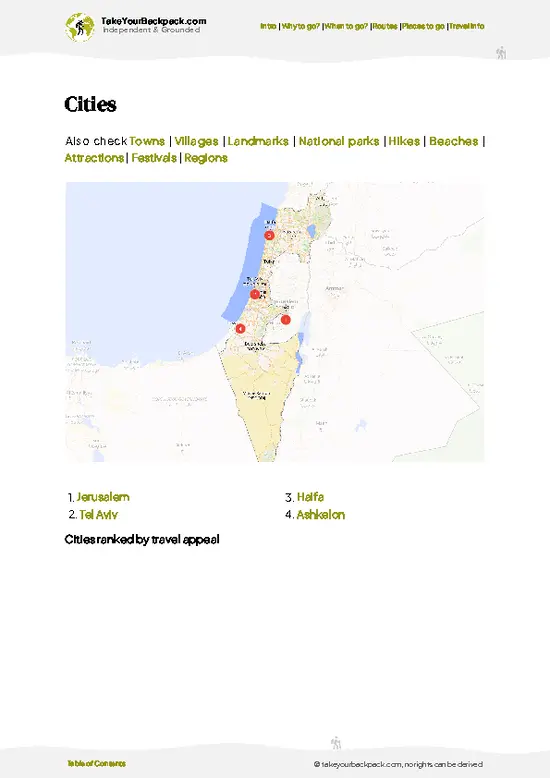
  • Tel Aviv—beachfront, Bauhaus architecture, nightlife districts| 54 km away
  • Ashkelon—ancient ruins, marina, palm-lined parks| 62 km away
  • Haifa—terraced gardens, port views, mixed neighborhoods| 115 km away

💡 Not sure where to go next?
Create a personalized itinerary for Israel including Jerusalem and the places that fit your trip.

Generate my itinerary

👉 Discover all cities

Or checkout all Israel has to offer (think cities, towns, villages, national parks, hikes, beaches, festivals)
Country photo of Israel

We 💚 feedbackWhat to keep in mind

Jerusalem is a living history book, where every stone tells a story. Walking through the Old City, you can feel the weight of centuries. But here’s the kicker: it’s crowded, especially at key sites. You’ll sacrifice some comfort for that authentic experience. Embrace the hustle; it’s part of the charm. Just know that patience is key. The rewards of this vibrant tapestry of faith and culture are absolutely worth it.

✈️ When did I visit Israel?
In October 2013 I visited Israel and the Westbank.

✍️ Help improve this page!
The information on this page is based on my own backpacking experience in Israel, supplemented with up-to-date research and feedback from other travelers. Travel details can change, so if you notice anything outdated or incomplete, feel free to let me know.


🙋‍♂️ Give feedback

👋 Meet the founderWho’s Behind Take Your Backpack?

Johan, backpacker and founder of TakeYourBackpackHi, I’m Johan (Netherlands 🇳🇱), the creator of TakeYourBackpack. Over the past decade, I’ve backpacked through 80+ countries across six continents, gaining extensive experience with independent travel, long-term trips, and overland routes.

This site is built on a combination of firsthand travel experience and carefully curated insights from other backpackers. Many guides are based on places I’ve personally visited, while others bring together tips, observations, and practical advice shared by trusted travelers I’ve met along the way.

The goal is to provide realistic, experience-driven guidance — not generic itineraries — so you can explore destinations with better context, clearer expectations, and more confidence.

Get full Israel guide •
Instant download • 81 highlights • Full Offline guide