×

Israel🇮🇱 | festivalsSukkot in Jerusalemtemporary huts, Western Wall gatherings, citywide processions | things to do and best time to go

Explore Karmiel Dance FestivalExplore Haifa International Film Festival

Backpacking in Sukkot in Jerusalem
👀 For curious travelersfestival ranked #13
By Johan Kruseman 🇳🇱 | Updated July 14, 2026

Sukkot in Jerusalem is not for anyone chasing a cheap, quiet shoulder-season escape or a laid‑back beach vibe. It’s loud, crowded, and prices jump. But that chaos actually works for backpackers who want intensity: the whole city turns into a living street festival, and you get maximum culture per shekel. Sukkot hits Jerusalem in the Judean hills of central Israel, mostly centered around the Old City, Mahane Yehuda market, and the downtown pedestrian streets. Expect religious songs, spontaneous drum circles, street performers, and families everywhere. The vibe swings from spiritual to carnival. It runs about a week, and while accommodation stings, the free street life and people‑watching more than repay the hit.

Discover everything you want to know in the 📖 Israel Travel Guide.
Safety warning

The current risk level for Israel is high. Check the advice before going.


Get your Israel guide
81 ranked highlights, routes & tips, works offline (299 pages)
Loading the map 🌍
CLICK TO FILTER
cities
towns
villages
landmarks
national parks
hikes
beaches
attractions
festivals
regions
SHOW COUNTRY’S BESTSHOW ALL

✨ Why go?
Ranked #13 festival in Israel
The unique appeal for travelers

Backpackers flock to Sukkot in Jerusalem for a burst of social energy and a chance to dive into a temporary community. This festival transforms the city into a vibrant hub of cultural immersion, where you can taste local foods, join in lively celebrations, and connect with both locals and fellow travelers. It’s an experience that’s not just about the sights but the shared moments that linger long after.

Plus, it’s surprisingly affordable compared to similar events worldwide. You can enjoy the festivities without breaking the bank, leaving more room in your budget for other adventures. Planning your route around Sukkot also fits seamlessly into longer travel plans, allowing you to explore the rich tapestry of Israel while soaking in the spirit of this unique celebration. Don’t miss out; it’s a highlight that fuels your journey!
Want to include Sukkot in Jerusalem in your Israel route?
Create a personalized Israel itinerary that includes Sukkot in Jerusalem and the places that fit your trip — based on your travel style, budget, and available time. Get your route in seconds.

Generate my trip

💡 HighlightsTop highlights of Sukkot in Jerusalem

  1. Communal sukkot and Sukkah-hopping — The city fills with private and public sukkot where neighbors invite anyone in for a cup of tea or a full meal. You’ll see everything from tiny makeshift huts to elaborately decorated structures; the mix of hospitality, homemade food, and impromptu conversation with locals is priceless. Personal favorite: bouncing between a few different sukkot in one evening is the easiest way to meet Jerusalemites and taste a range of home-cooked dishes.
  2. The Kotel’s fervor — prayer, singing and the lulav wave — The Western Wall during Sukkot is a sensory thing: intense prayers, groups singing in different languages, and the rhythmic waving of the lulav and etrog. Even if you’re not religious, the communal vibe—people cheering, hugging, and celebrating—is a powerful,
read more 👉
  1. Communal sukkot and Sukkah-hopping — The city fills with private and public sukkot where neighbors invite anyone in for a cup of tea or a full meal. You’ll see everything from tiny makeshift huts to elaborately decorated structures; the mix of hospitality, homemade food, and impromptu conversation with locals is priceless. Personal favorite: bouncing between a few different sukkot in one evening is the easiest way to meet Jerusalemites and taste a range of home-cooked dishes.
  2. The Kotel’s fervor — prayer, singing and the lulav wave — The Western Wall during Sukkot is a sensory thing: intense prayers, groups singing in different languages, and the rhythmic waving of the lulav and etrog. Even if you’re not religious, the communal vibe—people cheering, hugging, and celebrating—is a powerful, memorable experience.
  3. Open-air markets and the etrog & lulav stalls — Markets buzz with stalls selling etrogim, lulavim, decorations, and seasonal street food. The colors, smells, and friendly haggling make you feel like you’re in the middle of a living marketplace tradition, and it’s a great spot to pick up souvenirs or sample regional snacks between festival events.
  4. Simchat Beit HaShoeivah-style nights: music, dance, and ritual — Rooted in the ancient water-drawing celebration, modern iterations are nights of live music, folk dancing, and spirited public gatherings in synagogues, community centers, and plazas. It’s where ritual meets party: joyful, noisy, and full of energy, with lots of singing and clapping.
  5. Old City processions and neighborhood performances — Small parades, ethnic music troupes, and courtyard concerts thread through the narrow lanes and historic plazas, making the ancient stones feel surprisingly lively. The contrast of modern folk performances against the millennia-old backdrop gives Sukkot in Jerusalem a uniquely cinematic, almost timeless atmosphere.
Spotted a mistake or missing something? Contact us.

Things to do around Sukkot in Jerusalem

Ratings based on Tripadvisor reviews. When you book through this link, you support our work at no extra cost to you.

🌤️ When to go?When is the celebration of Sukkot in Jerusalem?


  • Weather: Sukkot falls in early autumn, when Jerusalem cools from summer’s scorch. Expect highs around 24°C (75°F) and lows near 13°C (55°F), perfect for long days on foot without overheating or shivering.

  • Daylight Hours: Days shorten but still offer about 11 to 12 hours of light, enough to dive into the festival’s vibrant street life and evening celebrations without rushing.

  • Crowds: The city swells with locals and tourists alike, especially in the first few days. Arriving mid-festival can mean fewer crowds but a slightly quieter vibe.

  • Seasonal Activities: This is prime time for open-air markets, religious ceremonies, and cultural events tied to the harvest season—don’t miss the chance to join in the communal meals and dances.

  • Price Fluctuations: Accommodation and flights spike sharply
read more 👉

  • Weather: Sukkot falls in early autumn, when Jerusalem cools from summer’s scorch. Expect highs around 24°C (75°F) and lows near 13°C (55°F), perfect for long days on foot without overheating or shivering.

  • Daylight Hours: Days shorten but still offer about 11 to 12 hours of light, enough to dive into the festival’s vibrant street life and evening celebrations without rushing.

  • Crowds: The city swells with locals and tourists alike, especially in the first few days. Arriving mid-festival can mean fewer crowds but a slightly quieter vibe.

  • Seasonal Activities: This is prime time for open-air markets, religious ceremonies, and cultural events tied to the harvest season—don’t miss the chance to join in the communal meals and dances.

  • Price Fluctuations: Accommodation and flights spike sharply during Sukkot’s start. Booking early or aiming for the festival’s tail end can save you serious shekels.


Pro-tip: Time your visit to hit the festival’s energetic opening days but book lodging weeks ahead to dodge price hikes and secure your spot in the heart of Jerusalem’s pulse.


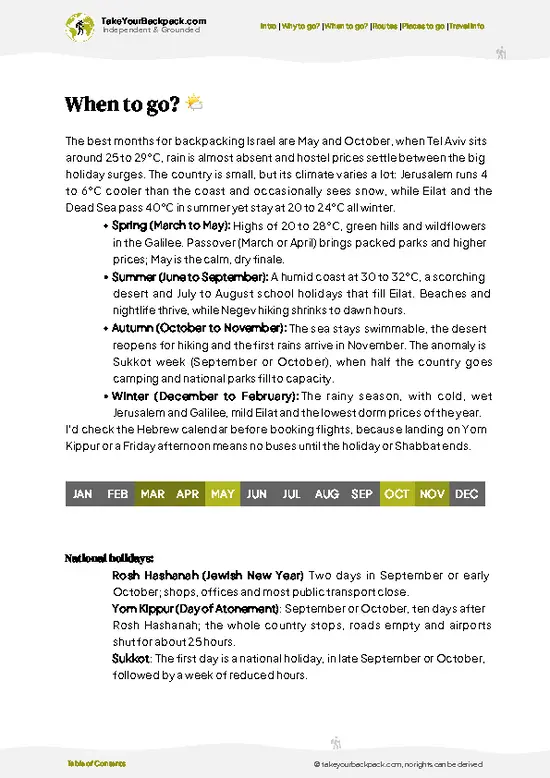
source: climatestotravel.comJANJanuary: not recommended for travelingFEBFebruary: not recommended for travelingMARMarch: not recommended for travelingAPRApril: not recommended for travelingMAYMay: not recommended for travelingJUNJune: not recommended for travelingJULJuly: not recommended for travelingAUGAugust: not recommended for travelingSEPSeptember: excellent for travelingOCTOctober: not recommended for travelingNOVNovember: not recommended for travelingDECDecember: not recommended for traveling

✈️ The backpacker research shortcutIsrael Travel Guide

An offline-friendly backpacking guide with optimized travel routes, ranked highlights, transport advice, and the best areas to stay.
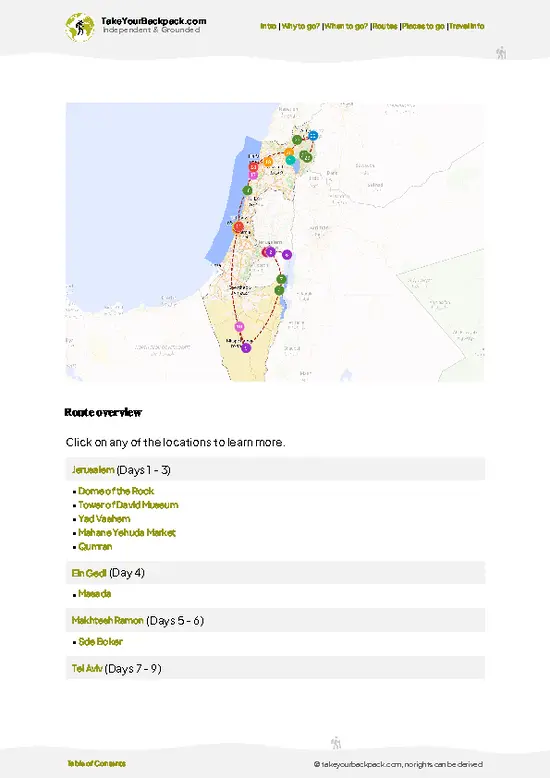
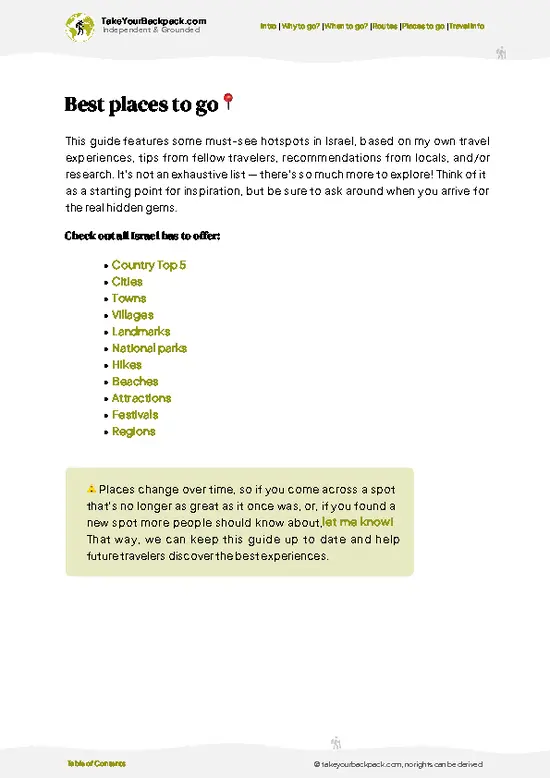
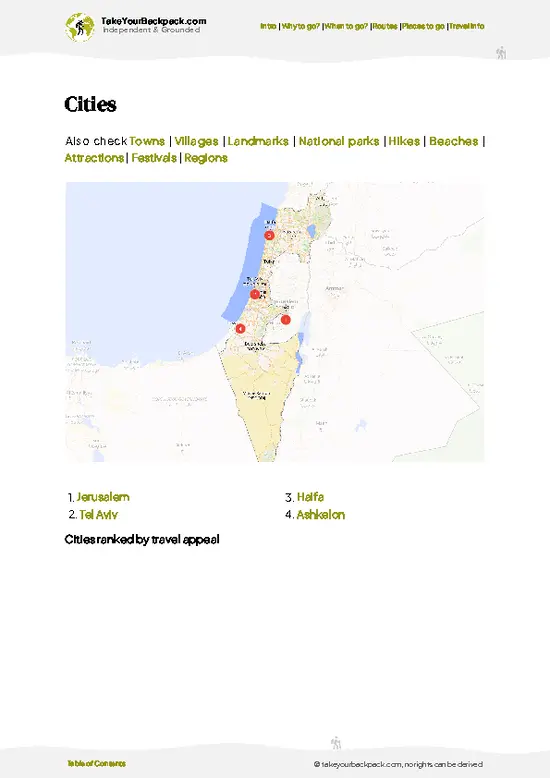
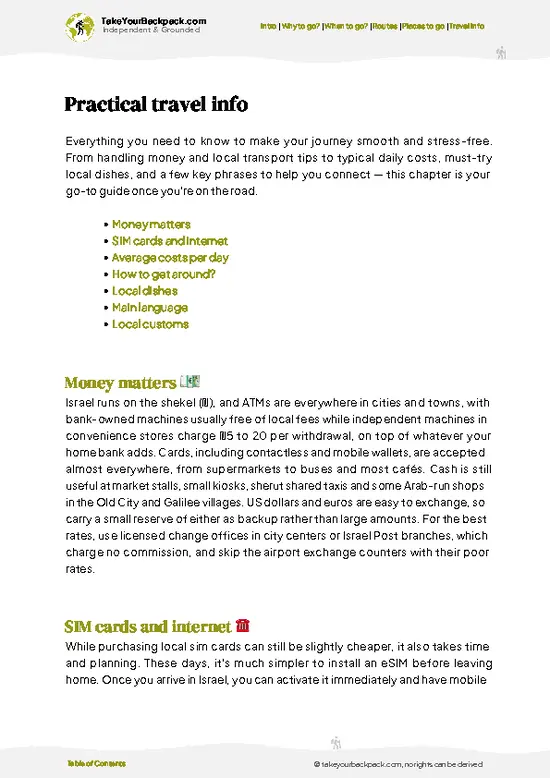
example page 0 from our offline Travel Guide for Israel
example page 1 from our offline Travel Guide for Israel
example page 2 from our offline Travel Guide for Israel
example page 3 from our offline Travel Guide for Israel
example page 4 from our offline Travel Guide for Israel
example page 5 from our offline Travel Guide for Israel
example page 6 from our offline Travel Guide for Israel
example page 7 from our offline Travel Guide for Israel
The digital guide (299 pages) contains:
81 highlights, ranked by travel appeal
Optimized 5, 10 & 15-day travel routes
Cities, national parks, landmarks, beaches
How to get around
Offline-friendly for travel without Wi-Fi
👉 Click to see all 30+ guide features

📅 Plan smarter in minutes, not weeks
Month by month travel advice
Festivals & national holidays
Budget expectations

🗺️ Go to the right places, skip the overrated ones
Honest pros & cons of destinations
Top hikes, parks & viewpoints
Lesser-known places most travelers miss
Clear “worth it vs skip it” guidance

🛏️ Travel smoothly without rookie mistakes
Best areas to stay
Transport systems explained simply
Common scams & safety advice
SIM cards, money & practical tips

🌍 Understand the country, not just visit it
Culture & traditions
52 Essential phrases & customs
Festivals worth planning around
Traveler-friendly historical context
Insights that make places more meaningful

📱 Built for real travel conditions
Fully downloadable PDF
Works completely offline
Optimized for phone use
Useful in remote areas & buses
Everything in one place
Save weeks of stressful planning
Get instant access to your full guide. 30‑day money-back guarantee.


By proceeding you agree to our terms.
Sent to your inbox immediately after payment • 100% Secure Checkout
Best Backpacking Travel Advisor 2025 tourism awardBest Backpacking
Travel Advisor
2025
What others say about Take Your Backpack Guides:
⭐⭐⭐⭐⭐
Fantastic, amazing amount of information!
⭐⭐⭐⭐⭐
My goodness this is amazing, it's what I've been looking for hats off too you!
⭐⭐⭐⭐⭐
I think this is absolutely BRILLIANT
⭐⭐⭐⭐
Very complete and informative. It's still missing places, but I gotta to commend you
⭐⭐⭐⭐⭐
This is truly amazing, thank you, can't wait to explore it with my kids!
⭐⭐⭐⭐⭐
Awesome resource, thank you!
⭐⭐⭐⭐⭐
This is amazing! Can't wait to explore the ones I haven't seen
⭐⭐⭐⭐
I love this! Well done, great idea.
⭐⭐⭐⭐⭐
Thanks for taking the time to make this gem!
⭐⭐⭐⭐⭐
This might be the best website I've ever seen.
⭐⭐⭐⭐⭐
Congratulations, and thank you so much for your work; it's incredibly valuable.
⭐⭐⭐⭐
In all seriousness I think you did a great job pointing out the important spots
⭐⭐⭐⭐⭐
10/10 very good
⭐⭐⭐⭐⭐
As someone who's only just starting to visit regularly this is awesome, thank you.
⭐⭐⭐⭐
Thank you very much! I'm going to visit my dad, it's going to be very useful!
⭐⭐⭐⭐⭐
This is really cool! We'll be travelling for the first time and this definitely come in handy.
⭐⭐⭐⭐⭐
You are now our minister of culture, congratulations 👨‍💼
⭐⭐⭐⭐⭐
Just wanted to tell you that this is a pearl! Going to follow your recommendations.
⭐⭐⭐⭐⭐
This is so cool. I'll definitely be using the resource for my travels soon.
⭐⭐⭐⭐⭐
This is very impressive! Good work.
⭐⭐⭐⭐⭐
This is an amazing and informative site. Very well done!

🛏️ Where to stay?How to pick the right area

Stay close to the heart of Jerusalem during Sukkot, and you’ll find vibrant areas that pulse with energy. The Old City is a must. It’s a maze of history and culture, where you can soak in the festival atmosphere. Just be ready for crowds; it’s a lively scene, but that’s part of the thrill.

Head to the Nachlaot neighborhood for a more laid-back vibe. This area is known for its artistic spirit and community feel. You’ll find cozy cafes and friendly locals, perfect for striking up conversations. Plus, it’s a short walk to the festival activities.

Don’t overlook the German Colony, either. It’s a … read more 👉
Stay close to the heart of Jerusalem during Sukkot, and you’ll find vibrant areas that pulse with energy. The Old City is a must. It’s a maze of history and culture, where you can soak in the festival atmosphere. Just be ready for crowds; it’s a lively scene, but that’s part of the thrill.

Head to the Nachlaot neighborhood for a more laid-back vibe. This area is known for its artistic spirit and community feel. You’ll find cozy cafes and friendly locals, perfect for striking up conversations. Plus, it’s a short walk to the festival activities.

Don’t overlook the German Colony, either. It’s a bit more upscale but still welcoming to budget travelers. The tree-lined streets and charming architecture create a lovely backdrop for your adventures.

Wherever you choose, keep your wits about you. The energy of Sukkot is infectious, but staying alert ensures you enjoy every moment without a hitch.

👛 Costs (as of 16 March 2026)Travel costs and budget guide for Sukkot in Jerusalem

Sukkot in Jerusalem is a vibrant celebration, but navigating the costs can feel like a maze. Here’s how to keep your budget in check while soaking in the festivities.
  • Festival Tickets: Entry to various events during Sukkot is often free, especially for public celebrations. However, some special events or concerts may charge between $10 to $50. Keep an eye out for local listings to snag the best deals.
  • Accommodation: Prices can fluctuate wildly during Sukkot. Expect to pay around $80 to $200 per night for a decent hotel. Hostels or guesthouses can be more budget-friendly, ranging from $30 to $70. Book early to avoid inflated rates.
  • Local Transport: Public transport is your best friend. Buses and light rail are efficient and cost about $1.50 per ride. If you prefer taxis, a short ride within the
read more 👉
Sukkot in Jerusalem is a vibrant celebration, but navigating the costs can feel like a maze. Here’s how to keep your budget in check while soaking in the festivities.
  • Festival Tickets: Entry to various events during Sukkot is often free, especially for public celebrations. However, some special events or concerts may charge between $10 to $50. Keep an eye out for local listings to snag the best deals.
  • Accommodation: Prices can fluctuate wildly during Sukkot. Expect to pay around $80 to $200 per night for a decent hotel. Hostels or guesthouses can be more budget-friendly, ranging from $30 to $70. Book early to avoid inflated rates.
  • Local Transport: Public transport is your best friend. Buses and light rail are efficient and cost about $1.50 per ride. If you prefer taxis, a short ride within the city will set you back around $10 to $20. Consider walking to soak in the atmosphere; it’s often the best way to experience the festival.
  • Food & Drinks: Street food is a must-try. You can grab a falafel or shawarma for about $5 to $10. Dining in a restaurant will cost you around $15 to $30 for a meal. Budget for snacks and drinks, adding another $10 to $20 per day.
  • Miscellaneous Expenses: Factor in costs for souvenirs, tips, or unexpected experiences. Set aside around $20 to $50 for these extras. It’s always good to have a buffer for spontaneous adventures.

Stay sharp, plan ahead, and you’ll have the energy and funds to dive deep into the heart of Sukkot.


source: israel.travel
⚠️ Prices can change and everyone travels differently, so take this as a rough guide. Hope it helps you plan your adventure!

🍲 FoodLocal Cuisine & Drinks

At the Sukkot festival in Jerusalem, food and drinks transform the streets into a vibrant feast. You’ll find stalls brimming with local specialties like stuffed grape leaves and challah bread, each bite echoing tradition. Don’t miss the sukkah booths offering pomegranate juice—a sweet burst of autumn that’s as refreshing as it is symbolic.

For authenticity, dive into a plate of kugel—a sweet noodle dish that’s comfort food at its finest. The atmosphere buzzes with communal sharing; it’s customary to offer a taste of your dish to neighbors. Lines can get long, so be patient and enjoy the chatter around you.

Cash is king here; many vendors don’t accept cards, so stock up before you dive into the culinary chaos. Serving sizes can vary, so don’t hesitate to ask for a smaller portion if you … read more 👉
At the Sukkot festival in Jerusalem, food and drinks transform the streets into a vibrant feast. You’ll find stalls brimming with local specialties like stuffed grape leaves and challah bread, each bite echoing tradition. Don’t miss the sukkah booths offering pomegranate juice—a sweet burst of autumn that’s as refreshing as it is symbolic.

For authenticity, dive into a plate of kugel—a sweet noodle dish that’s comfort food at its finest. The atmosphere buzzes with communal sharing; it’s customary to offer a taste of your dish to neighbors. Lines can get long, so be patient and enjoy the chatter around you.

Cash is king here; many vendors don’t accept cards, so stock up before you dive into the culinary chaos. Serving sizes can vary, so don’t hesitate to ask for a smaller portion if you want to sample multiple delights. Embrace the experience, and let the flavors of Sukkot fuel your adventure!

Other Israeli festivals near Sukkot in Jerusalem

Explore more nearby:


💡 Not sure where to go next?
Create a personalized itinerary for Israel including Sukkot in Jerusalem and the places that fit your trip.

Generate my itinerary

👉 Discover all festivals

Or checkout all Israel has to offer (think cities, towns, villages, national parks, hikes, beaches, festivals)
Country photo of Israel

We 💚 feedbackFinal thoughts on celebrating the Sukkot in Jerusalem

Sukkot in Jerusalem is a sensory feast. The vibrant streets pulse with life, and the communal spirit is infectious. But brace yourself for crowds. Navigating the throngs can drain your energy. Embrace the chaos, though; it’s part of the experience. Focus on the laughter, the food, and the stories shared. That’s where the real magic lies.

✈️ When did I visit Israel?
In October 2013 I visited Israel and the Westbank.

✍️ Help improve this page!
The information on this page is based on my own backpacking experience in Israel, supplemented with up-to-date research and feedback from other travelers. Travel details can change, so if you notice anything outdated or incomplete, feel free to let me know.


🙋‍♂️ Give feedback

👋 Meet the founderWho’s Behind Take Your Backpack?

Johan, backpacker and founder of TakeYourBackpackHi, I’m Johan (Netherlands 🇳🇱), the creator of TakeYourBackpack. Over the past decade, I’ve backpacked through 80+ countries across six continents, gaining extensive experience with independent travel, long-term trips, and overland routes.

This site is built on a combination of firsthand travel experience and carefully curated insights from other backpackers. Many guides are based on places I’ve personally visited, while others bring together tips, observations, and practical advice shared by trusted travelers I’ve met along the way.

The goal is to provide realistic, experience-driven guidance — not generic itineraries — so you can explore destinations with better context, clearer expectations, and more confidence.

Get full Israel guide •
Instant download • 81 highlights • Full Offline guide