×

Italy🇮🇹 | townsAostaAlpine scenery, Roman monuments, mountain gateway | things to do and best time to go

Explore LecceExplore Treviso

Backpacking in Aosta
👌 Worth visitingtown ranked #15
By Johan Kruseman 🇳🇱 | Updated September 4, 2026

Most people only realize after leaving Aosta that it’s the cheapest, calmest doorway into truly big-mountain Alps territory in Italy. You’re in the far northwest, in the Valle d’Aosta, ringed by Mont Blanc, Gran Paradiso, and the Swiss and French borders. The town itself is compact, Roman-walled, and very walkable, more practical than pretty-obsessed, with crisp air, church bells, and cured-meat smells drifting out of tiny shops. It works best as a base: easy trains and buses, quick access to trailheads and ski areas, but quieter and less flashy than Courmayeur. Nights are mellow, hostels and bars are social without being wild, costs are moderate for the Alps, and it feels safe enough to wander back streets after dark with your headlamp still in your pocket.

Discover everything you want to know in the 📖 Italy Travel Guide.


Get your Italy guide
143 ranked highlights, routes & tips, works offline (526 pages)
Loading the map 🌍
CLICK TO FILTER
cities
towns
villages
landmarks
national parks
hikes
beaches
attractions
festivals
regions
SHOW COUNTRY’S BESTSHOW ALL

✨ Why go?
Ranked #15 town in Italy
What sets this place apart

Aosta is a backpacker’s hub nestled in the Italian Alps, perfectly positioned for those seeking adventure and culture. Its walkable streets invite you to explore charming cafes and local markets, where the scent of fresh bread mingles with the crisp mountain air. This town serves as a gateway to stunning hikes in the surrounding valleys, making it ideal for hikers and slow travelers who want to soak in the scenery.

Accommodations range from cozy hostels to family-run guesthouses, fostering a friendly atmosphere that encourages socializing among solo travelers and small groups. Most backpackers stay a few days, using Aosta as a base to venture into the mountains or visit nearby cultural sites. The vibe is relaxed, perfect for those who appreciate a balance of exploration and rest. If you’re … read more 👉
Aosta is a backpacker’s hub nestled in the Italian Alps, perfectly positioned for those seeking adventure and culture. Its walkable streets invite you to explore charming cafes and local markets, where the scent of fresh bread mingles with the crisp mountain air. This town serves as a gateway to stunning hikes in the surrounding valleys, making it ideal for hikers and slow travelers who want to soak in the scenery.

Accommodations range from cozy hostels to family-run guesthouses, fostering a friendly atmosphere that encourages socializing among solo travelers and small groups. Most backpackers stay a few days, using Aosta as a base to venture into the mountains or visit nearby cultural sites. The vibe is relaxed, perfect for those who appreciate a balance of exploration and rest. If you’re looking for a place that feels like a warm welcome before your next adventure, Aosta is your spot.
Want to include Aosta in your Italy route?
Create a personalized Italy itinerary that includes Aosta and the places that fit your trip — based on your travel style, budget, and available time. Get your route in seconds.

Generate my trip

💡 HighlightsPlaces and moments you shouldn't skip

  • Arch of Augustus — The little triumphal arch that instantly says “this was a Roman town.” Walk around it, read the inscriptions, and enjoy how the modern streets curve away from a 2,000-year-old focal point.
  • Porta Praetoria — One of the best-preserved Roman gates in Europe, still standing at the old city edge. It gives a real sense of the ancient city boundary and is a great photo spot without crowds.
  • Roman Theatre — Ruins of the theatre sit just below the Arch of Augustus; you can make out the stage wall and audience tiers. It’s small but atmospheric, and sometimes used for summer performances — a neat overlap of past and present.
  • Criptoportico Forense (Cryptoporticus) — The vaulted Roman underground galleries that supported the ancient forum. Visiting them gives a tangible feel for
read more 👉
  • Arch of Augustus — The little triumphal arch that instantly says “this was a Roman town.” Walk around it, read the inscriptions, and enjoy how the modern streets curve away from a 2,000-year-old focal point.
  • Porta Praetoria — One of the best-preserved Roman gates in Europe, still standing at the old city edge. It gives a real sense of the ancient city boundary and is a great photo spot without crowds.
  • Roman Theatre — Ruins of the theatre sit just below the Arch of Augustus; you can make out the stage wall and audience tiers. It’s small but atmospheric, and sometimes used for summer performances — a neat overlap of past and present.
  • Criptoportico Forense (Cryptoporticus) — The vaulted Roman underground galleries that supported the ancient forum. Visiting them gives a tangible feel for how Aosta’s public life was laid out in Roman times.
  • Collegiata di Sant’Orso and its Cloister — A quiet medieval jewel: a compact Romanesque church with a beautifully carved cloister full of characterful capitals. The cloister’s carvings and the tiny museum make it worth lingering.
  • Cattedrale di Santa Maria Assunta (Aosta Cathedral) — The cathedral’s mix of styles, frescoed crypt and sacred art tell the city’s religious story across centuries. Climb into the crypt and check the cathedral treasury if you like church history.
  • Battistero di San Giovanni — The octagonal baptistery beside the cathedral is striking and surprisingly intact. It’s one of those compact, special places where the architecture itself explains why ritual mattered here.
  • Museo Archeologico Regionale — The regional archaeology museum collects the finds from the whole valley: inscriptions, mosaics, household objects. If you want context for the ruins you’ve just wandered through, this is the place.
  • Piazza Émile Chanoux — A lively civic heart with cafés, seasonal markets and the prefecture façade. Good for people-watching, planning the rest of your day, and catching the rhythm of modern Aosta against its ancient backdrop.
  • Sections of Roman and medieval city walls & towers — Scattered remains run through the historic center; tracing them on foot gives you a real sense of how the city was defended and expanded over time. Look for preserved stretches and the way towers punctuate narrow lanes.
A few great day-trips from Aosta: Gran Paradiso National Park (my personal favorite for its trails and wildlife), the Roman bridge at Pont-Saint-Martin, the mountain resort of Pila for views and hiking, and the spa/casino town of Saint-Vincent.
Spotted a mistake or missing something? Contact us.

Things to do around Aosta

Ratings based on Tripadvisor reviews. When you book through this link, you support our work at no extra cost to you.

🏘️ NeighborhoodsNeighborhood guide to Aosta

Aosta is a charming blend of history and mountain life, perfect for backpackers seeking both adventure and culture. Here’s how to navigate its neighborhoods:

Centro Storico: This is the heart of Aosta, where ancient Roman ruins mingle with cozy cafes. The vibe is lively yet relaxed, ideal for those who want to soak in history while enjoying a cappuccino. Walkability is high; everything is within a short stroll. Prices here can be a bit steep, but splurging on a local meal is worth it. Perfect for short stays, as you can easily explore the main sights.

Quartiere Cogne: A quieter area, Quartiere Cogne offers a more residential feel. It’s great for longer stays, with affordable accommodations and local markets. The atmosphere is peaceful, making it ideal for those who want to escape the hustle. … read more 👉
Aosta is a charming blend of history and mountain life, perfect for backpackers seeking both adventure and culture. Here’s how to navigate its neighborhoods:

Centro Storico: This is the heart of Aosta, where ancient Roman ruins mingle with cozy cafes. The vibe is lively yet relaxed, ideal for those who want to soak in history while enjoying a cappuccino. Walkability is high; everything is within a short stroll. Prices here can be a bit steep, but splurging on a local meal is worth it. Perfect for short stays, as you can easily explore the main sights.

Quartiere Cogne: A quieter area, Quartiere Cogne offers a more residential feel. It’s great for longer stays, with affordable accommodations and local markets. The atmosphere is peaceful, making it ideal for those who want to escape the hustle. Transport access is decent, but you’ll want to walk or bike to fully appreciate the surroundings.

Saint-Martin-de-Corléans: This neighborhood is a bit off the beaten path but offers stunning views and hiking trails. It’s best for the adventurous backpacker looking to immerse themselves in nature. Prices are lower, and the vibe is laid-back. While nightlife is minimal, the tranquility makes it a perfect retreat after a day of exploration.

⌛️ 1 dayHow to make the most of one day

Aosta, nestled in the heart of the Italian Alps, is a town where ancient Roman history meets breathtaking mountain views. The air is crisp, filled with the scent of fresh pastries from local bakeries and the faint aroma of woodsmoke from nearby chalets.

Start your morning at the bustling Piazza Chanoux, where you can sip a rich espresso while watching locals greet the day. The sun filters through the surrounding mountains, casting a warm glow on the historic buildings. After your caffeine fix, wander over to the Roman Theatre, an impressive relic that whispers stories of gladiators and ancient performances. The stones are worn, but the energy of the past lingers, making it a perfect spot for a few reflective moments.

In the afternoon, head to the quaint neighborhood of Cittadella, where … read more 👉
Aosta, nestled in the heart of the Italian Alps, is a town where ancient Roman history meets breathtaking mountain views. The air is crisp, filled with the scent of fresh pastries from local bakeries and the faint aroma of woodsmoke from nearby chalets.

Start your morning at the bustling Piazza Chanoux, where you can sip a rich espresso while watching locals greet the day. The sun filters through the surrounding mountains, casting a warm glow on the historic buildings. After your caffeine fix, wander over to the Roman Theatre, an impressive relic that whispers stories of gladiators and ancient performances. The stones are worn, but the energy of the past lingers, making it a perfect spot for a few reflective moments.

In the afternoon, head to the quaint neighborhood of Cittadella, where cobblestone streets lead you to artisan shops and hidden cafés. Don’t miss the lesser-known Museo Archeologico, which showcases fascinating artifacts from Aosta’s Roman era. It’s often overlooked, but the intimate setting allows for a deeper connection with the history. Grab a light lunch at a local trattoria, savoring homemade pasta paired with a glass of local wine.

As evening approaches, stroll along the walls of the ancient fortress, the sun setting behind the peaks. The golden light transforms the landscape, making it feel almost magical. For dinner, indulge in hearty mountain fare at a family-run restaurant, where the warmth of the staff matches the cozy atmosphere.

Aosta is not just a destination; it’s a tapestry of experiences waiting to be woven into your travel story.
Turn your Aosta visit into an Italy adventure
Build a complete Italy route with Aosta, hidden gems, must-see destinations, and realistic travel times included.

Generate my trip

🌤️ When to go?Seasonal considerations and timing


  • Weather: Spring and early autumn offer crisp, clear days perfect for hiking, with temperatures hovering between 10-20°C (50-68°F). Summer can be hot, pushing 25-30°C (77-86°F), but mountain breezes keep it bearable.

  • Temperature: Winters plunge below freezing, often -5°C to -10°C (23-14°F), making trails icy and less accessible unless you’re geared for snow.

  • Daylight Hours: Long summer days stretch up to 15 hours of light, ideal for extended treks. Winter days shrink to about 8 hours, limiting exploration time.

  • Crowds: Peak summer draws tourists to Aosta’s festivals and alpine routes, so expect busy trails and higher accommodation prices.

  • Seasonal Activities: Winter is ski season, transforming Aosta into a snowy playground. Spring and autumn bring wildflowers and harvest festivals,
read more 👉

  • Weather: Spring and early autumn offer crisp, clear days perfect for hiking, with temperatures hovering between 10-20°C (50-68°F). Summer can be hot, pushing 25-30°C (77-86°F), but mountain breezes keep it bearable.

  • Temperature: Winters plunge below freezing, often -5°C to -10°C (23-14°F), making trails icy and less accessible unless you’re geared for snow.

  • Daylight Hours: Long summer days stretch up to 15 hours of light, ideal for extended treks. Winter days shrink to about 8 hours, limiting exploration time.

  • Crowds: Peak summer draws tourists to Aosta’s festivals and alpine routes, so expect busy trails and higher accommodation prices.

  • Seasonal Activities: Winter is ski season, transforming Aosta into a snowy playground. Spring and autumn bring wildflowers and harvest festivals, enriching the cultural vibe.

  • Price Fluctuations: Summer and winter holidays spike prices. Shoulder seasons—late spring and early fall—offer better deals and quieter streets.


Pro-tip: Aim for late May or September to catch mild weather, fewer crowds, and wallet-friendly stays—perfect for soaking in Aosta’s rugged charm without the rush.


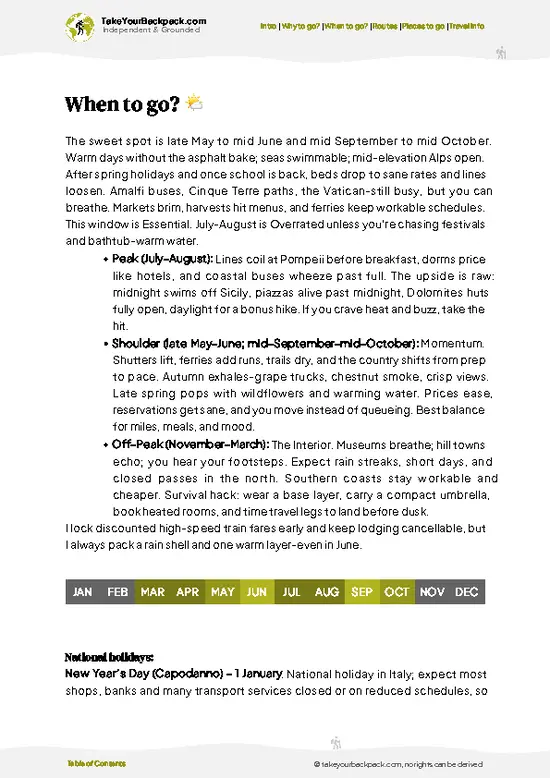
source: climatestotravel.comJANJanuary: good for travelingFEBFebruary: good for travelingMARMarch: fair for travelingAPRApril: highly recommended for travelingMAYMay: excellent for travelingJUNJune: highly recommended for travelingJULJuly: highly recommended for travelingAUGAugust: highly recommended for travelingSEPSeptember: excellent for travelingOCTOctober: highly recommended for travelingNOVNovember: fair for travelingDECDecember: good for traveling
italy-city-aosta
© Google |

✈️ The backpacker research shortcutItaly Travel Guide

An offline-friendly backpacking guide with optimized travel routes, ranked highlights, transport advice, and the best areas to stay.
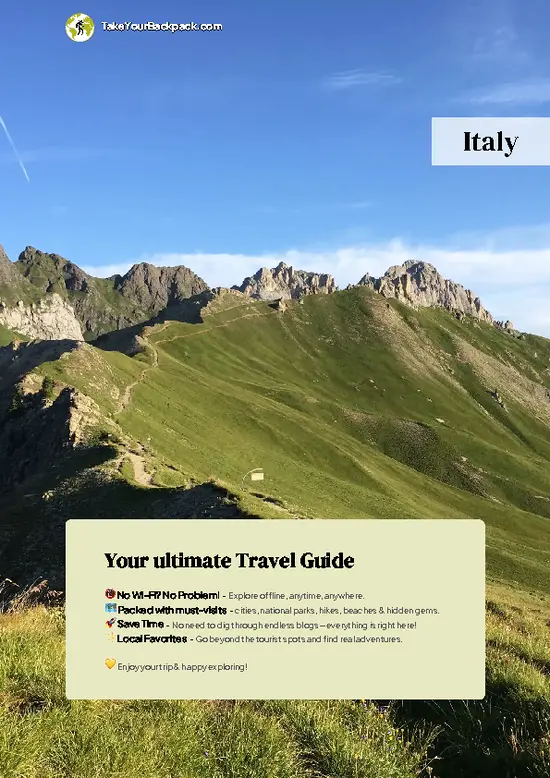
example page 0 from our offline Travel Guide for Italy
example page 1 from our offline Travel Guide for Italy
example page 2 from our offline Travel Guide for Italy
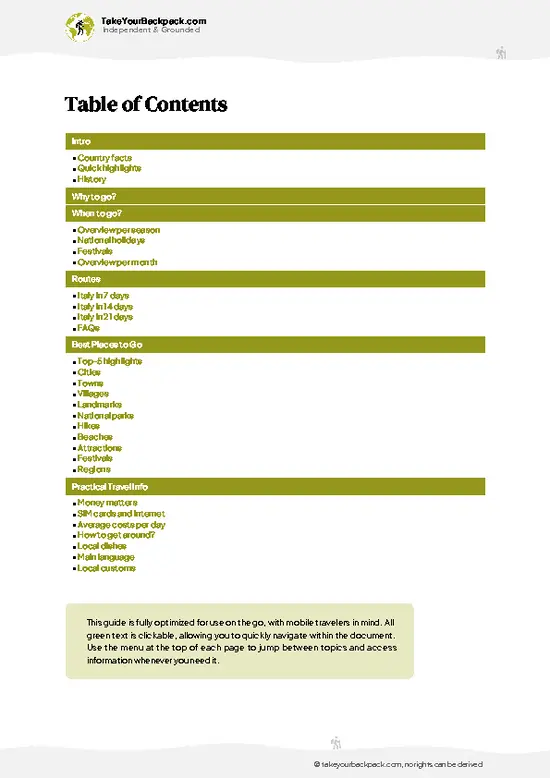
example page 3 from our offline Travel Guide for Italy
example page 4 from our offline Travel Guide for Italy
example page 5 from our offline Travel Guide for Italy
example page 6 from our offline Travel Guide for Italy
example page 7 from our offline Travel Guide for Italy
The digital guide (526 pages) contains:
143 highlights, ranked by travel appeal
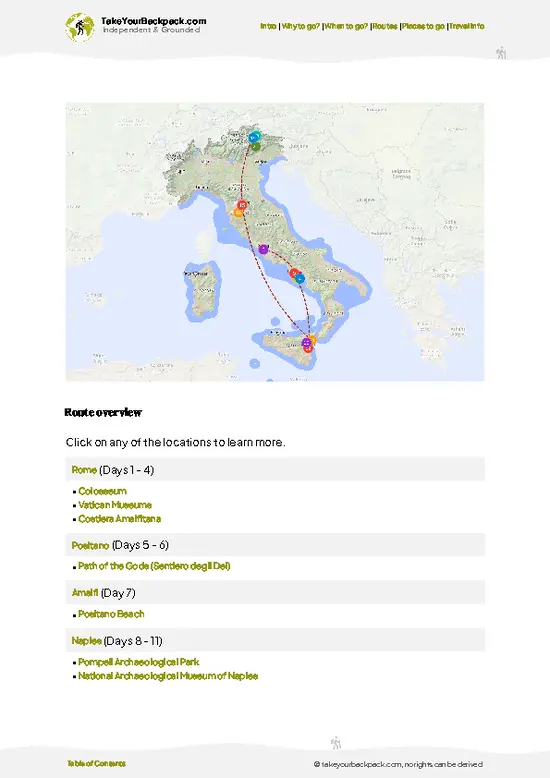
Optimized 7, 14 & 21-day travel routes
Cities, national parks, landmarks, beaches
How to get around
Offline-friendly for travel without Wi-Fi
👉 Click to see all 30+ guide features

📅 Plan smarter in minutes, not weeks
Month by month travel advice
Festivals & national holidays
Budget expectations

🗺️ Go to the right places, skip the overrated ones
Honest pros & cons of destinations
Top hikes, parks & viewpoints
Lesser-known places most travelers miss
Clear “worth it vs skip it” guidance

🛏️ Travel smoothly without rookie mistakes
Best areas to stay
Transport systems explained simply
Common scams & safety advice
SIM cards, money & practical tips

🌍 Understand the country, not just visit it
Culture & traditions
52 Essential phrases & customs
Festivals worth planning around
Traveler-friendly historical context
Insights that make places more meaningful

📱 Built for real travel conditions
Fully downloadable PDF
Works completely offline
Optimized for phone use
Useful in remote areas & buses
Everything in one place
Save weeks of stressful planning
Get instant access to your full guide. 30‑day money-back guarantee.
+ Add another guide for just £5.98

By proceeding you agree to our terms.
Sent to your inbox immediately after payment • 100% Secure Checkout
Best Backpacking Travel Advisor 2025 tourism awardBest Backpacking
Travel Advisor
2025
What others say about Take Your Backpack Guides:
⭐⭐⭐⭐⭐
Fantastic, amazing amount of information!
⭐⭐⭐⭐⭐
My goodness this is amazing, it's what I've been looking for hats off too you!
⭐⭐⭐⭐⭐
I think this is absolutely BRILLIANT
⭐⭐⭐⭐
Very complete and informative. It's still missing places, but I gotta to commend you
⭐⭐⭐⭐⭐
This is truly amazing, thank you, can't wait to explore it with my kids!
⭐⭐⭐⭐⭐
Awesome resource, thank you!
⭐⭐⭐⭐⭐
This is amazing! Can't wait to explore the ones I haven't seen
⭐⭐⭐⭐
I love this! Well done, great idea.
⭐⭐⭐⭐⭐
Thanks for taking the time to make this gem!
⭐⭐⭐⭐⭐
This might be the best website I've ever seen.
⭐⭐⭐⭐⭐
Congratulations, and thank you so much for your work; it's incredibly valuable.
⭐⭐⭐⭐
In all seriousness I think you did a great job pointing out the important spots
⭐⭐⭐⭐⭐
10/10 very good
⭐⭐⭐⭐⭐
As someone who's only just starting to visit regularly this is awesome, thank you.
⭐⭐⭐⭐
Thank you very much! I'm going to visit my dad, it's going to be very useful!
⭐⭐⭐⭐⭐
This is really cool! We'll be travelling for the first time and this definitely come in handy.
⭐⭐⭐⭐⭐
You are now our minister of culture, congratulations 👨‍💼
⭐⭐⭐⭐⭐
Just wanted to tell you that this is a pearl! Going to follow your recommendations.
⭐⭐⭐⭐⭐
This is so cool. I'll definitely be using the resource for my travels soon.
⭐⭐⭐⭐⭐
This is very impressive! Good work.
⭐⭐⭐⭐⭐
This is an amazing and informative site. Very well done!

🛏️ Where to stay?Choosing the right base

Aosta’s historic center is the heartbeat for backpackers craving a mix of safety, social buzz, and budget-friendly options. This compact area wraps you in narrow cobblestone streets where the scent of fresh espresso drifts from corner cafés, and locals chat animatedly over aperitifs. Staying here means you’re steps from Roman ruins and lively piazzas, perfect for spontaneous meetups or solo wandering without feeling isolated. Hostels and guesthouses cluster around this zone, offering easy access to communal spaces where you can swap trail stories or plan mountain day trips with fellow travelers. … read more 👉
Aosta’s historic center is the heartbeat for backpackers craving a mix of safety, social buzz, and budget-friendly options. This compact area wraps you in narrow cobblestone streets where the scent of fresh espresso drifts from corner cafés, and locals chat animatedly over aperitifs. Staying here means you’re steps from Roman ruins and lively piazzas, perfect for spontaneous meetups or solo wandering without feeling isolated. Hostels and guesthouses cluster around this zone, offering easy access to communal spaces where you can swap trail stories or plan mountain day trips with fellow travelers.

Venture outside the center, and the vibe shifts—quieter residential neighborhoods offer calm but lack the pulse and convenience that make backpacking in Aosta feel alive. The historic core’s blend of safety, social energy, and walkability isn’t just practical; it’s the secret sauce to unlocking the town’s authentic rhythm without burning your budget.

🚌 Getting aroundHow to get from A to B

Aosta moves at the pace of mountain air—crisp, clear, and unhurried. This isn’t a place where you’ll find frantic rush-hour crowds or a relentless timetable dictating your every step. Instead, the town flows with a relaxed rhythm, shaped by centuries-old stone streets and the slow drip of alpine sunlight through narrow alleys. The scent of fresh bread from local bakeries mingles with the cool, pine-scented breeze, inviting you to slow down and savor the moment. Here, transit isn’t about speed; it’s about fitting into the natural cadence of the town and its surroundings. Knowing how to navigate this flow means you’ll avoid wasted time and catch the best views without the tourist crush.


  • Walking: The heart of Aosta is compact and best explored on foot. Strolling through the Roman ruins and
read more 👉
Aosta moves at the pace of mountain air—crisp, clear, and unhurried. This isn’t a place where you’ll find frantic rush-hour crowds or a relentless timetable dictating your every step. Instead, the town flows with a relaxed rhythm, shaped by centuries-old stone streets and the slow drip of alpine sunlight through narrow alleys. The scent of fresh bread from local bakeries mingles with the cool, pine-scented breeze, inviting you to slow down and savor the moment. Here, transit isn’t about speed; it’s about fitting into the natural cadence of the town and its surroundings. Knowing how to navigate this flow means you’ll avoid wasted time and catch the best views without the tourist crush.


  • Walking: The heart of Aosta is compact and best explored on foot. Strolling through the Roman ruins and medieval lanes lets you absorb the textures and sounds—footsteps on cobblestones, the murmur of locals at cafes. Walking is free, flexible, and the only way to truly feel the town’s pulse.

  • Local Bus (Savda): Runs roughly from 7:00 AM to 7:00 PM with a ticket around €1.50. It’s slow but reliable, connecting Aosta to nearby villages and ski lifts. Perfect if you want to venture out without renting a car, but check schedules in advance—buses can be sparse on weekends.

  • Regional Train: The train station is a 10-minute walk from the center. Trains to Turin or Ivrea run every hour or so, starting early morning until late evening. Tickets hover around €5-€10. It’s a smooth, scenic ride through the valleys—ideal for day trips or arriving without hassle.

  • Bike Rentals: Available near the main square, bikes offer a faster way to explore the outskirts and nearby trails. Prices start at about €10 per day. The terrain can be hilly, so bring some stamina or opt for an e-bike to glide up those slopes with less sweat.

👛 Costs (as of 4 September 2026)Travel costs and budget guide for Aosta

Backpacking in Aosta, Italy, means stepping into a compact town where the Alps press close, and every euro counts toward savoring the crisp mountain air and ancient stone streets without breaking the bank.
  • Dorm Accommodation: Expect to pay around €25 to €40 per night for a bed in a hostel dorm. Options are limited but decent, often in converted historic buildings where the walls hold stories older than your guidebook. Booking ahead is smart, especially in peak season when hikers and skiers flood in.
  • Meals: Budget about €10 to €20 daily if you stick to casual spots. Grab a panino or a slice of pizza for €4-7, or hit a local bakery for fresh bread and cheese. Markets offer affordable ingredients if you want to DIY. Dining out at a trattoria will push you closer to €25 or more per meal, so save
read more 👉
Backpacking in Aosta, Italy, means stepping into a compact town where the Alps press close, and every euro counts toward savoring the crisp mountain air and ancient stone streets without breaking the bank.
  • Dorm Accommodation: Expect to pay around €25 to €40 per night for a bed in a hostel dorm. Options are limited but decent, often in converted historic buildings where the walls hold stories older than your guidebook. Booking ahead is smart, especially in peak season when hikers and skiers flood in.
  • Meals: Budget about €10 to €20 daily if you stick to casual spots. Grab a panino or a slice of pizza for €4-7, or hit a local bakery for fresh bread and cheese. Markets offer affordable ingredients if you want to DIY. Dining out at a trattoria will push you closer to €25 or more per meal, so save that for a special night.
  • Local Transport: Aosta is small enough to explore mostly on foot, but if you need buses, a single ticket costs about €1.50. Day passes hover around €4. Public transport is reliable but sparse on weekends, so plan accordingly.
  • Basic Activities/Entry Fees: Museums and historical sites typically charge €5 to €10. The Roman Theatre and Arch of Augustus are must-sees with modest fees. Hiking is free, but guided tours or ski passes will add €20 to €50 depending on the season and length.
  • Miscellaneous Expenses: Factor in about €5 to €10 for extras like bottled water, snacks, or a coffee break. Wi-Fi is often free in cafes but can be patchy, so consider a local SIM card if you need steady connectivity.

All told, a realistic daily budget for backpacking in Aosta lands between €50 and €90. This range covers the essentials without skimping on the experience—letting you soak in the mountain light and the scent of pine without counting every cent. The town’s compactness means you spend less on transport and more on moments that matter, like lingering over a slow espresso or wandering ancient streets as dusk settles.


source: lovevda.it
⚠️ Prices can change and everyone travels differently, so take this as a rough guide. Hope it helps you plan your adventure!

🚌 Day tripsEasy escapes and nearby places

Aosta, Italy, is a backpacker’s dream base, offering easy access to breathtaking landscapes and rich history. The charm of the town itself is just the beginning; the surrounding mountains and valleys are calling for exploration.

Gran Paradiso National Park
Just an hour’s bus ride from Aosta, this park is a haven for nature lovers. Picture yourself hiking through alpine meadows, the scent of wildflowers mingling with crisp mountain air. The trails vary from leisurely strolls to challenging hikes, so you can choose your adventure. Bring a packed lunch to enjoy with a view of the majestic Gran Paradiso peak. A day trip here costs around €10 for transport and a few euros for snacks. Late spring to early fall is ideal, but avoid the peak summer crowds. First-timers often underestimate the weather; … read more 👉
Aosta, Italy, is a backpacker’s dream base, offering easy access to breathtaking landscapes and rich history. The charm of the town itself is just the beginning; the surrounding mountains and valleys are calling for exploration.

Gran Paradiso National Park
Just an hour’s bus ride from Aosta, this park is a haven for nature lovers. Picture yourself hiking through alpine meadows, the scent of wildflowers mingling with crisp mountain air. The trails vary from leisurely strolls to challenging hikes, so you can choose your adventure. Bring a packed lunch to enjoy with a view of the majestic Gran Paradiso peak. A day trip here costs around €10 for transport and a few euros for snacks. Late spring to early fall is ideal, but avoid the peak summer crowds. First-timers often underestimate the weather; layers are essential, as temperatures can shift dramatically.


Courmayeur
A scenic 30-minute bus ride takes you to Courmayeur, a charming ski resort town. Even if you’re not hitting the slopes, the views of Mont Blanc are worth the trip. Stroll through the cobblestone streets, savoring local pastries at a café. If you’re feeling adventurous, take the Skyway Monte Bianco for a panoramic view that will leave you breathless. Budget around €15 for transport and a treat. Spring and early fall are perfect for fewer tourists and pleasant weather. A common rookie mistake? Not checking the Skyway schedule; it can close for maintenance.


Castel Savoia
Just a short bus ride from Aosta, this fairy-tale castle perched on a hill is a must-see. The vibrant colors of the castle against the backdrop of the Alps create a picture-perfect scene. The entrance fee is minimal, around €5, and the walk up offers a workout with rewarding views. Aim for a morning visit to avoid the afternoon heat and crowds. Many first-timers miss the charming village of Gressoney-Saint-Jean nearby, so take a detour to explore its quaint streets.


Val di Cogne
About an hour from Aosta, Val di Cogne is a paradise for hikers and wildlife enthusiasts. The valley is known for its stunning waterfalls and diverse flora and fauna. Pack a picnic and choose from various trails that cater to all skill levels. The bus fare is around €10, and the best time to visit is late spring when the flowers bloom. A common mistake is underestimating the trail lengths; plan your day accordingly to avoid rushing back.
Want to know what more Italy offers?
The Italy Travel Guide describes 143 highlights, from cities to national parks, from beaches to hikes

Get the Travel Guide -

🛡️ SafetyScams, Hazards, and Annoyances

Aosta is generally safe, but like any place, a bit of awareness goes a long way. Stick to well-lit streets at night, especially around the old town. The atmosphere shifts after dark; fewer people are out, and it’s easy to feel isolated.

Watch for the occasional distraction scam—someone might ask for directions while an accomplice swipes your bag. Keep your belongings close, especially in crowded areas like the market.

Solo travelers should embrace the local vibe; engage with shopkeepers or fellow diners. They’re often friendly and can offer tips on avoiding common annoyances, like overly aggressive street performers. Trust your instincts, stay aware, and you’ll navigate Aosta like a pro.

FAQTraveler FAQ

Yes, Aosta is worth visiting for its well-preserved Roman ruins and Alpine charm, not just as a stopover. The town offers unique historical sites like the Arch of Augustus and a scenic mountain backdrop that enrich the experience.
Two days are sufficient to explore Aosta thoroughly, including its Roman sites, local museums, and nearby hiking trails. This allows time to enjoy the town without rushing and to take in the surrounding natural beauty.
Yes, Aosta can be visited as a day trip from nearby cities like Turin, which is about 115 kilometers away. The train or bus journey takes around 1.5 to 2 hours each way, making it feasible for a full day excursion.
⚠️ Things can change over time, so always validate details locally before you go.

Other Italian towns near Aosta

Explore more nearby:

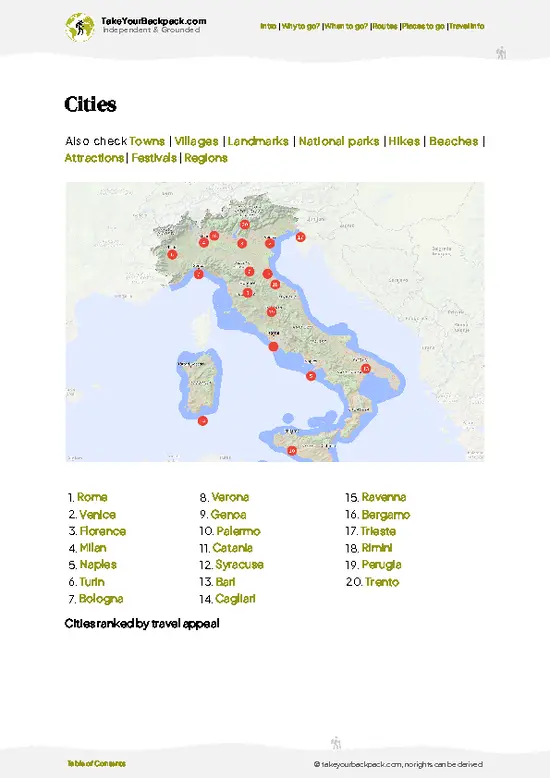
  • Lucca—Renaissance walls, tree-lined ramparts, bike paths| 329 km away
  • Pisa—Leaning tower, university district, Arno riverfront| 331 km away
  • Treviso—Canal network, frescoed buildings, local markets| 383 km away

💡 Not sure where to go next?
Create a personalized itinerary for Italy including Aosta and the places that fit your trip.

Generate my itinerary

👉 Discover all towns

Or checkout all Italy has to offer (think cities, towns, villages, national parks, hikes, beaches, festivals)
Country photo of Italy

We 💚 feedbackParting advice and final tips

Aosta’s charm lies in its rich Roman history, where ancient ruins whisper stories beneath the Alps’ watchful gaze. Strolling through the cobblestone streets, you can almost taste the local fontina cheese melting in your mouth. But be ready for the altitude; it can zap your energy if you’re not acclimated. Embrace the challenge, and the rewards will be worth every breath.

✈️ When did I visit Italy?
Italy I have vistited a couple of times: Rome already when I was still in high school, and I did a 7 day hike in the Dolomites in 2021.

✍️ Help improve this page!
The information on this page is based on my own backpacking experience in Italy, supplemented with up-to-date research and feedback from other travelers. Travel details can change, so if you notice anything outdated or incomplete, feel free to let me know.


🙋‍♂️ Give feedback

👋 Meet the founderWho’s Behind Take Your Backpack?

Johan, backpacker and founder of TakeYourBackpackHi, I’m Johan (Netherlands 🇳🇱), the creator of TakeYourBackpack. Over the past decade, I’ve backpacked through 80+ countries across six continents, gaining extensive experience with independent travel, long-term trips, and overland routes.

This site is built on a combination of firsthand travel experience and carefully curated insights from other backpackers. Many guides are based on places I’ve personally visited, while others bring together tips, observations, and practical advice shared by trusted travelers I’ve met along the way.

The goal is to provide realistic, experience-driven guidance — not generic itineraries — so you can explore destinations with better context, clearer expectations, and more confidence.

Get full Italy guide •
Instant download • 143 highlights • Full Offline guide