v2.webp)
- Castello Svevo (Castello Alfonsino) — The imposing seaside fortress that has watched over Brindisi’s harbor for centuries; great for wandering the battlements, imagining naval sieges, and getting a clear view of the port and the two Roman columns.
- Cattedrale di Brindisi (Duomo) — A layered building: Romanesque/Norman exterior, a tall bell tower, and a crypt with religious artifacts. Worth visiting for its quiet atmosphere and the way it anchors the old town around Piazza Duomo.
- Chiesa di San Giovanni al Sepolcro — A compact, almost-medieval church linked to Crusader/Templar traditions and built on a circular, rotunda plan. It’s small but atmospheric — a window into Brindisi’s medieval crossroads identity.
- Colonna Terminale dell’Appia (Roman Column) — The traditional ”end of the Appian
- Castello Svevo (Castello Alfonsino) — The imposing seaside fortress that has watched over Brindisi’s harbor for centuries; great for wandering the battlements, imagining naval sieges, and getting a clear view of the port and the two Roman columns.
- Cattedrale di Brindisi (Duomo) — A layered building: Romanesque/Norman exterior, a tall bell tower, and a crypt with religious artifacts. Worth visiting for its quiet atmosphere and the way it anchors the old town around Piazza Duomo.
- Chiesa di San Giovanni al Sepolcro — A compact, almost-medieval church linked to Crusader/Templar traditions and built on a circular, rotunda plan. It’s small but atmospheric — a window into Brindisi’s medieval crossroads identity.
- Colonna Terminale dell’Appia (Roman Column) — The traditional ”end of the Appian Way” marker at the port; a short, physical reminder that Brindisi was the Roman gateway to the East. Iconic for photos and for the sense of continuity with antiquity.
- Museo Archeologico Provinciale “Francesco Ribezzo” — Housed in an elegant palazzo, this museum gathers Messapian, Greek and Roman finds from the area: sculptures, mosaics, funerary items. It makes Brindisi’s ancient past tangible, not just listed on plaques.
- Lungomare Regina Margherita & the Porto — The waterfront promenade where locals stroll, ferries come and go, and sunsets light up the sea. It’s the city’s social spine: cafés, benches, and the real-life soundtrack of a working port.
- Monumento al Marinaio d’Italia / Memorials on the waterfront — The maritime monuments and anchors along the harbor honour Brindisi’s seafaring history; they’re powerful to see in person and make the port feel like a lived, commemorated place rather than just infrastructure.
- Teatro Verdi — A historic theater in the center where you can catch local concerts, plays, or at least admire the ornate interior and classic Italian theater vibe. A good place to check the program for an evening out.
- Mercato del Pesce (the fish market at the port) — Early-morning chaos and the freshest catch you’ll see in the city. Beyond food, it’s one of the best sensory snapshots of daily Brindisi life — smells, shouts, bargains, and the fishermen’s rhythms.
- Santa Maria del Casale — A 13th-century Gothic church slightly off the main tourist trails, with striking architecture and fresco fragments. It’s quieter than the Duomo but rich in local history and atmosphere.
Spotted a mistake or missing something? Contact us.

Ebike tours: the villages of Valle d'Itria and tasting of typical products

Lunch at Masseria Pasta Making Experience

Ostuni Orecchiette Cooking Class with Nonna

Private guided tour in Ostuni: exploring the panoramic historical centre

Orecchiette Cooking Class with Apulian Dinner and Wine

Ostuni : family cooking class in our country house

Toast : Alberobello, Locorot., Ostuni, guided tour, 2 Testings

Private Wine Tour from Ostuni with Lunch including Alberobello and Locorotondo

cooking class Ostuni


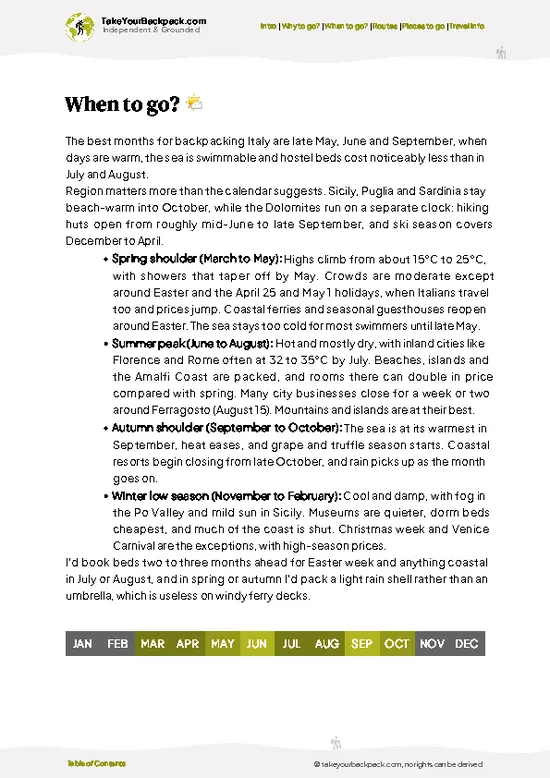
 Best Backpacking
.jpg) Hi, I’m Johan (Netherlands 🇳🇱), the creator of TakeYourBackpack. Over the past 3 decades, I’ve backpacked through 90+ countries across six continents, gaining extensive experience with independent travel, long-term trips, and overland routes.
Hi, I’m Johan (Netherlands 🇳🇱), the creator of TakeYourBackpack. Over the past 3 decades, I’ve backpacked through 90+ countries across six continents, gaining extensive experience with independent travel, long-term trips, and overland routes.