×

Italy🇮🇹 | landmarksMount EtnaActive volcano, lava fields, summit craters | things to do and best time to go

Explore Prosecco HillsExplore Piazza dei Miracoli

Backpacking in Mount Etna
UNESCO World Heritage site
🌟 Highlightunique site ranked #4
By Johan Kruseman 🇳🇱 | Updated October 15, 2026

Most people realize way too late that Etna is one of the easiest big volcanoes on earth to get close to using regular public transport and cheap local tours, instead of pricey “expedition” packages. Mount Etna sits on Sicily’s east coast, looming over Catania and visible from half the island on a clear day. As a backpacker destination, it’s a weird mix of raw geology and light circus. The scale is jaw-dropping, the lava fields feel otherworldly, and when the summit is puffing, it’s pure primal theater. But it’s not remote: busloads roll up to Rifugio Sapienza, souvenir stalls sell lava keychains, and guided summit trips aren’t cheap, especially once you add cable car and 4x4 fees. Still, hiking the quieter side trails, hearing locals talk about eruptions they grew up with, and watching the light change over black rock and snow? That’s the real Etna, and it’s worth the effort.

Discover everything you want to know in the 📖 Italy Travel Guide.


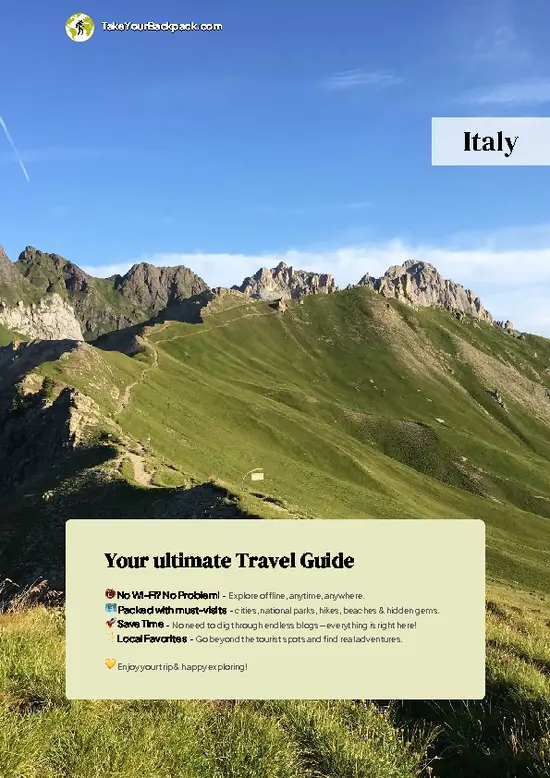
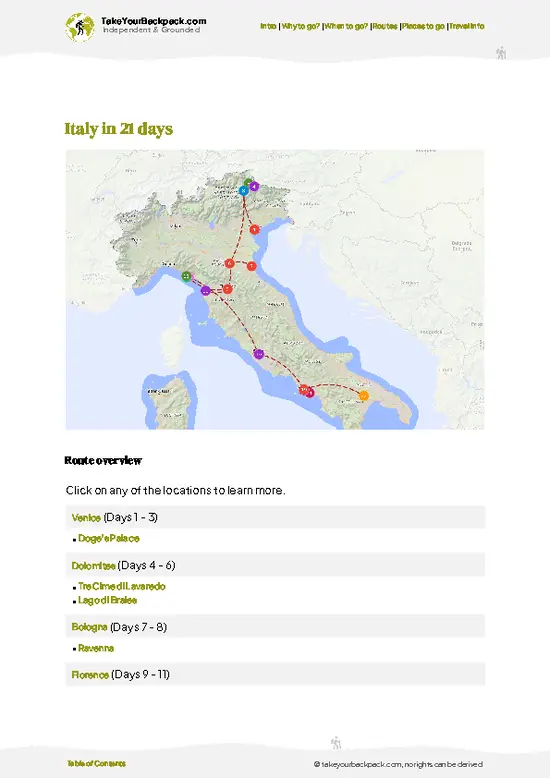
example page 0 from our offline Travel Guide for Italy
example page 1 from our offline Travel Guide for Italy
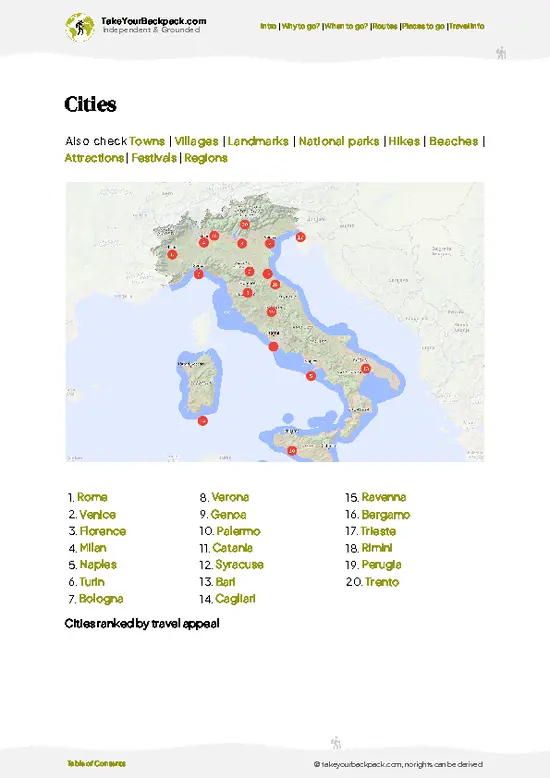
example page 2 from our offline Travel Guide for Italy
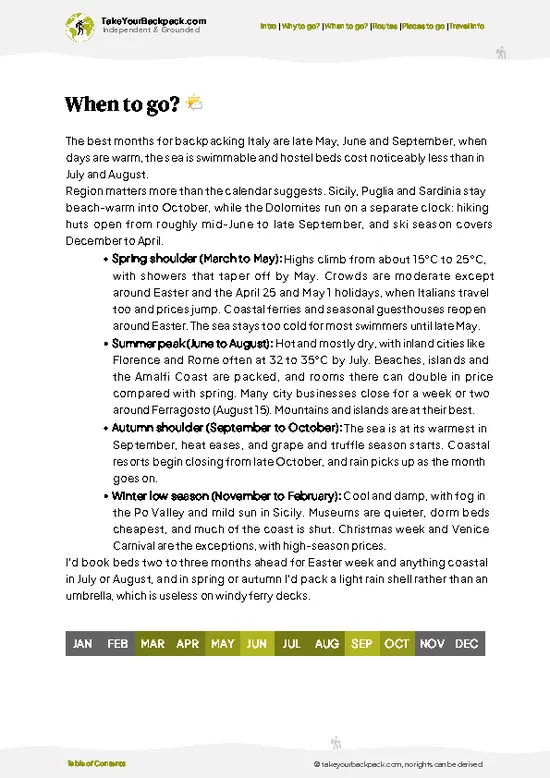
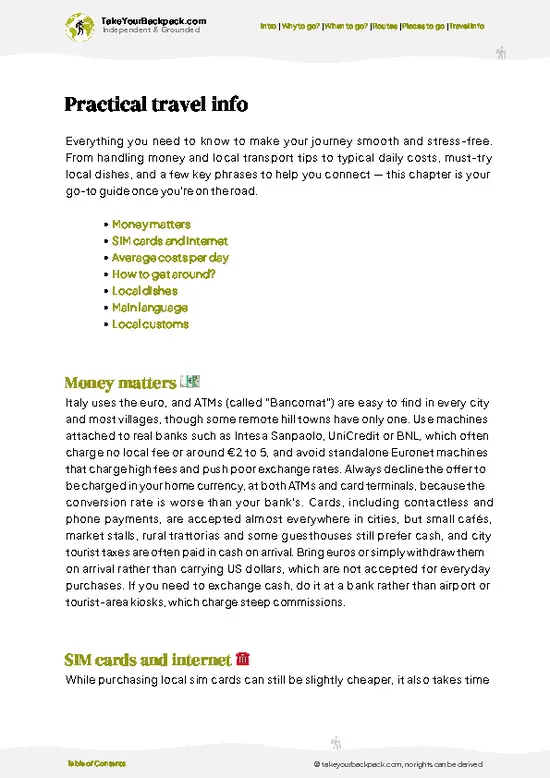
example page 3 from our offline Travel Guide for Italy
example page 4 from our offline Travel Guide for Italy
example page 5 from our offline Travel Guide for Italy
example page 6 from our offline Travel Guide for Italy
example page 7 from our offline Travel Guide for Italy
Loading the map 🌍
CLICK TO FILTER
cities
towns
villages
landmarks
national parks
hikes
beaches
attractions
festivals
regions
SHOW COUNTRY’S BESTSHOW ALL

✨ Why go?
Ranked #4 unique site in Italy
Reasons people choose to visit here

Mount Etna isn’t just another volcano; it’s a living, breathing giant that demands your attention. Sure, you’ll encounter crowds, especially during peak tourist season, but don’t let that deter you. The effort-to-reward ratio is off the charts. Hiking up its slopes offers a chance to witness breathtaking views and the raw power of nature.

You can explore craters and lava fields that tell stories of eruptions past. The accessibility is a huge plus; you can take a cable car or join a guided tour if you’re not feeling the full hike. Plus, it fits perfectly into a broader route through Sicily, making it easy to combine with charming towns like Taormina or Catania.

And let’s talk cost: entry fees are minimal, especially compared to other iconic sites. You’re not just ticking off a box; you’re … read more 👉
Mount Etna isn’t just another volcano; it’s a living, breathing giant that demands your attention. Sure, you’ll encounter crowds, especially during peak tourist season, but don’t let that deter you. The effort-to-reward ratio is off the charts. Hiking up its slopes offers a chance to witness breathtaking views and the raw power of nature.

You can explore craters and lava fields that tell stories of eruptions past. The accessibility is a huge plus; you can take a cable car or join a guided tour if you’re not feeling the full hike. Plus, it fits perfectly into a broader route through Sicily, making it easy to combine with charming towns like Taormina or Catania.

And let’s talk cost: entry fees are minimal, especially compared to other iconic sites. You’re not just ticking off a box; you’re experiencing a dynamic landscape that changes with every visit. Mount Etna is a reminder that sometimes the most authentic experiences are found in the places that don’t need a filter.

💡 HighlightsPlaces and moments you shouldn't skip

  • Summit craters and active eruptions — Etna is alive: steam, fresh lava fields and the occasional fireworks from the summit craters remind you this isn’t just a mountain, it’s a working planet. Access above certain elevations is restricted and guided visits are the way to safely feel the raw power up close.
  • Valle del Bove — A huge, horseshoe-shaped caldera on the east flank that funnels and frames lava flows; it’s dramatic, vast and great for seeing the scale of Etna’s eruptions. Personal favorite — the feel of standing on the rim and watching the scarred amphitheatre unfold below is unforgettable.
  • Recent lava flows and cone fields — Walkable patches of very recent geology (think 1980s-2000s eruptions) create a stark, black moonscape dotted with jagged cones. It’s one of the best places
… read more 👉
  • Summit craters and active eruptions — Etna is alive: steam, fresh lava fields and the occasional fireworks from the summit craters remind you this isn’t just a mountain, it’s a working planet. Access above certain elevations is restricted and guided visits are the way to safely feel the raw power up close.
  • Valle del Bove — A huge, horseshoe-shaped caldera on the east flank that funnels and frames lava flows; it’s dramatic, vast and great for seeing the scale of Etna’s eruptions. Personal favorite — the feel of standing on the rim and watching the scarred amphitheatre unfold below is unforgettable.
  • Recent lava flows and cone fields — Walkable patches of very recent geology (think 1980s-2000s eruptions) create a stark, black moonscape dotted with jagged cones. It’s one of the best places in the world to literally read volcanic history with your boots.
  • Lava caves and ice caves — Etna’s lava tubes (like the famous Grotta del Gelo) hide icy pockets and weird microclimates; spelunking here gives you a totally different volcanic experience, sheltered from wind and sun.
  • Volcanic vineyards and Etna wine culture — Vineyards cling to the black slopes in terraces; the lava-rich soils produce surprisingly elegant wines and ancient vines. Small family wineries and tastings among lava stone walls are a cultural highlight you won’t find on every volcano.
  • Skiing with a view of the sea — In winter you can ski or board on Etna’s slopes and then, on a clear day, look south to the Mediterranean. It’s the oddball combo of snow, sea and volcanic desert all in one outing.
  • Rifugio Sapienza, cable car and 4x4 routes — The cable car and off-road shuttles save time and deliver you to high-altitude trails, craters and viewpoints; Rifugio Sapienza is the hub for guides, info and the jump-off point for most excursions. Practical, noisy and essential — especially if you don’t want a full-day thigh workout.
Spotted a mistake or missing something? Contact us.

Things to do around Mount Etna

Ratings based on Tripadvisor reviews. When you book through this link, you support our work at no extra cost to you.

🌤️ When to go?Best time to visit Mount Etna

  • Weather: Mount Etna’s weather swings hard. Summer (June to August) is dry and hot, often hitting 30-35°C (86-95°F) on lower slopes, but the summit stays cooler. Winter brings snow and ice, making trails tricky or closed. Spring and fall offer mild, stable conditions—ideal for hiking without the scorch or freeze.
  • Temperature: Expect a big range. Base temperatures in spring/fall hover around 15-20°C (59-68°F), but near the summit, it can drop below freezing even in late spring. Dress in layers; the mountain doesn’t play fair with your comfort zone.
  • Daylight Hours: Summer gives you long days—up to 14-15 hours of light—perfect for extended treks. Winter shrinks daylight to about 9-10 hours, limiting your window for safe exploration.
  • Crowds: Summer is peak tourist season, especially July and
… read more 👉
  • Weather: Mount Etna’s weather swings hard. Summer (June to August) is dry and hot, often hitting 30-35°C (86-95°F) on lower slopes, but the summit stays cooler. Winter brings snow and ice, making trails tricky or closed. Spring and fall offer mild, stable conditions—ideal for hiking without the scorch or freeze.
  • Temperature: Expect a big range. Base temperatures in spring/fall hover around 15-20°C (59-68°F), but near the summit, it can drop below freezing even in late spring. Dress in layers; the mountain doesn’t play fair with your comfort zone.
  • Daylight Hours: Summer gives you long days—up to 14-15 hours of light—perfect for extended treks. Winter shrinks daylight to about 9-10 hours, limiting your window for safe exploration.
  • Crowds: Summer is peak tourist season, especially July and August, when the cable cars and trails fill up. Spring and fall see fewer visitors, letting you soak in the raw volcanic landscape without elbowing through selfie sticks.
  • Seasonal Activities: Winter is for snowshoeing and skiing on Etna’s slopes, a side of the volcano many miss. Spring and fall offer wildflower blooms and lava field hikes. Summer’s volcanic glow tours at night are popular but packed.
  • Price Fluctuations: Expect inflated prices for accommodation and tours in summer. Shoulder seasons (April-May, September-October) offer better deals and more flexible bookings.
Pro-tip: Aim for late spring or early fall. You dodge the crowds, catch decent weather, and get the best bang for your buck without sacrificing the full Etna experience.


source: climatestotravel.comJANJanuary: fair for travelingFEBFebruary: fair for travelingMARMarch: good for travelingAPRApril: highly recommended for travelingMAYMay: excellent for travelingJUNJune: highly recommended for travelingJULJuly: good for travelingAUGAugust: good for travelingSEPSeptember: excellent for travelingOCTOctober: highly recommended for travelingNOVNovember: good for travelingDECDecember: fair for traveling
italy-unique-site-mount-etna
© Google | Doppy (winnie)

✈️ The backpacker research shortcutItaly Travel Guide

An offline-friendly backpacking guide with optimized travel routes, ranked highlights, transport advice, and the best areas to stay.
example page 0 from our offline Travel Guide for Italy
example page 1 from our offline Travel Guide for Italy
example page 2 from our offline Travel Guide for Italy
example page 3 from our offline Travel Guide for Italy
example page 4 from our offline Travel Guide for Italy
example page 5 from our offline Travel Guide for Italy
example page 6 from our offline Travel Guide for Italy
example page 7 from our offline Travel Guide for Italy
The digital guide (523 pages) contains:
✅ 142 highlights, ranked by travel appeal
✅ Optimized 7, 14 & 21-day travel routes
✅ Cities, national parks, landmarks, beaches
✅ How to get around
✅ Offline-friendly for travel without Wi-Fi
👉 Click to see all 30+ guide features

📅 Plan smarter in minutes, not weeks
✅ Month by month travel advice
✅ Festivals & national holidays
✅ Budget expectations

🗺️ Go to the right places, skip the overrated ones
✅ Honest pros & cons of destinations
✅ Top hikes, parks & viewpoints
✅ Lesser-known places most travelers miss
✅ Clear “worth it vs skip it” guidance

🛏️ Travel smoothly without rookie mistakes
✅ Best areas to stay
✅ Transport systems explained simply
✅ Common scams & safety advice
✅ SIM cards, money & practical tips

🌍 Understand the country, not just visit it
✅ Culture & traditions
✅ 52 Essential phrases & customs
✅ Festivals worth planning around
✅ Traveler-friendly historical context
✅ Insights that make places more meaningful

📱 Built for real travel conditions
✅ Fully downloadable PDF
✅ Works completely offline
✅ Optimized for phone use
✅ Useful in remote areas & buses
✅ Everything in one place
Stop searching, start planning
Get instant access to your full guide. 30‑day money-back guarantee.
+ Add another guide for just

By proceeding you agree to our terms.
Sent to your inbox immediately after payment • 100% Secure Checkout
Best Backpacking Travel Advisor 2025 tourism awardBest Backpacking
Travel Advisor
2025
What others say about Take Your Backpack Guides:
⭐⭐⭐⭐⭐
Fantastic, amazing amount of information!
⭐⭐⭐⭐⭐
My goodness this is amazing, it's what I've been looking for hats off too you!
⭐⭐⭐⭐⭐
I think this is absolutely BRILLIANT
⭐⭐⭐⭐
Very complete and informative. It's still missing places, but I gotta to commend you
⭐⭐⭐⭐⭐
This is truly amazing, thank you, can't wait to explore it with my kids!
⭐⭐⭐⭐⭐
Awesome resource, thank you!
⭐⭐⭐⭐⭐
This is amazing! Can't wait to explore the ones I haven't seen
⭐⭐⭐⭐
I love this! Well done, great idea.
⭐⭐⭐⭐⭐
Thanks for taking the time to make this gem!
⭐⭐⭐⭐⭐
This might be the best website I've ever seen.
⭐⭐⭐⭐⭐
Congratulations, and thank you so much for your work; it's incredibly valuable.
⭐⭐⭐⭐
In all seriousness I think you did a great job pointing out the important spots
⭐⭐⭐⭐⭐
10/10 very good
⭐⭐⭐⭐⭐
As someone who's only just starting to visit regularly this is awesome, thank you.
⭐⭐⭐⭐
Thank you very much! I'm going to visit my dad, it's going to be very useful!
⭐⭐⭐⭐⭐
This is really cool! We'll be travelling for the first time and this definitely come in handy.
⭐⭐⭐⭐⭐
You are now our minister of culture, congratulations 👨‍💼
⭐⭐⭐⭐⭐
Just wanted to tell you that this is a pearl! Going to follow your recommendations.
⭐⭐⭐⭐⭐
This is so cool. I'll definitely be using the resource for my travels soon.
⭐⭐⭐⭐⭐
This is very impressive! Good work.
⭐⭐⭐⭐⭐
This is an amazing and informative site. Very well done!

🛏️ Where to stay?Where staying makes the most sense

When it comes to Mount Etna, the Instagram hype can be misleading. Yes, it’s a stunning volcano, but the crowds can be overwhelming, especially during peak season. If you want to experience the real magic, you need to choose your base wisely.

Start in Catania. This city is a lively hub with a vibrant atmosphere. You’ll find plenty of budget-friendly accommodations and a social scene that’s perfect for solo travelers. The bustling markets and street food will keep your taste buds happy, and the nightlife is a great way to meet fellow backpackers. Just be prepared for the noise; it’s part of the … read more 👉
When it comes to Mount Etna, the Instagram hype can be misleading. Yes, it’s a stunning volcano, but the crowds can be overwhelming, especially during peak season. If you want to experience the real magic, you need to choose your base wisely.

Start in Catania. This city is a lively hub with a vibrant atmosphere. You’ll find plenty of budget-friendly accommodations and a social scene that’s perfect for solo travelers. The bustling markets and street food will keep your taste buds happy, and the nightlife is a great way to meet fellow backpackers. Just be prepared for the noise; it’s part of the charm.

Another solid option is Taormina, though it’s a bit pricier. The views are jaw-dropping, and the town has a laid-back vibe. While it can feel touristy, the local cafes and shops offer a glimpse into authentic Sicilian life. Plus, it’s a short bus ride to the Etna trailheads.

For a quieter experience, consider Nicolosi. This small town is often overlooked but offers direct access to the volcano. It’s safe, friendly, and has a few cozy spots to crash. You’ll find fewer tourists here, allowing you to soak in the local culture without the chaos.

👛 Costs (as of 15 October 2026)Travel costs and budget guide for Mount Etna

Visiting Mount Etna can be a thrilling experience, but it comes with its own set of costs. Here’s a breakdown to help you plan your adventure without breaking the bank.
  • Entrance Fees: If you’re heading to the Silvestri Craters, the entrance fee is around €10. For a guided tour that includes a cable car ride, expect to pay between €30 and €50. This is worth it for the insights and safety, especially if you’re venturing into more rugged areas.
  • Transportation: Getting to Mount Etna from Catania is straightforward. Buses run frequently and cost about €5 each way. If you prefer a taxi, budget around €50 to €70 for a one-way trip. Renting a car can be a good option too, with daily rates starting around €30, plus fuel.
  • Guided Tours: If you want a deeper dive into the volcano’s history and geology, guided
… read more 👉
Visiting Mount Etna can be a thrilling experience, but it comes with its own set of costs. Here’s a breakdown to help you plan your adventure without breaking the bank.
  • Entrance Fees: If you’re heading to the Silvestri Craters, the entrance fee is around €10. For a guided tour that includes a cable car ride, expect to pay between €30 and €50. This is worth it for the insights and safety, especially if you’re venturing into more rugged areas.
  • Transportation: Getting to Mount Etna from Catania is straightforward. Buses run frequently and cost about €5 each way. If you prefer a taxi, budget around €50 to €70 for a one-way trip. Renting a car can be a good option too, with daily rates starting around €30, plus fuel.
  • Guided Tours: If you want a deeper dive into the volcano’s history and geology, guided tours are available. Prices range from €50 to €150, depending on the length and inclusions. Some tours even offer food and wine tastings, which can elevate the experience.
  • Food and Drink: Dining options vary widely. A meal at a local trattoria can cost between €15 and €30. If you’re looking for a quick bite, street food or snacks will set you back about €5 to €10. Don’t skip the local wines; a glass will typically cost around €5.
  • Equipment Rentals: If you plan to hike, consider renting gear. Hiking poles and boots can be rented for about €10 each. If you need a helmet or other safety gear, expect to pay an additional €5 to €15.

These costs can add up, but the experience of standing on an active volcano is priceless. Plan wisely, and you’ll find that the real magic of Mount Etna is worth every cent.
⚠️ Prices can change and everyone travels differently, so take this as a rough guide. Hope it helps you plan your adventure!

FAQFrequently asked questions about Mount Etna

Mount Etna is an active stratovolcano on the east coast of Sicily, Italy, and is one of the most active volcanoes in the world. It stands about 3,329 meters (10,922 feet) tall, making it the highest volcano in Europe. It is known for frequent eruptions and a diverse landscape of lava flows, craters, and forests.
A typical visit to Mount Etna takes about half a day to a full day, depending on the activities planned. Guided tours to the summit or crater areas usually last 4 to 6 hours, while hiking or exploring the lower slopes can take longer. Plan extra time if you want to visit nearby towns or wine regions.
You can get to Mount Etna from Catania, the nearest major city, which is about 30 kilometers away. Public buses and organized tours run regularly from Catania and Taormina. Renting a car is also common, with roads leading up to various access points on the volcano.
⚠️ Things can change over time, so always validate details locally before you go.

Other Italian landmarks near Mount Etna

Explore more nearby:


💡 Not sure where to go next?
Create a personalized itinerary for Italy including Mount Etna and the places that fit your trip.

Generate my itinerary

👉 Discover all landmarks

Or checkout all Italy has to offer (think cities, towns, villages, national parks, hikes, beaches, festivals)
Country photo of Italy

We 💚 feedbackSumming up the experience

Mount Etna is a raw, powerful experience. Standing on the edge of an active volcano, you feel the earth’s heartbeat. That thrill? Totally worth it. But let’s be real: the crowds can be overwhelming, especially during peak season. You’ll share the trails with selfie-takers more interested in their Instagram feeds than the view. Embrace the chaos, but don’t let it drown out the magic of this living giant. It’s a wild ride, and you’ll want to be part of it.

✈️ When did I visit Italy?
Italy I have visited a couple of times: Rome already when I was still in high school, and I did a 7 day hike in the Dolomites in 2021.

✍️ Help improve this page!
The information on this page is based on my own backpacking experience in Italy, supplemented with up-to-date research and feedback from other travelers. Travel details can change, so if you notice anything outdated or incomplete, feel free to let me know.


🙋‍♂️ Give feedback

👋 Meet the founderWho’s Behind Take Your Backpack?

Johan, backpacker and founder of TakeYourBackpackHi, I’m Johan (Netherlands 🇳🇱), the creator of TakeYourBackpack. Over the past 3 decades, I’ve backpacked through 90+ countries across six continents, gaining extensive experience with independent travel, long-term trips, and overland routes.

This site is built on a combination of firsthand travel experience and carefully curated insights from other backpackers. Many guides are based on places I’ve personally visited, while others bring together tips, observations, and practical advice shared by trusted travelers I’ve met along the way.

The goal is to provide realistic, experience-driven guidance — not generic itineraries — so you can explore destinations with better context, clearer expectations, and more confidence.