×

Italy🇮🇹 | landmarksVia Appia. Regina ViarumAncient road, basalt paving, Roman milestones | things to do and best time to go

Explore Trulli of AlberobelloExplore Villa Adriana (Tivoli)

Backpacking in Via Appia. Regina Viarum
UNESCO World Heritage site
👀 For curious travelersunique site ranked #13
By Johan Kruseman 🇳🇱 | Updated September 4, 2026

Most people think the Via Appia is just “that old road with some ruins” you bike down for Instagram. That’s the tourist brochure version. In reality, the Regina Viarum runs out of Rome toward the southeast, and the stretch in Parco dell’Appia Antica feels like someone quietly left a 2,000‑year‑old highway open for wandering. As a backpacker, you get serious history for almost no money, but also patchy public transport, uneven cobbles, and weekend crowds of cyclists and strollers. The wow isn’t a single monument; it’s the slow realization that you’re literally walking Rome’s ancient exit lane, with tombs, pines, and big, cinematic light.

Discover everything you want to know in the 📖 Italy Travel Guide.


Get your Italy guide
143 ranked highlights, routes & tips, works offline (526 pages)
Loading the map 🌍
CLICK TO FILTER
cities
towns
villages
landmarks
national parks
hikes
beaches
attractions
festivals
regions
SHOW COUNTRY’S BESTSHOW ALL

✨ Why go?
Ranked #13 unique site in Italy
The unique appeal for travelers

The Via Appia, or Regina Viarum, is a must-see for backpackers who crave authenticity over Instagram filters. Yes, it can get crowded, especially near the popular spots, but that’s part of the experience. You’re walking on ancient stones that have seen centuries of history.

The cost? Almost nothing. Just a few euros for entry to some sites along the way. This isn’t just a stroll; it’s a journey through time, connecting you to the heart of Roman civilization.

It fits perfectly into a broader route, linking you to other gems like the Catacombs and the Baths of Caracalla. Each step is a reminder that you’re part of something bigger. So, if you’re in Rome, don’t just snap a pic—immerse yourself in the real magic of the Via Appia.
Want to include Via Appia. Regina Viarum in your Italy route?
Create a personalized Italy itinerary that includes Via Appia. Regina Viarum and the places that fit your trip — based on your travel style, budget, and available time. Get your route in seconds.

Generate my trip

💡 HighlightsWhat this place is best known for

  • The ancient road itself (the basalt paving and milestones) — Walk, bike, or rent a scooter on stretches of original basalt that Romans laid two millennia ago. You can still spot mile markers and inscriptions; nothing beats the tingle of stepping on stones people actually used in antiquity. (Personal favorite — best early-morning vibe and surprisingly peaceful.)
  • Mausoleum of Cecilia Metella — A massive, well-preserved cylindrical tomb that reads like a Roman billboard: powerful family, serious wealth. Its fortress-like silhouette on a hill gives great views and an immediate sense of how the road showcased elite power.
  • Catacombs of San Sebastiano — One of the largest Christian burial complexes under the Appian Way, with frescoes, carved tombs and atmospheric underground passageways. It’s
read more 👉
  • The ancient road itself (the basalt paving and milestones) — Walk, bike, or rent a scooter on stretches of original basalt that Romans laid two millennia ago. You can still spot mile markers and inscriptions; nothing beats the tingle of stepping on stones people actually used in antiquity. (Personal favorite — best early-morning vibe and surprisingly peaceful.)
  • Mausoleum of Cecilia Metella — A massive, well-preserved cylindrical tomb that reads like a Roman billboard: powerful family, serious wealth. Its fortress-like silhouette on a hill gives great views and an immediate sense of how the road showcased elite power.
  • Catacombs of San Sebastiano — One of the largest Christian burial complexes under the Appian Way, with frescoes, carved tombs and atmospheric underground passageways. It’s a hands-on history lesson about early Christian worship and burial customs — dim, cool and oddly moving.
  • Circus of Maxentius (Villa of Maxentius complex) — A surprisingly intact chariot-race track and imperial villa complex where you can still trace the starting gates and track lengths. It’s quieter than the Colosseum but gives the same scale-up-close, and the brickwork is gorgeous.
  • Villa dei Quintili — Big, rural Roman luxury: baths, mosaics, terraces and sweeping views over the countryside. Far from the bustle of central Rome, it shows how powerful Romans retreated to lavish estates along the Appian Way.
  • Aqueduct arches (Aqua Claudia & Anio Novus) — Monumental stone arches cutting across the landscape — the infrastructure that kept Rome alive. They make for great photos and a reminder that the area wasn’t just villas and tombs but a functioning metropolis-support system.
  • Domine Quo Vadis Church — Tiny, atmospheric chapel tied to the Peter legend (“Lord, where are you going?”) and set among olive trees. It’s intimate, quirky and full of local devotion — a nice contrast to the grand ruins nearby.
Spotted a mistake or missing something? Contact us.

Things to do near Via Appia. Regina Viarum

Ratings based on Tripadvisor reviews. When you book through this link, you support our work at no extra cost to you.

🌤️ When to go?Choosing the right time of year


  • Weather: Spring (April to June) and fall (September to October) offer mild, pleasant weather—think 15-25°C (59-77°F). Summer can scorch you with highs over 30°C (86°F), making the long walk less enjoyable.

  • Temperature: Winters dip to 5-12°C (41-54°F), which is chilly but manageable if you layer. Avoid July and August unless you love sweating through your shirt.

  • Daylight Hours: Late spring and early fall give you 10-12 hours of daylight—enough to explore without rushing but not so long that you’re stuck in the heat all day.

  • Crowds: Summer draws tourists in droves, turning the Via Appia into a congested photo op. Shoulder seasons see fewer people, letting you soak in the ancient stones without elbowing through selfie sticks.

  • Seasonal Activities: Spring and fall bring local events
read more 👉

  • Weather: Spring (April to June) and fall (September to October) offer mild, pleasant weather—think 15-25°C (59-77°F). Summer can scorch you with highs over 30°C (86°F), making the long walk less enjoyable.

  • Temperature: Winters dip to 5-12°C (41-54°F), which is chilly but manageable if you layer. Avoid July and August unless you love sweating through your shirt.

  • Daylight Hours: Late spring and early fall give you 10-12 hours of daylight—enough to explore without rushing but not so long that you’re stuck in the heat all day.

  • Crowds: Summer draws tourists in droves, turning the Via Appia into a congested photo op. Shoulder seasons see fewer people, letting you soak in the ancient stones without elbowing through selfie sticks.

  • Seasonal Activities: Spring and fall bring local events and guided walks that dive into the history and nature of the route, adding layers to your experience beyond just the ruins.

  • Price Fluctuations: Accommodation and transport costs spike in summer. Visiting off-peak means better deals and less tourist inflation, stretching your backpacking budget further.


Pro-tip: Aim for late April or early October—cool enough to walk comfortably, quiet enough to feel like you’re stepping back in time, and rich with local life that summer crowds drown out.


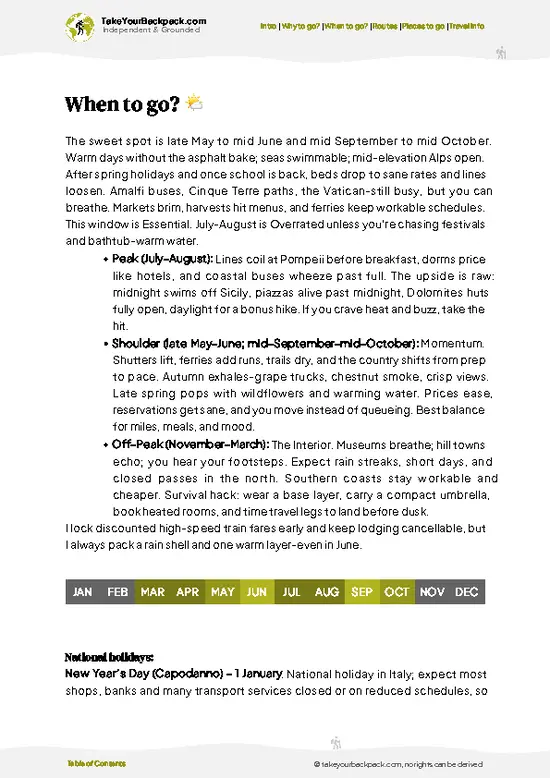
source: climatestotravel.comJANJanuary: good for travelingFEBFebruary: good for travelingMARMarch: highly recommended for travelingAPRApril: excellent for travelingMAYMay: excellent for travelingJUNJune: highly recommended for travelingJULJuly: fair for travelingAUGAugust: fair for travelingSEPSeptember: excellent for travelingOCTOctober: excellent for travelingNOVNovember: good for travelingDECDecember: good for traveling
when-to-go

✈️ The backpacker research shortcutItaly Travel Guide

An offline-friendly backpacking guide with optimized travel routes, ranked highlights, transport advice, and the best areas to stay.
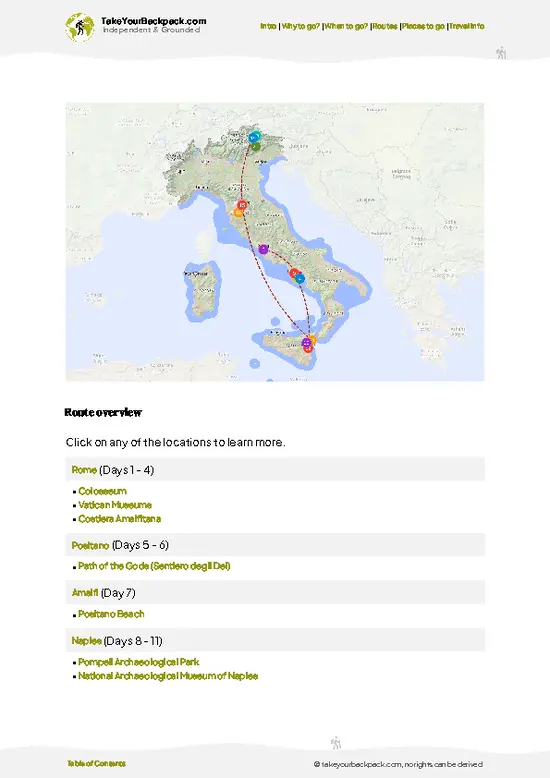
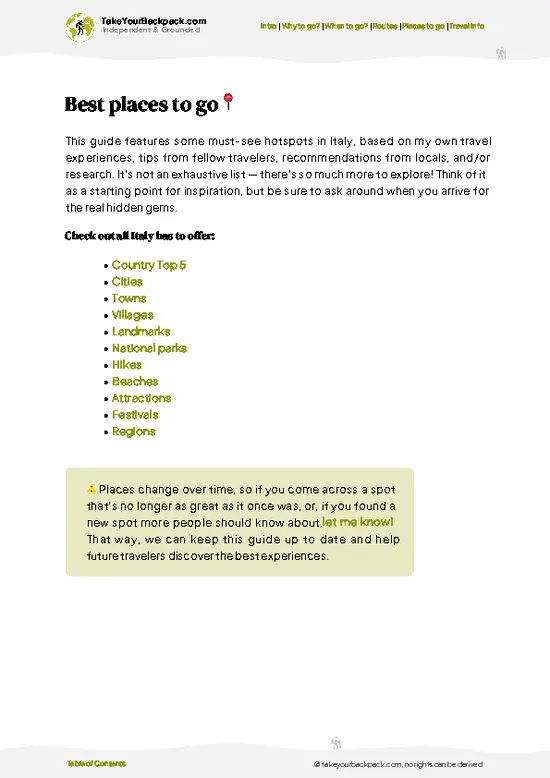
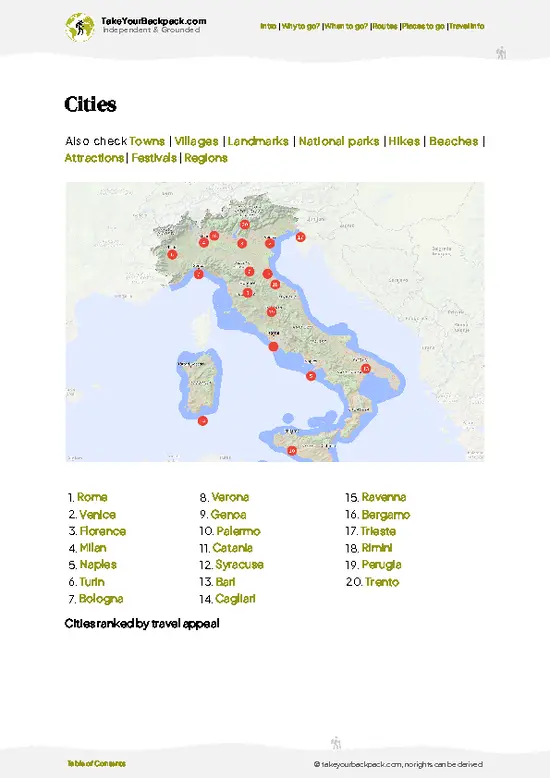
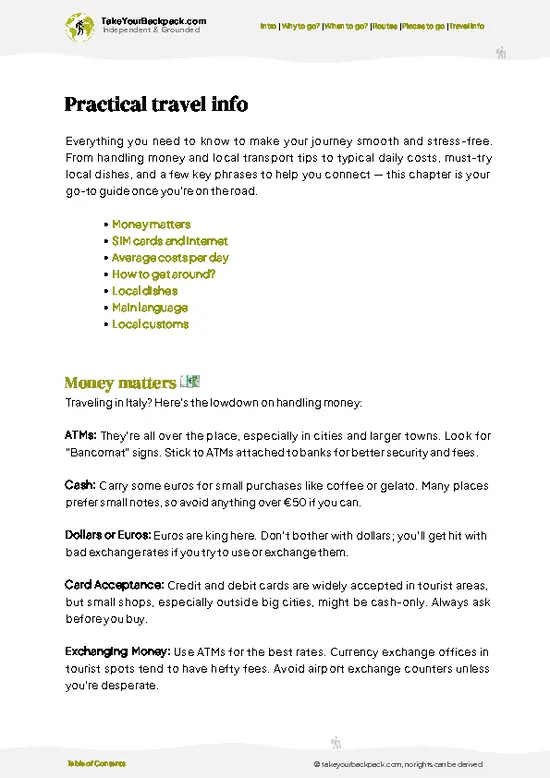
example page 0 from our offline Travel Guide for Italy
example page 1 from our offline Travel Guide for Italy
example page 2 from our offline Travel Guide for Italy
example page 3 from our offline Travel Guide for Italy
example page 4 from our offline Travel Guide for Italy
example page 5 from our offline Travel Guide for Italy
example page 6 from our offline Travel Guide for Italy
example page 7 from our offline Travel Guide for Italy
The digital guide (526 pages) contains:
143 highlights, ranked by travel appeal
Optimized 7, 14 & 21-day travel routes
Cities, national parks, landmarks, beaches
How to get around
Offline-friendly for travel without Wi-Fi
👉 Click to see all 30+ guide features

📅 Plan smarter in minutes, not weeks
Month by month travel advice
Festivals & national holidays
Budget expectations

🗺️ Go to the right places, skip the overrated ones
Honest pros & cons of destinations
Top hikes, parks & viewpoints
Lesser-known places most travelers miss
Clear “worth it vs skip it” guidance

🛏️ Travel smoothly without rookie mistakes
Best areas to stay
Transport systems explained simply
Common scams & safety advice
SIM cards, money & practical tips

🌍 Understand the country, not just visit it
Culture & traditions
52 Essential phrases & customs
Festivals worth planning around
Traveler-friendly historical context
Insights that make places more meaningful

📱 Built for real travel conditions
Fully downloadable PDF
Works completely offline
Optimized for phone use
Useful in remote areas & buses
Everything in one place
Save weeks of stressful planning
Get instant access to your full guide. 30‑day money-back guarantee.
+ Add another guide for just US$7.80

By proceeding you agree to our terms.
Sent to your inbox immediately after payment • 100% Secure Checkout
Best Backpacking Travel Advisor 2025 tourism awardBest Backpacking
Travel Advisor
2025
What others say about Take Your Backpack Guides:
⭐⭐⭐⭐⭐
Fantastic, amazing amount of information!
⭐⭐⭐⭐⭐
My goodness this is amazing, it's what I've been looking for hats off too you!
⭐⭐⭐⭐⭐
I think this is absolutely BRILLIANT
⭐⭐⭐⭐
Very complete and informative. It's still missing places, but I gotta to commend you
⭐⭐⭐⭐⭐
This is truly amazing, thank you, can't wait to explore it with my kids!
⭐⭐⭐⭐⭐
Awesome resource, thank you!
⭐⭐⭐⭐⭐
This is amazing! Can't wait to explore the ones I haven't seen
⭐⭐⭐⭐
I love this! Well done, great idea.
⭐⭐⭐⭐⭐
Thanks for taking the time to make this gem!
⭐⭐⭐⭐⭐
This might be the best website I've ever seen.
⭐⭐⭐⭐⭐
Congratulations, and thank you so much for your work; it's incredibly valuable.
⭐⭐⭐⭐
In all seriousness I think you did a great job pointing out the important spots
⭐⭐⭐⭐⭐
10/10 very good
⭐⭐⭐⭐⭐
As someone who's only just starting to visit regularly this is awesome, thank you.
⭐⭐⭐⭐
Thank you very much! I'm going to visit my dad, it's going to be very useful!
⭐⭐⭐⭐⭐
This is really cool! We'll be travelling for the first time and this definitely come in handy.
⭐⭐⭐⭐⭐
You are now our minister of culture, congratulations 👨‍💼
⭐⭐⭐⭐⭐
Just wanted to tell you that this is a pearl! Going to follow your recommendations.
⭐⭐⭐⭐⭐
This is so cool. I'll definitely be using the resource for my travels soon.
⭐⭐⭐⭐⭐
This is very impressive! Good work.
⭐⭐⭐⭐⭐
This is an amazing and informative site. Very well done!

🛏️ Where to stay?Choosing the right base

Staying near the Via Appia, the ancient road that whispers tales of Roman glory, can be a mixed bag. Crowds flock to the popular spots, but if you dig a little deeper, you’ll find some real treasures.

Consider the neighborhoods of Testaccio and Trastevere. Testaccio has a gritty charm, with local markets and authentic eateries. It’s a hub for backpackers who want to mingle and share stories over a plate of cacio e pepe. Trastevere, on the other hand, offers vibrant nightlife and a bohemian vibe. The narrow streets are alive with music and laughter, perfect for solo travelers looking to connect. … read more 👉
Staying near the Via Appia, the ancient road that whispers tales of Roman glory, can be a mixed bag. Crowds flock to the popular spots, but if you dig a little deeper, you’ll find some real treasures.

Consider the neighborhoods of Testaccio and Trastevere. Testaccio has a gritty charm, with local markets and authentic eateries. It’s a hub for backpackers who want to mingle and share stories over a plate of cacio e pepe. Trastevere, on the other hand, offers vibrant nightlife and a bohemian vibe. The narrow streets are alive with music and laughter, perfect for solo travelers looking to connect.

Both areas are safe and well-connected to public transport, making it easy to explore the Via Appia and beyond. You’ll find a mix of budget-friendly options, from hostels to guesthouses, where the real magic happens—meeting fellow adventurers and soaking in the local culture.

👛 Costs (as of 4 September 2026)Typical daily expenses

Visiting the Via Appia, also known as the Regina Viarum, can be a rewarding experience, but it’s essential to know what you’re getting into financially.
  • Entrance Fees: The Via Appia itself is free to walk, but some sites along the route, like the Catacombs of San Callisto or San Sebastiano, charge an entrance fee. Expect to pay around €8-€10 per person for these catacombs. Guided tours can run higher, around €15-€25, depending on the package.
  • Transportation: Getting to the Via Appia from central Rome can cost you. Public transport is your best bet. A single metro or bus ticket is about €1.50. If you prefer a taxi or rideshare, budget around €15-€30 for a one-way trip, depending on your starting point.
  • Food and Drink: There are limited dining options directly on the Via Appia, but nearby neighborhoods
read more 👉
Visiting the Via Appia, also known as the Regina Viarum, can be a rewarding experience, but it’s essential to know what you’re getting into financially.
  • Entrance Fees: The Via Appia itself is free to walk, but some sites along the route, like the Catacombs of San Callisto or San Sebastiano, charge an entrance fee. Expect to pay around €8-€10 per person for these catacombs. Guided tours can run higher, around €15-€25, depending on the package.
  • Transportation: Getting to the Via Appia from central Rome can cost you. Public transport is your best bet. A single metro or bus ticket is about €1.50. If you prefer a taxi or rideshare, budget around €15-€30 for a one-way trip, depending on your starting point.
  • Food and Drink: There are limited dining options directly on the Via Appia, but nearby neighborhoods offer some great choices. A casual meal can range from €10-€20. If you want to splurge on a sit-down meal, expect to pay €25-€50 per person, especially if you’re indulging in local wines.
  • Souvenirs and Extras: If you’re looking to take home a piece of history, budget around €5-€20 for small souvenirs. Local artisan shops may have unique items, but prices can vary widely. Always check for authenticity and quality.
  • Guided Tours: If you want a deeper dive into the history, consider a guided tour. Prices typically range from €30-€60 per person, depending on the duration and inclusions. Some tours may even offer bike rentals, which can add to the cost.

Understanding these costs helps you plan better and enjoy the real magic of the Via Appia without breaking the bank.


source: italia.it
⚠️ Prices can change and everyone travels differently, so take this as a rough guide. Hope it helps you plan your adventure!

FAQCommon questions from travelers

Via Appia, Regina Viarum, is an ancient Roman road built in 312 BC, known as the 'Queen of Roads' for its historical significance and engineering. It stretches over 560 kilometers from Rome to Brindisi, serving as a major route for military and trade purposes in antiquity.
Visiting Via Appia, Regina Viarum typically requires 2 to 4 hours if focusing on the section near Rome, including key sites like the Catacombs and ancient ruins. Longer visits up to a full day are recommended for exploring more extensive parts or combining with nearby parks and archaeological sites.
You can reach Via Appia, Regina Viarum by taking the Rome Metro Line A to the 'San Giovanni' station, then a short bus ride or a 20-minute walk to the start of the Appian Way Regional Park. Alternatively, taxis and bike rentals are common for accessing various points along the road.
⚠️ Things can change over time, so always validate details locally before you go.

Other Italian landmarks near Via Appia. Regina Viarum

Explore more nearby:


💡 Not sure where to go next?
Create a personalized itinerary for Italy including Via Appia. Regina Viarum and the places that fit your trip.

Generate my itinerary

👉 Discover all landmarks

Or checkout all Italy has to offer (think cities, towns, villages, national parks, hikes, beaches, festivals)
Country photo of Italy

We 💚 feedbackKey takeaways before you go

The Via Appia is a time machine. Walking its ancient stones, you can almost hear the whispers of history. But let’s be real: it can get crowded, especially near the popular spots. Still, the quiet stretches away from the hustle reveal a raw beauty that’s hard to find elsewhere. Embrace the journey; it’s worth every step.

✈️ When did I visit Italy?
Italy I have vistited a couple of times: Rome already when I was still in high school, and I did a 7 day hike in the Dolomites in 2021.

✍️ Help improve this page!
The information on this page is based on my own backpacking experience in Italy, supplemented with up-to-date research and feedback from other travelers. Travel details can change, so if you notice anything outdated or incomplete, feel free to let me know.


🙋‍♂️ Give feedback

👋 Meet the founderWho’s Behind Take Your Backpack?

Johan, backpacker and founder of TakeYourBackpackHi, I’m Johan (Netherlands 🇳🇱), the creator of TakeYourBackpack. Over the past decade, I’ve backpacked through 80+ countries across six continents, gaining extensive experience with independent travel, long-term trips, and overland routes.

This site is built on a combination of firsthand travel experience and carefully curated insights from other backpackers. Many guides are based on places I’ve personally visited, while others bring together tips, observations, and practical advice shared by trusted travelers I’ve met along the way.

The goal is to provide realistic, experience-driven guidance — not generic itineraries — so you can explore destinations with better context, clearer expectations, and more confidence.

Get full Italy guide •
Instant download • 143 highlights • Full Offline guide