
×

Jamaica🇯🇲 | townsPort AntonioTwin harbors, striped lighthouse, Navy Island, Saturday market | things to do and best time to go

Explore Ocho RiosExplore Mandeville

Backpacking in Port Antonio
🏆 Top picktown ranked #3
By Johan Kruseman 🇳🇱 | Updated October 22, 2026

Port Antonio suits slow travelers, hikers and anyone who wants a working Jamaican town instead of a resort strip. If you need nightlife, big beaches in town or a long list of sights, you will find it thin. It sits on Jamaica’s northeast coast in Portland parish, split between two harbors and a headland. I expected a resort town and it isn’t one. Streets around the market are narrow and loud with vendors, and the payoff is fresh breadfruit, patties and a real conversation. Lodging is mostly small guesthouses, so evenings are quiet porches and a few rum bars, and meeting other travelers happens over shared rides and meals. Skip the waterfront for sightseeing, since it is mostly functional. Spend your time on the rivers, the coves and the lighthouse point, where the views are worth the effort. Unlike Ocho Rios, there are no cruise crowds here.

Discover everything you want to know in the 📖 Jamaica Travel Guide.


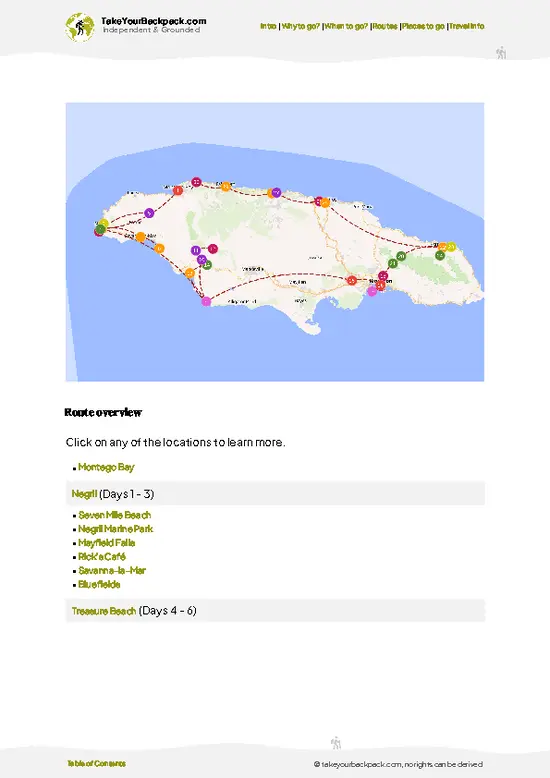
example page 0 from our offline Travel Guide for Jamaica
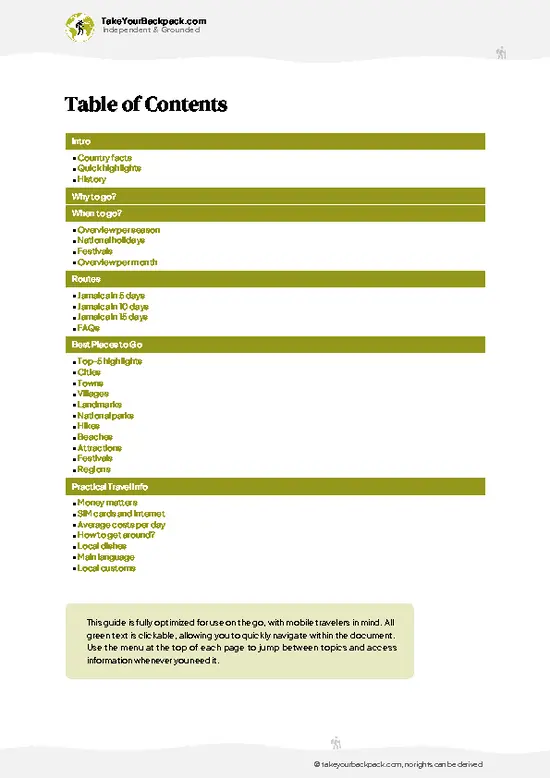
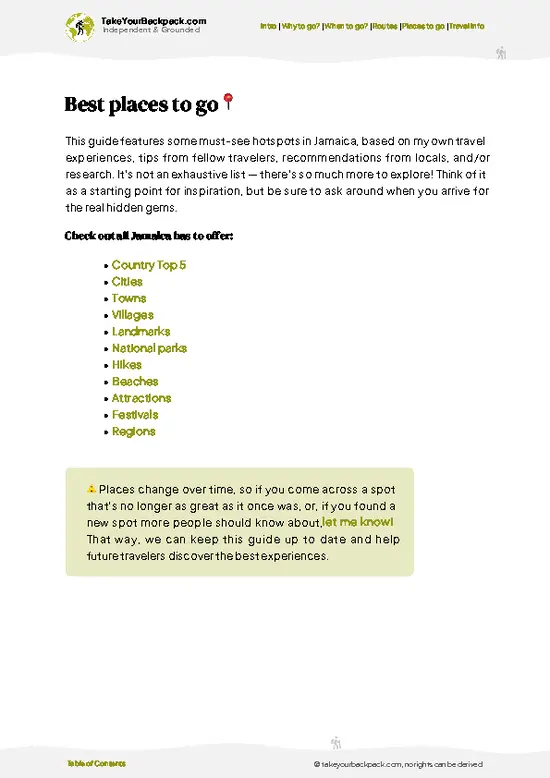
example page 1 from our offline Travel Guide for Jamaica
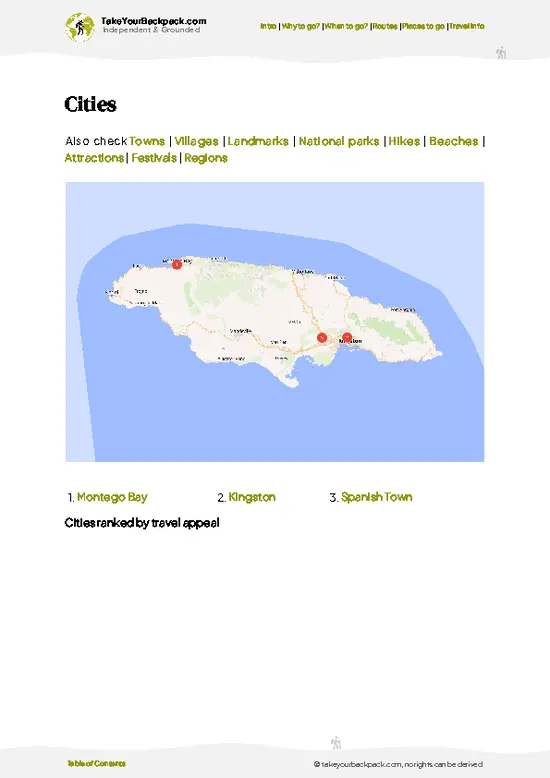
example page 2 from our offline Travel Guide for Jamaica
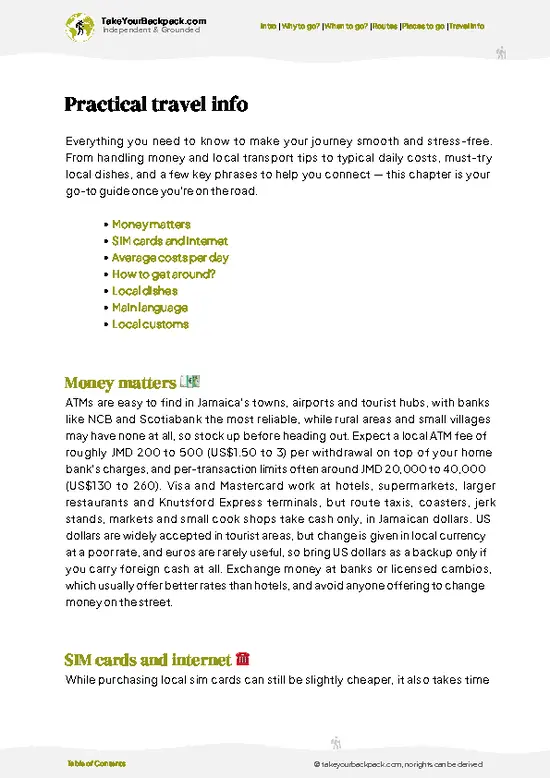
example page 3 from our offline Travel Guide for Jamaica
example page 4 from our offline Travel Guide for Jamaica
example page 5 from our offline Travel Guide for Jamaica
example page 6 from our offline Travel Guide for Jamaica
example page 7 from our offline Travel Guide for Jamaica
Loading the map 🌍
CLICK TO FILTER
cities
towns
villages
landmarks
national parks
hikes
beaches
attractions
festivals
regions
SHOW COUNTRY’S BESTSHOW ALL

✨ Why go?
Ranked #3 town in Jamaica
Reasons people choose to visit here

Port Antonio works as a base for the green, wet corner of Jamaica that most visitors speed past. Rain feeds the rivers, so the draw is water: Rio Grande bamboo rafting, waterfalls and the swimming coves east of town, all reachable on short rides. Guesthouses are small, owner-run and often serve dinner, which keeps costs and noise low. Most travelers stay three or four days, because day trips fill the time and town itself needs only an afternoon. Hikers and slow travelers will like it most, along with solo travelers who enjoy chatting with hosts and drivers. The Musgrave Market is where you eat cheaply and watch local life, and Boston Bay jerk is an easy detour for lunch. Go elsewhere if you want a party hostel scene or a long white beach on your doorstep. Expect rain showers at any time of year, and treat them as part of the deal.

💡 HighlightsMust-see experiences and standout moments

  1. Folly Point Lighthouse and Folly Mansion ruins: The red-and-white striped lighthouse stands on the peninsula between the two harbors, beside the roofless 1905 mansion. Walk the headland for sea views on both sides. Go early morning or late afternoon for softer light. Free, 1 to 1.5 hours.
  2. Navy Island: Errol Flynn once owned this small island in the harbor. There is no official tour, but local boatmen take visitors across. Weekdays are the calmest. Allow 2 to 3 hours and about US$5 to 15 for the boat and any beach access.
  3. Musgrave Market: The town’s main market sells yams, scotch bonnet peppers, fruit and fish. Saturday is busiest and most colorful, and mornings are best. It is free to browse, with snacks around US$1 to 4. Plan 1 hour.
  4. Fort George and Titchfield Hill: Old cannons and the shell
… read more 👉
  1. Folly Point Lighthouse and Folly Mansion ruins: The red-and-white striped lighthouse stands on the peninsula between the two harbors, beside the roofless 1905 mansion. Walk the headland for sea views on both sides. Go early morning or late afternoon for softer light. Free, 1 to 1.5 hours.
  2. Navy Island: Errol Flynn once owned this small island in the harbor. There is no official tour, but local boatmen take visitors across. Weekdays are the calmest. Allow 2 to 3 hours and about US$5 to 15 for the boat and any beach access.
  3. Musgrave Market: The town’s main market sells yams, scotch bonnet peppers, fruit and fish. Saturday is busiest and most colorful, and mornings are best. It is free to browse, with snacks around US$1 to 4. Plan 1 hour.
  4. Fort George and Titchfield Hill: Old cannons and the shell of the 18th-century fort sit above the town on Titchfield Hill, with views of both harbors. Late afternoon is cooler. Free, about 45 minutes.
  5. Errol Flynn Marina waterfront: Sailboats, harbor views and a few places for a cold Red Stripe make this a good place to end the day at sunset. It is free, and 30 to 60 minutes is enough.
Port Antonio’s highlights outside town include Reach Falls, Somerset Falls, Frenchman’s Cove, the Blue Lagoon and Boston Bay, all good day trips. Folly Point and Fort George combine well in one afternoon, since both are on the headland above the harbors and you can finish at the marina.
Spotted a mistake or missing something? Contact us.

Things to do around Port Antonio

Ratings based on Tripadvisor reviews. When you book through this link, you support our work at no extra cost to you.

🏘️ NeighborhoodsUnderstanding the local layout

Port Antonio is compact, and the areas worth your time sit within a few kilometers of each other, so you can cover most of it on foot plus a short ride.
  • Town Center (West Street, Harbour Street, the market): This is the working heart, with a produce market, hardware shops, bakeries and patty counters. The Musgrave Market is busiest on Saturdays, and a fresh coconut and a bag of pimento or ginger from a stall is the reward for wandering in. Flat, walkable, loud with horns, and dull after dark.
  • Titchfield Hill and Navy Island view: The old Georgian homes and the hilltop around Folly Point give you a view over both harbors. Skip the mansions you cannot enter. The lighthouse walk at Folly Point is worth the stroll for the sea air and ruined Folly Estate columns. Quiet, mostly uphill.
  • Fairy Hill and
… read more 👉
Port Antonio is compact, and the areas worth your time sit within a few kilometers of each other, so you can cover most of it on foot plus a short ride.
  • Town Center (West Street, Harbour Street, the market): This is the working heart, with a produce market, hardware shops, bakeries and patty counters. The Musgrave Market is busiest on Saturdays, and a fresh coconut and a bag of pimento or ginger from a stall is the reward for wandering in. Flat, walkable, loud with horns, and dull after dark.
  • Titchfield Hill and Navy Island view: The old Georgian homes and the hilltop around Folly Point give you a view over both harbors. Skip the mansions you cannot enter. The lighthouse walk at Folly Point is worth the stroll for the sea air and ruined Folly Estate columns. Quiet, mostly uphill.
  • Fairy Hill and Boston Bay: Ten to fifteen minutes east by taxi, Boston Bay is where jerk was born, and the roadside pits there serve smoky pork and chicken with festival bread. Come hungry. The bay itself is a small surf beach, not a swimming spot.
  • Frenchman’s Cove and San San: Pricey and residential, but the beaches are the best near town. Frenchman’s Cove has a river meeting the sea, and the entry fee is worth it for the calm, clean water. Blue Lagoon is next door, deep and cool, best seen by boat.
  • Drapers and Long Bay: Quiet coast, a few guesthouses, and decent swells. Nightlife is a rum bar and a sound system, nothing more.

⌛️ 1 day1-day itinerary for Port Antonio

7:30 AM, Folly Point: Start on the headland while the air is cool and the light is soft. Walk to the striped lighthouse and the ruined mansion, then look down on both harbors. You will see the town’s layout at a glance before it gets hot.
9:30 AM, Musgrave Market: Walk back into town for breakfast among the stalls. Try fried dumplings, fresh fruit and ackee if it is in season. Vendors are friendly, and buying a few mangoes or peppers is the easiest way to start conversations.
11:30 AM, Titchfield Hill and Fort George: Climb through the quiet old residential streets to the fort. It is a short, easy walk, and the cannons and harbor views are worth the pause. The streets here are where locals live, so say hello as you pass.
1:00 PM, Lunch near the marina: Settle at a simple spot near the water for … read more 👉
7:30 AM, Folly Point: Start on the headland while the air is cool and the light is soft. Walk to the striped lighthouse and the ruined mansion, then look down on both harbors. You will see the town’s layout at a glance before it gets hot.
9:30 AM, Musgrave Market: Walk back into town for breakfast among the stalls. Try fried dumplings, fresh fruit and ackee if it is in season. Vendors are friendly, and buying a few mangoes or peppers is the easiest way to start conversations.
11:30 AM, Titchfield Hill and Fort George: Climb through the quiet old residential streets to the fort. It is a short, easy walk, and the cannons and harbor views are worth the pause. The streets here are where locals live, so say hello as you pass.
1:00 PM, Lunch near the marina: Settle at a simple spot near the water for fish and festival or a plate of rice and peas. Sit in the shade and let the midday heat pass.
2:30 PM, Navy Island: Ask a local boatman for the short crossing and wander the island’s quiet paths. Few visitors make the crossing, so it feels private.
5:00 PM, Old courthouse and back streets: Return to town and walk past the colonial courthouse and the quieter lanes behind the harbor, where the architecture is least touched by modern development. Few travelers bother with it.
6:30 PM, Marina waterfront: Finish with a cold drink as the lights come on over the boats.

🌤️ When to go?Weather, crowds, and seasonal trade-offs

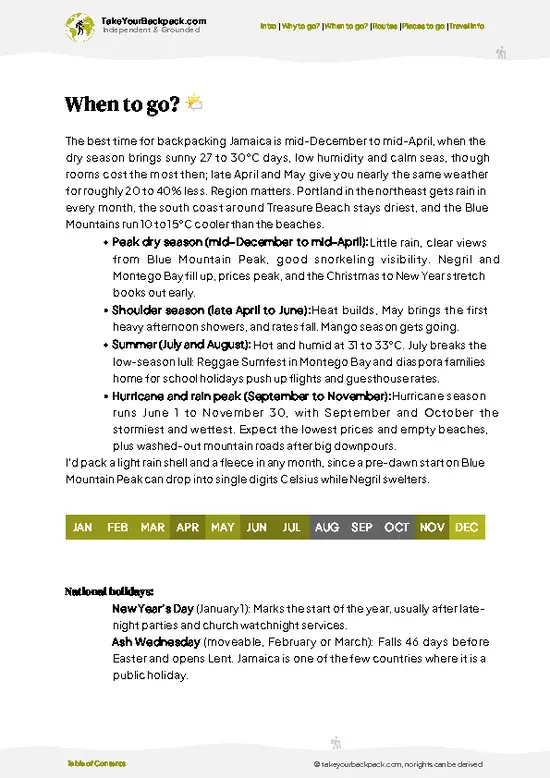
December to April is the driest and most comfortable window for Port Antonio, but this is Jamaica’s wettest parish, so expect showers in any month.
  • Dry Season (December to April): Days sit around 27 to 30°C (81 to 86°F), nights 20 to 22°C (68 to 72°F), with the least rain. Daylight runs about 11 to 12 hours. Crowds and prices peak around Christmas and in February.
  • Shoulder (May to June): Warm, 29 to 31°C (84 to 88°F), with short afternoon downpours. Rates soften and beaches empty out.
  • Wet Season (July to November): Hot, humid, 30 to 32°C (86 to 90°F), with heavy rain especially October and November. Hurricane risk peaks August to October. Rafting and waterfalls run full, and bargains are easy.
  • Festivals: The Portland Jerk Festival brings crowds when it runs, so book beds early then.
Book a February … read more 👉
December to April is the driest and most comfortable window for Port Antonio, but this is Jamaica’s wettest parish, so expect showers in any month.
  • Dry Season (December to April): Days sit around 27 to 30°C (81 to 86°F), nights 20 to 22°C (68 to 72°F), with the least rain. Daylight runs about 11 to 12 hours. Crowds and prices peak around Christmas and in February.
  • Shoulder (May to June): Warm, 29 to 31°C (84 to 88°F), with short afternoon downpours. Rates soften and beaches empty out.
  • Wet Season (July to November): Hot, humid, 30 to 32°C (86 to 90°F), with heavy rain especially October and November. Hurricane risk peaks August to October. Rafting and waterfalls run full, and bargains are easy.
  • Festivals: The Portland Jerk Festival brings crowds when it runs, so book beds early then.
Book a February stay by December, or come in May for the same beaches at lower rates.


source: climatestotravel.comJANJanuary: highly recommended for travelingFEBFebruary: highly recommended for travelingMARMarch: highly recommended for travelingAPRApril: highly recommended for travelingMAYMay: good for travelingJUNJune: fair for travelingJULJuly: fair for travelingAUGAugust: fair for travelingSEPSeptember: fair for travelingOCTOctober: fair for travelingNOVNovember: good for travelingDECDecember: highly recommended for traveling
when-to-go

✈️ The backpacker research shortcutJamaica Travel Guide

An offline-friendly backpacking guide with optimized travel routes, ranked highlights, transport advice, and the best areas to stay.
example page 0 from our offline Travel Guide for Jamaica
example page 1 from our offline Travel Guide for Jamaica
example page 2 from our offline Travel Guide for Jamaica
example page 3 from our offline Travel Guide for Jamaica
example page 4 from our offline Travel Guide for Jamaica
example page 5 from our offline Travel Guide for Jamaica
example page 6 from our offline Travel Guide for Jamaica
example page 7 from our offline Travel Guide for Jamaica
The digital guide (238 pages) contains:
✅ 71 highlights, ranked by travel appeal
✅ Optimized 5, 10 & 15-day travel routes
✅ Cities, national parks, landmarks, beaches
✅ How to get around
✅ Offline-friendly for travel without Wi-Fi
👉 Click to see all 30+ guide features

📅 Plan smarter in minutes, not weeks
✅ Month by month travel advice
✅ Festivals & national holidays
✅ Budget expectations

🗺️ Go to the right places, skip the overrated ones
✅ Honest pros & cons of destinations
✅ Top hikes, parks & viewpoints
✅ Lesser-known places most travelers miss
✅ Clear “worth it vs skip it” guidance

🛏️ Travel smoothly without rookie mistakes
✅ Best areas to stay
✅ Transport systems explained simply
✅ Common scams & safety advice
✅ SIM cards, money & practical tips

🌍 Understand the country, not just visit it
✅ Culture & traditions
✅ 52 Essential phrases & customs
✅ Festivals worth planning around
✅ Traveler-friendly historical context
✅ Insights that make places more meaningful

📱 Built for real travel conditions
✅ Fully downloadable PDF
✅ Works completely offline
✅ Optimized for phone use
✅ Useful in remote areas & buses
✅ Everything in one place
Stop searching, start planning
Get instant access to your full guide. 30‑day money-back guarantee.
+ Add another guide for just

By proceeding you agree to our terms.
Sent to your inbox immediately after payment • 100% Secure Checkout
Best Backpacking Travel Advisor 2025 tourism awardBest Backpacking
Travel Advisor
2025
What others say about Take Your Backpack Guides:
⭐⭐⭐⭐⭐
Fantastic, amazing amount of information!
⭐⭐⭐⭐⭐
My goodness this is amazing, it's what I've been looking for hats off too you!
⭐⭐⭐⭐⭐
I think this is absolutely BRILLIANT
⭐⭐⭐⭐
Very complete and informative. It's still missing places, but I gotta to commend you
⭐⭐⭐⭐⭐
This is truly amazing, thank you, can't wait to explore it with my kids!
⭐⭐⭐⭐⭐
Awesome resource, thank you!
⭐⭐⭐⭐⭐
This is amazing! Can't wait to explore the ones I haven't seen
⭐⭐⭐⭐
I love this! Well done, great idea.
⭐⭐⭐⭐⭐
Thanks for taking the time to make this gem!
⭐⭐⭐⭐⭐
This might be the best website I've ever seen.
⭐⭐⭐⭐⭐
Congratulations, and thank you so much for your work; it's incredibly valuable.
⭐⭐⭐⭐
In all seriousness I think you did a great job pointing out the important spots
⭐⭐⭐⭐⭐
10/10 very good
⭐⭐⭐⭐⭐
As someone who's only just starting to visit regularly this is awesome, thank you.
⭐⭐⭐⭐
Thank you very much! I'm going to visit my dad, it's going to be very useful!
⭐⭐⭐⭐⭐
This is really cool! We'll be travelling for the first time and this definitely come in handy.
⭐⭐⭐⭐⭐
You are now our minister of culture, congratulations 👨‍💼
⭐⭐⭐⭐⭐
Just wanted to tell you that this is a pearl! Going to follow your recommendations.
⭐⭐⭐⭐⭐
This is so cool. I'll definitely be using the resource for my travels soon.
⭐⭐⭐⭐⭐
This is very impressive! Good work.
⭐⭐⭐⭐⭐
This is an amazing and informative site. Very well done!

🛏️ Where to stay?Best areas and accommodation options

The center of Port Antonio and the East Coast around Drapers and Boston Bay are the two best areas for a budget bed. Budget choices are limited in number compared with Negril or Montego Bay, so book ahead for December through April.
Staying in town gives you the cheapest beds, with guesthouses and small inns typically at US$25 to 50 for a private room and a handful of dorm-style options at about US$15 to 25. You also get the bus park, the market, groceries and cheap eateries within a short walk, and the best transport links to Kingston and the coast. Noise is the cost, because roosters, horns and … read more 👉
The center of Port Antonio and the East Coast around Drapers and Boston Bay are the two best areas for a budget bed. Budget choices are limited in number compared with Negril or Montego Bay, so book ahead for December through April.
Staying in town gives you the cheapest beds, with guesthouses and small inns typically at US$25 to 50 for a private room and a handful of dorm-style options at about US$15 to 25. You also get the bus park, the market, groceries and cheap eateries within a short walk, and the best transport links to Kingston and the coast. Noise is the cost, because roosters, horns and sound systems start early. At night the main streets are fine, but the quiet side streets are best skipped after dark.
The coast toward Boston Bay and Drapers suits you if you want beach access and sleep with the sound of the sea. Rooms are mostly small guesthouses and cottages at around US$30 to 60. Transport depends on route taxis that thin out after dark, so plan evening returns. Lights are sparse, so carry a flashlight. Self-catering is common here, so buy groceries in town first.

🚌 Getting aroundGetting around like a local

A shared route taxi ride around Port Antonio costs about US$1 to 2, paid in cash to the driver, and having small Jamaican bills ready saves the haggling over change. Walking covers the center, but the town sprawls along two harbors and a hilly peninsula, so you will mix feet and wheels. Traffic is thin outside the Saturday market rush, and public transport thins out fast after dark.
  • Walking: The core between West Street, the Musgrave Market and the waterfront sits within about 1 kilometer (0.6 miles), flat and easy. Pavements run out quickly and the road hugs the harbor, so you get the cruise-ship-free views of Navy Island and the Titchfield Hill rooftops as you stroll.
  • Route taxis: Shared cars, marked by red license plates, run fixed lines to Drapers, Fairy Hill, Boston Bay and Buff Bay for
… read more 👉
A shared route taxi ride around Port Antonio costs about US$1 to 2, paid in cash to the driver, and having small Jamaican bills ready saves the haggling over change. Walking covers the center, but the town sprawls along two harbors and a hilly peninsula, so you will mix feet and wheels. Traffic is thin outside the Saturday market rush, and public transport thins out fast after dark.
  • Walking: The core between West Street, the Musgrave Market and the waterfront sits within about 1 kilometer (0.6 miles), flat and easy. Pavements run out quickly and the road hugs the harbor, so you get the cruise-ship-free views of Navy Island and the Titchfield Hill rooftops as you stroll.
  • Route taxis: Shared cars, marked by red license plates, run fixed lines to Drapers, Fairy Hill, Boston Bay and Buff Bay for roughly US$1 to 4. They leave when full, usually between about 6 a.m. and 6 p.m., and you squeeze in four or five to a car with reggae on the speakers. This is the cheapest way to reach Frenchman’s Cove and the east coast beaches.
  • Minibuses and coaster buses: These run toward Kingston (about 2.5 to 3.5 hours, around US$6 to 9) and Ocho Rios, leaving from the transport center near the market. Skip the late afternoon ones, because they fill and crawl on the mountain road. Morning departures give you the Junction hills and a seat by the window.
  • Private taxis: Licensed taxis charge about US$5 to 10 for short hops in town and US$25 to 45 to Reach Falls or the Blue Lagoon, so agree the fare before you get in. They are not worth the price for anything a route taxi covers, but they are the sane choice after dark or with a big pack.
  • Bamboo raft and boat rides: The Rio Grande rafts and boat transfers to Navy Island (about US$5 to 10) are experiences more than transport. The raft drifts for about 2 hours through green banks and is the one ride here I would pay extra for.

👛 Costs (as of 22 October 2026)Travel costs and budget guide for Port Antonio

Port Antonio costs about US$75 per day for a backpacker who stays in a budget bed and eats locally.
CategoryBudget RangeLocal Reality
Dorm accommodationUS$20 to 30Dorm beds are few, so many travelers pay for a basic private guesthouse room at US$30 to 50. Rates rise in high season.
MealsUS$15 to 25Jerk at Boston Bay costs around US$6 to 10 a plate, and patties and bakery snacks cost US$1 to 3. Restaurant dinners run US$12 to 20.
Local transportUS$5 to 10Route taxis cost US$1 to 3 a ride. Private taxis for beaches cost US$8 to 15 each way.
Basic activities/entry feesUS$10 to 20Reach Falls costs about US$10 to 15, Frenchman’s Cove around US$5 to 10, and rafting from US$60 per raft.
Miscellaneous expensesUS$5 to 10Water, SIM data, tips and a Red Stripe or two.
Total Daily BudgetUS$55 to 95Per person,
… read more 👉
Port Antonio costs about US$75 per day for a backpacker who stays in a budget bed and eats locally.
CategoryBudget RangeLocal Reality
Dorm accommodationUS$20 to 30Dorm beds are few, so many travelers pay for a basic private guesthouse room at US$30 to 50. Rates rise in high season.
MealsUS$15 to 25Jerk at Boston Bay costs around US$6 to 10 a plate, and patties and bakery snacks cost US$1 to 3. Restaurant dinners run US$12 to 20.
Local transportUS$5 to 10Route taxis cost US$1 to 3 a ride. Private taxis for beaches cost US$8 to 15 each way.
Basic activities/entry feesUS$10 to 20Reach Falls costs about US$10 to 15, Frenchman’s Cove around US$5 to 10, and rafting from US$60 per raft.
Miscellaneous expensesUS$5 to 10Water, SIM data, tips and a Red Stripe or two.
Total Daily BudgetUS$55 to 95Per person, per day, in high season.
Cook at a guesthouse kitchen using produce from the market, where a bunch of bananas or a pineapple costs about US$1 to 3.
⚠️ Prices can change and everyone travels differently, so take this as a rough guide. Hope it helps you plan your adventure!

🚌 Day tripsExploring the surroundings

Port Antonio works well as a base for day trips, because the best sights lie within one to two hours by shared taxi or a hired driver.
Reach Falls:
A series of limestone pools and cascades in the hills above Manchioneal, about 45 minutes to an hour by taxi along the coast. Entry is around US$10 to 15 and a guide is optional. Go early in the dry season, since heavy rain can close it. Wear water shoes, because the rocks are slick. Total cost with a shared ride is about US$20 to 30.
👉 Explore Reach Falls
Rio Grande Rafting:
A bamboo raft glides roughly two to three hours down the Rio Grande from Berridale, past green banks and kingfishers. A raft carrying two people costs about US$60 to 80 total, and you tip the captain. The mistake first-timers make is paying for transport back separately without … read more 👉
Port Antonio works well as a base for day trips, because the best sights lie within one to two hours by shared taxi or a hired driver.
Reach Falls:
A series of limestone pools and cascades in the hills above Manchioneal, about 45 minutes to an hour by taxi along the coast. Entry is around US$10 to 15 and a guide is optional. Go early in the dry season, since heavy rain can close it. Wear water shoes, because the rocks are slick. Total cost with a shared ride is about US$20 to 30.
👉 Explore Reach Falls
Rio Grande Rafting:
A bamboo raft glides roughly two to three hours down the Rio Grande from Berridale, past green banks and kingfishers. A raft carrying two people costs about US$60 to 80 total, and you tip the captain. The mistake first-timers make is paying for transport back separately without asking, so confirm the pickup is included.

Blue Lagoon:
This deep, cool spring-fed pool sits only 10 to 15 minutes east. Boat rides cost about US$15 to 25, and swimming is free. Go mid-morning, when the water shows its color best.

Nanny Falls and Moore Town:
About an hour inland, Moore Town is a Maroon community with a museum and monument to Nanny of the Maroons. Visits cost roughly US$10 to 20 for a guide and entry, and a driver round trip costs US$40 to 60. Weekdays are best, as things are closed on Sundays.

🛡️ SafetyStaying Safe: What Travelers Should Know

Port Antonio is calmer than Kingston or Montego Bay, and most trouble you meet is hassle, not danger. Persistent offers of weed, tours and rides come up near the market and on beaches, and a firm, friendly “no, thanks” while you keep walking usually ends it. Agree prices for taxis, boat rides and guides before you start, because quoted rates for visitors can climb. At the larger beaches, keep phones and cash on you rather than leaving them on the sand.
Solo travelers, women included, do fine in daytime. After dark, take a taxi rather than walk the coast road, which has little lighting and fast traffic. Avoid wandering the back streets of town at night and keep valuables out of sight. Heavy rain can flood roads and make river activities risky, so check conditions with your host before rafting or visiting waterfalls.

FAQFrequently asked questions about Port Antonio

Port Antonio is a destination in its own right, with Frenchman’s Cove, Blue Lagoon and the Rio Grande all within a short ride, and almost nobody treats it as a stopover. Its slow pace, few crowds and jerk stands at Boston Bay, about 20 minutes east, reward a stay. Most travelers fit in a raft trip (around US$60 to 80 per raft) and a swim at the Blue Lagoon.
Three to four days suits Port Antonio, which gives you time for a Rio Grande raft ride, a day of beaches at Frenchman’s Cove and Winnifred, and a trip to Reach Falls. Add a fifth day if you want Boston Bay jerk and a walk in the Blue Mountain foothills. Shared taxis keep each outing at about US$1 to 4 one way.
A day trip from Kingston to Port Antonio is possible but tiring, since the drive is roughly 2.5 to 3.5 hours each way by coaster bus (about US$6 to 9) or private car. You would have only about four hours on the ground, enough for the Blue Lagoon and a jerk lunch. Staying at least one night in Port Antonio makes far more sense.
⚠️ Things can change over time, so always validate details locally before you go.

Other Jamaican towns near Port Antonio

Explore more nearby:

  • Morant Bay—1865 rebellion sites, Paul Bogle square, fishing shore, parish market| 32 km away
  • Annotto Bay—river mouth, local fishing, modest town center| 36 km away
  • Linstead—Folk-song market, higgler stalls, spiced bun, domino squares| 63 km away

💡 Not sure where to go next?
Create a personalized itinerary for Jamaica including Port Antonio and the places that fit your trip.

Generate my itinerary

👉 Discover all towns

Or checkout all Jamaica has to offer (think cities, towns, villages, national parks, hikes, beaches, festivals)
Country photo of Jamaica

We 💚 feedbackFinal thoughts on visiting Port Antonio

Port Antonio is at its best in the early morning, when the harbor is still, the market is setting up and the hills sit under low cloud. Come between December and April if you want fewer showers. I would bring a light rain jacket and plan outdoor trips before noon.

✈️ When did I visit Jamaica?
As part of my 1.5 year travel around the world trip, I visited Jamaica in May 2016.

✍️ Help improve this page!
The information on this page is based on my own backpacking experience in Jamaica, supplemented with up-to-date research and feedback from other travelers. Travel details can change, so if you notice anything outdated or incomplete, feel free to let me know.


🙋‍♂️ Give feedback

👋 Meet the founderWho’s Behind Take Your Backpack?

Johan, backpacker and founder of TakeYourBackpackHi, I’m Johan (Netherlands 🇳🇱), the creator of TakeYourBackpack. Over the past 3 decades, I’ve backpacked through 90+ countries across six continents, gaining extensive experience with independent travel, long-term trips, and overland routes.

This site is built on a combination of firsthand travel experience and carefully curated insights from other backpackers. Many guides are based on places I’ve personally visited, while others bring together tips, observations, and practical advice shared by trusted travelers I’ve met along the way.

The goal is to provide realistic, experience-driven guidance — not generic itineraries — so you can explore destinations with better context, clearer expectations, and more confidence.