
×

Kazakhstan🇰🇿 | national parksSairam-Ugam National Parkalpine meadows, juniper forests, petroglyphs, snow-capped peaks | things to do and best time to go

Explore Korgalzhyn Nature ReserveExplore Cold Winter Deserts of Turan

Backpacking in Sairam-Ugam
👍 Recommendednational park ranked #10
By Johan Kruseman 🇳🇱 | Updated May 20, 2026

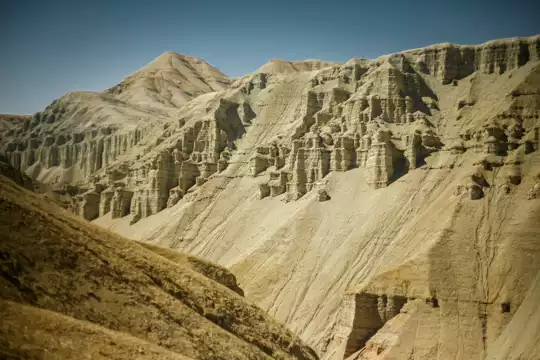
The first real fork in the trail at Sairam-Ugam National Park is whether you’ll go it alone or hire a local guide. This isn’t just about navigation—it’s about how much risk, language barrier, and route-finding you’re willing to take on. Sairam-Ugam sits in southern Kazakhstan, pressed up against the Uzbek border, a few hours’ drive from Shymkent. The park is a rugged, high-altitude sprawl of juniper forests, limestone canyons, and snow-dusted peaks. For backpackers, the draw is clear: wild, uncrowded trails and a shot at seeing ibex or golden eagles without a crowd of selfie sticks in the way. But the trade-offs are real. Trails are often unmarked, English is rare, and public transport drops you miles from the main gates. Entry is cheap, but you’ll pay in logistics and patience. Camping is allowed, but facilities are basic—think cold rivers for washing and pit toilets at best. Compared to Aksu-Zhabagly or Ile-Alatau, Sairam-Ugam is wilder, less polished, and far less trafficked. If you want solitude and don’t mind earning it, this is where Kazakhstan’s mountains feel most honest.

Discover everything you want to know in the 📖 Kazakhstan Travel Guide.
Loading the map 🌍
CLICK TO FILTER
cities
towns
villages
landmarks
national parks
hikes
beaches
attractions
festivals
regions
SHOW COUNTRY’S BESTSHOW ALL

✨ Why go?
Ranked #10 national park in Kazakhstan
Why Sairam-Ugam should be on your travel list

Backpackers pick Sairam-Ugam National Park because it offers a rare chance for independent exploration in Kazakhstan’s often overlooked wilderness. Unlike parks that funnel visitors into guided tours, Sairam-Ugam lets you roam on your own terms. The trails vary from gentle walks to demanding hikes, so you can tailor your day to your energy and skill level without feeling boxed in. This flexibility is a big draw for self-guided travelers who want to avoid the rigid schedules and inflated costs of organized groups.

Budget-wise, the park is a solid choice. There are camping spots where you can pitch a tent without breaking the bank, and a handful of hostels nearby that offer basic but clean accommodations. This setup keeps your expenses low and your options open, which is crucial when you want … read more 👉
Backpackers pick Sairam-Ugam National Park because it offers a rare chance for independent exploration in Kazakhstan’s often overlooked wilderness. Unlike parks that funnel visitors into guided tours, Sairam-Ugam lets you roam on your own terms. The trails vary from gentle walks to demanding hikes, so you can tailor your day to your energy and skill level without feeling boxed in. This flexibility is a big draw for self-guided travelers who want to avoid the rigid schedules and inflated costs of organized groups.

Budget-wise, the park is a solid choice. There are camping spots where you can pitch a tent without breaking the bank, and a handful of hostels nearby that offer basic but clean accommodations. This setup keeps your expenses low and your options open, which is crucial when you want to stretch your trip without sacrificing comfort entirely.

One heads-up: facilities inside the park are minimal, so pack accordingly and be ready for a bit of roughing it. But if you’re after a place where you can set your own pace, enjoy varied terrain, and keep costs manageable, Sairam-Ugam delivers without the usual tourist traps.
Want to include Sairam-Ugam National Park in your Kazakhstan route?
Create a personalized Kazakhstan itinerary that includes Sairam-Ugam National Park and the places that fit your trip — based on your travel style, budget, and available time. Get your route in seconds.

Generate my trip

💡 HighlightsTop highlights of Sairam-Ugam

1. Sairam Peak (4238m)
Sairam Peak is the park’s high point—literally and figuratively. The mountain’s sharp, snow-dusted summit dominates the skyline, visible for miles. For trekkers, it’s a classic Central Asian ascent: steep scree, wildflowers at the base, and a real sense of remoteness. The approach is not for beginners, but you don’t need to summit to appreciate the drama. Even from the lower slopes, you get a sweeping view of the Ugam Range and the valleys below, with the kind of silence that makes you forget your phone exists. If you want a taste of the Tien Shan without the crowds, this is the spot.


2. Aksu Canyon
Aksu Canyon is Kazakhstan’s answer to the Grand Canyon—minus the tour buses and selfie sticks. The canyon slices through limestone for nearly 15 kilometers, with sheer walls … read more 👉
1. Sairam Peak (4238m)
Sairam Peak is the park’s high point—literally and figuratively. The mountain’s sharp, snow-dusted summit dominates the skyline, visible for miles. For trekkers, it’s a classic Central Asian ascent: steep scree, wildflowers at the base, and a real sense of remoteness. The approach is not for beginners, but you don’t need to summit to appreciate the drama. Even from the lower slopes, you get a sweeping view of the Ugam Range and the valleys below, with the kind of silence that makes you forget your phone exists. If you want a taste of the Tien Shan without the crowds, this is the spot.


2. Aksu Canyon
Aksu Canyon is Kazakhstan’s answer to the Grand Canyon—minus the tour buses and selfie sticks. The canyon slices through limestone for nearly 15 kilometers, with sheer walls that drop 300 meters to the river below. The hiking here is rugged and exposed, but the payoff is real: you’ll see juniper forests clinging to the cliffs, wild goats picking their way along impossible ledges, and, if you’re lucky, golden eagles riding the thermals overhead. The scale is humbling. Bring sturdy boots and a healthy respect for loose rock.


3. Sairam-Su River Valley
This valley is the park’s green artery, fed by glacial melt and snowfields. In spring and early summer, the meadows explode with tulips and poppies—no exaggeration, it’s a riot of color. The river itself is icy, fast, and clear, with trout darting in the pools. This is prime territory for day hikes or longer treks, and you’ll pass yurts and shepherds with flocks of sheep and horses. It’s one of the few places where you can feel the pulse of traditional Kazakh life alongside the wild landscape.


4. Petroglyphs of Kaskasu
Tucked away in the foothills, the Kaskasu petroglyphs are a reminder that people have been drawn to these mountains for millennia. The carvings—mostly ibex, hunters, and abstract symbols—are weathered but unmistakable, etched into boulders scattered across the steppe. There’s no visitor center or interpretive signs; you find them by walking, looking, and paying attention. It’s a quiet, contemplative experience, and a rare chance to see ancient art in its original setting, not behind glass.


5. Juniper Forests of the Ugam Range
The juniper forests here are old—some trees are centuries past their prime, twisted by wind and time. Walking through these groves, you get a sense of the park’s resilience. The air is sharp with resin, and the ground is soft with needles. These forests are crucial habitat for rare wildlife: snow leopards, lynx, and wild boar all pass through, though you’ll be lucky to spot more than a fleeting track. Still, the knowledge that you’re sharing the landscape with such elusive animals adds a quiet thrill to every step.
Spotted a mistake or missing something? Contact us.

Things to do near Sairam-Ugam National Park

Ratings based on Tripadvisor reviews. When you book through this link, you support our work at no extra cost to you.

🌤️ When to go?Choosing the right time of year


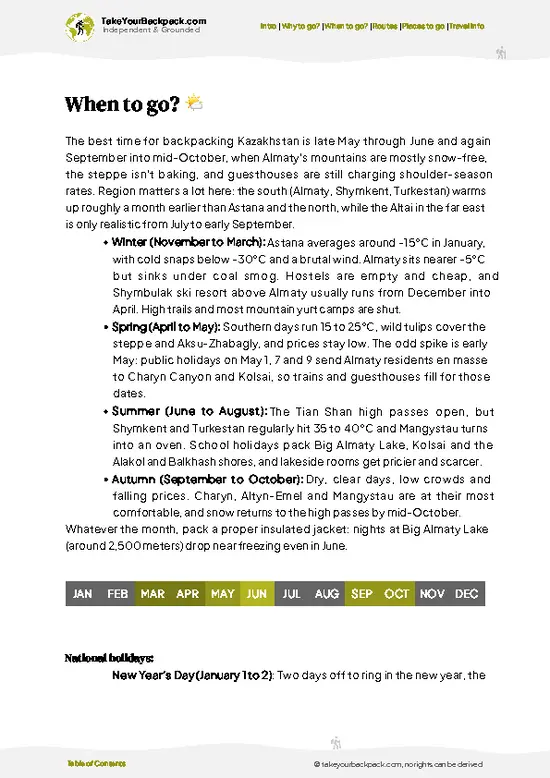
  • Weather: The best window is late spring through early autumn—May to September. Winters are harsh, with heavy snow and temperatures often plunging below -10°C (14°F), making trails slippery and access difficult.

  • Temperature: Summer days hover between 20-25°C (68-77°F), perfect for hiking without overheating. Nights can dip to 10°C (50°F), so pack layers. Early spring and late autumn bring chillier conditions, often below 5°C (41°F), which can sap your energy fast.

  • Daylight Hours: From June to August, expect up to 16 hours of daylight, giving you plenty of time to explore without rushing. Outside these months, daylight shrinks sharply, limiting your hiking window and increasing the risk of getting caught out after dark.

  • Crowds: Peak season in July and August sees a noticeable uptick
read more 👉

  • Weather: The best window is late spring through early autumn—May to September. Winters are harsh, with heavy snow and temperatures often plunging below -10°C (14°F), making trails slippery and access difficult.

  • Temperature: Summer days hover between 20-25°C (68-77°F), perfect for hiking without overheating. Nights can dip to 10°C (50°F), so pack layers. Early spring and late autumn bring chillier conditions, often below 5°C (41°F), which can sap your energy fast.

  • Daylight Hours: From June to August, expect up to 16 hours of daylight, giving you plenty of time to explore without rushing. Outside these months, daylight shrinks sharply, limiting your hiking window and increasing the risk of getting caught out after dark.

  • Crowds: Peak season in July and August sees a noticeable uptick in visitors, especially on popular trails. If you prefer solitude, aim for May, June, or September when the park is quieter but still accessible.

  • Seasonal Activities: Summer offers wildflower blooms and birdwatching, while autumn brings vivid foliage. Winter sports are minimal due to limited infrastructure, so avoid the colder months unless you’re prepared for serious cold-weather trekking.

  • Price Fluctuations: Accommodation and local services tend to be pricier during July and August. Booking in shoulder seasons like May or September can save you money and hassle.


Pro-tip: Target late spring or early autumn for the best balance of weather, daylight, and crowd levels—this keeps your energy and budget focused on the experience, not firefighting the elements or crowds.


source: climatestotravel.comJANJanuary: below average for travelingFEBFebruary: below average for travelingMARMarch: fair for travelingAPRApril: good for travelingMAYMay: excellent for travelingJUNJune: excellent for travelingJULJuly: highly recommended for travelingAUGAugust: highly recommended for travelingSEPSeptember: excellent for travelingOCTOctober: good for travelingNOVNovember: fair for travelingDECDecember: below average for traveling
when-to-go

✈️ The backpacker research shortcutKazakhstan Travel Guide

An offline-friendly backpacking guide with optimized travel routes, ranked highlights, transport advice, and the best areas to stay.
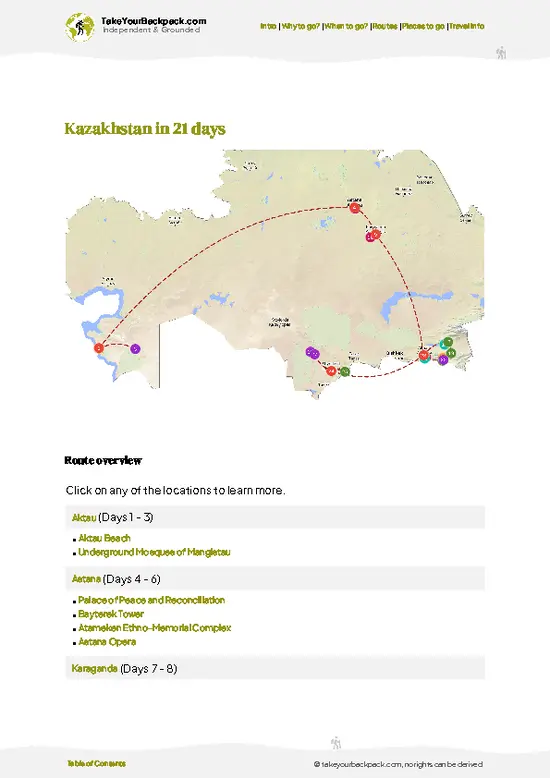
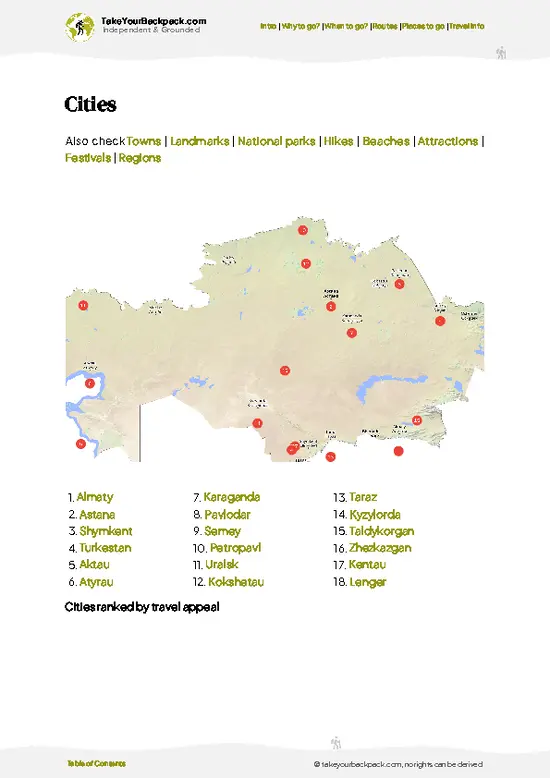
example page 0 from our offline Travel Guide for Kazakhstan
example page 1 from our offline Travel Guide for Kazakhstan
example page 2 from our offline Travel Guide for Kazakhstan
example page 3 from our offline Travel Guide for Kazakhstan
example page 4 from our offline Travel Guide for Kazakhstan
example page 5 from our offline Travel Guide for Kazakhstan
example page 6 from our offline Travel Guide for Kazakhstan
example page 7 from our offline Travel Guide for Kazakhstan
The digital guide (445 pages) contains:
118 highlights, ranked by travel appeal
Optimized 7, 14 & 21-day travel routes
Cities, national parks, landmarks, beaches
How to get around
Offline-friendly for travel without Wi-Fi
👉 Click to see all 30+ guide features

📅 Plan smarter in minutes, not weeks
Month by month travel advice
Festivals & national holidays
Budget expectations

🗺️ Go to the right places, skip the overrated ones
Honest pros & cons of destinations
Top hikes, parks & viewpoints
Lesser-known places most travelers miss
Clear “worth it vs skip it” guidance

🛏️ Travel smoothly without rookie mistakes
Best areas to stay
Transport systems explained simply
Common scams & safety advice
SIM cards, money & practical tips

🌍 Understand the country, not just visit it
Culture & traditions
52 Essential phrases & customs
Festivals worth planning around
Traveler-friendly historical context
Insights that make places more meaningful

📱 Built for real travel conditions
Fully downloadable PDF
Works completely offline
Optimized for phone use
Useful in remote areas & buses
Everything in one place
Save weeks of stressful planning
Get instant access to your full guide. 30‑day money-back guarantee.


By proceeding you agree to our terms.
Sent to your inbox immediately after payment • 100% Secure Checkout
Best Backpacking Travel Advisor 2025 tourism awardBest Backpacking
Travel Advisor
2025
What others say about Take Your Backpack Guides:
⭐⭐⭐⭐⭐
Fantastic, amazing amount of information!
⭐⭐⭐⭐⭐
My goodness this is amazing, it's what I've been looking for hats off too you!
⭐⭐⭐⭐⭐
I think this is absolutely BRILLIANT
⭐⭐⭐⭐
Very complete and informative. It's still missing places, but I gotta to commend you
⭐⭐⭐⭐⭐
This is truly amazing, thank you, can't wait to explore it with my kids!
⭐⭐⭐⭐⭐
Awesome resource, thank you!
⭐⭐⭐⭐⭐
This is amazing! Can't wait to explore the ones I haven't seen
⭐⭐⭐⭐
I love this! Well done, great idea.
⭐⭐⭐⭐⭐
Thanks for taking the time to make this gem!
⭐⭐⭐⭐⭐
This might be the best website I've ever seen.
⭐⭐⭐⭐⭐
Congratulations, and thank you so much for your work; it's incredibly valuable.
⭐⭐⭐⭐
In all seriousness I think you did a great job pointing out the important spots
⭐⭐⭐⭐⭐
10/10 very good
⭐⭐⭐⭐⭐
As someone who's only just starting to visit regularly this is awesome, thank you.
⭐⭐⭐⭐
Thank you very much! I'm going to visit my dad, it's going to be very useful!
⭐⭐⭐⭐⭐
This is really cool! We'll be travelling for the first time and this definitely come in handy.
⭐⭐⭐⭐⭐
You are now our minister of culture, congratulations 👨‍💼
⭐⭐⭐⭐⭐
Just wanted to tell you that this is a pearl! Going to follow your recommendations.
⭐⭐⭐⭐⭐
This is so cool. I'll definitely be using the resource for my travels soon.
⭐⭐⭐⭐⭐
This is very impressive! Good work.
⭐⭐⭐⭐⭐
This is an amazing and informative site. Very well done!

🛏️ Where to stay?Best areas to stay in Kazakhstan

Sairam-Ugam National Park in Kazakhstan doesn’t offer accommodations inside its boundaries. This is a key point to lock in early—expect no lodges, cabins, or official campsites within the park itself. The park’s focus is on preserving its natural state, so your best bet is to base yourself in nearby towns and plan day trips or overnight hikes accordingly.

The closest practical hub is the town of Tulkubas, roughly 30 kilometers from the park’s main entrance. It’s small but functional, with guesthouses and basic hotels that cater to budget travelers and backpackers. Don’t expect luxury here; the … read more 👉
Sairam-Ugam National Park in Kazakhstan doesn’t offer accommodations inside its boundaries. This is a key point to lock in early—expect no lodges, cabins, or official campsites within the park itself. The park’s focus is on preserving its natural state, so your best bet is to base yourself in nearby towns and plan day trips or overnight hikes accordingly.

The closest practical hub is the town of Tulkubas, roughly 30 kilometers from the park’s main entrance. It’s small but functional, with guesthouses and basic hotels that cater to budget travelers and backpackers. Don’t expect luxury here; the accommodations are simple, clean, and affordable, perfect for resting after a day of trekking. Another option is Shymkent, a larger city about 100 kilometers away, offering a wider range of lodging, from hostels to mid-range hotels. Shymkent is your go-to if you want more amenities or need to stock up on supplies before heading into the park.

If you’re aiming for a more immersive experience, consider camping—but only in designated areas outside the park boundaries. Wild camping inside the park is generally discouraged and can lead to fines or worse. Bring your own gear and be prepared for basic conditions. The takeaway: plan your nights outside the park, keep your expectations realistic, and focus your energy on the trails and landscapes that make Sairam-Ugam worth the trip.

👛 Costs (as of 8 December 2024)Money, prices, and spending tips

As of 2026, the entrance fee to Sairam-Ugam National Park is approximately 943 KZT per person per day, which is about €5 to €10, depending on the exchange rate.

source: orexca.com
⚠️ Prices can change and everyone travels differently, so take this as a rough guide. Hope it helps you plan your adventure!

🥾 TrailsScenic routes and wildlife spotting in Sairam-Ugam

Sairam-Ugam National Park in Kazakhstan offers a rugged, less-trodden hiking experience that rewards those willing to navigate its diverse terrain. The park’s landscape is a mix of rolling foothills, dense forests, and alpine meadows, punctuated by rocky outcrops and clear mountain streams. Wildlife sightings are a genuine possibility here—expect to see marmots, ibex, and a variety of birds of prey, though patience and quiet are essential. The terrain can be uneven and steep in places, so sturdy boots and a good level of fitness are non-negotiable.

The park features a few designated trails, with … read more 👉
Sairam-Ugam National Park in Kazakhstan offers a rugged, less-trodden hiking experience that rewards those willing to navigate its diverse terrain. The park’s landscape is a mix of rolling foothills, dense forests, and alpine meadows, punctuated by rocky outcrops and clear mountain streams. Wildlife sightings are a genuine possibility here—expect to see marmots, ibex, and a variety of birds of prey, though patience and quiet are essential. The terrain can be uneven and steep in places, so sturdy boots and a good level of fitness are non-negotiable.

The park features a few designated trails, with the most notable being Ugam Ridge Trail. This trail stretches about 12 kilometers and typically takes 5 to 6 hours to complete. It’s rated moderate to difficult, mainly due to steep ascents and some rocky sections that require careful footing. The trail climbs steadily through mixed forest before opening up to panoramic views of the surrounding mountain ranges. Key features include wildflower meadows in late spring and early summer, and the chance to spot mountain goats along the ridge. Terrain varies from soft forest floor to loose scree near the summit, so be prepared for changing conditions.

Another option is the Chilik River Loop, a shorter 7-kilometer route that takes about 3 hours. It’s easier, suitable for most hikers with average fitness. This trail follows the riverbank, weaving through groves of walnut and apricot trees, and offers several spots perfect for a quiet rest or a picnic. The terrain here is gentler, mostly flat with some mild inclines, but watch for slippery stones near the water’s edge.

Getting to Sairam-Ugam National Park isn’t a walk in the park itself. Public transport options are limited; the nearest town with bus connections is Tashkent, but from there, you’ll likely need a private car or taxi to reach the park entrance. Roads can be rough, especially after rain, so factor in extra travel time. The park is not a major tourist magnet, so you’ll rarely encounter crowds, which is a plus if you value solitude. However, this also means facilities are basic—don’t expect well-marked trails or frequent ranger presence.

There is a modest entrance fee, which goes toward conservation efforts. It’s best to carry cash, as card payments are unlikely to be accepted. Cell phone coverage is patchy, so download maps or bring a GPS device. In short, Sairam-Ugam is for hikers who want to trade convenience for authenticity. Prepare well, respect the wild, and you’ll find moments that justify the effort.
⚠️ Hiking info can sometimes be outdated or inaccurate. Before you hit the trail, check the latest conditions with locals. If you do spot anything that's off, I'd love to hear from you, so I can update it for fellow travelers.

🛡️ SafetyTraveler Safety Guide

Sairam-Ugam National Park offers a mostly straightforward hiking experience, but don’t let that lull you into complacency. Weather here can shift quickly, especially in spring and autumn, with sudden rain or chilly winds catching unprepared hikers off guard. Layering is your friend—bring a reliable waterproof jacket and warm mid-layers even if the morning starts sunny. The terrain varies from gentle forest paths to steeper rocky sections, so sturdy boots with good grip are essential. Watch your footing on loose stones and be ready for occasional river crossings; these aren’t raging torrents but can be slippery and require careful balance.

Wildlife encounters are generally low-risk; the park’s animals tend to avoid humans. Still, keep a respectful distance from any wildlife you spot and avoid … read more 👉
Sairam-Ugam National Park offers a mostly straightforward hiking experience, but don’t let that lull you into complacency. Weather here can shift quickly, especially in spring and autumn, with sudden rain or chilly winds catching unprepared hikers off guard. Layering is your friend—bring a reliable waterproof jacket and warm mid-layers even if the morning starts sunny. The terrain varies from gentle forest paths to steeper rocky sections, so sturdy boots with good grip are essential. Watch your footing on loose stones and be ready for occasional river crossings; these aren’t raging torrents but can be slippery and require careful balance.

Wildlife encounters are generally low-risk; the park’s animals tend to avoid humans. Still, keep a respectful distance from any wildlife you spot and avoid leaving food scraps behind to prevent habituation. Navigation is mostly intuitive with marked trails, but first-timers should carry a map or GPS device—cell service can be patchy. The biggest mistake I see is underestimating the time needed to cover ground, so pace yourself and start early to avoid hiking in fading light. This park rewards steady, mindful trekking more than speed or risk-taking.

Other Kazakhstani national parks near Sairam-Ugam

Explore more nearby:


💡 Not sure where to go next?
Create a personalized itinerary for Kazakhstan including Sairam-Ugam and the places that fit your trip.

Generate my itinerary

👉 Discover all national parks

Or checkout all Kazakhstan has to offer (think cities, towns, villages, national parks, hikes, beaches, festivals)
Country photo of Kazakhstan

We 💚 feedbackFinal thoughts on exploring Sairam-Ugam

Sairam-Ugam isn’t about flashy comforts or crowds—it’s about raw space and quiet that feels rare these days. The best surprise? How close you can get to untouched nature without a guide breathing down your neck. But don’t underestimate the logistics: roads can be rough, and cell service is spotty at best. Pack smart, bring cash, and prepare for basic facilities. If you’re chasing peace and real wilderness, this park delivers. Just don’t expect it to hold your hand. That’s the trade-off—and the charm.

✍️ Help improve this page!
The information on this page is based on in-depth research, insights shared by experienced travelers, and feedback from the local travel community in Kazakhstan. While every effort is made to keep the information accurate and current, conditions can change — so if you spot anything incorrect or outdated, please get in touch.


🙋‍♂️ Give feedback

👋 Meet the founderWho’s Behind Take Your Backpack?

Johan, backpacker and founder of TakeYourBackpackHi, I’m Johan (Netherlands 🇳🇱), the creator of TakeYourBackpack. Over the past decade, I’ve backpacked through 80+ countries across six continents, gaining extensive experience with independent travel, long-term trips, and overland routes.

This site is built on a combination of firsthand travel experience and carefully curated insights from other backpackers. Many guides are based on places I’ve personally visited, while others bring together tips, observations, and practical advice shared by trusted travelers I’ve met along the way.

The goal is to provide realistic, experience-driven guidance — not generic itineraries — so you can explore destinations with better context, clearer expectations, and more confidence.

Get full Kazakhstan guide •
Instant download • 118 highlights • Full Offline guide