v2.webp)
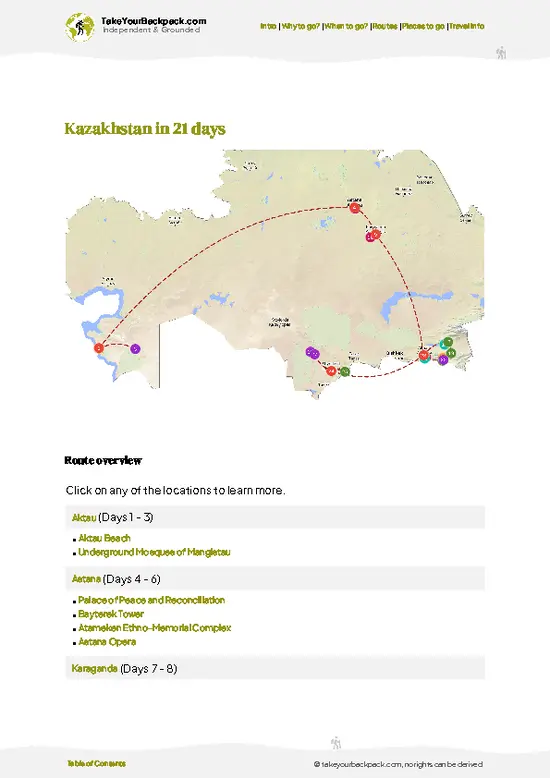
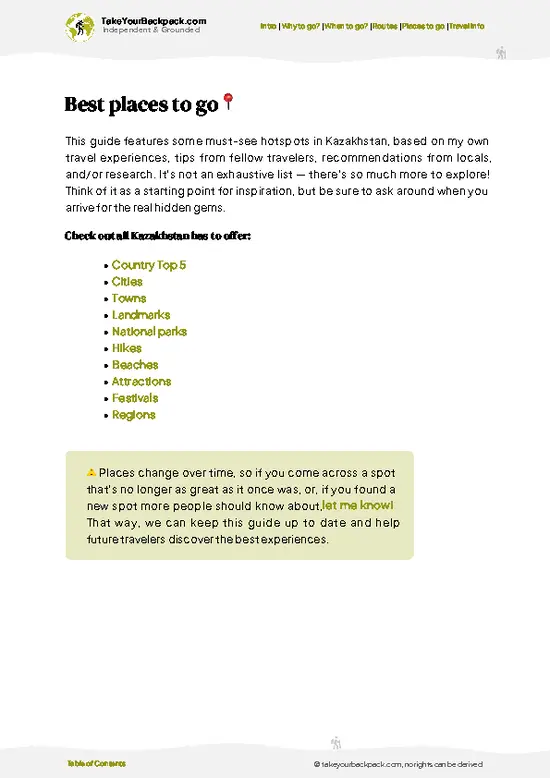
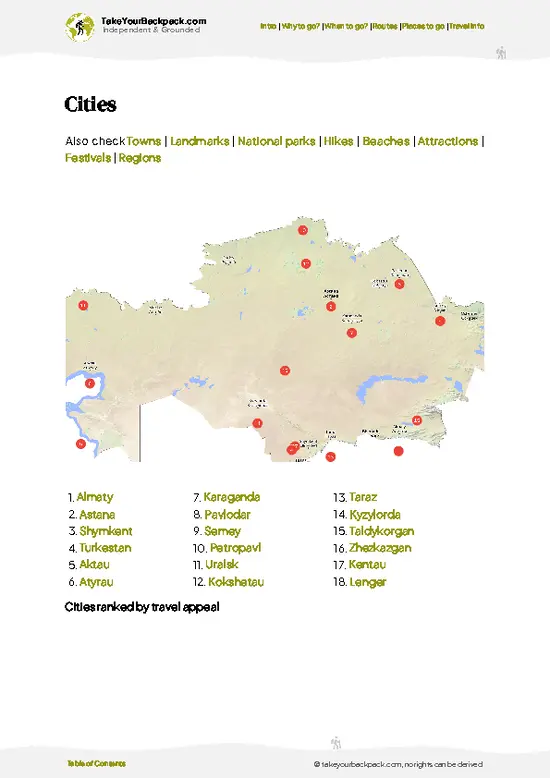
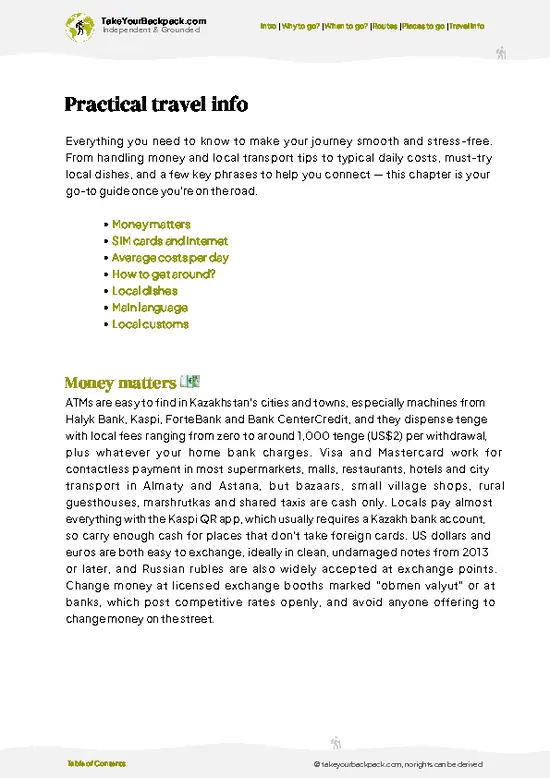
Lake Alakol’s Black Pebble Beaches
You’re not in the Mediterranean, but you’ll swear you are when you hit the volcanic black pebble beaches of Lake Alakol. The water is mineral-rich, slightly saline, and locals swear by its healing powers. Skip the crowded resort strips—head east toward Akshi or Koktuma, where the shore is quieter, the sunsets are cinematic, and you can still find a fisherman grilling his catch for a few tenge. The trade-off: it’s a haul from the nearest city, and public transport is a patchwork, but the payoff is a swim with more pelicans than people.
Tarbagatai Mountains: Wildflower Trekking
Come late spring, the Tarbagatai range explodes in color—think carpets of tulips and irises, with snow-capped peaks as your backdrop. This is Kazakhstan’s answer to the Alps, minus … read more 👉
You’re not in the Mediterranean, but you’ll swear you are when you hit the volcanic black pebble beaches of Lake Alakol. The water is mineral-rich, slightly saline, and locals swear by its healing powers. Skip the crowded resort strips—head east toward Akshi or Koktuma, where the shore is quieter, the sunsets are cinematic, and you can still find a fisherman grilling his catch for a few tenge. The trade-off: it’s a haul from the nearest city, and public transport is a patchwork, but the payoff is a swim with more pelicans than people.
Tarbagatai Mountains: Wildflower Trekking
Come late spring, the Tarbagatai range explodes in color—think carpets of tulips and irises, with snow-capped peaks as your backdrop. This is Kazakhstan’s answer to the Alps, minus … read more 👉
Lake Alakol’s Black Pebble Beaches
You’re not in the Mediterranean, but you’ll swear you are when you hit the volcanic black pebble beaches of Lake Alakol. The water is mineral-rich, slightly saline, and locals swear by its healing powers. Skip the crowded resort strips—head east toward Akshi or Koktuma, where the shore is quieter, the sunsets are cinematic, and you can still find a fisherman grilling his catch for a few tenge. The trade-off: it’s a haul from the nearest city, and public transport is a patchwork, but the payoff is a swim with more pelicans than people.
Tarbagatai Mountains: Wildflower Trekking
Come late spring, the Tarbagatai range explodes in color—think carpets of tulips and irises, with snow-capped peaks as your backdrop. This is Kazakhstan’s answer to the Alps, minus the crowds and price tag. Trails are rough, signage is non-existent, and you’ll need to be self-sufficient, but the solitude and sheer scale of the landscape are the reward. Bring your own food, and don’t expect cell service. You’ll get bragging rights for seeing a side of Kazakhstan most locals haven’t.
Zharkent Mosque
A riot of Chinese, Central Asian, and Russian architectural influences, this wooden mosque is a visual curveball in a region known for its steppe minimalism. Built without a single nail, the mosque’s dragon motifs and candy-colored paintwork are a testament to the Silk Road’s cultural mashup. It’s a quick stop, but the details are worth lingering over. You’ll trade a bit of time off the main highway for a genuine “wait, this is Kazakhstan?” moment.
Zharkent Bazaar
If you want to eat like a local, this is your move. The bazaar is a sensory overload—fresh samsa, honey, dried apricots, and the kind of melons that ruin supermarket fruit forever. You’ll need to haggle, and you’ll get jostled, but you’ll also get the best snapshot of daily life in the region. The trade-off: it’s chaotic and loud, but you’ll walk away with a full stomach and a story.
Charyn Canyon’s Temirlik Valley (Hidden Gem)
Everyone flocks to the main Charyn Canyon, but the Temirlik Valley is where the locals picnic and the silence is only broken by the wind. The rock formations here are otherworldly, and you can camp right at the canyon’s edge. Getting here means a bumpy ride and a bit of navigation, but you’ll have the place nearly to yourself.
Karatal River Rafting (Hidden Gem)
Forget the overhyped rafting circuits. The Karatal River is wild, unpredictable, and best tackled with a local guide who knows the bends. Rapids, birdlife, and the occasional wild horse sighting—this is the Tarbagatai region at its rawest. The catch: it’s seasonal, and you’ll need to arrange everything in advance, but the adrenaline rush is pure.
Urzhar’s Petroglyph Fields (Hidden Gem)
Scattered across the steppe near Urzhar, these ancient rock carvings are easy to miss—there’s no ticket booth, no fences, just you and the echoes of Bronze Age artists. You’ll need to ask around in town for directions, and the approach is a dusty one, but the sense of discovery is real. This is history you can touch, with zero crowds.
You’re not in the Mediterranean, but you’ll swear you are when you hit the volcanic black pebble beaches of Lake Alakol. The water is mineral-rich, slightly saline, and locals swear by its healing powers. Skip the crowded resort strips—head east toward Akshi or Koktuma, where the shore is quieter, the sunsets are cinematic, and you can still find a fisherman grilling his catch for a few tenge. The trade-off: it’s a haul from the nearest city, and public transport is a patchwork, but the payoff is a swim with more pelicans than people.
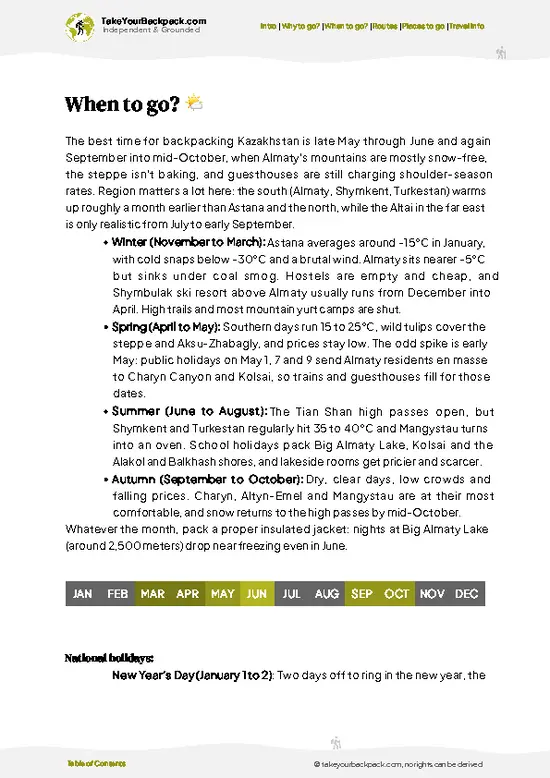
Tarbagatai Mountains: Wildflower Trekking
Come late spring, the Tarbagatai range explodes in color—think carpets of tulips and irises, with snow-capped peaks as your backdrop. This is Kazakhstan’s answer to the Alps, minus the crowds and price tag. Trails are rough, signage is non-existent, and you’ll need to be self-sufficient, but the solitude and sheer scale of the landscape are the reward. Bring your own food, and don’t expect cell service. You’ll get bragging rights for seeing a side of Kazakhstan most locals haven’t.
Zharkent Mosque
A riot of Chinese, Central Asian, and Russian architectural influences, this wooden mosque is a visual curveball in a region known for its steppe minimalism. Built without a single nail, the mosque’s dragon motifs and candy-colored paintwork are a testament to the Silk Road’s cultural mashup. It’s a quick stop, but the details are worth lingering over. You’ll trade a bit of time off the main highway for a genuine “wait, this is Kazakhstan?” moment.
Zharkent Bazaar
If you want to eat like a local, this is your move. The bazaar is a sensory overload—fresh samsa, honey, dried apricots, and the kind of melons that ruin supermarket fruit forever. You’ll need to haggle, and you’ll get jostled, but you’ll also get the best snapshot of daily life in the region. The trade-off: it’s chaotic and loud, but you’ll walk away with a full stomach and a story.
Charyn Canyon’s Temirlik Valley (Hidden Gem)
Everyone flocks to the main Charyn Canyon, but the Temirlik Valley is where the locals picnic and the silence is only broken by the wind. The rock formations here are otherworldly, and you can camp right at the canyon’s edge. Getting here means a bumpy ride and a bit of navigation, but you’ll have the place nearly to yourself.
Karatal River Rafting (Hidden Gem)
Forget the overhyped rafting circuits. The Karatal River is wild, unpredictable, and best tackled with a local guide who knows the bends. Rapids, birdlife, and the occasional wild horse sighting—this is the Tarbagatai region at its rawest. The catch: it’s seasonal, and you’ll need to arrange everything in advance, but the adrenaline rush is pure.
Urzhar’s Petroglyph Fields (Hidden Gem)
Scattered across the steppe near Urzhar, these ancient rock carvings are easy to miss—there’s no ticket booth, no fences, just you and the echoes of Bronze Age artists. You’ll need to ask around in town for directions, and the approach is a dusty one, but the sense of discovery is real. This is history you can touch, with zero crowds.
Spotted a mistake or missing something? Contact us.

 Best Backpacking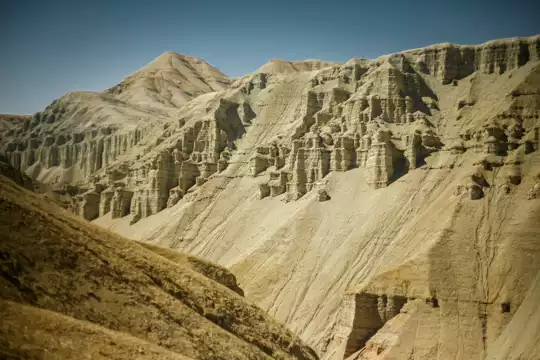
.jpg) Hi, I’m Johan (Netherlands 🇳🇱), the creator of TakeYourBackpack. Over the past 3 decades, I’ve backpacked through 90+ countries across six continents, gaining extensive experience with independent travel, long-term trips, and overland routes.
Hi, I’m Johan (Netherlands 🇳🇱), the creator of TakeYourBackpack. Over the past 3 decades, I’ve backpacked through 90+ countries across six continents, gaining extensive experience with independent travel, long-term trips, and overland routes.