v2.webp)
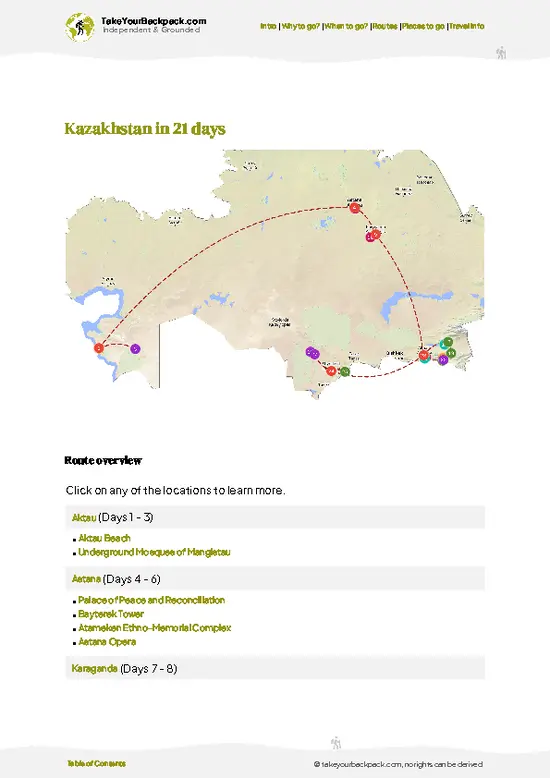
- Mausoleum of Khoja Ahmed Yasawi — The city’s soul and a UNESCO World Heritage site: a vast Timurid-era mausoleum with massive vaults, brilliant tilework and an atmosphere that’s part pilgrimage, part architectural awe. Don’t rush the courtyard at golden hour.
- Yasawi Historical and Cultural Reserve (museum within the complex) — Small but well-curated displays that explain the mausoleum’s construction, Timurid ornament, and the saint’s place in Central Asian Islam. Good context after you’ve walked the monument.
- Arystan Bab Mausoleum — A humble, active pilgrimage shrine often visited together with Yasawi; there’s a revered well and you’ll see locals making offerings. Great for seeing living traditions rather than just museum pieces.
- Barak Khan Mausoleum — One of the smaller royal tombs clustered
- Mausoleum of Khoja Ahmed Yasawi — The city’s soul and a UNESCO World Heritage site: a vast Timurid-era mausoleum with massive vaults, brilliant tilework and an atmosphere that’s part pilgrimage, part architectural awe. Don’t rush the courtyard at golden hour.
- Yasawi Historical and Cultural Reserve (museum within the complex) — Small but well-curated displays that explain the mausoleum’s construction, Timurid ornament, and the saint’s place in Central Asian Islam. Good context after you’ve walked the monument.
- Arystan Bab Mausoleum — A humble, active pilgrimage shrine often visited together with Yasawi; there’s a revered well and you’ll see locals making offerings. Great for seeing living traditions rather than just museum pieces.
- Barak Khan Mausoleum — One of the smaller royal tombs clustered around the big mausoleum; the brickwork and tile patterns give a different, more intimate perspective on regional funerary architecture.
- Rabia Sultan Begim Mausoleum — A quieter, less-crowded tomb with pretty glazed tiles and calm courtyards—good if you want a moment away from the main tourist flow.
- Necropolis and satellite mausoleums — Walk the surrounding plots and minor mausoleums that make up Turkestan’s necropolis; the variety of styles and eras tells the story of the city’s layered sacred landscape.
- Turkestan Regional Museum (Local History & Ethnography) — The go-to place for artifacts: nomadic gear, local costume, archaeological finds and regional history that help make sense of the sites you just visited.
- Central Bazaar (city market) — Not glamorous, but where you’ll get real food, bread, dried fruit, tea and textiles; excellent for cheap meals, people-watching and practicing your bargaining skills.
- Tea houses and local chaikhanas around the old town — Simple, authentic places to drink green tea, eat samsa/baursak and chat with locals; a small cultural immersion that costs next to nothing.
- Main square and viewing terraces — The modern civic space built during the city’s revival; it gives surprisingly good panoramic views of the mausoleum complex and is the best spot for sunset photos and quiet evening walks.
Spotted a mistake or missing something? Contact us.

 Best Backpacking
.jpg) Hi, I’m Johan (Netherlands 🇳🇱), the creator of TakeYourBackpack. Over the past 3 decades, I’ve backpacked through 90+ countries across six continents, gaining extensive experience with independent travel, long-term trips, and overland routes.
Hi, I’m Johan (Netherlands 🇳🇱), the creator of TakeYourBackpack. Over the past 3 decades, I’ve backpacked through 90+ countries across six continents, gaining extensive experience with independent travel, long-term trips, and overland routes.