
×

Kenya🇰🇪 | hikesMount Suswadouble crater, lava caves, Maasai lands, panoramic rim | things to do and best time to go

Explore Ngong HillsExplore Loita Hills

Backpacking in mount Suswa
👀 For curious travelershike ranked #10
By Johan Kruseman 🇳🇱 | Updated June 9, 2026

Forget the myth: Mount Suswa isn’t just a dusty, cracked volcano you tick off for the badge. It’s a living, breathing caldera in Kenya’s Rift Valley, southwest of Nairobi, where Maasai herders and volcanic caves share the same ground. The hike itself is raw—expect loose rock, sun that doesn’t quit, and a trail that’s more suggestion than signage. But the payoff is wild: panoramic crater views, zebra herds, and the surreal descent into lava tubes echoing with bats. It’s not Kilimanjaro’s slog or Mount Longonot’s Instagram parade—Suswa is quieter, rougher, and less forgiving. Public transport gets you close, but the last stretch demands a boda-boda or dusty walk. If you want Kenya’s wild side without the crowds, Suswa delivers—blisters and all.

Discover everything you want to know in the 📖 Kenya Travel Guide.
Best time to go: June - October, December - February
Duration: 6 to 8 hours
Distance: 15 kilometers
Total ascent: 600 to 800 meters


Get your Kenya guide
114 ranked highlights, routes & tips, works offline (429 pages)
Loading the map 🌍
CLICK TO FILTER
cities
towns
landmarks
national parks
hikes
beaches
attractions
festivals
regions
SHOW COUNTRY’S BESTSHOW ALL

✨ Why go?
Ranked #10 hike in Kenya
What sets this place apart

Mount Suswa is a backpacker’s playground in Kenya, where the scenery-to-effort ratio is off the charts. You’ll find yourself surrounded by breathtaking views of the Great Rift Valley and the crater’s unique landscape without the grueling climbs of other peaks. Public transport gets you there easily, making it a breeze to hop on a matatu from Nairobi.

The low cost of entry means you can splurge on a cold beer afterward without guilt. Whether you’re up for a quick day hike or a multi-day trek, the flexible distances cater to all levels. Plus, it fits seamlessly into a longer backpacking route, allowing you to explore more of Kenya’s wild heart. The moment you reach the summit and soak in that panoramic view, you’ll realize this hike is about so much more than just the destination—it’s the journey that fuels your soul.
Want to include mount Suswa in your Kenya route?
Create a personalized Kenya itinerary that includes mount Suswa and the places that fit your trip — based on your travel style, budget, and available time. Get your route in seconds.

Generate my trip

💡 HighlightsMust-see experiences and standout moments

  1. Double Crater (inner and outer calderas) — The defining thing about Suswa: two nested craters separated by a narrow ridge. Walking the rim gives dramatic drops into the inner bowl on one side and wide Rift Valley panoramas on the other — a geological setup you don’t see on most Kenyan hikes.
  2. Lava tubes and caves — Large, walkable lava tunnels thread through the volcano; you can crouch, scramble and peer into caverns. Many trekkers sleep in the caves, so bring a headlamp and warm layers — it’s an actual underground camping vibe that’s rare on East African trails.
  3. Summit saddle and viewpoints — The saddle between the craters and the higher ridges offer sweeping sunrise/sunset views over the Rift escarpment and distant peaks. The light here is spectacular for photos and the open, windswept
read more 👉
  1. Double Crater (inner and outer calderas) — The defining thing about Suswa: two nested craters separated by a narrow ridge. Walking the rim gives dramatic drops into the inner bowl on one side and wide Rift Valley panoramas on the other — a geological setup you don’t see on most Kenyan hikes.
  2. Lava tubes and caves — Large, walkable lava tunnels thread through the volcano; you can crouch, scramble and peer into caverns. Many trekkers sleep in the caves, so bring a headlamp and warm layers — it’s an actual underground camping vibe that’s rare on East African trails.
  3. Summit saddle and viewpoints — The saddle between the craters and the higher ridges offer sweeping sunrise/sunset views over the Rift escarpment and distant peaks. The light here is spectacular for photos and the open, windswept ridgelines feel very different from Kenya’s usual forested hikes.
  4. Baboon colonies and local wildlife — Large troops of baboons, rock hyraxes and other Rift Valley species live on the slopes and in the crater. Encounters are frequent and lively — great for watching animal behavior (but keep your distance and your food secured).
  5. Maasai grazing landscapes and cultural stops — The slopes are dotted with Maasai kraals and grazing cattle; many hikes are guided by local shepherds who share stories about life on the mountain. That direct cultural touch — short homestead visits or a chat by the trail — adds a human element you won’t get from a pure nature walk.
Spotted a mistake or missing something? Contact us.

Things to do near mount Suswa

Ratings based on Tripadvisor reviews. When you book through this link, you support our work at no extra cost to you.

🌤️ When to go?When to go for the best experience


  • Weather: The dry seasons, from late June to October and January to February, offer the clearest trails and views. Rain turns paths slick and visibility low, making the climb tougher and less rewarding.

  • Temperature: Daytime highs hover around 20-25°C (68-77°F), perfect for hiking without overheating. Nights can dip to 10°C (50°F), so pack layers for the chill after sunset.

  • Daylight Hours: Expect roughly 11 to 12 hours of daylight year-round, enough to tackle the hike without rushing but start early to avoid afternoon heat and fading light.

  • Crowds: Peak tourist months (July-August) bring more hikers, especially on weekends. For solitude, aim for shoulder months or weekdays when the trail feels like your own rugged playground.

  • Seasonal Activities: Dry seasons coincide with local wildlife
read more 👉

  • Weather: The dry seasons, from late June to October and January to February, offer the clearest trails and views. Rain turns paths slick and visibility low, making the climb tougher and less rewarding.

  • Temperature: Daytime highs hover around 20-25°C (68-77°F), perfect for hiking without overheating. Nights can dip to 10°C (50°F), so pack layers for the chill after sunset.

  • Daylight Hours: Expect roughly 11 to 12 hours of daylight year-round, enough to tackle the hike without rushing but start early to avoid afternoon heat and fading light.

  • Crowds: Peak tourist months (July-August) bring more hikers, especially on weekends. For solitude, aim for shoulder months or weekdays when the trail feels like your own rugged playground.

  • Seasonal Activities: Dry seasons coincide with local wildlife migrations nearby, adding a bonus safari vibe if you time it right.

  • Price Fluctuations: Accommodation and guide fees spike during peak dry months. Booking off-peak can save cash and snag better local deals.


Pro-tip: Hit Mount Suswa just after the short rains in January—trails are fresh, crowds thin, and the landscape bursts with green, making every step worth the effort.


source: climatestotravel.comJANJanuary: excellent for travelingFEBFebruary: excellent for travelingMARMarch: fair for travelingAPRApril: below average for travelingMAYMay: fair for travelingJUNJune: highly recommended for travelingJULJuly: highly recommended for travelingAUGAugust: highly recommended for travelingSEPSeptember: excellent for travelingOCTOctober: excellent for travelingNOVNovember: fair for travelingDECDecember: good for traveling
kenya-hike-mount-suswa v1
© Google |

✈️ The backpacker research shortcutKenya Travel Guide

An offline-friendly backpacking guide with optimized travel routes, ranked highlights, transport advice, and the best areas to stay.
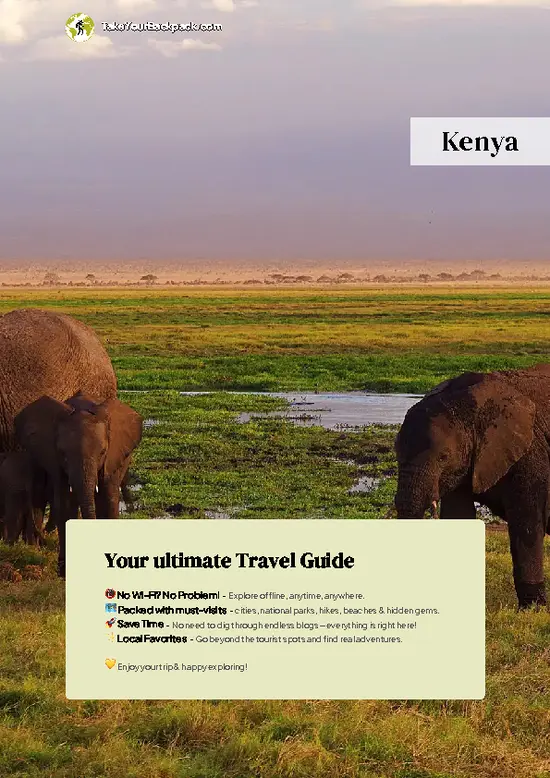
example page 0 from our offline Travel Guide for Kenya
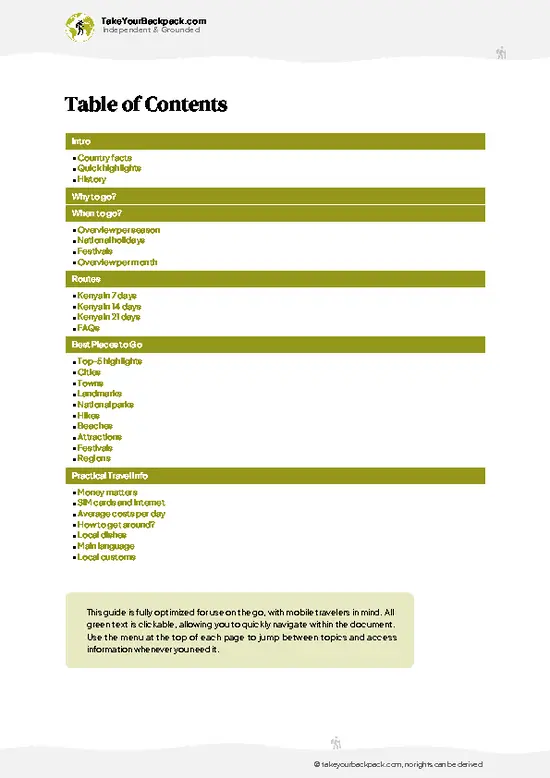
example page 1 from our offline Travel Guide for Kenya
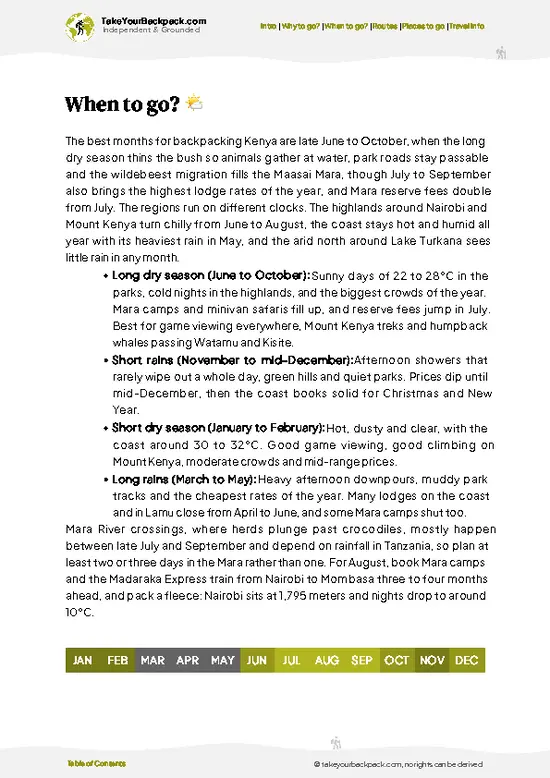
example page 2 from our offline Travel Guide for Kenya
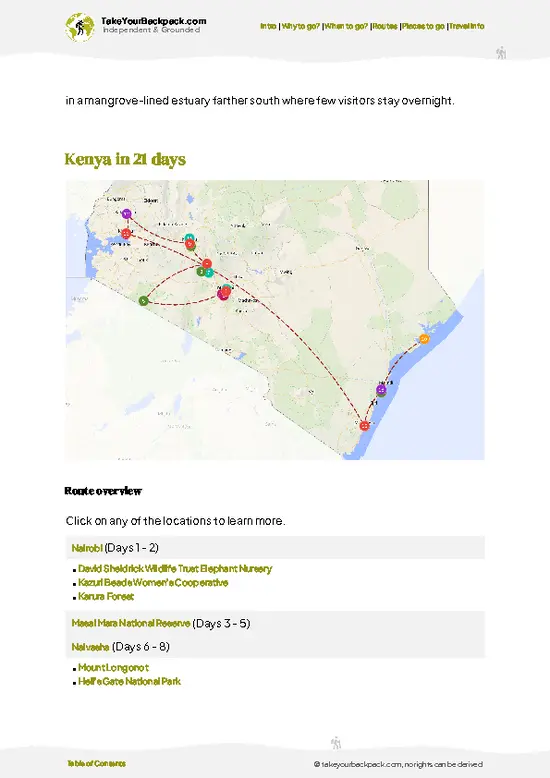
example page 3 from our offline Travel Guide for Kenya
example page 4 from our offline Travel Guide for Kenya
example page 5 from our offline Travel Guide for Kenya
example page 6 from our offline Travel Guide for Kenya
example page 7 from our offline Travel Guide for Kenya
The digital guide (429 pages) contains:
114 highlights, ranked by travel appeal
Optimized 7, 14 & 21-day travel routes
Cities, national parks, landmarks, beaches
How to get around
Offline-friendly for travel without Wi-Fi
👉 Click to see all 30+ guide features

📅 Plan smarter in minutes, not weeks
Month by month travel advice
Festivals & national holidays
Budget expectations

🗺️ Go to the right places, skip the overrated ones
Honest pros & cons of destinations
Top hikes, parks & viewpoints
Lesser-known places most travelers miss
Clear “worth it vs skip it” guidance

🛏️ Travel smoothly without rookie mistakes
Best areas to stay
Transport systems explained simply
Common scams & safety advice
SIM cards, money & practical tips

🌍 Understand the country, not just visit it
Culture & traditions
52 Essential phrases & customs
Festivals worth planning around
Traveler-friendly historical context
Insights that make places more meaningful

📱 Built for real travel conditions
Fully downloadable PDF
Works completely offline
Optimized for phone use
Useful in remote areas & buses
Everything in one place
Save weeks of stressful planning
Get instant access to your full guide. 30‑day money-back guarantee.


By proceeding you agree to our terms.
Sent to your inbox immediately after payment • 100% Secure Checkout
Best Backpacking Travel Advisor 2025 tourism awardBest Backpacking
Travel Advisor
2025
What others say about Take Your Backpack Guides:
⭐⭐⭐⭐⭐
Fantastic, amazing amount of information!
⭐⭐⭐⭐⭐
My goodness this is amazing, it's what I've been looking for hats off too you!
⭐⭐⭐⭐⭐
I think this is absolutely BRILLIANT
⭐⭐⭐⭐
Very complete and informative. It's still missing places, but I gotta to commend you
⭐⭐⭐⭐⭐
This is truly amazing, thank you, can't wait to explore it with my kids!
⭐⭐⭐⭐⭐
Awesome resource, thank you!
⭐⭐⭐⭐⭐
This is amazing! Can't wait to explore the ones I haven't seen
⭐⭐⭐⭐
I love this! Well done, great idea.
⭐⭐⭐⭐⭐
Thanks for taking the time to make this gem!
⭐⭐⭐⭐⭐
This might be the best website I've ever seen.
⭐⭐⭐⭐⭐
Congratulations, and thank you so much for your work; it's incredibly valuable.
⭐⭐⭐⭐
In all seriousness I think you did a great job pointing out the important spots
⭐⭐⭐⭐⭐
10/10 very good
⭐⭐⭐⭐⭐
As someone who's only just starting to visit regularly this is awesome, thank you.
⭐⭐⭐⭐
Thank you very much! I'm going to visit my dad, it's going to be very useful!
⭐⭐⭐⭐⭐
This is really cool! We'll be travelling for the first time and this definitely come in handy.
⭐⭐⭐⭐⭐
You are now our minister of culture, congratulations 👨‍💼
⭐⭐⭐⭐⭐
Just wanted to tell you that this is a pearl! Going to follow your recommendations.
⭐⭐⭐⭐⭐
This is so cool. I'll definitely be using the resource for my travels soon.
⭐⭐⭐⭐⭐
This is very impressive! Good work.
⭐⭐⭐⭐⭐
This is an amazing and informative site. Very well done!

🛏️ Where to stay?Best areas to stay in Kenya

If you enjoy meeting fellow travelers, consider choosing hostels with high ratings for atmosphere. On the other hand, if you prefer having your own space, a hotel might be a better option.

🥾 Hike detailsRoute, distance, and difficulty explained

Total Distance: Approximately 14 kilometers (round trip), depending on the specific route you choose around the crater.

Estimated Duration: Expect to spend around 5 to 7 hours on the trail. This includes time for breaks, taking in the views, and possibly some scrambling.

Difficulty Level: Moderate to challenging. The trail has some steep sections and rocky terrain, so a decent level of fitness is recommended.

Starting Point: The trailhead is near the Suswa Conservancy entrance. To get there by public transport, take a matatu from Nairobi to Narok. From Narok, you can catch another matatu or … read more 👉
Total Distance: Approximately 14 kilometers (round trip), depending on the specific route you choose around the crater.

Estimated Duration: Expect to spend around 5 to 7 hours on the trail. This includes time for breaks, taking in the views, and possibly some scrambling.

Difficulty Level: Moderate to challenging. The trail has some steep sections and rocky terrain, so a decent level of fitness is recommended.

Starting Point: The trailhead is near the Suswa Conservancy entrance. To get there by public transport, take a matatu from Nairobi to Narok. From Narok, you can catch another matatu or a boda-boda (motorcycle taxi) to the Suswa gate. Be prepared for a bit of a bumpy ride on the dirt roads.

Major Landmarks Along the Route:
  • Suswa Crater: The main highlight, offering stunning views and a chance to explore the unique volcanic landscape.
  • Rock Formations: Keep an eye out for interesting rock formations and caves that add character to the hike.
  • Wildlife Viewing Points: There are spots along the trail where you might catch glimpses of wildlife, especially if you’re quiet and patient.

Type of Terrain and Scenery: The terrain varies from rocky paths to grassy slopes. You’ll encounter some loose stones, so good footwear is a must. The scenery is breathtaking, with expansive views of the Great Rift Valley, rolling hills, and the distant peaks of Mount Kenya on clear days.

Typical Vegetation: Expect to see a mix of acacia trees, grasslands, and some shrubs. The higher elevations might have more unique flora, including various wildflowers.

Wildlife: The area is home to a variety of wildlife, including:
  • Antelope: Look out for species like the Grant’s gazelle and the impala.
  • Birds: A birdwatcher’s delight, with species ranging from eagles to various colorful songbirds.
  • Small Mammals: You might spot rock hyraxes or even a bush pig if you’re lucky.

Pack plenty of water, some snacks, and a camera for those views. And remember, the weather can change quickly, so a light rain jacket might be a good idea. Enjoy the hike!
⚠️ Hiking info can sometimes be outdated or inaccurate. Before you hit the trail, check the latest conditions with locals. If you do spot anything that's off, I'd love to hear from you, so I can update it for fellow travelers.

🛡️ SafetyStaying Safe: What Travelers Should Know

Mount Suswa offers a rewarding hike, but it’s not without its quirks. Weather can shift quickly; sunny skies can morph into sudden rain, so pack a light waterproof layer. The terrain is varied—some sections are steep and rocky, demanding focus on your footing. Navigation is straightforward, but keep an eye on trail markers to avoid wandering off track.

Wildlife is part of the experience. You might spot baboons or antelope; respect their space and don’t feed them. As for altitude, you’ll feel it, especially if you’re not acclimatized. Take your time, hydrate, and listen to your body.

Timing is key—start early to beat the heat and enjoy the sunrise. With the right preparation, the views from the summit and the sense of accomplishment will make every step worthwhile.

Other Kenyan hikes near mount Suswa

Explore more nearby:

  • Hell’s Gate Gorge—towering cliffs, geothermal vents, slot canyons, rock towers| 33 km away
  • Mount Longonot—steep crater rim, volcanic ash, Rift Valley panorama, open savanna| 34 km away
  • Ngong Hills—windy ridgeline, rolling summits, Nairobi views, open grassland| 41 km away

💡 Not sure where to go next?
Create a personalized itinerary for Kenya including mount Suswa and the places that fit your trip.

Generate my itinerary

👉 Discover all hikes

Or checkout all Kenya has to offer (think cities, towns, villages, national parks, hikes, beaches, festivals)
Country photo of Kenya

We 💚 feedbackSumming up the experience

Mount Suswa is a raw, unfiltered slice of Kenya. The trails are rugged, and the air is crisp, but the real magic? The moment you crest that final ridge and see the crater’s expanse—it’s a rush. Watch for the local wildlife; a herd of zebra might just surprise you. Just be ready for the altitude; it can sneak up on you. Pack water and embrace the challenge. You’ll leave with stories worth sharing.

✍️ Help improve this page!
The information on this page is based on in-depth research, insights shared by experienced travelers, and feedback from the local travel community in Kenya. While every effort is made to keep the information accurate and current, conditions can change — so if you spot anything incorrect or outdated, please get in touch.


🙋‍♂️ Give feedback

👋 Meet the founderWho’s Behind Take Your Backpack?

Johan, backpacker and founder of TakeYourBackpackHi, I’m Johan (Netherlands 🇳🇱), the creator of TakeYourBackpack. Over the past decade, I’ve backpacked through 80+ countries across six continents, gaining extensive experience with independent travel, long-term trips, and overland routes.

This site is built on a combination of firsthand travel experience and carefully curated insights from other backpackers. Many guides are based on places I’ve personally visited, while others bring together tips, observations, and practical advice shared by trusted travelers I’ve met along the way.

The goal is to provide realistic, experience-driven guidance — not generic itineraries — so you can explore destinations with better context, clearer expectations, and more confidence.

Get full Kenya guide •
Instant download • 114 highlights • Full Offline guide