


×

Kenya🇰🇪 | festivalsKilifi New Year Festivalbeach camping, electronic music, art installations | things to do and best time to go

Explore Nairobi International Trade FairExplore Africa Nouveau Festival

Backpacking in Kilifi New Year
🌟 Highlightfestival ranked #6
By Johan Kruseman 🇳🇱 | Updated May 23, 2026

Five years ago, Kilifi New Year Festival felt like a secret—just a few hundred sunburned dreamers, barefoot on the baobab roots, trading stories under a sky so clear you could count satellites. Now, the secret’s out. The festival has grown into a kinetic, thumping convergence of East African house, Afro-fusion, and global bass, drawing a wild mix of Nairobi creatives, Euro backpackers, and Kenyan coastal regulars. You’ll find it tucked along the Takaungu Creek, just outside Kilifi town on Kenya’s Indian Ocean coast. The vibe is fiercely communal and eco-conscious, with art installations, sunrise yoga, and a crowd that skews young, open, and ready to dance for three days straight. If you want a festival where the journey—dodging matatus, sweating through the mangroves, and camping under the stars—feels as vital as the music, Kilifi delivers. Just don’t expect to sleep much.

Discover everything you want to know in the 📖 Kenya Travel Guide.


Get your Kenya guide
114 ranked highlights, routes & tips, works offline (429 pages)
Loading the map 🌍
CLICK TO FILTER
cities
towns
landmarks
national parks
hikes
beaches
attractions
festivals
regions
SHOW COUNTRY’S BESTSHOW ALL

✨ Why go?
Ranked #6 festival in Kenya
What makes this festival worth celebrating

Backpackers flock to the Kilifi New Year Festival in Kenya for a reason: it’s a social energy powerhouse. Imagine stepping into a vibrant community where everyone shares the same excitement. This festival isn’t just about music and dance; it’s a temporary community that sparks connections. You’ll meet fellow travelers and locals alike, all united in celebration.

The cultural immersion is off the charts. From traditional performances to local cuisine, every moment is a chance to dive deeper into Kenyan culture. Plus, it’s surprisingly affordable compared to similar events worldwide. You get a rich experience without breaking the bank, leaving you with more funds for the adventures that follow.

Planning your route around this festival makes perfect sense. It’s a natural pit stop on your journey … read more 👉
Backpackers flock to the Kilifi New Year Festival in Kenya for a reason: it’s a social energy powerhouse. Imagine stepping into a vibrant community where everyone shares the same excitement. This festival isn’t just about music and dance; it’s a temporary community that sparks connections. You’ll meet fellow travelers and locals alike, all united in celebration.

The cultural immersion is off the charts. From traditional performances to local cuisine, every moment is a chance to dive deeper into Kenyan culture. Plus, it’s surprisingly affordable compared to similar events worldwide. You get a rich experience without breaking the bank, leaving you with more funds for the adventures that follow.

Planning your route around this festival makes perfect sense. It’s a natural pit stop on your journey along the stunning Kenyan coast. You can soak in the festival vibes and then explore the breathtaking beaches or wildlife nearby. This festival isn’t just a party; it’s a strategic move to enhance your entire trip. By weaving it into your travel plans, you preserve your energy and budget for the moments that truly matter.
Want to include Kilifi New Year Festival in your Kenya route?
Create a personalized Kenya itinerary that includes Kilifi New Year Festival and the places that fit your trip — based on your travel style, budget, and available time. Get your route in seconds.

Generate my trip

💡 HighlightsEssential experiences to have while celebrating the Kilifi New Year

  • Kilifi Creek setting and dhow cruises — The festival sits on a tidal creek framed by mangroves and Swahili cottages, so sunsets and boat trips feel built into the experience. A short dhow ride or a walk along the creek turns a music weekend into a proper coastal escape; the water, breeze and low-slung light give everything an effortlessly relaxed, seaside vibe you won’t get at inland festivals.
  • Eclectic live music fusion — Expect a mix rather than a single genre: Swahili taarab and traditional coastal rhythms sit comfortably alongside Afrobeat, reggae, and electronic sets. That cross-pollination—local artists jamming with visiting acts—creates spontaneous moments and sounds you won’t easily hear elsewhere.
  • Local cultural performances and storytelling — Traditional Mijikenda dances, drumming
read more 👉
  • Kilifi Creek setting and dhow cruises — The festival sits on a tidal creek framed by mangroves and Swahili cottages, so sunsets and boat trips feel built into the experience. A short dhow ride or a walk along the creek turns a music weekend into a proper coastal escape; the water, breeze and low-slung light give everything an effortlessly relaxed, seaside vibe you won’t get at inland festivals.
  • Eclectic live music fusion — Expect a mix rather than a single genre: Swahili taarab and traditional coastal rhythms sit comfortably alongside Afrobeat, reggae, and electronic sets. That cross-pollination—local artists jamming with visiting acts—creates spontaneous moments and sounds you won’t easily hear elsewhere.
  • Local cultural performances and storytelling — Traditional Mijikenda dances, drumming circles and oral storytelling are woven into the lineup, not tucked away as a tourist sideshow. That makes it a genuine chance to see coastal Kenyan culture performed in community spaces, with authentic costumes and rhythms instead of staged, generic displays.
  • Fresh coastal food and informal beach feasts — The food scene leans on local produce: grilled fish, coconut-rich Swahili stews, mangoes, and street snacks. Food is served from small stalls and pop-up kitchens, so eating becomes part of the social fabric—you’ll share tables, swap plates and discover flavors that anchor the festival to place.
  • Art, markets and a community-driven vibe — Pop-up craft stalls, local artists, beach installations and hands-on workshops give the festival a creative market feel. It’s small enough to bump into artists and volunteers, and there’s often an eco-minded, community focus—useful if you like festivals that feel grassroots rather than corporate.
Spotted a mistake or missing something? Contact us.

Things to do near Kilifi New Year Festival

Ratings based on Tripadvisor reviews. When you book through this link, you support our work at no extra cost to you.

🌤️ When to go?When is the celebration of Kilifi New Year Festival?


  • Topic: Weather – Kilifi’s New Year Festival thrives in the dry season, from December to February. Expect warm, sunny days around 28-32°C (82-90°F) with minimal rain. Avoid the heavy rains of April and May that turn roads to mud and dampen the vibe.

  • Topic: Temperature – Nights cool down to a comfortable 20-24°C (68-75°F), perfect for late-night beach bonfires without freezing your toes off. Daytime heat demands light, breathable clothing and plenty of hydration.

  • Topic: Daylight Hours – Around 12 hours of daylight year-round, but December offers slightly longer evenings to soak in the festival’s music and dance under fading light, stretching your adventure well into the night.

  • Topic: Crowds – The festival draws a lively mix of locals and travelers, but it’s not a crush-fest. Arriving early
read more 👉

  • Topic: Weather – Kilifi’s New Year Festival thrives in the dry season, from December to February. Expect warm, sunny days around 28-32°C (82-90°F) with minimal rain. Avoid the heavy rains of April and May that turn roads to mud and dampen the vibe.

  • Topic: Temperature – Nights cool down to a comfortable 20-24°C (68-75°F), perfect for late-night beach bonfires without freezing your toes off. Daytime heat demands light, breathable clothing and plenty of hydration.

  • Topic: Daylight Hours – Around 12 hours of daylight year-round, but December offers slightly longer evenings to soak in the festival’s music and dance under fading light, stretching your adventure well into the night.

  • Topic: Crowds – The festival draws a lively mix of locals and travelers, but it’s not a crush-fest. Arriving early December or just after New Year’s Day lets you dodge peak crowds and snag better accommodation deals.

  • Topic: Seasonal Activities – December to February is prime for beach parties, cultural shows, and water sports. Outside this window, some activities slow down or close, so timing your visit here means full access to the festival’s pulse.

  • Topic: Price Fluctuations – Prices spike around New Year’s Eve itself. Booking early or aiming for the first two weeks of December can save you serious cash on lodging and local transport, leaving more for the festival experience.


Pro-tip: Lock in your trip for mid-December to early January to balance weather, crowd size, and wallet—this sweet spot keeps your energy high and your budget intact for the moments that count.


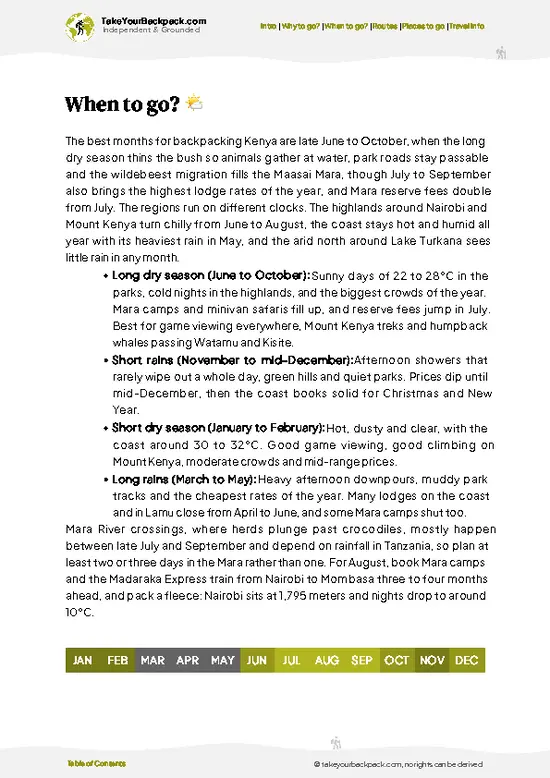
source: climatestotravel.comJANJanuary: excellent for travelingFEBFebruary: not recommended for travelingMARMarch: not recommended for travelingAPRApril: not recommended for travelingMAYMay: not recommended for travelingJUNJune: not recommended for travelingJULJuly: not recommended for travelingAUGAugust: not recommended for travelingSEPSeptember: not recommended for travelingOCTOctober: not recommended for travelingNOVNovember: not recommended for travelingDECDecember: excellent for traveling

✈️ The backpacker research shortcutKenya Travel Guide

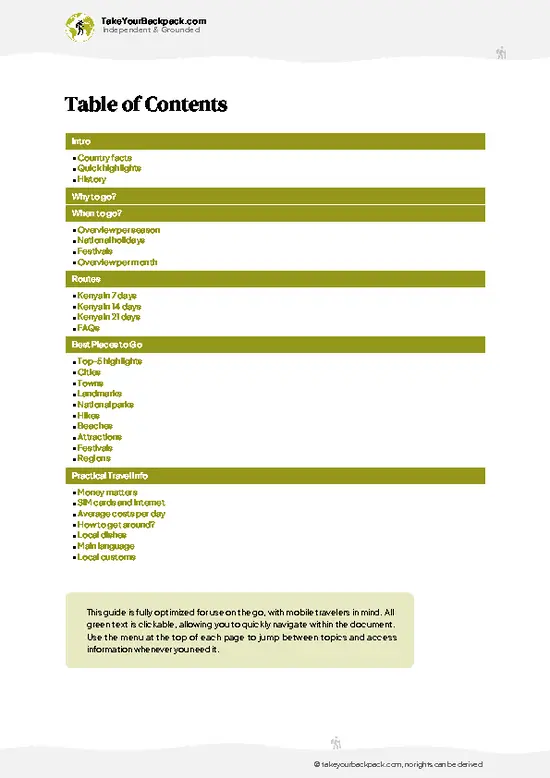
An offline-friendly backpacking guide with optimized travel routes, ranked highlights, transport advice, and the best areas to stay.
example page 0 from our offline Travel Guide for Kenya
example page 1 from our offline Travel Guide for Kenya
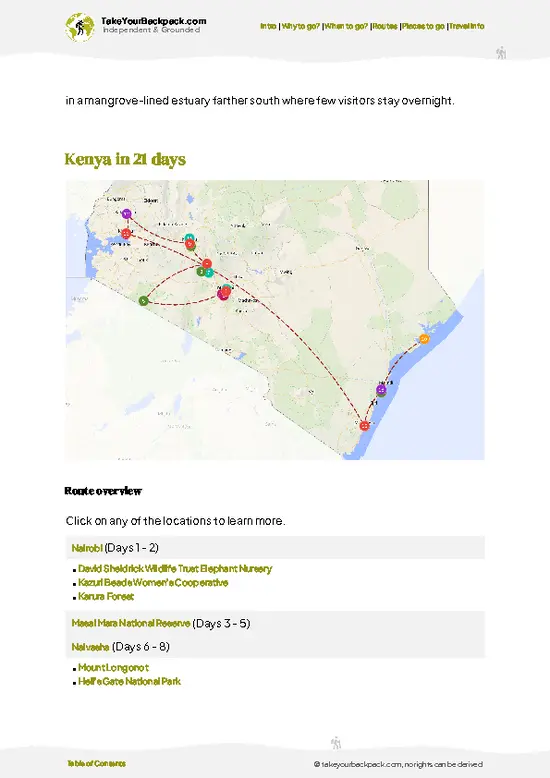
example page 2 from our offline Travel Guide for Kenya
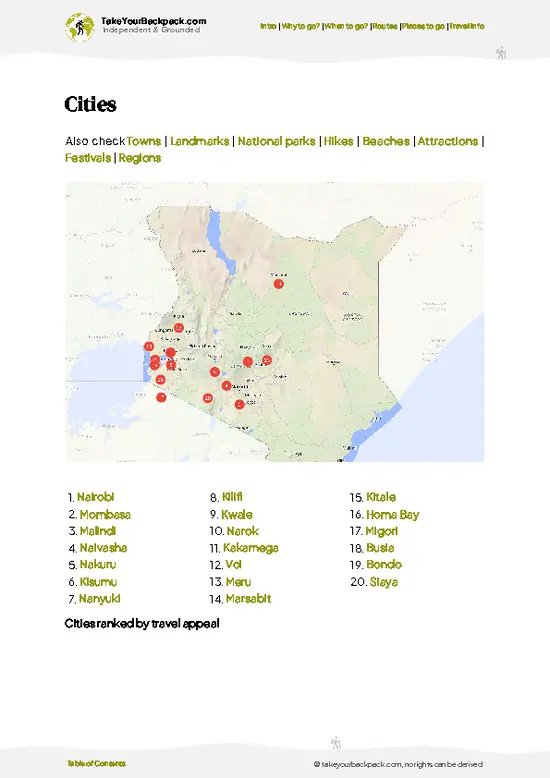
example page 3 from our offline Travel Guide for Kenya
example page 4 from our offline Travel Guide for Kenya
example page 5 from our offline Travel Guide for Kenya
example page 6 from our offline Travel Guide for Kenya
example page 7 from our offline Travel Guide for Kenya
The digital guide (429 pages) contains:
114 highlights, ranked by travel appeal
Optimized 7, 14 & 21-day travel routes
Cities, national parks, landmarks, beaches
How to get around
Offline-friendly for travel without Wi-Fi
👉 Click to see all 30+ guide features

📅 Plan smarter in minutes, not weeks
Month by month travel advice
Festivals & national holidays
Budget expectations

🗺️ Go to the right places, skip the overrated ones
Honest pros & cons of destinations
Top hikes, parks & viewpoints
Lesser-known places most travelers miss
Clear “worth it vs skip it” guidance

🛏️ Travel smoothly without rookie mistakes
Best areas to stay
Transport systems explained simply
Common scams & safety advice
SIM cards, money & practical tips

🌍 Understand the country, not just visit it
Culture & traditions
52 Essential phrases & customs
Festivals worth planning around
Traveler-friendly historical context
Insights that make places more meaningful

📱 Built for real travel conditions
Fully downloadable PDF
Works completely offline
Optimized for phone use
Useful in remote areas & buses
Everything in one place
Save weeks of stressful planning
Get instant access to your full guide. 30‑day money-back guarantee.


By proceeding you agree to our terms.
Sent to your inbox immediately after payment • 100% Secure Checkout
Best Backpacking Travel Advisor 2025 tourism awardBest Backpacking
Travel Advisor
2025
What others say about Take Your Backpack Guides:
⭐⭐⭐⭐⭐
Fantastic, amazing amount of information!
⭐⭐⭐⭐⭐
My goodness this is amazing, it's what I've been looking for hats off too you!
⭐⭐⭐⭐⭐
I think this is absolutely BRILLIANT
⭐⭐⭐⭐
Very complete and informative. It's still missing places, but I gotta to commend you
⭐⭐⭐⭐⭐
This is truly amazing, thank you, can't wait to explore it with my kids!
⭐⭐⭐⭐⭐
Awesome resource, thank you!
⭐⭐⭐⭐⭐
This is amazing! Can't wait to explore the ones I haven't seen
⭐⭐⭐⭐
I love this! Well done, great idea.
⭐⭐⭐⭐⭐
Thanks for taking the time to make this gem!
⭐⭐⭐⭐⭐
This might be the best website I've ever seen.
⭐⭐⭐⭐⭐
Congratulations, and thank you so much for your work; it's incredibly valuable.
⭐⭐⭐⭐
In all seriousness I think you did a great job pointing out the important spots
⭐⭐⭐⭐⭐
10/10 very good
⭐⭐⭐⭐⭐
As someone who's only just starting to visit regularly this is awesome, thank you.
⭐⭐⭐⭐
Thank you very much! I'm going to visit my dad, it's going to be very useful!
⭐⭐⭐⭐⭐
This is really cool! We'll be travelling for the first time and this definitely come in handy.
⭐⭐⭐⭐⭐
You are now our minister of culture, congratulations 👨‍💼
⭐⭐⭐⭐⭐
Just wanted to tell you that this is a pearl! Going to follow your recommendations.
⭐⭐⭐⭐⭐
This is so cool. I'll definitely be using the resource for my travels soon.
⭐⭐⭐⭐⭐
This is very impressive! Good work.
⭐⭐⭐⭐⭐
This is an amazing and informative site. Very well done!

🛏️ Where to stay?Best areas to stay in Kenya

When you’re gearing up for the Kilifi New Year Festival, the right base can make all the difference. Head to Kilifi Town itself. This vibrant hub is alive with energy, and you’ll find a mix of budget-friendly accommodations that cater to backpackers. The proximity to the festival means you can easily walk or bike to the festivities, saving your energy for the dance floor instead of long commutes.

Next, consider Diani Beach, a bit further south but worth the trek. It’s a hotspot for solo travelers and groups alike, with a laid-back vibe that encourages socializing. The beach scene is perfect for … read more 👉
When you’re gearing up for the Kilifi New Year Festival, the right base can make all the difference. Head to Kilifi Town itself. This vibrant hub is alive with energy, and you’ll find a mix of budget-friendly accommodations that cater to backpackers. The proximity to the festival means you can easily walk or bike to the festivities, saving your energy for the dance floor instead of long commutes.

Next, consider Diani Beach, a bit further south but worth the trek. It’s a hotspot for solo travelers and groups alike, with a laid-back vibe that encourages socializing. The beach scene is perfect for unwinding after a night of celebration. Plus, the local eateries serve up delicious, affordable meals that keep your budget intact.

Don’t overlook Malindi, either. This coastal town has a rich history and a welcoming atmosphere. It’s a bit quieter than Kilifi but offers a unique charm. You’ll find friendly locals and fellow travelers, making it easy to connect with others.

Stay alert for hidden costs, like transport fees or overpriced meals near the festival. Prioritize places where you can mingle and share stories, ensuring your experience is as rich as the local culture.

👛 Costs (as of 25 September 2025)Travel costs and budget guide for Kilifi New Year

The Kilifi New Year Festival in Kenya is a vibrant celebration, but navigating the costs can be tricky. Here’s what you need to know to keep your budget intact while maximizing your experience.
  • Festival Tickets: Expect to pay between $50 to $100 for a multi-day pass. Prices can vary based on the lineup and early bird discounts. Grab your tickets early to avoid last-minute price hikes.
  • Accommodation: Options range from budget hostels at around $10 to $30 per night to mid-range hotels costing $50 to $100. Book in advance, as places fill up fast during the festival. Camping is also an option, often included in festival tickets, but check the details.
  • Local Transport: Budget around $5 to $15 per day for local transport. Matatus (shared taxis) are the most common and affordable way to get around.
read more 👉
The Kilifi New Year Festival in Kenya is a vibrant celebration, but navigating the costs can be tricky. Here’s what you need to know to keep your budget intact while maximizing your experience.
  • Festival Tickets: Expect to pay between $50 to $100 for a multi-day pass. Prices can vary based on the lineup and early bird discounts. Grab your tickets early to avoid last-minute price hikes.
  • Accommodation: Options range from budget hostels at around $10 to $30 per night to mid-range hotels costing $50 to $100. Book in advance, as places fill up fast during the festival. Camping is also an option, often included in festival tickets, but check the details.
  • Local Transport: Budget around $5 to $15 per day for local transport. Matatus (shared taxis) are the most common and affordable way to get around. If you’re feeling adventurous, consider renting a bike for about $10 a day to explore the area at your own pace.
  • Food & Drinks: Plan for $10 to $30 daily. Street food is delicious and cheap, with meals costing as little as $2. Restaurants will be pricier, but you can still find good meals for under $10. Don’t forget to budget for drinks, especially at the festival, where prices can spike.
  • Miscellaneous Expenses: Set aside $20 to $50 for souvenirs, activities, or unexpected costs. This includes anything from local crafts to spontaneous excursions. Having a buffer will keep your adventure stress-free.

Keep these figures in mind, and you’ll be ready to dive into the festival without breaking the bank.
⚠️ Prices can change and everyone travels differently, so take this as a rough guide. Hope it helps you plan your adventure!

🍲 FoodLocal Cuisine & Drinks

At the Kilifi New Year Festival, food and drinks are a vibrant part of the experience. You’ll find a mix of local specialties and festival stalls buzzing with energy. Think ugali—a staple made from maize flour, served with rich stews. Don’t miss out on samosas, crispy and stuffed with spiced meat or veggies, perfect for snacking as you wander.

For drinks, the local brews are a must-try. Sip on Tusker, a popular Kenyan beer, or go for ajon, a traditional millet brew that packs a punch. Fresh coconut water is also a refreshing choice, especially under the tropical sun.

When it comes to authenticity, dive into the street food scene. Grab a plate of nyama choma—grilled meat that’s smoky and tender, often served with a side of kachumbari, a zesty tomato and onion salad. The flavors are a celebration … read more 👉
At the Kilifi New Year Festival, food and drinks are a vibrant part of the experience. You’ll find a mix of local specialties and festival stalls buzzing with energy. Think ugali—a staple made from maize flour, served with rich stews. Don’t miss out on samosas, crispy and stuffed with spiced meat or veggies, perfect for snacking as you wander.

For drinks, the local brews are a must-try. Sip on Tusker, a popular Kenyan beer, or go for ajon, a traditional millet brew that packs a punch. Fresh coconut water is also a refreshing choice, especially under the tropical sun.

When it comes to authenticity, dive into the street food scene. Grab a plate of nyama choma—grilled meat that’s smoky and tender, often served with a side of kachumbari, a zesty tomato and onion salad. The flavors are a celebration of Kenyan culture.

Be prepared for some quirks. Sharing is common; locals often invite you to try their food, so don’t hesitate to reciprocate. Lines can get long, especially for the most popular stalls, so patience is key. Cash is king here; some vendors may not accept cards, so keep some shillings handy. Serving sizes can vary, so don’t be shy about asking for recommendations. Enjoy the feast!

Other Kenyan festivals near Kilifi New Year

Explore more nearby:


💡 Not sure where to go next?
Create a personalized itinerary for Kenya including Kilifi New Year and the places that fit your trip.

Generate my itinerary

👉 Discover all festivals

Or checkout all Kenya has to offer (think cities, towns, villages, national parks, hikes, beaches, festivals)
Country photo of Kenya

We 💚 feedbackKey takeaways before you go

The Kilifi New Year Festival is a whirlwind of energy, where the beats of local music pulse through the air and the scent of street food dances around you. Expect surprises—like impromptu dance-offs that pull you in. But here’s the kicker: don’t underestimate the crowds. They can be overwhelming, especially if you’re not prepared. Arrive early to snag a good spot and soak in the vibe without feeling rushed. Trust me, those moments of connection are what you’ll remember long after the fireworks fade.

✍️ Help improve this page!
The information on this page is based on in-depth research, insights shared by experienced travelers, and feedback from the local travel community in Kenya. While every effort is made to keep the information accurate and current, conditions can change — so if you spot anything incorrect or outdated, please get in touch.


🙋‍♂️ Give feedback

👋 Meet the founderWho’s Behind Take Your Backpack?

Johan, backpacker and founder of TakeYourBackpackHi, I’m Johan (Netherlands 🇳🇱), the creator of TakeYourBackpack. Over the past decade, I’ve backpacked through 80+ countries across six continents, gaining extensive experience with independent travel, long-term trips, and overland routes.

This site is built on a combination of firsthand travel experience and carefully curated insights from other backpackers. Many guides are based on places I’ve personally visited, while others bring together tips, observations, and practical advice shared by trusted travelers I’ve met along the way.

The goal is to provide realistic, experience-driven guidance — not generic itineraries — so you can explore destinations with better context, clearer expectations, and more confidence.

Get full Kenya guide •
Instant download • 114 highlights • Full Offline guide