×

Kenya🇰🇪 | festivalsMaulidi FestivalIslamic rituals, Lamu mosques, devotional poetry | things to do and best time to go

Explore Mombasa CarnivalExplore Nairobi International Book Fair

Backpacking in Maulidi
👍 Recommendedfestival ranked #9
By Johan Kruseman 🇳🇱 | Updated September 3, 2026

Your sandals slap the stone as you dodge a swirl of boys drumming on plastic buckets, incense thick in your nose, the call-and-response chants ricocheting off Lamu’s coral walls. Maulidi Festival erupts each spring in Lamu Old Town, off Kenya’s northern coast—a centuries-old Sufi celebration that transforms the island’s narrow lanes into a living, breathing procession. Expect devotional poetry, taarab music, and a crowd that’s mostly local, with a handful of wide-eyed travelers swept into the current. The energy is communal, spiritual, and kinetic—less a party, more a marathon of faith and stamina. If you crave authenticity and don’t mind a little chaos, Maulidi delivers. If you need personal space, skip it.

Discover everything you want to know in the 📖 Kenya Travel Guide.


Get your Kenya guide
101 ranked highlights, routes & tips, works offline (376 pages)
Loading the map 🌍
CLICK TO FILTER
cities
towns
landmarks
national parks
hikes
beaches
attractions
festivals
regions
SHOW COUNTRY’S BESTSHOW ALL

✨ Why go?
Ranked #9 festival in Kenya
What makes this festival worth celebrating

Backpackers plan their routes around the Maulidi Festival in Kenya for a reason. This vibrant celebration bursts with social energy, drawing people together in a temporary community that feels electric. You’ll dive into cultural immersion, experiencing local traditions and flavors that are hard to find elsewhere. Plus, it’s affordable compared to similar events, allowing you to stretch your budget for other adventures. By timing your travels with the festival, you not only enrich your journey but also create unforgettable memories that resonate long after the last drumbeat fades. Embrace the rhythm of exploration; it’s all part of the adventure!
Want to include Maulidi Festival in your Kenya route?
Create a personalized Kenya itinerary that includes Maulidi Festival and the places that fit your trip — based on your travel style, budget, and available time. Get your route in seconds.

Generate my trip

💡 HighlightsThe experiences that define the visit

  • Qasida and naat recitations (devotional poetry) — Expect call-and-response poetry and songs praising the Prophet, often sung in Arabic and Swahili. The harmonies and layered voices in mosque courtyards or open squares give the whole thing a spine-tingling, communal feel you don’t get at regular services.
  • Dhikr and Sufi zikr circles — Rhythmic, repetitive chanting led by local sheikhs where people clap, sway, and sometimes enter trance-like states. It’s intimate, intense and a living example of how spirituality and community blend in Kenyan Muslim life.
  • Swahili processions and traditional pageantry — Colourful parades through old town alleys with men in kanzus and women in kangas, children carrying lanterns, and elders leading the way. It’s less about spectacle and more about shared identity
read more 👉
  • Qasida and naat recitations (devotional poetry) — Expect call-and-response poetry and songs praising the Prophet, often sung in Arabic and Swahili. The harmonies and layered voices in mosque courtyards or open squares give the whole thing a spine-tingling, communal feel you don’t get at regular services.
  • Dhikr and Sufi zikr circles — Rhythmic, repetitive chanting led by local sheikhs where people clap, sway, and sometimes enter trance-like states. It’s intimate, intense and a living example of how spirituality and community blend in Kenyan Muslim life.
  • Swahili processions and traditional pageantry — Colourful parades through old town alleys with men in kanzus and women in kangas, children carrying lanterns, and elders leading the way. It’s less about spectacle and more about shared identity and continuity — great for street-level people-watching.
  • Coastal music: taarab, percussion and dance — Live taarab ensembles, drums and singing mix Arabic, Indian and African influences into something uniquely East African. You’ll find couples dancing, impromptu performances in market squares, and music that pulls you into the rhythm of the place.
  • Feasts, street food and traditional treats — Communal meals are everywhere: pilau, biryani, mahamri, halwa, dates and spiced tea handed out in mosques and on streets. Food is how locals show hospitality during Maulidi, so grab a plate and be prepared for honest, home-style flavours and plenty of friendly invites.
Spotted a mistake or missing something? Contact us.

Things to do near Maulidi Festival

Ratings based on Tripadvisor reviews. When you book through this link, you support our work at no extra cost to you.

🌤️ When to go?When is the celebration of Maulidi Festival?


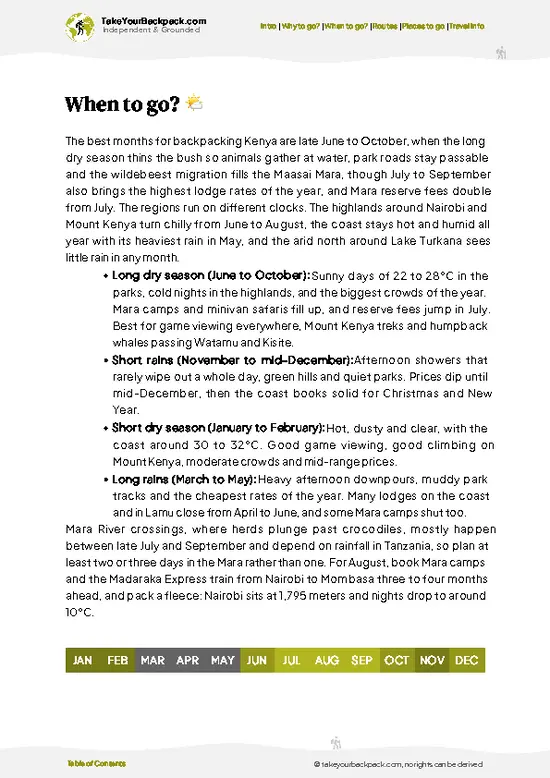
  • Topic: Weather – The Maulidi Festival thrives in Kenya’s dry season, typically from June to October. Expect clear skies and minimal rain, perfect for trekking between events without soggy boots or soggy spirits.

  • Topic: Temperature – Daytime highs hover around 24-28°C (75-82°F), cooling to 12-16°C (54-61°F) at night. Dress in layers to handle warm days and crisp evenings without wasting energy on discomfort.

  • Topic: Daylight Hours – With roughly 11 to 12 hours of daylight, you get ample time to soak in the festival’s rhythm and explore surrounding areas without rushing.

  • Topic: Crowds – Peak festival days draw local crowds but rarely overwhelm. Arriving early in the dry season helps you avoid weekend surges and secures better accommodation deals.

  • Topic: Seasonal Activities – The dry
read more 👉

  • Topic: Weather – The Maulidi Festival thrives in Kenya’s dry season, typically from June to October. Expect clear skies and minimal rain, perfect for trekking between events without soggy boots or soggy spirits.

  • Topic: Temperature – Daytime highs hover around 24-28°C (75-82°F), cooling to 12-16°C (54-61°F) at night. Dress in layers to handle warm days and crisp evenings without wasting energy on discomfort.

  • Topic: Daylight Hours – With roughly 11 to 12 hours of daylight, you get ample time to soak in the festival’s rhythm and explore surrounding areas without rushing.

  • Topic: Crowds – Peak festival days draw local crowds but rarely overwhelm. Arriving early in the dry season helps you avoid weekend surges and secures better accommodation deals.

  • Topic: Seasonal Activities – The dry season aligns with cultural ceremonies and outdoor performances, maximizing your chances to witness authentic celebrations rather than watered-down versions.

  • Topic: Price Fluctuations – Prices for lodging and transport spike slightly during the festival’s core days but remain reasonable compared to Kenya’s high tourist season in December-January. Booking ahead locks in better rates.


Pro-tip: Time your visit just before the festival’s peak to catch rehearsals, quieter moments, and better deals—energy saved here fuels your full immersion when the festival ignites.


source: climatestotravel.comJANJanuary: not recommended for travelingFEBFebruary: not recommended for travelingMARMarch: not recommended for travelingAPRApril: not recommended for travelingMAYMay: not recommended for travelingJUNJune: highly recommended for travelingJULJuly: highly recommended for travelingAUGAugust: highly recommended for travelingSEPSeptember: highly recommended for travelingOCTOctober: highly recommended for travelingNOVNovember: not recommended for travelingDECDecember: not recommended for traveling

✈️ The backpacker research shortcutKenya Travel Guide

An offline-friendly backpacking guide with optimized travel routes, ranked highlights, transport advice, and the best areas to stay.
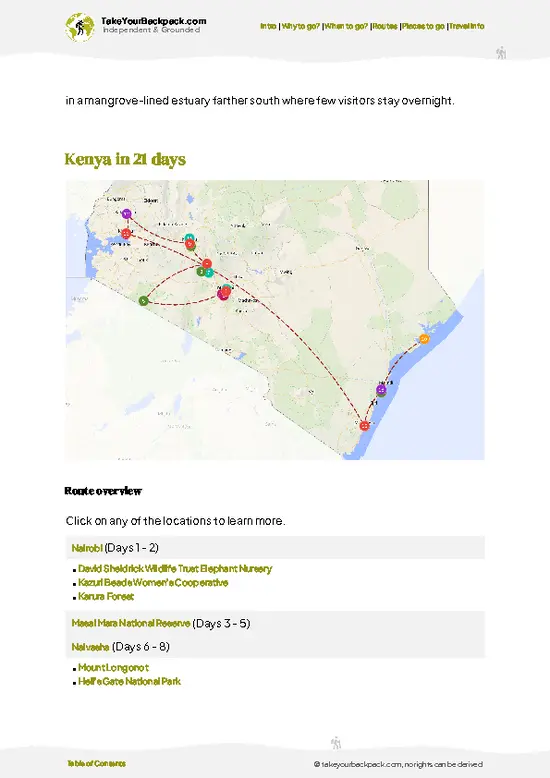
example page 0 from our offline Travel Guide for Kenya
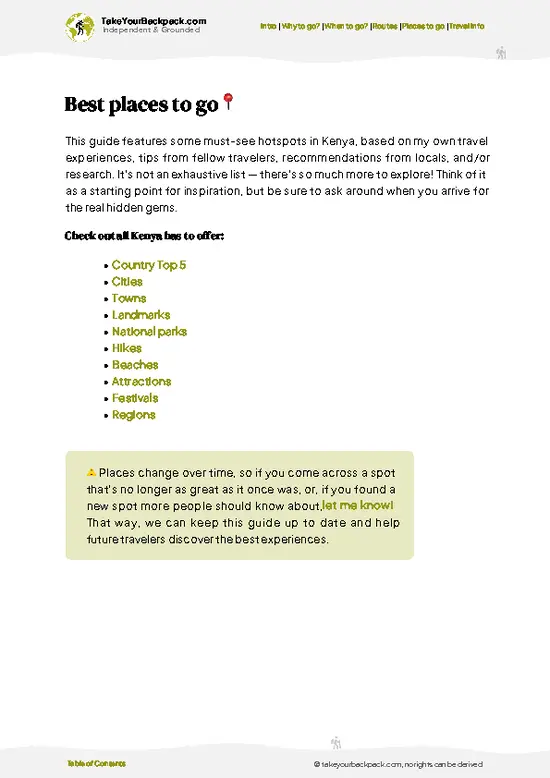
example page 1 from our offline Travel Guide for Kenya
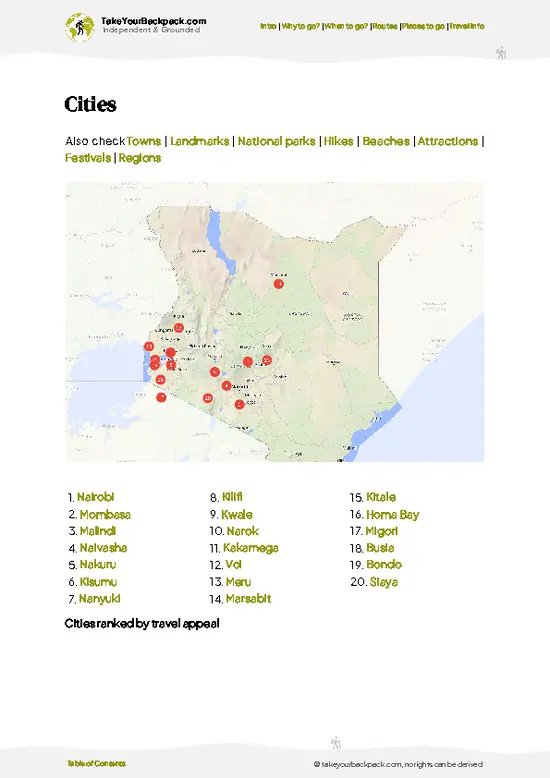
example page 2 from our offline Travel Guide for Kenya
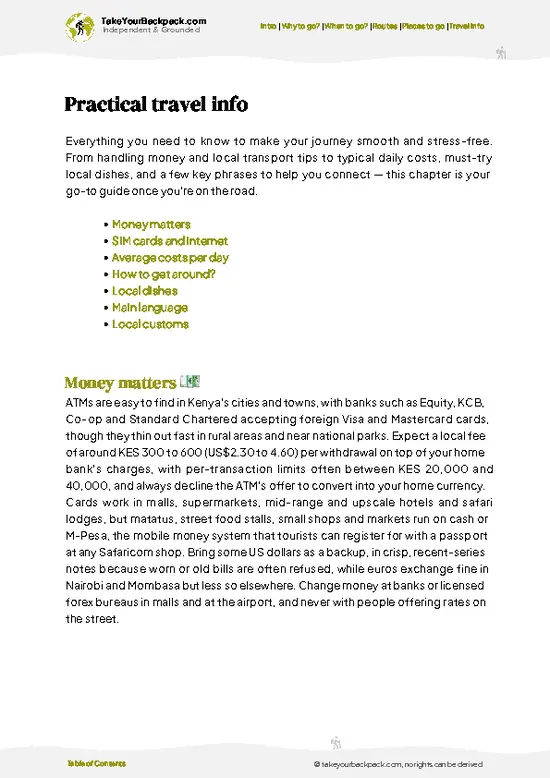
example page 3 from our offline Travel Guide for Kenya
example page 4 from our offline Travel Guide for Kenya
example page 5 from our offline Travel Guide for Kenya
example page 6 from our offline Travel Guide for Kenya
example page 7 from our offline Travel Guide for Kenya
The digital guide (376 pages) contains:
101 highlights, ranked by travel appeal
Optimized 7, 14 & 21-day travel routes
Cities, national parks, landmarks, beaches
How to get around
Offline-friendly for travel without Wi-Fi
👉 Click to see all 30+ guide features

📅 Plan smarter in minutes, not weeks
Month by month travel advice
Festivals & national holidays
Budget expectations

🗺️ Go to the right places, skip the overrated ones
Honest pros & cons of destinations
Top hikes, parks & viewpoints
Lesser-known places most travelers miss
Clear “worth it vs skip it” guidance

🛏️ Travel smoothly without rookie mistakes
Best areas to stay
Transport systems explained simply
Common scams & safety advice
SIM cards, money & practical tips

🌍 Understand the country, not just visit it
Culture & traditions
52 Essential phrases & customs
Festivals worth planning around
Traveler-friendly historical context
Insights that make places more meaningful

📱 Built for real travel conditions
Fully downloadable PDF
Works completely offline
Optimized for phone use
Useful in remote areas & buses
Everything in one place
Save weeks of stressful planning
Get instant access to your full guide. 30‑day money-back guarantee.
+ Add another guide for just €6.50

By proceeding you agree to our terms.
Sent to your inbox immediately after payment • 100% Secure Checkout
Best Backpacking Travel Advisor 2025 tourism awardBest Backpacking
Travel Advisor
2025
What others say about Take Your Backpack Guides:
⭐⭐⭐⭐⭐
Fantastic, amazing amount of information!
⭐⭐⭐⭐⭐
My goodness this is amazing, it's what I've been looking for hats off too you!
⭐⭐⭐⭐⭐
I think this is absolutely BRILLIANT
⭐⭐⭐⭐
Very complete and informative. It's still missing places, but I gotta to commend you
⭐⭐⭐⭐⭐
This is truly amazing, thank you, can't wait to explore it with my kids!
⭐⭐⭐⭐⭐
Awesome resource, thank you!
⭐⭐⭐⭐⭐
This is amazing! Can't wait to explore the ones I haven't seen
⭐⭐⭐⭐
I love this! Well done, great idea.
⭐⭐⭐⭐⭐
Thanks for taking the time to make this gem!
⭐⭐⭐⭐⭐
This might be the best website I've ever seen.
⭐⭐⭐⭐⭐
Congratulations, and thank you so much for your work; it's incredibly valuable.
⭐⭐⭐⭐
In all seriousness I think you did a great job pointing out the important spots
⭐⭐⭐⭐⭐
10/10 very good
⭐⭐⭐⭐⭐
As someone who's only just starting to visit regularly this is awesome, thank you.
⭐⭐⭐⭐
Thank you very much! I'm going to visit my dad, it's going to be very useful!
⭐⭐⭐⭐⭐
This is really cool! We'll be travelling for the first time and this definitely come in handy.
⭐⭐⭐⭐⭐
You are now our minister of culture, congratulations 👨‍💼
⭐⭐⭐⭐⭐
Just wanted to tell you that this is a pearl! Going to follow your recommendations.
⭐⭐⭐⭐⭐
This is so cool. I'll definitely be using the resource for my travels soon.
⭐⭐⭐⭐⭐
This is very impressive! Good work.
⭐⭐⭐⭐⭐
This is an amazing and informative site. Very well done!

🛏️ Where to stay?Best areas and accommodation options

For the Maulidi Festival, head to Lamu Town. This vibrant coastal hub pulses with life, making it a prime spot for backpackers. The narrow streets are alive with chatter, and the local eateries serve up delicious, affordable meals.

Stay near the waterfront for a mix of safety and social vibes. You’ll find fellow travelers eager to share stories and tips.

Another option is Shela Beach, where you can unwind after festival festivities. The atmosphere is laid-back, perfect for meeting new friends.

Both areas keep you close to the action while preserving your energy and budget for the unforgettable moments that await.

👛 Costs (as of 3 September 2026)Travel costs and budget guide for Maulidi

The Maulidi Festival in Kenya is a vibrant celebration that can be both exhilarating and budget-friendly if you plan wisely. Here’s how to navigate the costs like a pro:
  • Festival Tickets: Entry to the Maulidi Festival is typically free, but some special events or performances may charge a small fee, ranging from €5 to €20. Keep an eye out for any exclusive experiences that might require a ticket.
  • Accommodation: Options vary widely. Budget travelers can find dormitory beds in hostels for around €10 to €15 per night. If you prefer a private room, expect to pay between €30 and €60. Booking in advance can save you some cash, especially during the festival.
  • Local Transport: Getting around is straightforward. Matatus (shared taxis) are the go-to for budget travel, costing about €0.50 to €2 per ride.
read more 👉
The Maulidi Festival in Kenya is a vibrant celebration that can be both exhilarating and budget-friendly if you plan wisely. Here’s how to navigate the costs like a pro:
  • Festival Tickets: Entry to the Maulidi Festival is typically free, but some special events or performances may charge a small fee, ranging from €5 to €20. Keep an eye out for any exclusive experiences that might require a ticket.
  • Accommodation: Options vary widely. Budget travelers can find dormitory beds in hostels for around €10 to €15 per night. If you prefer a private room, expect to pay between €30 and €60. Booking in advance can save you some cash, especially during the festival.
  • Local Transport: Getting around is straightforward. Matatus (shared taxis) are the go-to for budget travel, costing about €0.50 to €2 per ride. If you’re feeling adventurous, consider renting a bicycle for around €5 a day to explore at your own pace.
  • Food & Drinks: Street food is a highlight. You can enjoy local dishes for as little as €1 to €3. If you opt for sit-down meals, budget around €5 to €10 per meal. Don’t forget to try the local chai; it’s usually less than €1!
  • Miscellaneous Expenses: Set aside about €10 to €20 for souvenirs, tips, or unexpected costs. This cushion will help you enjoy the festival without worrying about running out of cash.

By keeping these costs in mind, you can focus your energy on soaking up the festival’s atmosphere rather than stressing over your budget.
⚠️ Prices can change and everyone travels differently, so take this as a rough guide. Hope it helps you plan your adventure!

🍲 FoodLocal Flavors for Backpackers

At the Maulidi Festival in Kenya, food is a vibrant celebration. You’ll find samosas bursting with spiced meat or vegetables, and ugali, a staple that pairs perfectly with rich stews. Don’t miss the nyama choma—grilled meat that’s smoky and tender, often served with a tangy kachumbari salad.

For drinks, try chai—sweet and spiced, it’s a festival favorite. Fresh coconut water is a refreshing escape from the heat.

Etiquette matters here. Be ready to share; it’s part of the experience. Lines can be long, so patience is key. Cash is king, but some stalls may accept cards. Serving sizes are generous, so come hungry and ready to dive into the local flavors!

FAQTraveler FAQ

Maulidi Festival in Kenya typically takes place in the month of Rabi' al-Awwal, the third month of the Islamic calendar, which varies each year but often falls around October or November. The festival lasts for about 3 to 5 days depending on the local community's schedule.
Attending the Maulidi Festival is generally free of charge as it is a religious and cultural event open to the public. However, some local events or special gatherings during the festival may request voluntary donations or small fees for food and accommodation.
No, you do not need tickets in advance to attend the Maulidi Festival. It is an open public celebration, and visitors can join the festivities without prior registration or ticket purchase.
⚠️ Things can change over time, so always validate details locally before you go.

Other Kenyan festivals near Maulidi

Explore more nearby:


💡 Not sure where to go next?
Create a personalized itinerary for Kenya including Maulidi and the places that fit your trip.

Generate my itinerary

👉 Discover all festivals

Or checkout all Kenya has to offer (think cities, towns, villages, national parks, hikes, beaches, festivals)
Country photo of Kenya

We 💚 feedbackIs it worth it?

The Maulidi Festival pulses with energy—music, laughter, and a sense of community that’s infectious. Don’t miss the spontaneous street performances; they’ll catch you off guard in the best way. Just keep an eye on your belongings; the crowd can get lively, and you want to soak in every moment.

✍️ Help improve this page!
The information on this page is based on in-depth research, insights shared by experienced travelers, and feedback from the local travel community in Kenya. While every effort is made to keep the information accurate and current, conditions can change — so if you spot anything incorrect or outdated, please get in touch.


🙋‍♂️ Give feedback

👋 Meet the founderWho’s Behind Take Your Backpack?

Johan, backpacker and founder of TakeYourBackpackHi, I’m Johan (Netherlands 🇳🇱), the creator of TakeYourBackpack. Over the past decade, I’ve backpacked through 80+ countries across six continents, gaining extensive experience with independent travel, long-term trips, and overland routes.

This site is built on a combination of firsthand travel experience and carefully curated insights from other backpackers. Many guides are based on places I’ve personally visited, while others bring together tips, observations, and practical advice shared by trusted travelers I’ve met along the way.

The goal is to provide realistic, experience-driven guidance — not generic itineraries — so you can explore destinations with better context, clearer expectations, and more confidence.

Get full Kenya guide •
Instant download • 101 highlights • Full Offline guide