
×

Kenya🇰🇪 | national parksLake Turkana National Parksdesert lakeshore, archaeological sites, crocodile colonies | things to do and best time to go

Explore Lake NakuruExplore Mara Triangle

Backpacking in Lake Turkana
UNESCO World Heritage site
👀 For curious travelersnational park ranked #26
By Johan Kruseman 🇳🇱 | Updated May 20, 2026

Your boots crunch over black volcanic gravel, the wind off Lake Turkana carrying a metallic tang and the distant bark of a baboon. Lake Turkana National Parks sits in Kenya’s far north, closer to Ethiopia than Nairobi, and feels like the edge of the world. For backpackers, it’s raw and remote—think Martian landscapes, crocodile-haunted shores, and almost no crowds. Hiking is wild and unscripted, but infrastructure is minimal, entrance fees are steep, and public transport is nearly nonexistent. Compared to Samburu or Hell’s Gate, Turkana is lonelier, harsher, and far less forgiving—rewarding only if you’re prepared for the logistical slog.

Discover everything you want to know in the 📖 Kenya Travel Guide.


Get your Kenya guide
114 ranked highlights, routes & tips, works offline (429 pages)
Loading the map 🌍
CLICK TO FILTER
cities
towns
landmarks
national parks
hikes
beaches
attractions
festivals
regions
SHOW COUNTRY’S BESTSHOW ALL

✨ Why go?
Ranked #26 national park in Kenya
Reasons people choose to explore here

Lake Turkana National Parks attract backpackers for several reasons. Independent exploration is a major draw; the park’s vast landscapes invite you to wander freely. Budget options like camping and nearby hostels keep costs low, allowing you to stretch your funds. The variety of trails caters to different skill levels, from easy walks to challenging treks. This park is particularly suited for self-guided travelers, as the well-marked paths and stunning scenery make it easy to navigate without a tour. Just be prepared for the heat and carry enough water—your energy and budget will thank you later.
Want to include Lake Turkana National Parks in your Kenya route?
Create a personalized Kenya itinerary that includes Lake Turkana National Parks and the places that fit your trip — based on your travel style, budget, and available time. Get your route in seconds.

Generate my trip

💡 HighlightsPlaces and moments you shouldn't skip

  • Central Island National Park — A volcanic island in the middle of the lake with black lava flows, steaming vents and crater rims you can scramble around. It’s famous for huge colonies of Nile crocodiles and seabird rookeries; short, otherworldly walks here feel almost lunar.
  • South Island National Park — Another volcanic island chain with dramatic cones and cliffs; far less visited, so it’s a good spot for quiet wildlife viewing and rugged exploration. Expect raw geology, nesting birds and prime crocodile habitat along the rocky shorelines.
  • Koobi Fora fossil beds (Sibiloi) — One of the world’s top paleoanthropology sites where fossils and early stone tools of ancient hominins were found. The badland scenery itself is spectacular; guided walks give context to the digs and make the deep-time
read more 👉
  • Central Island National Park — A volcanic island in the middle of the lake with black lava flows, steaming vents and crater rims you can scramble around. It’s famous for huge colonies of Nile crocodiles and seabird rookeries; short, otherworldly walks here feel almost lunar.
  • South Island National Park — Another volcanic island chain with dramatic cones and cliffs; far less visited, so it’s a good spot for quiet wildlife viewing and rugged exploration. Expect raw geology, nesting birds and prime crocodile habitat along the rocky shorelines.
  • Koobi Fora fossil beds (Sibiloi) — One of the world’s top paleoanthropology sites where fossils and early stone tools of ancient hominins were found. The badland scenery itself is spectacular; guided walks give context to the digs and make the deep-time story tangible.
  • Sibiloi shoreline and badlands — The eastern shore offers stark cliffs, salt flats and sculpted badlands that glow at sunrise and sunset. It’s a hauntingly beautiful landscape with pockets of birdlife and easy, worthwhile photo hikes along the coast.
  • Eliye Springs and palm-fringed beaches — A surprising stretch of freshwater springs and shady palms on the lake’s western shore — great for camping, cooling off, kayaking and watching impossible Turkana sunsets. It’s also the most comfortable base if you want a bit of creature comfort after remote drives.
  • Birdlife and flamingo flats — The lake and its islands attract huge numbers of waterbirds (including flamingos, pelicans and terns) when conditions are right. Birdwatching here is rewarding: big flocks, striking colors and isolated viewing points make for memorable mornings.
  • Great Rift scenery & lakeshore drives — The wider Turkana basin is classic Rift Valley: knife-edged escarpments, volcanic outcrops, endless blue water and massive, empty horizons. Even simple drives along the shore deliver dramatic vistas and some of the best sunsets in Kenya.
Spotted a mistake or missing something? Contact us.

🌤️ When to go?Weather, crowds, and seasonal trade-offs


  • Weather: The dry season from June to October is your best bet. Expect minimal rain, which means easier trails and fewer mosquitoes. The wet season (November to May) can turn paths muddy and unpredictable.

  • Temperature: Daytime highs hover around 30–35°C (86–95°F) in the dry months, cooling off at night to 15–20°C (59–68°F). The wet season brings slightly cooler days but sticky humidity.

  • Daylight Hours: Roughly 12 hours year-round, but the dry season offers clearer skies for early starts and late finishes without weather interruptions.

  • Crowds: This park isn’t a tourist hotspot, but the dry season sees a modest uptick in visitors. Still, expect solitude compared to Kenya’s more famous parks.

  • Seasonal Activities: Dry months are prime for wildlife spotting and boat trips on Lake Turkana.
read more 👉

  • Weather: The dry season from June to October is your best bet. Expect minimal rain, which means easier trails and fewer mosquitoes. The wet season (November to May) can turn paths muddy and unpredictable.

  • Temperature: Daytime highs hover around 30–35°C (86–95°F) in the dry months, cooling off at night to 15–20°C (59–68°F). The wet season brings slightly cooler days but sticky humidity.

  • Daylight Hours: Roughly 12 hours year-round, but the dry season offers clearer skies for early starts and late finishes without weather interruptions.

  • Crowds: This park isn’t a tourist hotspot, but the dry season sees a modest uptick in visitors. Still, expect solitude compared to Kenya’s more famous parks.

  • Seasonal Activities: Dry months are prime for wildlife spotting and boat trips on Lake Turkana. Wet months limit access to some areas due to flooding.

  • Price Fluctuations: Expect slightly higher costs during the dry season when demand peaks. Off-season rates drop but come with trade-offs in accessibility and comfort.


Pro-tip: Prioritize the dry season to save energy and avoid surprises—your budget and boots will thank you.


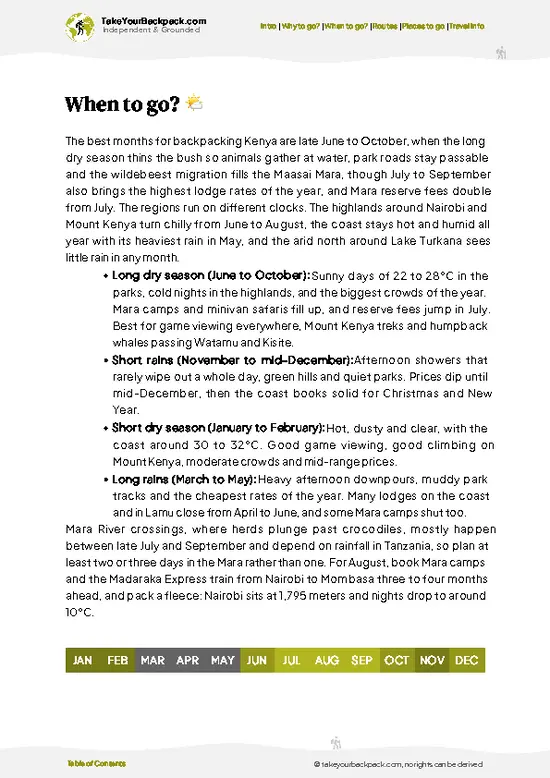
source: climatestotravel.comJANJanuary: fair for travelingFEBFebruary: fair for travelingMARMarch: fair for travelingAPRApril: fair for travelingMAYMay: fair for travelingJUNJune: excellent for travelingJULJuly: excellent for travelingAUGAugust: excellent for travelingSEPSeptember: excellent for travelingOCTOctober: excellent for travelingNOVNovember: fair for travelingDECDecember: fair for traveling
kenya-national-park-lake-turkana-national-parks
© Google |

✈️ The backpacker research shortcutKenya Travel Guide

An offline-friendly backpacking guide with optimized travel routes, ranked highlights, transport advice, and the best areas to stay.
example page 0 from our offline Travel Guide for Kenya
example page 1 from our offline Travel Guide for Kenya
example page 2 from our offline Travel Guide for Kenya
example page 3 from our offline Travel Guide for Kenya
example page 4 from our offline Travel Guide for Kenya
example page 5 from our offline Travel Guide for Kenya
example page 6 from our offline Travel Guide for Kenya
example page 7 from our offline Travel Guide for Kenya
The digital guide (429 pages) contains:
114 highlights, ranked by travel appeal
Optimized 7, 14 & 21-day travel routes
Cities, national parks, landmarks, beaches
How to get around
Offline-friendly for travel without Wi-Fi
👉 Click to see all 30+ guide features

📅 Plan smarter in minutes, not weeks
Month by month travel advice
Festivals & national holidays
Budget expectations

🗺️ Go to the right places, skip the overrated ones
Honest pros & cons of destinations
Top hikes, parks & viewpoints
Lesser-known places most travelers miss
Clear “worth it vs skip it” guidance

🛏️ Travel smoothly without rookie mistakes
Best areas to stay
Transport systems explained simply
Common scams & safety advice
SIM cards, money & practical tips

🌍 Understand the country, not just visit it
Culture & traditions
52 Essential phrases & customs
Festivals worth planning around
Traveler-friendly historical context
Insights that make places more meaningful

📱 Built for real travel conditions
Fully downloadable PDF
Works completely offline
Optimized for phone use
Useful in remote areas & buses
Everything in one place
Save weeks of stressful planning
Get instant access to your full guide. 30‑day money-back guarantee.


By proceeding you agree to our terms.
Sent to your inbox immediately after payment • 100% Secure Checkout
Best Backpacking Travel Advisor 2025 tourism awardBest Backpacking
Travel Advisor
2025
What others say about Take Your Backpack Guides:
⭐⭐⭐⭐⭐
Fantastic, amazing amount of information!
⭐⭐⭐⭐⭐
My goodness this is amazing, it's what I've been looking for hats off too you!
⭐⭐⭐⭐⭐
I think this is absolutely BRILLIANT
⭐⭐⭐⭐
Very complete and informative. It's still missing places, but I gotta to commend you
⭐⭐⭐⭐⭐
This is truly amazing, thank you, can't wait to explore it with my kids!
⭐⭐⭐⭐⭐
Awesome resource, thank you!
⭐⭐⭐⭐⭐
This is amazing! Can't wait to explore the ones I haven't seen
⭐⭐⭐⭐
I love this! Well done, great idea.
⭐⭐⭐⭐⭐
Thanks for taking the time to make this gem!
⭐⭐⭐⭐⭐
This might be the best website I've ever seen.
⭐⭐⭐⭐⭐
Congratulations, and thank you so much for your work; it's incredibly valuable.
⭐⭐⭐⭐
In all seriousness I think you did a great job pointing out the important spots
⭐⭐⭐⭐⭐
10/10 very good
⭐⭐⭐⭐⭐
As someone who's only just starting to visit regularly this is awesome, thank you.
⭐⭐⭐⭐
Thank you very much! I'm going to visit my dad, it's going to be very useful!
⭐⭐⭐⭐⭐
This is really cool! We'll be travelling for the first time and this definitely come in handy.
⭐⭐⭐⭐⭐
You are now our minister of culture, congratulations 👨‍💼
⭐⭐⭐⭐⭐
Just wanted to tell you that this is a pearl! Going to follow your recommendations.
⭐⭐⭐⭐⭐
This is so cool. I'll definitely be using the resource for my travels soon.
⭐⭐⭐⭐⭐
This is very impressive! Good work.
⭐⭐⭐⭐⭐
This is an amazing and informative site. Very well done!

🛏️ Where to stay?Best areas to stay in Kenya

For backpackers heading to Lake Turkana National Parks, options are limited but solid. Inside the park, the Turkana Campsite offers basic amenities and a chance to connect with nature. It’s a no-frills experience, but you’re right by the lake, which is what you came for.

Nearby, Loiyangalani is a small town with a few guesthouses like El Molo Lodge. It’s a bit more comfortable and provides a good base for exploring. Just remember, supplies can be scarce, so stock up before you arrive. This area is remote, so plan accordingly to avoid unexpected costs and energy drains.

👛 Costs (as of 22 September 2025)Money, prices, and spending tips

Visiting Lake Turkana National Parks in Kenya can be a rewarding experience, but it’s essential to be aware of the costs involved to avoid surprises.

Entry fees for the park typically range from $20 to $30 per person for foreign visitors. This fee grants access to the park, but it’s worth noting that it can vary depending on the specific area you’re visiting within the park.

If you plan to camp, expect to pay around $10 to $15 per night for a campsite. Facilities can be basic, so prepare accordingly. For those looking to stay in lodges or guesthouses nearby, prices can range from $50 to $150 per night, depending on the level of comfort and amenities you desire.

Transportation is another factor. Hiring a 4x4 vehicle is often necessary due to the park’s rugged terrain. Rental prices can range … read more 👉
Visiting Lake Turkana National Parks in Kenya can be a rewarding experience, but it’s essential to be aware of the costs involved to avoid surprises.

Entry fees for the park typically range from $20 to $30 per person for foreign visitors. This fee grants access to the park, but it’s worth noting that it can vary depending on the specific area you’re visiting within the park.

If you plan to camp, expect to pay around $10 to $15 per night for a campsite. Facilities can be basic, so prepare accordingly. For those looking to stay in lodges or guesthouses nearby, prices can range from $50 to $150 per night, depending on the level of comfort and amenities you desire.

Transportation is another factor. Hiring a 4x4 vehicle is often necessary due to the park’s rugged terrain. Rental prices can range from $70 to $150 per day, excluding fuel. If you opt for a guided tour, costs can increase significantly, often starting around $200 per day, which typically includes transportation, meals, and a guide.

Food costs can be modest if you’re self-catering, but dining at local establishments might set you back $5 to $15 per meal.

Plan for additional expenses like park guides, which can cost around $10 to $20, and any activities you might want to engage in, such as boat rides on the lake, which can vary widely in price.

Being aware of these costs will help you budget effectively and focus on enjoying the unique landscapes and experiences Lake Turkana has to offer.


source: kws.go.ke
⚠️ Prices can change and everyone travels differently, so take this as a rough guide. Hope it helps you plan your adventure!

🥾 TrailsDiscover Lake Turkana's top trails and natural wonders

Lake Turkana National Parks offers some pretty unique hiking opportunities, with its dramatic landscapes and rich wildlife. The terrain is a mix of rocky outcrops, sandy shores, and volcanic hills, making for some stunning views, especially at sunrise and sunset. You might spot everything from camels to the elusive Nile crocodile lounging by the water, so keep your eyes peeled!

While there aren’t many designated trails, one worth mentioning is the Pangani Trail. Here’s the scoop:
  • Length: 10 km
  • Estimated Duration: 3-4 hours
  • Difficulty Level: Moderate
  • Key Features: Scenic views of Lake Turkana,
read more 👉
Lake Turkana National Parks offers some pretty unique hiking opportunities, with its dramatic landscapes and rich wildlife. The terrain is a mix of rocky outcrops, sandy shores, and volcanic hills, making for some stunning views, especially at sunrise and sunset. You might spot everything from camels to the elusive Nile crocodile lounging by the water, so keep your eyes peeled!

While there aren’t many designated trails, one worth mentioning is the Pangani Trail. Here’s the scoop:
  • Length: 10 km
  • Estimated Duration: 3-4 hours
  • Difficulty Level: Moderate
  • Key Features: Scenic views of Lake Turkana, potential wildlife sightings, and interesting geological formations
  • Terrain: Rocky and sandy paths, some elevation changes

Getting to the park can be a bit of an adventure in itself. Public transport options are limited, but you can catch a bus to Lodwar and then hire a matatu or a private taxi to the park. Just be prepared for some bumpy roads! It’s not overly crowded, which is a plus if you’re looking for some solitude, but it can get busier during peak tourist seasons. As for entrance fees, they’re pretty reasonable, but it’s always a good idea to check the latest rates before you go.
⚠️ Hiking info can sometimes be outdated or inaccurate. Before you hit the trail, check the latest conditions with locals. If you do spot anything that's off, I'd love to hear from you, so I can update it for fellow travelers.

🛡️ SafetySafety Tips and Common Scams in Lake Turkana

Lake Turkana National Parks offer a unique experience, but preparation is key. The weather can shift quickly; pack layers to handle both heat and cooler evenings. Trails are generally manageable, but rocky terrain can challenge footing, so sturdy shoes are essential.

Wildlife encounters are possible, especially with camels and birds. Keep a respectful distance and avoid feeding animals. Hydration is crucial; carry enough water, as sources can be sparse. Timing your hikes for early morning or late afternoon helps avoid the midday heat. Stay aware, and you’ll enjoy this remarkable landscape without unnecessary stress.

Other Kenyan national parks near Lake Turkana

Explore more nearby:


💡 Not sure where to go next?
Create a personalized itinerary for Kenya including Lake Turkana and the places that fit your trip.

Generate my itinerary

👉 Discover all national parks

Or checkout all Kenya has to offer (think cities, towns, villages, national parks, hikes, beaches, festivals)
Country photo of Kenya

We 💚 feedbackParting advice and final tips

Lake Turkana is raw and beautiful, but don’t underestimate the heat. Bring plenty of water and a good hat. The best surprise? The vibrant local culture—don’t miss a chance to connect with the communities. It’s worth every effort.

✍️ Help improve this page!
The information on this page is based on in-depth research, insights shared by experienced travelers, and feedback from the local travel community in Kenya. While every effort is made to keep the information accurate and current, conditions can change — so if you spot anything incorrect or outdated, please get in touch.


🙋‍♂️ Give feedback

👋 Meet the founderWho’s Behind Take Your Backpack?

Johan, backpacker and founder of TakeYourBackpackHi, I’m Johan (Netherlands 🇳🇱), the creator of TakeYourBackpack. Over the past decade, I’ve backpacked through 80+ countries across six continents, gaining extensive experience with independent travel, long-term trips, and overland routes.

This site is built on a combination of firsthand travel experience and carefully curated insights from other backpackers. Many guides are based on places I’ve personally visited, while others bring together tips, observations, and practical advice shared by trusted travelers I’ve met along the way.

The goal is to provide realistic, experience-driven guidance — not generic itineraries — so you can explore destinations with better context, clearer expectations, and more confidence.

Get full Kenya guide •
Instant download • 114 highlights • Full Offline guide