×

Kenya🇰🇪 | citiesNarokMaasai culture, Maasai Mara access, open grasslands | things to do and best time to go

Explore VoiExplore Isiolo

Backpacking in Narok
🌟 Highlightcity ranked #9
By Johan Kruseman 🇳🇱 | Updated June 15, 2026

Narok used to be a dusty, slow-moving outpost—more cattle market than city, a place most travelers only glimpsed through a bus window en route to the Maasai Mara. Today, it’s a bustling, practical gateway: still rough around the edges, but pulsing with energy and commerce. You’ll find Narok in southwestern Kenya, perched on the edge of the Rift Valley, about two hours from Nairobi. For backpackers, Narok is more crossroads than destination. There’s little in the way of classic sights—no grand museums or nightlife to write home about—but the market is lively, the Maasai culture is palpable, and it’s the last real town before the Mara. It’s affordable, safe by Kenyan standards, and easy to navigate, but don’t expect the backpacker camaraderie of Nairobi or the coastal towns. Narok’s vibe is utilitarian: come for supplies, stories, and a taste of frontier Kenya, then move on.

Discover everything you want to know in the 📖 Kenya Travel Guide.


Get your Kenya guide
114 ranked highlights, routes & tips, works offline (429 pages)
Loading the map 🌍
CLICK TO FILTER
cities
towns
landmarks
national parks
hikes
beaches
attractions
festivals
regions
SHOW COUNTRY’S BESTSHOW ALL

✨ Why go?
Ranked #9 city in Kenya
Why Narok should be on your travel list

Narok is a strategic hub for backpackers, balancing time, money, and comfort. It offers a solid base for day trips to nearby parks without the hefty price tag of more touristy spots. The hostels here are budget-friendly and social, perfect for meeting fellow travelers. You’ll find affordable food options that fuel your adventures without breaking the bank. The city is walkable, making it easy to explore local markets and enjoy the vibrant nightlife. Plus, onward travel to other destinations is straightforward, allowing you to maximize your journey without unnecessary hassle. If you’re looking for a place to recharge and plan your next move, Narok fits the bill.
Want to include Narok in your Kenya route?
Create a personalized Kenya itinerary that includes Narok and the places that fit your trip — based on your travel style, budget, and available time. Get your route in seconds.

Generate my trip

💡 HighlightsPlaces and moments you shouldn't skip

  1. Narok Main Market (livestock & crafts) — The heartbeat of the town: a sprawling market where you watch cattle trading, haggle for fresh produce, and buy authentic Maasai beadwork and shukas. It’s the best place to see daily commerce and meet local traders up close.
  2. Main Street Maasai artisan stalls — Rows of family-run stalls along the town’s main road selling bead jewelry, leatherwork, and handwoven textiles. Sellers are happy to demonstrate how things are made and the prices are far better than airport souvenirs.
  3. Narok Stadium (community events & cultural shows) — A practical visit during market festivals or match days; the stadium hosts local football, cultural performances, and communal events where you can catch traditional dance and ceremonies happening in town.
  4. Narok Airstrip
read more 👉
  1. Narok Main Market (livestock & crafts) — The heartbeat of the town: a sprawling market where you watch cattle trading, haggle for fresh produce, and buy authentic Maasai beadwork and shukas. It’s the best place to see daily commerce and meet local traders up close.
  2. Main Street Maasai artisan stalls — Rows of family-run stalls along the town’s main road selling bead jewelry, leatherwork, and handwoven textiles. Sellers are happy to demonstrate how things are made and the prices are far better than airport souvenirs.
  3. Narok Stadium (community events & cultural shows) — A practical visit during market festivals or match days; the stadium hosts local football, cultural performances, and communal events where you can catch traditional dance and ceremonies happening in town.
  4. Narok Airstrip — Small but active airstrip used for light aircraft to and from the Maasai Mara. It’s useful to visit if you’re arranging flights, watching incoming charter landings, or heading straight into the Mara without a long road transfer.
A few real, visitable highlights outside but very close to Narok that make perfect day trips are the Maasai Mara National Reserve (wildlife and landscape), the Sekenani/Sekenani Gate area (an accessible Mara entry point and community markets), and the Loita Hills region for hikes and deep Maasai cultural experiences.
Spotted a mistake or missing something? Contact us.

Things to do in Narok

Ratings based on Tripadvisor reviews. When you book through this link, you support our work at no extra cost to you.

🏘️ NeighborhoodsKey areas and districts to know

Narok is a vibrant hub for backpackers exploring Kenya’s Maasai Mara and beyond. Here’s a breakdown of key areas to help you navigate your stay:

Town Center: The beating heart of Narok. Affordable accommodations and local eateries abound. It’s walkable, with easy access to transport for day trips. The nightlife is low-key, perfect for unwinding after a day of exploration. Ideal for short stays.

Maasai Market Area: A cultural hotspot. Here, you can haggle for crafts and souvenirs. The vibe is lively, making it great for socializing. While it’s a bit busier, it’s still manageable on foot. Suitable for longer stays if you want to immerse yourself in local life.

Outskirts: Quieter and more spacious. Perfect for those seeking peace after a day of adventure. Accommodations are more spread out, … read more 👉
Narok is a vibrant hub for backpackers exploring Kenya’s Maasai Mara and beyond. Here’s a breakdown of key areas to help you navigate your stay:

Town Center: The beating heart of Narok. Affordable accommodations and local eateries abound. It’s walkable, with easy access to transport for day trips. The nightlife is low-key, perfect for unwinding after a day of exploration. Ideal for short stays.

Maasai Market Area: A cultural hotspot. Here, you can haggle for crafts and souvenirs. The vibe is lively, making it great for socializing. While it’s a bit busier, it’s still manageable on foot. Suitable for longer stays if you want to immerse yourself in local life.

Outskirts: Quieter and more spacious. Perfect for those seeking peace after a day of adventure. Accommodations are more spread out, and transport options are limited, so plan ahead. Great for longer stays if you want to escape the hustle.

⌛️ 1 dayA smart one-day plan

Narok, Kenya, is a vibrant hub for those eager to experience the Maasai culture and the stunning landscapes of the Great Rift Valley. Start your day at the bustling Narok Market, where the colors and sounds of local vendors create an electric atmosphere. Grab a fresh mandazi (a sweet fried dough) and a cup of chai to fuel your morning.

Afterward, head to the nearby Maasai Mara National Reserve. While it’s a bit of a drive, the chance to see wildlife in their natural habitat is worth the time. Spend a few hours exploring the reserve, soaking in the sights of elephants, lions, and the vast savannah.

In the afternoon, return to Narok and visit the lesser-known Enkare Nairobi River. This serene spot offers a peaceful escape and a chance to connect with nature away from the tourist crowds.

read more 👉
Narok, Kenya, is a vibrant hub for those eager to experience the Maasai culture and the stunning landscapes of the Great Rift Valley. Start your day at the bustling Narok Market, where the colors and sounds of local vendors create an electric atmosphere. Grab a fresh mandazi (a sweet fried dough) and a cup of chai to fuel your morning.

Afterward, head to the nearby Maasai Mara National Reserve. While it’s a bit of a drive, the chance to see wildlife in their natural habitat is worth the time. Spend a few hours exploring the reserve, soaking in the sights of elephants, lions, and the vast savannah.

In the afternoon, return to Narok and visit the lesser-known Enkare Nairobi River. This serene spot offers a peaceful escape and a chance to connect with nature away from the tourist crowds.

As evening falls, enjoy dinner at a local eatery, savoring traditional dishes like ugali and sukuma wiki. The warmth of the community will make your day feel complete.
Turn your Narok visit into an Kenya adventure
Build a complete Kenya route with Narok, hidden gems, must-see destinations, and realistic travel times included.

Generate my trip

🌤️ When to go?Seasonal considerations and timing


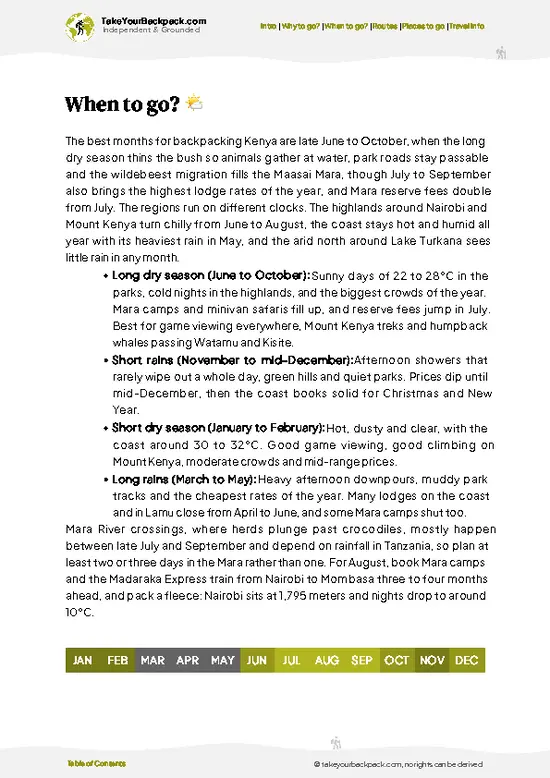
  • Topic: Weather – Narok’s climate swings between dry and wet seasons. The dry months from June to October offer clear skies and minimal rain, perfect for trekking and wildlife spotting. The wet season, November to May, brings heavy rains that can turn trails muddy and unpredictable.

  • Topic: Temperature – Expect daytime highs around 20-25°C (68-77°F) during dry months, cooling off at night to 10-12°C (50-54°F). Wet season days hover slightly warmer but feel damp and chilly, especially after rain.

  • Topic: Daylight Hours – Near the equator, Narok enjoys roughly 12 hours of daylight year-round. Sunrise and sunset times shift only slightly, so plan your hikes knowing daylight won’t be your limiting factor.

  • Topic: Crowds – Peak tourist season aligns with the dry months, especially July and
read more 👉

  • Topic: Weather – Narok’s climate swings between dry and wet seasons. The dry months from June to October offer clear skies and minimal rain, perfect for trekking and wildlife spotting. The wet season, November to May, brings heavy rains that can turn trails muddy and unpredictable.

  • Topic: Temperature – Expect daytime highs around 20-25°C (68-77°F) during dry months, cooling off at night to 10-12°C (50-54°F). Wet season days hover slightly warmer but feel damp and chilly, especially after rain.

  • Topic: Daylight Hours – Near the equator, Narok enjoys roughly 12 hours of daylight year-round. Sunrise and sunset times shift only slightly, so plan your hikes knowing daylight won’t be your limiting factor.

  • Topic: Crowds – Peak tourist season aligns with the dry months, especially July and August, when the Great Migration passes nearby. Expect more visitors and higher prices then, but also unparalleled wildlife action.

  • Topic: Seasonal Activities – The migration spectacle dominates July to October. The wet season, while less crowded, offers lush landscapes and birdwatching but fewer game drives due to muddy roads.

  • Topic: Price Fluctuations – Accommodation and tours spike in the dry season, particularly during migration. Off-peak months bring lower costs but trade off some wildlife visibility and trail conditions.


Pro-tip: Aim for early June or late October to catch good weather, fewer crowds, and better prices—a sweet spot where timing turns into a strategic advantage.


source: climatestotravel.comJANJanuary: fair for travelingFEBFebruary: fair for travelingMARMarch: fair for travelingAPRApril: fair for travelingMAYMay: fair for travelingJUNJune: highly recommended for travelingJULJuly: excellent for travelingAUGAugust: excellent for travelingSEPSeptember: excellent for travelingOCTOctober: highly recommended for travelingNOVNovember: fair for travelingDECDecember: fair for traveling
kenya-city-narok
© Google |

✈️ The backpacker research shortcutKenya Travel Guide

An offline-friendly backpacking guide with optimized travel routes, ranked highlights, transport advice, and the best areas to stay.
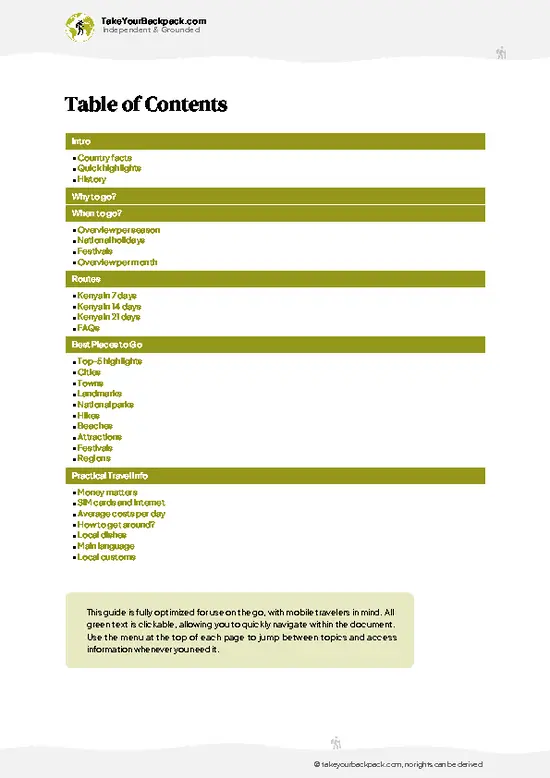
example page 0 from our offline Travel Guide for Kenya
example page 1 from our offline Travel Guide for Kenya
example page 2 from our offline Travel Guide for Kenya
example page 3 from our offline Travel Guide for Kenya
example page 4 from our offline Travel Guide for Kenya
example page 5 from our offline Travel Guide for Kenya
example page 6 from our offline Travel Guide for Kenya
example page 7 from our offline Travel Guide for Kenya
The digital guide (429 pages) contains:
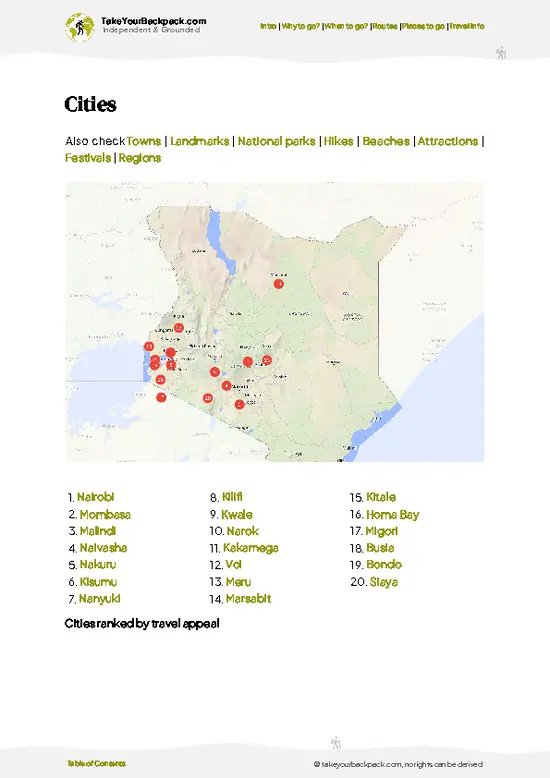
114 highlights, ranked by travel appeal
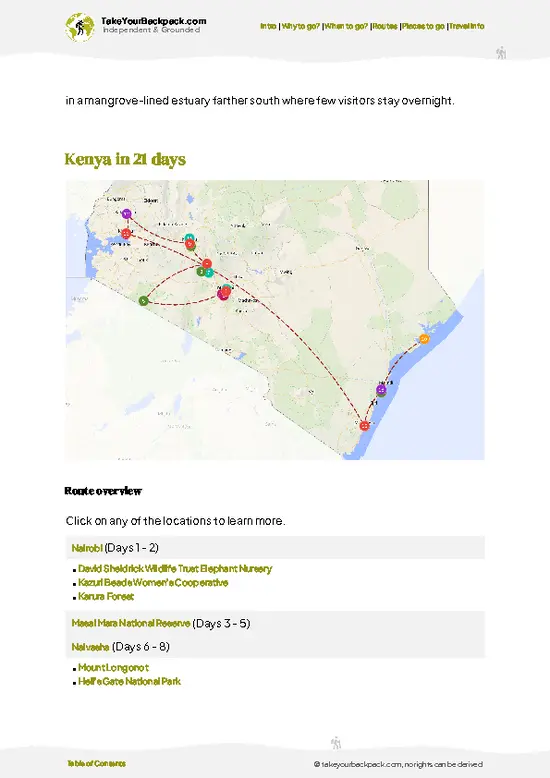
Optimized 7, 14 & 21-day travel routes
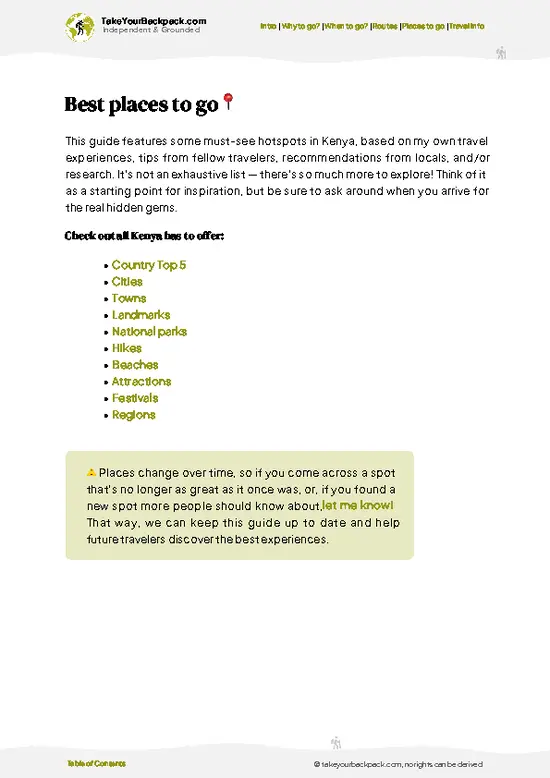
Cities, national parks, landmarks, beaches
How to get around
Offline-friendly for travel without Wi-Fi
👉 Click to see all 30+ guide features

📅 Plan smarter in minutes, not weeks
Month by month travel advice
Festivals & national holidays
Budget expectations

🗺️ Go to the right places, skip the overrated ones
Honest pros & cons of destinations
Top hikes, parks & viewpoints
Lesser-known places most travelers miss
Clear “worth it vs skip it” guidance

🛏️ Travel smoothly without rookie mistakes
Best areas to stay
Transport systems explained simply
Common scams & safety advice
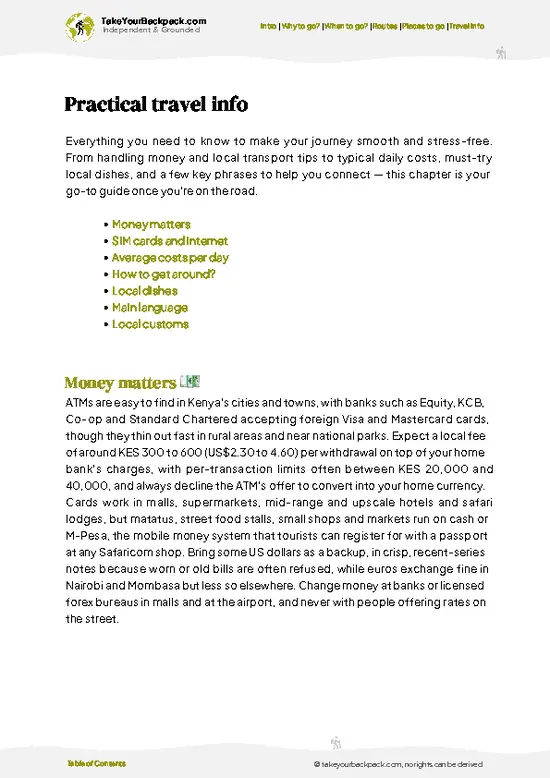
SIM cards, money & practical tips

🌍 Understand the country, not just visit it
Culture & traditions
52 Essential phrases & customs
Festivals worth planning around
Traveler-friendly historical context
Insights that make places more meaningful

📱 Built for real travel conditions
Fully downloadable PDF
Works completely offline
Optimized for phone use
Useful in remote areas & buses
Everything in one place
Save weeks of stressful planning
Get instant access to your full guide. 30‑day money-back guarantee.


By proceeding you agree to our terms.
Sent to your inbox immediately after payment • 100% Secure Checkout
Best Backpacking Travel Advisor 2025 tourism awardBest Backpacking
Travel Advisor
2025
What others say about Take Your Backpack Guides:
⭐⭐⭐⭐⭐
Fantastic, amazing amount of information!
⭐⭐⭐⭐⭐
My goodness this is amazing, it's what I've been looking for hats off too you!
⭐⭐⭐⭐⭐
I think this is absolutely BRILLIANT
⭐⭐⭐⭐
Very complete and informative. It's still missing places, but I gotta to commend you
⭐⭐⭐⭐⭐
This is truly amazing, thank you, can't wait to explore it with my kids!
⭐⭐⭐⭐⭐
Awesome resource, thank you!
⭐⭐⭐⭐⭐
This is amazing! Can't wait to explore the ones I haven't seen
⭐⭐⭐⭐
I love this! Well done, great idea.
⭐⭐⭐⭐⭐
Thanks for taking the time to make this gem!
⭐⭐⭐⭐⭐
This might be the best website I've ever seen.
⭐⭐⭐⭐⭐
Congratulations, and thank you so much for your work; it's incredibly valuable.
⭐⭐⭐⭐
In all seriousness I think you did a great job pointing out the important spots
⭐⭐⭐⭐⭐
10/10 very good
⭐⭐⭐⭐⭐
As someone who's only just starting to visit regularly this is awesome, thank you.
⭐⭐⭐⭐
Thank you very much! I'm going to visit my dad, it's going to be very useful!
⭐⭐⭐⭐⭐
This is really cool! We'll be travelling for the first time and this definitely come in handy.
⭐⭐⭐⭐⭐
You are now our minister of culture, congratulations 👨‍💼
⭐⭐⭐⭐⭐
Just wanted to tell you that this is a pearl! Going to follow your recommendations.
⭐⭐⭐⭐⭐
This is so cool. I'll definitely be using the resource for my travels soon.
⭐⭐⭐⭐⭐
This is very impressive! Good work.
⭐⭐⭐⭐⭐
This is an amazing and informative site. Very well done!

🛏️ Where to stay?How to pick the right area

Narok’s backpacker sweet spot is the town center, especially around the main market and the junction near the bus station. This area strikes a rare balance: it’s lively enough to meet fellow travelers and locals without tipping into chaos. You’ll find budget hostels and guesthouses clustered here, making it easy to hop between social spots and essential services on foot. Safety-wise, it’s the most reliable zone after dark, thanks to steady foot traffic and a visible police presence.

Venture too far out, and you trade convenience for isolation—public transport thins out, and the vibe shifts to … read more 👉
Narok’s backpacker sweet spot is the town center, especially around the main market and the junction near the bus station. This area strikes a rare balance: it’s lively enough to meet fellow travelers and locals without tipping into chaos. You’ll find budget hostels and guesthouses clustered here, making it easy to hop between social spots and essential services on foot. Safety-wise, it’s the most reliable zone after dark, thanks to steady foot traffic and a visible police presence.

Venture too far out, and you trade convenience for isolation—public transport thins out, and the vibe shifts to residential or commercial zones that don’t cater to travelers. The outskirts might feel quieter but lack the social pulse backpackers crave. Staying near the market means you’re plugged into the city’s rhythm: street food vendors, local chatter, and the occasional impromptu gathering. It’s not luxury, but it’s authentic, affordable, and, crucially, comfortable enough to recharge before your next safari or trek. This is where your time, money, and comfort find their best compromise in Narok.

🚌 Getting aroundHow to get around Narok

Narok moves at a pace that’s a curious blend of deliberate rhythm and spontaneous bursts. It’s not a city where you’ll find strict timetables etched in stone, but neither is it a free-for-all chaos. Instead, the flow depends on a mix of local intuition and the occasional clock—especially when it comes to getting around. You quickly learn that time, money, and comfort are constantly negotiating with each other here. The trick is knowing when to hold your patience and when to spend a bit more for ease. Mastering Narok’s transit options is like cracking a code: each choice reveals what you’re really trading off.


  • Walking: The most straightforward and cost-free way to navigate Narok’s compact center. Ideal for short hops and soaking in the street life, but expect uneven sidewalks and occasional
read more 👉
Narok moves at a pace that’s a curious blend of deliberate rhythm and spontaneous bursts. It’s not a city where you’ll find strict timetables etched in stone, but neither is it a free-for-all chaos. Instead, the flow depends on a mix of local intuition and the occasional clock—especially when it comes to getting around. You quickly learn that time, money, and comfort are constantly negotiating with each other here. The trick is knowing when to hold your patience and when to spend a bit more for ease. Mastering Narok’s transit options is like cracking a code: each choice reveals what you’re really trading off.


  • Walking: The most straightforward and cost-free way to navigate Narok’s compact center. Ideal for short hops and soaking in the street life, but expect uneven sidewalks and occasional dust. No schedule, just your own pace.


  • Boda Boda (Motorcycle Taxi): Fast and flexible, these dart through traffic with ease. Prices start low—around 50-100 KES for short rides—but negotiate upfront to avoid surprises. Comfort is minimal; helmets are hit-or-miss. Operating hours stretch from dawn until late evening, but availability can fluctuate.


  • Matatu (Shared Minibus): The backbone of Narok’s public transit. Runs roughly from 6 AM to 8 PM, with fares around 50-150 KES depending on distance. It’s cheap and relatively quick but expect crowding and a noisy, stop-and-go rhythm. Comfort is basic; windows open for ventilation, but seats can be cramped.


  • Private Taxi: Offers the most comfort and direct routes, but at a steep price—often 500 KES or more for short trips. No fixed schedule; you call or hail on the street. Best for when time is tight or you’re carrying heavy gear, but it’s a clear money-for-comfort trade.


  • Rental Car: For those who want full control over timing and routes. Costs start high, and roads outside town can be rough, so a 4x4 is recommended. This option sacrifices budget for maximum freedom and comfort, especially if you’re planning day trips to Maasai Mara or surrounding areas.

👛 Costs (as of 14 October 2025)What things cost and how to budget

Backpacking in Narok, Kenya, demands a clear-eyed view of where your money goes, so you can balance your time, comfort, and budget like a pro.
  • Dorm Accommodation (High Season): Expect to pay around $10 to $15 per night. High season pushes prices up due to demand, especially near Maasai Mara access points.
  • Dorm Accommodation (Off-Season): Prices drop to about $6 to $10 per night. Fewer tourists mean better deals but check for basic amenities as some places scale back services.
  • Meals: Street food and local eateries offer meals for $2 to $5. A mix of ugali, sukuma wiki, and nyama choma keeps costs low and flavors authentic. Western-style restaurants can double that price.
  • Local Transport: Matatus and boda bodas (motorcycle taxis) cost between $0.50 and $1.50 per ride within town. Bargain
read more 👉
Backpacking in Narok, Kenya, demands a clear-eyed view of where your money goes, so you can balance your time, comfort, and budget like a pro.
  • Dorm Accommodation (High Season): Expect to pay around $10 to $15 per night. High season pushes prices up due to demand, especially near Maasai Mara access points.
  • Dorm Accommodation (Off-Season): Prices drop to about $6 to $10 per night. Fewer tourists mean better deals but check for basic amenities as some places scale back services.
  • Meals: Street food and local eateries offer meals for $2 to $5. A mix of ugali, sukuma wiki, and nyama choma keeps costs low and flavors authentic. Western-style restaurants can double that price.
  • Local Transport: Matatus and boda bodas (motorcycle taxis) cost between $0.50 and $1.50 per ride within town. Bargain hard for boda bodas, especially if you’re not in a rush.
  • City Transport Pass: Narok doesn’t have a formal city transport pass system. Budget around $3 to $5 daily if you rely heavily on boda bodas or shared taxis for multiple trips.
  • Basic Activities/Entry Fees: Local cultural visits or small museums charge $2 to $5. For Maasai Mara day trips, expect to pay significantly more, but those are separate from city costs.
  • Miscellaneous Expenses: Water, snacks, phone credit, and small tips add up to about $2 to $4 daily. Always keep some cash handy for unexpected needs.

Narok’s daily backpacking budget typically ranges from $15 to $30, depending on season and your comfort choices. This range lets you decide if you want to stretch your dollars by roughing it or invest a bit more for convenience and ease. Knowing these trade-offs upfront means you’re not just spending money—you’re buying the experience you want.
⚠️ Prices can change and everyone travels differently, so take this as a rough guide. Hope it helps you plan your adventure!

🚌 Day tripsBest day trips from Narok

Narok, Kenya, serves as a fantastic launchpad for day trips that pack a punch without draining your wallet or time. Here’s how to maximize your adventure.

Maasai Mara National Reserve
Just a short drive from Narok, the Maasai Mara is a must-see. The wildlife here is unparalleled; you might spot lions lounging or elephants roaming. Aim for an early start to catch the animals at their most active. Expect to spend around $70 for a budget-friendly day tour, including transport and park fees. The best time? July to October, during the Great Migration. A common mistake? Forgetting to bring binoculars; they can make all the difference in spotting wildlife.


Lake Nakuru National Park
About two hours from Narok, Lake Nakuru is famous for its flamingos and stunning landscapes. The park is a … read more 👉
Narok, Kenya, serves as a fantastic launchpad for day trips that pack a punch without draining your wallet or time. Here’s how to maximize your adventure.

Maasai Mara National Reserve
Just a short drive from Narok, the Maasai Mara is a must-see. The wildlife here is unparalleled; you might spot lions lounging or elephants roaming. Aim for an early start to catch the animals at their most active. Expect to spend around $70 for a budget-friendly day tour, including transport and park fees. The best time? July to October, during the Great Migration. A common mistake? Forgetting to bring binoculars; they can make all the difference in spotting wildlife.


Lake Nakuru National Park
About two hours from Narok, Lake Nakuru is famous for its flamingos and stunning landscapes. The park is a birdwatcher’s paradise, and you might even see rhinos. A day trip will cost around $60, covering transport and entry fees. The dry season, from June to September, is ideal for clear views. Many first-timers underestimate the park’s size; plan to spend the whole day exploring.


Narok Town Cultural Experience
Stay local and dive into Narok’s vibrant culture. Visit local markets, sample traditional Maasai cuisine, and engage with the community. This trip is free if you explore on foot, but budget a few dollars for snacks. Anytime is good, but mornings are lively. A common oversight? Skipping the markets; they’re where the real local flavor is.
Want to know what more Kenya offers?
The Kenya Travel Guide describes 114 highlights, from cities to national parks, from beaches to hikes

Get the Travel Guide -

🍲 FoodLocal Cuisine & Drinks

In Narok, local cuisine is a vibrant tapestry of flavors. Don’t miss ugali, a staple made from maize flour, often paired with sukuma wiki (collard greens) or nyama choma (grilled meat). Street vendors serve up sizzling skewers, filling the air with mouthwatering aromas.

For drinks, try chai—a spiced tea that’s a social ritual here. You’ll find it everywhere, from bustling markets to casual cafés.

Eating is communal; sharing food is a sign of hospitality. Expect to eat with your hands—it’s not just acceptable, it’s encouraged. Dive into the local scene, and you’ll taste the heart of Narok.

🛡️ SafetyScams, Hazards, and Annoyances

Narok is generally safe, but like any place, a little awareness goes a long way. Stick to well-lit areas at night, especially if you’re solo. The town can get lively, so keep your belongings close in crowded spots. Be cautious of overly friendly locals offering unsolicited help; they might expect a tip. Always negotiate prices upfront for transport or souvenirs to avoid surprises. Trust your instincts, and you’ll navigate Narok smoothly while soaking in its vibrant culture.

Other Kenyan cities near Narok

Explore more nearby:

  • Bomet—tea estates, rolling hills, rural trading center| 69 km away
  • Naivasha—freshwater lake, geothermal springs, flower farms| 75 km away
  • Limuru—Tea estates, rolling hills, cool mornings| 86 km away

💡 Not sure where to go next?
Create a personalized itinerary for Kenya including Narok and the places that fit your trip.

Generate my itinerary

👉 Discover all cities

Or checkout all Kenya has to offer (think cities, towns, villages, national parks, hikes, beaches, festivals)
Country photo of Kenya

We 💚 feedbackSumming up the experience

Narok has a raw, electric vibe that pulses with life. The best surprise? The local Maasai markets—colorful, bustling, and full of character. Just a heads-up: be ready for the dust and the heat. Embrace it; it’s part of the adventure.

✍️ Help improve this page!
The information on this page is based on in-depth research, insights shared by experienced travelers, and feedback from the local travel community in Kenya. While every effort is made to keep the information accurate and current, conditions can change — so if you spot anything incorrect or outdated, please get in touch.


🙋‍♂️ Give feedback

👋 Meet the founderWho’s Behind Take Your Backpack?

Johan, backpacker and founder of TakeYourBackpackHi, I’m Johan (Netherlands 🇳🇱), the creator of TakeYourBackpack. Over the past decade, I’ve backpacked through 80+ countries across six continents, gaining extensive experience with independent travel, long-term trips, and overland routes.

This site is built on a combination of firsthand travel experience and carefully curated insights from other backpackers. Many guides are based on places I’ve personally visited, while others bring together tips, observations, and practical advice shared by trusted travelers I’ve met along the way.

The goal is to provide realistic, experience-driven guidance — not generic itineraries — so you can explore destinations with better context, clearer expectations, and more confidence.

Get full Kenya guide •
Instant download • 114 highlights • Full Offline guide