×

Kenya🇰🇪 | regionsTana River Deltapapyrus swamps, tidal creeks, coastal forests, endemic primates | things to do and best time to go

Explore Kenya Lake System in the Great Rift ValleyExplore Lamu Old Town

Backpacking in Tana River Delta
👍 Recommendedregion ranked #2
By Johan Kruseman 🇳🇱 | Updated June 2, 2026

Everyone says you come to the Tana River Delta for the wildlife—hippos, crocs, and birds that twitchers dream about. But here’s the real secret: it’s the feeling of being somewhere that still belongs to itself, not to the travel brochures. The Tana River Delta sits on Kenya’s north coast, where the river fans out into a wild, watery maze before spilling into the Indian Ocean. For backpackers, it’s a region that rewards patience and curiosity more than a fat wallet. The scenery is raw—think endless papyrus swamps, palm-fringed villages, and beaches where you might not see another soul all day. Getting around is slow and sometimes muddy, and public transport is more “shared pickup” than “air-conditioned shuttle.” But that’s the trade: you swap convenience for stories you’ll actually want to tell. It’s less polished than Lamu, less trafficked than Malindi, and the vibe is pure, unhurried Swahili coast—if you’re after authenticity, this is where you find it.

Discover everything you want to know in the 📖 Kenya Travel Guide.


Get your Kenya guide
114 ranked highlights, routes & tips, works offline (429 pages)
Loading the map 🌍
CLICK TO FILTER
cities
towns
landmarks
national parks
hikes
beaches
attractions
festivals
regions
SHOW COUNTRY’S BESTSHOW ALL

✨ Why go?
Ranked #2 region in Kenya
What makes this region worth visiting

The Tana River Delta is a backpacker’s playground, and here’s why savvy travelers flock to this spot. First off, the variety of landscapes is mind-blowing. You’ve got wetlands, savannahs, and even coastal areas all within reach. It’s like a buffet of nature, and you don’t have to keep packing up your gear every few days.

Then there’s the transport flexibility. Local matatus (shared taxis) and boats make it easy to hop between experiences without the hassle of long bus rides. Want to explore a fishing village one day and hike through lush forests the next? You can do that without breaking a sweat.

What really sets the delta apart is the chance to mix nature and culture. You can spend your mornings birdwatching or fishing, then dive into local traditions in the afternoon. This isn’t just sightseeing; … read more 👉
The Tana River Delta is a backpacker’s playground, and here’s why savvy travelers flock to this spot. First off, the variety of landscapes is mind-blowing. You’ve got wetlands, savannahs, and even coastal areas all within reach. It’s like a buffet of nature, and you don’t have to keep packing up your gear every few days.

Then there’s the transport flexibility. Local matatus (shared taxis) and boats make it easy to hop between experiences without the hassle of long bus rides. Want to explore a fishing village one day and hike through lush forests the next? You can do that without breaking a sweat.

What really sets the delta apart is the chance to mix nature and culture. You can spend your mornings birdwatching or fishing, then dive into local traditions in the afternoon. This isn’t just sightseeing; it’s slow travel at its best. You’ll connect with the land and its people in a way that’s hard to replicate elsewhere.

So, if you’re looking for a place that balances time, money, and comfort, the Tana River Delta is your ticket to high-value experiences.
Want to include Tana River Delta in your Kenya route?
Create a personalized Kenya itinerary that includes Tana River Delta and the places that fit your trip — based on your travel style, budget, and available time. Get your route in seconds.

Generate my trip

💡 HighlightsMust-see experiences and standout moments

  1. Kipini village and its mangrove channels — A compact, working riverside Swahili village right at the delta’s edge. Expect narrow lanes, traditional mtumbwi (dugout) boats, local fish smoking shacks and immediate access to dense mangrove labyrinths that are brilliant for short canoe trips and low-tide mudflat walks. It’s where the human side of the delta feels most tangible and immediate.
  2. Tana River Primate Reserve — One of the few places on earth to see the endangered Tana River red colobus and the endemic crested mangabey in riverine forest habitat. Bird and primate encounters here are unique to this river system — bring a guide who knows the trails and the best viewing times.
  3. Boni Forest edge and forest tracks (Hidden gem) — The western fringe of the delta spills into Boni’s coastal
read more 👉
  1. Kipini village and its mangrove channels — A compact, working riverside Swahili village right at the delta’s edge. Expect narrow lanes, traditional mtumbwi (dugout) boats, local fish smoking shacks and immediate access to dense mangrove labyrinths that are brilliant for short canoe trips and low-tide mudflat walks. It’s where the human side of the delta feels most tangible and immediate.
  2. Tana River Primate Reserve — One of the few places on earth to see the endangered Tana River red colobus and the endemic crested mangabey in riverine forest habitat. Bird and primate encounters here are unique to this river system — bring a guide who knows the trails and the best viewing times.
  3. Boni Forest edge and forest tracks (Hidden gem) — The western fringe of the delta spills into Boni’s coastal forest: a quieter, denser patch of trees with a very different feel to the open floodplain. Less-visited, with rare birds and shady trails, and a real chance to walk forest paths used by locals for medicinal plants and honey gathering.
  4. Garsen river market and launch point — Garsen is the practical gateway to the delta: a lively market, boatyards and the place locals load produce onto ferries. Visit on market day for fresh river fish, charcoal trade and to arrange boat trips deeper into channels and oxbow lakes.
  5. Floodplain oxbow lakes and lagoons — The delta’s shifting channels leave a scatter of oxbow lakes and seasonal lagoons that fill with water in the rains and become magnets for migratory and resident birds. It’s the habitat for the Tana River cisticola (a local endemic) and superb for patient birders and photographers.
  6. Orma pastoralist grazing lands and cattle-camp visits — The Orma people manage floodplain grazing in a way adapted specifically to the delta’s rhythms. Visiting a cattle camp or tagging along for a day with a herder gives a close-up on flood-based pastoralism, seasonal movements and crafts like leatherwork that aren’t found in the same form elsewhere.
  7. Pokomo river gardens and irrigation clusters — Patchworks of riverside farms and hand-built irrigation channels where Pokomo farmers grow rice, maize and vegetables on alluvial soils. Seeing the small-scale irrigation techniques and tasting the food fresh from the riverbanks is a distinct local experience.
  8. River mouth beaches and sea-turtle nesting areas — The coastline where the Tana meets the ocean has quiet sandy stretches that are occasional nesting sites for green and hawksbill turtles. Visits organized with local conservation groups (seasonal and careful) let you see patrols, nest sites and laid-back coastal life without disturbing habitats.
  9. Mudflat shellfisher villages and mangrove-harvesting (Hidden gem) — Small hamlets tucked into the mangroves where families harvest oysters, crabs and bait by hand. These are everyday working places rather than tourist displays — join local harvesters for a morning (with permission) and you’ll learn techniques, taste fresh shellfish and see how livelihoods depend on the delta’s intertidal zones.
  10. Dugout-canoe labyrinth runs and dawn/sunset estuary trips (Hidden gem) — Hire a local paddler for low-key, intimate trips through narrow channels at sunrise or dusk. The light, reflections, floating village life and quiet wildlife encounters on these small boats are hard to replicate anywhere else and tend to be missed by road-based visitors.
Spotted a mistake or missing something? Contact us.

⌛️ 5 daysSeeing the highlights in 5 days

Day 1: Tana River Delta

Start your adventure in the Tana River Delta, where the river meets the Indian Ocean. This is your base for the next few days. The transport here is a mix of matatus (shared taxis) and motorbike taxis, which can be a bit chaotic but are the lifeblood of local travel. Get familiar with the matatu schedules; they’re your ticket to moving efficiently. Spend the day soaking in the local culture, sampling fresh fish from the river, and chatting with fishermen. The vibe here is relaxed, setting the tone for your journey.

Day 2: Garsen

Head to Garsen, a small town that’s a gateway to the delta’s hidden treasures. The matatu ride takes about an hour, and you’ll want to leave early to beat the heat. Garsen is where you can explore the lush mangroves and spot unique bird species. … read more 👉
Day 1: Tana River Delta

Start your adventure in the Tana River Delta, where the river meets the Indian Ocean. This is your base for the next few days. The transport here is a mix of matatus (shared taxis) and motorbike taxis, which can be a bit chaotic but are the lifeblood of local travel. Get familiar with the matatu schedules; they’re your ticket to moving efficiently. Spend the day soaking in the local culture, sampling fresh fish from the river, and chatting with fishermen. The vibe here is relaxed, setting the tone for your journey.

Day 2: Garsen

Head to Garsen, a small town that’s a gateway to the delta’s hidden treasures. The matatu ride takes about an hour, and you’ll want to leave early to beat the heat. Garsen is where you can explore the lush mangroves and spot unique bird species. Rent a canoe for a few hours; it’s a fantastic way to connect with nature. The locals are friendly, and you might even score a guide who knows the best spots for wildlife watching.

Day 3: Kipini

Make your way to Kipini, a coastal village that feels like stepping back in time. The journey is longer, about two hours, but the scenery is worth it. Here, you can relax on the beach or visit the nearby ruins of a Swahili settlement. This area is less touristy, giving you a genuine feel for coastal life. Grab a fresh coconut from a local vendor and enjoy the laid-back atmosphere.

Day 4: Off-Path Reward - Mida Creek

Take a detour to Mida Creek, a stunning tidal lagoon. It’s about an hour from Kipini, and the journey is a bit bumpy, but trust me, it’s worth it. Kayaking through the mangroves here is surreal. You’ll see dolphins and maybe even catch a glimpse of a sea turtle. This is a slice of paradise that feels untouched.

Day 5: Return to Tana River Delta

Wrap up your trip by returning to the Tana River Delta. Spend your last day reflecting on your journey. Visit a local market for souvenirs and enjoy one last meal of fresh seafood. This day is about savoring the experience and soaking in the vibrant local life before you head home.

The must-do day? Day 4 at Mida Creek. It’s the highlight that ties the whole trip together, offering a unique blend of adventure and tranquility that you won’t find anywhere else.
Turn your Tana River Delta visit into an Kenya adventure
Build a complete Kenya route with Tana River Delta, hidden gems, must-see destinations, and realistic travel times included.

Generate my trip

🌤️ When to go?When to go for the best experience


  • Topic: Weather – The Tana River Delta swings between a dry season (June to October) and a wet season (March to May). Dry months bring less mud and fewer mosquitoes, making trekking and wildlife spotting easier. Wet months flood parts of the delta, turning some trails into impassable mud baths.

  • Topic: Temperature – Expect highs around 28-32°C (82-90°F) during the dry season, with cooler nights dropping to 18-22°C (64-72°F). The wet season is slightly cooler but stickier, thanks to humidity that can push the heat index higher than the thermometer suggests.

  • Topic: Daylight Hours – Near the equator, daylight stays steady year-round, roughly 12 hours. Sunrise around 6:30 AM, sunset near 6:30 PM. This consistency means you can plan your days without worrying about losing light early.

  • Topic:
read more 👉

  • Topic: Weather – The Tana River Delta swings between a dry season (June to October) and a wet season (March to May). Dry months bring less mud and fewer mosquitoes, making trekking and wildlife spotting easier. Wet months flood parts of the delta, turning some trails into impassable mud baths.

  • Topic: Temperature – Expect highs around 28-32°C (82-90°F) during the dry season, with cooler nights dropping to 18-22°C (64-72°F). The wet season is slightly cooler but stickier, thanks to humidity that can push the heat index higher than the thermometer suggests.

  • Topic: Daylight Hours – Near the equator, daylight stays steady year-round, roughly 12 hours. Sunrise around 6:30 AM, sunset near 6:30 PM. This consistency means you can plan your days without worrying about losing light early.

  • Topic: Crowds – The delta is off the beaten path, so crowds are rare. However, dry season attracts more eco-tourists and birdwatchers, especially July to September. If you want near solitude, aim for shoulder months like June or October.

  • Topic: Seasonal Activities – Dry season is prime for boat safaris and spotting migratory birds. Wet season floods create unique water routes but limit land access. Fishing peaks during the rains, so if that’s your jam, plan accordingly.

  • Topic: Price Fluctuations – Expect higher prices during dry season when demand spikes. Local guides and lodges often lower rates during wet months, but be ready for some logistical headaches if you go then.


Pro-tip: Hit the delta just as the rains taper off in late May or early June—trails dry, crowds thin, prices dip, and the landscape is still lush. That’s the sweet spot for backpackers who want the best of both worlds.


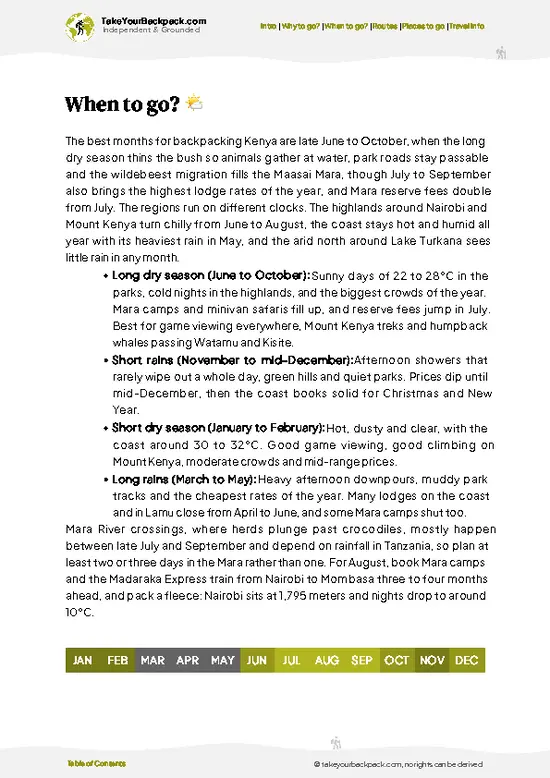
source: climatestotravel.comJANJanuary: good for travelingFEBFebruary: good for travelingMARMarch: fair for travelingAPRApril: fair for travelingMAYMay: highly recommended for travelingJUNJune: excellent for travelingJULJuly: excellent for travelingAUGAugust: excellent for travelingSEPSeptember: excellent for travelingOCTOctober: highly recommended for travelingNOVNovember: good for travelingDECDecember: good for traveling
when-to-go

✈️ The backpacker research shortcutKenya Travel Guide

An offline-friendly backpacking guide with optimized travel routes, ranked highlights, transport advice, and the best areas to stay.
example page 0 from our offline Travel Guide for Kenya
example page 1 from our offline Travel Guide for Kenya
example page 2 from our offline Travel Guide for Kenya
example page 3 from our offline Travel Guide for Kenya
example page 4 from our offline Travel Guide for Kenya
example page 5 from our offline Travel Guide for Kenya
example page 6 from our offline Travel Guide for Kenya
example page 7 from our offline Travel Guide for Kenya
The digital guide (429 pages) contains:
114 highlights, ranked by travel appeal
Optimized 7, 14 & 21-day travel routes
Cities, national parks, landmarks, beaches
How to get around
Offline-friendly for travel without Wi-Fi
👉 Click to see all 30+ guide features

📅 Plan smarter in minutes, not weeks
Month by month travel advice
Festivals & national holidays
Budget expectations

🗺️ Go to the right places, skip the overrated ones
Honest pros & cons of destinations
Top hikes, parks & viewpoints
Lesser-known places most travelers miss
Clear “worth it vs skip it” guidance

🛏️ Travel smoothly without rookie mistakes
Best areas to stay
Transport systems explained simply
Common scams & safety advice
SIM cards, money & practical tips

🌍 Understand the country, not just visit it
Culture & traditions
52 Essential phrases & customs
Festivals worth planning around
Traveler-friendly historical context
Insights that make places more meaningful

📱 Built for real travel conditions
Fully downloadable PDF
Works completely offline
Optimized for phone use
Useful in remote areas & buses
Everything in one place
Save weeks of stressful planning
Get instant access to your full guide. 30‑day money-back guarantee.


By proceeding you agree to our terms.
Sent to your inbox immediately after payment • 100% Secure Checkout
Best Backpacking Travel Advisor 2025 tourism awardBest Backpacking
Travel Advisor
2025
What others say about Take Your Backpack Guides:
⭐⭐⭐⭐⭐
Fantastic, amazing amount of information!
⭐⭐⭐⭐⭐
My goodness this is amazing, it's what I've been looking for hats off too you!
⭐⭐⭐⭐⭐
I think this is absolutely BRILLIANT
⭐⭐⭐⭐
Very complete and informative. It's still missing places, but I gotta to commend you
⭐⭐⭐⭐⭐
This is truly amazing, thank you, can't wait to explore it with my kids!
⭐⭐⭐⭐⭐
Awesome resource, thank you!
⭐⭐⭐⭐⭐
This is amazing! Can't wait to explore the ones I haven't seen
⭐⭐⭐⭐
I love this! Well done, great idea.
⭐⭐⭐⭐⭐
Thanks for taking the time to make this gem!
⭐⭐⭐⭐⭐
This might be the best website I've ever seen.
⭐⭐⭐⭐⭐
Congratulations, and thank you so much for your work; it's incredibly valuable.
⭐⭐⭐⭐
In all seriousness I think you did a great job pointing out the important spots
⭐⭐⭐⭐⭐
10/10 very good
⭐⭐⭐⭐⭐
As someone who's only just starting to visit regularly this is awesome, thank you.
⭐⭐⭐⭐
Thank you very much! I'm going to visit my dad, it's going to be very useful!
⭐⭐⭐⭐⭐
This is really cool! We'll be travelling for the first time and this definitely come in handy.
⭐⭐⭐⭐⭐
You are now our minister of culture, congratulations 👨‍💼
⭐⭐⭐⭐⭐
Just wanted to tell you that this is a pearl! Going to follow your recommendations.
⭐⭐⭐⭐⭐
This is so cool. I'll definitely be using the resource for my travels soon.
⭐⭐⭐⭐⭐
This is very impressive! Good work.
⭐⭐⭐⭐⭐
This is an amazing and informative site. Very well done!

🛏️ Where to stay?Choosing the right base

The Tana River Delta is a treasure trove for backpackers seeking a blend of adventure and community. Start in Garsen, the gateway to the delta. It’s buzzing with local life, and you’ll find plenty of friendly faces willing to share stories over a cup of chai. The riverside vibe is perfect for meeting fellow travelers, and the markets are a feast for the senses.

Next, consider Tana River Town. This spot is a bit more off the beaten path but offers a genuine slice of Kenyan life. The locals are welcoming, and you can easily find guides for river tours or cultural experiences. Plus, the prices … read more 👉
The Tana River Delta is a treasure trove for backpackers seeking a blend of adventure and community. Start in Garsen, the gateway to the delta. It’s buzzing with local life, and you’ll find plenty of friendly faces willing to share stories over a cup of chai. The riverside vibe is perfect for meeting fellow travelers, and the markets are a feast for the senses.

Next, consider Tana River Town. This spot is a bit more off the beaten path but offers a genuine slice of Kenyan life. The locals are welcoming, and you can easily find guides for river tours or cultural experiences. Plus, the prices are friendly on the wallet, allowing you to stretch your budget further.

Don’t overlook Kibwezi, a small village that’s a bit quieter but rich in natural beauty. It’s a great base for exploring the surrounding landscapes and connecting with nature. The community here is tight-knit, and you’ll often find impromptu gatherings where you can join in.

Timing is key. Visit during the dry season for easier travel and more social opportunities. Embrace the local rhythm, and you’ll find that the Tana River Delta is more than just a stop; it’s an experience that lingers long after you leave.

🚌 Getting aroundMoving around without the hassle

The Tana River Delta is a wild, untamed symphony of water and land, where schedules are more of a suggestion than a rule. Here, the rhythm of life flows like the river itself—sometimes calm, sometimes chaotic. You’ll find that getting around isn’t about rigid timetables; it’s about embracing the moment. Whether you’re hopping on a matatu or negotiating a boat ride, the journey is as much a part of the experience as the destination. The locals know the best times to travel, and if you’re willing to go with the flow, you’ll discover the true heart of this vibrant region.


  • Matatus: These shared minibuses are the lifeblood of local transport. They run frequently, usually from dawn until dusk, with fares around 100-200 KES ($1-$2) depending on the distance. Expect a bumpy ride, but you’ll be immersed
read more 👉
The Tana River Delta is a wild, untamed symphony of water and land, where schedules are more of a suggestion than a rule. Here, the rhythm of life flows like the river itself—sometimes calm, sometimes chaotic. You’ll find that getting around isn’t about rigid timetables; it’s about embracing the moment. Whether you’re hopping on a matatu or negotiating a boat ride, the journey is as much a part of the experience as the destination. The locals know the best times to travel, and if you’re willing to go with the flow, you’ll discover the true heart of this vibrant region.


  • Matatus: These shared minibuses are the lifeblood of local transport. They run frequently, usually from dawn until dusk, with fares around 100-200 KES ($1-$2) depending on the distance. Expect a bumpy ride, but you’ll be immersed in the local vibe, packed in with friendly chatter and the occasional music blast.


  • Boda Bodas: Motorbike taxis are your go-to for quick, nimble transport. Prices start at about 50 KES ($0.50) for short hops, and they can zip you through traffic like a pro. Just negotiate the fare upfront and hold on tight; it’s a thrilling way to see the delta!


  • Boat Rides: For a more scenic route, hop on a local canoe or motorboat. Prices vary widely, but expect to pay around 500-1500 KES ($5-$15) depending on the distance and type of boat. Early morning or late afternoon rides offer stunning views and a chance to spot wildlife, so plan accordingly.


  • Walking: Don’t underestimate the power of your own two feet. Many villages are accessible by foot, and it’s a fantastic way to soak in the sights and sounds. Just be sure to wear sturdy shoes and stay hydrated; the heat can be relentless.


  • Private Hire Cars: If you’re looking for comfort and convenience, consider hiring a car. Prices start around 3000 KES ($30) for a day, but you’ll have the freedom to explore at your own pace. This option is best for groups or those wanting a more relaxed experience.


For efficient travel, always ask locals for the best times to catch matatus or boats. They know the rhythms of the delta better than any guidebook. Timing is everything; avoid the midday heat and the rush hours to make your journey smoother and more enjoyable.

🍲 FoodLocal Flavors for Backpackers

In the Tana River Delta, food is a vibrant tapestry of flavors and traditions. You can’t miss trying ugali, a staple made from maize flour, often served with sukuma wiki (collard greens) or a rich fish stew. The river’s bounty means fresh fish is a must; grilled tilapia, seasoned with local spices, is a crowd-pleaser. Pair it with kachumbari, a zesty tomato and onion salad that cuts through the richness.

For drinks, seek out ajon, a local brew made from fermented millet. It’s a bit of an acquired taste, but sipping it in a lively market while chatting with locals is an experience you won’t forget.

When it comes to dining, embrace the markets. Vendors serve up steaming plates of food, and the atmosphere is electric. Grab a seat on a low bench and dig in. Street food is your friend here—look … read more 👉
In the Tana River Delta, food is a vibrant tapestry of flavors and traditions. You can’t miss trying ugali, a staple made from maize flour, often served with sukuma wiki (collard greens) or a rich fish stew. The river’s bounty means fresh fish is a must; grilled tilapia, seasoned with local spices, is a crowd-pleaser. Pair it with kachumbari, a zesty tomato and onion salad that cuts through the richness.

For drinks, seek out ajon, a local brew made from fermented millet. It’s a bit of an acquired taste, but sipping it in a lively market while chatting with locals is an experience you won’t forget.

When it comes to dining, embrace the markets. Vendors serve up steaming plates of food, and the atmosphere is electric. Grab a seat on a low bench and dig in. Street food is your friend here—look for samosas or mandazi (sweet fried dough) from bustling stalls.

Etiquette is relaxed; sharing food is common, and you might find yourself invited to join a meal. Just remember to eat with your right hand, as it’s considered polite. Dive in, savor the moment, and let the flavors of the delta linger on your palate.

Ideas for continuing your journey

Tana River Delta isn’t the only highlight in Kenya. Explore all what Kenya has to offer.
Country photo of Kenya

We 💚 feedbackSumming up the experience

The Tana River Delta is a wild card. You’ll find a raw beauty that’s hard to replicate. The locals are genuine, and their warmth is a surprise that’ll stick with you. But here’s the kicker: the roads can be rough. If you’re not comfortable with a bit of discomfort, think twice. Still, if you embrace the chaos, you’ll uncover stories and experiences that are worth every bump. Trust me, it’s the kind of place that gets under your skin in the best way.

✍️ Help improve this page!
The information on this page is based on in-depth research, insights shared by experienced travelers, and feedback from the local travel community in Kenya. While every effort is made to keep the information accurate and current, conditions can change — so if you spot anything incorrect or outdated, please get in touch.


🙋‍♂️ Give feedback

👋 Meet the founderWho’s Behind Take Your Backpack?

Johan, backpacker and founder of TakeYourBackpackHi, I’m Johan (Netherlands 🇳🇱), the creator of TakeYourBackpack. Over the past decade, I’ve backpacked through 80+ countries across six continents, gaining extensive experience with independent travel, long-term trips, and overland routes.

This site is built on a combination of firsthand travel experience and carefully curated insights from other backpackers. Many guides are based on places I’ve personally visited, while others bring together tips, observations, and practical advice shared by trusted travelers I’ve met along the way.

The goal is to provide realistic, experience-driven guidance — not generic itineraries — so you can explore destinations with better context, clearer expectations, and more confidence.

Get full Kenya guide •
Instant download • 114 highlights • Full Offline guide