v2.webp)
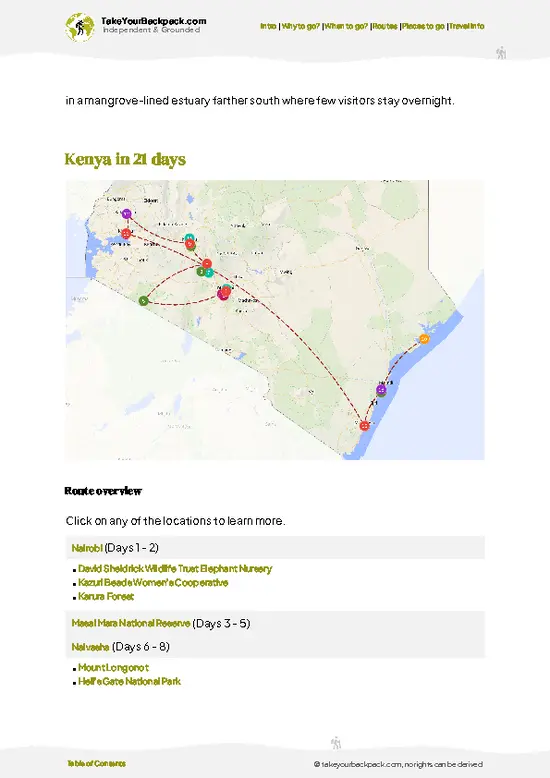
- Coral reef system and snorkeling sites: A mosaic of hard and soft corals close to shore makes Watamu one of Kenya’s best places to snorkel and dive — shallow reefs full of colorful reef fish, clear water, and easy drift-snorkel sections so you don’t need to be an expert to see a lot.
- Turtle nesting beaches and seagrass meadows: The park protects green and hawksbill turtles that nest on the beaches and feed on nearby seagrass; you’ll often spot adults or juveniles while snorkeling, and local conservation groups run hatchery programs you can learn about.
- Dolphin channel and boat safaris: Short boat trips out of Watamu reliably find playful bottlenose/common dolphins. The channel between reefs also attracts occasional spinner dolphins and provides dramatic surface action for photos.
- Mangrove-fringed
- Coral reef system and snorkeling sites: A mosaic of hard and soft corals close to shore makes Watamu one of Kenya’s best places to snorkel and dive — shallow reefs full of colorful reef fish, clear water, and easy drift-snorkel sections so you don’t need to be an expert to see a lot.
- Turtle nesting beaches and seagrass meadows: The park protects green and hawksbill turtles that nest on the beaches and feed on nearby seagrass; you’ll often spot adults or juveniles while snorkeling, and local conservation groups run hatchery programs you can learn about.
- Dolphin channel and boat safaris: Short boat trips out of Watamu reliably find playful bottlenose/common dolphins. The channel between reefs also attracts occasional spinner dolphins and provides dramatic surface action for photos.
- Mangrove-fringed creeks and estuaries: Mangrove channels (think tangled roots and quiet waterways) act as bird and fish nurseries — great for gentle boat or kayak trips to see kingfishers, herons, mudskippers and the mangrove ecology up close.
- Blue Lagoon and tidal sandbanks: The park’s tidal lagoons and sandbanks are stunning at low tide — wide shallow pools, glassy shallows for snorkeling, and long white sand stretches that feel almost private when the tide pulls back.
- Seagrass nurseries and juvenile marine life: Vast seagrass beds inside the park are crucial nursery habitat; look for juvenile fish, small rays, and the animals that keep the reef healthy — subtle but ecologically vital and surprisingly lively if you take your time.
- Shallow reef drop-offs and dive sites: For divers there are accessible drop-offs and pinnacles with greater species variety — more chances to see larger reef fish, moray eels, and the occasional reef shark on a calm day.
Spotted a mistake or missing something? Contact us.

Day Trip - Tsavo East National Park ( Man Eater Lions of Tsavo & Other Big Five)

Private Circle Island Tour we build your dream Itinerary

Kisite Marine Park Private Boat Snorkeling with breakfast & Lunch

Safari-Tsavo east national park -2 days 1 night

Discover Kenya Safaris

Safari blue

Mida creek mangrove Kayaking adventure in Watamu, Kenya

Tour Malindi & Robinson Island & Marafa Hell's Kitchen

3 Days, 2 Nights Safari - Amboseli National Park and Tsavo West Adventure Safari


 Best Backpacking
.jpg) Hi, I’m Johan (Netherlands 🇳🇱), the creator of TakeYourBackpack. Over the past 3 decades, I’ve backpacked through 90+ countries across six continents, gaining extensive experience with independent travel, long-term trips, and overland routes.
Hi, I’m Johan (Netherlands 🇳🇱), the creator of TakeYourBackpack. Over the past 3 decades, I’ve backpacked through 90+ countries across six continents, gaining extensive experience with independent travel, long-term trips, and overland routes.