
×

Kiribati🇰🇮 | beachesBamboo BeachAbaiang lagoon, tidal flats, coral-head snorkeling, outrigger canoes | things to do and best time to go

Explore Sacred Heart CathedralExplore Makin Island

Backpacking in Bamboo Beach
🏆 Top pickbeach ranked #1
By Johan Kruseman 🇳🇱 | Updated October 15, 2026

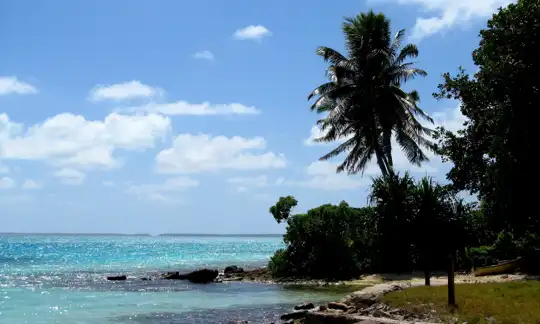
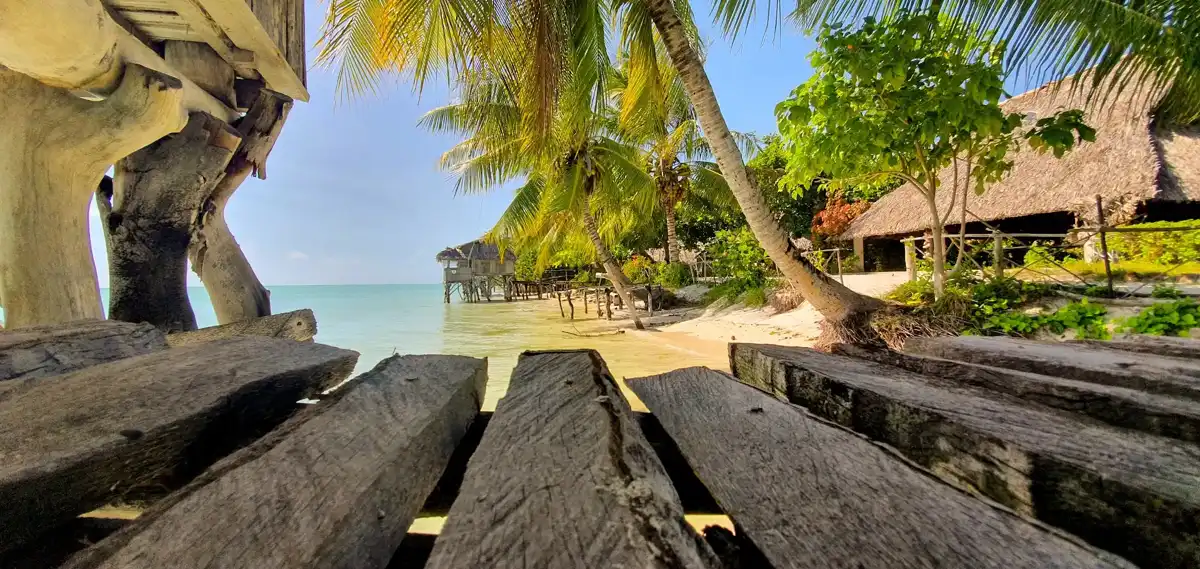
Bamboo Beach is a quiet strip of pale coral sand on Abaiang atoll, in the north of Kiribati and a flight or boat ride north of Tarawa. Coconut palms throw broken shade over the sand, the lagoon glows turquoise over white bottom, and at low tide the water pulls back and leaves flats that tick and gurgle as they drain. The light is hard and bright by midday, and there is little shelter from it. Swimming is easiest at high tide, when the lagoon is deep enough to float in. Surf is absent, since the reef and lagoon keep the water flat, and snorkeling is simple but pleasant, with small reef fish and coral heads close to shore. There are no crowds and no resort polish. Expect basic homestay-style lodging, plain fish and rice, and few shops, so bring cash and snacks. Getting here is the real cost, in time and patience. A first day could mean arriving, walking the shoreline at low tide, swimming at high tide, and eating whatever the family hosting you has caught.

Discover everything you want to know in the 📖 Kiribati Travel Guide.


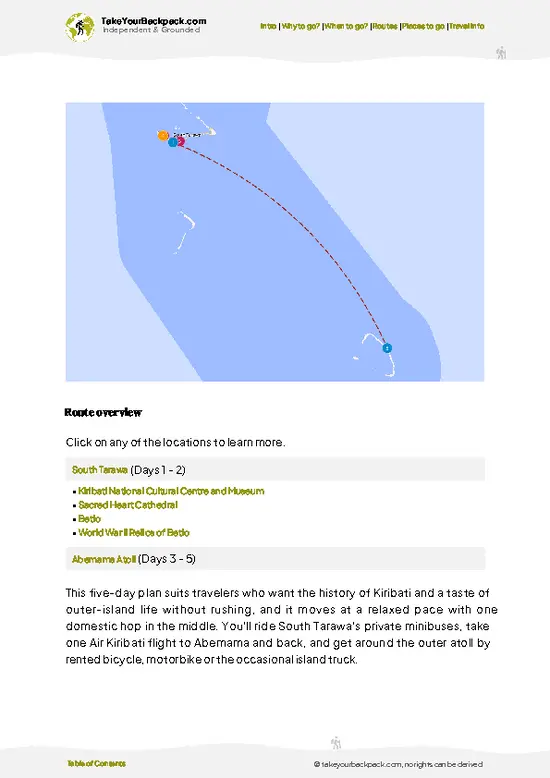
example page 0 from our offline Travel Guide for Kiribati
example page 1 from our offline Travel Guide for Kiribati
example page 2 from our offline Travel Guide for Kiribati
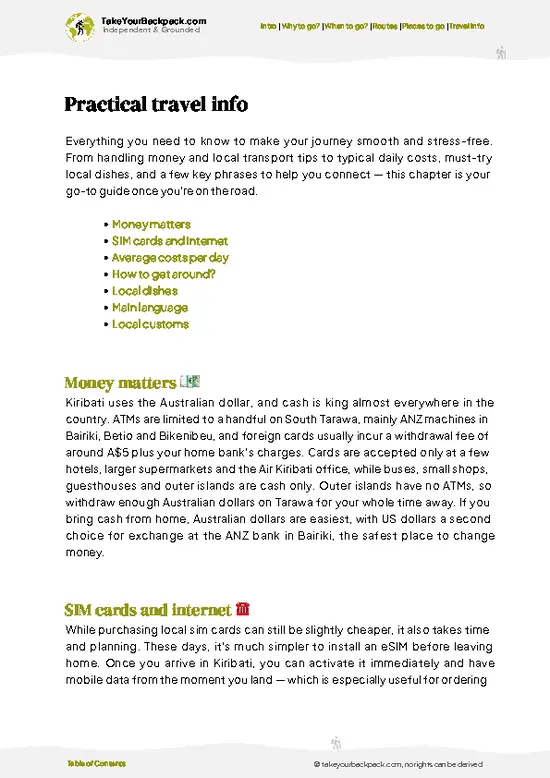
example page 3 from our offline Travel Guide for Kiribati
example page 4 from our offline Travel Guide for Kiribati
example page 5 from our offline Travel Guide for Kiribati
example page 6 from our offline Travel Guide for Kiribati
example page 7 from our offline Travel Guide for Kiribati
Loading the map 🌍
CLICK TO FILTER
towns
villages
landmarks
national parks
beaches
attractions
festivals
regions
SHOW COUNTRY’S BESTSHOW ALL

✨ Why go?
Ranked #1 beach in Kiribati
Why Bamboo Beach should be on your travel list

Backpackers come to Bamboo Beach because Abaiang’s lagoon side gives you what Tarawa’s crowded, built-up shoreline cannot: clear water, space and quiet. Rubbish and traffic are far less of a presence here, and the villages around the atoll still run on fishing, coconut and pandanus. You can swim, snorkel and wander without another visitor in sight, which is rare anywhere in the Pacific.

The second reason is people. Staying on an outer atoll means sharing meals with a host family, and you will be drawn into the daily rhythm: tides, canoes, cooking over fire, church bells on Sunday. Conversation tends to start with a handshake and an invitation to sit. I would arrive with small gifts such as tea, sugar or rice, which are appreciated.

The third reason is the contrast it gives a Kiribati itinerary. … read more 👉
Backpackers come to Bamboo Beach because Abaiang’s lagoon side gives you what Tarawa’s crowded, built-up shoreline cannot: clear water, space and quiet. Rubbish and traffic are far less of a presence here, and the villages around the atoll still run on fishing, coconut and pandanus. You can swim, snorkel and wander without another visitor in sight, which is rare anywhere in the Pacific.

The second reason is people. Staying on an outer atoll means sharing meals with a host family, and you will be drawn into the daily rhythm: tides, canoes, cooking over fire, church bells on Sunday. Conversation tends to start with a handshake and an invitation to sit. I would arrive with small gifts such as tea, sugar or rice, which are appreciated.

The third reason is the contrast it gives a Kiribati itinerary. A few days here between Tarawa stops slows the trip down and shows how the atoll nation actually lives, on a ribbon of land barely above sea level, with ocean on one side and lagoon on the other. It is a place to pause, not a place to tick off.

💡 HighlightsWhat this place is best known for

  1. Abaiang Lagoon Swimming: The shallow, flat lagoon is the main event. At high tide the water is deep enough for a proper swim, warm as a bath and clear enough to see your toes on the sand. Go in the morning, when the light is soft and the wind is lighter.
  2. Low-Tide Reef Flats Walk: When the tide drops, the coral flats are exposed and you can walk out among tide pools, hermit crabs, small fish and sea cucumbers. Wear sturdy sandals, because live coral and sharp rock are everywhere. Locals often gather shellfish here, so you may see them at work.
  3. Snorkeling the Coral Heads: Close to shore, patches of coral hold small reef fish, and the water is calm enough for beginners. Bring your own mask and snorkel, since rentals are not something to count on. Visibility is best around high tide on a calm day.
… read more 👉
  1. Abaiang Lagoon Swimming: The shallow, flat lagoon is the main event. At high tide the water is deep enough for a proper swim, warm as a bath and clear enough to see your toes on the sand. Go in the morning, when the light is soft and the wind is lighter.
  2. Low-Tide Reef Flats Walk: When the tide drops, the coral flats are exposed and you can walk out among tide pools, hermit crabs, small fish and sea cucumbers. Wear sturdy sandals, because live coral and sharp rock are everywhere. Locals often gather shellfish here, so you may see them at work.
  3. Snorkeling the Coral Heads: Close to shore, patches of coral hold small reef fish, and the water is calm enough for beginners. Bring your own mask and snorkel, since rentals are not something to count on. Visibility is best around high tide on a calm day.
  4. Sailing Canoe Ride (Waa): Kiribati’s traditional outrigger sailing canoes are still part of lagoon life, and asking your host to arrange a short trip is the best way to see the atoll from the water. Agree on a price beforehand, and expect to get wet.
  5. Village Walk and Sunset on the Atoll: A stroll along the lagoon road shows coconut groves, pandanus houses, open-sided meeting halls (maneaba) and children playing in the shallows. In the evening the sun drops over the lagoon, which turns coppery. There is no nightlife, only stars and the sound of water, and that is the point.
For a first visit, start with the low-tide reef flats walk, because it shows you the atoll’s living shoreline in a way a swim alone cannot.
Spotted a mistake or missing something? Contact us.
🌤️ When to go?Weather, crowds, and seasonal trade-offs

  • Drier Season (May to October): Steady trade winds keep afternoons around 28 to 31°C (82 to 88°F) and the lagoon calm enough for easy swimming and boat hops. Showers are short. This is the most comfortable window for walking the sandy village tracks.
  • Wetter Season (November to April): Expect 27 to 32°C (81 to 90°F), heavier squalls and muggier nights. Westerly winds can roughen the lagoon and delay boats and flights, so build in spare days.
  • Daylight: Sunrise comes between about 6:10 and 6:40 am and sunset between about 6:15 and 6:45 pm, so plan your beach time before the midday glare.
  • Crowds and Prices: Visitors are rare in any month. Fares and homestay rates barely move with the seasons, but inter-island boats and flights fill up around Independence Day on July 12 and the Christmas to New Year
… read more 👉
  • Drier Season (May to October): Steady trade winds keep afternoons around 28 to 31°C (82 to 88°F) and the lagoon calm enough for easy swimming and boat hops. Showers are short. This is the most comfortable window for walking the sandy village tracks.
  • Wetter Season (November to April): Expect 27 to 32°C (81 to 90°F), heavier squalls and muggier nights. Westerly winds can roughen the lagoon and delay boats and flights, so build in spare days.
  • Daylight: Sunrise comes between about 6:10 and 6:40 am and sunset between about 6:15 and 6:45 pm, so plan your beach time before the midday glare.
  • Crowds and Prices: Visitors are rare in any month. Fares and homestay rates barely move with the seasons, but inter-island boats and flights fill up around Independence Day on July 12 and the Christmas to New Year holidays, when families travel home.
Book transport out of Abaiang with a buffer day, since sea conditions and flight schedules decide departures more than the calendar does.


source: climatestotravel.comJANJanuary: fair for travelingFEBFebruary: fair for travelingMARMarch: fair for travelingAPRApril: fair for travelingMAYMay: excellent for travelingJUNJune: excellent for travelingJULJuly: excellent for travelingAUGAugust: excellent for travelingSEPSeptember: excellent for travelingOCTOctober: excellent for travelingNOVNovember: fair for travelingDECDecember: fair for traveling
kiribati-beach-bamboo-beach
© Google | Kaboua John

✈️ The backpacker research shortcutKiribati Travel Guide

An offline-friendly backpacking guide with optimized travel routes, ranked highlights, transport advice, and the best areas to stay.
example page 0 from our offline Travel Guide for Kiribati
example page 1 from our offline Travel Guide for Kiribati
example page 2 from our offline Travel Guide for Kiribati
example page 3 from our offline Travel Guide for Kiribati
example page 4 from our offline Travel Guide for Kiribati
example page 5 from our offline Travel Guide for Kiribati
example page 6 from our offline Travel Guide for Kiribati
example page 7 from our offline Travel Guide for Kiribati
The digital guide (120 pages) contains:
✅ 25 highlights, ranked by travel appeal
✅ Optimized 2, 3 & 5-day travel routes
✅ Cities, national parks, landmarks, beaches
✅ How to get around
✅ Offline-friendly for travel without Wi-Fi
👉 Click to see all 30+ guide features

📅 Plan smarter in minutes, not weeks
✅ Month by month travel advice
✅ Festivals & national holidays
✅ Budget expectations

🗺️ Go to the right places, skip the overrated ones
✅ Honest pros & cons of destinations
✅ Top hikes, parks & viewpoints
✅ Lesser-known places most travelers miss
✅ Clear “worth it vs skip it” guidance

🛏️ Travel smoothly without rookie mistakes
✅ Best areas to stay
✅ Transport systems explained simply
✅ Common scams & safety advice
✅ SIM cards, money & practical tips

🌍 Understand the country, not just visit it
✅ Culture & traditions
✅ 52 Essential phrases & customs
✅ Festivals worth planning around
✅ Traveler-friendly historical context
✅ Insights that make places more meaningful

📱 Built for real travel conditions
✅ Fully downloadable PDF
✅ Works completely offline
✅ Optimized for phone use
✅ Useful in remote areas & buses
✅ Everything in one place
Stop searching, start planning
Get instant access to your full guide. 30‑day money-back guarantee.
+ Add another guide for just

By proceeding you agree to our terms.
Sent to your inbox immediately after payment • 100% Secure Checkout
Best Backpacking Travel Advisor 2025 tourism awardBest Backpacking
Travel Advisor
2025
What others say about Take Your Backpack Guides:
⭐⭐⭐⭐⭐
Fantastic, amazing amount of information!
⭐⭐⭐⭐⭐
My goodness this is amazing, it's what I've been looking for hats off too you!
⭐⭐⭐⭐⭐
I think this is absolutely BRILLIANT
⭐⭐⭐⭐
Very complete and informative. It's still missing places, but I gotta to commend you
⭐⭐⭐⭐⭐
This is truly amazing, thank you, can't wait to explore it with my kids!
⭐⭐⭐⭐⭐
Awesome resource, thank you!
⭐⭐⭐⭐⭐
This is amazing! Can't wait to explore the ones I haven't seen
⭐⭐⭐⭐
I love this! Well done, great idea.
⭐⭐⭐⭐⭐
Thanks for taking the time to make this gem!
⭐⭐⭐⭐⭐
This might be the best website I've ever seen.
⭐⭐⭐⭐⭐
Congratulations, and thank you so much for your work; it's incredibly valuable.
⭐⭐⭐⭐
In all seriousness I think you did a great job pointing out the important spots
⭐⭐⭐⭐⭐
10/10 very good
⭐⭐⭐⭐⭐
As someone who's only just starting to visit regularly this is awesome, thank you.
⭐⭐⭐⭐
Thank you very much! I'm going to visit my dad, it's going to be very useful!
⭐⭐⭐⭐⭐
This is really cool! We'll be travelling for the first time and this definitely come in handy.
⭐⭐⭐⭐⭐
You are now our minister of culture, congratulations 👨‍💼
⭐⭐⭐⭐⭐
Just wanted to tell you that this is a pearl! Going to follow your recommendations.
⭐⭐⭐⭐⭐
This is so cool. I'll definitely be using the resource for my travels soon.
⭐⭐⭐⭐⭐
This is very impressive! Good work.
⭐⭐⭐⭐⭐
This is an amazing and informative site. Very well done!

🛏️ Where to stay?How to pick the right area

Your best option is a village homestay or small family-run guesthouse on Abaiang itself, close to the lagoon shore, rather than commuting from Tarawa. Abaiang has no hostel scene, so social contact comes through the villages. Staying in or beside a village puts you within a short walk of the beach. It also means shared meals of fish, coconut and breadfruit, and a quick introduction to the families who look after the shoreline.

Choose a spot on the lagoon side, where water is calm and boats pull up daily. Ask your host to arrange permission to use the beach, because the land belongs to local families. … read more 👉
Your best option is a village homestay or small family-run guesthouse on Abaiang itself, close to the lagoon shore, rather than commuting from Tarawa. Abaiang has no hostel scene, so social contact comes through the villages. Staying in or beside a village puts you within a short walk of the beach. It also means shared meals of fish, coconut and breadfruit, and a quick introduction to the families who look after the shoreline.

Choose a spot on the lagoon side, where water is calm and boats pull up daily. Ask your host to arrange permission to use the beach, because the land belongs to local families. Rooms are simple: a mat or basic bed, a mosquito net, bucket washing and limited electricity. Bring cash in Australian dollars, since card machines are rare and shops are small.

If you arrive with little time, a base on South Tarawa lets you buy supplies and confirm boat or flight times before crossing. The more rewarding choice for solo travelers is a night or two in a village on Abaiang. Evenings revolve around the maneaba, the open meeting house, where people sit, talk and often invite visitors to join. Keep modest dress in villages, and bring a small gift such as rice, sugar or tinned fish for your hosts.

🛡️ SafetyScams, Hazards, and Annoyances

Bamboo Beach sits on sheltered lagoon water, so rips and surf are not the concern you would have on an ocean coast. Swimming is generally easy, though tidal flow changes through the day. At low tide the water can be shallow and the flats expose rough coral rubble, so wear reef shoes or sandals to protect your feet. Tide channels can pull firmly as the lagoon fills and drains, so swim near the shore and watch where children and locals enter the water.

The sun is the main hazard. Near the equator it burns hard from mid-morning, even under cloud, so bring a long-sleeved shirt, reef-safe sunscreen and plenty of drinking water. Squalls in the wetter months can arrive quickly, and rough weather affects boat crossings more than swimming.

Petty theft is uncommon in village settings, but keep valuables … read more 👉
Bamboo Beach sits on sheltered lagoon water, so rips and surf are not the concern you would have on an ocean coast. Swimming is generally easy, though tidal flow changes through the day. At low tide the water can be shallow and the flats expose rough coral rubble, so wear reef shoes or sandals to protect your feet. Tide channels can pull firmly as the lagoon fills and drains, so swim near the shore and watch where children and locals enter the water.

The sun is the main hazard. Near the equator it burns hard from mid-morning, even under cloud, so bring a long-sleeved shirt, reef-safe sunscreen and plenty of drinking water. Squalls in the wetter months can arrive quickly, and rough weather affects boat crossings more than swimming.

Petty theft is uncommon in village settings, but keep valuables with your host rather than left on the sand. Ask where locals swim, avoid wandering onto private land, and stay out of the water after dark.

FAQTraveler FAQ

Fly or take a boat from Tarawa to Abaiang, then continue by local transport or on foot to the beach. Air Kiribati runs short flights between South Tarawa and Abaiang, taking roughly 15 to 25 minutes, though schedules are limited and can change. Boats also cross from the North Tarawa area, taking about 2 to 4 hours depending on wind and tide. Confirm times locally before you go, and expect to pay roughly A$20 to 100 (about US$13 to 65) depending on whether you go by boat or air.
Swimming is the main draw, since the lagoon water is sheltered, warm at around 28 to 30°C (82 to 86°F), and free of surf. Snorkeling is possible over patches of coral and sand near the shore, best at high tide when the water is deep enough to float over the rubble. Surfing is not realistic here, as there is no wave break inside the lagoon. Bring your own mask and snorkel, because rental gear is not available in the area.
Yes, there is no entrance fee, and no ticket booth or gate. The shoreline belongs to local families, so ask your host or a villager for permission before settling in. A small gift such as rice, sugar or a few Australian dollars toward a family meal or boat ride is a polite gesture. Your real costs are transport to Abaiang and a homestay, usually around A$20 to 50 (US$13 to 33) per night with meals.
⚠️ Things can change over time, so always validate details locally before you go.

Other I-Kiribati beaches near Bamboo Beach

Explore more nearby:

  • Makin Island—Butaritari shallows, wartime relics, bonefish flats, copra at dawn| 174 km away
  • Nukuroa—tidal pools, driftwood, wind-shaped coastline

💡 Not sure where to go next?
Create a personalized itinerary for Kiribati including Bamboo Beach and the places that fit your trip.

Generate my itinerary

👉 Discover all beaches

Or checkout all Kiribati has to offer (think cities, towns, villages, national parks, hikes, beaches, festivals)
Country photo of Kiribati

We 💚 feedbackWhat to keep in mind

Go in the early morning, when the air is cooler, the lagoon is flat and the village is already awake with canoes and cooking smoke. By midday the glare is punishing, so I would plan a long, lazy siesta under the palms and save the swim for the incoming tide. Bring plenty of water, cash in small bills and a sense of humor about schedules.

✍️ Help improve this page!
The information on this page is based on in-depth research, insights shared by experienced travelers, and feedback from the local travel community in Kiribati. While every effort is made to keep the information accurate and current, conditions can change — so if you spot anything incorrect or outdated, please get in touch.


🙋‍♂️ Give feedback

👋 Meet the founderWho’s Behind Take Your Backpack?

Johan, backpacker and founder of TakeYourBackpackHi, I’m Johan (Netherlands 🇳🇱), the creator of TakeYourBackpack. Over the past 3 decades, I’ve backpacked through 90+ countries across six continents, gaining extensive experience with independent travel, long-term trips, and overland routes.

This site is built on a combination of firsthand travel experience and carefully curated insights from other backpackers. Many guides are based on places I’ve personally visited, while others bring together tips, observations, and practical advice shared by trusted travelers I’ve met along the way.

The goal is to provide realistic, experience-driven guidance — not generic itineraries — so you can explore destinations with better context, clearer expectations, and more confidence.