

×

Kiribati🇰🇮 | attractionsKiribati National Cultural Centre and Museum
traditional artifacts, indigenous crafts, local history | things to do and best time to go

Explore Tamana IslandExplore World War II Relics of Betio

Backpacking in Kiribati National Cultural Centre and Museum
🌟 Highlightattraction ranked #2
By Johan Kruseman 🇳🇱 | Updated April 4, 2026

Here’s what nobody tells you until you’re standing in the midday heat: the Kiribati National Cultural Centre and Museum is one of the only places in Tarawa where you can actually get your hands on Kiribati’s story—without a guide, a tour group, or a staged dance. It’s tucked right in Bikenibeu, South Tarawa, a short, dusty minibus ride from anywhere you’re likely to be staying. Let’s be real: this isn’t a blockbuster museum with interactive screens or air conditioning. The displays are simple, sometimes faded, and you’ll probably have the place to yourself—because most travelers skip it, chasing the postcard beaches instead. But that’s the trick: here, you get the raw, unpolished heart of Kiribati. The artifacts—canoes, shark-tooth swords, woven armor—aren’t behind glass, and the staff might just pull out a story or two if you ask. It’s cheap, uncrowded, and delivers more cultural punch per dollar than any resort show. If you want to understand Kiribati beyond the Instagram sunsets, this is where the real magic starts.

Discover everything you want to know in the 📖 Kiribati Travel Guide.
Loading the map 🌍
CLICK TO FILTER
town
village
unique site
national park
beach
attraction
festival
region
SHOW COUNTRY‘S BESTSHOW ALL

✨ Why go?
Ranked #2 attraction in Kiribati
Why visitors keep coming back

The Kiribati National Cultural Centre and Museum isn’t your typical tourist checkbox. Sure, it’s not a sprawling metropolis of exhibits or a flashy, high-tech attraction. But that’s exactly why it’s a must for backpackers who want to cut through the noise. This place is the heartbeat of Kiribati’s identity, packed with authentic cultural artifacts and oral histories that you won’t find plastered all over Instagram. It’s where you get the real story behind the island nation’s resilience against climate change, its ancient navigation techniques, and the deep-rooted traditions that still shape daily life.

Yes, it’s modest and sometimes crowded with local school groups, but the payoff is huge. You’re not just seeing history; you’re stepping into a living narrative that connects you directly to … read more 👉
The Kiribati National Cultural Centre and Museum isn’t your typical tourist checkbox. Sure, it’s not a sprawling metropolis of exhibits or a flashy, high-tech attraction. But that’s exactly why it’s a must for backpackers who want to cut through the noise. This place is the heartbeat of Kiribati’s identity, packed with authentic cultural artifacts and oral histories that you won’t find plastered all over Instagram. It’s where you get the real story behind the island nation’s resilience against climate change, its ancient navigation techniques, and the deep-rooted traditions that still shape daily life.

Yes, it’s modest and sometimes crowded with local school groups, but the payoff is huge. You’re not just seeing history; you’re stepping into a living narrative that connects you directly to the people and their struggles. For backpackers, it’s a major milestone—a place that demands you slow down and absorb, not just snap a quick photo. The effort to get here, often involving a bit of island hopping or local transport, is rewarded with a perspective that no beach or resort can offer. This isn’t about spectacle; it’s about substance. And that’s why it’s worth every minute.
Get the complete Travel Guide for Kiribati
Everything organized for offline planning — routes, highlights, costs & tips

See what’s inside 👉

Get the Travel Guide -

💡 HighlightsDon't-miss highlights and experiences

Traditional Maneaba (Meeting House)
Forget the Instagram fantasy of a deserted, palm-fringed hut. The real maneaba here is the architectural and social heart of Kiribati. This isn’t a prop—it’s a living, breathing piece of community DNA. Step inside and you’ll see the massive, hand-hewn beams lashed together with coconut fiber, not a nail in sight. The space is open, communal, and built for storytelling, debate, and decision-making. If you want to understand how an island nation survives and thrives, stand in the center of this structure and imagine the generations who’ve gathered here to hash out everything from fishing rights to family feuds. It’s not just a building; it’s the blueprint for Kiribati society.

Outrigger Canoes and Traditional Navigation
You’ll see battered, salt-stained canoes … read more 👉
Traditional Maneaba (Meeting House)
Forget the Instagram fantasy of a deserted, palm-fringed hut. The real maneaba here is the architectural and social heart of Kiribati. This isn’t a prop—it’s a living, breathing piece of community DNA. Step inside and you’ll see the massive, hand-hewn beams lashed together with coconut fiber, not a nail in sight. The space is open, communal, and built for storytelling, debate, and decision-making. If you want to understand how an island nation survives and thrives, stand in the center of this structure and imagine the generations who’ve gathered here to hash out everything from fishing rights to family feuds. It’s not just a building; it’s the blueprint for Kiribati society.

Outrigger Canoes and Traditional Navigation
You’ll see battered, salt-stained canoes that look like they’ve been dragged straight from a fishing trip—because they have. These aren’t museum pieces behind glass. They’re the real deal, built by hand, still used by locals, and displayed with the pride of people who crossed entire oceans without GPS or even a compass. The museum doesn’t sugarcoat it: Kiribati’s ancestors were navigators on a scale that makes most modern sailors look like they’re playing with bathtub toys. If you’re lucky, you’ll catch a demonstration or a talk about how they read the stars, the swell, and the wind. This is the raw, unfiltered magic of Pacific exploration.

Kiribati Dance and Costume Displays
Don’t expect a sanitized, tourist-friendly luau. The costumes here are made from pandanus leaves, shells, and human hair—yes, really. The photos and artifacts show the sweat, the grit, and the artistry that go into every performance. The dances themselves are fierce, rhythmic, and loaded with meaning, telling stories of migration, survival, and the ocean’s moods. If you time your visit right, you might catch a rehearsal or a community event. This isn’t staged for outsiders; it’s a living tradition, and it hits harder than any TikTok highlight reel.

World War II Relics
Kiribati was ground zero for some of the Pacific’s most brutal battles, and the museum doesn’t flinch from the reality. You’ll see rusted helmets, battered rifles, and fragments of downed planes—relics left behind by American and Japanese forces. There’s no attempt to romanticize the past. The displays are blunt, sometimes even jarring, but they tell the story of an island caught in the crossfire of global conflict. It’s sobering, but it’s real history, not a sanitized souvenir.

Everyday Artifacts: Fishing Gear, Tools, and Domestic Life
This is where the museum quietly outshines the Instagram hype. The shelves are lined with hand-carved fish hooks, woven mats, and ingenious tools for everything from coconut husking to rainwater collection. These objects aren’t glamorous, but they’re the backbone of survival in a place where the ocean gives and takes in equal measure. You’ll walk away with a new respect for the resourcefulness and resilience that define life in Kiribati—no filter required.
Spotted a mistake or missing something? Contact us.

🌤️ When to go?Weather, crowds, and seasonal trade-offs


  • Weather: Kiribati’s climate is relentlessly tropical, hovering around 27-31°C (81-88°F) year-round. The dry season from May to October offers less humidity and fewer rain showers, making it the most comfortable window for exploring the Cultural Centre without feeling like you’re melting.

  • Temperature: Expect steady warmth with little variation—nights rarely dip below 24°C (75°F). This consistency means you won’t need to pack layers, but prepare for sticky days if you visit during the wetter months of November to April.

  • Daylight Hours: Near the equator, daylight is stable, roughly 12 hours daily year-round. This means you can plan your museum visits and island explorations without worrying about early sunsets cutting your day short.

  • Crowds: Kiribati isn’t a tourist hotspot, so the Cultural
read more 👉

  • Weather: Kiribati’s climate is relentlessly tropical, hovering around 27-31°C (81-88°F) year-round. The dry season from May to October offers less humidity and fewer rain showers, making it the most comfortable window for exploring the Cultural Centre without feeling like you’re melting.

  • Temperature: Expect steady warmth with little variation—nights rarely dip below 24°C (75°F). This consistency means you won’t need to pack layers, but prepare for sticky days if you visit during the wetter months of November to April.

  • Daylight Hours: Near the equator, daylight is stable, roughly 12 hours daily year-round. This means you can plan your museum visits and island explorations without worrying about early sunsets cutting your day short.

  • Crowds: Kiribati isn’t a tourist hotspot, so the Cultural Centre rarely feels packed. However, local school holidays around July and August can bring in more domestic visitors, which adds a lively, authentic vibe rather than tourist chaos.

  • Seasonal Activities: The dry season aligns with cultural festivals and traditional dance performances, offering a richer experience at the Centre. Visiting between June and September maximizes your chances to catch these events.

  • Price Fluctuations: Prices for accommodation and flights tend to peak slightly during the dry season and local holidays, but Kiribati remains generally affordable. Booking ahead for July and August can save you from last-minute price hikes.


Pro-tip: Aim for June to September to dodge the sticky wet season, catch cultural events, and enjoy the Centre without the rare but real risk of rain dampening your plans.


source: climatestotravel.comJANJanuary: fair for travelingFEBFebruary: fair for travelingMARMarch: fair for travelingAPRApril: fair for travelingMAYMay: highly recommended for travelingJUNJune: excellent for travelingJULJuly: excellent for travelingAUGAugust: excellent for travelingSEPSeptember: excellent for travelingOCTOctober: highly recommended for travelingNOVNovember: fair for travelingDECDecember: fair for traveling
when-to-go

✈️ The backpacker research shortcutKiribati Travel Guide

An offline-friendly backpacking guide with optimized travel routes, ranked highlights, transport advice, and the best areas to stay.
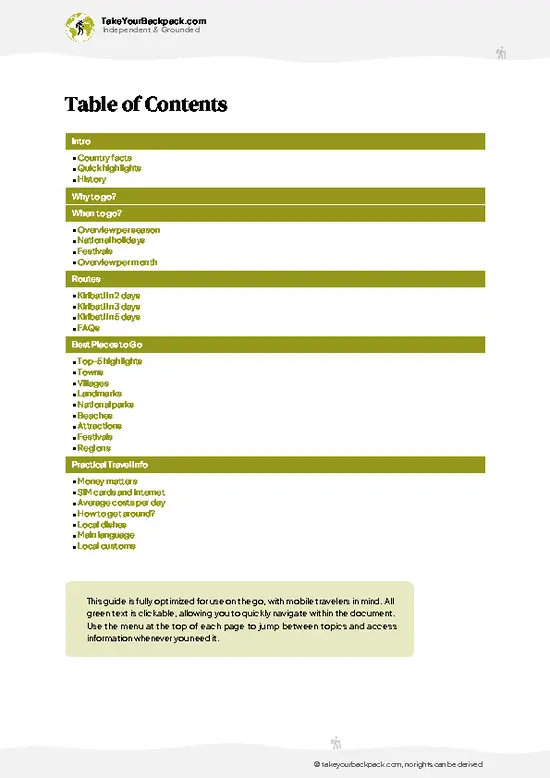
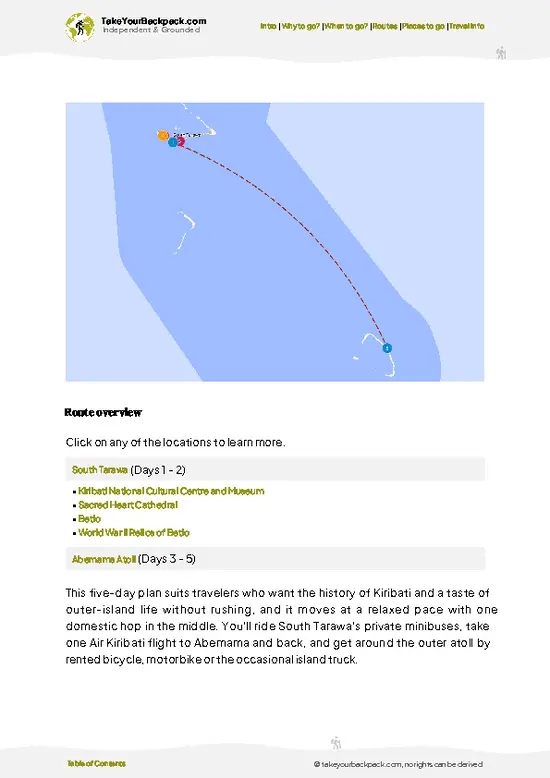
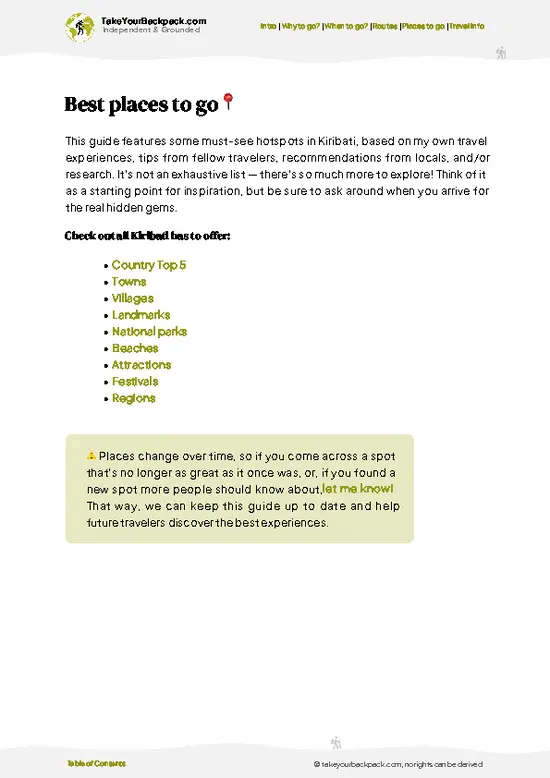
example page 0 from our offline Travel Guide for Kiribatiexample page 1 from our offline Travel Guide for Kiribatiexample page 2 from our offline Travel Guide for Kiribatiexample page 3 from our offline Travel Guide for Kiribatiexample page 4 from our offline Travel Guide for Kiribatiexample page 5 from our offline Travel Guide for Kiribati
The digital guide (127 pages) contains:
30 highlights, ranked by travel appeal
Optimized 2, 3 & 5-day travel routes
Best neighborhoods to stay
How to get around
Offline-friendly for travel without Wi-Fi
👉 See all 30+ guide features

📅 Plan smarter in minutes, not weeks
Month by month travel advice
Festivals & national holidays
Budget expectations

🗺️ Go to the right places, skip the overrated ones
Honest pros & cons of destinations
Top hikes, parks & viewpoints
Lesser-known places most travelers miss
Clear “worth it vs skip it” guidance

🛏️ Travel smoothly without rookie mistakes
Best areas to stay
Transport systems explained simply
Common scams & safety advice
SIM cards, money & practical tips

🌍 Understand the country, not just visit it
Culture & traditions
52 Essential phrases & customs
Festivals worth planning around
Traveler-friendly historical context
Insights that make places more meaningful

📱 Built for real travel conditions
Fully downloadable PDF
Works completely offline
Optimized for phone use
Useful in remote areas & buses
Everything in one place
Save weeks of stressful planning
Get instant access to the full guide directly. 30-day money-back guarantee.


Sent to your inbox immediately after payment • 100% Secure Checkout
Best Backpacking Travel Advisor 2025 tourism awardBest Backpacking
Travel Advisor
2025
What others say about Take Your Backpack Guides:
⭐⭐⭐⭐⭐
Fantastic, amazing amount of information!
⭐⭐⭐⭐⭐
My goodness this is amazing, it's what I've been looking for hats off too you!
⭐⭐⭐⭐⭐
I think this is absolutely BRILLIANT
⭐⭐⭐⭐
Very complete and informative. It's still missing places, but I gotta to commend you
⭐⭐⭐⭐⭐
This is truly amazing, thank you, can't wait to explore it with my kids!
⭐⭐⭐⭐⭐
Awesome resource, thank you!
⭐⭐⭐⭐⭐
This is amazing! Can't wait to explore the ones I haven't seen
⭐⭐⭐⭐
I love this! Well done, great idea.
⭐⭐⭐⭐⭐
Thanks for taking the time to make this gem!
⭐⭐⭐⭐⭐
This might be the best website I've ever seen.
⭐⭐⭐⭐⭐
Congratulations, and thank you so much for your work; it's incredibly valuable.
⭐⭐⭐⭐
In all seriousness I think you did a great job pointing out the important spots
⭐⭐⭐⭐⭐
10/10 very good
⭐⭐⭐⭐⭐
As someone who's only just starting to visit regularly this is awesome, thank you.
⭐⭐⭐⭐
Thank you very much! I'm going to visit my dad, it's going to be very useful!
⭐⭐⭐⭐⭐
This is really cool! We'll be travelling for the first time and this definitely come in handy.
⭐⭐⭐⭐⭐
You are now our minister of culture, congratulations 👨‍💼
⭐⭐⭐⭐⭐
Just wanted to tell you that this is a pearl! Going to follow your recommendations.
⭐⭐⭐⭐⭐
This is so cool. I'll definitely be using the resource for my travels soon.
⭐⭐⭐⭐⭐
This is very impressive! Good work.
⭐⭐⭐⭐⭐
This is an amazing and informative site. Very well done!

🛏️ Where to stay?Where staying makes the most sense

Forget the postcard-perfect images of Kiribati’s National Cultural Centre and Museum that flood your feed. Yes, it’s a small place, and yes, it’s often swarmed by locals and tourists alike during peak hours, which can kill the vibe if you’re chasing solitude. The reality? This isn’t a sprawling, polished cultural complex. It’s raw, intimate, and deeply tied to the community’s heartbeat. You want to be where the action and authenticity collide.

For backpackers, the best move is to base yourself in the Bairiki area. It’s the administrative and commercial hub of South Tarawa, just a short walk or … read more 👉
Forget the postcard-perfect images of Kiribati’s National Cultural Centre and Museum that flood your feed. Yes, it’s a small place, and yes, it’s often swarmed by locals and tourists alike during peak hours, which can kill the vibe if you’re chasing solitude. The reality? This isn’t a sprawling, polished cultural complex. It’s raw, intimate, and deeply tied to the community’s heartbeat. You want to be where the action and authenticity collide.

For backpackers, the best move is to base yourself in the Bairiki area. It’s the administrative and commercial hub of South Tarawa, just a short walk or bike ride from the museum. Bairiki offers a mix of guesthouses and budget lodgings where you’ll find other solo travelers and locals hanging out. It’s safe, social, and practical—exactly what you want after a day of soaking in Kiribati’s culture. The streets buzz with small markets, local eateries, and informal hangouts where you can swap stories and pick up insider tips.

Avoid the temptation to stay too far out in the quieter villages. You’ll miss the pulse of the place and the chance to connect with people who make Kiribati’s culture come alive. Bairiki isn’t flashy, but it’s real, and that’s what makes it worth your time.

👛 Costs (as of 16 March 2026)Travel costs and budget guide for Kiribati National Cultural Centre and Museum

The Kiribati National Cultural Centre and Museum, known as Te Umanibong, offers free admission to the public. Visitors are encouraged to contact museum staff for more information. ([internalaffairs.gov.ki](https://internalaffairs.gov.ki/cmd/?utm_source=openai))

source: internalaffairs.gov.ki
⚠️ Prices can change and everyone travels differently, so take this as a rough guide. Hope it helps you plan your adventure!

Other I-Kiribati attractions near Kiribati National Cultural Centre and Museum

Explore more nearby:


👉 Discover all attractions

Or checkout all Kiribati has to offer (think cities, towns, villages, national parks, hikes, beaches, festivals)
Country photo of Kiribati

We 💚 feedbackFinal thoughts on visiting Kiribati National Cultural Centre and Museum

The Kiribati National Cultural Centre and Museum isn’t flashy, and yes, it can feel a bit quiet—don’t expect crowds or polished exhibits. But that’s exactly why it’s worth your time. The real magic is in the raw, unfiltered stories of Kiribati’s people and traditions, told through artifacts that feel lived-in, not staged. If you’re after Instagram moments, look elsewhere. But if you want to connect with a culture that’s quietly resilient and deeply rooted in the Pacific, this place delivers in ways no postcard ever could.

✍️ Help improve this page!
The information on this page is based on in-depth research, insights shared by experienced travelers, and feedback from the local travel community in Kiribati. While every effort is made to keep the information accurate and current, conditions can change — so if you spot anything incorrect or outdated, please get in touch.


🙋‍♂️ Give feedback

👋 Meet the founderWho’s Behind Take Your Backpack?

Johan, backpacker and founder of TakeYourBackpackHi, I’m Johan (Netherlands 🇳🇱), the creator of TakeYourBackpack. Over the past decade, I’ve backpacked through 80+ countries across six continents, gaining extensive experience with independent travel, long-term trips, and overland routes.

This site is built on a combination of firsthand travel experience and carefully curated insights from other backpackers. Many guides are based on places I’ve personally visited, while others bring together tips, observations, and practical advice shared by trusted travelers I’ve met along the way.

The goal is to provide realistic, experience-driven guidance — not generic itineraries — so you can explore destinations with better context, clearer expectations, and more confidence.

Get Full Country Guide |
Instant download • 30 highlights • Full Offline guide