v2.webp)
1. The Tank Graveyard
Let’s get real: you don’t come to Betio for manicured memorials or polished plaques. You come for the raw, rusting skeletons of war—like the tank graveyard, where American Sherman tanks and Japanese Type 95s sit half-swallowed by sand and salt. These aren’t roped off or sanitized for your Instagram grid. You can walk right up, run your hand along the pitted steel, and feel the weight of history—literally. It’s not pretty, but it’s powerful. The tanks are battered, sun-bleached, and absolutely authentic. No museum glass, no velvet ropes. Just you, the Pacific wind, and the ghosts of 1943.
2. The Japanese Command Bunker
This is not your average “bunker tour.” The Japanese command bunker on Betio is a hulking, concrete relic, still pockmarked by shellfire. Step inside and … read more 👉
Let’s get real: you don’t come to Betio for manicured memorials or polished plaques. You come for the raw, rusting skeletons of war—like the tank graveyard, where American Sherman tanks and Japanese Type 95s sit half-swallowed by sand and salt. These aren’t roped off or sanitized for your Instagram grid. You can walk right up, run your hand along the pitted steel, and feel the weight of history—literally. It’s not pretty, but it’s powerful. The tanks are battered, sun-bleached, and absolutely authentic. No museum glass, no velvet ropes. Just you, the Pacific wind, and the ghosts of 1943.
2. The Japanese Command Bunker
This is not your average “bunker tour.” The Japanese command bunker on Betio is a hulking, concrete relic, still pockmarked by shellfire. Step inside and … read more 👉
1. The Tank Graveyard
Let’s get real: you don’t come to Betio for manicured memorials or polished plaques. You come for the raw, rusting skeletons of war—like the tank graveyard, where American Sherman tanks and Japanese Type 95s sit half-swallowed by sand and salt. These aren’t roped off or sanitized for your Instagram grid. You can walk right up, run your hand along the pitted steel, and feel the weight of history—literally. It’s not pretty, but it’s powerful. The tanks are battered, sun-bleached, and absolutely authentic. No museum glass, no velvet ropes. Just you, the Pacific wind, and the ghosts of 1943.
2. The Japanese Command Bunker
This is not your average “bunker tour.” The Japanese command bunker on Betio is a hulking, concrete relic, still pockmarked by shellfire. Step inside and you’ll find graffiti from both sides of the conflict—some scrawled by desperate defenders, some by victorious Marines. The air is thick, the silence is heavy, and the sense of claustrophobia is real. It’s a time capsule that hasn’t been prettied up for tourists. If you want to feel the tension of the Pacific War, this is the place.
3. The Red Beach Landing Sites
Forget the sanitized beaches of Normandy. Red Beach on Betio is where the U.S. Marines hit the sand under withering fire, and the geography hasn’t changed much. You can stand where the landing craft ground to a halt on coral reefs, forcing men to wade through chest-deep water under machine-gun fire. There are still bullet-pocked pillboxes and anti-tank obstacles scattered along the shoreline. It’s not a “beautiful” beach, but it’s one of the most honest. You’ll leave with sand in your shoes and a new respect for what happened here.
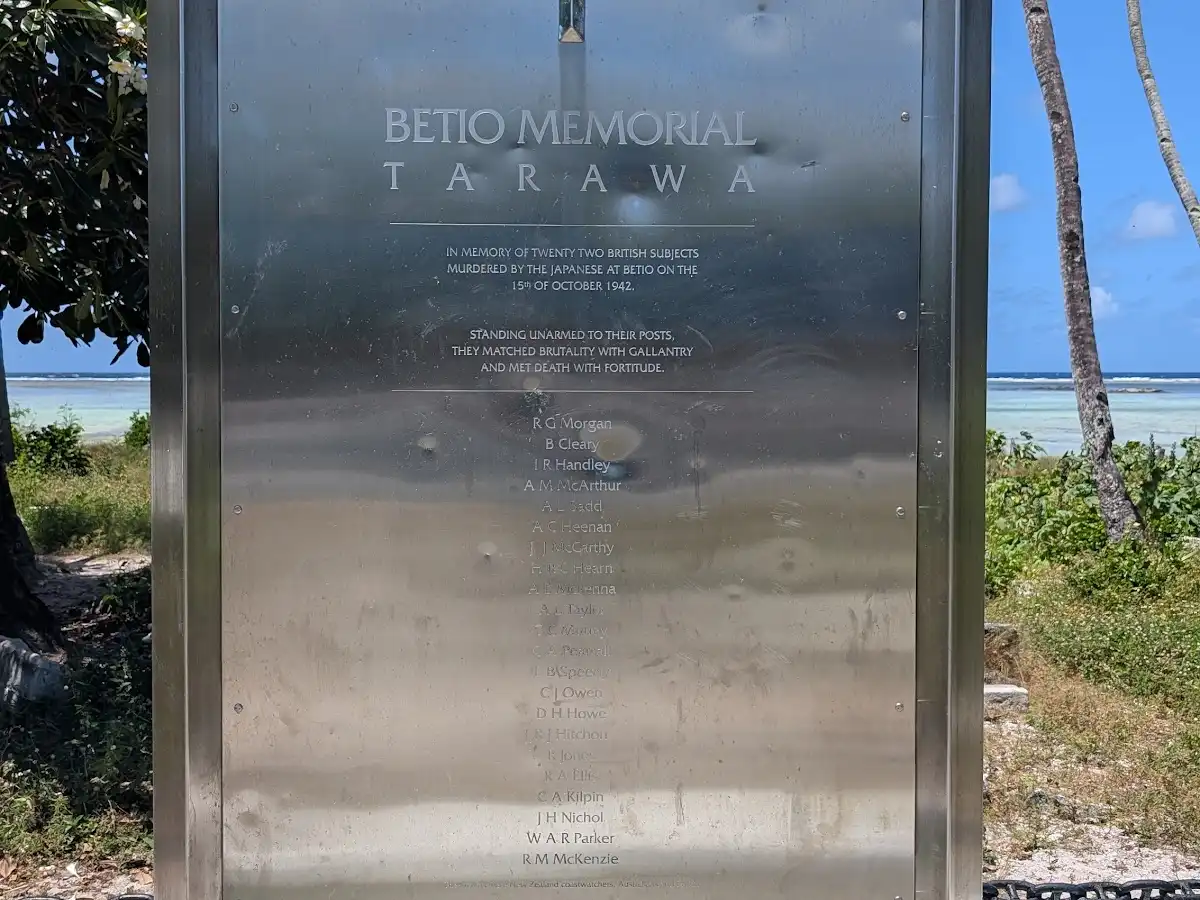
4. The Mass Graves and Memorials
This isn’t a tourist selfie stop. The mass graves on Betio are marked by simple, weathered crosses and the occasional plaque. There’s no fanfare, just a quiet, sobering reminder of the thousands who died in three days of fighting. If you want to understand the true cost of war, stand here for a moment. The silence is the point. It’s not entertainment, but it’s essential.
5. The Scattered Relics: Helmets, Shells, and Shrapnel
Betio isn’t a curated museum—it’s an open-air archive. You’ll spot rusted helmets, shell casings, and twisted metal half-buried in the sand or tangled in the undergrowth. Some are marked, most are not. It’s a scavenger hunt for the historically curious, but tread carefully—these are not souvenirs. The randomness and rawness of these finds are what make Betio unforgettable for anyone who wants to see history unfiltered.
Let’s get real: you don’t come to Betio for manicured memorials or polished plaques. You come for the raw, rusting skeletons of war—like the tank graveyard, where American Sherman tanks and Japanese Type 95s sit half-swallowed by sand and salt. These aren’t roped off or sanitized for your Instagram grid. You can walk right up, run your hand along the pitted steel, and feel the weight of history—literally. It’s not pretty, but it’s powerful. The tanks are battered, sun-bleached, and absolutely authentic. No museum glass, no velvet ropes. Just you, the Pacific wind, and the ghosts of 1943.
2. The Japanese Command Bunker
This is not your average “bunker tour.” The Japanese command bunker on Betio is a hulking, concrete relic, still pockmarked by shellfire. Step inside and you’ll find graffiti from both sides of the conflict—some scrawled by desperate defenders, some by victorious Marines. The air is thick, the silence is heavy, and the sense of claustrophobia is real. It’s a time capsule that hasn’t been prettied up for tourists. If you want to feel the tension of the Pacific War, this is the place.
3. The Red Beach Landing Sites
Forget the sanitized beaches of Normandy. Red Beach on Betio is where the U.S. Marines hit the sand under withering fire, and the geography hasn’t changed much. You can stand where the landing craft ground to a halt on coral reefs, forcing men to wade through chest-deep water under machine-gun fire. There are still bullet-pocked pillboxes and anti-tank obstacles scattered along the shoreline. It’s not a “beautiful” beach, but it’s one of the most honest. You’ll leave with sand in your shoes and a new respect for what happened here.
4. The Mass Graves and Memorials
This isn’t a tourist selfie stop. The mass graves on Betio are marked by simple, weathered crosses and the occasional plaque. There’s no fanfare, just a quiet, sobering reminder of the thousands who died in three days of fighting. If you want to understand the true cost of war, stand here for a moment. The silence is the point. It’s not entertainment, but it’s essential.
5. The Scattered Relics: Helmets, Shells, and Shrapnel
Betio isn’t a curated museum—it’s an open-air archive. You’ll spot rusted helmets, shell casings, and twisted metal half-buried in the sand or tangled in the undergrowth. Some are marked, most are not. It’s a scavenger hunt for the historically curious, but tread carefully—these are not souvenirs. The randomness and rawness of these finds are what make Betio unforgettable for anyone who wants to see history unfiltered.
Spotted a mistake or missing something? Contact us.





 Best Backpacking
.jpg) Hi, I’m Johan (Netherlands 🇳🇱), the creator of TakeYourBackpack. Over the past decade, I’ve backpacked through 80+ countries across six continents, gaining extensive experience with independent travel, long-term trips, and overland routes.
Hi, I’m Johan (Netherlands 🇳🇱), the creator of TakeYourBackpack. Over the past decade, I’ve backpacked through 80+ countries across six continents, gaining extensive experience with independent travel, long-term trips, and overland routes.