





×

Kiribati🇰🇮 | best attractionsTop-Rated 3 attractions in Kiribati

Kiribati’s best attractions are shaped by its vast spread of atolls and the relentless Pacific tides, where each island offers a distinct rhythm and challenge for backpackers. Choosing where to explore means weighing the trade-offs between remote tranquility and the logistical hurdles of inter-island travel, seasonal weather shifts that dictate accessibility, and the varying degrees of cultural engagement. Independent travelers will find that the right destination here directly influences their budget, safety, and the authenticity of their experience.

By Johan Kruseman 🇳🇱 | Updated June 12, 2026
Explore the best festivals in Kiribati

Why go?Why These attraction Stand Out

Kiribati’s attractions stand apart because they demand patience and intention. The country’s remote location in the central Pacific means travel involves long flights and limited connections, making each visit a deliberate choice rather than a casual stop. This isolation preserves a way of life deeply connected to the ocean and traditional practices, offering experiences that feel untouched by mass tourism. However, the sparse infrastructure and limited accessibility mean travelers must accept simpler accommodations and fewer conveniences. The climate—hot, humid, and prone to sudden storms—shapes the rhythm of exploration, rewarding those who adapt with encounters of raw natural beauty and cultural authenticity. Unlike destinations where attractions are clustered and easily reached, Kiribati’s … read more 👉
Kiribati’s attractions stand apart because they demand patience and intention. The country’s remote location in the central Pacific means travel involves long flights and limited connections, making each visit a deliberate choice rather than a casual stop. This isolation preserves a way of life deeply connected to the ocean and traditional practices, offering experiences that feel untouched by mass tourism. However, the sparse infrastructure and limited accessibility mean travelers must accept simpler accommodations and fewer conveniences. The climate—hot, humid, and prone to sudden storms—shapes the rhythm of exploration, rewarding those who adapt with encounters of raw natural beauty and cultural authenticity. Unlike destinations where attractions are clustered and easily reached, Kiribati’s appeal lies in the slow unfolding of its environment and heritage, where the effort to arrive and engage is part of the reward itself.
Why These Made the Cut
The list of best attractions in Kiribati is created based on cultural significance or entertainment value. If you feel a attraction is missing in this list, please let us know.

When to go?Timing Your Visit for the Best Experience

Seasonal Patterns Shape the Kiribati Experience

Kiribati’s equatorial position means the year splits into two distinct moods: the dry season and the wet season. The dry months bring steady sunshine, lighter humidity, and calmer seas—conditions that make exploring the islands’ natural and cultural attractions more accessible and comfortable. This period is the sweet spot for travelers who want to avoid the damp heaviness and unpredictable downpours that characterize the wet season.

The wet season, by contrast, delivers intense bursts of rain, higher humidity, and rougher ocean conditions. While the islands remain lush and vibrant, some outdoor activities become more challenging or less enjoyable. Crowds thin out during this time, and prices often dip, offering a trade-off between comfort … read more 👉

Seasonal Patterns Shape the Kiribati Experience

Kiribati’s equatorial position means the year splits into two distinct moods: the dry season and the wet season. The dry months bring steady sunshine, lighter humidity, and calmer seas—conditions that make exploring the islands’ natural and cultural attractions more accessible and comfortable. This period is the sweet spot for travelers who want to avoid the damp heaviness and unpredictable downpours that characterize the wet season.

The wet season, by contrast, delivers intense bursts of rain, higher humidity, and rougher ocean conditions. While the islands remain lush and vibrant, some outdoor activities become more challenging or less enjoyable. Crowds thin out during this time, and prices often dip, offering a trade-off between comfort and cost.

Shoulder months straddle these extremes, offering a mix of sun and showers. Visitors during these times should prepare for sudden weather shifts but can benefit from fewer tourists and a more relaxed pace. Planning around these seasonal rhythms ensures the effort to reach Kiribati pays off with clear skies, warm breezes, and the full sensory impact of island life.

attraction hoppingOptimizing Your Multi-Stop Itinerary

How to Combine the Best Attractions of Kiribati Into One Trip


Navigating Kiribati’s scattered atolls demands a clear sense of direction and patience. The key is to cluster visits by region—focus on one island group before hopping to the next. Flights and boats are infrequent, so plan for at least two to three days per major stop to absorb the local rhythm without rushing. Expect travel days to eat into your schedule; the distances aren’t vast, but connections are slow and weather-dependent. Trying to cram too many islands into a short trip often leads to exhaustion and missed experiences. Balancing speed and depth means accepting some trade-offs: fewer stops with more time on each island will reveal the culture and landscapes more fully, while a faster pace favors breadth but risks surface-level … read more 👉

How to Combine the Best Attractions of Kiribati Into One Trip


Navigating Kiribati’s scattered atolls demands a clear sense of direction and patience. The key is to cluster visits by region—focus on one island group before hopping to the next. Flights and boats are infrequent, so plan for at least two to three days per major stop to absorb the local rhythm without rushing. Expect travel days to eat into your schedule; the distances aren’t vast, but connections are slow and weather-dependent. Trying to cram too many islands into a short trip often leads to exhaustion and missed experiences. Balancing speed and depth means accepting some trade-offs: fewer stops with more time on each island will reveal the culture and landscapes more fully, while a faster pace favors breadth but risks surface-level encounters. Flexibility is essential—weather and transport hiccups are part of the deal, so build in buffer days to keep your plans realistic and your spirits high.

The ListMust-Visit attractions in Kiribati

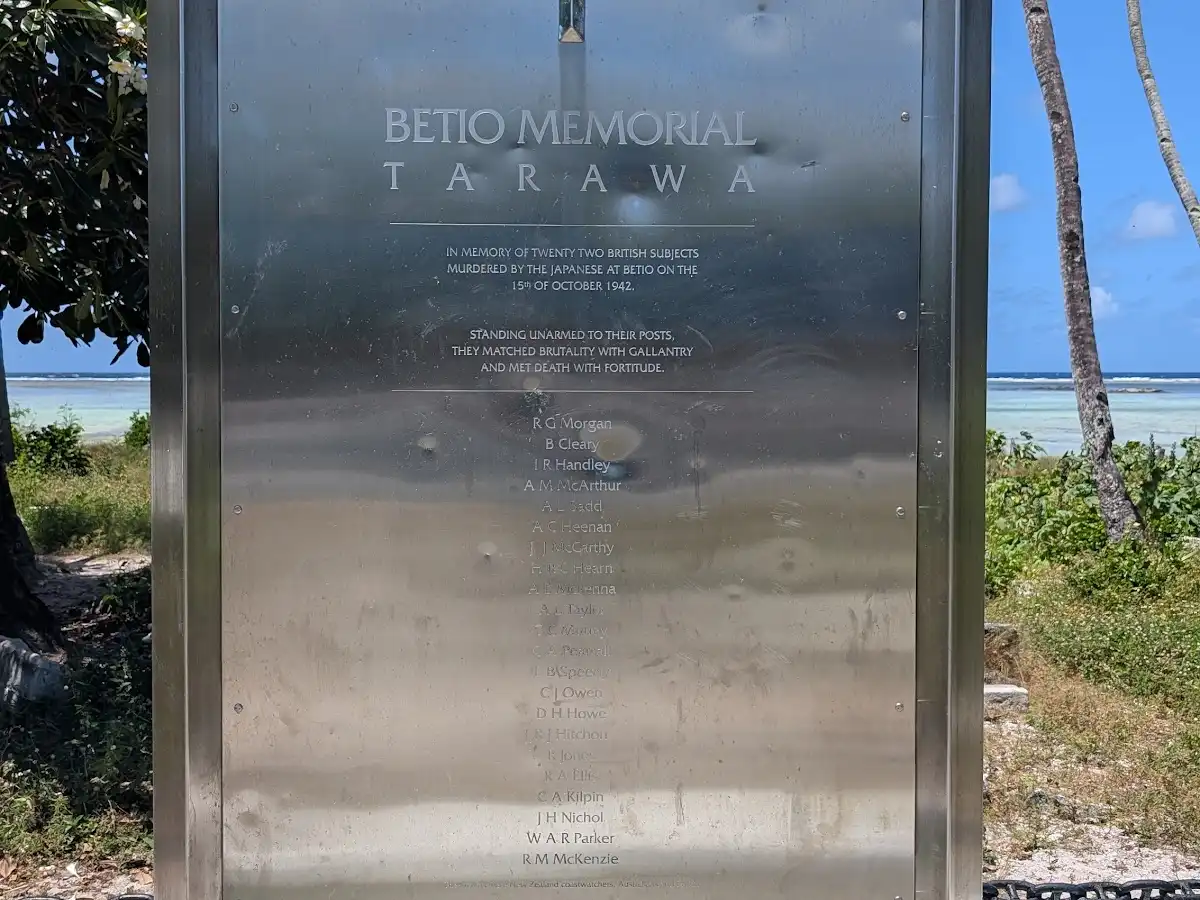
1 World War II Relics of Betio

bunkers, rusted artillery, battlefield remains

Walk among scattered remnants of conflict, where weathered military structures and relics reveal the island’s strategic wartime significance.

kiribati-attraction-world-war-ii-relics-of-betio
© Google |

2 Kiribati National Cultural Centre and Museum

traditional artifacts, indigenous crafts, local history

Discover Kiribati’s evolving identity through displays of ancestral navigation, ceremonial objects, and community stories in a modest, informative setting.

3 Sacred Heart Cathedral

oceanfront church, stained glass, community gatherings

Experience the intersection of faith and island life in a coastal cathedral known for its peaceful atmosphere and distinctive Pacific influences.

kiribati-attraction-sacred-heart-cathedral
© Google |
Loading the map 🌍

Expert viewInsights from Locals and Experts

Expert Commentary

Kiribati’s attractions don’t pile up like a checklist; they unfold slowly, demanding patience and a willingness to embrace the island pace. You’ll want to aim for a handful—three to five key experiences—to truly absorb what this vast ocean nation offers. Trying to cram more risks turning the trip into a blur of transit and missed moments. The distances between atolls are vast, and the transport options are limited and weather-dependent, so factor in extra time just to get from one place to another. This isn’t a place for tight schedules.

Budget-wise, Kiribati leans toward the modest side, but don’t expect luxury or convenience. Accommodations and food are simple, often family-run, and the infrastructure outside the main hubs can be basic. This means you’ll spend less on … read more 👉

Expert Commentary

Kiribati’s attractions don’t pile up like a checklist; they unfold slowly, demanding patience and a willingness to embrace the island pace. You’ll want to aim for a handful—three to five key experiences—to truly absorb what this vast ocean nation offers. Trying to cram more risks turning the trip into a blur of transit and missed moments. The distances between atolls are vast, and the transport options are limited and weather-dependent, so factor in extra time just to get from one place to another. This isn’t a place for tight schedules.

Budget-wise, Kiribati leans toward the modest side, but don’t expect luxury or convenience. Accommodations and food are simple, often family-run, and the infrastructure outside the main hubs can be basic. This means you’ll spend less on flashy amenities but more on patience and flexibility. The reward is in the authenticity—the scent of salt air mingling with coconut husks drying in the sun, the quiet hum of village life, and the vastness of the Pacific stretching to the horizon. It’s a sensory experience that feels earned after the logistical effort.

Planning your visit means prioritizing what matters most to you. If you’re drawn to cultural immersion, prepare to engage deeply with local customs and traditions, which are woven tightly into daily life. Respect for community norms is crucial—modest dress and asking permission before photographing people are not just polite but expected. Safety is generally good, but the remoteness means medical help is limited, so travel with basic first aid and a cautious mindset.

The natural attractions—pristine lagoons, coral reefs, and birdlife—are breathtaking but fragile. Access often requires small boats and can be affected by tides and weather, so flexibility is your best friend. The payoff is a quiet moment on a deserted beach or the thrill of spotting a rare seabird, moments that linger long after you’ve left.

In short, Kiribati demands a traveler who values depth over breadth, who understands that the journey itself is part of the reward. It’s not about ticking off sights but about sinking into a rhythm that reveals the soul of the islands, one slow, deliberate step at a time.

✈️ The backpacker research shortcutKiribati Travel Guide

An offline-friendly backpacking guide with optimized travel routes, ranked highlights, transport advice, and the best areas to stay.
example page 0 from our offline Travel Guide for Kiribati
example page 1 from our offline Travel Guide for Kiribati
example page 2 from our offline Travel Guide for Kiribati
example page 3 from our offline Travel Guide for Kiribati
example page 4 from our offline Travel Guide for Kiribati
example page 5 from our offline Travel Guide for Kiribati
example page 6 from our offline Travel Guide for Kiribati
example page 7 from our offline Travel Guide for Kiribati
The digital guide (143 pages) contains:
30 highlights, ranked by travel appeal
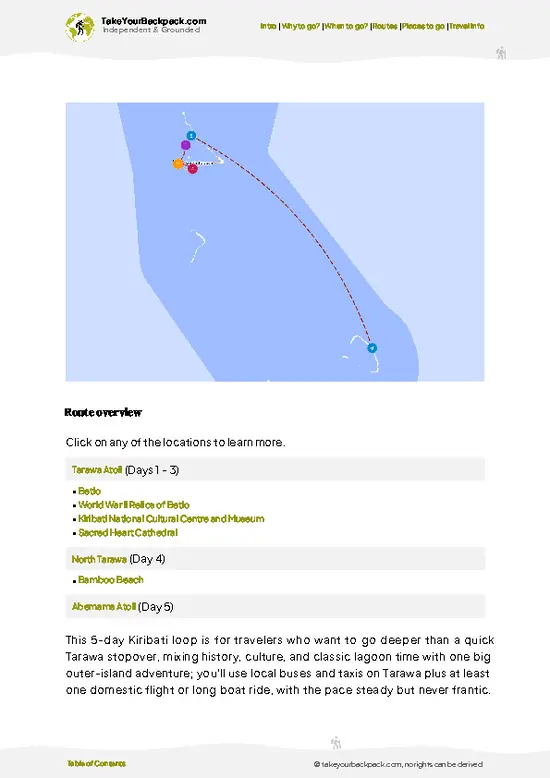
Optimized 2, 3 & 5-day travel routes
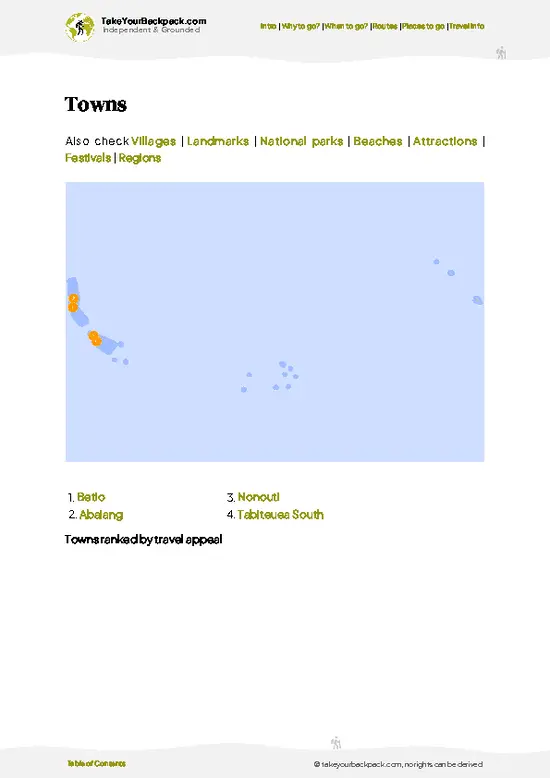
Cities, national parks, landmarks, beaches
How to get around
Offline-friendly for travel without Wi-Fi
👉 Click to see all 30+ guide features

📅 Plan smarter in minutes, not weeks
Month by month travel advice
Festivals & national holidays
Budget expectations

🗺️ Go to the right places, skip the overrated ones
Honest pros & cons of destinations
Top hikes, parks & viewpoints
Lesser-known places most travelers miss
Clear “worth it vs skip it” guidance

🛏️ Travel smoothly without rookie mistakes
Best areas to stay
Transport systems explained simply
Common scams & safety advice
SIM cards, money & practical tips

🌍 Understand the country, not just visit it
Culture & traditions
52 Essential phrases & customs
Festivals worth planning around
Traveler-friendly historical context
Insights that make places more meaningful

📱 Built for real travel conditions
Fully downloadable PDF
Works completely offline
Optimized for phone use
Useful in remote areas & buses
Everything in one place
Save weeks of stressful planning
Get instant access to your full guide. 30‑day money-back guarantee.


By proceeding you agree to our terms.
Sent to your inbox immediately after payment • 100% Secure Checkout
Best Backpacking Travel Advisor 2025 tourism awardBest Backpacking
Travel Advisor
2025
What others say about Take Your Backpack Guides:
⭐⭐⭐⭐⭐
Fantastic, amazing amount of information!
⭐⭐⭐⭐⭐
My goodness this is amazing, it's what I've been looking for hats off too you!
⭐⭐⭐⭐⭐
I think this is absolutely BRILLIANT
⭐⭐⭐⭐
Very complete and informative. It's still missing places, but I gotta to commend you
⭐⭐⭐⭐⭐
This is truly amazing, thank you, can't wait to explore it with my kids!
⭐⭐⭐⭐⭐
Awesome resource, thank you!
⭐⭐⭐⭐⭐
This is amazing! Can't wait to explore the ones I haven't seen
⭐⭐⭐⭐
I love this! Well done, great idea.
⭐⭐⭐⭐⭐
Thanks for taking the time to make this gem!
⭐⭐⭐⭐⭐
This might be the best website I've ever seen.
⭐⭐⭐⭐⭐
Congratulations, and thank you so much for your work; it's incredibly valuable.
⭐⭐⭐⭐
In all seriousness I think you did a great job pointing out the important spots
⭐⭐⭐⭐⭐
10/10 very good
⭐⭐⭐⭐⭐
As someone who's only just starting to visit regularly this is awesome, thank you.
⭐⭐⭐⭐
Thank you very much! I'm going to visit my dad, it's going to be very useful!
⭐⭐⭐⭐⭐
This is really cool! We'll be travelling for the first time and this definitely come in handy.
⭐⭐⭐⭐⭐
You are now our minister of culture, congratulations 👨‍💼
⭐⭐⭐⭐⭐
Just wanted to tell you that this is a pearl! Going to follow your recommendations.
⭐⭐⭐⭐⭐
This is so cool. I'll definitely be using the resource for my travels soon.
⭐⭐⭐⭐⭐
This is very impressive! Good work.
⭐⭐⭐⭐⭐
This is an amazing and informative site. Very well done!

🛏️ Where to stay?Where to Stay in Kiribati

Yes — Kiribati has guesthouses, homestays and a few basic hostels concentrated on South Tarawa; options are sparse outside the capital so book ahead, bring cash, mosquito repellent and a torch, and expect simple facilities with intermittent power and limited potable water.
Most budget choices cluster in Teaoraereke (best for shops, transport links and the widest budget selection), Bairiki (quieter, administrative hub with nearby services) and Betio (closest to WWII sites, ferries and the busiest travel links); pros are proximity to transport and essentials, cons are limited nightlife, basic amenities, and minimal medical/tourist infrastructure on outer islands.

If you enjoy meeting fellow travelers, … read more 👉
Yes — Kiribati has guesthouses, homestays and a few basic hostels concentrated on South Tarawa; options are sparse outside the capital so book ahead, bring cash, mosquito repellent and a torch, and expect simple facilities with intermittent power and limited potable water.
Most budget choices cluster in Teaoraereke (best for shops, transport links and the widest budget selection), Bairiki (quieter, administrative hub with nearby services) and Betio (closest to WWII sites, ferries and the busiest travel links); pros are proximity to transport and essentials, cons are limited nightlife, basic amenities, and minimal medical/tourist infrastructure on outer islands.

If you enjoy meeting fellow travelers, consider choosing hostels with high ratings for atmosphere. On the other hand, if you prefer having your own space, a hotel might be a better option.

KiribatiMore of Kiribati

👋 Meet the founderWho’s Behind Take Your Backpack?

Johan, backpacker and founder of TakeYourBackpackHi, I’m Johan (Netherlands 🇳🇱), the creator of TakeYourBackpack. Over the past decade, I’ve backpacked through 80+ countries across six continents, gaining extensive experience with independent travel, long-term trips, and overland routes.

This site is built on a combination of firsthand travel experience and carefully curated insights from other backpackers. Many guides are based on places I’ve personally visited, while others bring together tips, observations, and practical advice shared by trusted travelers I’ve met along the way.

The goal is to provide realistic, experience-driven guidance — not generic itineraries — so you can explore destinations with better context, clearer expectations, and more confidence.

Get full Kiribati guide •
Instant download • 30 highlights • Full Offline guide