v2.webp)
The Planetarium
Forget the dusty, half-broken planetariums you might have suffered through on school trips. Kuwait National Museum’s planetarium is a full-sensory time machine. The domed theater launches you into the cosmos with surprisingly slick visuals and a sound system that actually rumbles your seat. Shows run in both Arabic and English, and the staff doesn’t treat you like a child for asking questions. If you’re traveling with kids, it’s a slam dunk. If you’re an adult who secretly loves space, you’ll walk out grinning.
The Al-Sabah Islamic Art Collection
This is not your average “here’s a dusty vase” gallery. The Al-Sabah Collection is a heavyweight—one of the world’s most important private Islamic art collections, and it’s right here, not in Paris or London. You’ll see centuries-old … read more 👉
Forget the dusty, half-broken planetariums you might have suffered through on school trips. Kuwait National Museum’s planetarium is a full-sensory time machine. The domed theater launches you into the cosmos with surprisingly slick visuals and a sound system that actually rumbles your seat. Shows run in both Arabic and English, and the staff doesn’t treat you like a child for asking questions. If you’re traveling with kids, it’s a slam dunk. If you’re an adult who secretly loves space, you’ll walk out grinning.
The Al-Sabah Islamic Art Collection
This is not your average “here’s a dusty vase” gallery. The Al-Sabah Collection is a heavyweight—one of the world’s most important private Islamic art collections, and it’s right here, not in Paris or London. You’ll see centuries-old … read more 👉
The Planetarium
Forget the dusty, half-broken planetariums you might have suffered through on school trips. Kuwait National Museum’s planetarium is a full-sensory time machine. The domed theater launches you into the cosmos with surprisingly slick visuals and a sound system that actually rumbles your seat. Shows run in both Arabic and English, and the staff doesn’t treat you like a child for asking questions. If you’re traveling with kids, it’s a slam dunk. If you’re an adult who secretly loves space, you’ll walk out grinning.
The Al-Sabah Islamic Art Collection
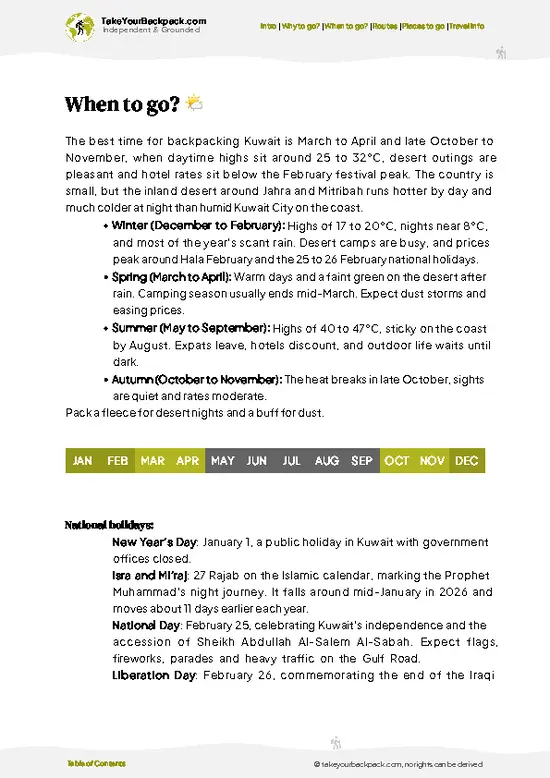
This is not your average “here’s a dusty vase” gallery. The Al-Sabah Collection is a heavyweight—one of the world’s most important private Islamic art collections, and it’s right here, not in Paris or London. You’ll see centuries-old manuscripts, intricate metalwork, and jewelry that looks like it belongs in a fantasy novel. The curation is sharp: objects are grouped by theme, not just by date, so you actually get a sense of the ideas and aesthetics that shaped the Islamic world. It’s a crash course in beauty and history, minus the snobbery.
The Heritage Museum (Traditional Kuwaiti Life)
Instagram will show you the outside of the museum’s sand-colored buildings, but the real magic is inside the Heritage Museum. Here, you get a walk-through diorama of pre-oil Kuwait: mudbrick houses, a souk with mannequins that are more charming than creepy, and a pearl diver’s dhow. It’s not Disney-fied—there’s grit and detail, from the tools in the kitchen to the battered fishing nets. You can almost smell the cardamom and sea salt. This is where Kuwait’s story feels personal, not just historical.
The Archaeological Museum
If you’re expecting a blockbuster, lower your expectations. But if you’re a history nerd, this wing is a goldmine. The Archaeological Museum houses artifacts from Failaka Island and the wider Gulf region—think Bronze Age pottery, coins, and ancient seals. The displays are straightforward, sometimes even a little rough around the edges, but that’s part of the charm. You’re not separated from the past by velvet ropes and glass; it feels raw and real.
The Courtyard and Modernist Architecture
Here’s the part nobody tells you: the museum itself is a piece of art. Designed by French architect Michel Ecochard, the complex is a masterclass in 20th-century modernism, with courtyards that channel the feel of a traditional Kuwaiti village. The interplay of light and shadow is hypnotic, especially in the late afternoon. It’s one of the rare places in Kuwait where you can sit, breathe, and feel the city’s pulse slow down. If you’re a fan of architecture or just need a break from the mall-and-highway sprawl, this is your oasis.
Forget the dusty, half-broken planetariums you might have suffered through on school trips. Kuwait National Museum’s planetarium is a full-sensory time machine. The domed theater launches you into the cosmos with surprisingly slick visuals and a sound system that actually rumbles your seat. Shows run in both Arabic and English, and the staff doesn’t treat you like a child for asking questions. If you’re traveling with kids, it’s a slam dunk. If you’re an adult who secretly loves space, you’ll walk out grinning.
The Al-Sabah Islamic Art Collection
This is not your average “here’s a dusty vase” gallery. The Al-Sabah Collection is a heavyweight—one of the world’s most important private Islamic art collections, and it’s right here, not in Paris or London. You’ll see centuries-old manuscripts, intricate metalwork, and jewelry that looks like it belongs in a fantasy novel. The curation is sharp: objects are grouped by theme, not just by date, so you actually get a sense of the ideas and aesthetics that shaped the Islamic world. It’s a crash course in beauty and history, minus the snobbery.
The Heritage Museum (Traditional Kuwaiti Life)
Instagram will show you the outside of the museum’s sand-colored buildings, but the real magic is inside the Heritage Museum. Here, you get a walk-through diorama of pre-oil Kuwait: mudbrick houses, a souk with mannequins that are more charming than creepy, and a pearl diver’s dhow. It’s not Disney-fied—there’s grit and detail, from the tools in the kitchen to the battered fishing nets. You can almost smell the cardamom and sea salt. This is where Kuwait’s story feels personal, not just historical.
The Archaeological Museum
If you’re expecting a blockbuster, lower your expectations. But if you’re a history nerd, this wing is a goldmine. The Archaeological Museum houses artifacts from Failaka Island and the wider Gulf region—think Bronze Age pottery, coins, and ancient seals. The displays are straightforward, sometimes even a little rough around the edges, but that’s part of the charm. You’re not separated from the past by velvet ropes and glass; it feels raw and real.
The Courtyard and Modernist Architecture
Here’s the part nobody tells you: the museum itself is a piece of art. Designed by French architect Michel Ecochard, the complex is a masterclass in 20th-century modernism, with courtyards that channel the feel of a traditional Kuwaiti village. The interplay of light and shadow is hypnotic, especially in the late afternoon. It’s one of the rare places in Kuwait where you can sit, breathe, and feel the city’s pulse slow down. If you’re a fan of architecture or just need a break from the mall-and-highway sprawl, this is your oasis.
Spotted a mistake or missing something? Contact us.

Half Day licensed Tours in Kuwait City & Desert PickUp & DropOff

Full Day licensed Tours in Kuwait City & Desert PickUp & DropOff

Kuwait: Half-Day City & Desert Tour with Pick-Up & Drop-Off

Discover Bahrain: Authentic Tours with Local Guide.

History Tour of Stories That Shaped Kuwait by Kuwaiti Guide

Kuwait City Heritage Souq & Modern Shopping Malls Tour

Full Day Kuwait City Tour

Full Day Private Kuwait City and Desert Tour with a Local Guide

Kuwait City Oil & Gas Exhibition & Al Qurain Martyrs Museum Tour


 Best Backpacking
.jpg) Hi, I’m Johan (Netherlands 🇳🇱), the creator of TakeYourBackpack. Over the past 3 decades, I’ve backpacked through 90+ countries across six continents, gaining extensive experience with independent travel, long-term trips, and overland routes.
Hi, I’m Johan (Netherlands 🇳🇱), the creator of TakeYourBackpack. Over the past 3 decades, I’ve backpacked through 90+ countries across six continents, gaining extensive experience with independent travel, long-term trips, and overland routes.