×

Kyrgyzstan🇰🇬 | national parksDashman Forest ReserveWalnut forests, Arslanbob, Fergana ridge, waterfall paths | things to do and best time to go

Explore Naryn State ReserveExplore Alatai State Nature Park

Backpacking in Dashman Forest Reserve
👀 For curious travelersnational park ranked #13
By Johan Kruseman 🇳🇱 | Updated October 15, 2026

Boots crunch through September husks as walnuts thump onto the path, and the air smells of green rind and woodsmoke. That was my morning in Dashman Forest Reserve, in Jalal-Abad Region, a short walk above Arslanbob village in southern Kyrgyzstan. Go for the huge wild groves, easy independent hiking and harvest-season color. Skip it if you want Ala Archa’s alpine peaks or Issyk-Kul’s lake views. Buses to Arslanbob are slow, shared taxis cost time, and trail signs are sparse, so download offline maps and allow a buffer day for delays.

Discover everything you want to know in the 📖 Kyrgyzstan Travel Guide.


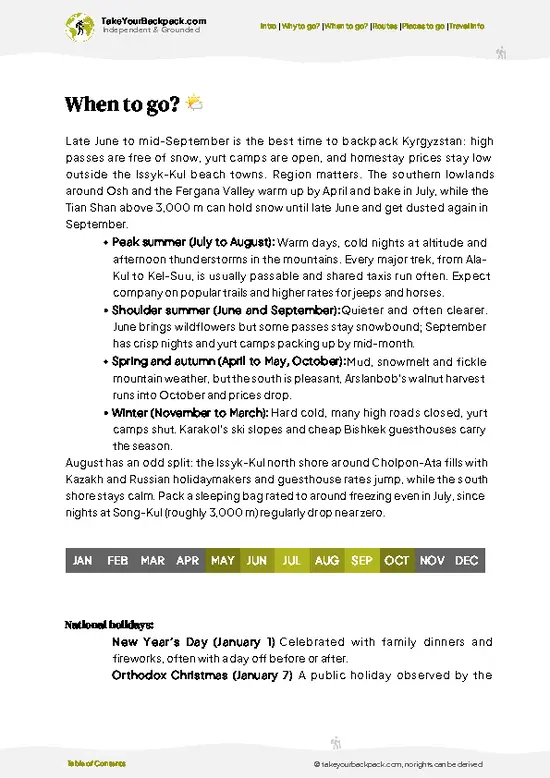
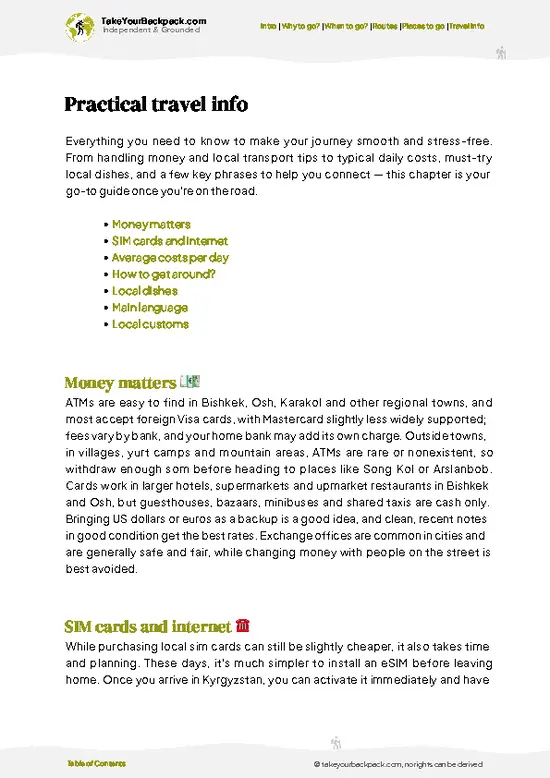
example page 0 from our offline Travel Guide for Kyrgyzstan
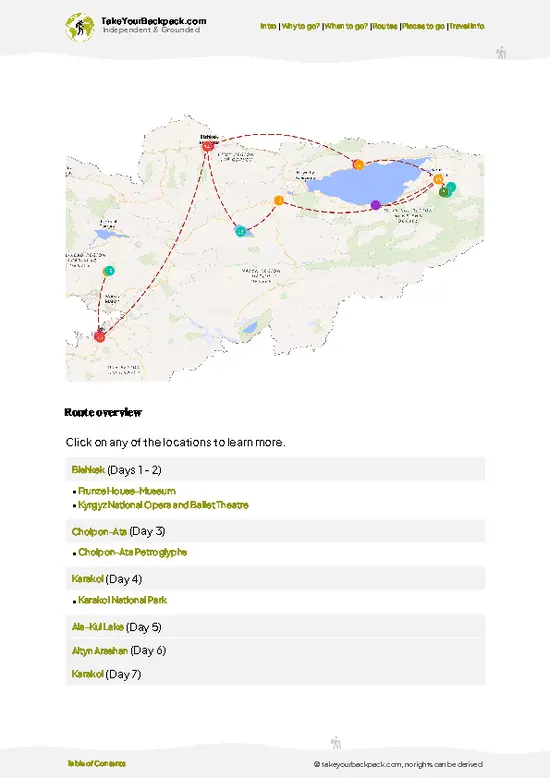
example page 1 from our offline Travel Guide for Kyrgyzstan
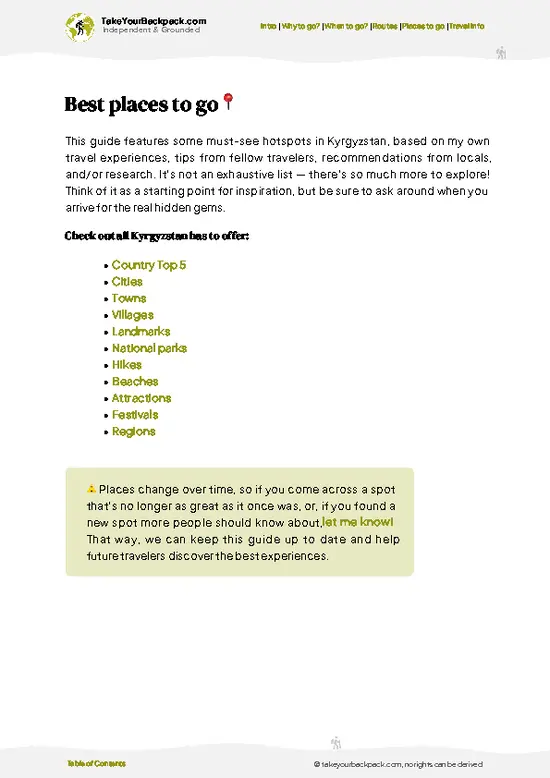
example page 2 from our offline Travel Guide for Kyrgyzstan
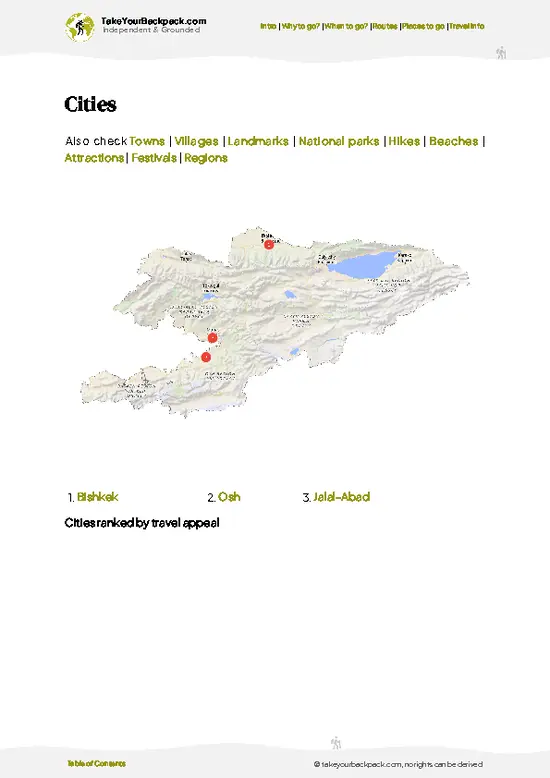
example page 3 from our offline Travel Guide for Kyrgyzstan
example page 4 from our offline Travel Guide for Kyrgyzstan
example page 5 from our offline Travel Guide for Kyrgyzstan
example page 6 from our offline Travel Guide for Kyrgyzstan
example page 7 from our offline Travel Guide for Kyrgyzstan
Loading the map 🌍
CLICK TO FILTER
cities
towns
villages
landmarks
national parks
hikes
beaches
attractions
festivals
regions
SHOW COUNTRY’S BESTSHOW ALL

✨ Why go?
Ranked #13 national park in Kyrgyzstan
Why visitors keep coming back

Backpackers choose Dashman because the walnut forest is reachable on foot from Arslanbob village, so you can explore independently without paying for a tour. Homestays in the village are the usual budget option, and a bed with dinner and breakfast often runs about US$15 to 25. Trails vary from short waterfall walks to long ridge days, so you can build a route around your legs and weather. Self-guided hiking works well with offline maps, a guide is optional, and local community tourism offices can arrange one if you want. Come in September and October for the harvest, when families camp in the groves and collect nuts by hand.

💡 HighlightsMust-see experiences and standout moments

  1. Ancient walnut groves: Some of the largest wild walnut forests in the world, with trees that are centuries old, huge trunks and deep shade. Walking under them is the heart of the visit.
  2. Autumn harvest: In September, villagers gather nuts by hand and often camp in the forest. Watching them work is a window into a tradition that still runs on family labor.
  3. Arslanbob waterfalls: Two waterfalls, one lower and one higher, sit on a signed walk from the village. The lower one is an easy half-day outing, and the upper one is a stiffer climb.
  4. Arslanbob village edge: The forest begins right above the village, so you can step from a homestay onto a trail within minutes. Look for the old mosque and the cobbled lanes on your way up.
  5. Fruit and nut orchards: Alongside walnuts, the slopes hold wild apple, pear,
… read more 👉
  1. Ancient walnut groves: Some of the largest wild walnut forests in the world, with trees that are centuries old, huge trunks and deep shade. Walking under them is the heart of the visit.
  2. Autumn harvest: In September, villagers gather nuts by hand and often camp in the forest. Watching them work is a window into a tradition that still runs on family labor.
  3. Arslanbob waterfalls: Two waterfalls, one lower and one higher, sit on a signed walk from the village. The lower one is an easy half-day outing, and the upper one is a stiffer climb.
  4. Arslanbob village edge: The forest begins right above the village, so you can step from a homestay onto a trail within minutes. Look for the old mosque and the cobbled lanes on your way up.
  5. Fruit and nut orchards: Alongside walnuts, the slopes hold wild apple, pear, plum and pistachio trees, which make spring blossom and late summer picking a pleasure.
  6. Mountain viewpoints: Higher paths open views over the valley and across to the Fergana range, and the long ridge days give the best panoramas.
I would pick the walnut groves first, because everything else in the reserve grows out of them and the shade, scale and smell are best experienced slowly on foot.
Spotted a mistake or missing something? Contact us.

🌤️ When to go?Seasonal considerations and timing

September to early October is the best window for Dashman Forest Reserve, when the walnut harvest is on and days are clear.
  • Autumn (Sept to Oct): Days run 15 to 24°C (59 to 75°F), nights 3 to 8°C (37 to 46°F). Families harvest walnuts by hand, and homestay prices are at their highest.
  • Summer (June to Aug): Highs reach 25 to 32°C (77 to 90°F) in the valley, cooler under the canopy. Daylight lasts about 14 hours. Kyrgyz holidaymakers fill the village on weekends.
  • Spring (Apr to May): Blossom and green hillsides, 8 to 20°C (46 to 68°F), but rain turns trails to mud.
  • Winter (Dec to Feb): Snow, -10 to 2°C (14 to 36°F), roughly 9 hours of light, and few visitors.
Book a homestay a week ahead for late September, and arrive midweek.

source: climatestotravel.comJANJanuary: below average for travelingFEBFebruary: below average for travelingMARMarch: below average for travelingAPRApril: fair for travelingMAYMay: good for travelingJUNJune: highly recommended for travelingJULJuly: excellent for travelingAUGAugust: excellent for travelingSEPSeptember: highly recommended for travelingOCTOctober: fair for travelingNOVNovember: below average for travelingDECDecember: below average for traveling
when-to-go

✈️ The backpacker research shortcutKyrgyzstan Travel Guide

An offline-friendly backpacking guide with optimized travel routes, ranked highlights, transport advice, and the best areas to stay.
example page 0 from our offline Travel Guide for Kyrgyzstan
example page 1 from our offline Travel Guide for Kyrgyzstan
example page 2 from our offline Travel Guide for Kyrgyzstan
example page 3 from our offline Travel Guide for Kyrgyzstan
example page 4 from our offline Travel Guide for Kyrgyzstan
example page 5 from our offline Travel Guide for Kyrgyzstan
example page 6 from our offline Travel Guide for Kyrgyzstan
example page 7 from our offline Travel Guide for Kyrgyzstan
The digital guide (242 pages) contains:
✅ 73 highlights, ranked by travel appeal
✅ Optimized 5, 10 & 15-day travel routes
✅ Cities, national parks, landmarks, beaches
✅ How to get around
✅ Offline-friendly for travel without Wi-Fi
👉 Click to see all 30+ guide features

📅 Plan smarter in minutes, not weeks
✅ Month by month travel advice
✅ Festivals & national holidays
✅ Budget expectations

🗺️ Go to the right places, skip the overrated ones
✅ Honest pros & cons of destinations
✅ Top hikes, parks & viewpoints
✅ Lesser-known places most travelers miss
✅ Clear “worth it vs skip it” guidance

🛏️ Travel smoothly without rookie mistakes
✅ Best areas to stay
✅ Transport systems explained simply
✅ Common scams & safety advice
✅ SIM cards, money & practical tips

🌍 Understand the country, not just visit it
✅ Culture & traditions
✅ 52 Essential phrases & customs
✅ Festivals worth planning around
✅ Traveler-friendly historical context
✅ Insights that make places more meaningful

📱 Built for real travel conditions
✅ Fully downloadable PDF
✅ Works completely offline
✅ Optimized for phone use
✅ Useful in remote areas & buses
✅ Everything in one place
Stop searching, start planning
Get instant access to your full guide. 30‑day money-back guarantee.
+ Add another guide for just

By proceeding you agree to our terms.
Sent to your inbox immediately after payment • 100% Secure Checkout
Best Backpacking Travel Advisor 2025 tourism awardBest Backpacking
Travel Advisor
2025
What others say about Take Your Backpack Guides:
⭐⭐⭐⭐⭐
Fantastic, amazing amount of information!
⭐⭐⭐⭐⭐
My goodness this is amazing, it's what I've been looking for hats off too you!
⭐⭐⭐⭐⭐
I think this is absolutely BRILLIANT
⭐⭐⭐⭐
Very complete and informative. It's still missing places, but I gotta to commend you
⭐⭐⭐⭐⭐
This is truly amazing, thank you, can't wait to explore it with my kids!
⭐⭐⭐⭐⭐
Awesome resource, thank you!
⭐⭐⭐⭐⭐
This is amazing! Can't wait to explore the ones I haven't seen
⭐⭐⭐⭐
I love this! Well done, great idea.
⭐⭐⭐⭐⭐
Thanks for taking the time to make this gem!
⭐⭐⭐⭐⭐
This might be the best website I've ever seen.
⭐⭐⭐⭐⭐
Congratulations, and thank you so much for your work; it's incredibly valuable.
⭐⭐⭐⭐
In all seriousness I think you did a great job pointing out the important spots
⭐⭐⭐⭐⭐
10/10 very good
⭐⭐⭐⭐⭐
As someone who's only just starting to visit regularly this is awesome, thank you.
⭐⭐⭐⭐
Thank you very much! I'm going to visit my dad, it's going to be very useful!
⭐⭐⭐⭐⭐
This is really cool! We'll be travelling for the first time and this definitely come in handy.
⭐⭐⭐⭐⭐
You are now our minister of culture, congratulations 👨‍💼
⭐⭐⭐⭐⭐
Just wanted to tell you that this is a pearl! Going to follow your recommendations.
⭐⭐⭐⭐⭐
This is so cool. I'll definitely be using the resource for my travels soon.
⭐⭐⭐⭐⭐
This is very impressive! Good work.
⭐⭐⭐⭐⭐
This is an amazing and informative site. Very well done!

🛏️ Where to stay?Choosing the right base

The best base is Arslanbob village, a few kilometers from the reserve edge, because there is no lodging inside the forest itself.
Nearly everything here is a family-run homestay, typically a room with mattresses on the floor, a shared outdoor toilet, and dinner and breakfast of plov, bread, jam and walnuts. Many are organized through the Community Based Tourism (CBT) office in the village center, which also arranges guides and horses. A handful of small guesthouses with private rooms exist if you want more comfort.
Wild camping is possible in the forest and above it, but you must carry your own … read more 👉
The best base is Arslanbob village, a few kilometers from the reserve edge, because there is no lodging inside the forest itself.
Nearly everything here is a family-run homestay, typically a room with mattresses on the floor, a shared outdoor toilet, and dinner and breakfast of plov, bread, jam and walnuts. Many are organized through the Community Based Tourism (CBT) office in the village center, which also arranges guides and horses. A handful of small guesthouses with private rooms exist if you want more comfort.
Wild camping is possible in the forest and above it, but you must carry your own gear and food. For bigger services, the city of Jalal-Abad lies roughly 60 km away, with hotels, banks and ATMs. Shared taxis and marshrutkas connect the two, taking about 1.5 to 2 hours.

👛 Costs (as of 15 October 2026)Typical daily expenses

Expect to spend about USD 25 to 45 a day around Dashman Forest Reserve, with homestay meals making up much of that.
CategoryBudget RangeLocal Reality
Entrance feesUSD 1 to 3A small village or reserve fee is usually collected on entry, paid in cash in som.
AccommodationUSD 12 to 25Homestays often include dinner and breakfast, and rates rise during the September harvest.
CampingFree to USD 5Wild camping needs your own tent and stove, and no facilities exist.
Food and suppliesUSD 4 to 10Lunch at a village cafe or from the bazaar, plus snacks and bread. Bring cash.
Local transportUSD 3 to 8Shared taxis and marshrutkas from Jalal-Abad cost a few dollars per person.
Guides and horsesUSD 20 to 40Arranged through the CBT office, with horses priced per day and group size splitting the cost.
⚠️ Prices can change and everyone travels differently, so take this as a rough guide. Hope it helps you plan your adventure!

🥾 TrailsWhere to hike in Dashman Forest Reserve: trails for every level

Dashman’s forest paths climb gently from Arslanbob through walnut woods, then rise into steeper meadow and ridge terrain. Most routes are unmarked or lightly signed, so carry an offline map. Wildlife is quiet but present: birds, squirrels, and occasional signs of larger animals higher up. Autumn brings the most people, though crowds stay modest compared with northern parks.
  • Lower waterfall walk: about 3 to 4 km round trip, 1.5 to 2 hours, easy to moderate, with a forest path and a short rocky final section.
  • Upper waterfall route: about 8 to 10 km round trip, 3 to 4 hours, moderate, with a steady
… read more 👉
Dashman’s forest paths climb gently from Arslanbob through walnut woods, then rise into steeper meadow and ridge terrain. Most routes are unmarked or lightly signed, so carry an offline map. Wildlife is quiet but present: birds, squirrels, and occasional signs of larger animals higher up. Autumn brings the most people, though crowds stay modest compared with northern parks.
  • Lower waterfall walk: about 3 to 4 km round trip, 1.5 to 2 hours, easy to moderate, with a forest path and a short rocky final section.
  • Upper waterfall route: about 8 to 10 km round trip, 3 to 4 hours, moderate, with a steady climb on rocky ground and good views of the valley.
  • Ridge and meadow trek: multi-hour or full-day, moderate to hard, with steep slopes, open meadows and the best panoramas.
Getting there is a slog but doable. Marshrutkas and shared taxis run from Jalal-Abad to Arslanbob, roughly 1.5 to 2 hours depending on road and traffic, and Bishkek to Jalal-Abad takes most of a day. Local community tourism offices handle guides, homestays and small fees, and expect to pay a modest local fee or donation for forest access. Check at the village before you set out.
⚠️ Hiking info can sometimes be outdated or inaccurate. Before you hit the trail, check the latest conditions with locals. If you do spot anything that's off, I'd love to hear from you, so I can update it for fellow travelers.

🛡️ SafetySafety Tips and Common Scams in Dashman Forest Reserve

Dashman is a straightforward, well-trodden reserve, and most problems come from weather and poor preparation rather than danger. Trails are dirt paths with steep, loose sections that turn slick after rain, so wear boots with grip and carry trekking poles for descents. Junctions are not always signed, so download an offline map or hire a CBT guide. Temperatures drop fast at higher elevations, even in September, and a rain layer is wise. Shepherd dogs guard flocks on upper pastures; stop, avoid eye contact and walk around calmly. Bears and wolves are rare and shy. Carry water and snacks, and tell your host your route.

FAQTraveler FAQ

Two to three days is enough for most travelers, with a third day for a longer ridge hike. Day one covers the walnut groves and the lower waterfall, and day two can take in the upper waterfall or a meadow route. Add a travel day each way if you are coming from Bishkek or Osh.
Yes, you can reach it without a car using public transport. Shared taxis and marshrutkas run from Jalal-Abad to Arslanbob in roughly 1.5 to 2 hours, and from there the forest is reachable on foot. Osh to Jalal-Abad is another leg, so plan about a day of travel from either city.
There is no big-park ticket office, but local community tourism and village authorities collect small fees for forest access, so bring cash in Kyrgyz som. Amounts are modest and vary by route and season, so confirm at the Arslanbob tourism office. Guides and homestays are paid separately, and a guided day typically costs a few tens of US dollars.
⚠️ Things can change over time, so always validate details locally before you go.

Other Kyrgyz national parks near Dashman Forest Reserve

Explore more nearby:


💡 Not sure where to go next?
Create a personalized itinerary for Kyrgyzstan including Dashman Forest Reserve and the places that fit your trip.

Generate my itinerary

👉 Discover all national parks

Or checkout all Kyrgyzstan has to offer (think cities, towns, villages, national parks, hikes, beaches, festivals)
Country photo of Kyrgyzstan

We 💚 feedbackSumming up the experience

Dashman won me over because you can sit under a thousand-year-old walnut tree, crack a fresh nut and still be home for dinner in a family kitchen. It is not for everyone, though. Getting there takes long hours on slow roads, and trail signage is thin, so if you hate planning ahead, a tighter-run park suits you better.

✈️ When did I visit Kyrgyzstan?
I started my 1.5 year travel around the world trip in June 2015 in Kyrgyzstan.

✍️ Help improve this page!
The information on this page is based on my own backpacking experience in Kyrgyzstan, supplemented with up-to-date research and feedback from other travelers. Travel details can change, so if you notice anything outdated or incomplete, feel free to let me know.


🙋‍♂️ Give feedback

👋 Meet the founderWho’s Behind Take Your Backpack?

Johan, backpacker and founder of TakeYourBackpackHi, I’m Johan (Netherlands 🇳🇱), the creator of TakeYourBackpack. Over the past 3 decades, I’ve backpacked through 90+ countries across six continents, gaining extensive experience with independent travel, long-term trips, and overland routes.

This site is built on a combination of firsthand travel experience and carefully curated insights from other backpackers. Many guides are based on places I’ve personally visited, while others bring together tips, observations, and practical advice shared by trusted travelers I’ve met along the way.

The goal is to provide realistic, experience-driven guidance — not generic itineraries — so you can explore destinations with better context, clearer expectations, and more confidence.