×

Kyrgyzstan🇰🇬 | townsKarakoltrekking hub, Sunday animal market, wooden mosque | things to do and best time to go

Explore Cholpon-AtaExplore Kyzyl-Oi Village

Backpacking in Karakol
🏆 Top picktown ranked #1
By Johan Kruseman 🇳🇱 | Updated September 4, 2026

Most people online sell Karakol as “just a trekking hub,” but the surprise is how lived-in it feels: this is a real provincial town first, trailhead second, with smoky shashlik grills, Soviet blocks, and Dungan courtyards all sharing the same dusty streets. Karakol sits at the eastern end of Issyk-Kul, tucked under the Terskey Ala-Too range, basically where the road runs out and the mountains start making the rules. For backpackers, it works best as a base camp: you sleep cheap in town, then launch into Altyn Arashan, Jyrgalan, or the Karakol Gorge by day or on multi-day hikes. The center is walkable, marshrutkas and shared taxis handle the rest, and evenings are more tea-and-lagman than nightlife, though a couple of hostels and cafés make it easy to meet other hikers. It’s cheaper and calmer than Cholpon-Ata, more practical than Jeti-Ögüz, and feels safe, if a bit rough around the edges in a good, frontier-way.

Discover everything you want to know in the 📖 Kyrgyzstan Travel Guide.
Loading the map 🌍
CLICK TO FILTER
cities
towns
villages
landmarks
national parks
hikes
beaches
attractions
festivals
regions
SHOW COUNTRY’S BESTSHOW ALL

✨ Why go?
Ranked #1 town in Kyrgyzstan
Reasons people choose to visit here

Karakol is a backpacker’s hub in Kyrgyzstan, perfectly positioned for those eager to dive into the great outdoors. It’s not just a stopover; it’s a launchpad for stunning hikes in the Terskey Alatau mountains. The easy access to trails like Ala-Kul Lake and the Jeti-Oguz Valley makes it a magnet for hikers and nature lovers.

The town itself has a friendly vibe. You’ll find cozy guesthouses and small-scale hostels that encourage mingling. The walkable streets are lined with local eateries where you can savor plov and laghman, giving you a taste of authentic Kyrgyz culture.

Most travelers linger for a few days, soaking in the laid-back atmosphere and sharing stories with fellow adventurers. It’s ideal for slow travelers and solo backpackers who appreciate a sense of community without the … read more 👉
Karakol is a backpacker’s hub in Kyrgyzstan, perfectly positioned for those eager to dive into the great outdoors. It’s not just a stopover; it’s a launchpad for stunning hikes in the Terskey Alatau mountains. The easy access to trails like Ala-Kul Lake and the Jeti-Oguz Valley makes it a magnet for hikers and nature lovers.

The town itself has a friendly vibe. You’ll find cozy guesthouses and small-scale hostels that encourage mingling. The walkable streets are lined with local eateries where you can savor plov and laghman, giving you a taste of authentic Kyrgyz culture.

Most travelers linger for a few days, soaking in the laid-back atmosphere and sharing stories with fellow adventurers. It’s ideal for slow travelers and solo backpackers who appreciate a sense of community without the chaos of nightlife.

While Karakol isn’t a bustling urban center, its charm lies in the balance of quiet moments and social interactions. If you’re looking for a place that feels like a home base for exploration, this town is a solid choice.
Want to include Karakol in your Kyrgyzstan route?
Create a personalized Kyrgyzstan itinerary that includes Karakol and the places that fit your trip — based on your travel style, budget, and available time. Get your route in seconds.

Generate my trip

💡 HighlightsKey sights and experiences for travelers

  1. Dungan Mosque (Karakol Mosque) — A stunning wooden mosque built by the Dungan community; the Chinese-style rooflines and delicate wooden joinery make it a rare architectural sight in Central Asia and a peaceful place to learn about Karakol’s multicultural past.
  2. Holy Trinity Russian Orthodox Cathedral — A large wooden Orthodox church with an ornate iconostasis and a very photogenic exterior; visiting gives you a feel for the Russian settler history that shaped the town.
  3. Przhevalsky Museum — Small but fascinating museum devoted to explorer Nikolai Przhevalsky and his expeditions; stuffed specimens, maps and expedition gear tell a tangible story of 19th-century Central Asian exploration and scientific curiosity.
  4. Karakol Regional (Local History) Museum) — Compact ethnographic displays on
read more 👉
  1. Dungan Mosque (Karakol Mosque) — A stunning wooden mosque built by the Dungan community; the Chinese-style rooflines and delicate wooden joinery make it a rare architectural sight in Central Asia and a peaceful place to learn about Karakol’s multicultural past.
  2. Holy Trinity Russian Orthodox Cathedral — A large wooden Orthodox church with an ornate iconostasis and a very photogenic exterior; visiting gives you a feel for the Russian settler history that shaped the town.
  3. Przhevalsky Museum — Small but fascinating museum devoted to explorer Nikolai Przhevalsky and his expeditions; stuffed specimens, maps and expedition gear tell a tangible story of 19th-century Central Asian exploration and scientific curiosity.
  4. Karakol Regional (Local History) Museum) — Compact ethnographic displays on nomadic life, Soviet-era artifacts and local crafts; great if you want context for items you’ll see on the streets and in the bazaars.
  5. Central Bazaar (Green Bazaar) — Full-sensory market where locals buy produce, dairy, and fresh-caught Issyk-Kul fish; perfect for tasting local snacks, spotting traditional dress, and watching everyday Kyrgyz trade in action.
  6. Weekly Livestock Market — A raw, lively slice of rural Kyrgyz life: animals, bargaining, and traditional transport. It’s chaotic, noisy and incredibly genuine — best experienced in the morning when it’s in full swing.
  7. Karakol Cemetery / Przhevalsky’s Grave — Quiet, reflective spot where Przhevalsky is buried among local graves; it’s a short walk from town and adds human context to the museum exhibits about the explorer’s life and death here.
  8. Historic Wooden Streets and Merchant Houses — Wander the backstreets to see carved wooden facades, old merchant villas and Soviet-era add-ons — an informal, free walking museum that shows how different waves of culture overlapped in Karakol.
  9. Dungan and Uyghur Teahouses & Restaurants — Eating here is cultural education: hand-pulled noodles, flatbreads and fragrant teas served family-style. A meal at a local teahouse is one of the fastest ways to understand Karakol’s food heritage.
  10. Shyrdak/Felt Workshops and Craft Stalls — Small workshops and stalls where you can watch (and sometimes try) traditional felt-carpet making, buy authentic shyrdak or other handicrafts, and talk to makers about techniques and symbolism.
A few excellent day trips from Karakol: the Jeti-Oguz red-rock formations, the hot springs and mountain
Spotted a mistake or missing something? Contact us.

Things to do around Karakol

Ratings based on Tripadvisor reviews. When you book through this link, you support our work at no extra cost to you.

🏘️ NeighborhoodsHow different areas shape the experience

Karakol is a vibrant hub for backpackers, offering a mix of adventure and culture. Each neighborhood has its own character, making it essential to choose wisely based on your style and needs.

City Center: This is the heartbeat of Karakol. You’ll find a blend of local markets, cafes, and shops. The vibe is lively, perfect for those who want to soak in the local culture. It’s walkable, with most attractions within a 20-minute stroll. Prices here are reasonable, but you can splurge on a nice meal. Ideal for short stays, as you can easily access transport for day trips.

Lenin Street: A bit quieter, this area offers a more laid-back atmosphere. It’s lined with guesthouses and small eateries, making it budget-friendly. The walkability is decent, but you might want to grab a bike or use local transport … read more 👉
Karakol is a vibrant hub for backpackers, offering a mix of adventure and culture. Each neighborhood has its own character, making it essential to choose wisely based on your style and needs.

City Center: This is the heartbeat of Karakol. You’ll find a blend of local markets, cafes, and shops. The vibe is lively, perfect for those who want to soak in the local culture. It’s walkable, with most attractions within a 20-minute stroll. Prices here are reasonable, but you can splurge on a nice meal. Ideal for short stays, as you can easily access transport for day trips.

Lenin Street: A bit quieter, this area offers a more laid-back atmosphere. It’s lined with guesthouses and small eateries, making it budget-friendly. The walkability is decent, but you might want to grab a bike or use local transport to explore further. Nightlife is minimal, so it’s perfect for those seeking peace after a day of trekking. Great for longer stays if you prefer a slower pace.

East Karakol: This neighborhood is where you’ll find the local vibe at its best. It’s less touristy, with authentic experiences like family-run cafes and markets. The scent of fresh bread wafts through the air, inviting you to linger. While it’s a bit farther from the main attractions, public transport is accessible. Ideal for longer stays, as you’ll get a deeper sense of the local life.

South Karakol: This area is more residential and offers a glimpse into everyday life. It’s quieter, with fewer tourists, making it a good spot for those who want to escape the hustle. Prices are lower, but amenities are limited. Walkability is decent, but you’ll need to plan transport for longer excursions. Best suited for those looking to immerse themselves in the local culture for an extended period.

⌛️ 1 dayHow to make the most of one day

Karakol, a charming town nestled against the backdrop of the towering Terskey Alatau mountains, is a gateway to adventure and culture in Kyrgyzstan. The air here carries a hint of pine and the promise of exploration. It’s a place where the rugged beauty of nature meets the warmth of local hospitality, making it a perfect spot for a day of discovery.

Start your morning with a stroll through the bustling bazaar. The vibrant colors of fresh produce and handmade crafts create a sensory feast. Grab a cup of chai from a local vendor; the earthy aroma will awaken your senses. As you sip, take in the lively chatter around you. This is where you’ll feel the pulse of Karakol.

Afterward, head to the Dungan Mosque, an architectural marvel that stands out with its intricate woodwork and vibrant colors. … read more 👉
Karakol, a charming town nestled against the backdrop of the towering Terskey Alatau mountains, is a gateway to adventure and culture in Kyrgyzstan. The air here carries a hint of pine and the promise of exploration. It’s a place where the rugged beauty of nature meets the warmth of local hospitality, making it a perfect spot for a day of discovery.

Start your morning with a stroll through the bustling bazaar. The vibrant colors of fresh produce and handmade crafts create a sensory feast. Grab a cup of chai from a local vendor; the earthy aroma will awaken your senses. As you sip, take in the lively chatter around you. This is where you’ll feel the pulse of Karakol.

Afterward, head to the Dungan Mosque, an architectural marvel that stands out with its intricate woodwork and vibrant colors. It’s not just a sight; it’s a testament to the town’s diverse heritage. Spend some time here, absorbing the peaceful atmosphere and perhaps chatting with a local who can share stories about the mosque’s history.

In the afternoon, make your way to the nearby Karakol Valley. This isn’t just a hike; it’s an immersion into the heart of Kyrgyzstan’s natural beauty. The trail leads you through lush meadows dotted with wildflowers, and the sound of a babbling brook accompanies you. If you’re feeling adventurous, consider a short detour to the less-visited Altyn Arashan hot springs. The warm, mineral-rich waters are a perfect reward after your trek.

As evening approaches, return to town and savor a meal at a local eatery. Try the plov, a hearty rice dish that embodies the flavors of Central Asia. The cozy atmosphere will invite you to linger, perhaps sharing a table with fellow travelers or locals.

Karakol may not be on every tourist’s radar, but its blend of culture, nature, and warmth makes it a place worth exploring. Each moment here, from the bustling bazaar to the serene valleys, weaves together a rich tapestry of experiences that will linger long after you leave.
Turn your Karakol visit into an Kyrgyzstan adventure
Build a complete Kyrgyzstan route with Karakol, hidden gems, must-see destinations, and realistic travel times included.

Generate my trip

🌤️ When to go?Best time to visit Karakol


  • Weather: Karakol’s summers (June to August) bring mild, dry days with highs around 20-25°C (68-77°F), perfect for hiking without overheating. Winters plunge below freezing, often -10°C (14°F) or colder, turning trails icy and roads tricky.

  • Temperature: Spring and fall offer cool, crisp air—around 10-15°C (50-59°F)—but nights can dip sharply, so layering is key. Summer’s warmth is balanced by mountain breezes, making daytime trekking comfortable.

  • Daylight Hours: Long summer days stretch to 15 hours of light, giving you more time to explore before dusk. Winter days shrink to about 8 hours, limiting daylight for outdoor activities.

  • Crowds: Peak season in summer means more tourists, especially around popular spots like Issyk-Kul lake. Shoulder seasons (late spring and early fall) offer
read more 👉

  • Weather: Karakol’s summers (June to August) bring mild, dry days with highs around 20-25°C (68-77°F), perfect for hiking without overheating. Winters plunge below freezing, often -10°C (14°F) or colder, turning trails icy and roads tricky.

  • Temperature: Spring and fall offer cool, crisp air—around 10-15°C (50-59°F)—but nights can dip sharply, so layering is key. Summer’s warmth is balanced by mountain breezes, making daytime trekking comfortable.

  • Daylight Hours: Long summer days stretch to 15 hours of light, giving you more time to explore before dusk. Winter days shrink to about 8 hours, limiting daylight for outdoor activities.

  • Crowds: Peak season in summer means more tourists, especially around popular spots like Issyk-Kul lake. Shoulder seasons (late spring and early fall) offer quieter trails and a more local vibe.

  • Seasonal Activities: Summer unlocks hiking, horseback riding, and lake swimming. Winter is for hardcore adventurers into skiing or snowshoeing, but many guesthouses close, limiting options.

  • Price Fluctuations: Accommodation and tours spike in summer. Visiting in shoulder seasons can save you 20-30%, with the bonus of negotiating better deals when the crowds thin.


Pro-tip: Aim for late June to early July—days are long, the air smells of pine and wildflowers, and the trails are lively but not yet crowded, giving you the best balance of comfort and authenticity.


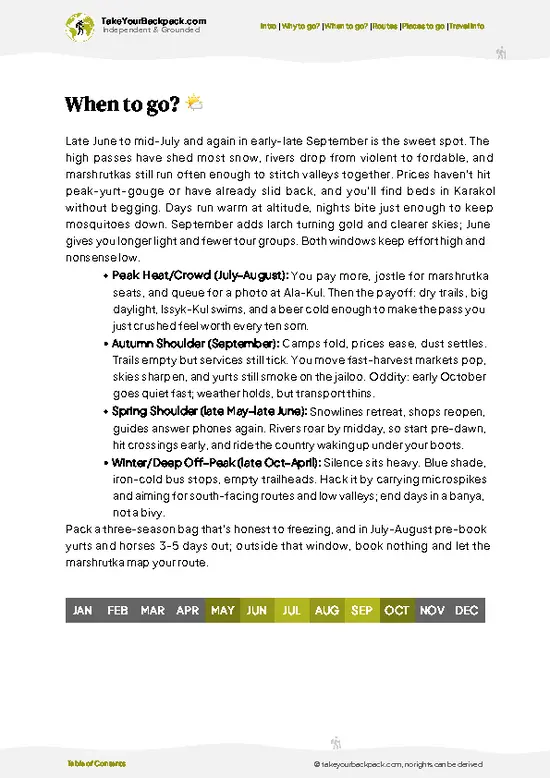
source: climatestotravel.comJANJanuary: below average for travelingFEBFebruary: below average for travelingMARMarch: fair for travelingAPRApril: good for travelingMAYMay: highly recommended for travelingJUNJune: excellent for travelingJULJuly: excellent for travelingAUGAugust: highly recommended for travelingSEPSeptember: highly recommended for travelingOCTOctober: good for travelingNOVNovember: fair for travelingDECDecember: below average for traveling
when-to-go

✈️ The backpacker research shortcutKyrgyzstan Travel Guide

An offline-friendly backpacking guide with optimized travel routes, ranked highlights, transport advice, and the best areas to stay.
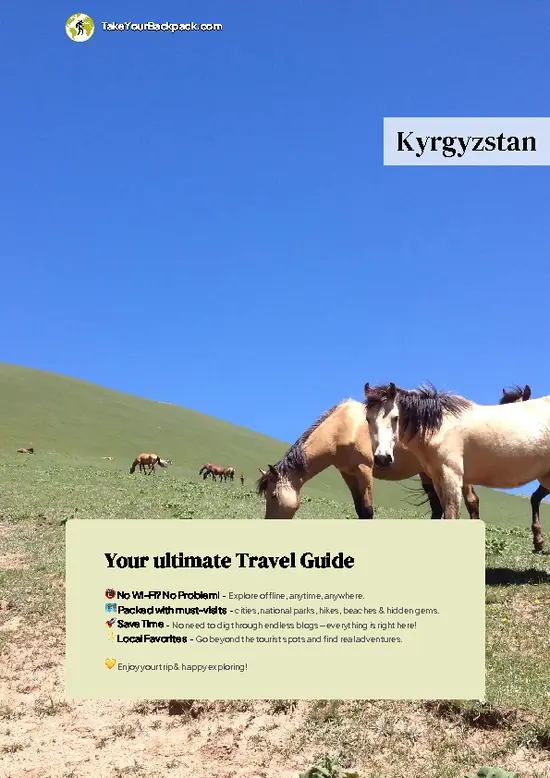
example page 0 from our offline Travel Guide for Kyrgyzstan
example page 1 from our offline Travel Guide for Kyrgyzstan
example page 2 from our offline Travel Guide for Kyrgyzstan
example page 3 from our offline Travel Guide for Kyrgyzstan
example page 4 from our offline Travel Guide for Kyrgyzstan
example page 5 from our offline Travel Guide for Kyrgyzstan
example page 6 from our offline Travel Guide for Kyrgyzstan
example page 7 from our offline Travel Guide for Kyrgyzstan
The digital guide (296 pages) contains:
77 highlights, ranked by travel appeal
Optimized 5, 10 & 15-day travel routes
Cities, national parks, landmarks, beaches
How to get around
Offline-friendly for travel without Wi-Fi
👉 Click to see all 30+ guide features

📅 Plan smarter in minutes, not weeks
Month by month travel advice
Festivals & national holidays
Budget expectations

🗺️ Go to the right places, skip the overrated ones
Honest pros & cons of destinations
Top hikes, parks & viewpoints
Lesser-known places most travelers miss
Clear “worth it vs skip it” guidance

🛏️ Travel smoothly without rookie mistakes
Best areas to stay
Transport systems explained simply
Common scams & safety advice
SIM cards, money & practical tips

🌍 Understand the country, not just visit it
Culture & traditions
52 Essential phrases & customs
Festivals worth planning around
Traveler-friendly historical context
Insights that make places more meaningful

📱 Built for real travel conditions
Fully downloadable PDF
Works completely offline
Optimized for phone use
Useful in remote areas & buses
Everything in one place
Save weeks of stressful planning
Get instant access to your full guide. 30‑day money-back guarantee.
+ Add another guide for just €6.50

By proceeding you agree to our terms.
Sent to your inbox immediately after payment • 100% Secure Checkout
Best Backpacking Travel Advisor 2025 tourism awardBest Backpacking
Travel Advisor
2025
What others say about Take Your Backpack Guides:
⭐⭐⭐⭐⭐
Fantastic, amazing amount of information!
⭐⭐⭐⭐⭐
My goodness this is amazing, it's what I've been looking for hats off too you!
⭐⭐⭐⭐⭐
I think this is absolutely BRILLIANT
⭐⭐⭐⭐
Very complete and informative. It's still missing places, but I gotta to commend you
⭐⭐⭐⭐⭐
This is truly amazing, thank you, can't wait to explore it with my kids!
⭐⭐⭐⭐⭐
Awesome resource, thank you!
⭐⭐⭐⭐⭐
This is amazing! Can't wait to explore the ones I haven't seen
⭐⭐⭐⭐
I love this! Well done, great idea.
⭐⭐⭐⭐⭐
Thanks for taking the time to make this gem!
⭐⭐⭐⭐⭐
This might be the best website I've ever seen.
⭐⭐⭐⭐⭐
Congratulations, and thank you so much for your work; it's incredibly valuable.
⭐⭐⭐⭐
In all seriousness I think you did a great job pointing out the important spots
⭐⭐⭐⭐⭐
10/10 very good
⭐⭐⭐⭐⭐
As someone who's only just starting to visit regularly this is awesome, thank you.
⭐⭐⭐⭐
Thank you very much! I'm going to visit my dad, it's going to be very useful!
⭐⭐⭐⭐⭐
This is really cool! We'll be travelling for the first time and this definitely come in handy.
⭐⭐⭐⭐⭐
You are now our minister of culture, congratulations 👨‍💼
⭐⭐⭐⭐⭐
Just wanted to tell you that this is a pearl! Going to follow your recommendations.
⭐⭐⭐⭐⭐
This is so cool. I'll definitely be using the resource for my travels soon.
⭐⭐⭐⭐⭐
This is very impressive! Good work.
⭐⭐⭐⭐⭐
This is an amazing and informative site. Very well done!

🛏️ Where to stay?Best areas and accommodation options

Karakol’s heart for backpackers beats strongest around the central part of town, especially near the main street, Lenin Avenue. This area is where you’ll find the pulse of local life—markets spilling fresh produce, the scent of frying samsa wafting through the air, and a steady hum of chatter in Kyrgyz, Russian, and English. It’s safe, walkable, and packed with budget guesthouses and hostels that cater to solo travelers and groups alike. Staying here means you’re never far from the social buzz: communal kitchens, shared courtyards, and impromptu gatherings over chai or beer.

Venture a little … read more 👉
Karakol’s heart for backpackers beats strongest around the central part of town, especially near the main street, Lenin Avenue. This area is where you’ll find the pulse of local life—markets spilling fresh produce, the scent of frying samsa wafting through the air, and a steady hum of chatter in Kyrgyz, Russian, and English. It’s safe, walkable, and packed with budget guesthouses and hostels that cater to solo travelers and groups alike. Staying here means you’re never far from the social buzz: communal kitchens, shared courtyards, and impromptu gatherings over chai or beer.

Venture a little east toward the riverside, and the vibe shifts to something quieter but still welcoming. This neighborhood offers a slower pace, with tree-lined streets and a few cozy hostels that attract hikers and nature lovers gearing up for the nearby mountains. It’s perfect if you want to decompress after trekking but still want to bump into fellow travelers swapping route tips.

Avoid the outskirts or newer residential zones—they’re quieter but lack the social fabric and easy access to the town’s core. The charm of Karakol is in its approachable, lived-in feel, and the best way to tap into that is by staying where locals and backpackers mingle naturally. This isn’t just about a place to crash; it’s about stepping into the rhythm of the town, where every corner invites connection and discovery.

🚌 Getting aroundGetting around like a local

Karakol moves at its own pace—neither frantic nor sluggish, but a steady rhythm shaped by mountain shadows and the scent of pine. The town’s pulse is a blend of purposeful locals and wandering travelers, where schedules exist but bend easily to the day’s light and weather. You won’t find rigid timetables here; instead, you’ll navigate a flow that rewards patience and a keen eye. The streets hum with the occasional honk of a marshrutka, the clatter of horseshoes on cobblestones, and the murmur of markets where haggling is part of the dance. This is a place where transit isn’t just about getting from A to B—it’s about syncing with the town’s heartbeat, feeling the crisp mountain air, and letting the journey itself set the tone.

Walking: Karakol’s compact center is best explored on foot. The … read more 👉
Karakol moves at its own pace—neither frantic nor sluggish, but a steady rhythm shaped by mountain shadows and the scent of pine. The town’s pulse is a blend of purposeful locals and wandering travelers, where schedules exist but bend easily to the day’s light and weather. You won’t find rigid timetables here; instead, you’ll navigate a flow that rewards patience and a keen eye. The streets hum with the occasional honk of a marshrutka, the clatter of horseshoes on cobblestones, and the murmur of markets where haggling is part of the dance. This is a place where transit isn’t just about getting from A to B—it’s about syncing with the town’s heartbeat, feeling the crisp mountain air, and letting the journey itself set the tone.

Walking: Karakol’s compact center is best explored on foot. The air carries the scent of fresh bread from local bakeries and the faint musk of horse stables. Walking lets you catch the subtle shifts in light on wooden houses and overhear snippets of Kyrgyz conversation. It’s free, flexible, and the best way to absorb the town’s character. Expect uneven sidewalks and occasional muddy patches after rain, so sturdy shoes are a must.

Marshrutka (Shared Minibus): These minibuses are the lifeblood of Karakol’s transit, darting through streets with a mix of urgency and local know-how. Routes to nearby villages and the Karakol Valley start around 7 AM and run until early evening, with fares typically under $1. They’re cramped but fast, and the drivers’ sharp maneuvers are part of the experience. Flag one down anywhere along the route—no fixed stops—just be ready to hop on quickly.

Taxi: Taxis here are informal and negotiable. You won’t find meters, so always agree on a price before you climb in. For short trips within town, expect to pay around 100-150 soms ($1.20-$1.80). Taxis offer a faster, more comfortable ride than marshrutkas, especially if you’re carrying gear or traveling in a group. Drivers often double as informal guides, so a quick chat can unlock insider tips.

Bicycle Rental: For the adventurous, renting a bike is a fantastic way to cover more ground while still feeling the mountain breeze. Rentals cost about 300-500 soms per day ($3.50-$6), and the town’s modest traffic makes cycling manageable. Be prepared for some steep climbs and rough patches on dirt roads if you venture beyond the center. Early morning rides offer crisp air and quiet streets before the day’s bustle kicks in.

Horseback Riding: Not your typical transit, but a practical and immersive option for reaching nearby valleys and trails. Local stables rent horses for half-day or full-day trips, usually starting around 500 soms ($6) per hour. This mode connects you directly to the landscape’s scent of pine and earth, the rhythm of hooves on dirt, and the wide-open skies that define the region. It’s slower and less predictable than motorized options but deeply rewarding for those willing to embrace the pace.

Understanding Karakol’s transit means tuning into its natural tempo—where timing is flexible, and the journey is as much about soaking in the atmosphere as it is about moving forward. Each option offers a different lens on the town’s life, from the intimate and pedestrian to the kinetic and communal. Choose your mode not just for efficiency, but for the texture it adds to your experience.

👛 Costs (as of 4 September 2026)How expensive it really is

Backpacking in Karakol, Kyrgyzstan, offers a raw, authentic experience where your money stretches well without sacrificing comfort or local flavor. Here’s how your daily budget typically breaks down:
  • Dorm Accommodation: Expect to pay around $5 to $10 per night for a bed in a basic hostel dorm. These places often have a rustic charm—wooden beams, shared bathrooms, and a communal vibe that’s perfect for swapping travel stories. The price reflects simple but clean lodgings, often with heating in colder months.
  • Meals: Local eateries serve hearty meals for $2 to $5. Think steaming bowls of lagman or manty, fresh bread, and strong tea. Street food and small cafes keep costs low, but if you opt for a Western-style meal or a café with a view, expect to pay closer to $7 or $8.
  • Local Transport: Getting
read more 👉
Backpacking in Karakol, Kyrgyzstan, offers a raw, authentic experience where your money stretches well without sacrificing comfort or local flavor. Here’s how your daily budget typically breaks down:
  • Dorm Accommodation: Expect to pay around $5 to $10 per night for a bed in a basic hostel dorm. These places often have a rustic charm—wooden beams, shared bathrooms, and a communal vibe that’s perfect for swapping travel stories. The price reflects simple but clean lodgings, often with heating in colder months.
  • Meals: Local eateries serve hearty meals for $2 to $5. Think steaming bowls of lagman or manty, fresh bread, and strong tea. Street food and small cafes keep costs low, but if you opt for a Western-style meal or a café with a view, expect to pay closer to $7 or $8.
  • Local Transport: Getting around town is cheap and straightforward. Marshrutkas (shared minibuses) and taxis cost about $0.20 to $1 per ride depending on distance. Renting a bike for the day might run you $5 to $7, a great way to explore the surrounding valleys at your own pace.
  • Basic Activities/Entry Fees: Many natural attractions around Karakol are free or have minimal entry fees, usually under $2. Visiting the Karakol Historical Museum or the Dungan Mosque might cost around $1 to $3. Guided hikes or horseback rides can push your daily activity budget to $10-$15 if you want a more structured experience.
  • Miscellaneous Expenses: This includes essentials like bottled water, snacks, or occasional internet access, typically $1 to $3 daily. If you’re buying souvenirs or local crafts, budget a bit extra, but casual daily expenses stay low.

All told, you’re looking at roughly $10 to $25 per day to cover the essentials in Karakol. This range lets you live comfortably without cutting corners, soaking in the mountain air and local culture without the tourist gloss. The modest costs here reward you with a genuine connection to the place, where every dollar feels like an investment in experience rather than just a transaction.


source: kg.kg
⚠️ Prices can change and everyone travels differently, so take this as a rough guide. Hope it helps you plan your adventure!

🚌 Day tripsExploring the surroundings

Karakol, Kyrgyzstan, is a backpacker’s dream base for day trips, offering a mix of stunning landscapes and cultural experiences. Here’s how to make the most of your time.

Altyn Arashan Hot Springs
A soak in the natural hot springs at Altyn Arashan is a must. The journey takes about an hour by marshrutka (shared taxi), followed by a 30-minute hike through lush valleys and towering pine trees. The scent of fresh mountain air fills your lungs as you approach the springs, where the steam rises against the backdrop of snow-capped peaks. Bring a swimsuit and some snacks; the total cost is around $10, including transport. The best time to visit is late spring to early fall when the trails are clear. A common mistake? Forgetting to pack enough water for the hike back.


Jeti-Oguz Valley
Just … read more 👉
Karakol, Kyrgyzstan, is a backpacker’s dream base for day trips, offering a mix of stunning landscapes and cultural experiences. Here’s how to make the most of your time.

Altyn Arashan Hot Springs
A soak in the natural hot springs at Altyn Arashan is a must. The journey takes about an hour by marshrutka (shared taxi), followed by a 30-minute hike through lush valleys and towering pine trees. The scent of fresh mountain air fills your lungs as you approach the springs, where the steam rises against the backdrop of snow-capped peaks. Bring a swimsuit and some snacks; the total cost is around $10, including transport. The best time to visit is late spring to early fall when the trails are clear. A common mistake? Forgetting to pack enough water for the hike back.


Jeti-Oguz Valley
Just a short ride from Karakol, Jeti-Oguz is famous for its striking red rock formations and lush meadows. The trip takes about 30 minutes by taxi, costing around $5. Once there, you can hike among the iconic Seven Bulls rock formations, taking in the earthy scent of the surrounding flora. The valley is particularly beautiful in late summer when wildflowers bloom. Many first-timers underestimate the weather; it can change quickly, so pack layers.


Issyk-Kul Lake
A day at Issyk-Kul Lake is a refreshing escape. The lake is about an hour away by marshrutka, costing around $3. The water is surprisingly warm, and the sandy beaches invite you to relax. Grab some local food from a nearby stall and enjoy the view of the mountains reflecting off the lake’s surface. Late spring to early fall is ideal for swimming and sunbathing. A common pitfall? Not checking the marshrutka schedule; they can be infrequent, especially in the off-season.


Karasai Valley
For a taste of local life, head to Karasai Valley. It’s a 40-minute ride from Karakol, costing about $4. This valley is less touristy, allowing you to experience traditional Kyrgyz culture. You can wander through fields, meet local shepherds, and even sample homemade bread. The best time to visit is during the harvest season in late summer. Many travelers miss out on this authentic experience by sticking to more popular spots.


Karakol’s location makes it a perfect launchpad for these adventures. Each trip offers a unique slice of Kyrgyzstan, blending natural beauty with cultural richness.
Want to know what more Kyrgyzstan offers?
The Kyrgyzstan Travel Guide describes 77 highlights, from cities to national parks, from beaches to hikes

Get the Travel Guide -

🛡️ SafetyStaying Safe: What Travelers Should Know

Karakol is generally safe, but a few practical tips can enhance your experience. The town has a relaxed vibe, but like any place, awareness is key. Stick to well-lit areas at night, especially if you’re solo. The main square and popular eateries are usually bustling, making them safer choices after dark.

Watch for common scams, like overly friendly locals offering to guide you for a fee. While many are genuine, it’s wise to clarify costs upfront. Street vendors can be charming, but double-check prices; some may inflate them for tourists.

Keep your belongings close, especially in crowded markets. A crossbody bag or a secure backpack can deter opportunistic theft.

Overall, trust your instincts. If something feels off, it probably is. Embrace the local culture, engage with the people, and … read more 👉
Karakol is generally safe, but a few practical tips can enhance your experience. The town has a relaxed vibe, but like any place, awareness is key. Stick to well-lit areas at night, especially if you’re solo. The main square and popular eateries are usually bustling, making them safer choices after dark.

Watch for common scams, like overly friendly locals offering to guide you for a fee. While many are genuine, it’s wise to clarify costs upfront. Street vendors can be charming, but double-check prices; some may inflate them for tourists.

Keep your belongings close, especially in crowded markets. A crossbody bag or a secure backpack can deter opportunistic theft.

Overall, trust your instincts. If something feels off, it probably is. Embrace the local culture, engage with the people, and enjoy the stunning landscapes. The little challenges you face will only deepen your connection to this remarkable place.

FAQCommon questions from travelers

Yes, Karakol is worth visiting for its unique blend of natural beauty and cultural heritage, including access to the nearby Terskey Alatau mountains and the historic Dungan Mosque. It offers a more authentic experience compared to larger cities and is a gateway for trekking and outdoor activities.
You need at least 2 to 3 days in Karakol to explore the town, visit local markets, and take day trips to nearby attractions like the Karakol Valley or Jeti-Oguz Gorge. This duration allows time for acclimatization and enjoying outdoor activities without rushing.
No, Karakol is not practical as a day trip from nearby cities like Bishkek or Osh due to the long travel times, which can exceed 6 to 8 hours one way by road. Staying overnight in Karakol is recommended to fully experience the area and avoid exhausting travel schedules.
⚠️ Things can change over time, so always validate details locally before you go.

Other Kyrgyz towns near Karakol

Explore more nearby:

  • Kyzyl-Suu—hot springs, gateway to Altyn Arashan, small bazaar| 36 km away
  • Cholpon-Ata—petroglyph site, lakeside resorts, summer festivals| 109 km away
  • Kyzyl Tuu Village—yurt frame workshops, steppe landscape, family-run stays| 142 km away

💡 Not sure where to go next?
Create a personalized itinerary for Kyrgyzstan including Karakol and the places that fit your trip.

Generate my itinerary

👉 Discover all towns

Or checkout all Kyrgyzstan has to offer (think cities, towns, villages, national parks, hikes, beaches, festivals)
Country photo of Kyrgyzstan

We 💚 feedbackKey takeaways before you go

Karakol is a gateway to some of the most breathtaking hikes in the Tien Shan mountains. Picture this: crisp air, towering peaks, and the scent of wildflowers filling your lungs. But here’s the catch—getting around can be a challenge. Public transport is sporadic, and taxis can be pricey. Embrace the adventure, though; it’s part of the charm. The payoff? Those trails and the local culture will leave you feeling alive in ways you never expected.

✈️ When did I visit Kyrgyzstan?
I started my 1.5 year travel around the world trip in June 2015 in Kyrgyzstan.

✍️ Help improve this page!
The information on this page is based on my own backpacking experience in Kyrgyzstan, supplemented with up-to-date research and feedback from other travelers. Travel details can change, so if you notice anything outdated or incomplete, feel free to let me know.


🙋‍♂️ Give feedback

👋 Meet the founderWho’s Behind Take Your Backpack?

Johan, backpacker and founder of TakeYourBackpackHi, I’m Johan (Netherlands 🇳🇱), the creator of TakeYourBackpack. Over the past decade, I’ve backpacked through 80+ countries across six continents, gaining extensive experience with independent travel, long-term trips, and overland routes.

This site is built on a combination of firsthand travel experience and carefully curated insights from other backpackers. Many guides are based on places I’ve personally visited, while others bring together tips, observations, and practical advice shared by trusted travelers I’ve met along the way.

The goal is to provide realistic, experience-driven guidance — not generic itineraries — so you can explore destinations with better context, clearer expectations, and more confidence.

Get full Kyrgyzstan guide •
Instant download • 77 highlights • Full Offline guide