×

Kyrgyzstan🇰🇬 | best townsDiscover the 12 Best towns Across Kyrgyzstan

Towns in Kyrgyzstan are not polished postcards. They are Soviet grids, bazaar crossroads and lakeshore resort strips, all sitting under serious mountains. Expect low prices (a bed in a guesthouse often runs US$8 to 20), shared minibuses called marshrutkas, and almost no crowds outside summer. The north, around Issyk-Kul and Bishkek, is the easiest, with frequent transport and the most English. The south, around Osh and the Fergana Valley, is older, hotter, louder and more Uzbek in flavor. The high interior around Naryn is remote and thinly served. Independent travelers can hop between all three, so pick the mood you want and go.

By Johan Kruseman 🇳🇱 | Updated November 18, 2026
Explore the best villages in Kyrgyzstan

Why go?Why Travelers Love These Spots

Kyrgyzstan makes towns feel like doorways rather than destinations. About 90 percent of the country is mountainous, so settlements cluster in river valleys and along lake shores, and each one works as a gateway to yurt stays, trekking and horse riding. That geography gives you a rare mix: a morning at a bazaar piled with dried apricots, bread and felt crafts, an afternoon on a trailhead.

History layers the picture. The Silk Road left old trading hubs in the south, the Russian Empire and Soviet planners added wide avenues, concrete mosaics and sanatoriums, and nomadic Kyrgyz culture still shapes hospitality, food and festivals. Expect mutton, laghman noodles, fermented mare’s milk and tea poured generously.

Be realistic before choosing the country for towns alone. Architecture is modest, … read more 👉
Kyrgyzstan makes towns feel like doorways rather than destinations. About 90 percent of the country is mountainous, so settlements cluster in river valleys and along lake shores, and each one works as a gateway to yurt stays, trekking and horse riding. That geography gives you a rare mix: a morning at a bazaar piled with dried apricots, bread and felt crafts, an afternoon on a trailhead.

History layers the picture. The Silk Road left old trading hubs in the south, the Russian Empire and Soviet planners added wide avenues, concrete mosaics and sanatoriums, and nomadic Kyrgyz culture still shapes hospitality, food and festivals. Expect mutton, laghman noodles, fermented mare’s milk and tea poured generously.

Be realistic before choosing the country for towns alone. Architecture is modest, museums are small, and the real draw is the landscape around each stop. Roads are improving but remain slow, with winding passes that stretch short distances into long rides. Cash is still common outside cities, and ATMs thin out quickly. Russian is widely spoken alongside Kyrgyz, while English is limited. Come curious, carry small bills, learn a few phrases, and the towns repay you with warmth and surprising ease.
Why These Made the Cut
The list of best towns in Kyrgyzstan is created based on charm, local culture, atmosphere, hidden gems, and visitor appeal. If you feel a town is missing in this list, please let us know.

When to go?Optimal Periods for Travel

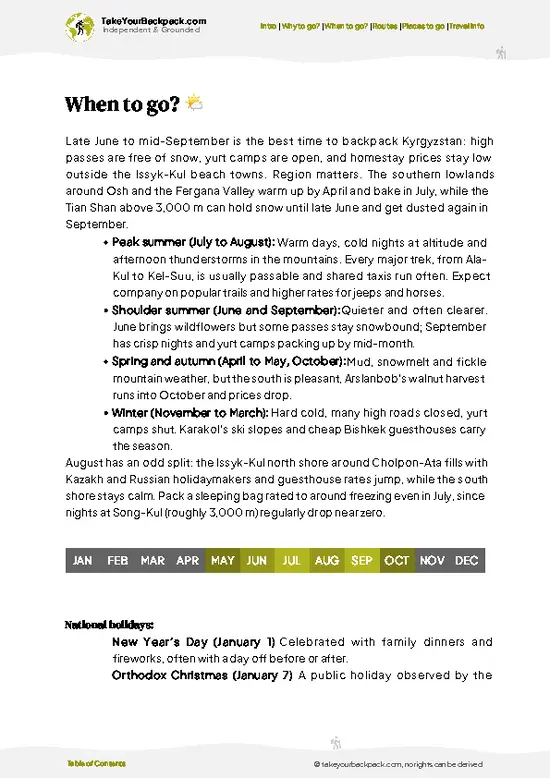
Best months for towns: June to September is the best window for towns in Kyrgyzstan, because passes are open, lakeside and valley days run 22 to 32°C, and roads, yurt camps and guesthouses are all operating. July and August are the warmest and busiest, especially around Issyk-Kul, where rooms fill and prices can rise 20 to 40 percent on weekends.
Shoulder seasons: May and late September to October are superb for exploring. Days sit around 12 to 22°C, crowds thin, and orchards in the south bloom in spring or glow gold in autumn. Expect cooler nights near 0 to 8°C, some closed yurt camps, and showers, with spring bringing the most rain in the north.
Winter and regional differences: November to March turns the north and the high interior cold. Naryn and other high-altitude areas often fall to -15°C … read more 👉
Best months for towns: June to September is the best window for towns in Kyrgyzstan, because passes are open, lakeside and valley days run 22 to 32°C, and roads, yurt camps and guesthouses are all operating. July and August are the warmest and busiest, especially around Issyk-Kul, where rooms fill and prices can rise 20 to 40 percent on weekends.
Shoulder seasons: May and late September to October are superb for exploring. Days sit around 12 to 22°C, crowds thin, and orchards in the south bloom in spring or glow gold in autumn. Expect cooler nights near 0 to 8°C, some closed yurt camps, and showers, with spring bringing the most rain in the north.
Winter and regional differences: November to March turns the north and the high interior cold. Naryn and other high-altitude areas often fall to -15°C or lower, and some mountain roads close. Bishkek stays around -8 to 3°C with snow, and Karakol draws skiers from December to March. The Fergana Valley around Osh and Jalal-Abad is the mildest in winter and fiercely hot in July, often above 35°C, so spring and autumn suit it best.

town hoppingTips for Visiting Multiple Destinations

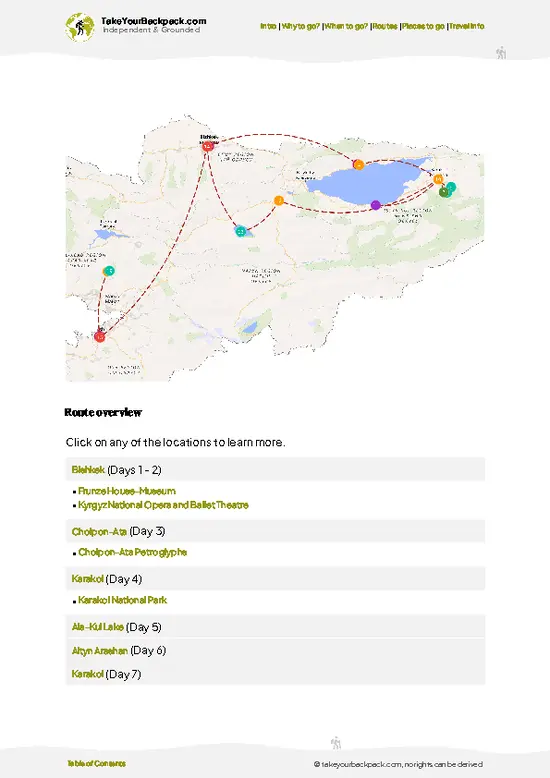
How long to allow: A trip linking several towns in Kyrgyzstan needs 10 to 21 days, with 14 days the comfortable middle. The country splits into three clusters: Bishkek and the north, the Issyk-Kul shore and east, and the south around Osh. The central highlands around Naryn connect them.
Direction and transport: Start in Bishkek, loop around Issyk-Kul, then head south through Naryn toward Osh, or reverse it if you prefer to end in the warm Fergana Valley. Flights between Bishkek and Osh take about 1 hour and cost roughly US$40 to 90, which saves the 10 to 12 hour drive. Marshrutkas and shared taxis leave from main bus stations when full. Bishkek to Karakol runs 6 to 8 hours, Karakol to Naryn roughly 6 to 8, and Naryn to Osh about 8 to 10.
Pacing and mistakes: Give each stop 2 to 3 nights, including … read more 👉
How long to allow: A trip linking several towns in Kyrgyzstan needs 10 to 21 days, with 14 days the comfortable middle. The country splits into three clusters: Bishkek and the north, the Issyk-Kul shore and east, and the south around Osh. The central highlands around Naryn connect them.
Direction and transport: Start in Bishkek, loop around Issyk-Kul, then head south through Naryn toward Osh, or reverse it if you prefer to end in the warm Fergana Valley. Flights between Bishkek and Osh take about 1 hour and cost roughly US$40 to 90, which saves the 10 to 12 hour drive. Marshrutkas and shared taxis leave from main bus stations when full. Bishkek to Karakol runs 6 to 8 hours, Karakol to Naryn roughly 6 to 8, and Naryn to Osh about 8 to 10.
Pacing and mistakes: Give each stop 2 to 3 nights, including outdoor excursions. Travelers often cram in too many towns, underestimate slow mountain roads, or ignore weather at high passes. Instead, cap travel days at one long ride per three days, leave mornings for departures, since shared vehicles fill early, and keep a buffer day before flights. Check border and permit rules for any frontier-area stops in advance.

The ListMust-Visit towns in Kyrgyzstan

1 Karakol

Ala-Kul trailhead, Dungan mosque, Sunday animal market, ashlyan-fu

Step between a nail-free pagoda mosque and a wooden Orthodox cathedral, then fuel up on spicy noodles before the gorge trails south of town.

2 Cholpon-Ata

Beach promenade, petroglyph field, resort guesthouses, north shore

Spend summer days on the shores of Issyk-Kul, then wander the open-air petroglyph field above town on foot.

3 Arslanbob

Walnut forests, waterfalls, Uzbek-Kyrgyz homestays, horse treks

Walk through the world’s largest walnut forest to a pair of waterfalls, then spend the evening with a host family in the village.

4 Kochkor

Felt workshops, Song-Kol access, jailoo guides, Tian Shan crossroads

Arrange a horseback trip to Song-Kol from this small town, where local cooperatives sell hand-made felt rugs and shyrdaks.

5 Naryn

Naryn River, Soviet grid, Tash Rabat gateway, cold highland winters

Break the long drive across the Tian Shan in this high-altitude river town, a practical base for routes to Tash Rabat and Song-Kol.

6 Sary-Mogol

Alay Valley, Peak Lenin views, Pamir Highway, yurt stays

Sleep in a yurt at the foot of the Trans-Alay range and look across the valley to Peak Lenin, more than 7,100 meters high.

7 Toktogul

Reservoir viewpoints, bazaar, local museum, roadside shashlik

Stop for shoreline views over the reservoir, browse the bazaar and museum, and finish the day with plov or shashlik by the road.

8 At-Bashy

Livestock market, Tash Rabat road, high steppe, Soviet-era center

Visit on market day to watch herders trade horses and sheep, then continue toward the stone caravanserai of Tash Rabat.

9 Batken

Apricot orchards, Alay valley launch pad, border-region capital, quiet guesthouses

Wander shady lanes and a morning bazaar of dried fruit, nuts and fresh nan before heading on toward the Alay and Ak-Suu valleys.

10 Talas

Manas legacy, Talas Valley, Kyrgyz epic, western hills

Trace the legend of the epic hero Manas through a green western valley, visiting his pavilion and the museum dedicated to his story.

11 Kyzyl-Suu

South Issyk-Kul, Jeti-Oguz road, Soviet seaside, trout lunches

Stop near the lake’s southern shore to eat fresh fish and catch a ride up to the red cliffs of Jeti-Oguz.

12 Kyzyl-Kiya

Fergana Valley, Uzbek bazaar, Soviet industry, border town

Cross the Fergana Valley plain to a working Uzbek-influenced town, where the bazaar and chaikhanas show everyday life far from tourist routes.

Loading the map 🌍

Expert viewPro Tips for Exploring the Best

How many towns to visit: Visit four to six towns in two weeks. Fewer and you miss the contrast between north, east and south. More and you spend your trip inside a minibus on switchbacks, watching walnut forests slide past a dusty window. Each town needs two nights so the mountains behind it can actually be reached, whether that means a gorge walk, a horse ride or a yurt night above the treeline.
Choosing the kind of town: Lakeshore and resort towns suit relaxed travelers, families and swimmers, with beaches, cafés and easy day trips. Trekking towns, especially in the east and highlands, fit hikers who want trailheads, gear rental and homestay dinners. Bazaar towns in the south suit culture seekers, with noisy markets, samsa ovens, shrines and Uzbek-influenced old quarters. Pick one of each … read more 👉
How many towns to visit: Visit four to six towns in two weeks. Fewer and you miss the contrast between north, east and south. More and you spend your trip inside a minibus on switchbacks, watching walnut forests slide past a dusty window. Each town needs two nights so the mountains behind it can actually be reached, whether that means a gorge walk, a horse ride or a yurt night above the treeline.
Choosing the kind of town: Lakeshore and resort towns suit relaxed travelers, families and swimmers, with beaches, cafés and easy day trips. Trekking towns, especially in the east and highlands, fit hikers who want trailheads, gear rental and homestay dinners. Bazaar towns in the south suit culture seekers, with noisy markets, samsa ovens, shrines and Uzbek-influenced old quarters. Pick one of each kind and you get a balanced trip. If time is short, the trekking type delivers the most.
What it costs: Budget US$25 to 45 a day for dorms or homestays, local food and shared transport. Mid-range comfort runs US$50 to 90. Guesthouse beds cost US$8 to 20, a plate of plov or laghman US$2 to 4, and a long marshrutka ride US$5 to 15. Add roughly US$15 to 40 per day for a local guide, US$30 to 60 for a horse and handler, and small entry fees of US$1 to 5 at museums and reserves. Border-zone permits for some mountain areas cost a few dollars and are arranged through guesthouses or agencies. Carry som in small notes, because cards fail outside larger towns.
Safety and etiquette: Kyrgyzstan is generally welcoming, but petty theft happens in bazaars and crowded transport, so keep phones and wallets in front pockets. Take only licensed taxis or ride-hailing apps in cities, and agree prices before long shared taxi trips. Dress modestly in the south, where mosques and conservative neighborhoods are more common, and remove shoes before entering homes and yurts. Accept tea and bread when offered, since refusing outright can offend. Tap water is unreliable, so use filtered or bottled water. Mountain weather turns fast, so tell your host where you’re heading before any trailhead, and carry layers even in summer. Bag snatching and rare night-time muggings do occur in Bishkek, so avoid dark, empty streets after late hours.

✈️ The backpacker research shortcutKyrgyzstan Travel Guide

What the free pages can't give you: ready-made routes, every place ranked, and it works offline. All in 1 guide.
example page 0 from our offline Travel Guide for Kyrgyzstan
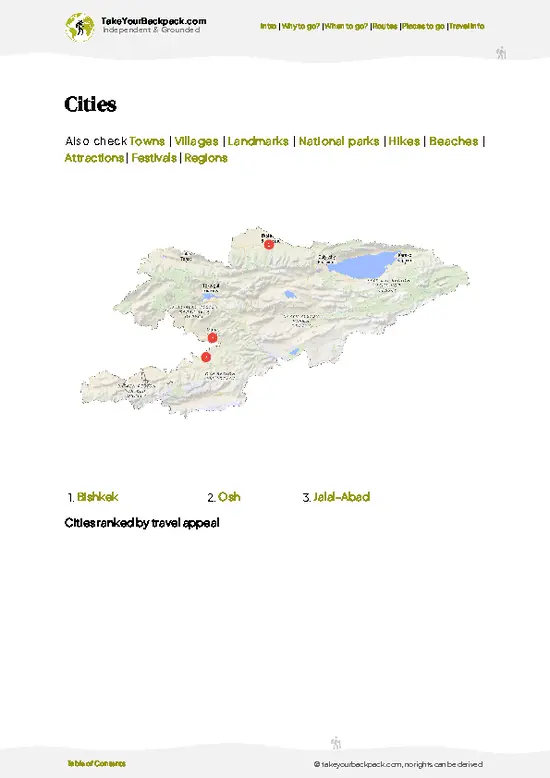
example page 1 from our offline Travel Guide for Kyrgyzstan
example page 2 from our offline Travel Guide for Kyrgyzstan
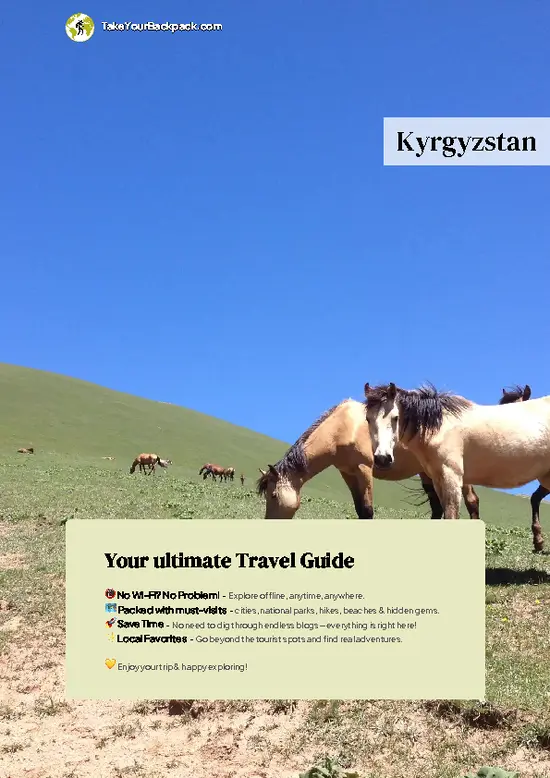
example page 3 from our offline Travel Guide for Kyrgyzstan
example page 4 from our offline Travel Guide for Kyrgyzstan
example page 5 from our offline Travel Guide for Kyrgyzstan
example page 6 from our offline Travel Guide for Kyrgyzstan
example page 7 from our offline Travel Guide for Kyrgyzstan
The digital guide (232 pages) contains:-page digital guide:
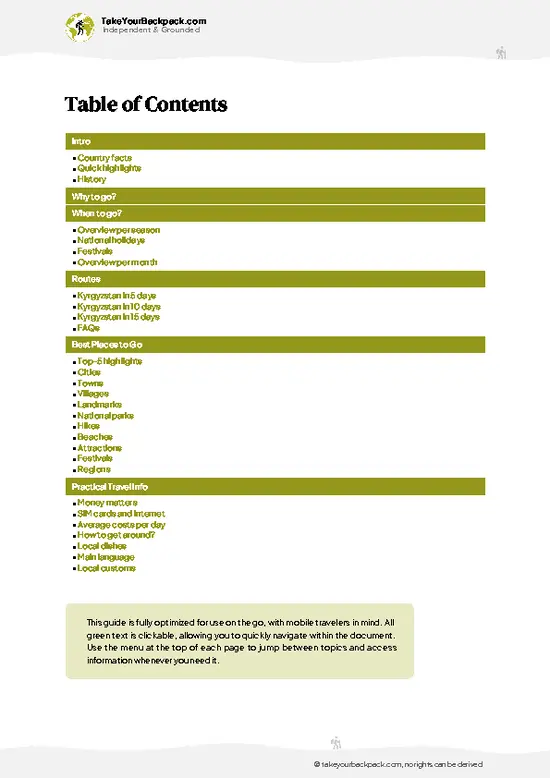
✅ Ready-made 5, 10 & 15-day routes
✅ All 67 places ranked, so you skip the overrated ones
✅ Works offline, all in 1 guide
✅ Cities, national parks, landmarks, beaches
✅ How to get around
👉 Click to see all 30+ guide features

📅 Plan smarter in minutes, not weeks
✅ Month by month travel advice
✅ Festivals & national holidays
✅ Budget expectations

🗺️ Go to the right places, skip the overrated ones
✅ Honest pros & cons of destinations
✅ Top hikes, parks & viewpoints
✅ Lesser-known places most travelers miss
✅ Clear “worth it vs skip it” guidance

🛏️ Travel smoothly without rookie mistakes
✅ Best areas to stay
✅ Transport systems explained simply
✅ Common scams & safety advice
✅ SIM cards, money & practical tips

🌍 Understand the country, not just visit it
✅ Culture & traditions
✅ 52 Essential phrases & customs
✅ Festivals worth planning around
✅ Traveler-friendly historical context
✅ Insights that make places more meaningful

📱 Built for real travel conditions
✅ Fully downloadable PDF
✅ Works completely offline
✅ Optimized for phone use
✅ Useful in remote areas & buses
✅ All in 1 guide
Stop searching, start planning
Get instant access to your full guide. 30‑day money-back guarantee.


By proceeding you agree to our terms.
Sent to your inbox immediately after payment • 100% Secure Checkout
Best Backpacking Travel Advisor 2025 tourism awardBest Backpacking
Travel Advisor
2025
What others say about Take Your Backpack Guides:
⭐⭐⭐⭐⭐
Fantastic, amazing amount of information!
⭐⭐⭐⭐⭐
My goodness this is amazing, it's what I've been looking for hats off too you!
⭐⭐⭐⭐⭐
I think this is absolutely BRILLIANT
⭐⭐⭐⭐
Very complete and informative. It's still missing places, but I gotta to commend you
⭐⭐⭐⭐⭐
This is truly amazing, thank you, can't wait to explore it with my kids!
⭐⭐⭐⭐⭐
Awesome resource, thank you!
⭐⭐⭐⭐⭐
This is amazing! Can't wait to explore the ones I haven't seen
⭐⭐⭐⭐
I love this! Well done, great idea.
⭐⭐⭐⭐⭐
Thanks for taking the time to make this gem!
⭐⭐⭐⭐⭐
This might be the best website I've ever seen.
⭐⭐⭐⭐⭐
Congratulations, and thank you so much for your work; it's incredibly valuable.
⭐⭐⭐⭐
In all seriousness I think you did a great job pointing out the important spots
⭐⭐⭐⭐⭐
10/10 very good
⭐⭐⭐⭐⭐
As someone who's only just starting to visit regularly this is awesome, thank you.
⭐⭐⭐⭐
Thank you very much! I'm going to visit my dad, it's going to be very useful!
⭐⭐⭐⭐⭐
This is really cool! We'll be travelling for the first time and this definitely come in handy.
⭐⭐⭐⭐⭐
You are now our minister of culture, congratulations 👨‍💼
⭐⭐⭐⭐⭐
Just wanted to tell you that this is a pearl! Going to follow your recommendations.
⭐⭐⭐⭐⭐
This is so cool. I'll definitely be using the resource for my travels soon.
⭐⭐⭐⭐⭐
This is very impressive! Good work.
⭐⭐⭐⭐⭐
This is an amazing and informative site. Very well done!

🛏️ Where to stay?Top Places to Consider Staying

Kyrgyzstan has plenty of hostels and guesthouses, with dorm beds typically running 500 to 1,000 som (about US$6 to 12) and family-run homestays covering most rural areas where hostels don’t exist. In Bishkek, the blocks around Ala-Too Square and Chuy Avenue put you within walking distance of most bars, cafes and the main sights, while the streets near Osh Bazaar are cheaper and handy for westbound marshrutkas but noisier and less polished. In Karakol the guesthouses clustered in the quiet grid near the center make the best trekking base, and in Osh the lanes around the bazaar and Sulaiman-Too keep you close to the sights at the cost of early-morning market noise.

If you enjoy meeting fellow travelers, … read more 👉
Kyrgyzstan has plenty of hostels and guesthouses, with dorm beds typically running 500 to 1,000 som (about US$6 to 12) and family-run homestays covering most rural areas where hostels don’t exist. In Bishkek, the blocks around Ala-Too Square and Chuy Avenue put you within walking distance of most bars, cafes and the main sights, while the streets near Osh Bazaar are cheaper and handy for westbound marshrutkas but noisier and less polished. In Karakol the guesthouses clustered in the quiet grid near the center make the best trekking base, and in Osh the lanes around the bazaar and Sulaiman-Too keep you close to the sights at the cost of early-morning market noise.

If you enjoy meeting fellow travelers, consider choosing hostels with high ratings for atmosphere. On the other hand, if you prefer having your own space, a hotel might be a better option.

KyrgyzstanMore Places Across Kyrgyzstan

👋 Meet the founderWho’s Behind Take Your Backpack?

Johan, backpacker and founder of TakeYourBackpackHi, I’m Johan (Netherlands 🇳🇱), the creator of TakeYourBackpack. Over the past 30 years, I’ve backpacked through 88 countries across six continents, gaining extensive experience with independent travel, long-term trips, and overland routes.

This site is built on a combination of firsthand travel experience and carefully curated insights from other backpackers. Many guides are based on places I’ve personally visited, while others bring together tips, observations, and practical advice shared by trusted travelers I’ve met along the way.

The goal is to provide realistic, experience-driven guidance — not generic itineraries — so you can explore destinations with better context, clearer expectations, and more confidence.