v2.webp)
The Cave Museum (Sulaiman-Too Museum)
Forget the word “museum” conjuring up glass cases and dusty placards. This one is literally carved into the mountain itself—a Soviet-era fever dream tunneled into the rock, with panoramic windows that make you feel like you’re floating above Osh. Inside, you get a crash course in Silk Road history, shamanic rituals, and the mountain’s tangled religious legacy. The exhibits are a wild mix: ancient petroglyphs, Soviet propaganda, and local oddities. The real showstopper is the view from the museum’s glass wall—Osh sprawled below, the Fergana Valley stretching out like a green sea. It’s surreal, and it’s the only place in Central Asia where you’ll see Lenin and pre-Islamic fertility cults sharing a roof.
Ancient Petroglyphs
Instagram will sell you the mountain’s … read more 👉
Forget the word “museum” conjuring up glass cases and dusty placards. This one is literally carved into the mountain itself—a Soviet-era fever dream tunneled into the rock, with panoramic windows that make you feel like you’re floating above Osh. Inside, you get a crash course in Silk Road history, shamanic rituals, and the mountain’s tangled religious legacy. The exhibits are a wild mix: ancient petroglyphs, Soviet propaganda, and local oddities. The real showstopper is the view from the museum’s glass wall—Osh sprawled below, the Fergana Valley stretching out like a green sea. It’s surreal, and it’s the only place in Central Asia where you’ll see Lenin and pre-Islamic fertility cults sharing a roof.
Ancient Petroglyphs
Instagram will sell you the mountain’s … read more 👉
The Cave Museum (Sulaiman-Too Museum)
Forget the word “museum” conjuring up glass cases and dusty placards. This one is literally carved into the mountain itself—a Soviet-era fever dream tunneled into the rock, with panoramic windows that make you feel like you’re floating above Osh. Inside, you get a crash course in Silk Road history, shamanic rituals, and the mountain’s tangled religious legacy. The exhibits are a wild mix: ancient petroglyphs, Soviet propaganda, and local oddities. The real showstopper is the view from the museum’s glass wall—Osh sprawled below, the Fergana Valley stretching out like a green sea. It’s surreal, and it’s the only place in Central Asia where you’ll see Lenin and pre-Islamic fertility cults sharing a roof.
Ancient Petroglyphs
Instagram will sell you the mountain’s silhouette at sunset, but the real treasure is under your boots. Scattered across the rocks are petroglyphs—some over a thousand years old—etched by hands that believed this mountain was the navel of the world. These aren’t roped off or sanitized. You’ll spot goats, hunters, and mysterious symbols, sometimes half-faded, sometimes sharp as the day they were scratched in. There’s something electric about tracing a line with your finger and realizing you’re touching the same groove as a Silk Road traveler or a Bronze Age shaman.
Babur’s House
This isn’t a house in the “four walls and a roof” sense. It’s a cave where Babur, founder of the Mughal Empire, supposedly meditated and wrote poetry. The cave is cramped, dark, and—let’s be honest—smells a bit like centuries of sweat and candle wax. But if you want to feel the pulse of history, this is it. You’re standing where a teenage conqueror dreamed up an empire. The sense of continuity is almost physical.
The Sacred Trail and Pilgrims’ Rituals
You’ll see grandmas in floral scarves climbing barefoot, young couples tying rags to trees, and men pressing their foreheads to the rock. The mountain is a living shrine, not a fossilized relic. Watch for the “fertility slide”—a polished groove in the rock where women slide down for luck in childbirth. It’s not for show; these rituals are woven into daily life. The energy is raw, communal, and utterly unfiltered.
Summit Panorama (My Personal Favorite)
Climb to the top—yes, you’ll sweat, and yes, you’ll dodge selfie sticks. But the summit delivers. The view is a 360-degree punch: the city’s patchwork rooftops, the Fergana Valley’s endless green, and the snow-capped Pamirs on the horizon. It’s not just a photo op. Up here, the wind is sharp, the air smells of sage, and you can hear the city’s call to prayer echoing off the cliffs. This is where the mountain’s magic hits hardest—no filter, no hype, just the world laid bare.
Forget the word “museum” conjuring up glass cases and dusty placards. This one is literally carved into the mountain itself—a Soviet-era fever dream tunneled into the rock, with panoramic windows that make you feel like you’re floating above Osh. Inside, you get a crash course in Silk Road history, shamanic rituals, and the mountain’s tangled religious legacy. The exhibits are a wild mix: ancient petroglyphs, Soviet propaganda, and local oddities. The real showstopper is the view from the museum’s glass wall—Osh sprawled below, the Fergana Valley stretching out like a green sea. It’s surreal, and it’s the only place in Central Asia where you’ll see Lenin and pre-Islamic fertility cults sharing a roof.
Ancient Petroglyphs
Instagram will sell you the mountain’s silhouette at sunset, but the real treasure is under your boots. Scattered across the rocks are petroglyphs—some over a thousand years old—etched by hands that believed this mountain was the navel of the world. These aren’t roped off or sanitized. You’ll spot goats, hunters, and mysterious symbols, sometimes half-faded, sometimes sharp as the day they were scratched in. There’s something electric about tracing a line with your finger and realizing you’re touching the same groove as a Silk Road traveler or a Bronze Age shaman.
Babur’s House
This isn’t a house in the “four walls and a roof” sense. It’s a cave where Babur, founder of the Mughal Empire, supposedly meditated and wrote poetry. The cave is cramped, dark, and—let’s be honest—smells a bit like centuries of sweat and candle wax. But if you want to feel the pulse of history, this is it. You’re standing where a teenage conqueror dreamed up an empire. The sense of continuity is almost physical.
The Sacred Trail and Pilgrims’ Rituals
You’ll see grandmas in floral scarves climbing barefoot, young couples tying rags to trees, and men pressing their foreheads to the rock. The mountain is a living shrine, not a fossilized relic. Watch for the “fertility slide”—a polished groove in the rock where women slide down for luck in childbirth. It’s not for show; these rituals are woven into daily life. The energy is raw, communal, and utterly unfiltered.
Summit Panorama (My Personal Favorite)
Climb to the top—yes, you’ll sweat, and yes, you’ll dodge selfie sticks. But the summit delivers. The view is a 360-degree punch: the city’s patchwork rooftops, the Fergana Valley’s endless green, and the snow-capped Pamirs on the horizon. It’s not just a photo op. Up here, the wind is sharp, the air smells of sage, and you can hear the city’s call to prayer echoing off the cliffs. This is where the mountain’s magic hits hardest—no filter, no hype, just the world laid bare.
Spotted a mistake or missing something? Contact us.

8 Days Trekking in Kyrgyzstan: Alay Mountains Adventure

Osh to Dushanbe on Pamir Highway in 7 days

Horse riding in Kyrgyzstan, Truly Nomadic Land

Walking Osh Tour

8 Days Private Tour at Lenin Peak Base Camp Trek

Plov-Cooking Tour

One day Trek in Osh to Sacred Sites and Panoramic Views

Full Day Group Tour to Pamir Alay Mountains

2-Day Kichi Alay Mountain Hiking Tour with Overnight Stay

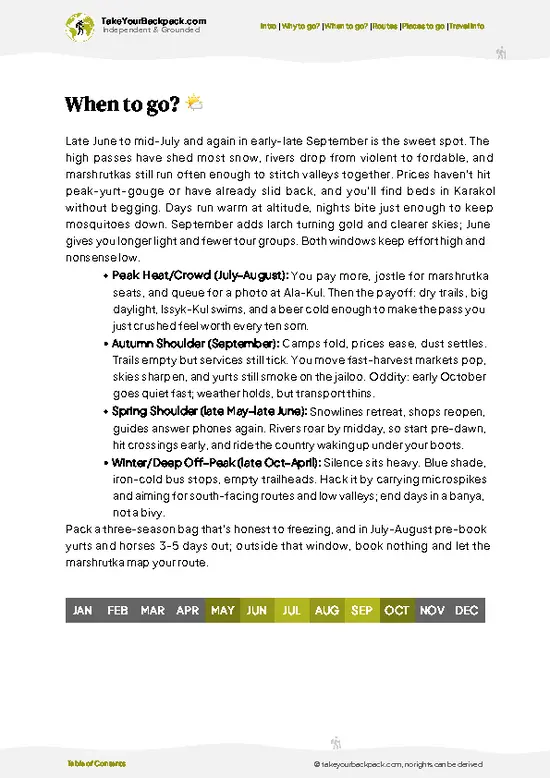

 Best Backpacking
.jpg) Hi, I’m Johan (Netherlands 🇳🇱), the creator of TakeYourBackpack. Over the past decade, I’ve backpacked through 80+ countries across six continents, gaining extensive experience with independent travel, long-term trips, and overland routes.
Hi, I’m Johan (Netherlands 🇳🇱), the creator of TakeYourBackpack. Over the past decade, I’ve backpacked through 80+ countries across six continents, gaining extensive experience with independent travel, long-term trips, and overland routes.